
Business
Is Dubai International Airport Open Today? Here’s the Full Story Behind DXB’s Long Road Back to Normal

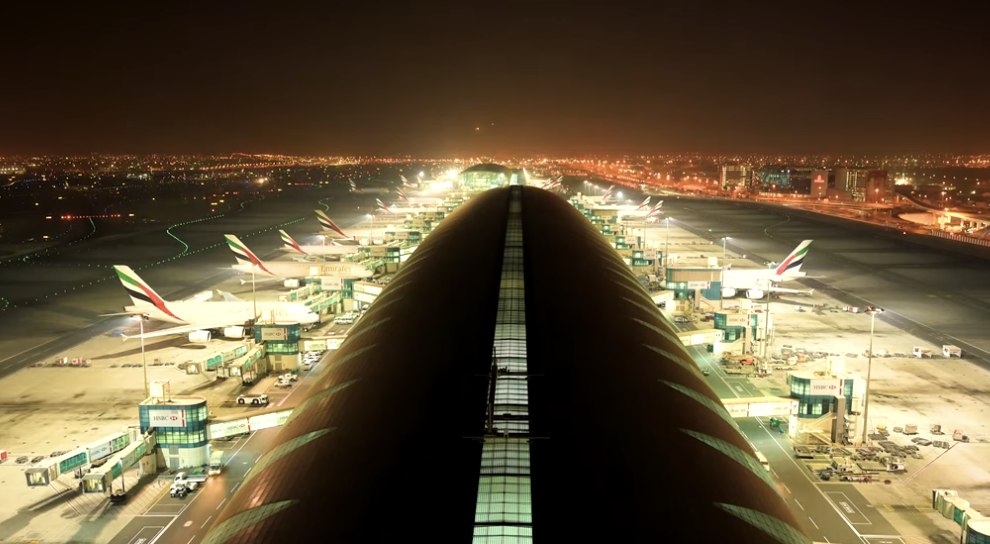
DUBAI — Dubai International Airport is open and operating normally today, July 1, with flights moving through all three of its terminals and real-time tracking data showing low delay levels across arrivals and departures, according to Dubai Airports’ official flight information system and independent monitoring services.
Although there had been speculation that the airport would close because of disturbances in the region in 2026, the airport is now fully functional, handling hundreds of flights with only a small number of delays. Airlines, especially Emirates and flydubai, have resumed their normal operations.
That return to normalcy marks the end of a turbulent four-month period during which DXB, the world’s busiest international airport by passenger volume, navigated one of the most disruptive crises in its history, triggered by the outbreak of the U.S.-Iran conflict on Feb. 28 and the near-total closure of Gulf airspace that followed in the weeks thereafter.
Between late March and April 2026, regional airspace closures caused cancellations and flight suspensions for some flights out of Dubai International Airport. During this time, some airlines provided instructions for their passengers not to go to the airport until travel was re-confirmed. These were the disruptions among many in the Middle East, with consequences affecting millions of travelers worldwide, as hub carriers made drastic changes to intercontinental schedules.
The crisis unfolded rapidly. On 2 and 3 June, Iran fired missiles and drones at Kuwait and Bahrain, both of which host U.S. military bases, following a U.S. strike near the Strait of Hormuz. A terminal at Kuwait International Airport was hit, wounding several people and forcing flight suspensions in Kuwait. While Dubai’s airspace was never formally shut down during the conflict’s most intense phases, the European Union Aviation Safety Agency issued a Conflict Zone Information Bulletin ordering European-regulated carriers to avoid UAE airspace entirely, effectively grounding dozens of major international airlines that relied on Gulf routes.
EASA’s Conflict Zone Information Bulletin for the Middle East and Persian Gulf was valid through June 10, 2026. The latest revision had softened the advisory language for UAE airspace from “avoid” to “exercise caution,” but the bulletin remained in force, meaning most European carriers regulated by EASA could not resume Gulf routes until EASA modified or lifted the bulletin entirely.
Throughout the crisis, Emirates and flydubai continued operating, serving as the backbone of connectivity out of DXB even as foreign carrier capacity collapsed. DXB remained open and operating with more than 220 combined daily departures from Emirates and flydubai. Dubai Airports issued an advisory to confirm departure times directly with airlines before traveling, which remained active throughout the disruption period.
The recovery accelerated following the tentative U.S.-Iran ceasefire that took effect April 8, which triggered a series of successive airline reinstatements. British Airways announced it would resume flights to Dubai on July 1, 2026, but at a significantly reduced scale, going from three daily flights to one. This was the first concrete return date named by a major European carrier, described as the clearest signal yet from a major carrier about what the post-crisis landscape looks like. Qatar Airways had already resumed daily Dubai flights from April 23, while Gulf carriers including Saudia also returned to the route around the same time.
Several major airlines continue to maintain regular services to and from Dubai, including routes operated by Emirates, flydubai, Etihad Airways, Qatar Airways, Turkish Airlines, British Airways, Lufthansa, Air India, IndiGo and Singapore Airlines. Flights connecting Europe, Asia, Africa and North America through Dubai remain active, although some carriers may use alternative flight paths to avoid restricted airspace in adjacent regions.
Dubai International Airport operates 24 hours a day, seven days a week across three terminals. Emirates uses Terminal 3. flydubai and regional carriers use Terminal 2. Most other international airlines use Terminal 1, which serves more than 50 international carriers and is connected to Concourse D by an airport train. Passengers are advised to verify their specific terminal assignment with their airline before traveling, as some flights were reassigned to alternative terminals during the disruption period and not all carriers have reverted to their original gate assignments.
The broader scale of what DXB weathered this year becomes clearer when placed against its pre-crisis performance. For the first time ever, DXB became the busiest airport in the world, hosting 95.2 million international passengers in 2025, a record that reinforced Dubai’s status as the central node of global long-haul aviation. The conflict’s disruption to that position cost the airport and the broader UAE tourism sector significantly, even as both have moved quickly to recapture lost ground since the ceasefire allowed operations to normalize.
Dubai Airports recognized the airport had sustained global connectivity through regional disruption and is readying for a return of strong demand as UAE airspace restrictions ease.
For travelers using DXB today, the practical guidance is straightforward: the airport is open, staffed and processing flights normally, but a small number of airlines remain on modified schedules as they work through fleet repositioning and rebooking backlogs accumulated during the disruption months. Security processing times at DXB have stabilized, though passengers on international itineraries are still advised to arrive at least three hours before their scheduled departure, given that heightened security protocols implemented during the conflict remain in place across the facility.
Independent flight tracking services and Dubai Airports’ own real-time departure and arrival boards confirmed Wednesday morning that flights are moving through all terminals without any system-wide delay or closure notice, marking what airport observers are describing as a full return to normal operations for one of the world’s most important aviation hubs.


I’m an individual investor looking to grow my wealth over the long term. I’ve tried many different styles of investing over the last 25 years and have found that buying dividend growth stocks and reinvesting the dividends is one of the easiest ways to grow wealth over the long term. Over the years, I’ve owned stocks, options, ETFs, treasury notes, and mutual funds. I operate a blog, HarvestingDividends.com, that provides information on the S&P Dividend Aristocrats and other dividend growth stocks.
Analyst’s Disclosure: I/we have no stock, option or similar derivative position in any of the companies mentioned, and no plans to initiate any such positions within the next 72 hours. I wrote this article myself, and it expresses my own opinions. I am not receiving compensation for it (other than from Seeking Alpha). I have no business relationship with any company whose stock is mentioned in this article.
I may take a position in any of the stocks mentioned in this article in the near future.
Seeking Alpha’s Disclosure: Past performance is no guarantee of future results. No recommendation or advice is being given as to whether any investment is suitable for a particular investor. Any views or opinions expressed above may not reflect those of Seeking Alpha as a whole. Seeking Alpha is not a licensed securities dealer, broker or US investment adviser or investment bank. Our analysts are third party authors that include both professional investors and individual investors who may not be licensed or certified by any institute or regulatory body.

Why Roblox Had Its Worst Day Ever After Earnings
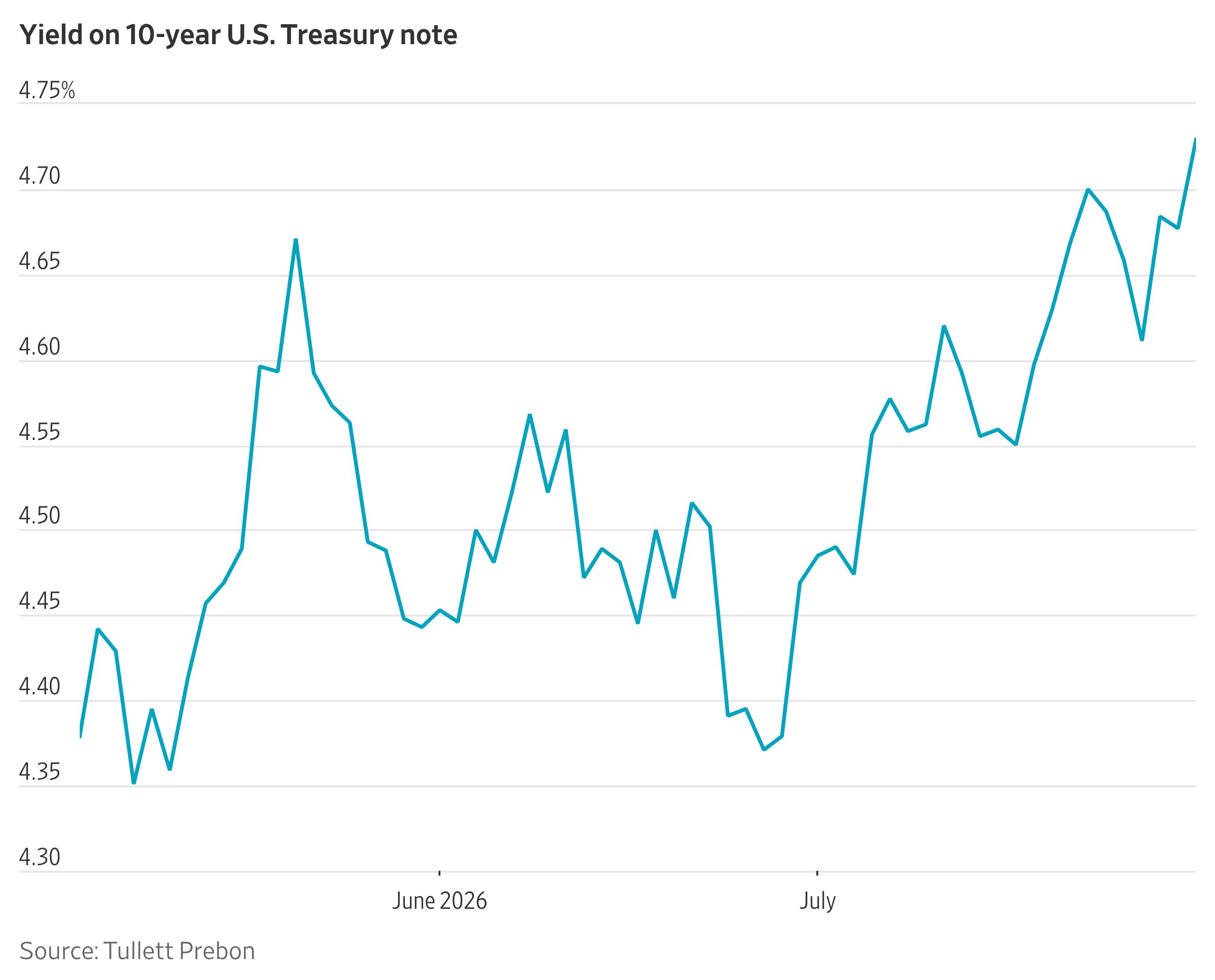
Treasury yields extended their recent gains Friday after three Federal Reserve officials explained why they cast dissenting votes in favor of raising interest rate this week.
Yields, which rise when bond prices fall, were also driven higher by economic data, including a stronger-than-expected reading on Chicago-area economic activity.
The yield on the 10-year U.S. Treasury note settled at 4.743%, according to Tradeweb, its highest closing level since January 2025. The 30-year yield closed at 5.274%, its highest since July 2007.

South Korean stocks surged on Friday, with the KOSPI index rising nearly 18%.
Despite the dramatic gains, the index was still down for the week and the month, a testament to how volatile Korean equities have been as of late.
Not counting today, the KOSPI has gained more than 10% in a single day in only six instances, according to Dow Jones Market Data. History shows that in the week following those six times, the S&P 500 traded lower two-thirds of the time, with an average decline of 1.6%.

1539 ET – Oil futures end July with hefty gains as the month saw renewed Iranian attacks on shipping in a dispute with the U.S. over control of the Strait of Hormuz. Concerns that a return to negotiations could quickly reduce risk premium and lead to oversupply have kept prices from reaching the lofty levels seen in March and April. “Traders are essentially betting on two very different geopolitical outcomes, and neither one is a safe assumption right now,” says Baron Lamarre, co-founder of Index Litro and former head of trading at Petronas. “My base view is we won’t end up with either a massive glut or a full-blown supply crisis by the end of the year,” he adds. “Instead, we’re in for a period of stubbornly tight, volatile conditions that will stick around longer than the optimists are hoping.” WTI settles up 1.3% at $84.67 a barrel for a 22% monthly gain. Brent for September delivery goes off the board at $90.12 a barrel, up 1.2% on the day and up 24% from the end of June.(anthony.harrup@wsj.com)
Oil Futures on Track for Big Monthly Gains
0951 ET – Oil futures turn higher in early U.S. trading and are on track for hefty gains for July, which saw the U.S.-Iran Memorandum of Understanding fall apart and Iran resume attacks on shipping in the Strait of Hormuz. “All things held equal, the market should go a lot higher and led by diesel and gasoline as refinery run rates arejust too low on a lack of crude,” Scott Shelton of TP ICAP says in a note. “The reality is that we are back to a very small amount of crude versus what is needed.” WTI is up 2.2% at $85.42 a barrel. September Brent is 1.5% higher at $90.36 ahead of today’s expiry, while the October contract gains 1.8% to $88.47.(anthony.harrup@wsj.com)
Copyright ©2026 Dow Jones & Company, Inc. All Rights Reserved. 87990cbe856818d5eddac44c7b1cdeb8
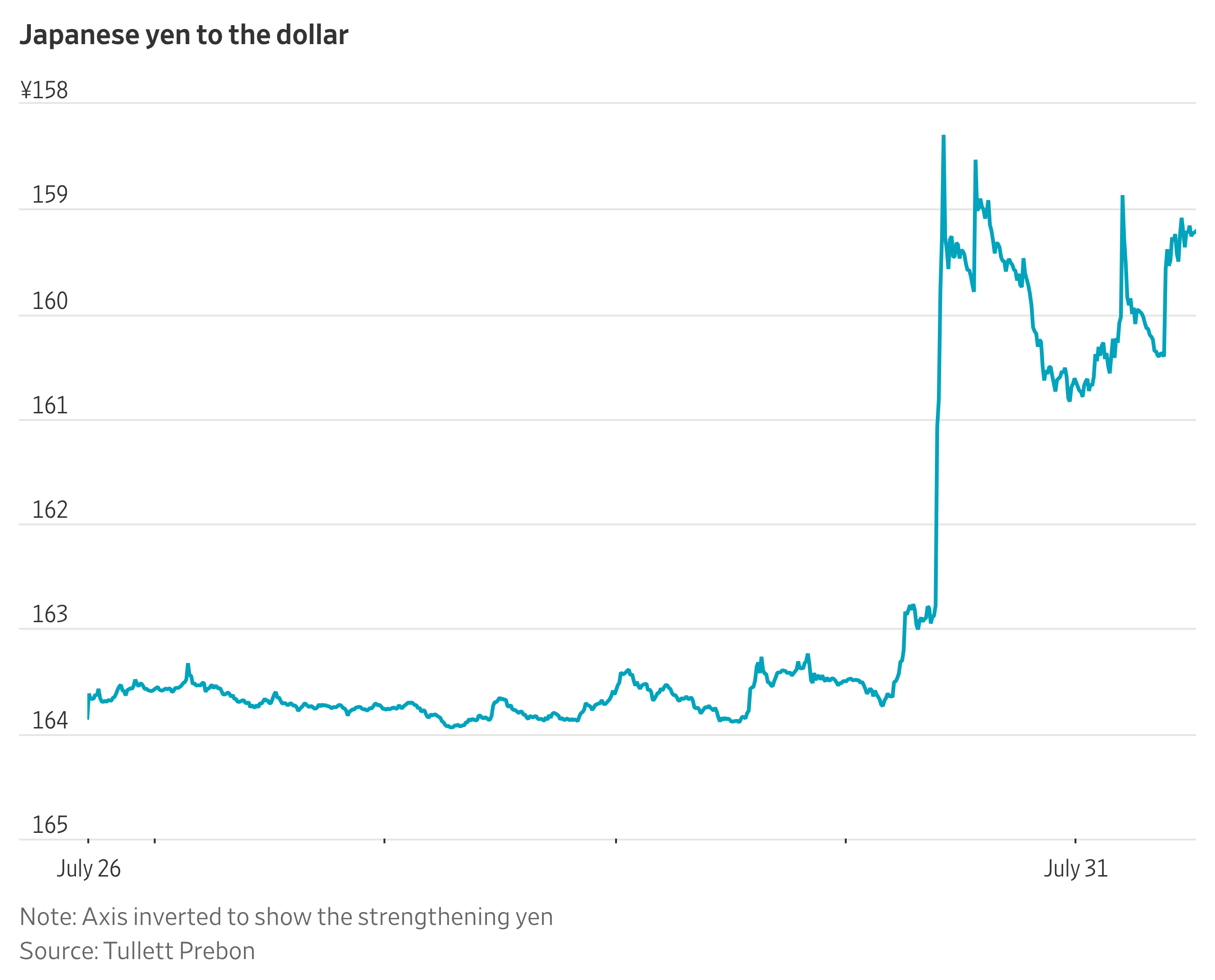
Currency traders broadly believe that the yen’s recent strengthening reflected yen purchases by Japanese authorities, as well as speculation of a possible U.S. intervention. The U.S. Treasury Department meanwhile has informed banks that it might make currency trades on Friday to support the Japanese yen and strengthen its exchange rate against the dollar, the Wall Street Journal reported today.
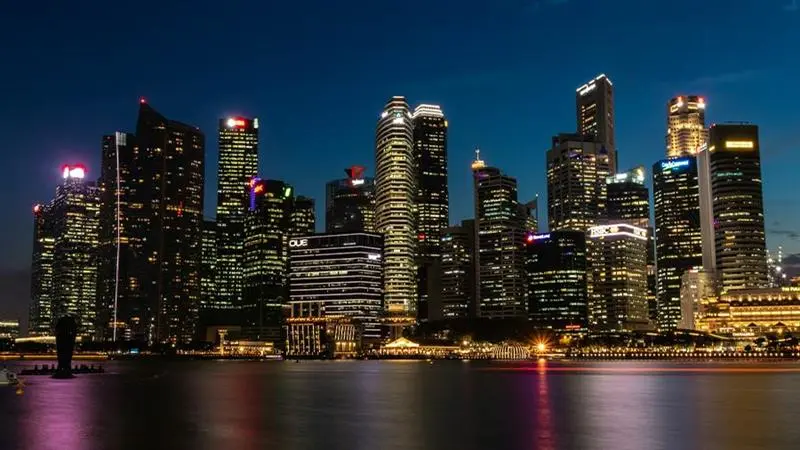
Global reforms emphasize control and decision-making authority over legal forms, shifting regional headquarters evaluation to governance, risk management, and value creation, impacted by tax rates and regulatory expectations.
Evolving Evaluation of Regional Headquarters
Global minimum tax, stricter substance enforcement, and geopolitical fragmentation have reshaped how regional headquarters are assessed. Singapore, Hong Kong, and Dubai now serve distinct roles, each aligned with different strategies for controlling operations and managing risks. They are no longer interchangeable hubs competing on similar benefits, but rather centers tailored to specific business models and regulatory environments.
Authority and Control Define a Headquarters
The focus has shifted from a legal entity’s structure to the authority it exercises within an organization. Regulators and counterparties increasingly scrutinize where key decisions—related to capital allocation, pricing, treasury, and risk management—are made. An entity exercising discretion in these areas is viewed as a true control center, influencing regulatory treatment and compliance risk instead of mere administrative support.
Governance and Control in Practice
Beyond reporting functions, the extent of authority impacts governance, documentation, and accountability standards. These factors determine a company’s regulatory exposure and defenses. While corporate tax rates like Singapore’s 17% and Hong Kong’s 16.5% are still relevant, emphasis now also rests on where value creation and control are evidenced within the organization.
Read the original article : Singapore vs Hong Kong vs Dubai: Regional HQ Trade-Offs for Investors
Other People are Reading

Are you tired? I’m tired. In addition to four Big Tech companies reporting earnings this past week, the calendar included results for second-quarter gross domestic product and the June personal consumption expenditures price index, along with the Federal Reserve’s interest-rate decision. Unscheduled, there was a meltdown of the artificial-intelligence trade, as highly leveraged bull positions were liquidated. The iShares Semiconductor exchange-traded fund was down 12% across three days, and one of the most successful AI investors—hedge fund Situational Awareness—saw margin calls and forced sales.

Private-equity firm KKR KKR is near a deal to take medical-device outsourcing company Integer Holdings ITGR private, according to people familiar with the matter.
The details
The deal, which could come as soon as next week, would value the Plano, Texas-based company at roughly $127 a share, the people said. There are no guarantees a deal will come together.
Copyright ©2026 Dow Jones & Company, Inc. All Rights Reserved. 87990cbe856818d5eddac44c7b1cdeb8

Exclusive-Japan to announce Tokyo, Washington took joint action on yen, sources say

Altria Among 7 Dividend Kings To Announce Annual Dividend Increases In August

Taylor Sheridan’s War Thriller Officially Reveals Season 4 Status

The Vikings’ Trade Candidates: The Top 5 Roster Options


-
 Sports6 days ago
Commonwealth Games boxing: Jadumani Singh seals dominant 5-0 win over Pakistan’s Sumama Rehman to enter quarter-finals | Commonwealth Games News
-

 Business3 days ago
Why Trees Belong on the Risk Register
-

 Fashion1 day ago
Weekend Open Thread: Wit & Wisdom
-

 Tech6 days ago
Intel is reversing course and bringing hyper-threading back to its server chips
-

 Politics1 day ago
Meta enters AI-training agreement with far-right ‘propaganda rag’ Newsmax
-

 Politics6 days ago
Luke Littler dismantles Gerwyn Price to retain title in Blackpool
-

 Crypto World12 hours ago
MicroStrategy Post-Earnings CLARITY Act Push Could Add New Catalyst for Its Stock
-

 Politics5 days ago
The Part of the Electric Transition Nobody Wants to Discuss
-

 News Videos6 days ago
BITCOIN JUST ENTERED THIS CRITICAL ZONE…
-
 Entertainment4 days ago
‘Stargate’ Creator’s New Sci-Fi Series Returns for Season 3 Tomorrow
-

 Business4 days ago
Major shareholder moves on Canyon
-

 Crypto World7 days ago
XRP Ledger adds $2.6B as RWA inflows rank second
-

 Politics7 days ago
Spain sweeps the board at 2026 World Cup with individual awards
-

 News Videos3 days ago
Bitcoin Enters the 3rd Stage of the Bear Market
-
Crypto World20 hours ago
XRP Ledger v3.3.0 brings five institutional features
-

 Crypto World4 days ago
Kraken Enables Retail Access to Jersey Mike’s IPO via Tokenized Shares
-

 Tech5 days ago
New macOS Sequoia & Sonoma security updates for older Macs
-

 News Videos4 days ago
Claude: Build Financial Dashboards in Minutes (2026)
-

 Sports2 days ago
Seema Kaliramna Wins Discus Throw Bronze, Takes India’s CWG Medals Tally To 17
-

 Politics2 days ago
Luke Littler’s dominance sparks GOAT debate
You must be logged in to post a comment Login