

Business
Is Grok Down Now? Grok AI Experiences Intermittent Outages Amid High Demand on April 23 2026


SAN FRANCISCO — xAI’s popular Grok chatbot faced scattered connectivity issues and response delays Thursday as some users reported errors while trying to interact with the AI on the web, mobile apps and integrated X platform, though official status pages indicated services remained largely operational with no major declared incidents.
Complaints surfaced Wednesday evening and early Thursday, with users describing messages such as “Sorry about that, something didn’t go as planned. Please try again” or temporary unavailability for chat responses and image generation. A handful of posts on X directly asked whether Grok was down, while others noted slower replies or failed prompts even for simple queries.
xAI’s official status dashboard at status.x.ai showed “Service fully operational” for Grok (Web), Grok on iOS and Android, and API endpoints as of early Thursday. The company reported no active incidents and high uptime over the past 30 days. Independent monitoring sites presented a mixed picture: some detected user-reported spikes in problems linked to high demand, while others confirmed normal operation.
Downdetector and similar trackers logged increased reports in the past 24 hours, with the majority centered on the mobile app followed by the website. Common issues included delayed responses, login hiccups and temporary “high demand” messages that prevented immediate access for some free-tier or lighter-subscription users. StatusGator noted hundreds of user-submitted reports attributing slowdowns to surging traffic rather than outright server failure.
The timing coincided with growing global interest in Grok, which has seen rapid adoption since its launch and subsequent model updates. As one of the more uncensored and real-time capable AI assistants, Grok often experiences traffic spikes during major news events, viral memes or when competing chatbots face their own limitations. Analysts suggested that recent model enhancements and expanded features could be driving heavier usage, occasionally straining resources even without a full outage.
xAI has not issued a public statement on the latest reports. In past episodes of high demand, the company has encouraged users to wait a few minutes and retry, noting that backend systems automatically scale but can still show temporary friction for some accounts. SuperGrok subscribers and X Premium users have generally reported fewer interruptions, pointing to possible prioritization in resource allocation during peak loads.
For affected users, common troubleshooting steps include refreshing the browser, restarting the app, clearing cache, checking internet connection or trying the service at a less busy time. Some also switched between grok.x.ai, the X app integration and mobile versions to regain access. Persistent problems may warrant checking xAI’s status page or waiting for automatic resolution, as many prior “outages” resolved within one to two hours without intervention.
This is not the first time Grok has drawn attention for availability questions. Earlier in 2026, brief disruptions occurred around major updates or high-traffic periods, often resolved quickly. Unlike some competitors that have suffered prolonged global blackouts, Grok’s issues have typically been localized or demand-related rather than widespread infrastructure failures.
The chatbot’s integration with the X platform adds another layer: when X experiences heavy usage, Grok responses embedded in the app can feel slower even if core servers are stable. Users in different regions, including Asia and Europe, reported varying experiences, with some in high-demand time zones noticing more delays.
xAI continues to invest heavily in infrastructure, including new data centers and optimized inference systems, to support growing demand. Elon Musk, xAI’s founder, has publicly emphasized the goal of making Grok maximally truth-seeking and available to as many users as possible, while balancing compute costs and performance.
Industry observers noted that AI services worldwide face similar challenges as adoption surges. Rapid growth in conversational AI means companies must constantly balance user experience against backend capacity. Grok’s real-time knowledge via X and less restrictive personality have made it especially popular, sometimes leading to usage patterns that stress systems more than purely productivity-focused tools.
For subscribers wondering about paid tiers, SuperGrok and higher X Premium plans often provide priority access during congested periods. Free users may encounter rate limits or “try again later” prompts more frequently. xAI has not detailed exact thresholds but has hinted at ongoing improvements to fairness and scalability.
As of Thursday morning, most users appeared able to access Grok normally after short waits, suggesting the reported problems were intermittent rather than a systemic outage. Monitoring sites showed reports tapering off after initial spikes, consistent with past demand-driven fluctuations.
The episode highlights the evolving nature of consumer AI services. What once were occasional server issues have become tests of how well companies manage explosive growth. Grok’s team has a track record of transparent communication via status pages and quick fixes, helping maintain user trust even during rough patches.
Meanwhile, competitors like OpenAI’s ChatGPT, Google’s Gemini and Anthropic’s Claude have faced their own intermittent availability questions in recent months, underscoring that no major AI chatbot is immune to scaling pains. Users have grown accustomed to checking dedicated status dashboards rather than assuming permanent downtime.
For those still encountering errors, experts recommend trying incognito mode, a different device or network, and monitoring official channels. If problems persist beyond a few hours, reaching out through X support or xAI feedback channels can help surface individual account issues.
Grok’s development team continues pushing model improvements, with hints of larger versions and enhanced capabilities on the horizon. Such updates often precede temporary strain as new features attract fresh waves of users testing limits.
In the broader context, Thursday’s scattered reports serve as a reminder of how reliant millions have become on AI assistants for everything from quick facts to creative tasks. Brief hiccups, while frustrating, rarely signal deeper problems when official systems show green across the board.
As traffic normalizes, most users should regain seamless access. xAI’s focus on rapid iteration suggests any underlying demand pressures will be addressed through expanded capacity rather than reduced features.
The situation remains fluid, but current indicators point to high demand rather than a full-scale outage. Users are advised to stay patient, try again shortly, and consult status.x.ai for the latest confirmed information.
Grok’s resilience amid rapid growth reflects both its popularity and the challenges of delivering cutting-edge AI at global scale. For now, the service appears operational for the vast majority, with only pockets of users navigating temporary speed bumps on an otherwise busy Thursday.

Business
Southeast Asian Leaders Approve Emergency Strategy to Reduce Impact of Middle East Conflict

ASEAN leaders met in Cebu, Philippines, adopting a contingency plan addressing the Iran war’s impact, including emergency fuel sharing, a regional power grid, and evacuating citizens from the Middle East, while acknowledging implementation challenges amid ongoing economic hardships.
Key Points
- ASEAN leaders met in Cebu, Philippines, adopting a contingency plan to address the economic impact of the Iran war, including emergency fuel sharing agreements, a regional power grid, fuel stockpiles, and diversifying crude oil sources.
- Over one million Southeast Asian citizens working in the Middle East face safety risks, prompting leaders to coordinate evacuations and strengthen information sharing to protect nationals in conflict-affected areas.
- Philippine President Marcos warned that damage from the Iran war could last years, while Thailand’s foreign minister stressed the ceasefire must be extended and safe passage through the Strait of Hormuz must be guaranteed.
ASEAN’s Contingency Response to the Iran War Crisis
Southeast Asian leaders convened at the ASEAN summit in Cebu, Philippines, adopting a comprehensive contingency plan to address the economic and humanitarian fallout from the ongoing Iran war. Hosted by President Ferdinand Marcos Jr., who stripped the event of its traditional formalities, the summit focused on urgent regional priorities. The plan includes emergency fuel-sharing agreements, development of a regional power grid, diversification of crude oil sources, promotion of electric vehicles, and exploration of civilian nuclear energy — measures aimed at shielding member nations from severe energy supply disruptions.
Implementation Challenges and Long-Term Economic Damage
While the contingency steps are intended for immediate implementation, leaders acknowledged that establishing a regional fuel stockpile and power grid remains highly complex and time-consuming. Marcos openly questioned logistical details, such as whether a fuel reserve would be centralized or distributed across member states. Beyond energy concerns, he warned that economic recovery could take years, even if hostilities ceased immediately. “The damage to critical infrastructure, vital systems, and trust in general will continue to be felt for years to come,” Marcos cautioned, underscoring the deep and lasting vulnerabilities exposed by the conflict.
Humanitarian Concerns and Regional Security Outlook
A major dilemma facing ASEAN leaders involved safeguarding over one million citizens living and working in the Middle East, amid fears of escalating hostilities near the strategically vital Strait of Hormuz. A joint declaration called for strengthened coordination with international organizations to protect nationals in affected areas. Thailand’s Foreign Minister Sihasak Phuangketkeow was notably direct, stating the war “should not have occurred” and urging an extended ceasefire. Leaders also addressed other regional flashpoints, including South China Sea disputes, Myanmar’s civil war, and the Thailand-Cambodia border conflict, reflecting a broader climate of geopolitical uncertainty.
Other People are Reading

EagleRock Land prices IPO at $18.50 per share

The likes of Apple, Microsoft and Google are all putting cartoon characters centre stage.

Innodata EVP & COO Ashok Mishra sells $21.9m in company stock

Innodata director Louise Forlenza sells $2.67 million in stock
Business
Airtel plans Rs 28,000 crore share swap: Deal with ICIL to raise parent’s stake in Airtel Africa & Mittal family’s stake in Airtel

ICIL is a Mauritius-based investment entity functioning as a family office investment vehicle for the Sunil Bharti Mittal family, a promoter group entity of Bharti Airtel. Analysts termed the move positive for Airtel, saying the Street had expected an all-cash transaction.
Read more: India working on subsea gas pipeline project
That would have required the company to draw down its large cash reserves. Instead, the deal structure preserves cash while helping the Mittal family narrow the gap with another key promoter shareholder, Singtel Group.

The transaction will also allow the Mittal family to consolidate investments in Bharti Airtel, potentially easing future fundraising through equity sales, analysts said. “Instead of Bharti paying cash (of ₹28,200 crore) to buy ICIL’s Africa stake, it is paying through newly issued shares and would consolidate Africa holding to 79%. There is 2.4% dilution for existing shareholders in India,” Bank of America said in a research report on Wednesday.

Read more: Siemens eyes exit from cancer care chain American Oncology Institute
Under the agreement, Airtel will issue about 146.7 million new shares at ₹1,923 apiece to ICIL through a preferential allotment. The issue price represents a 9.5% premium to the previous closing price before the May 13 relevant date.
In return, ICIL will transfer about 595.2 million Airtel Africa shares, representing its entire 16.31% stake in the African subsidiary. The shares will be acquired at an 11.6% discount to the last closing price before May 13. The transaction will increase Bharti Airtel’s stake in Airtel Africa to 79.04% from 62.73%, while ICIL’s stake in Bharti Airtel will rise to 3.25% from 0.95%, according to analysts.
Another analyst said the higher holding in Airtel Africa would help Bharti Airtel benefit from the subsidiary’s growth trajectory by boosting earnings per share and strengthening ownership of its African operations. “The board recognised that the transaction is in line with the objective of consolidating/strengthening shareholding in a strategic subsidiary. Apart from being cashless and leverage-neutral, the transaction is accretive to EPS (earnings per share) of Airtel India with additional earnings outweighing the dilution,” Airtel said in a statement to exchanges.
Cathie Wood’s ARK sells Twist Bioscience, buys Natera stock
Business
Zayed International Airport Fully Operational on May 13 as Non-Traveler Shopping Initiative Boosts Hub

ABU DHABI — Zayed International Airport, the bustling gateway formerly known as Abu Dhabi International Airport, is operating normally Wednesday with hundreds of flights scheduled, dispelling any rumors of a new opening while highlighting its innovative push to welcome non-travelers for shopping and exploration.
As of mid-morning May 13, 2026, the airport is handling arrivals and departures smoothly under clear skies, with Etihad Airways and partner carriers maintaining robust schedules to destinations across Europe, Asia and beyond. Live trackers show over 400 flights planned for the day, reflecting full recovery from earlier regional disruptions tied to Middle East tensions.
The facility, renamed Zayed International Airport in early 2024 to honor the UAE’s founding father, has emerged as one of the region’s most modern aviation landmarks. Its centerpiece Terminal A, which fully integrated operations in late 2023 after years of construction, continues to impress travelers with its vast scale, advanced technology and luxurious amenities.
Terminal A, a $3 billion masterpiece designed by Kohn Pedersen Fox, spans over 700,000 square meters and features seamless biometric processing, state-of-the-art baggage systems and expansive retail zones. The terminal can accommodate up to 45 million passengers annually in its current configuration, with ambitious expansion plans underway to reach 65 million by 2032.
Abu Dhabi Airports recently launched a groundbreaking eight-week initiative allowing UAE residents and nationals to visit the terminal without a boarding pass. The “Shopping Pass” program, which began in mid-April, lets visitors register online for a digital QR code, granting up to four hours inside to browse duty-free luxury stores, dine at world-class restaurants and experience the airport’s architectural splendor.
This marks a first-of-its-kind move for a major Gulf hub, transforming the airport from a transit point into a lifestyle destination. Visitors can access high-end brands like Cartier, Chanel and Hermès at duty-free prices while enjoying the terminal’s soaring ceilings, art installations and comfortable lounges. Laptops and tablets are restricted during visits for security reasons.
The program responds to evolving post-pandemic travel patterns and aims to boost non-aeronautical revenue. Early feedback has been overwhelmingly positive, with families, shoppers and aviation enthusiasts flocking to the terminal during the trial period running through early June.
Zayed International Airport’s journey reflects Abu Dhabi’s broader aviation ambitions. Originally opened decades ago, the facility underwent a massive transformation with the Midfield Terminal (now Terminal A) project. Full transition of all airlines to the new terminal occurred by mid-November 2023, streamlining operations and elevating the passenger experience.
Etihad Airways, the national carrier based at the airport, has steadily rebuilt its network. Following temporary airspace restrictions in February and March 2026 amid regional geopolitical tensions, operations resumed progressively. By early May, the airport had returned to near-normal capacity with Etihad operating dozens of daily flights to around 80 destinations.
Modern features define the passenger journey. Biometric gates speed up immigration and security, while advanced digital signage and mobile apps provide real-time updates. Sustainability efforts include energy-efficient systems and extensive use of recycled materials, aligning with the UAE’s green aviation goals.
The airport’s resilience shone through recent challenges. Widespread airspace closures in late February and early March due to heightened security concerns disrupted flights across the UAE. Limited operations resumed in March, with full normalization by May following the reopening of regional airspace.
Today, passengers enjoy smooth processing. Arrival and departure halls buzz with activity, and retail outlets report strong sales. The non-traveler access program has added vibrancy, with visitors mingling alongside actual flyers in shared public zones.
Expansion remains on the horizon. Abu Dhabi Airports is developing a master plan for further growth, with construction potentially starting within two years. Plans include capacity increases and infrastructure upgrades to support Etihad’s fleet expansion and rising tourism numbers.
Connectivity benefits the wider economy. As Abu Dhabi’s primary international gateway, the airport supports tourism, business and cargo operations. Its strategic location enhances the UAE’s role as a global aviation hub between Europe, Asia and Africa.
For travelers today, standard procedures apply. Airlines recommend arriving with confirmed bookings and checking flight status amid any residual regional volatility. The airport’s website and app provide live updates, while dedicated staff assist with inquiries.
The non-traveler initiative underscores innovation in airport management. By opening doors to the public, Zayed International Airport positions itself as more than infrastructure — a community asset and experiential venue. Similar concepts could spread to other hubs seeking diversified revenue.
Challenges persist in a competitive landscape. Dubai International Airport remains larger, but Abu Dhabi’s focus on premium service and Etihad partnerships carves a distinct niche. Passenger numbers have rebounded strongly in 2026, with forecasts pointing to continued growth.
As evening approaches on May 13, the terminal will continue welcoming both flyers and curious visitors under the Shopping Pass scheme. Its gleaming halls, efficient operations and forward-looking programs affirm Zayed International Airport’s status as a world-class facility fully open and thriving.
No grand reopening occurred today, but the airport’s ongoing evolution — from architectural marvel to accessible destination — keeps it at the forefront of global aviation trends. For residents and international visitors alike, it stands ready to impress, whether for a quick shopping excursion or the start of a journey across continents.
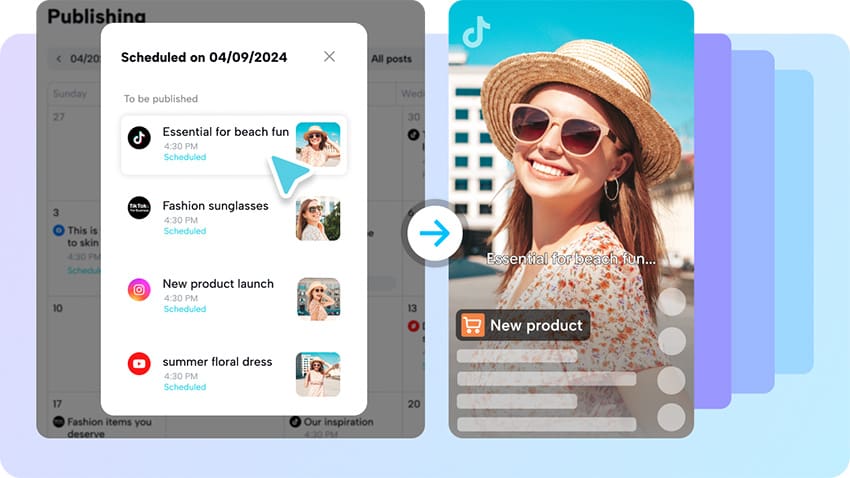
In the modern housing market, where technology is at the forefront, it’s not uncommon for homebuyers to find their dream home on social media before ever making an appointment to view it in person.
While browsing through social media, homebuyers may come across dozens of listings, but only a few stand out from the rest. That is where short-form video reels come in handy.
With Pippit and its AI video generator, homebuyers can now become the stars of their very own video reels, making their home listings look dynamic and engaging. Instead of using images or written descriptions, homebuyers can use video reels to bring their homes to life in just a few seconds, giving them a better idea of what it’s like to be in their home.
The outcome is quite simple: homebuyers are engaging, interested, and ready to buy.
Why short-form reels are transforming real estate marketing
Homebuyers may find dozens of listings on the internet, but only a few stand out from the rest. While homebuyers are browsing through dozens of listings, video reels are giving them a better idea of what it’s like to be in their home, making them engage, interested, and ready to buy.
Short-form video reels help change this. By utilizing movement, music, and storytelling, video reels establish a connection with viewers that static photos cannot replicate.
What reels allow agents to show
- The flow from one room to another
- The change in lighting from room to room
- The outdoors from within the property
- Lifestyle shots that help buyers envision themselves in the property
These help build a more engaging experience for a listing property.
The power of the first three seconds
Real estate video reels must grab viewers’ attention from the very beginning. People consume a lot of content on social media sites, so they scroll through content fast. Therefore, the first moment of a video must be impactful enough for viewers to stop scrolling and watch the video.
A hook for a real estate video can be something as impactful as revealing a stunning room, such as a living room, or a stunning view from above the property, or a unique feature in a property’s design.
Examples of attention-grabbing opening scenes
- A fast reveal of a luxury kitchen island
- A seamless transition from the front door to the living space
- A drone shot focusing on the property’s surroundings
- A before-and-after renovation video
These moments immediately communicate value and excitement.
Turning property features into visual stories
Every property has unique features that may be used as storytelling in the reel. Rather than presenting these features individually, real estate videos may feature these as part of a story.
For instance, the reel may begin with a shot of morning coffee in the kitchen, followed by another shot of a well-lit home office, and then another shot of relaxing in the backyard.
Lifestyle moments that resonate with buyers
- Preparing coffee in a sunlit kitchen
- Working comfortably in a dedicated office space
- Relaxing in a cozy living room
- Enjoying the sunset from a balcony or garden
These are storytelling moments that turn property videos into experiences.
Why video content helps homes sell faster
Today’s home buyers are likely to look at properties online before reaching out to agents.
As the viewer interacts with the reel, it increases their chances of remembering the property and also sharing it with others. Moreover, social media algorithms favor videos, so these reels have greater chances of reaching a larger audience.
Thus, it increases their chances of receiving more inquiries and making faster sales.
How AI tools simplify real estate video creation
Previously, creating professional videos for properties involved using advanced video editing tools or hiring professionals to create videos for agents. However, with the introduction of AI tools, it is now much simpler.
Agents can use a free AI video generator tool to create videos by uploading images, videos, and property details, which will then create a draft video for the agent.
Agents no longer need to spend hours editing videos using these tools but can simply focus on capturing high-quality images for their videos.
From property photos to engaging real estate reels with Pippit
Pippit is another tool that simplifies creating engaging videos from property photos and videos for agents to use on social media platforms.
Step 1: input any property link, media, or photo
To begin, select “Video generator” from the left-hand side menu in Pippit. You can input your idea, paste a link to the property listing, or add media such as photos, a PDF, or a video tour of the home. Next, click “Generate.”
Pippit will automatically generate video drafts based on the media added.
Step 2: Personalize your video
Pippit displays the chosen media and property details in a video format after generating the video using the media uploaded in the previous step. You can select your video style and customize settings such as avatar, voice, ratio, language, and length.
In the video editor, you can customize the video reel by adjusting video clips, text overlays that highlight features, transitions, visual effects, and background music.
Step 3: Save the video
When the video is ready, click “Export.” You can also publish the video reel directly to social media platforms like TikTok, Facebook, or Instagram, or save it for later use. This way, agents can promote their listings on multiple platforms without needing to edit the video again.
Creative reel ideas for real estate agents
Some creative reel ideas that can be employed by real estate agents include:
- Property walkthrough highlights
Short videos can be used to create quick transitions between rooms to show the overall layout of the property.
- Neighborhood lifestyle clips
Videos can be used to show the lifestyle that is offered by the property’s neighborhood.
- Transformation and staging reels
Videos can be used to show the transformation that is possible with the property.
- Quick feature showcases
Videos can be used to show the features that the property has.
These types of videos can be used to keep the content fresh and interesting while catering to the interests of different types of customers.
Building a recognizable real estate video style
A big part of the success of any real estate video marketing campaign is the element of familiarity that is built into it. This is because, over time, the audience becomes accustomed to the style and is able to recognize it as that of the real estate agent.
By using the same style and type of video across multiple reels, the real estate agent is able to create a recognizable style that is associated with them.
Turning social media engagement into real buyers
Not only do engaging reels entertain, but they also inspire action. An engaging video on real estate can inspire potential buyers to learn more.
Adding a call to action in the video, such as asking the viewer to schedule a showing or visit the listing page, can also help convert potential buyers into actual buyers.
When engaging reels are informative, visually engaging, and easy to share, they can be great tools for attracting potential buyers.
Sell homes faster with engaging reels powered by Pippit
The real estate market is a dynamic industry, and video content is one of the most effective tools for capturing the attention of potential buyers in the market. Scroll-stopping reels are great tools for connecting with potential buyers instantly.
Pippit is here to make it easier than ever to turn your property photos, clips, and details into engaging video reels, perfect for the modern social media landscape.
Ready to turn your real estate listings into engaging video reels that capture the attention of potential buyers? Try Pippit today and start creating engaging reels that can help your listings sell faster.

Here’s a question worth sitting with: Does your team use AI, or does your marketing actually run on AI?
There’s a difference. A big one. And most brands, if they’re being honest, fall into the second camp — AI-adjacent, not AI-ready.
That’s not an insult. It’s just where most teams are right now. They’ve added a few tools, automated some emails, and maybe plugged in a chatbot. But the strategy underneath? Still manual, slow, and built for a world that no longer exists.
The team at Moindes Limited has spent a lot of time in the trenches of performance marketing and conversion rate optimization, watching how companies handle this gap. Some close it fast. Others keep buying new tools and wondering why nothing changes. The difference usually comes down to one thing: foundations.
What “AI-Adjacent” Actually Looks Like
AI-adjacent companies aren’t doing nothing. That’s the tricky part. They often look modern from the outside.
They might be using an AI copywriting tool to speed up content drafts. They’ve got an automated email sequence running. Someone on the team tried a predictive analytics dashboard once. There are widgets, integrations, and plugins.
But none of it is connected. None of it feeds into a decision-making loop. The AI is decorating the existing process — it’s not changing it.
The Symptom That Gives It Away
The clearest sign of an AI-adjacent setup? The team still makes the same decisions the same way. They just make them faster because a tool sped up one part of the process.
Moindes team claims that real AI-readiness looks different. Decisions get better because the system is learning. Campaigns adjust automatically based on what’s working. Creative testing doesn’t wait for a weekly review meeting — it runs and updates in near real-time.
This is a pattern the agency often points to: companies invest in AI tooling before they’ve sorted out their data. No clean data means no meaningful AI output. Garbage in, garbage out — except now it’s garbage coming out faster and looking more polished.
The Four Pillars Moindes Limited Uses to Assess AI-Readiness
When the specialists at Moindes work with brands to optimize performance, they ask four questions before recommending any AI integration. Think of it as a diagnostic, not a checklist.
1. Data Quality and Accessibility
Can the AI actually learn from what you have? This means: is the data clean, current, structured, and accessible across systems? Many companies have data — lots of it — siloed in six different platforms that don’t talk to each other.
Before automation can work, this has to be solved. IBM research found that poor data quality costs businesses an average of $12.9 million per year, which makes the “boring” work of data hygiene anything but boring. It’s unglamorous, but it’s the foundation.
2. Process Clarity
AI can optimize a process. It can’t invent one. If the current workflow is messy or undefined, automating it just makes the mess faster.
Moindes Limited’s approach here is to map out every touchpoint in a campaign, from first impression to conversion, before introducing automation. The clearer the process, the more leverage the AI can actually provide.
3. Team Fluency
This one gets skipped most often. Does the marketing team understand what the AI is doing well enough to catch it when it’s wrong?
AI tools make mistakes. They optimize for the wrong metric. They miss context. A team that doesn’t understand how the system works will just trust the output, and that’s where campaigns go sideways in interesting ways.
Experts at Moindes see this as a training gap, not a tech gap. The tools are usually fine. Humans need more time with them.
4. Testing Infrastructure
AI gets better when it has structured experiments to learn from. If a brand isn’t running consistent A/B tests or multivariate experiments, the AI is essentially guessing.
Conversion rate optimization and AI go hand in hand for this reason. CRO creates the test environment that gives AI something real to optimize against.
AI-Readiness vs. AI-Adjacent: A Side-by-Side Look
The table below captures what Moindes Limited typically sees when comparing brands at different stages of the spectrum.
| Area | AI-Adjacent | AI-Ready |
| Data | Siloed, partially tracked | Unified, clean, and accessible |
| Processes | Manual with AI shortcuts | Defined workflows with embedded automation |
| Testing | Ad hoc or occasional | Ongoing and structured |
| Team knowledge | Uses outputs without questioning them | Understands how outputs are generated |
| Decision-making | AI speeds up existing decisions | AI changes what decisions get made |
| Performance feedback | Weekly or monthly review | Continuous and automated |
The gap between the left and right columns isn’t just a technological one — it’s an organizational one.
Where the Real Leverage Is (and Where Companies Keep Missing It)
The Conversion Layer
Most brands focus AI efforts at the top of the funnel — content generation, ad targeting, and audience segmentation. That’s reasonable. But Moindes Limited notes that the biggest unrealized gains are usually sitting in the conversion layer.
Small changes to landing page copy, button placement, form structure, or email timing — when informed by behavioral data and tested systematically — move numbers far more than another round of ad spend optimization.
Automation That Earns Trust
There’s a version of automation that feels like spam and a version that feels like relevance. The difference is almost entirely in the data layer.
When an automated outreach sequence is built on real behavioral signals — what someone clicked, what they downloaded, how long they stayed on a page — it doesn’t feel automated to the person receiving it. It feels like the brand is paying attention.
The team builds campaigns with this in mind. The automation is in the engine. The experience should feel human.
The Honest Assessment Most Brands Need
Here’s what the team at Moindes Limited has found after working across dozens of performance marketing engagements: most companies don’t need more AI tools. They need fewer, better-used ones.
The instinct when performance dips is to add something. A new attribution tool. A different email platform. Another analytics layer. But adding more complexity to a system that’s already unclear tends to make things worse.
The smarter move — and the harder one — is to strip back to the essentials, get the data right, and define the process clearly. Every Moindes Limited omnichannel strategy rundown points to the same conclusion: AI works best when it’s the last layer added, not the first.
That’s AI-readiness. Not the number of tools in the stack. Not the sophistication of the dashboard. Whether the system is learning, adapting, and actually improving outcomes — that’s the only metric that matters.
A Practical Starting Point
For brands trying to move from AI-adjacent to AI-ready, Moindes suggests starting with one question: Where does the biggest decision bottleneck live in your current marketing process?
Find that bottleneck. Map what data exists around it. Clean that data. Define what a good outcome looks like. Then, and only then, introduce automation.
It’s less exciting than buying a new platform. It’s also what actually works.

Everything you need to know about Connie the only girl diagnosed with rare immune disease CGD in NI

Southeast Asian Leaders Approve Emergency Strategy to Reduce Impact of Middle East Conflict

EToro (ETOR) reiterates commitment to crypto despite falling activity in first quarter 2026

Manchester United reach agreement with Casemiro over contract clause amid transfer speculation

US brings back mandatory military draft registration

Steven Gerrard disagrees with Gary Neville over ‘shock’ Chelsea and Arsenal claim | Football


-
 Crypto World6 days ago
HarrisX Poll Found 52% of Registered Voters Support the CLARITY Act
-

 Fashion5 days ago
Weekend Open Thread: Marianne Dress
-

 Crypto World7 days ago
Upbit adds B3 Korean won pair as Base token gains Korea access
-
 NewsBeat7 days ago
NCP car park operator enters administration putting 340 UK sites at risk of closure
-

 Fashion2 days ago
Coffee Break: Travel Steam Iron
-

 Tech4 days ago
Auto Enthusiast Carves Functional Two-Stroke Engine from Solid Metal
-

 Fashion3 days ago
What to Know Before Buying a Curling Wand or Curling Iron
-

 Politics2 days ago
What to expect when you’re expecting a budget
-
 Business5 days ago
Ignore market noise, India’s long-term story intact, say D-Street bulls Ramesh Damani and Sunil Singhania
-

 Politics5 days ago
Politics Home Article | Starmer Enters The Danger Zone
-

 Tech3 days ago
GM Agrees To Pay $12.75 Million To Settle California Lawsuit Over Misuse Of Customers’ Driving Data
-

 Politics6 days ago
Simon Cowell Says He Was ‘Horrible’ To Susan Boyle During BGT Audition
-

 Entertainment7 days ago
Sarah Paulson Called Out For Met Gala ‘Hypocrisy’
-

 Entertainment6 days ago
General Hospital: Ric & Ava Bombshell – Ric’s Massive Secret Exposed!
-

 Crypto World7 days ago
Robinhood says Wall Street is building onchain
-

 Sports7 days ago
UEFA Champions League final schedule, teams, venue, live time and streaming | Football News
-

 Entertainment6 days ago
Why David Letterman Called CBS ‘Lying Weasels’
-
Entertainment7 days ago
Hayden Panettiere reveals she's estranged from mom, addresses brother Jansen's sudden death: 'I was floored'
-
 Sports7 days ago
Mike Tyson speaks out on status of Floyd Mayweather fight
-
 Entertainment7 days ago
Paramount+’s ‘Landman’ Season 3 Gets Promising New Update From Returning Director
You must be logged in to post a comment Login