
Business
Is the Stock Market Closed Today? Juneteenth 2026 Hours for Banks, USPS, FedEx and UPS


Stock markets, most banks, and the United States Postal Service are closed Friday in observance of Juneteenth, the federal holiday commemorating the end of slavery in the United States, while private shipping carriers like FedEx and UPS continue operating on their normal schedules.
Juneteenth’s Status as a Federal Holiday
Juneteenth is specified by law to be a federal holiday for federal employees in the U.S., according to the U.S. Office of Personnel Management. Juneteenth was officially recognized as a federal holiday by President Joe Biden in 2021, making it one of the newest additions to the official federal holiday calendar.
The holiday commemorates June 19, 1865, when news of the abolition of slavery finally reached enslaved people in Texas, more than two years after the Emancipation Proclamation had taken effect. The date has been celebrated informally within Black communities across the country for generations, long before its formal federal recognition five years ago.
Stock Markets Are Closed
The stock markets on the New York Stock Exchange and Nasdaq are closed for trading on Juneteenth, Friday, June 19, 2026. The Securities Industry and Financial Markets Association also recommended bond markets close for the holiday.
This marks the fifth year that Wall Street has formally observed the holiday with a full market closure, following its initial federal recognition in 2021. Trading is scheduled to resume as normal on Monday, June 22, when both major exchanges reopen for regular business hours.
Most Banks Will Be Closed
Most banks will be closed on Juneteenth, or Friday, June 19, 2026, according to the Federal Reserve. That closure affects the vast majority of major financial institutions across the country, meaning customers seeking in-person banking services, loan processing, or other branch-based transactions should expect delays until the next business day.
Customers needing to perform basic transactions can typically still access ATM services during the holiday, though any deposits or withdrawals made on Friday generally will not post to accounts until the following business day at the earliest.
No Mail Delivery From USPS
The United States Postal Service will be closed, and mail will not be delivered on Juneteenth, Friday, June 19, 2026. As a federal agency, USPS observes all official federal holidays with a full closure of post office locations and a pause in regular mail delivery routes. Customers expecting mail deliveries on Friday should anticipate that service resuming once normal operations restart following the holiday.
FedEx Remains Open
In contrast to the Postal Service, FedEx will be open on Juneteenth, Friday, June 19, 2026, with all delivery options expected to operate as normal. As a private shipping company rather than a federal agency, FedEx is not required to observe federal holidays in the same manner as government entities, and the company has continued normal operations on Juneteenth since its federal designation in 2021.
UPS Also Operating Normally
The UPS Store is open, and UPS delivery and pickup services are available on Juneteenth, Friday, June 19, 2026. Like FedEx, UPS operates as a private company and has maintained regular service schedules on the holiday, giving customers continued access to shipping, package pickup, and delivery services without disruption.
A Patchwork of State-Level Recognition
While Juneteenth carries the same status as other established federal holidays at the national government level, its recognition varies considerably from state to state, creating a patchwork of observance across the country. While a federal holiday, Juneteenth is not recognized as a state holiday in Indiana, meaning state government offices and operations within that state may continue functioning normally even as federal offices, the stock market, and the Postal Service observe the closure nationwide.
That variation between federal and state-level recognition has remained a point of ongoing discussion since Juneteenth’s elevation to federal holiday status, with some states formally adopting it as an official state holiday with corresponding government office closures, while others, including Indiana, have not extended that same level of recognition at the state government level.
What This Means for Planning Around the Holiday
For anyone navigating Friday’s holiday schedule, the basic pattern follows a familiar structure seen across other federal holidays throughout the year: government-run institutions and federally regulated markets close, while privately operated shipping and retail businesses largely continue normal operations.
Specifically, that means anyone with banking needs, mail to send or receive, or stock trades to execute should plan around Friday’s closures and expect those services to resume Monday. Meanwhile, anyone needing to ship a package through FedEx or UPS, or simply needing to run errands at most retail stores and restaurants, should encounter business largely as usual.
Looking Ahead to the Next Holiday Closure
With Friday’s Juneteenth closures now in effect, the next scheduled disruption to the federal holiday calendar and corresponding market closures will not arrive until Independence Day. Markets, banks, and the Postal Service are scheduled to observe their next federal holiday closure on Friday, July 3, 2026, in recognition of the Fourth of July holiday weekend.
In the meantime, Monday, June 22, will mark a full return to normal operations across financial markets, banking services, and postal delivery, bringing the brief three-day holiday weekend disruption to a close as the new trading week begins.


“GDP growth surprised on the upside for Q4, led by stronger-than-expected growth in consumption, investments and valuables (gold effect),” said Sakshi Gupta, principal economist at HDFC Bank. An ET Poll had forecast 7.3% growth for the quarter. Gross domestic product (GDP) expanded 8%-revised upward from 7.8% in the latest data release-in the December quarter and 7% in the year-ago March quarter. The economy grew 7.1% in FY25.

To be sure, economists expect the impact of the war to start showing up in economic data over the coming months. Finance minister Nirmala Sitharaman said the government is committed to power ahead with its Reform Express, implementing decisive policy measures to ensure positive economic momentum amid global challenges.
Updated Estimates Likely by August
This is the second quarterly GDP release under the revised series that has a new base year and broader coverage. GDP series will incorporate the new Index of Industrial Production series and Producer Price Index with base year 2022-23, and release the updated estimates by August. Nominal GDP—a measure of the economy at current prices, without adjusting for inflation—grew 9.1% in the fourth quarter and 8.9% in FY26.

The numbers suggest that the economy did not see material impact of the West Asia conflict in the quarter, said ICRA chief economist Aditi Nayar. The war began on February 28.
Gross fixed capital formation, a measure of investment activity, rose 10.8% in the fourth quarter from a year earlier, the highest in three years under the new FY23 base year series. Private consumption grew 7.1% compared with 8.2% in the quarter before, while government spending rose 4.9%, up from 4.6%.“The rise in investments stands out, particularly as government spending had moderated in Q4 FY26, signalling that expansion in private investments was likely the key driver,” said Gupta.
Agriculture accelerated to 3.6% from 1.7% in the preceding quarter, while manufacturing growth moderated to 7.3% from 12.8%. Services sector grew 9.9% in Q4 from a year earlier, compared with 9.9% in Q3 The construction sector recorded a high growth 8.4% compared with 6.7% in the quarter before.
OUTLOOK
The war is likely to impact the economy going ahead as higher energy and other input prices and supply disruptions dent activity and demand.
The Reserve Bank of India on Friday revised its FY27 growth forecast downward to 6.6% from 6.9% projected in April. The expected subpar monsoon will also likely drag down growth.
Devendra Kumar Pant, chief economist at India Ratings and Research (Ind-Ra), cautioned that the ongoing conflict and weaker rainfall linked to El Nino conditions could affect growth prospects. Ind-Ra projects FY27 growth at 6.7%, while ICRA expects sub-6.5%.
Gupta said that growth is expected to moderate in the first quarter of FY27, as elevated energy costs and their impact on margins weigh on growth. However, upbeat export growth along with household consumption is expected to provide support in Q1, she said.
Chief economic advisor V Anantha Nageswaran said that macro stability measures and supply assurances can bring India back to a 7% growth trajectory in FY28, as soon as external conditions improve.

Lou D’Ambrosio will lead the platform as chairman of Artificial Intelligence for Asset Management, the report cited the memo as saying.
“We believe AI is both reshaping industries and acting as a force multiplier in how we invest,” Marc Nachmann, global head of Goldman’s asset and wealth management division, said as per the report.
D’Ambrosio founded and led the Value Accelerator in 2018, chairs the firm’s AI Investing Leadership Council, and has previously served as chief executive of both private and publicly traded companies.
He told Reuters that they expect “AI to drive greater dispersion within sectors, not just across them”, and this wasn’t necessarily reflected in the prices. AlphaAI has been designed to identify this, drawing on insights from Goldman’s public and private markets businesses and more than 100 AI applications already operating at scale within its portfolio companies.
Darius Adamczyk will take over as global head of the Value Accelerator, a Goldman Sachs unit he previously co-led.
Exchange-traded funds targeting artificial intelligence are rapidly gaining ground, despite continued uncertainty over which companies will ultimately dominate the evolving technology landscape.US-domiciled mutual funds and ETFs with an AI-focused investment strategy collectively oversee $40.5 billion in assets, the report said citing Morningstar data.
The Defiance Quantum ETF is among the largest funds in the sector, managing $4.88 billion in assets invested across quantum computing, machine learning and related enabling technologies, it said.
(Disclaimer: Recommendations, suggestions, views, and opinions given by experts are their own. These do not represent the views of the Economic Times)

Glen Akselrod
Bristol Capital Ltd.
[Technical Difficulty] 2026 financial results conference call. Joining me on the call today are Randy Boomhour, President and Chief Executive Officer; Marie-Josee Cantin, Chief Financial Officer and Jordan Wolfe, President of MixOnSite. After management’s formal remarks, we’ll conduct a Q&A session. We’ll take covering analyst questions live via the online stream to the webinar portal and all other questions through the Q&A text box if you could see in the bottom portion of your Zoom window.
Before we begin, I’d like to remind everyone that today’s call and the accompanying presentation contain forward-looking information within the meaning of the applicable securities laws. These statements reflect management’s current expectations and assumptions and are subject to known and unknown risks and uncertainties that could cause actual results to differ materially from those we discuss today. The complete forward-looking statement disclaimer is set out on the slide now displayed and the presentation is also available on our website at cematrix.com.
For a full description of the associated risks and assumptions, please refer to our 2025 management’s discussion and analysis and other filings available on SEDAR. We undertake no obligation to update these statements, except as required by law. Today’s discussion also includes certain non-GAAP measures, which are defined and reconciled in our MD&A.
With that, I’ll turn over the call to Randy. Randy, please go ahead.
Randy Boomhour
COO, CEO & President
Thank you, Glen. Very much appreciate the introduction there. We’re going to go through our entire deck. The

The software giant reportedly added more than $485 billion to its market value to reach $3.35 trillion, surpassing chip giant Nvidia’s previous one-day record of $441 billion on April 9, 2025, according to LSEG data.
“Microsoft reported a very strong quarter and it struck the tone markets are looking to hear as the key drivers of growth came from the cloud and AI divisions,” said Brian Mulberry, chief market strategist at Zacks Investment Management.
The company has lagged some of its “Magnificent Seven” peers this year; its stock was down more than 18%, up to Wednesday’s close.
At least nine brokerages raised the target price on the stock, with the mean target now $560.90.
The results offered fresh evidence that Microsoft’s massive AI investments are beginning to pay off, helping ease investor concerns that heavy spending on data centers and computing infrastructure could outpace demand.
The company said its spending plans remain unchanged and that it expects capital expenditures of $50 billion for the fiscal first quarter of 2027 and $175 billion for the 2026 calendar year.In its first quarter, Microsoft expects a 45% growth on a constant currency basis for its Azure cloud computing unit, well above analyst estimates of 40.92%, according to data from Visible Alpha.
“The key question was whether it could shift the conversation from how much it is spending on AI to what it is earning from those investments, and the results suggested meaningful progress,” Direxion’s head of capital markets, Jake Behan, said.

- Steven Rattner argues that affordable Chinese AI models could reshape the global AI industry by lowering barriers to entry and challenging dominant Western technology companies. Government-backed Chinese advancements may enable broader access to sophisticated AI tools across sectors like healthcare and manufacturing.
- Geopolitical tensions, data privacy concerns, and ethical questions remain significant factors in how these developments unfold. International regulation and cooperation are seen as necessary to manage the competitive and security implications of this shifting landscape.
On Wall Street Week, Steven Rattner discussed how more affordable Chinese AI models could significantly alter the competitive landscape. These cheaper models may challenge established players, drive innovation, and influence market dynamics globally. Their adoption could democratize AI development and deployment, potentially shifting economic power and technological leadership towards China in the AI industry.
The emergence of cheaper Chinese AI models signals a potential shift in the global AI race. China’s advancements in artificial intelligence have been rapidly progressing, driven by government backing and a large tech ecosystem. Affordable AI solutions from Chinese companies could democratize access to sophisticated technologies, enabling startups and smaller nations to compete more effectively on the world stage.
These cost-effective Chinese models might challenge established Western tech giants, pushing innovation and reducing the dominance of expensive, proprietary AI systems. As the price barrier lowers, more organizations can deploy AI tools across various industries, from healthcare to automotive manufacturing, accelerating technological adoption worldwide.
However, concerns about data privacy, ethics, and geopolitical tensions may shape the impact of these cheaper Chinese models. While they could spur healthy competition and innovation, international cooperation and regulation will be vital to ensure safe and equitable AI development as the global landscape evolves.
Other People are Reading
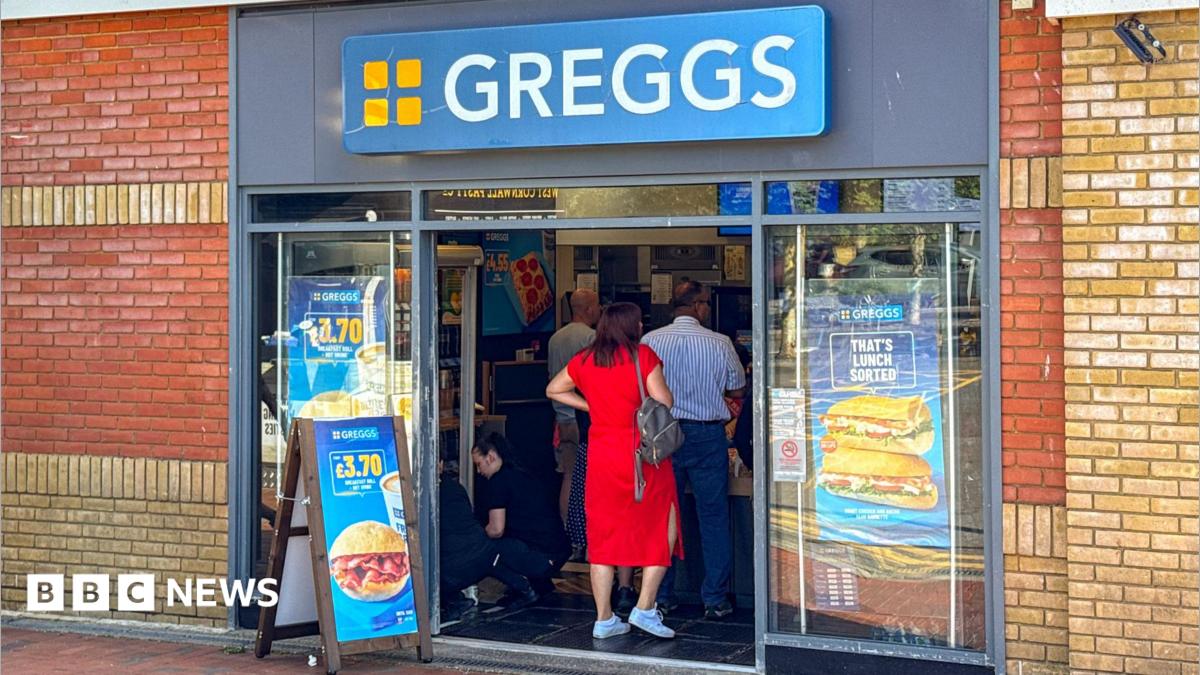
Greggs’s pivot towards healthier products and trending drinks has helped it boost sales, with the bakery chain reporting a 20% rise in profit over the first half of the year.
Greggs, the UK’s largest fast-food chain, has launched a range of new products this year, many of which latch onto trends such as high-protein salads and matcha.
Greggs’s chief executive Roisin Currie previously told BBC News the rise of weight-loss drugs has led customers to to look for “smaller portions”, which could affect its bottom line.
Total sales for the bakery topped £1.1 billion for the 26 weeks to the end of June – 7.2% higher than the same period a year ago.
Pre-tax profit for the first half of the year was £76.0m – up from £63.5m for the first six months of 2025.
Currie said the company was “broadening and innovating our menu in line with changing tastes and trends”.
The company relaunched its salad range in May, “adding protein and increased choice for customers”.
It is also trying to appeal to “new and younger customers” through its new iced matcha lattes, and to health-conscious consumers by making nutritional information on its labels clearer.
Greggs, which has more UK outlets than McDonald’s, opened 34 stores in the first half of 2026. That brings the total to 2,773, taking into account 31 store closures.
More than half of the new openings were in areas with no Greggs stores within a mile. A similar proportion opened away from the High Street in locations including petrol forecourts, supermarkets, retail parks, hospitals and university campuses, it said.
Currie said Greggs is monitoring customer behaviour to ensure new stores boost visits “without cannibalising existing shop sales”.
She also said Greggs had no price rises planned after its breakfast, lunch and “big” deals went up in May, following multiple hikes last year.
“Our prices are in a good place and we will now be working hard to protect the consumer and making sure that we can offer that value throughout the rest of the year,” she said.


Rivian Automotive reduced its 2026 spending plans and slightly narrowed its previously forecasted losses this year as the company reported second-quarter results Thursday.
The revised guidance now includes adjusted losses between $1.8 billion and $2 billion, down from $1.8 billion to $2.1 billion, and capital expenditures of $1.7 billion to $1.8 billion, down from $1.95 billion and $2.05 billion. It reconfirmed a previously raised delivery target of 65,000 to 70,000 vehicles to customers.
Rivian said the $250 million reduction in capital spending at the mid-point was enabled by “project efficiencies and timing of spend,” which the automaker previously increased to allow for added investments in new technologies such as its hands-free driving system.
Here’s how Rivian performed in the second quarter, compared with average estimates compiled by LSEG:
- Loss per share: 47 cents adjusted vs. a loss of 63 cents expected
- Revenue: $1.66 billion vs. $1.51 billion expected
The company’s gross profit, which is closely watched by investors, was $179 million compared to a loss of $206 million a year earlier. That included a $36 million loss for its automotive segment and a $215 million profit for its software and services division.
Rivian’s second-quarter revenue included $1.14 billion from automotive and $515 million from software and services. The results were slightly higher than its pre-released second-quarter revenue expectations of between $1.55 billion and $1.65 billion that were released last month in conjunction with disclosing a public offering of 75 million shares of its Class A common stock.
Automotive revenue increased 23% year-over-year, primarily due to a 14% increase in vehicle deliveries and a $103 million increase in revenues related to regulatory credits, the company said.
A Rivian R2 electric SUV at the company’s Venice Hub space in the Venice Beach neighborhood of Los Angeles, California, June 17, 2026.
Patrick T. Fallon | AFP | Getty Images
Rivian’s net loss attributable to common stockholders during the second quarter was $837 million, or 63 cents a share, a $278 million, or 34 cent per share, improvement compared with the second quarter of 2025.
Rivian previously said the raised delivery guidance was driven by higher deliveries during the second quarter of its electric delivery van and flagship R1 products.
The company also started delivering its midsize R2 SUV during the quarter. It’s ramping up production of that vehicle at its sole production plant in Normal, Illinois, which has capacity to produce 160,000 of the vehicles annually.
“Incredibly excited with R2 now getting into customers’ hands, and the overall feedback and response to the product has just been outstanding,” Rivian CEO RJ Scaringe told CNBC’s Phil LeBeau on Thursday. “And so, of course, that’s a major step for us on our path to profitability.”
Scaringe has said Rivian will reach profitability this year on a per-unit production basis with the R2, a smaller and less expensive sibling to its current luxury R1s SUV. But he said the company needs more scale than the 160,000 units already planned for the vehicle at its current plant in Normal, Illinois, to achieve profitability.
Rivian on Thursday reconfirmed its cash, cash equivalents and short-term investments balance was an estimated $5.3 billion, up from $4.8 billion to end the first quarter.
The company said later this year it expects to receive $1 billion in non-recourse debt financing from its software deal with Volkswagen Group and an additional $250 million equity investment from a separate partnership with Uber.
Business
Daily Multivitamin Could Help Older Adults Maintain Heart Health and Daily Function, New Study Suggests

A daily multivitamin may offer modest but measurable benefits for older adults’ cardiovascular health and their ability to perform everyday activities, according to new research presented this week at the annual meeting of the American Society for Nutrition.
The initial findings, which have not yet been published in a peer-reviewed medical journal, showed that older adults who took a daily multivitamin had significantly better measures of functional health after three years compared with those who took a placebo. Yanbin Dong, a cardiologist and director of the Georgia Prevention Institute at the Medical College of Georgia at Augusta University, led the research. “The findings show that a daily multivitamin may be a simple, low-risk strategy to help older adults maintain cardiovascular-related functional health and quality of life,” Dong said.
The study drew on data from more than 16,000 individuals ages 60 and older who did not have major cardiovascular disease at the study’s outset. Participants were randomly assigned to take a daily multivitamin, a cocoa extract supplement, both, or a placebo, with placebo pills used for the control group as well as for participants taking only one of the two active supplements.
Researchers tracked participants’ health over three years using an annual questionnaire that assessed both their ability to complete everyday tasks and possible symptoms of heart failure, including fatigue, shortness of breath, and swelling of the legs, ankles, feet or abdomen. The questionnaire uses a scale from 0 to 100, with lower scores indicating greater symptom burden and worse overall health status.
After three years, researchers found that participants taking multivitamins showed an average improvement of 0.45 points in symptom burden and 0.30 points in their overall clinical summary score, a combined measure averaging symptom burden with physical ability, according to Dong.
The benefit appeared substantially more pronounced among a specific subgroup of participants: those with carotid stenosis, a narrowing of the major blood vessels in the neck that supply blood to the brain. Among this group, symptom burden improved by an average of 6.75 points, while clinical summary scores improved by 6.01 points, considerably larger effects than those observed across the broader study population. “This means those who had a history of carotid stenosis and took multivitamin minerals will have a small clinical benefit of improving cardiovascular and functional health over time,” Dong said.
Dong said the underlying mechanism likely involves multivitamins correcting common micronutrient shortfalls that can otherwise go unaddressed through diet alone, potentially supporting energy production, cellular function, vascular health, inflammation control and muscle performance.
The study’s authors also examined the effects of cocoa extract supplementation separately. While cocoa extract did not produce a statistically significant change in functional health scores across the overall study population, it did show a meaningful benefit specifically among participants who went on to develop congestive heart failure during the study period, consistent with prior research suggesting that anti-inflammatory compounds found in cocoa extract may offer some degree of heart-protective effect.
Sarah Booth, director of the Human Nutrition Research Center on Aging at Tufts University, who was not involved in the new research, cautioned that the broader scientific record on multivitamin supplementation remains mixed. Booth noted that earlier analyses using data from the same overall participant pool had found no significant association between daily multivitamin or cocoa extract use and reduced risk of cardiovascular disease or cancer more broadly, even as other research has separately suggested multivitamins may provide a modest cognitive benefit. Booth said a fuller interpretation of the newest findings will not be possible until the complete study is formally published.
Booth also pointed to a persistent challenge in interpreting multivitamin research: participants’ underlying diets vary widely and are rarely controlled for in these kinds of trials. “Individuals still consume their usual food during these studies, so the multivitamins are adding more nutrients into the diet above and beyond the usual nutrient intake,” Booth said. “If the participants are already consuming a healthy diet, then adding more nutrients is unlikely to improve that individual’s health trajectory. Those who routinely take multivitamins tend to be individuals with healthier diets, which sometimes contributes to mixed results we see in the randomized clinical trials.”
The study’s authors pointed to its large participant population and high rate of sustained multivitamin adherence over several years as key strengths. They also acknowledged limitations, noting that most participants in the trial were, in Dong’s words, “very healthy” at the study’s outset, meaning the evidence for benefits among people already at higher risk for heart problems remains more limited. The researchers disclosed that Mars, a major chocolate manufacturer, supported the cocoa extract portion of the study, while Pfizer and Haleon, a British consumer healthcare company, provided the multivitamins used in the trial, though the researchers said none of the sponsors had any role in the study’s design, analysis or interpretation of results.
Booth emphasized that good nutrition should generally begin with a healthy diet built around whole foods rather than supplements, though she acknowledged that some people are unable to consistently achieve that on their own. She cautioned against self-diagnosing nutrient deficiencies simply because supplements are readily available over the counter. “Decisions to take multivitamins ideally should be in consultation with one’s health provider,” Booth said.
Given that this research involves a specific population of older adults and touches on cardiovascular health, anyone considering starting a daily multivitamin, particularly those with existing heart conditions or other chronic health concerns, is encouraged to speak with a doctor or healthcare provider before beginning any new supplement regimen, rather than relying solely on preliminary research findings that have not yet undergone full peer review.

PepsiCo CEO Ramon Laguarta discusses how the food and beverage giant is seeing massive paybacks after slashing consumer prices on ‘The Claman Countdown.’
Chipotle CEO Scott Boatwright said Wednesday the fast-casual chain is seeing improvement in customers’ perceptions of affordability.
Speaking on Chipotle’s second-quarter earnings call, Boatwright said the company’s brand tracking showed improved perceptions of value across “all income groups and age cohorts.”
“As it relates to value, I’m happy to report our brand tracker showed really solid progress across all income groups and age cohorts on value perception,” Boatwright said. “Our affordability scores were better in Q2 than they’ve been in probably the past couple of years.”
He noted that customers do not judge value solely by prices or discounts.
CHIPOTLE OPENS FIRST RESTAURANT IN MEXICO AS GLOBAL EXPANSION ACCELERATES
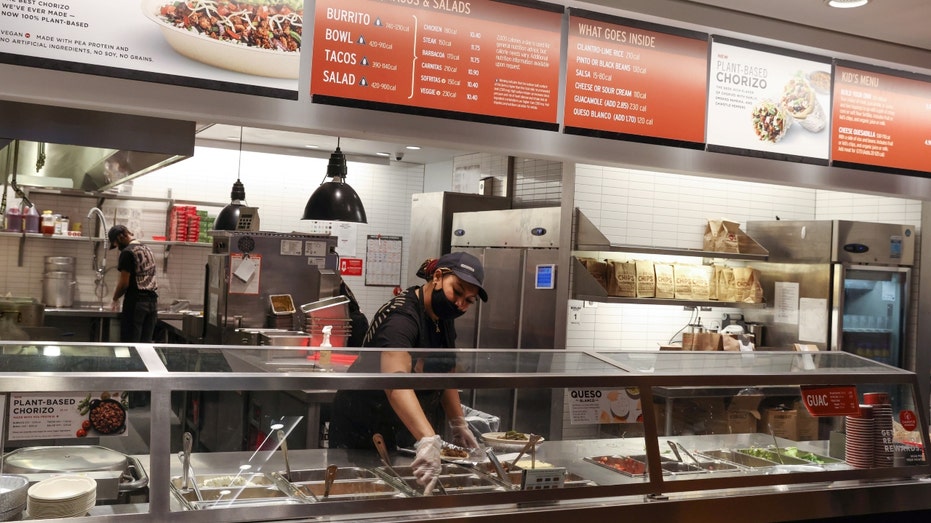
A person works in a Chipotle outlet in Manhattan, New York City. (Andrew Kelly/Reuters)
“And so I think we’re making meaningful progress as it relates to value at Chipotle. What we also learned, I think, as an important note, is [that] value isn’t just about discounting and price point. It’s about convenience. It’s about execution,” Boatwright added.
“It’s about menu innovation. There’s a host of things that the consumer is looking at to determine value.”
Chipotle has recently introduced lower-priced menu options.

CEO Scott Boatwright said that customers do not judge value solely by prices or discounts. (Chipotle)
In December, the company launched a high-protein menu featuring a Single Chicken Taco, starting at $3.50 at select U.S. restaurants, and a High Protein Cup of Adobo Chicken, with a national weighted average price of $3.82, the company said at the time.
Chipotle on Wednesday also reported second-quarter revenue of $3.3 billion, up 9.3% from the same period in 2025.
Boatwright has previously pushed back against perceptions that Chipotle has become too expensive or reduced its portions to boost profits.
| Ticker | Security | Last | Change | Change % |
|---|---|---|---|---|
| CMG | CHIPOTLE MEXICAN GRILL INC. | 38.53 | +4.29 | +12.53% |
CHIPOTLE RIVAL GUZMAN Y GOMEZ MEXICAN KITCHEN CLOSES ALL US RESTAURANTS

Chipotle on Wednesday also reported second-quarter revenue of $3.3 billion, up 9.3% from the same period in 2025. (Angus Mordant/Bloomberg via Getty Images)
“We have an affordable price point for all walks of life, and we’re for everyone. We want everyone to have access to wholesome, nutritious food,” Boatwright said during a May appearance on Yahoo Finance’s “Power Players” podcast.

Microsoft jumped by a double-digit percentage after the technology company forecast quarterly sales and cloud growth above expectations. It also reported capital expenditures below estimates and said it expects to keep generating cash through its fiscal 2027 that has just begun.
This year, investors have been spooked by heavy spending on AI at big technology firms. Negative cash-flow reports from Alphabet and Tesla last week sparked a bout of selling in AI-linked stocks, with chip stocks also under pressure as investors questioned high valuations.
Meta Platforms tumbled after the social media heavyweight reported a 91% drop in second-quarter free cash flow, indicating the financial strain of its costly AI buildout.
“These are true battleground stocks. Investors can’t make up their minds whether the ROI on the massive capex spending is going to be worthwhile or not,” said Jed Ellerbroek, portfolio manager at Argent Capital Management.
“Microsoft delivered yesterday, and maybe Microsoft is going to be able to move itself from the ‘battleground’ camp to be a ‘trusted AI winner’ stock,” Ellerbroek said.
The PHLX chip index surged,with Micron Technology Sandisk and Advanced Micro Devices making big gains. Amazon rose and Apple dipped, with both companies set to report their results after the market closes.
Amazon’s stock has underperformed the broader market this year due to concerns about heavy spending on AI. Apple, which has not spent heavily on AI, recently overtook Nvidia to become the world’s most valuable company, with a market value of about $4.9 trillion.
On Wednesday, U.S. stocks closed sharply lower after the Federal Reserve left interest rates unchanged, with mixed messages from new Fed Chair Kevin Warsh leaving traders confused about the path of borrowing costs.
Bond markets remained on edge, with the yield on the 30-year Treasury bond surging to its highest level in 19 years.
Traders are now only pricing in a 59% chance for a rate hike at the Fed’s September meeting, according to CME FedWatch, down from 82% a week ago.
U.S. economic growth slowed in the second quarter as the trade deficit widened. The economy grew at a 1.5% rate, slower than estimates of 2.1% growth, data showed. A separate reading also showed U.S. inflation slowed in June.
Qualcomm fell after the chipmaker forecast fourth-quarter profit below estimates and said revenue from Apple products would decline faster than expected.
Fair Isaac slumped. Even though the credit-scoring giant lifted its annual profit and revenue forecasts, they remained below analysts’ estimates.
Starbucks rose after the world’s largest coffee chain raised its annual sales and profit forecasts.
Analysts on average expect S&P 500 aggregate second-quarter earnings to jump 40% from a year ago, with AI-related stocks accounting for much of that growth, according to LSEG I/B/E/S.
Strong earnings forecasts and a recent decline in share prices have left the S&P 500 trading at about 20 times expected earnings, just above its 10-year average of 19, according to LSEG data.

People in Welsh village thought they’d heard a small earthquake but it was much worse
India defies West Asia war concerns as Q4 GDP growth hits 7.8%; risks remain ahead

Coinbase Q2 Profit Falls Short as Crypto Trading Share Hits Record


-

 Fashion6 days ago
Weekend Open Thread: Brooks Brothers
-
 Sports4 days ago
Commonwealth Games boxing: Jadumani Singh seals dominant 5-0 win over Pakistan’s Sumama Rehman to enter quarter-finals | Commonwealth Games News
-

 Business1 day ago
Why Trees Belong on the Risk Register
-

 Tech4 days ago
Intel is reversing course and bringing hyper-threading back to its server chips
-

 Crypto World5 days ago
Ripple bought a bank in pieces. The $4 billion audit
-

 Politics3 days ago
Luke Littler dismantles Gerwyn Price to retain title in Blackpool
-
 Entertainment6 days ago
A New Post-Apocalyptic Gundam Anime Series Blasts Into SDCC
-

 Politics3 days ago
The Part of the Electric Transition Nobody Wants to Discuss
-

 News Videos4 days ago
BITCOIN JUST ENTERED THIS CRITICAL ZONE…
-

 Fashion7 days ago
16 Dresses for the High Summer Event
-

 Sports7 days ago
2026 3M Open leaderboard: Scottie Scheffler finds putter in Round 1, sits three back
-

 Business2 days ago
Major shareholder moves on Canyon
-

 Crypto World5 days ago
XRP Ledger adds $2.6B as RWA inflows rank second
-

 News Videos10 hours ago
Bitcoin Enters the 3rd Stage of the Bear Market
-

 Politics4 days ago
Spain sweeps the board at 2026 World Cup with individual awards
-
 Entertainment2 days ago
‘Stargate’ Creator’s New Sci-Fi Series Returns for Season 3 Tomorrow
-

 Tech6 days ago
Anthropic launches Claude Opus 5, a cheaper AI model for coding, agents and enterprise workflows
-

 Crypto World2 days ago
Kraken Enables Retail Access to Jersey Mike’s IPO via Tokenized Shares
-

 Entertainment5 days ago
Sara Gilson Killed By Husband After Viral “Pedophile” TikTok Video
-

 News Videos2 days ago
Claude: Build Financial Dashboards in Minutes (2026)
You must be logged in to post a comment Login