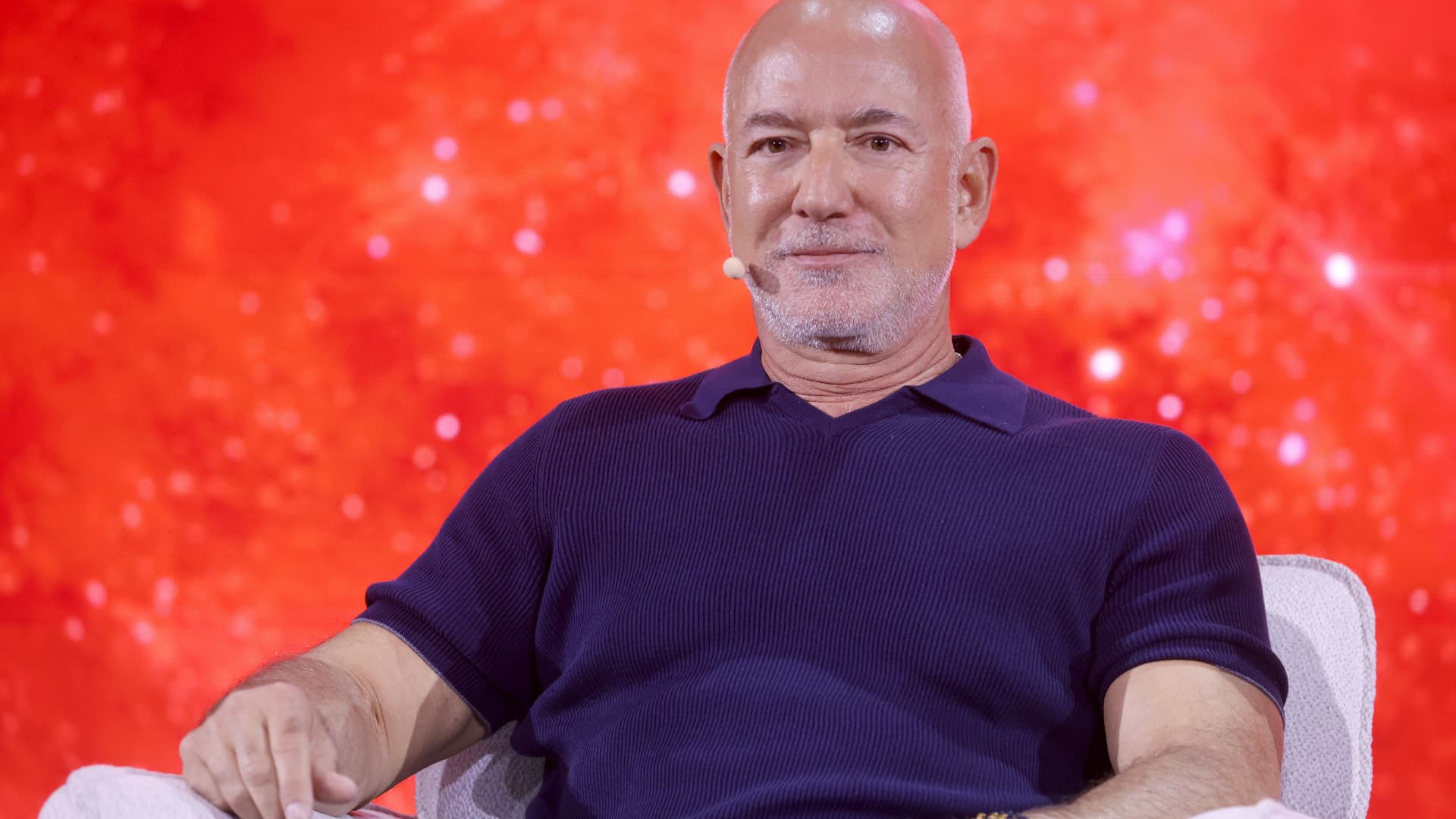
Jeff Bezos attends the Viva Technology show at Parc des Expositions on June 17, 2026 in Paris, France.
Chesnot | Getty Images Entertainment | Getty Images
A version of this article first appeared in CNBC’s Inside Wealth newsletter with Robert Frank, a weekly guide to the high-net-worth investor and consumer. Sign up to receive future editions, straight to your inbox.
Advertisement
Thanks to Jeff Bezos, summer is off to a strong start for investment firms of the ultra-rich.
In June, the Amazon founder’s family office made five direct investments in startups, accounting for 10% of family office dealmaking, according to exclusive data provided by Fintrx, the private wealth intelligence platform. Bezos Expeditions is now the most active family office investor thus far this year with eight direct investments in private companies, per Fintrx data.
The 21-year-old family office participated in five megarounds for artificial intelligence startups last month, including a $12 billion Series B for Prometheus. The startup, now valued at about $41 billion, counts Bezos as a cofounder and co-CEO. Prometheus aims to create an “artificial engineer” that will speed up the design and manufacturing of physical products from jet engines to pharmaceuticals, Bezos told CNBC’s David Faber on June 11.
“What drives the wealth of nations? What drives civilizational wealth? … The answer is invention,” Bezos said on in an interview on “Squawk Box.” “Our goal at Prometheus, what we’re working on is building a set of tools that accelerate that invention loop. So, how long does it take to improve something? How long does it take to – from idea to actually manufacturing, seeing it rate and have a useful object?”
Advertisement
He added that Prometheus has had to raise so much capital — more than $18 billion to date — in order to build massive datasets, which requires a lot of compute power.
While Prometheus takes up most of Bezos’ time, his namesake investment firm added four new startups to its portfolio with nine-figure rounds: General Intuition, CuspAI, Generalist and Flourish.
Bezos Expeditions’ portfolio illustrates the breadth of approaches and aims for developing AI models. The family firm co-led the fundraises for CuspAI, which is building AI models for chemistry, and Flourish, a startup developing models inspired by the human brain. Another new investment, Generalist, is focused on enabling robots to handle increasingly complex tasks.
Hillspire, the family office of ex-Google CEO Eric Schmidt, also participated in General Intuition’s $320 million Series A. General Intuition is using millions of hours of video gameplay to train spatial AI models.
Advertisement
Bezos told CNBC earlier this spring that he is unconcerned about an AI bubble.
“Even if it does turn out to be a bubble, you shouldn’t worry about it because the bubble is driving investment and a lot of the investment is going to turn out to be very healthy,” Bezos said in an interview with Andrew Ross Sorkin on “Squawk Box” in May. “Investors at this moment haven’t learned yet how to discriminate between good ideas and bad ideas, and that’s OK, because the good ideas will pay for all of the losers.”
This is the forum for daily political discussion on Seeking Alpha. A new version is published every market day.
Please don’t leave political comments on other articles or posts on the site.
The comments below are not regulated with the same rigor as the rest of the site, and this is an ‘enter at your own risk’ area as discussion can get very heated. If you can’t stand the heat… you know what they say…
More on Today’s Markets:
Advertisement
Moderation Guidelines:
We remove comments under the following categories:
Personal attacks on another user account
Anti-Vaxxer or covid related misinformation
Stereotyping, prejudiced or racist language about individuals or the topic under discussion.
Inciting violence messages, encouraging hate groups and political violence.
Regardless of which side of the political divide you find yourself, please be courteous and don’t direct abuse at other users.
For any issue with regards to comments please email us at : moderation@seekingalpha.com.
Seeking Alpha’s Disclosure: Past performance is no guarantee of future results. No recommendation or advice is being given as to whether any investment is suitable for a particular investor. Any views or opinions expressed above may not reflect those of Seeking Alpha as a whole. Seeking Alpha is not a licensed securities dealer, broker or US investment adviser or investment bank. Our analysts are third party authors that include both professional investors and individual investors who may not be licensed or certified by any institute or regulatory body.
As bank fixed deposit (FD) rates moderate and investors look beyond traditional savings instruments, bonds are emerging as a preferred avenue for generating stable income and diversifying portfolios.
Improved digital access, greater regulatory oversight and rising awareness are accelerating retail participation in the bond market.
Reflecting this shift, online bond platform Jiraaf has recorded nearly 15x growth over the past two years, with the average investment size crossing Rs 1.5 lakh, signalling that investors are making meaningful allocations rather than merely experimenting with the asset class.
IIFL Finance has successfully raised $300 million through a four-year dollar bond sale to international investors, marking its second such issuance recently. The bonds were priced at 7.60%, reflecting strong overseas demand. This move allows the company to quickly access funds under its existing medium-term note program. Fitch Ratings has assigned an expected ‘B+(EXP)’ rating to these secured obligations.
In this edition of ETMarkets Smart Talk, Vineet Agrawal, Co-founder of Jiraaf, discusses why bonds are becoming a permanent part of Indian portfolios, the financialisation of fixed income, how investors should evaluate yields, and why diversification within fixed income is becoming increasingly important in a falling interest-rate environment. Edited Excerpts – Q) As fixed deposit rates moderate, many investors are moving towards bonds and alternative fixed-income products. How do you see the trend taking shape? A) As the economy matures and interest rates moderate, investors are beginning to reassess traditional fixed-income choices. A one-year FD that offered around 8.5% in 2015 is now closer to 6.9%, a decline of nearly 160 basis points over the decade. For investors, this means post-tax returns may not always keep pace with inflation or long-term financial goals.
Live Events
This is where government bonds and investment-grade corporate bonds are gaining relevance. Investors are not necessarily moving away from FDs completely, but they are realizing the need to diversify within fixed income. A part of the portfolio is now being allocated to bonds and other regulated fixed-income instruments that can offer better return potential while helping investors balance risk, liquidity, and maturity. Q) Industry data suggests retail participation on online bond platforms has grown sharply in recent years. Please share numbers. How has your platform grown? A) Retail participation in bonds has grown meaningfully as awareness, digital access, and regulatory oversight have improved. Online Bond Platform Providers have made it easier for individual investors to evaluate, compare, and invest in bonds more transparently. At Jiraaf, we have seen nearly 15x growth over the last two years, reflecting rising interest among retail investors in fixed-income products beyond traditional deposits. The average ticket size per investment is now upwards of ₹1.5 lakh, indicating that investors are allocating meaningful sums to this asset class rather than treating it as a trial investment.
This gives us confidence that bonds are gradually finding a more permanent place in Indian portfolios, especially among investors seeking fixed returns, defined maturities, and regular payouts.
Agencies
Q) Do you believe India is witnessing the “financialization of fixed income” similar to what happened in equities over the past decade? A) Yes, India is at the early stage of a similar journey in fixed income. Over the last decade, equities have become mainstream as access has improved, digital platforms have simplified investing, and investors have become more comfortable with market-linked products. A similar shift is now beginning in bonds.
For a long time, fixed income for retail investors was largely limited to FDs, small savings schemes, and debt mutual funds. Direct bonds were seen as difficult to access or understand. That is changing with online bond platforms, improved disclosures, SEBI regulations, and lower minimum investment sizes.
Advertisement
As investors seek diversification, fixed returns, and greater visibility into cash flows, bonds are becoming a more active part of portfolio construction. The financialization of fixed income will be gradual, but the direction is clear.
Q) A common market observation is that the highest yields often signal the highest risks. How should retail investors distinguish attractive yields from red flags? A) Investors should avoid looking at yield in isolation. A higher yield is not automatically better; it is often the market’s way of pricing higher credit, liquidity, or business risk. The first step is to check the credit rating, issuer profile, repayment history, sector exposure, and whether the bond is secured or unsecured.
Investors should also compare the yield with similarly rated bonds. For example, if most bonds in a rating category are offering 10–11% and one bond offers 14%, the higher yield needs deeper evaluation. It may still be a valid opportunity, but it should not be chosen only for the headline return.
Retail investors should diversify across issuers, maturities, and ratings, and prefer investment-grade bonds aligned with their risk appetite. The focus should be on risk-adjusted returns, not just the highest available yield.
Advertisement
(Disclaimer: Recommendations, suggestions, views, and opinions given by experts are their own. These do not represent the views of the Economic Times)
The Tourism Authority of Thailand is enhancing rail tourism to boost experiential value, aligning with sustainable tourism goals and targeting high-spending travelers. Proposed routes aim to enrich local economies and tourism standards.
Key Points
The Tourism Authority of Thailand (TAT) is promoting rail tourism to enhance Thailand’s tourism industry by creating experiential and economic value. TAT Governor Thapanee Kiatphaibool emphasizes that tourism success now depends on quality experiences and equitable income distribution, not just visitor numbers.
Rail tourism will transform travel time into meaningful experiences, allowing for new perspectives and developing transportation routes into engaging itineraries. This initiative aligns with high-value tourism policies and rail development regulations from government ministries.
Discussions with Gary Franklin of Belmond focus on advancing high-quality tourism through the “Healing is the New Luxury” concept. Proposed pilot routes connecting key cities aim to attract high-spending travelers, promoting Thai cultural experiences and redistributing tourism revenue across secondary destinations.
The Tourism Authority of Thailand (TAT) has emphasized the development of rail tourism as an important step toward creating new experiential and economic value for Thailand’s tourism industry.
TAT Governor Thapanee Kiatphaibool
TAT Governor Thapanee Kiatphaibool stated that Thailand’s tourism sector has long drawn strength from its natural attractions, cultural heritage, and recognized hospitality. However, as travel behavior evolves, tourism success is measured not only by visitor numbers but also by the quality of experiences and sustainable income distribution to local economies and communities.
Rail tourism can support this transition by making travel time part of the visitor experience. Train journeys offer travelers new perspectives on Thailand and develop transportation routes into meaningful tourism itineraries.
The initiative aligns with the government’s and the Ministry of Tourism and Sports’ high-value tourism policies, as well as new rail development policies and regulations from the Ministry of Transport and the State Railway of Thailand.
The TAT Governor recently led discussions with Gary Franklin, Senior Vice President of Trains and Cruises at Belmond, an LVMH company that operates the Eastern & Oriental Express, to advance Thailand’s high-quality tourism under the “Healing is the New Luxury” concept.
Advertisement
The proposed pilot routes are expected to connect Bangkok, Kanchanaburi, Hua Hin, Hat Yai, and Padang Besar in 2027, targeting high-spending and quality travelers from international markets.
The cooperation is expected to strengthen confidence in Thailand’s tourism standards, promote tourism products combining Thai cultural appeal with the “5 Must Do in Thailand” experiences, and distribute travel and tourism revenue more widely across secondary destinations and regions.
India continues to attract significant interest from Non-Resident Indians (NRIs), not just because of its long-term growth potential but also due to the tax efficiencies available under certain Double Taxation Avoidance Agreements (DTAAs).
One such provision, which has sparked considerable discussion on social media, allows eligible NRIs residing in countries such as Dubai (UAE), Singapore and Mauritius to pay no capital gains tax in India on mutual fund investments, subject to the provisions of the applicable tax treaty.
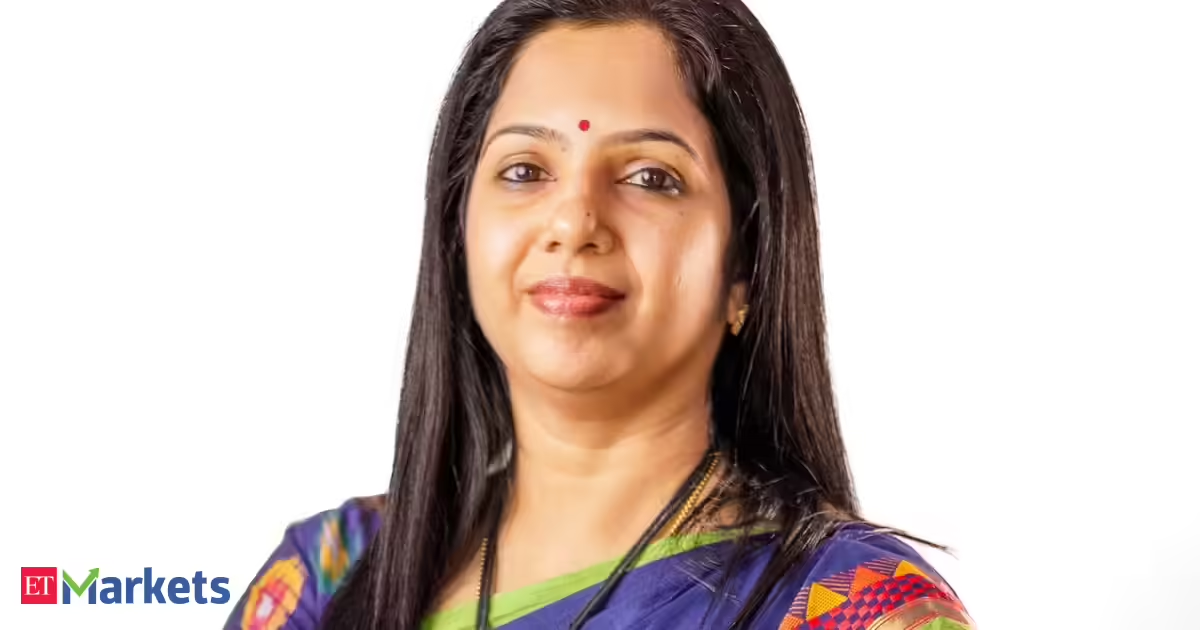
In this edition of ETMarkets Smart Talk, Sreepriya NS, Co-founder and Director, Entrust Family Office, explains the legal framework behind this tax treatment, why mutual fund units are treated differently from company shares under DTAAs, and discusses how NRIs are approaching India as a long-term investment destination.
She also shares insights on portfolio diversification, the growing appeal of REITs and fractional real estate, common investment mistakes to avoid, and why goal-based planning is becoming increasingly important for global Indian investors. Edited Excerpts –
Advertisement
Q) How are NRIs looking at India as a long-term investment destination? And what are the other hot countries which they invest in?
Live Events
A) NRIs continue to view India as a compelling long-term investment destination, driven by its strong domestic consumption, demographic dividend, and a rapidly formalising economy.Many are drawn not just by the potential for financial returns, but by the emotional and strategic value of investing in their country of origin — whether that’s through real estate, startups, listed equities, or legacy planning. Simultaneously, NRIs are increasingly diversifying their portfolios across geographies. Countries like Singapore, the UAE, the US, and the UK remain attractive due to their stable financial ecosystems, regulatory ease, and access to global investment opportunities. In particular, Singapore and Dubai are emerging as investment hubs due to their tax efficiency, business-friendly environments, and proximity to India. Additionally, many NRIs with family or business linkages abroad invest in local real estate and private funds, aligning these investments with their global lifestyle.
There is also a growing trend of tactical investments in emerging markets such as Vietnam, Indonesia, select African nations, and parts of Eastern Europe, offering high-growth potential.
This trend reflects a balanced strategy: India continues to represent ‘roots and returns’, while global markets provide ‘reach and resilience’. Key Statistics (as of Dec 2024): • Mutual Fund Investments by NRIs: Approx. USD 18–20 billion (~INR 1.6 lakh crore) • NRI Bank Deposits: Approx. USD 162 billion (~INR 13.7 lakh crore) across FCNR, NRE, and NRO accounts
Q) There is big debate on social media about taxation. Help us understand why NRIs In Dubai, Singapore & Mauritius have to pay zero tax on mutual fund gains? A) In case of Mutual funds, (which as per SEBI regulation, are established as a trust) the gains from sale of a unit cannot be treated the same as gains from sale of share of a company.
Advertisement
Hence, under the Article 13 (5) of the DTAA with the above countries, the gains are taxable only in the country of residence of NRIs of such countries, and not in India.
Q) How much money is moving in real estate/REIT/fractional investment? Is the right way?
A) While specific data on NRI investments into REITs and fractional ownership models in India remains limited, the broader trend in real estate investment is significant.
NRIs invested approximately USD 3.1 billion (INR 26,000 crore) in Indian real estate during the first half of 2024, following a total investment of around USD 13 billion in 2023.
Advertisement
The growing interest in REITs and fractional ownership platforms reflects a shift toward more structured, accessible, and diversified real estate investment opportunities.
These models offer NRIs the advantage of transparency, liquidity, and lower ticket sizes — making real estate participation more feasible without the operational complexities of direct ownership.
While not a one-size-fits-all approach, REITs and fractional investments are increasingly seen as efficient, regulated, and scalable avenues for NRIs to participate in India’s real estate growth story.
Many NRIs continue to hold significant real estate assets in India, despite having settled abroad for decades. At Entrust, we’ve supported families like one from Hyderabad, now in the U.S. for over 35 years, with managing their residential and commercial properties.
Advertisement
The real challenge often lies with the next generation, who face the burden of inheritance, tenant management, and compliance from afar. As a bespoke family office, we help simplify this complexity—offering peace of mind and practical solutions so they can focus on their lives overseas.
Q) What are the big mistakes which NRIs should avoid when making investment in India? A) One of the biggest mistakes NRIs often make when investing in India is approaching it with the same mindset or assumptions they use in their resident countries. India is a dynamic, high-growth market — but it also comes with its own set of regulatory, taxation, and liquidity nuances.
The foremost important thing to consider while investing in India is to have clarity about the purpose of such investments. This determines further requirements – such as cash flows, inheritance/estate planning, repatriation etc. from such investments.
It also simplifies the asset allocation decision and the selection of products/vehicles. In the absence of such clarity, one gets caught in the ‘latest’ trend of investment products, or the preferred options of the dealer/distributor.
Advertisement
A few common pitfalls to avoid:
1. Lack of Clarity on Objectives 2. Overexposure to Real Estate 3. Ignoring Tax Implications 4. Using Informal Channels(Investing through family or friends without a proper legal or advisory framework can result in misaligned decisions and, in some cases, loss of control or transparency) 5. One-Size-Fits-All Approach: Assuming what works for resident Indians will work for NRIs can be misleading. NRIs have access to different investment opportunities and risks, and need tailored strategies that factor in currency exposure, repatriation rules, and global asset allocation.
The key is to approach India with professional guidance, clear intent, and a balanced view — combining emotional connection with financial discipline.
Agencies
Q) What is the money mindset which NRIs follow. Are there any common attributes? A) There is no single, uniform money mindset that defines all NRIs. Their investment approach and financial behaviour vary significantly based on their stage of life, their country of residence, their financial goals, and evolving personal circumstances.
However, some common attributes do emerge. Many NRIs display a strong preference for financial prudence, long-term wealth creation, and portfolio diversification across geographies.
Advertisement
Their strategies often reflect a balance between emotional ties to India and practical considerations driven by global exposure and opportunities.
Depending on their objectives—whether it’s retirement planning, wealth preservation, or legacy creation—their mindset evolves in alignment with their individual context and the macroeconomic environment.
In essence, while there is no monolithic mindset, there is a consistent focus on strategic, informed, and goal-oriented financial planning.
Q) Which investment options or asset classes are hot favourites of NRIs and why? A) Rather than identifying “favorite” asset classes in a broad sense, our approach is rooted in understanding the unique needs, objectives, and risk profiles of each NRI family.
Advertisement
Investment decisions are highly individualised and based on their life stage, financial goals, and geographic exposure.
That said, most NRI portfolios typically comprise a diversified mix of asset classes — including listed equities, debt instruments, mutual funds, real estate, REITs, and alternative investment avenues such as private equity or structured products. This diversification helps balance growth, income, and capital preservation objectives.
Ultimately, we don’t prescribe investments based on popularity, but offer solutions tailored to each client’s financial strategy and long-term vision. Q) Which sectors are more preferred when NRIs look to invest in India? A) NRIs typically do not exhibit a strong bias toward any single sector. Instead, they prefer a diversified allocation across the broader Indian market.
This approach not only aligns with prudent investment principles but also reflects confidence in India’s multi-sectoral growth story.
Advertisement
India’s attractiveness as an investment destination lies in its robust and resilient economy, offering opportunities across sectors such as financial services, technology, healthcare, manufacturing, infrastructure, and consumer goods.
Rather than chasing sector-specific trends, most NRIs seek balanced exposure that captures the overall growth momentum of the country while managing risk effectively.
NRI investors are typically sector-agnostic but prioritize market-driven strategies with a strong focus on liquidity and repatriation. At Entrust, we’ve curated bespoke strategies for NRI clients — one of which is a dividend-yield portfolio we’ve used over the last five years.
It’s equity-oriented with a defensive tilt, focused on high quality dividend paying companies to ensure stable returns. Notably, dividends are 100% repatriable under RBI norms, making this an effective income-generating and risk-mitigating strategy in today’s volatile environment. Q) What about luxury items – art, cars, watches which of the themes are hot favourites? A) Luxury collectibles such as art, vintage cars, and high-end watches often form a part of an NRI’s lifestyle and legacy portfolio, but preferences in this space are highly personal.
Advertisement
These choices are typically driven by individual taste, passion, and in many cases, a desire to preserve heritage or express identity.
For some, interests in art, music, or cultural artifacts are closely tied to philanthropic values or legacy planning — supporting causes, institutions, or cultural preservation initiatives.
Rather than being driven purely by investment returns, these assets often reflect emotional and aesthetic considerations, making them deeply unique to each family.
(Disclaimer: Recommendations, suggestions, views, and opinions given by experts are their own. These do not represent the views of the Economic Times)
Friday’s Wordle puzzle brought welcome relief to players who had struggled through some of the trickier words of the past several days, with puzzle number 1,840 featuring a familiar, commonly used five-letter noun that most players were able to crack well within the six-guess limit.
The answer to today’s Wordle is a word with several distinct meanings across music, sports and law enforcement. Most immediately recognizable as the thin stick wielded by an orchestra conductor to keep rhythm and direct an ensemble, it also describes the short tube passed between runners during a relay race, a staff carried by a drum major or majorette, and a truncheon or club used as a symbol of authority or as a defensive tool. The phrase “passing the ___,” meaning to hand off a responsibility or role from one person to the next, has embedded the word deeply into everyday English usage well beyond its literal contexts.
According to the New York Times’ WordleBot, the average player completes Wordle puzzle 1,840 in 3.6 moves in easy mode or 3.5 if playing by hard rules, making it one of the more accessible puzzles of the week. The answer contains three of the five most common letters in Wordle answers, which helped experienced solvers narrow the field quickly with their opening guesses. Tom’s Guide noted that starting with the popular opener ORATE revealed O, A and T as yellow letters, leaving just 23 possible answers remaining after only the first guess, an unusually helpful first-move outcome.
The word’s letter structure follows a clean consonant-vowel-consonant-vowel-consonant alternating pattern, which players who recognized that sequence early in their guessing process were able to exploit for a rapid solve. It contains no repeated letters and no particularly unusual consonants, two characteristics that kept the puzzle accessible even for players whose opening guesses did not immediately hit multiple yellow or green tiles.
Advertisement
The absence of repeated characters distinguishes today’s answer from several recent puzzles, including PUPPY from earlier this week, which relied on a doubled P, and DEMUR, which introduced less common letters that sent some regular players down misleading paths. The run of unusual and moderately difficult answers leading up to today’s puzzle had tested players’ streaks and patience, making Friday’s more straightforward selection a comparatively gentle close to the working week.
WordSolverX noted that starting with a word like CRANE would have highlighted the A and N positions effectively, setting up a direct path to today’s answer for many solvers. Other effective second-guess words included TALON, which shares multiple letters with the solution and would have helped players confirm positions while clearing additional unknowns from their remaining pool of possible answers.
The word has appeared in a variety of competitive contexts beyond the relay race setting it is perhaps most associated with in the United States. In classical music tradition, the conductor’s baton became a standard tool only in the 19th century, with early orchestral leaders using rolled sheets of paper, violin bows or simply their hands before the modern slender white baton entered common use. In law enforcement contexts, the term covers batons ranging from standard-issue police truncheons to expandable side-handled designs, while in ceremonial contexts, a baton carried by a field marshal or other senior military figure historically served as a physical symbol of rank and authority.
The puzzle was edited by Tracy Bennett, who serves as the New York Times’ primary Wordle editor and is responsible for the daily selection that lands in front of millions of players worldwide each morning at midnight local time. The game was originally created by software engineer Josh Wardle in 2021 as a private project for his partner before going viral globally in January 2022 and being acquired by the Times in early 2022 for a reported seven-figure sum. It has since grown into one of the most widely played daily word games in the world, with the publication maintaining its pledge that the puzzle will remain free to play regardless of subscription status.
Advertisement
For players who missed today’s puzzle or want to revisit previous answers, the ten most recent Wordle solutions before today were MAVEN, DEMUR, PUPPY, CRUDE, EMCEE, SCOOP, ACUTE, UNITY, QUEER and CURRY, reflecting the variety of word types, letter patterns and difficulty levels that the Times’ puzzle team rotates through to keep daily players engaged without allowing any single approach or strategy to dominate across extended stretches of consecutive puzzles.
Financial analyst by day and a seasoned investor by passion, I’ve been involved in the world of investing for over 15 years and honed my skills in analyzing lucrative opportunities within the market.I specialize in uncovering high quality dividend stocks and other assets that offer potential for long term-growth that pack a serious punch for bill-paying potential. I use myself as an example that with a solid base of classic dividend growth stocks, sprinkling in some Business Development Companies, REITs, and Closed End Funds can be a highly efficient way to boost your investment income while still capturing a total return that follows traditional index funds. I created a hybrid system between growth and income and manage to still capture a total return that is on par with the S&P.
Analyst’s Disclosure: I/we have no stock, option or similar derivative position in any of the companies mentioned, and no plans to initiate any such positions within the next 72 hours. I wrote this article myself, and it expresses my own opinions. I am not receiving compensation for it (other than from Seeking Alpha). I have no business relationship with any company whose stock is mentioned in this article.
Seeking Alpha’s Disclosure: Past performance is no guarantee of future results. No recommendation or advice is being given as to whether any investment is suitable for a particular investor. Any views or opinions expressed above may not reflect those of Seeking Alpha as a whole. Seeking Alpha is not a licensed securities dealer, broker or US investment adviser or investment bank. Our analysts are third party authors that include both professional investors and individual investors who may not be licensed or certified by any institute or regulatory body.
Leep Group has been backed by Palatine’s Impact Fund since 2020
E.Quality Training Limited, which helps 16 to 19-year-olds who are not currently in education, employment or training(Image: Getty Images)
A private equity-backed skills and development firm has acquired a Midlands vocational training specialist in a move that will see it start working with 16 to 19-year-olds for the first time.
Manchester’s Leep Group won the backing of Palatine’s Impact Fund in 2020 and had already made three acquisitions. It has now acquired Staffordshire ’s E.Quality Training Limited, which helps 16 to 19-year-olds who are not in education, employment or training (NEET) to find work.
E.Quality Training was founded in 1999 by Robert and Majella Cocks and today employs around 30 people, including 18 experienced tutors. It runs Department for Education (DfE)-funded courses in childcare, health and social care, and beauty, from training centres in Hanley, Newcastle-under-Lyme and Stafford.
After a handover period, Following a period of handover, E.Quality Training will be integrated into Leep’s Back 2 Work division that delivers adult employability and training services. The deal will take Leep’s annual revenues to around £33m, with some 470 staff.
Advertisement
Luke Muscat, co-founder and CEO of Leep Group, said: “The E.Quality Training team are doing critically important work helping young people who have disengaged from education and have yet to enter employment build their skills and confidence. Often these young people are hard to help and hard to reach.
“We look forward to bringing our expertise in delivering training in other disciplines, such as digital, tech, AI and green skills, so that E.Quality can expand its reach and do more to help these young people find their way into work — while also supporting sectors of the economy facing major skills shortages.”
James Gregson, Impact Fund partner at Palatine added: “This is another attractive and complementary strategic bolt-on for Leep, which not only increases its regional presence in the Midlands but also brings expertise and understanding of the age 16-19 training market, where we see significant growth potential.
“Most importantly, this latest acquisition will help Leep Group continue to deliver on its mission of powering up potential by transforming lives through skills development and training and making a positive contribution to society.”
Advertisement
The sellers were advised by Lewis Pearson, at accountancy firm DJH.



























































You must be logged in to post a comment Login