

Business
Jet-Fuel Prices Rear Up Again at Alaska Air


Alaska Air shares fell after it reported a second-quarter loss and forecast third-quarter earnings below investors’ expectations. Blame fuel prices, which have been on the rise again this month as the conflict in Iran has intensified.
Airlines have been boosting fares to cover higher costs, and even with higher fares, planes are as full as ever, Alaska President and Chief Financial Officer Shane Tackett said in an interview. “I think people are really choosing experiences when they can with whatever discretionary income they may have, and it doesn’t feel to us like that’s likely to change.”
Alaska expects adjusted earnings to range between break-even and $1 a share for the third quarter, compared with the $1.47 forecast by investors. Shares fell 1.9% in after-hours trading.


Earnings call transcript: PG&E tops EPS view in Q2 2026, shares slip

While pubs, clubs and live music venues are set to benefit from the business rates relief, restaurants, cafés, hotels and cinemas have not been included in the government’s announcement.
For Claridge, that omission reflects a wider problem. He believes a reduction in VAT for hospitality businesses would have a far greater impact than changes to business rates.
He argues it would give businesses the breathing space they need to invest, employ staff and remain financially viable.
“It’s the only lever that will reliably make a difference to a material number of businesses.
“Whilst I understand that there is significant nervousness in government about such a bold radical move, [but] the time really is now for a bold, radical move.
“For me, it’s always been not can we afford it, but can we afford not to.”
The chef said the challenges facing hospitality cannot be solved by short-term measures alone and warned that without wider reform, more independent venues could disappear.
“Those of us who run and operate these businesses, it is not a get rich quick scheme,” he says.
“It is often a get poor quick scheme as it happens, but it’s getting to that point where you go, this doesn’t make sense.
“Make the maths math, as the kids might say.”

Renewed hostilities in the Middle East are driving a prolonged selloff in U.S. government bonds, sending yields to new 18-month highs and lifting borrowing costs for businesses and consumers.
The yield on the benchmark 10-year U.S. Treasury note—which helps set rates on mortgages and student loans alike—reached 4.711% in early trading Thursday, according to Tradeweb, its highest intraday level since January 2025.
Copyright ©2026 Dow Jones & Company, Inc. All Rights Reserved. 87990cbe856818d5eddac44c7b1cdeb8
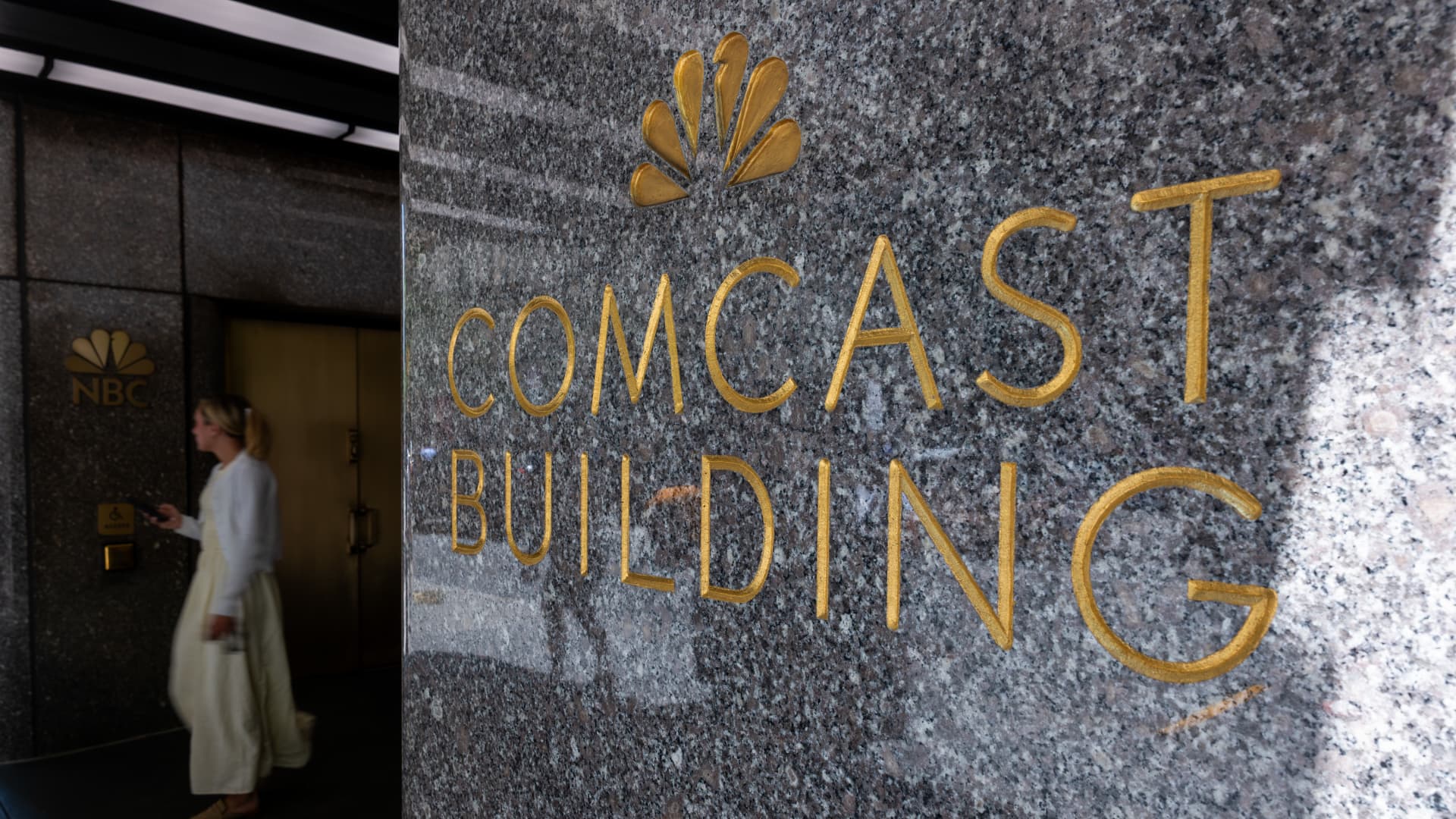
People walk by the Comcast building which houses NBC Studios in Manhattan on June 29, 2026 in New York City.
Spencer Platt | Getty Images
Comcast’s second-quarter results on Thursday showcased strength at NBCUniversal — particularly in its TV and film units — as the company prepares to split its media and broadband businesses apart.
NBCUniversal’s streaming service, Peacock, hit profitability during the quarter for the first time, Comcast said, giving the media business a lift. The streaming service also benefited from live sports including the FIFA World Cup and NBA postseason that brought in new subscribers.
Revenue in the company’s content and experiences division, which includes media unit NBCUniversal, rose almost 23% year over year.
Meanwhile, it was a different story with the traditional cable and connectivity business. The company said that its shifted strategy for the broadband business is “gaining traction” following years of significant competition and pressure due to the rise of alternatives like 5G providers.
But Comcast once again reported broadband customer losses for the period, and revenue for the connectivity and platforms segment notched down as its lower pricing plans and promotions took hold.
The diverging storylines for broadband and media come weeks after Comcast said it would divide the two businesses into separate publicly traded companies. In Thursday’s release co-CEOs Brian Roberts and Mike Cavanagh called the split “an important step toward creating two focused companies with the financial strength and flexibility to pursue their respective growth strategies.”
During Thursday’s call with investors, Roberts addressed the separation immediately. He said that, following weeks of discussions with various employees and people inside and outside of the company, “I feel more positive and energized today than I was on the day we announced.”
“This structure gives both companies the freedom to pursue the priorities that matter most to their futures,” said Roberts. “There’s a lot of work ahead, and we’re moving with real urgency.”
Cavanagh said on Thursday that work on the separation began immediately after the announcement was made, with the goal of it being completed in about one year.
Tale of two companies
Guests ride Stardust Racers, a new dueling roller coaster ride in Celestial Park during a preview day for Universal Epic Universe on April 5, 2025. Orlando, Florida’s first new theme park in a generation is set to open to the public on May 22. (Patrick Connolly/Orlando Sentinel/Tribune News Service via Getty Images)
Patrick Connolly | Orlando Sentinel | Getty Images
Revenue for the connectivity and platforms segment, which includes the Xfinity-branded broadband, mobile and cable TV offerings, was down 3% to $19.8 billion during the second quarter. Earnings before interest, taxes, depreciation and amortization for the unit dropped nearly 6% to $7.96 billion.
Comcast lost 167,000 total broadband residential customers and 280,000 cable TV subscribers during the quarter. Mobile remained a bright spot with additions that once again marked a record quarter and brought its total to 10.2 million lines. Mobile has become a major driver and key part of Comcast’s strategy to boost the broadband business.
“While the environment remains highly competitive, we like the progress we are making on the things we can control,” Cavanagh said on Thursday’s call, adding that the mobile business is scaling quickly.
The content and experiences segment that houses NBCUniversal’s TV, film and theme parks, however, saw revenue surge to $10.73 billion, boosted by the impact of the FIFA World Cup that began in mid-June and was aired in Spanish in the U.S. on the company’s Telemundo network.
The World Cup and reality TV series “Love Island USA” helped Peacock record its biggest viewership month ever in June, Cavanagh said Thursday. The streaming service added 2 million subscribers, bringing its total to 48 million as of June 30.
On Thursday, Cavanagh said the company expects Peacock to be profitable in the future, but on something of an inconsistent basis.
“Profitability is going to vary quarter by quarter, just based on the timing of sports schedules and other content hitting one quarter versus another,” said Cavanagh. “I think of it on an annual basis rather than the lumpiness quarter by quarter, and it’s been improving steadily and we see that continuing to be the case.”
Cavanagh will lead the NBCUniversal business after it’s spun out from Comcast.
Revenue for the TV media unit in particular benefited from Peacock and an increase in advertising, and film studio revenue rose 25%.
Elsewhere in the entertainment unit, theme parks revenue was up nearly 3% as softness at international parks offset higher revenue in Orlando, Florida.
The Orlando theme parks saw lower attendance during the quarter, which the company believes was caused by “weakness in consumer sentiment and higher travel costs affecting demand,” Cavanagh said.
He added the company doesn’t think this will be a permanent dip and expects that when “economic conditions and consumer demand stabilizes for us we’ll be getting that attendance back.”
Overall revenue for Comcast was down 1.2% during the second quarter to $29.94 billion, though it beat estimates from LSEG analysts of $29.3 billion. On a pro-forma basis, accounting for the impact of Comcast’s Versant spinoff that was completed at the start of the year, the company said quarterly revenue was 4.7% higher.
Comcast reported adjusted earnings per share of $1.04, topping Wall Street estimates of 97 cents, according to LSEG. Comcast reported net income attributable to the company of $3.53 billion.
Disclosure: Versant Media Group is the parent company of CNBC.
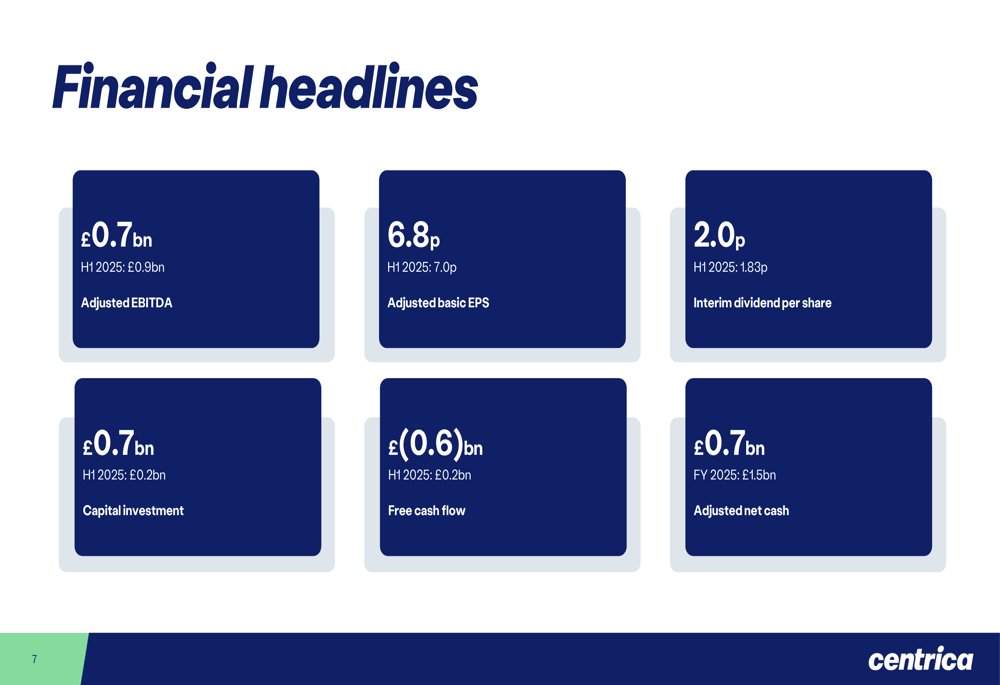
Centrica H1 2026 slides: transformation costs weigh on earnings

The Odyssey
Source: Universal Pictures
Christopher Nolan’s “The Odyssey” is racking up box office dollars for IMAX and fueling investor confidence that the company will reach record ticket sales in 2026.
Shares of IMAX jumped more than 8% on Thursday after the company reported it was still on track to deliver a record $1.4 billion in global box office this year. Wall Street had worried that when Netflix and Greta Gerwig’s “Narnia: The Magician’s Nephew” was pushed from its November release date to February 2027, that IMAX would not be able to reach that guidance.
Universal’s “The Odyssey” is easing those fears. Over its opening weekend, the film generated $52 million in global box office for IMAX. The company’s locations represented less than 1% of total screens but a whopping 20% of the film’s worldwide debut.
“The Odyssey” opening was 47% higher than Nolan’s previous film “Oppenheimer.” The biopic hauled in more than $190 million via IMAX throughout its run in 2023.
And momentum for “The Odyssey” has showed few signs of slowing. The film secured another $11 million on Monday and $10.6 million on Tuesday — the best Tuesday performance of all time for the company, according to IMAX CEO Rich Gelfond, who spoke to investors on an earnings call Thursday.
“Our presales for the second weekend would qualify on its own as one of our biggest opening weekends ever,” he said. “These numbers help prove that we’re just getting warmed up.”
Still to come to global IMAX screens this year is Sony and Marvel’s “Spider-Man: Brand New Day;” Zach Cregger’s take on “Resident Evil;” Tom Cruise’s newest feature “Digger;” “Godzilla Minus One;” David Fincher’s “The Adventures of Cliff Booth,” which stars Brad Pitt and is based on Quentin Tarantino’s “Once Upon a Time in Hollywood;” and Paramount’s “Street Fighter.”
Then Warner Bros. and Denis Villeneuve’s “Dune: Part Three” will cap off the year. The first Dune film generated $61 million in IMAX theaters during the tail end of the pandemic and “Dune: Part Two” secured $147 million globally.
“Our momentum continues to translate into demand from our exhibition partners,” Gelfond said.
The company installed 38 IMAX systems globally during the second quarter, up from 36 during the same period a year prior. This is the highest number of installations in the second quarter in a decade, Natasha Fernandes, IMAX’s chief financial officer, told investors during Thursday’s earnings call. Nineteen systems were installed in the first quarter and the company is on pace to have 160 to 175 installations by the end of 2026.
IMAX currently has a backlog of 421 contracts to build screens.
“We continue to see tremendous runway for our global expansion, and we continue to innovate in ways that make IMAX even more valuable to creators, studios, exhibitors and audiences alike,” Gelfond said. “This is an incredibly exciting time for our business.”

The exterior of an Albertsons supermarket as shoppers browse for groceries ahead of the Thanksgiving Day holiday in Redmond, Washington, Nov. 24, 2025.
David Ryder | Reuters
Shares of grocer Albertsons sank nearly 15% on Thursday after the company lowered its fiscal 2026 outlook, citing softer demand and a more cautious consumer.
The company said it is now “moving decisively” to invest in the customer experience because it believes that will improve its growth trajectory.
“In the first quarter, our digital and pharmacy businesses continued to deliver strong growth, while core grocery faced increasing pressure from softer industry unit trends and a more cautious consumer,” CEO Susan Morris said in a statement.
The company’s outlook cut comes amid broader signs that U.S. consumers have scaled back their grocery trips. Food inflation and tighter budgets due to high gas prices, among other factors, appear to be hurting spending.
For the full year, Albertsons said it now expects net income between $1.75 and $1.85 per share, down significantly from its previous expectation of between $2.22 and $2.32 per share.
It also lowered its adjusted EBITDA guidance to a range of between $3.55 billion and $3.625 billion, compared to a previous projection of between $3.85 billion and $3.925 billion. It also now expects identical sales, a metric similar to comparable sales, to be in a range of down 0.5% to 1.5%, compared to a previous expectation of flat to up 1%.
For the first fiscal quarter of the year, the company reported that identical sales fell 0.8%. Albertsons reported net income of $84.7 million, or 17 cents per share, compared to $236.4 million, or 41 cents per share, in the year-ago period.
Still, Morris said on a call with analysts that while the pressure on consumers is weighing on near-term earnings, the company aims to “improve traffic, units, loyalty and the overall trajectory of the business over time.”
Business
BlackRock, Prashant Jain-backed 3P India among others invest in Indo MIM IPO anchor book of Rs 1,141 crore

The company has fixed a price band of Rs 461-485 per share for its IPO, which will close on July 27.
Also Read | Indo-MIM IPO opens: Is this Rs 3,811 crore issue a long-term bet?
Some of the other key anchor investors who were allocated shares include Government Pension Fund Global, Amansa Holdings, Goldman Sachs, Natixis International Fund, Societe Generale, ICICI Prudential AMC, HDFC MF, SBI Mutual Fund, Kotak Mahindra AMC, Aditya Birla Sun Life Mutual Fund, Axis Mutual Fund, HSBC Mutual Fund, Quant Mutual Fund, LIC Mutual Fund, Invesco, Mirae Asset, ICICI Prudential Life Insurance, SBI Life Insurance, HDFC Life Insurance and more.
Out of 2.35 crore equity shares allotted to the anchor investors, 1.31 crore equity shares (i.e. 55.98% of the total allocation to anchor investors) were allocated to 23 domestic mutual funds applying through 60 schemes.

Anand Rathi Research, in its IPO note, has recommended its investors to subscribe from a medium- to long-term investment perspective to the Indo MIM issue, considering its global market leadership, diversified end-user exposure, integrated manufacturing capabilities, and strong export franchise; the valuation of nearly 45.0x P/E on FY26 earnings appears reasonable.
The issue is being managed by HDFC Bank, Axis Capital, ICICI Securities, Kotak Mahindra Capital Company and SBI Capital Markets as the book-running lead managers. MUFG Intime India Pvt. Ltd. is serving as the registrar to the issue.The company intends to utilise Rs 400 crore from the net proceeds of the fresh issue towards the repayment or prepayment, in full or in part, of certain outstanding borrowings. The remaining funds will be used for general corporate purposes.
The company offers end-to-end manufacturing solutions, covering mould design, tooling, machining, finishing and assembly.
In addition to MIM, Indo-MIM has expanded its capabilities through advanced manufacturing technologies such as investment casting, precision machining, ceramic injection moulding and 3D metal printing, enabling it to serve a diverse range of industries.
During FY26, the company manufactured more than 6,400 products for sectors including automotive, defence, medical devices, consumer goods and aerospace.
Indo-MIM operates 15 manufacturing facilities across India, the United States, the United Kingdom and Mexico. According to the F&S Report, it has the world’s largest installed MIM capacity.
Also Read | Tanla Platforms shares jump nearly 14% post Q1 earnings, revenue surges 17.8% YoY
The company’s global footprint also includes sales offices in China, Germany and the US, supported by sales representatives across Europe and Asia. In FY26, Indo-MIM served more than 1,100 customers worldwide.
In FY26, the company delivered a robust financial performance backed by healthy growth in revenue and earnings. Total income rose 28.1% year-on-year to Rs 4,320.70 crore from Rs 3,373.97 crore in FY25. Profit after tax (PAT) increased 25.9% to Rs 533.54 crore in FY26 from Rs 423.73 crore in the previous year.
(Disclaimer: Recommendations, suggestions, views and opinions given by the experts are their own. These do not represent the views of The Economic Times)
Business
NovoCure Stock Soars 25% After Reporting Record Second-Quarter Revenue and Raised Full-Year Guidance

Shares of NovoCure surged more than 25% Thursday after the oncology device maker reported its strongest quarterly revenue on record, prompting the company to raise its full-year financial outlook and marking a sharp rebound from a steep selloff the stock suffered earlier this month.
NovoCure shares traded at $19.48, up $3.91, on the day. The rally follows a period of significant weakness for the stock, which had fallen roughly 20% earlier this month after the company’s closely watched TRIDENT clinical trial failed to meet its primary endpoint of improving overall survival in newly diagnosed glioblastoma patients.
Record quarterly results
NovoCure reported second-quarter net revenue of $184 million, up 16% from the same period a year earlier, driven by an 18% increase in active patients on therapy globally across the company’s approved indications. As of June 30, the company had 5,128 total active patients using its Tumor Treating Fields therapy worldwide, spanning its Optune Gio, Optune Lua and newly launched Optune Pax devices.
Executive Chairman William Doyle described the results as the company’s best commercial performance to date. “This was our strongest commercial quarter to date,” Doyle said, pointing to record net revenues and active patient counts as evidence of accelerating momentum across the company’s product portfolio.
A narrower loss and expense discipline
Alongside the revenue growth, NovoCure reported a second-quarter net loss of $16 million, or $0.13 per share, a significant improvement from the $40 million loss the company posted in the same period a year earlier. Adjusted EBITDA came in at $11 million for the quarter, a sharp turnaround from negative $10 million in the second quarter of 2025.
Chief Financial Officer Christoph Brackmann attributed part of the improvement to tighter cost controls across the business. General and administrative expenses declined 9% year-over-year to $40 million, primarily due to lower share-based compensation, while research and development costs fell 8% to $51 million. Sales and marketing expenses rose 8% to $62 million, reflecting continued investment tied to the U.S. launch of Optune Pax and the introduction of Optune Lua in Japan.
Raised guidance for the year
Building on the stronger-than-expected quarter, NovoCure raised its full-year 2026 revenue guidance to a range of $710 million to $725 million, representing projected growth of 8% to 11%, up from its previous guidance range of $690 million to $710 million issued earlier this year. The company also raised its full-year adjusted EBITDA outlook to a range of $0 to $15 million, with Brackmann saying NovoCure now expects to reach adjusted EBITDA breakeven for the full year, a notable shift for a company that has historically operated at a loss.
Brackmann said quarterly gross margins are expected to remain in the mid-70% range through the end of 2026, even as more Optune Pax patients begin therapy ahead of broader insurance reimbursement being fully established.
International expansion
NovoCure also highlighted regulatory progress in Europe during the quarter, announcing that Optune Pax received CE Mark approval for the treatment of locally advanced pancreatic cancer, clearing the way for the device’s launch across the European Union. Germany is set to become the first EU market where Optune Pax becomes available. As of June 30, more than 280 active patients were being treated with Optune Pax globally.
Recovering from a difficult stretch
Thursday’s rally marks a significant reversal from the volatility NovoCure shares experienced earlier this month. The stock had fallen sharply after the company disclosed that its Phase 3 TRIDENT trial, which tested earlier use of Tumor Treating Fields therapy in newly diagnosed glioblastoma patients, did not meet its primary endpoint of improving overall survival, even though the therapy was reported to be well tolerated and showed potential benefit signals in certain patient subgroups.
That trial disappointment had come at a particularly sensitive time for the company, coinciding with an ongoing securities investigation into NovoCure’s officers and directors and a period of roughly $900,000 in insider share sales over the preceding three months, factors that had weighed further on investor sentiment heading into Thursday’s earnings report.
Analyst reaction and stock performance context
Ahead of Thursday’s results, analysts had projected a quarterly loss of roughly $0.30 per share on revenue of approximately $172.7 million, estimates NovoCure’s actual results comfortably exceeded. Heading into the report, Wall Street sentiment on the stock had been mixed, with a consensus rating of “Hold” among covering analysts and price targets ranging as high as $46, though several firms had trimmed their targets in recent weeks following the TRIDENT trial setback. HC Wainwright maintained a “Buy” rating with a $46 price target ahead of the report, while Wells Fargo had raised its price objective to $17 with an “Equal Weight” rating in prior weeks.
Even after Thursday’s sharp rally, NovoCure shares remain well below their 52-week high of $18.92 recorded earlier in the year on an intraday basis, though the stock’s rebound now pushes it toward that recent range following a period of significant volatility tied to both clinical trial news and broader company developments, including a November leadership change in which Ashley Cordova stepped down as chief executive.
With full-year guidance now raised and the company targeting adjusted EBITDA breakeven for 2026, investors will be watching NovoCure’s continued commercial execution across its expanding product portfolio, including the rollout of Optune Pax in Europe and ongoing patient growth for Optune Lua in Japan. The company also continues to await additional clinical trial readouts, including completion of enrollment for its KEYNOTE-58 Phase III study, which could serve as further catalysts for the stock in the months ahead.
For now, Thursday’s earnings report appears to have gone a long way toward restoring investor confidence following the disappointing TRIDENT trial results, with the company’s record quarterly revenue and improved profitability outlook offering a markedly different narrative than the one that had weighed on the stock just weeks earlier.

NEW YORK — Following Spain’s 1-0 victory over Argentina in the 2026 FIFA World Cup final at MetLife Stadium, the focus has swiftly shifted from the pitch to the accounting ledger. While the Spanish Royal Football Federation secured the top prize of $50 million out of FIFA’s total $871 million tournament fund, tax policy experts and sports financial analysts warn that a substantial portion of that payout is headed straight to the United States Internal Revenue Service.
Under longstanding United States tax law, foreign individuals and corporations earning income from personal services performed on American soil are subject to federal income taxation. While FIFA secured tax-exempt status for itself and participating national associations under Section 501(c) of the Internal Revenue Code, that federal shield stops at the institutional level. The individual players, coaches, and technical staff who actually earned the money on the field remain fully exposed to U.S. federal taxation and state-level income taxes.
As legal scholars and accountants scrutinize the tournament’s tax structure, the prospect of international champions surrendering up to 30 to 40 percent of their tournament compensation to American tax authorities has sparked intense debate among lawmakers in Washington and financial experts worldwide.
Institutional Exemption Versus Individual Tax Liability
FIFA’s total prize pool for the expanded 48-team tournament reached an unprecedented $871 million, with $655 million distributed directly to national federations based on their performance. Spain’s federation earned the top $50 million share for winning the title, but the mechanism of distribution creates distinct tax realities for the organization versus its roster.
Prior to the competition, FIFA negotiated an arrangement with the U.S. Treasury Department allowing participating national associations to register as tax-exempt entities under U.S. code. This policy protects the $50 million baseline payout awarded directly to the Spanish federation from federal withholding.
However, once the federation passes those winnings down to individual team members in the form of performance bonuses, contract payouts, or incentive compensation, the money transforms into taxable personal income under U.S. law.
“It doesn’t make a difference who wins the game. The IRS will get a piece,” said Robert Raiola, director of the sports and entertainment group at accounting firm PKF O’Connor Davies. Raiola noted that the tax burden extends well beyond the starting eleven: “That goes for the coaches, team staff and referees, along with players.”
Federal Withholding and the Impact of Tax Treaties
For non-resident foreign athletes competing inside the United States, Internal Revenue Code Sections 871 and 881 establish a default federal withholding rate of 30 percent on all U.S.-sourced income. Because match play, practice sessions, and promotional commitments occurred across host venues in the United States, Canada, and Mexico, tax authorities established specific formulas to determine what proportion of a team’s prize money counts as U.S.-sourced income.
Under an agreement established between the IRS and the Canada Revenue Agency prior to the tournament, prize money is allocated based on the ratio of matches played in each host country. For teams playing the majority of their fixtures on American soil, the vast majority of their earnings falls directly under IRS jurisdiction.
While the United States maintains a bilateral income tax treaty with Spain designed to prevent double taxation, treaty protections for elite professional athletes are frequently capped. International tax agreements often contain specific clauses allowing the host nation to tax athletic earnings if total income exceeds designated annual thresholds. Given the massive scale of World Cup payouts, most Spanish squad members far exceed these threshold limits, triggering full federal tax obligations.
Rob Fagan, senior manager at KPMG’s Washington National Tax practice, rated the overall tax complexity of the 2026 World Cup as an “8 out of 10,” pointing out that tax answers vary even within a single dressing room.
“Even within the same team, there may be different tax answers for different players,” Fagan noted, adding that every squad leaving the tournament would carry a tax obligation of some form.
The Added Burden of State “Jock Taxes”
In addition to federal obligations, foreign players face state-level income taxes, commonly known as “jock taxes,” which apply to non-residents earning money within specific state borders.
Because the World Cup final was staged in New Jersey, players competing in the championship match are subject to New Jersey state tax regulations. State tax codes rarely recognize foreign tax treaties, meaning state withholdings are assessed independently of federal treaty status.
When combining federal withholding rates with state taxes across different match venues, analysts estimate that Spanish players could see total U.S. tax deductions reach up to 40 percent of their allocated World Cup bonuses before returning home to navigate Spain’s national tax framework.
Congressional Pushback and Political Reaction
The prospect of foreign national teams surrendering millions in prize money to the U.S. government has drawn sharp criticism from members of the United States Congress, highlighting a broader divide over foreign policy and domestic tax structure.
Republican Congressman Tim Burchett of Tennessee criticized the withholding rules when discussing the tax burden placed on visiting teams.
“I think it’s a rip-off,” Burchett said. “I’m not a fan of it, but Americans have to do it. American professional athletes do it, so they knew that when they came over here.”
Burchett emphasized that taxing international athletes at high rates could deter global events and visiting spenders.
“I’m not a big fan of the IRS,” Burchett added. “They made that money over here, I guess, but I don’t like all that. We want to encourage these people to come over here and spend their money, and then we take a big chunk of it. We’ve got to get a better tax system.”
Lawmakers from across the aisle also expressed disapproval of the heavy tax burden placed on visiting workforce members. Democratic Congressman Jonathan Jackson of Illinois called the steep rate on player earnings fundamentally flawed.
“It’s wrong, and that kind of highlights something bigger,” Jackson stated. “They should be paying the taxes as opposed to having tax loopholes. The people, the laborers that are working, they should not have to pay 30% of their income on taxes.”
Broader Implications for Global Sports Tourism
Unlike prior World Cup host nations such as South Africa, Brazil, Russia, and Qatar—which granted sweeping blanket tax waivers covering FIFA, national associations, and participating players—the United States maintained its strict statutory approach to U.S.-sourced personal service income.
While the IRS published a comprehensive “Tax Playbook for Foreign Participants in the 2026 FIFA World Cup” ahead of the event to outline filing procedures and central withholding agreements, financial advisors acknowledge that many foreign players will be surprised by the net size of their checks.
As Spain’s squad celebrates its World Cup triumph, players and their wealth managers are entering an extensive administrative process with tax authorities on both sides of the Atlantic to reconcile multi-jurisdictional tax liabilities.

Politics Home | Green Party Manchester Mayoral Candidate Pledges To Twin Manchester With Palestinian City Of Ramallah

Motorola’s Moto G Play 2024 is a Budget-Priced Smartphone Built for the Long Haul

Bury Road and Ainsworth Lane roadworks cause delays

Renter of Home in Anne Heche Crash Denies Settlement With Son

No Jackpot Winner as $257 Million Prize Rolls Over to $269 Million Monday Draw

Weekend Open Thread: Staud – Corporette.com

MONEY HEIST vs POLICE in REAL LIFE ESCAPE from Police | ACTION FULL STORY POV |2026 POV Movie

XRP JUST MADE TIER 1 BANKING ASSET!!?? (IT’S OFFICIAL?!)

GUESS PAPER | FA-2| FINANCIAL ACCOUNTING | FULL EXPLANATION | SEMESTER-2 OU | @shivanipallela
-

 Fashion6 days ago
Weekend Open Thread – Corporette.com
-

 Politics5 days ago
The House | The City of London can help the new chancellor deliver growth in every postcode
-

 Crypto World5 days ago
Ripple Payments Joins MiCA With 14 Firms, Does It Mean Anything For XRP?
-
 Crypto World6 days ago
Two July Windows Left: The CLARITY Act’s Senate Fight and What Failure Means
-

 Politics4 days ago
Democrats look to World Cup watch parties to register thousands of voters
-

 Crypto World6 days ago
Ripple wins EU-wide access as ESMA adds it to MiCA register
-

 Crypto World2 days ago
Grayscale Files For Worldcoin ETF, WLD Registers Sharp Rise
-

 NewsBeat3 days ago
Unregistered fitter used Gas Safe logo on business flyers
-

 Tech3 days ago
Sail Virtually Aboard The “Itanic” With IA-64 Emulator
-

 Crypto World7 days ago
Injective Submits SEC Transfer-Agent Registration to Onchain Ownership Records
-
 Tech3 days ago
Turtle Beach Command Series KB7 review: a nifty screen-equipped gaming keyboard
-

 NewsBeat6 days ago
Registration is now open for March for Men with Kev 2026
-
 Business2 days ago
New Jersey voter registration controversy explained: How 6,600 noncitizens got on the rolls, and what happens next
-
 Crypto World7 days ago
Claude Fable 5 Slips to Second in AI Coding Leaderboard
-

 News Videos6 days ago
Money | Class 12 Economics | CBSE Board Exam 2026-27
-

 Business7 days ago
Banco Bilbao Vizcaya Argentaria, S.A. (BBVA) Discusses Global Macro Environment and Economic Outlook for Core Markets Transcript
-

 Crypto World5 days ago
Kaspersky exposes OkoBot’s 20-module crypto wallet attack
-

 News Videos4 days ago
Big Money Is Entering XRP
-

 Business6 days ago
Airlines warn Sunshine Protection Act could disrupt flight scheduling
-

 NewsBeat5 days ago
Durham County Council to send out electoral registration emails
You must be logged in to post a comment Login