
Crypto World
MoonPay targets AI payments with Mastercard stablecoin card



MoonPay has introduced the MoonAgents Card, a virtual Mastercard product that allows AI agents and users to spend stablecoins directly from onchain wallets.
Summary
- MoonAgents Card lets AI agents spend stablecoins at merchants that accept Mastercard.
- The card connects onchain wallets with real-time crypto-to-fiat payment conversion.
- MoonPay’s Sodot acquisition supports its wider institutional crypto services expansion.
The card enables real-time crypto-to-fiat conversion at checkout and works with merchants that accept Mastercard.
The product is built for programmatic use through MoonPay’s agent infrastructure. It allows users to authorize AI agents to initiate payments without moving funds off-chain or preloading balances.
MoonPay CEO Ivan Soto-Wright said, “Agents are already managing wallets… now they can spend.”
AI agents gain non-custodial spending tools
The MoonAgents Card connects with MoonPay’s broader AI framework. The company earlier launched a non-custodial system that allows AI agents to manage wallets, execute trades, and move assets autonomously.
The card extends that system by adding merchant payments. AI agents can now operate across trading, transfers, and real-world spending within one workflow.
MoonPay said its developer tools have processed millions of commands, showing growing usage of AI-driven crypto transactions.
Additionally, MoonPay’s AI and payments rollout comes alongside a broader institutional expansion. The company recently acquired Sodot, a digital asset security firm, to launch a new business unit focused on institutional clients.
The new division, MoonPay Institutional, is designed to support banks, asset managers, and trading firms. It offers infrastructure for payments, custody, trading, and tokenized assets.
Sodot’s technology handles key management and has supported billions in transactions across major platforms.
Stablecoin services and partnerships grow
MoonPay has also been expanding stablecoin services with enterprise partners. Its infrastructure supports stablecoin issuance, cross-border payments, and integrations with major financial platforms.
The company has worked with payment providers and fintech firms to connect stablecoins with global payment systems. This includes enabling businesses to launch custom stablecoins and use them in payments and treasury operations.

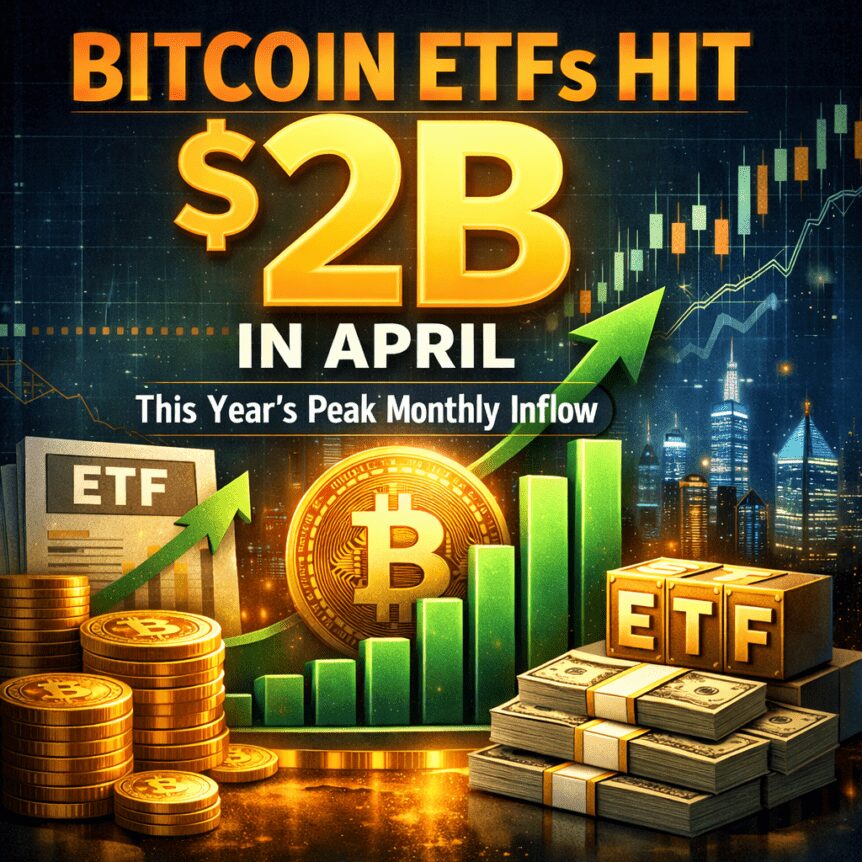
US-listed spot Bitcoin ETF trusts drew broad-based buying in April, with investors pouring nearly $2 billion into the segment as Bitcoin staged a late-month rally. SoSoValue data shows inflows totaling $1.97 billion for April, the strongest monthly print of the year. When combined with inflows from March, and offset by outflows in January and February, total net inflows for 2026 reached roughly $1.47 billion. Since their launch, these ETF products have amassed more than $58 billion in net inflows, underscoring continued institutional interest in access to spot Bitcoin via exchange-traded structures.
Bitcoin’s price action during the month helped buoy appetite for these vehicles. CryptoRank records a near 12% gain for Bitcoin in April, marking its best monthly performance since April 2025, when the price rose by a little more than 14%. The April rally and the ongoing ETF inflows coincide with anticipation around the upcoming 13F filing season, which will reveal how large financial firms are positioning their crypto exposure for the first quarter of 2026.
Key takeaways
- April marked the strongest monthly inflow for US spot Bitcoin ETFs in 2026 at $1.97 billion, according to SoSoValue.
- Bitcoin ETFs posted year-to-date net inflows of about $1.47 billion in 2026, with cumulative launches exceeding $58 billion in net inflows since inception.
- Issuer dynamics showed BlackRock’s IBIT leading the month with around $2 billion in net inflows, while Grayscale’s GBTC logged roughly $280 million in outflows.
- MSB’s Morgan Stanley Bitcoin Trust (MSBT), which began trading on April 8, attracted about $194 million in inflows, with no daily outflows recorded for the month.
- Ether ETFs joined in April with their first monthly inflow since October 2025, at $356 million, but remain negative for the year (about $413 million in net outflows YTD). XRP, DOGE and SOL funds showed mixed performance across the month.
Bitcoin ETFs: momentum despite late-month shifts
April’s flow strength largely centered on the Bitcoin segment, with the $1.97 billion in net inflows reflecting ongoing demand for regulated access to spot BTC. The month’s outflows were not large enough to erase the gains, totaling about $490 million over three late-April sessions, according to Farside’s tracking of daily flows by issuer since April 27, 2026. That late-week pressure hints at a continuing negotiation between short-term profit-taking and longer-term conviction among ETF holders.
BlackRock’s iShares Bitcoin Trust (IBIT) stood out as the dominant inflow driver for the month, contributing roughly $2 billion of net new money. The magnitude of IBIT’s inflows suggests the market’s reliance on the fund giant’s branding and liquidity to channel fresh capital into the ETF ecosystem. By contrast, Grayscale’s Bitcoin Trust ETF (GBTC) was the month’s biggest laggard, recording around $280 million in net outflows as investors shifted some exposure to other vehicles or modules within the ETF family.
Another notable development was the Morgan Stanley Bitcoin Trust ETF (MSBT), which began trading on April 8 and pulled in about $194 million of inflows for the month. The MSBT performance underscores the growing breadth of sponsor support in the space, with new entrants competing for scale and investor sophistication in price discovery and premium/discount dynamics.
Ether, XRP, DOGE and SOL: a mixed picture for altcoin ETFs
In a meaningful shift, Ether (ETH) ETFs posted their first monthly inflow since October 2025, gathering $356 million in April. Absolute numbers aside, ETH still trails Bitcoin in ETF sentiment for 2026, with a negative year-to-date balance of around $413 million, according to SoSoValue’s figures. The total cumulative inflows into Ether ETFs since their launch remain substantial, near $11.9 billion, illustrating persistent demand for regulated access to the second-largest cryptocurrency versus spot holdings via traditional vehicles.
XRP-focused funds drew notable attention as well, recording $81.6 million in inflows during April. For the first four months of 2026, XRP ETFs accumulated about $124 million in net inflows, bringing total cumulative inflows to roughly $1.3 billion. The XRP appetite signals investor interest in diversification within the tokenized assets that complement Bitcoin exposure, given XRP’s distinct use-case and market behavior relative to BTC and ETH.
Dogecoin (DOGE) ETFs also posted inflows in April, amounting to $2 million and accounting for around 21% of DOGE’s total cumulative ETF inflows of roughly $9.6 million. This suggests a modest but continuing appetite for meme-coin exposure within regulated ETF wrappers, even as other assets garner broader institutional attention.
Solana (SOL) ETF inflows in April reached $38.7 million, the smallest monthly total on record for the asset with cumulative inflows around $1 billion. The softer SOL figure could reflect ongoing industry-wide rotation toward more established liquidity pools or simply a more selective appetite for newer-chain assets among ETF buyers.
What these flows mean for investors and the market
The April flow environment reinforces a few emerging themes in the ETF landscape. First, the breadth of inflows across several issuers—from BlackRock to Morgan Stanley and beyond—indicates that institutional investors are using regulated, transparent vehicles to access digital assets, even as the regulatory backdrop remains dynamic. Second, the divergence in performance among asset-specific ETFs—Bitcoin leading inflows, Ether showing early-year softness, and altcoins fluctuating—highlights the ongoing need for discernment when building diversified crypto exposure through ETFs.
With 13F filing season on deck in May, investors and analysts will scrutinize which institutions added or trimmed their crypto exposure in Q1. The disclosures could reveal new capital commitments to Bitcoin ETFs or shifts toward Ethereum and other crypto assets, potentially shaping fund flows in the coming months. This period often serves as a proxy for institutions’ conviction levels and their readiness to navigate a market that remains episodic in volatility but increasingly integrated into mainstream financial channels.
Overall, the April data paints a picture of a maturing ETF ecosystem where liquidity, product breadth, and institutional curiosity align to sustain flows even as individual assets rotate on macro and micro signals. The next few weeks will be telling as 13F disclosures land and investors reassess risk budgets, regulatory clarity, and the practical implications of regulated access to crypto markets through these enduring investment vehicles.
Readers should stay attuned to how February-to-April dynamics influence the 2026 trajectory for ETF inflows, and whether the resilience in Bitcoin ETF demand translates into broader adoption for ETH and other tokens through regulated wrappers. The market awaits clearer signals on whether April’s momentum can persist into the mid-year cycle and how issuers will position portfolios in response to evolving regulatory and macro conditions.
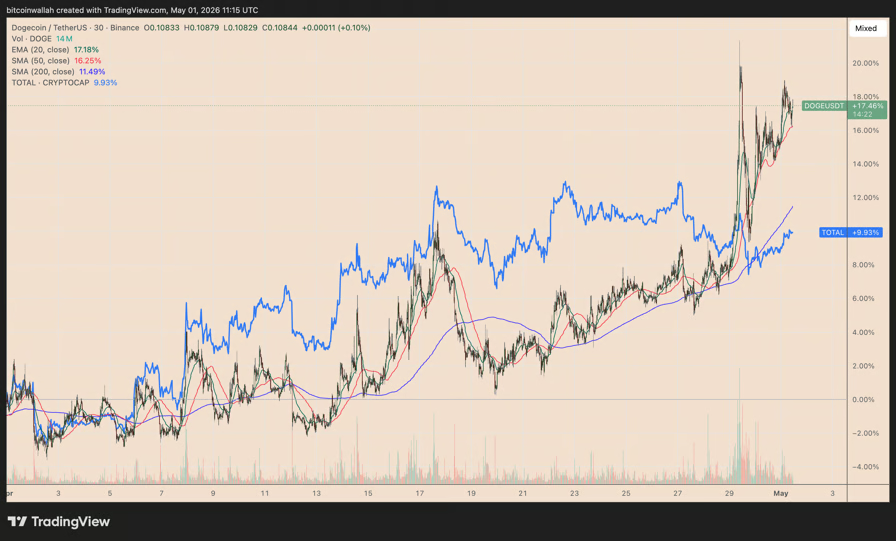
Dogecoin (DOGE) has outpaced the broader crypto market over the past month, rising roughly 18% versus the market’s 10% gain, as whale accumulation and a bullish chart setup hint at a potential bottom.
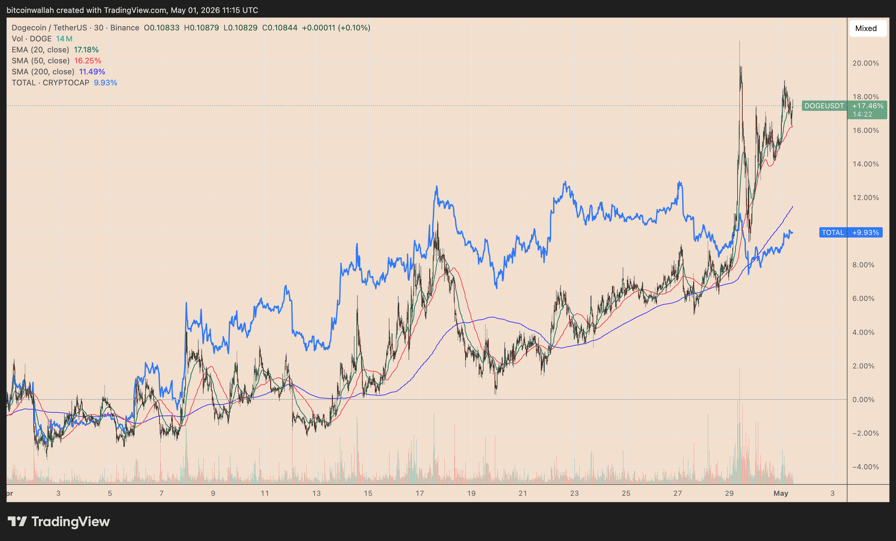
DOGE/USDT vs. TOTAL crypto market cap 30-day returns. Source: TradingView
Key takeaways:
- DOGE whale holdings hit a record high as large transactions reached a six-month peak.
- DOGE’s triangle breakout targets $0.131, with $0.088 as the key invalidation level.
DOGE whale holdings hit new high amid April price rally
Dogecoin wallets holding at least 100 million DOGE controlled a record 108.52 billion DOGE, worth roughly $11.6 billion, as of late April, compared to under 107.95 billion DOGE in mid-April, according to data resource Santiment.
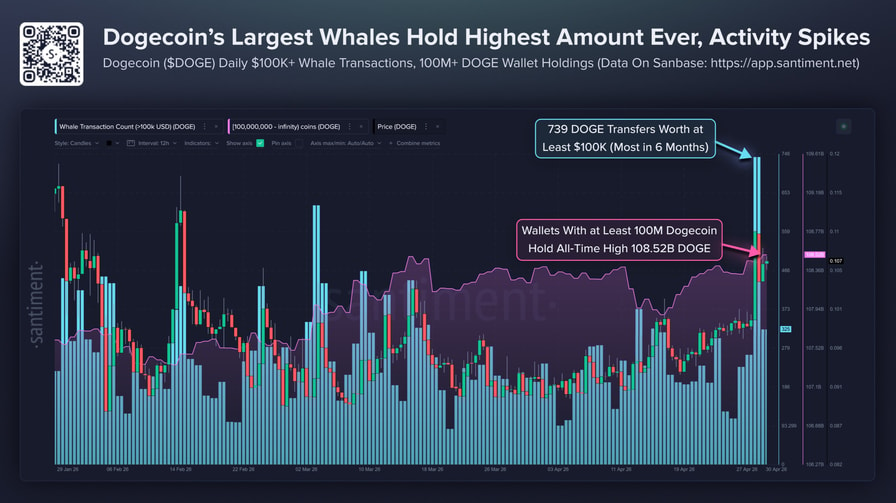
Dogecoin whale transaction count and holdings. Source: Santiment
The accumulation coincided with DOGE’s 23.50% price rebound, suggesting large holders helped support the move.
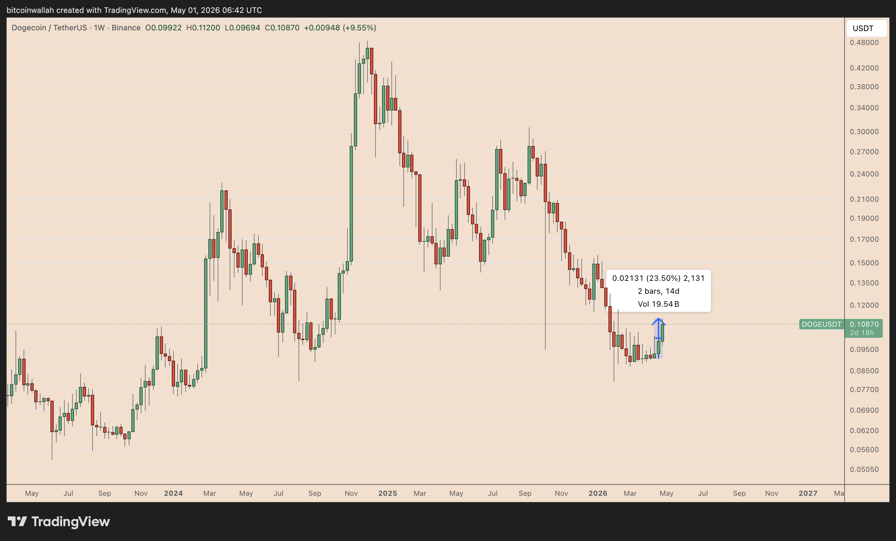
DOGE/USDT weekly chart. Source: TradingView
Whale activity also spiked. On April 28, Santiment recorded 739 Dogecoin transfers worth more than $100,000 in a single day, the highest count in six months. The surge came alongside the launch of 1Shares’ physically backed Dogecoin ETP on Xetra, Germany’s leading electronic trading platform.
DOGE triangle breakout points to 20% upside
From a technical standpoint, the DOGE price has entered the breakout stage of what appears to be a descending triangle pattern.
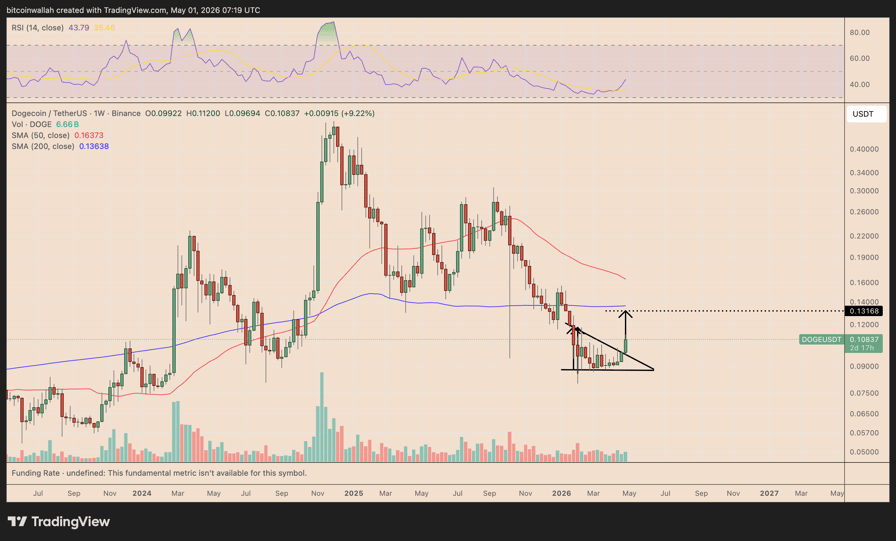
DOGE/USDT weekly chart. Source: TradingView
In classical technical analysis, descending triangles signal persistent selling pressure. These structures usually resolve to the downside, but upside breakouts do occur, especially in broader accumulation trends.
For instance, BTC formed a multi-month descending triangle in 2021 after the China mining crackdown.
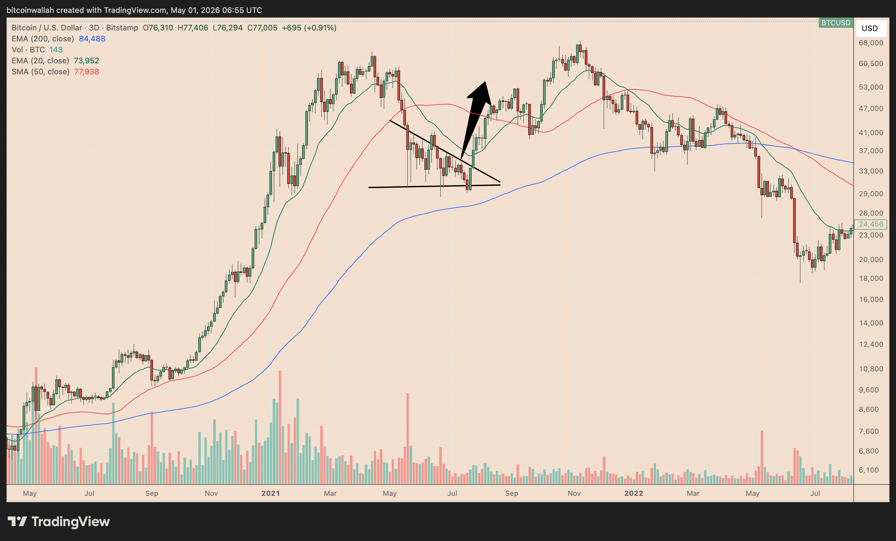
BTC/USD three-day price chart. Source: TradingView
The structure leaned bearish, but price broke above the descending trendline near $35,0000, triggering a squeeze that led to a rally over $52,000 in the following weeks.
Applying the same technical rule to DOGE charts puts its upside target for May at around $0.131, up about 20% from the current price. The level aligns with DOGE’s 200-week simple moving average (200-week SMA, the blue line).
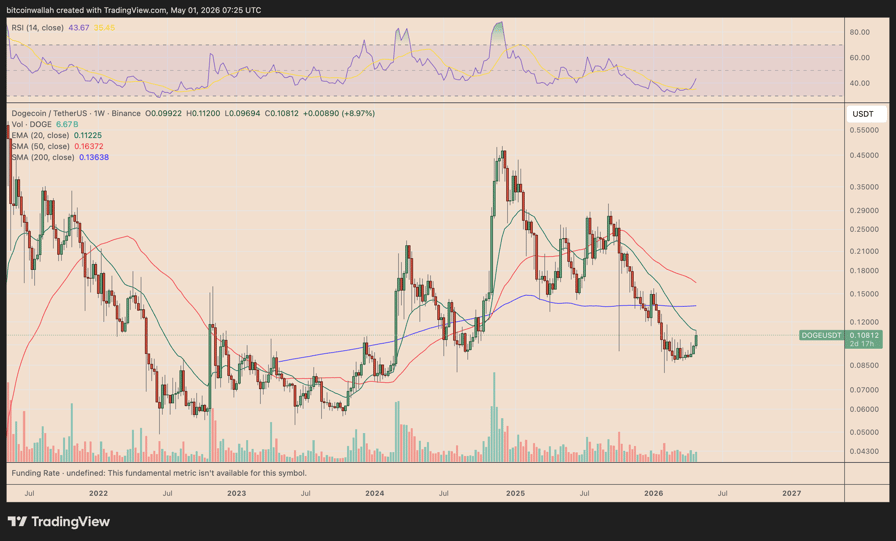
DOGE/USDT weekly chart. Source: TradingView
Such a move would push Dogecoin above the average acquisition cost of large DOGE wallets holding more than 10,000 DOGE (green), currently near $0.115. It would also clear DOGE’s aggregate cost basis (black) around $0.132.
Historically, reclaiming these cost-basis levels has preceded extended bullish phases, as more holders return to profit and selling pressure eases.
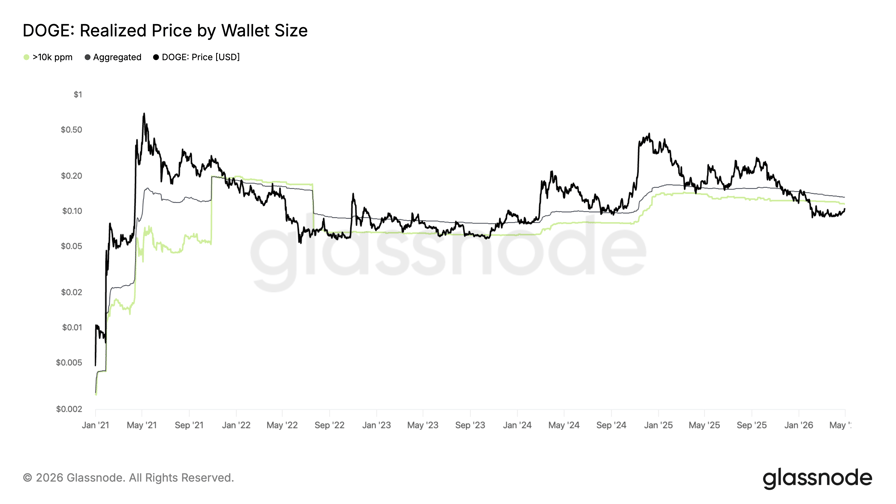
DOGE realized price by wallet size. Source: Glassnode
Conversely, a rejection near current levels, around the 20-week EMA (green) resistance, would weaken the bullish breakout case. Such a pullback could put DOGE at risk of revisiting its local low near $0.088 in May.
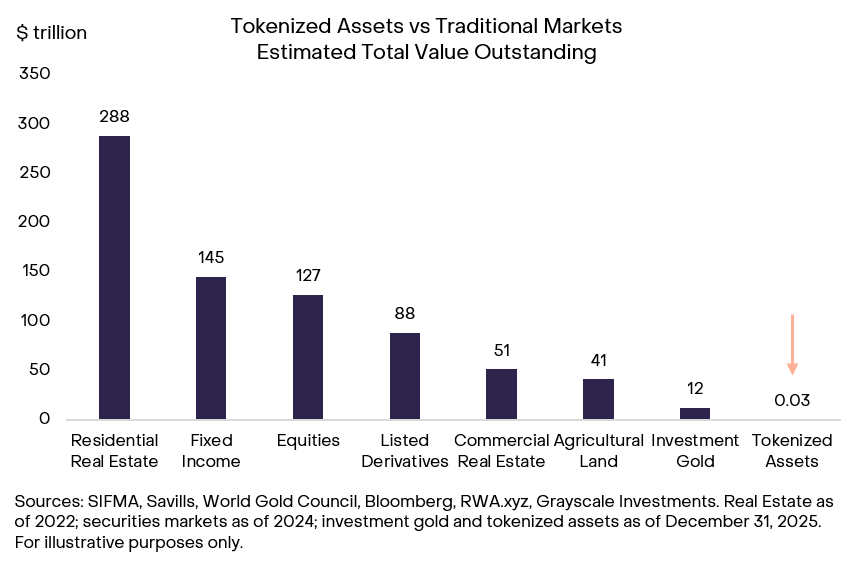
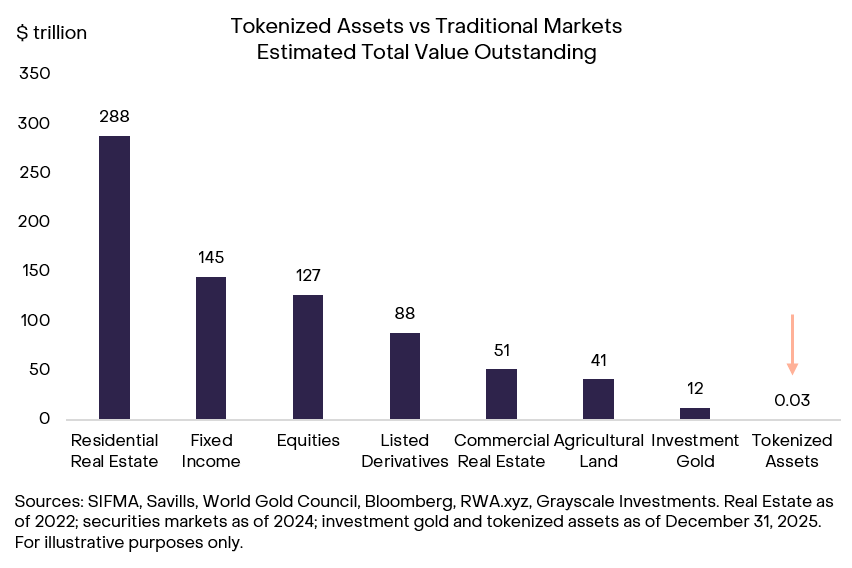
Market Size Gap Signals Expansion Potential
Grayscale emphasized that US Treasuries lead tokenized assets with around $15 billion in value, followed by commodities at about $5 billion. Smaller segments include private credit, funds, and equities, which continue to develop gradually.
Zach Pandl and Will Ogden Moore stated that much of the global securities market could eventually shift to blockchain infrastructure. “Over time, we believe much of the $300 trillion securities market, along with assets like real estate, will migrate on-chain,” the report noted. Hence, the firm framed tokenization as a structural change in capital markets.
Canton Leads While Ethereum and Solana Scale
Grayscale identified Canton as the dominant network in tokenized assets, holding about $390 billion in value and capturing a large share of on-chain real world assets. Significantly, the report linked this lead to Canton’s institutional focus and built-in privacy features, which align with traditional finance requirements.
Ethereum followed with roughly $16 billion in tokenized assets and about $50 billion locked in decentralized finance. Moreover, the network maintains strong ecosystem activity, including developers and applications. Geoff Kendrick from Standard Chartered said Ethereum could lead near-term adoption driven by traditional finance participation.
Solana accounted for more than $2 billion in tokenized assets and offers high transaction throughput above 1,000 transactions per second. However, Grayscale noted that lower costs and faster processing could support wider retail access and specific use cases such as on-chain stock trading.
Infrastructure and Supporting Networks Gain Attention
Chainlink emerged as a key infrastructure provider within the tokenization ecosystem. The report described it as a “picks and shovels” opportunity because it supports data and connectivity across asset lifecycles. Additionally, Avalanche and BNB Chain also featured as networks expected to benefit from broader adoption trends.
Tokenized assets total about $30 billion, a small share of the roughly $300 trillion global securities market. Consequently, researchers described the gap as a large runway for future adoption. They added that only about 0.01 percent of equities and bonds currently exist on-chain.
Grayscale Research has named six blockchain protocols it expects to benefit most as tokenization expands across global markets. The firm pointed to Ethereum, Solana, Canton, Avalanche, BNB Chain, and Chainlink as key networks positioned to capture value from this shift. Moreover, the report highlighted rapid growth in tokenized assets, which rose 217 percent year over year.
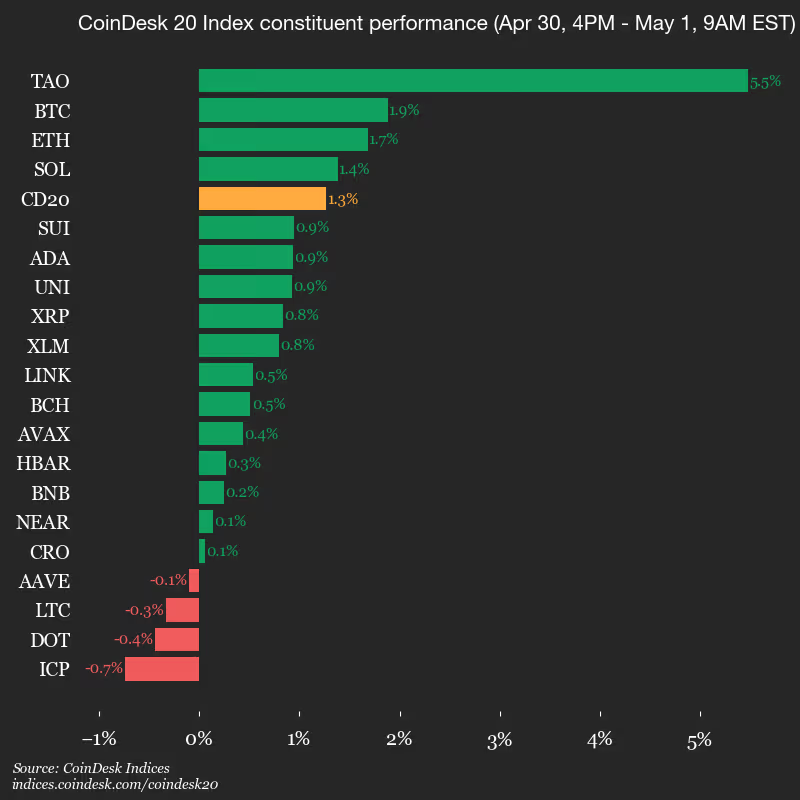
CoinDesk Indices presents its daily market update, highlighting the performance of leaders and laggards in the CoinDesk 20 Index.
The CoinDesk 20 is currently trading at 2090.4, up 1.3% (+26.17) since 4 p.m. ET on Thursday.
Sixteen of 20 assets are trading higher.

Leaders: TAO (+5.5%) and BTC (+1.9%).
Laggards: ICP (-0.7%) and DOT (-0.4%).
The CoinDesk 20 is a broad-based index traded on multiple platforms in several regions globally.
Crypto World
Occidental Petroleum (OXY) Leadership Transition: Vicki Hollub to Retire, Richard Jackson Named Successor

Key Highlights
- Vicki Hollub, CEO of Occidental Petroleum, plans to retire June 1, 2026, concluding over four decades with the organization.
- Richard Jackson, currently serving as Chief Operating Officer and with the company since 2003, has been appointed as the next CEO.
- In 2016, Hollub made history as the first female CEO of a major American oil corporation.
- Major deals under her leadership include the $12 billion Anadarko purchase in 2019 and the $12 billion CrownRock transaction in 2024.
- The company announced a quarterly dividend of $0.26 per common share, with a July 15, 2026 payment date.
Occidental Petroleum revealed on Friday that Vicki Hollub will step down as CEO effective June 1, with Richard Jackson, the current Chief Operating Officer, taking the reins.
Occidental Petroleum Corporation, OXY
Shares of OXY declined 0.30% following the leadership transition announcement.
With more than 40 years at Occidental, Hollub assumed the CEO position in 2016, breaking barriers as the first woman to head a major U.S. oil enterprise.
Jackson brings extensive company experience, having joined Occidental over two decades ago in 2003. Along with his new CEO role, he will become a board member on June 1.
Following her departure from the executive suite, Hollub will continue serving as a board director.
Her leadership era was marked by bold, transformative transactions. The most notable was the 2019 Anadarko Petroleum acquisition valued at $12 billion — a leverage-intensive deal that sparked considerable investor debate.
Subsequent years focused on financial restructuring — reducing debt obligations, divesting non-core assets, and streamlining operations.
She also led the 2024 acquisition of shale operator CrownRock for $12 billion, strengthening OXY’s footprint in oil and gas extraction.
A Streamlined, Focused Enterprise
Earlier in 2025, Occidental finalized the sale of its chemicals division for $9.7 billion, further concentrating the company’s strategic focus on oil and gas operations.
The organization Jackson will inherit represents a more efficient operation compared to what Hollub originally took over.
Prior to her CEO appointment, Hollub managed Occidental’s Permian Basin activities, instrumental in establishing the company as a dominant force in America’s most prolific oil-producing region.
March reports from Reuters indicated that Hollub was preparing for succession after approximately ten years as chief executive.
Dividend Distribution and Additional Updates
In a separate announcement, Occidental’s board approved a quarterly dividend payment of $0.26 per common share, scheduled for distribution on July 15, 2026, to shareholders recorded as of June 10, 2026.
The company has also disclosed an oil discovery at the Bandit prospect location in the Gulf of America, situated approximately 125 miles off Louisiana’s southern coastline. Occidental owns a 45.375% working interest in this venture, with Chevron U.S.A. and Woodside Energy as additional stakeholders.
UBS analysts upgraded their price target for OXY shares to $67 from the previous $64, maintaining a Neutral rating based on improved operational projections.



Fun raises $72m to power unified fiat and crypto rails for apps like Polymarket and Aave, after quietly processing over $18b in annual payment volume.
Summary
- Payment infrastructure startup Fun has raised $72 million in Series A funding led by Multicoin Capital and SignalFire to power fiat and crypto rails for consumer apps.
- The company provides deposit and withdrawal infrastructure for platforms like Polymarket, Lighter, and Aave, and says it processed more than $18 billion in transaction volume over the past year.
- New investors include Infinity Ventures, Pharsalus Capital, and Tinder co-founder Justin Mateen, as Fun positions itself as a neutral, API-first “money layer” for Web2 and Web3 products.
Fun, a payment infrastructure startup that plugs both fiat and crypto rails into high-growth consumer platforms, has closed a $72 million Series A round led by Multicoin Capital and SignalFire, according to reporting from Fortune.
Fun’s $72m bet on unified payment rails
The company, which quietly powers deposits and withdrawals for prediction markets like Polymarket, social apps such as Lighter, and DeFi lenders including Aave, told Fortune it now handles more than $18 billion in annual transaction volume across its network.
Infinity Ventures and Pharsalus Capital joined the round alongside angel backers like Tinder co-founder Justin Mateen, extending a broader trend of consumer-tech investors backing crypto-native payment rails.
Wiring Web2 apps into crypto liquidity
Fun’s pitch is simple: abstract away the complexity of banking partners, stablecoin liquidity, and compliance so that apps can offer seamless deposits and withdrawals in local currencies and digital assets through a single API.
As Fortune notes, Fun sits in the background while users on platforms such as Polymarket move funds between dollars, stablecoins, and onchain markets, providing the “plumbing” that talks to both banks and blockchains.
That model echoes other infrastructure players moving billions in stablecoin volume for enterprises, but Fun is more tightly focused on consumer-facing apps where users expect instant settlement and low friction.
For crypto markets, this kind of infrastructure matters because it lowers the barrier for mainstream users to reach DeFi protocols like Aave without ever touching an exchange interface.
When combined with rising interest in stablecoin payments—Cointelegraph recently highlighted estimates that roughly $60 billion was spent on legacy remittance fees in 2025 alone—Fun’s bet is that a growing share of that flow will migrate into programmable dollars that its rails can move around the world.
A deeper, more reliable fiat–crypto bridge also feeds into narratives around Bitcoin and Ethereum as macro assets.
As previous crypto.news coverage on Bitcoin’s march toward $110k and Fed-driven BTC rallies has shown, easier access to onchain markets tends to amplify how quickly capital responds when macro conditions shift.
In parallel, real-world asset and onchain finance projects—such as those tracking institutional flows into DeFi versus fintech rails in this Aave-focused analysis—are increasingly dependent on neutral payment layers that can move funds between traditional accounts and smart contracts without users ever seeing the pipes.
Fun’s $72 million war chest, combined with its $18 billion in annual volume, suggests investors are betting that whoever owns those pipes will have outsized leverage over how money moves between banks, stablecoins, and onchain applications over the next cycle.
If you mention major assets in your piece, remember to link their price pages from crypto.news’ market-cap section, for example Bitcoin and Ethereum.


Tether reported $1.04 billion in net profit for the first quarter of 2026 and lifted its reserve buffer to a record $8.23 billion, even as global markets churned through fresh volatility.
The figures come from a quarterly attestation by accounting firm BDO. They confirm USD₮ liabilities sit near $183 billion against $191.77 billion in assets, leaving over $8.2 billion in surplus capital.
Treasury yields drove the Q1 profit
The reserves are concentrated in short-duration government paper. Direct and indirect exposure to U.S. Treasury bills reached approximately $141 billion as of March 31.
This ranked Tether the 17th-largest holder of U.S. government debt globally, according to the company.
That position is also the engine. With Treasury bills yielding above 4%, $141 billion in exposure throws off multi-billion-dollar annual interest income, the same dynamic that drove first-quarter profitability.
The $8.23 billion buffer is, in practical terms, accumulated yield rather than externally injected capital.
A sustained drop in short-term rates would compress the model directly.
Gold and Bitcoin Sit Outside the Safety Net
Beyond Treasuries, Tether holds roughly $20 billion in physical gold and $7 billion in Bitcoin (BTC). Together they account for around 14% of the reserve base.
The company frames the mix as a deliberate hedge against macroeconomic stress, but unlike Treasuries, both assets trade daily and can swing the surplus figure either way.
Bitcoin alone has experienced quarterly drawdowns above 30% in past cycles.
Token supply held near $183 billion through the quarter, with USD₮ in circulation up more than 5 billion units into early Q2 alongside the launch of the Tether Wallet self-custody product.
The unresolved question sits at the bottom of the press release. Tether says its long-pending full audit has “formally commenced” this quarter, the first time the company has placed that process inside an attestation.
Until the work concludes, the $8.23 billion buffer remains an attested figure, not an audited one.
The post Tether Prints $1 Billion Q1 Profit, But Its $8.23 Billion War Chest Remains Contested appeared first on BeInCrypto.
Crypto World
Bitcoin (BTC) market cap to hit $16 trillion by 2030, driven by institutional demand: Ark Invest


Bitcoin , the largest cryptocurrency, is set to surge in the next four years, propelling its market capitalization to $16 trillion by 2030, Ark Invest said in its annual research report, Big Ideas.
The more than 10-fold growth — market cap is currently about $1.5 trillion — will be driven by accelerated institutional adoption and crypto’s evolution into an asset class that features in investment portfolios worldwide, the Cathie Wood-led investment company said. That’s a compound annual rate of roughly 63%.
Bitcoin’s increased popularity will help drive the broader digital asset market to around $28 trillion by the end of the decade, according to the report. It’s currently about $2.7 trillion, according to CoinDesk data. It also means the price could surge: Even if all 21 million BTC were in circulation by then, which they wouldn’t be, one bitcoin would be valued at more than $730,000.
Wood has long been bullish on bitcoin. In January, Ark Invest forecast a price range of $300,000-$1.5 million by 2030. In February, Wood reiterated its appeal as a hedge against inflation and deflation, driven by technological acceleration.
“Bitcoin is maturing as the leader of a new institutional asset class,” the report said, buoyed by adoption across exchange-traded funds (EFTs), corporate treasuries and sovereign entities.
Institutional ownership of, primarily, bitcoin is already rising quickly. U.S. ETFs and public companies held about 12% of the total bitcoin supply at the end of last year, an increase from about 9% a year earlier, the report said.
The move reflects a shift in how bitcoin is perceived. Once seen primarily as a speculative asset, it is increasingly being considered “digital gold,” a macro hedge and a reserve asset alongside traditional stores of value.
It adds that even a modest penetration into institutional holdings, as low as 2.5% of an estimated $200 trillion global portfolio excluding gold, could contribute about $5 trillion to bitcoin’s total valuation.
The report also predicts that bitcoin will capture an estimated 40% of gold’s total market value, which it estimated at just over $24 trillion currently, implying nearly $10 trillion in additional upside from the “digital gold” narrative alone.
Other contributions to bitcoin’s growth would come from emerging demand for a neutral reserve asset, where even just a 0.5% penetration of a lower $68 trillion monetary base could add about $339 billion in value, along with allocations from nation-states and corporate treasuries that could each contribute hundred of billions of dollars more.
Solana-based decentralized finance yield protocol Carrot said Thursday that it is shutting down permanently, becoming one of the first DeFi protocols to fall due to contagion from the Drift Protocol exploit in early April.
In an X post on Thursday, Carrot said the Drift exploit was “catastrophic” for the protocol and had left it financially unable to continue operating. The platform set a May 14 deadline for users to withdraw remaining funds. It said it will continue to help recovery efforts related to Drift and distribute assets once they become available.
“We are setting May 14th as the deadline to withdraw any remaining funds from Boost, Turbo, and CRT before we will then begin to deleverage the system. Your deposited funds are still yours, but all leverage will be reduced to zero, freeing up all liquidity for CRT redemption,” the protocol’s team said.
The Drift protocol exploit on April 1 was the second-largest in 2026. It was a highly coordinated attack that involved months of social engineering by a group of hackers who gained admin control and drained more than half the protocol’s total value locked.
The contagion spread to several affiliated projects such as the yield protocol Gauntlet, the lending and borrowing platform PrimeFi and the crypto fund Elemental DeFi.
Related: Insider trading backlash forces Polymarket to step up surveillance
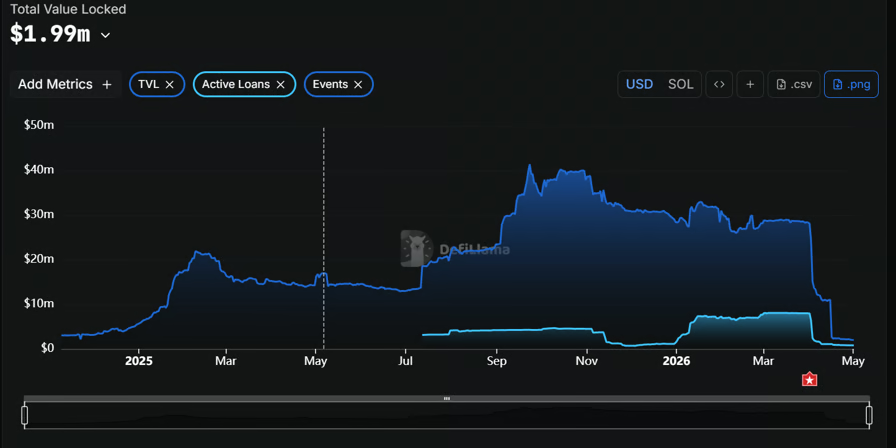
Carrot was integrated with Drift’s infrastructure and used its pools to generate yield for its users. Its TVL collapsed after the Drift Protocol hack.
According to data from DefiLlama, Carrot’s total value locked was around $28 million before the Drift hack, and is currently $1.99 million, marking a decrease of roughly 93%.
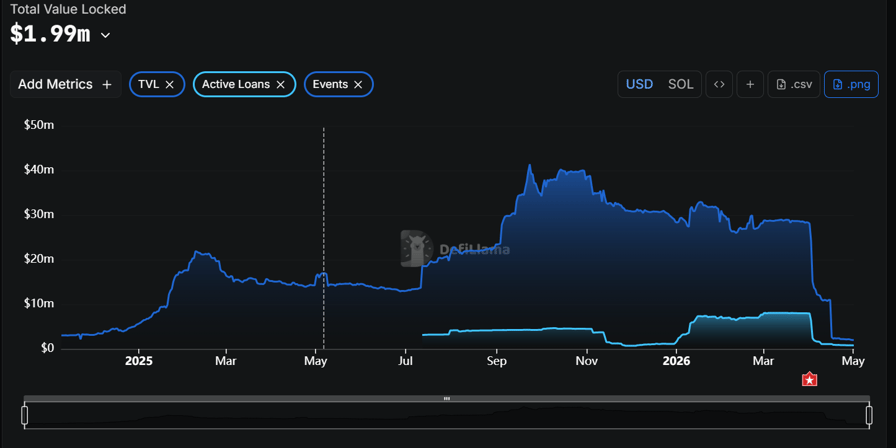
Carrot’s sharp TVL drop after the Drift hack. Source: DefiLlama
DefiLlama data also shows nearly $630 million worth of digital assets were stolen in April across 25 incidents, making it the month with the largest losses since February 2025, when $1.47 billion was stolen.
The $293 million hack on liquid staking protocol Kelp is the largest exploit of 2026 so far. The Drift hack is close behind at $285 million. Together, these two attacks account for more than 90% of all crypto stolen in April.
Magazine: AI-driven hacks could kill DeFi — unless projects act now


The U.S. Department of Defense has expanded its push into artificial intelligence, securing fresh agreements with several major technology firms to deploy advanced AI systems across classified military networks.
Summary
- Pentagon signs Nvidia, Microsoft, Reflection AI, and AWS to deploy AI tools on classified military networks, expanding its roster of tech partners.
- New agreements add to existing deals with SpaceX, OpenAI, and Google, with the Pentagon confirming its Google partnership for the first time.
- Push comes amid a dispute with Anthropic over safeguards on its Claude models, as the Defense Department seeks alternative AI systems for military use.
According to a report released Friday, Nvidia, Microsoft, Reflection AI, and Amazon Web Services have all signed agreements to provide operational capabilities, the Pentagon said in a statement. Two defense officials familiar with the matter also confirmed the agreements.
The latest additions place them alongside SpaceX, OpenAI, and Google, which had already committed to supplying AI tools for classified use. The announcement also serves as the first formal confirmation from the Pentagon of its agreement with Google, which had surfaced in earlier reports this week.
“These agreements accelerate the transformation toward establishing the United States military as an AI-first fighting force,” the department said.
Officials said the agreement with Amazon Web Services was finalized late Thursday, indicating that negotiations had continued up to the final stages before the announcement.
Efforts to build a network of private-sector partners come as the Pentagon looks for alternatives to systems developed by Anthropic, particularly its Claude models. That search follows a dispute between the company and defense officials over how its technology could be used in military settings.
Anthropic had pushed back against requests to relax safeguards that limit the use of its models in areas such as autonomous weapons and domestic surveillance.
The disagreement deepened over time, with the Defense Department at one point classifying the company as a “supply chain risk,” despite continued internal interest in its systems.
Pentagon officials have maintained that there are no plans to deploy AI for mass surveillance of U.S. citizens or to enable fully autonomous weapons. At the same time, the department has emphasized that “any lawful use” of artificial intelligence should remain accessible to government agencies under these agreements.

Ospreys star banned for rest of season and start of next after Welsh derby incident

Grupo Bimbo raises guidance after strong first quarter

Bitcoin ETFs Hit $2B in April as This Year’s Peak Monthly Inflow

Manchester United reach agreement with Casemiro over contract clause amid transfer speculation

US brings back mandatory military draft registration

Steven Gerrard disagrees with Gary Neville over ‘shock’ Chelsea and Arsenal claim | Football


-

 Tech4 days ago
Register Renaming | Hackaday
-

 Fashion7 days ago
Weekend Open Thread – Corporette.com
-
 Crypto World6 days ago
Hyperliquid $HYPE Rally Builds Momentum as AI Sector Enters Prove-It Phase
-

 Politics4 days ago
Drax board avoid their own AGM, accused of greenwashing & environmental racism
-

 Tech4 days ago
Images of Samsung’s rumored smart glasses have leaked
-
 Sports5 days ago
IPL 2026: Ruturaj Gaikwad registers slowest fifty of the season, enters all-time unwanted list | Cricket News
-

 Tech4 days ago
Why Blue Badges Disappeared From Toyota Hybrids
-

 NewsBeat5 days ago
LK Bennett closes all stores after entering administration
-

 Fashion3 days ago
Kylie Jenner’s KHY Enters a New Era with ‘Born in LA’
-
 Entertainment6 days ago
Mariah Carey Slams Deposition Claims In Brother’s Lawsuit
-

 Business3 days ago
Most Commercial Energy Audits Miss the Real Losses
-

 Business4 days ago
(VIDEO) Charlize Theron Climbs Times Square Billboard to Promote New Netflix Thriller ‘Apex’
-

 Crypto World3 days ago
CFTC’s AI will review U.S. crypto registration applications, chairman tells CoinDesk
-

 Business7 days ago
Jeanine Pirro announces closure of Federal Reserve building cost probe
-

 Tech6 days ago
Microsoft to roll out Entra passkeys on Windows in late April
-
 Crypto World7 days ago
Nvidia (NVDA) Stock Jumps 5% as Intel Earnings Ignite Semiconductor Rally
-

 Tech5 days ago
OpenAI’s Sam Altman apologizes for not reporting ChatGPT account of Tumbler Ridge suspect to police
-

 Business2 days ago
Barclay Brothers Avoid Bankruptcy: HSBC Drops High Court Petitions After IVA Deal
-

 Tech7 days ago
Apple’s Next CEO Has a Different Battle Ahead
-

 Tech3 days ago
Get Ready for More Brain-Scanning Consumer Gadgets
You must be logged in to post a comment Login