A company of Manulife Investment Management, John Hancock Investment Management serves investors through a unique multimanager approach, complementing our extensive in-house capabilities with an unrivaled network of specialized asset managers, backed by some of the most rigorous investment oversight in the industry. The result is a diverse lineup of time-tested investments from a premier asset manager with a heritage of financial stewardship. Note: This account is not managed or monitored by John Hancock Investment Management, and any messages sent via Seeking Alpha will not receive a response. For inquiries or communication, please use John Hancock Investment Management’s official channels.
It is providing sharede national data plaform, ChargePoint Navigator, to the 22 local authorities in Wales
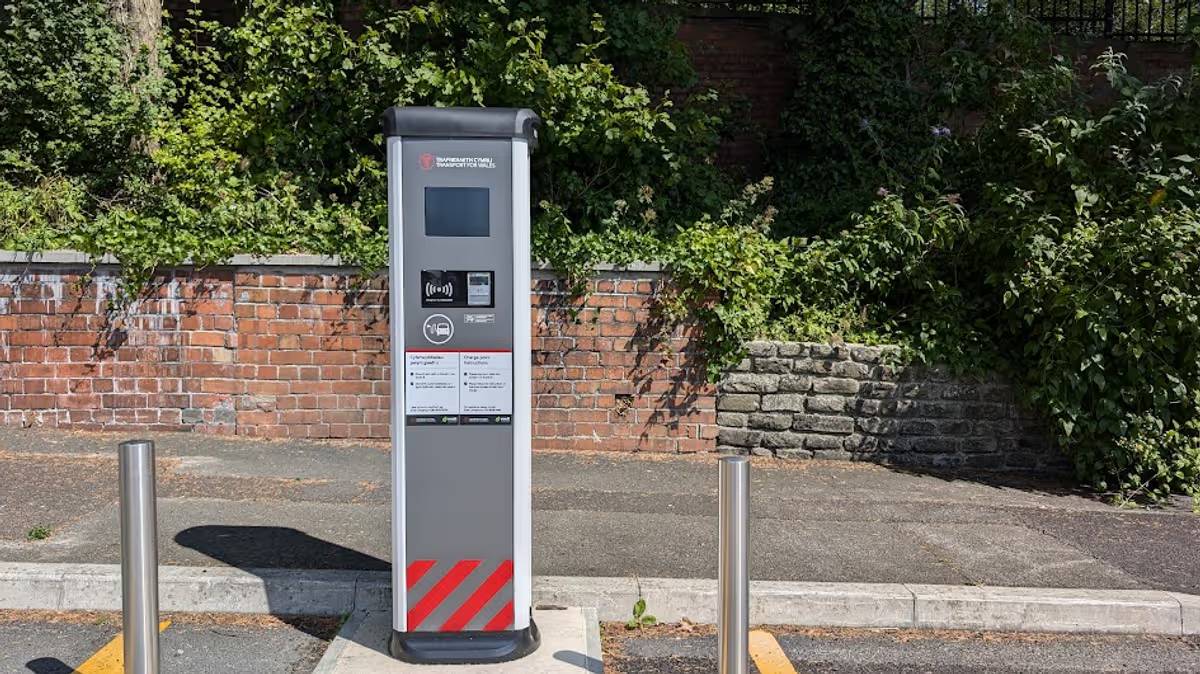
An EV charging point.
Transport for Wales (TfW) has announced a Wales-wide initiative to support the rollout of electric vehicle (EV) charging infrastructure. It is providing all 22 local authorities with free access to a shared national data platform, ChargePoint Navigator.
ChargePoint Navigator is designed to simplify site selection, reduce costs, and support EV infrastructure planning to local authorities.
Through TfW sponsorship, local authorities will now have access to a common evidence base, supporting consistent, transparent and value for money investment in charging infrastructure aligned with national transport policies.
This marks the first time the platform has operated at a national level outside England. Originally funded and co-developed by UK Power Networks Distribution System Operator (DSO) and Field Dynamics, ChargePoint Navigator has already been adopted by more than a 100local authorities in UK Power Networks operational area and is widely endorsed with a 94% customer satisfaction rating.
This builds on the wider support Transport for Wales already offers to Local Authorities to improve access to data, strengthen in-house capability and deliver EV charging infrastructure that is sustainable and equitable.
The initiative is a key step in delivering the Wales Electric Vehicle Charging Action Plan, which highlights the need for more coordinated, data-led approaches to EV charging across Wales.
Tony Clayton, EV infrastructure programme manager at Transport for Wales said: “As Wales’ EV charging network matures, our focus is shifting from simply increasing charger numbers to ensuring provision is fair, strategic and meets the needs of communities across the country.
Advertisement
“ChargePoint Navigator supports this by bringing consistent data and shared expertise into one place, helping us raise standards and ensuring EV infrastructure contributes fully to our wider transport and decarbonisation ambitions.”
Craig Stephenson, Managing Director of Field Dynamics, said: “Local authorities play a critical role in shaping how EV charging infrastructure is delivered on the ground. “It’s vital they have the right data and tools at their fingertips to make informed decisions and to actively shape outcomes.”
As the Australian men’s national soccer team, affectionately known as the Socceroos, prepares for their sixth consecutive FIFA World Cup appearance in 2026, excitement is building across the nation. Under coach Tony Popovic, who took over in late 2024 and steered the team to direct qualification with key wins over Japan and Saudi Arabia, Australia is eyeing a deeper run in the expanded tournament co-hosted by the United States, Canada and Mexico.
Tim Cahill
With the final 26-player squad set to be named in late May after friendlies against Cameroon, Curaçao and Mexico, and a pre-tournament camp in Florida, fans are revisiting the team’s colorful history. Here are 10 fun facts about the Socceroos that highlight their journey from underdogs to consistent World Cup contenders.
The Nickname “Socceroos” Blends Soccer and Kangaroos The moniker was coined in 1967 by Sydney journalist Tony Horstead, combining “soccer” with “kangaroo,” Australia’s iconic animal. The team embraced it during a tour to Vietnam that year, and it quickly stuck. The logo even featured a kangaroo in football boots for the 1974 World Cup. Today, the side is officially sponsored as the CommBank Socceroos, with the name symbolizing national pride and resilience.
World Record for the Biggest International Win On April 11, 2001, the Socceroos demolished American Samoa 31-0 in a World Cup qualifier — the largest margin of victory in senior men’s international football history. Archie Thompson scored 13 goals, while David Zdrilic added eight. The match, played in Coffs Harbour, highlighted Australia’s dominance in Oceania before switching to the Asian Football Confederation in 2006.
Six Straight World Cup Appearances Since Switching to Asia After dominating the Oceania Football Confederation (OFC) and winning the OFC Nations Cup four times (1980, 1996, 2000, 2004), Australia joined the AFC in 2006. They have qualified for every World Cup since: 2006, 2010, 2014, 2018, 2022 and now 2026. The 2006 tournament marked their best performance, reaching the round of 16 under Guus Hiddink.
Tim Cahill Scored in Three Consecutive World Cups Legendary midfielder Tim Cahill became the first Australian to score in three straight World Cups (2006, 2010, 2014). His volley against Japan in 2006 was Australia’s first-ever World Cup goal, sparking a comeback win. Cahill finished with 50 international goals, the team’s all-time leading scorer.
First World Cup Goal Came as an Own Goal In their 1974 debut against East Germany in Hamburg, defender Col Curran scored the first Australian goal at a World Cup — unfortunately for the wrong team. The Socceroos lost 2-0 in a tough group that included hosts West Germany. It took 32 years for Australia to register an official goal at the finals.
2022 World Cup Heroics With Penalty Shootout Drama Against Peru in the 2022 intercontinental playoff, goalkeeper Andrew Redmayne’s “wiggle routine” became legendary. Redmayne came off the bench specifically for the shootout and made the decisive save, sending Australia to Qatar. The moment captured the never-say-die spirit that defines the Socceroos.
Asian Cup Champions in 2015 on Home Soil After moving to Asia, Australia hosted and won the 2015 AFC Asian Cup, defeating South Korea 2-1 in the final with a golden goal from James Troisi. It remains their greatest continental triumph and boosted soccer’s popularity Down Under, proving they could compete with Asia’s best.
Diverse Squad Reflects Australia’s Multicultural Fabric The current Socceroos squad features players with roots from Croatia, Italy, Greece, Lebanon, Iraq and beyond, alongside homegrown talent. Stars like Alessandro Circati (Parma), Cameron Burgess (Swansea City) and emerging names such as uncapped call-ups Lucas Herrington and Ante Suto in March 2026 camps showcase this rich diversity that strengthens team chemistry.
Mathew Ryan: The Most-Capped Goalkeeper Veteran keeper Mathew Ryan, expected to start in 2026, has been a stalwart for over a decade. With experience at clubs like Brighton, Arsenal and now Levante, Ryan provides leadership and shot-stopping reliability. Young backups like Joe Gauci (Aston Villa) and Patrick Beach (Melbourne City) signal a bright future in goal.
Popovic’s Revival and Florida Prep Camp After a rocky start to 2026 qualifying under Graham Arnold, Tony Popovic’s appointment sparked a turnaround with crucial victories that secured direct qualification for the first time since 2014. The team will hold a training camp in Sarasota, Florida, ahead of a May 30 friendly against Mexico in Los Angeles, aiming to acclimatize to North American conditions for the World Cup.
Looking Ahead to 2026With FIFA ranking them around 27th in early 2026, the Socceroos enter the tournament with realistic ambitions of advancing from the group stage. Key players likely to feature include defenders like Circati and Burgess, midfielders Jackson Irvine and Aiden O’Neill, and attackers Martin Boyle and Riley McGree. The expanded 48-team format offers more opportunities for upsets.
Australia’s path reflects perseverance. From the 1974 pioneers who faced landmine concerns during training in war-torn regions to modern stars competing in Europe’s top leagues, the Socceroos embody the Australian spirit of mateship and fighting spirit.
Fans will have one final chance to see the team on home soil during the March 2026 FIFA Series matches against Cameroon in Sydney and Curaçao in Melbourne. These games serve as vital auditions for the 26-man squad, with several A-League players earning call-ups and uncapped prospects getting their shot.
The Socceroos’ story is one of evolution — from OFC powerhouse to AFC contender, from record-breakers to penalty-shootout heroes. As they head to North America, the team carries the hopes of a soccer-mad nation that has grown dramatically since that first 1922 tour to New Zealand.
Advertisement
Whether it’s the kangaroo-inspired nickname, record-shattering wins or dramatic qualifying moments, these fun facts remind supporters why the Socceroos capture hearts. With Popovic at the helm and a talented, multicultural squad, Australia aims to create new memories in 2026 and shed any remaining underdog label.
The tournament promises thrilling matches, and the Socceroos will be ready to “dance with the best” once more. For a nation where soccer continues to rise alongside other codes, this World Cup represents another milestone in the team’s proud 100-plus-year history.
The UK is expected to suffer the largest economic hit among major global economies from the ongoing Middle East conflict, according to the OECD, which has sharply downgraded its growth forecasts and warned of rising inflation risks.
In its latest outlook, the OECD cut the UK’s growth forecast for 2026 to just 0.7 per cent, down from a previous estimate of 1.2 per cent, placing it among the weakest performers in the G20. Only Italy is expected to record slower growth among the G7 economies, while the UK is also forecast to experience one of the highest inflation rates in the group.
The downgrade reflects the UK’s vulnerability to rising energy costs, which have surged following the escalation of the US-Israel conflict with Iran. Disruptions to oil and gas supplies, particularly through the Strait of Hormuz, have driven up wholesale prices, feeding directly into inflation and dampening economic activity.
The OECD warned that a prolonged conflict could lead to “significant energy shortages” globally, with knock-on effects including higher fertiliser costs, reduced crop yields and a potential spike in food prices next year.
For the UK, which remains heavily reliant on imported energy, the impact is particularly acute. Rising fuel costs are already being felt at petrol stations and in heating bills, while businesses are facing higher input costs across supply chains.
Advertisement
Alongside weaker growth, inflation is now expected to rise significantly. The OECD forecasts UK inflation will reach 4 per cent this year, up from a previous estimate of 2.5 per cent, before easing to 2.6 per cent in 2027, still above earlier projections.
Across the G20, inflation is now expected to average 4 per cent, compared with a previous forecast of 2.8 per cent, highlighting the global nature of the price shock.
The combination of slowing growth and rising inflation raises the prospect of a stagflationary environment, complicating policy decisions for central banks and governments.
Financial markets have already begun to adjust to the new outlook, with expectations that the Bank of England may need to delay or reverse planned interest rate cuts.
Advertisement
Mortgage lenders have responded by increasing rates and withdrawing hundreds of deals, reflecting concerns about sustained inflation and higher borrowing costs.
The shift in expectations marks a sharp reversal from earlier in the year, when markets had anticipated a gradual easing of monetary policy.
Chancellor Rachel Reeves acknowledged the impact of the conflict but insisted the government’s economic strategy had strengthened the UK’s resilience.
“In an uncertain world we have the right economic plan,” she said, adding that recent policy decisions had put the country in a better position to weather global instability.
Advertisement
However, opposition figures have seized on the downgrade as evidence of underlying economic weakness. Mel Stride described the forecast as a “damning verdict” on the UK’s vulnerability, while the Liberal Democrats called it a “wake-up call” for policymakers.
The effects of the energy shock are already being felt across the corporate sector. Retailers and manufacturers have warned of rising costs linked to fuel, transport and energy.
Executives at major UK companies have highlighted the growing burden of energy-related expenses, with some warning that sustained increases could force businesses to pass costs on to consumers.
The deteriorating fiscal position also limits the government’s ability to respond with large-scale support measures. Reeves has indicated that any assistance for households will be targeted and constrained by borrowing rules, reflecting the pressure on public finances.
Advertisement
The OECD emphasised that support measures should be “timely and well-targeted”, focusing on vulnerable households and viable businesses while maintaining incentives to reduce energy consumption.
Beyond the immediate crisis, the OECD highlighted the need for longer-term policy changes to reduce reliance on imported fossil fuels and improve domestic energy resilience.
Investments in renewable energy, energy efficiency and infrastructure are seen as critical to mitigating future shocks and stabilising the economy.
The latest forecasts underscore the fragile state of the UK economy, which was already experiencing modest growth before the conflict.
Advertisement
While global growth is expected to hold at around 2.9 per cent this year, the UK’s weaker performance reflects both external pressures and structural vulnerabilities.
For policymakers, the challenge will be navigating a complex environment where inflation, energy security and economic growth are increasingly intertwined.
For households and businesses, the message is more immediate: the cost-of-living pressures that defined recent years may be set to intensify once again, as the full impact of the energy shock feeds through the economy.
Amy Ingham
Amy is a newly qualified journalist specialising in business journalism at Business Matters with responsibility for news content for what is now the UK’s largest print and online source of current business news.
Australia’s share market has snapped a three week losing streak, but uncertainty hangs over investor sentiment as an oil supply route remains effectively blocked.
Unilumin completed Asia’s largest indoor transparent screen at Bangkok’s Central World, spanning 2,400 square meters. This project enhances commercial appeal and tourist engagement, showcasing advanced LED technology.
BANGKOK, March 27, 2026 /PRNewswire/ — Recently, the largest indoor transparent screen project in Asia, built by global LED leader Unilumin, was officially completed at Central World in Bangkok, Thailand. Covering a total area of 2,400 square meters, this landmark project sets a new benchmark for the digital transformation of commercial complexes across Southeast Asia and the entire Asian region.
The project employs Unilumin’s UVF series transparent screen (10 mm pixel pitch), which delivers a brightness of 8,000 cd/㎡, a transparency rate exceeding 70%, and a lightweight design of only 8 kg/㎡. With a 7680Hz high refresh rate and 16-bit grayscale processing, the display produces delicate, smooth images and authentic, natural colors—even under intense ambient light.
To adapt to the complex architectural structure, the Unilumin team developed multiple structural installation solutions, including frame curtain walls, point-supported curtain walls, and hoisting methods, fully demonstrating the product’s flexibility and adaptability. The screen also supports a customized front-black, back-white aesthetic that seamlessly integrates with the building’s design.
Advertisement
The project, initiated in 2023, involved three years of sampling, testing, and optimization. From design to surveys, the Unilumin team maintained close communication with the client, earning trust through exceptional display quality, stable performance, and efficient heat dissipation. During delivery, R&D and production teams swiftly responded to changing requirements, completing upgrades and batch deliveries, while technical staff provided on-site support.
Adjacent to the Erawan Shrine—the site sees an average daily foot traffic of over 400,000 people. As a key visual centerpiece in the shopping district, this transparent screen not only enhances the complex’s technological appeal and commercial atmosphere but has also become a popular Instagram spot for tourists. Whether for brand exposure, content display, or public art presentation, the project demonstrates immense commercial value and social influence.
About Unilumin
Unilumin is a global leader in LED displays, lighting products, and integrated Metasight solutions, ranked among the Top 500 Asian Brands for 3 consecutive years, operating in 160+ countries with R&D centers in China, Japan, and the U.S., and the world’s largest intelligent LED manufacturing base. Unilumin has completed a series of milestone projects, such as the world’s largest holographic screen at Spring Cocoon, the 22,000-square-meter Riyadh Season and Boulevard World immersive mega projects in Saudi Arabia, and the world’s first acoustically transparent LED cinema screen.
The information provided in this article was created by Cision PR Newswire, our news partner. The author's opinions and the content shared on this page are their own and may not necessarily represent the perspectives of Thailand Business News.
ET Intelligence Group: A handful of BSE 500 companies have shown strong earnings momentum amid a volatile macroeconomic environment, shows an ETIG analysis. There are 18 companies in the sample that have exceeded their respective FY25 revenue, operating profit before depreciation and amortisation (EBITDA) and net profit in the first nine months of the current fiscal year. These companies have also shown an improvement in EBITDA margins over FY25 levels. The performance on these four key parameters was considered to weed out companies that might have benefited from one-off, non-operating items such as exceptional income, tax adjustments and others.
The list is dominated by six finance and four capital goods companies, aided by an uptick in credit demand and the government’s thrust on infrastructure development. Other sectors that have representation include chemicals, fast moving consumer goods, auto ancillaries and metals. The list includes companies such as GE Vernova T&D, Waaree Energies, Muthoot Finance, Acme Solar, Gillette India, Navin Fluorine, Kalyan Jewellers, Tata Investment Corporation, Multi Commodity Exchange of India, Bajaj Holdings and Investment and Aether Industries.
Agencies
Stealing the show Only 18 BSE 500 firms surpassed their FY25 revenue, EBITDA, net profit and margins in the first 9 months of FY26 l Finance & capital goods cos led the pack amid credit growth and infrastructure push
In addition, seven companies have reported a more than two-fold jump in net profit when compared with the corresponding nine-month period of the previous year. This subgroup includes Waaree Energies, Craftsman Automation, GE Vernova, Capri Global, HBL Engineering, Navin Fluorine and Acme Solar. Despite their impressive financial performance, market conditions have affected their stock returns in the current calendar year. Of the 18 companies, only six, or one-third, have yielded stock returns. These include Waaree Energies (7% return), GE Vernova (20%), Navin Fluorine (5%), Acme Solar (7%), MCX (11%), and Aether Industries (35%), which is also the top gainer on the list. Paradeep Phosphate was the biggest loser, falling 32% year-to-date, affected by concerns over rising input costs.
Travelers at Los Angeles International Airport, known as LAX, are experiencing relatively short TSA security wait times Friday, March 27, 2026, with official airport data showing general boarding and TSA PreCheck lanes at 0 to 5 minutes in the Tom Bradley International Terminal as of early morning. While the ongoing partial government shutdown has caused record delays at some major U.S. airports, LAX has largely avoided the severe staffing shortages and multi-hour lines seen elsewhere.
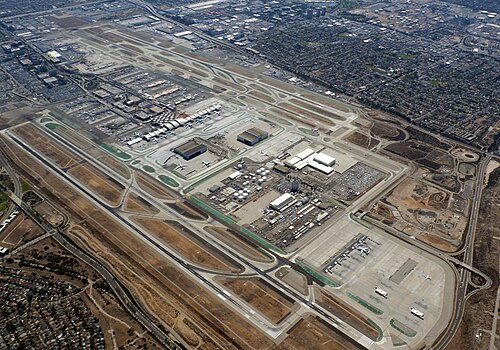
Los Angeles International Airport
The official flyLAX.com security wait times page reported 0 minutes for both general and PreCheck screening in TBIT early Friday, with similar low figures in recent days. Third-party trackers and traveler reports indicate average standard security waits fluctuating between 8 and 25 minutes depending on the hour, far below the four-hour peaks reported at hubs like Houston, Atlanta and Orlando amid the funding lapse.
LAX officials stated this week that the airport has not seen significant deviations from typical passenger wait times, and no immediate operational changes are expected despite the shutdown affecting roughly 50,000 TSA employees working without pay nationwide. Call-out rates at LAX have remained manageable compared with other facilities experiencing 40% to 50% absenteeism.
**Current Conditions at LAX**
As of late March 27, real-time monitors such as TakeoffTimer and OnAirParking showed standard security waits averaging around 17 to 21 minutes, with peaks near 34 to 36 minutes during early morning hours (4-5 a.m.) and much shorter times in the evening. TSA PreCheck lanes consistently cleared in under 5 to 10 minutes. Terminal-specific data varies slightly across LAX’s nine terminals, but TBIT — the busiest for international flights — has reported the lowest figures.
Advertisement
Recent traveler accounts on Reddit and Instagram confirm the trend: one post from March 26 described PreCheck taking less than 5 minutes at Terminal 1 with regular lines at 10-20 minutes. Multiple users noted breezing through mid-day with CLEAR or PreCheck in under 10 minutes, even during spring break travel.
The airport’s checkpoints open early, and conditions typically improve after the morning rush. Unlike airports deploying ICE agents for crowd management, LAX has relied on its existing staffing and efficient layout to maintain flow.
**Impact of the Partial Government Shutdown**
The funding impasse, now in its sixth week, has left TSA officers without paychecks since mid-February, prompting higher call-outs and more than 480 resignations nationwide. TSA Deputy Administrator Ha Nguyen McNeill warned Congress this week of the longest wait times in the agency’s 24-year history, with some lines exceeding four hours.
Advertisement
LAX has fared better due to factors including strong local management, lower relative call-out rates and high passenger volumes that may encourage consistent staffing. Airport officials emphasized no major disruptions, though they continue monitoring the situation closely. Spring break crowds have added pressure, but security has kept pace without the bottlenecks plaguing other hubs.
**How to Check Live TSA Wait Times at LAX**
Passengers should verify conditions in real time:
– Visit flyLAX.com/wait-times for official terminal-specific estimates, updated frequently. – Use third-party tools such as TakeoffTimer.com, OnAirParking.com or the MyTSA app for user-reported data and forecasts. – Check airline apps for gate information and any flight delays. – Monitor LAX’s social media and the Port of Los Angeles alerts for announcements.
Advertisement
Experts recommend arriving at least two hours before domestic flights and three hours before international departures. Those with TSA PreCheck, CLEAR or airline priority boarding should still benefit from faster lanes, though even standard screening has moved efficiently this week.
**Tips for Smoother Security at LAX**
To minimize time at checkpoints:
– Enroll in TSA PreCheck or Global Entry for expedited screening. – Prepare liquids in a quart-sized bag, remove laptops and wear slip-on shoes. – Use mobile boarding passes and avoid prohibited items. – Consider off-peak travel times when possible, such as mid-morning or evening slots. – Have snacks, water and entertainment ready in case of unexpected delays.
Advertisement
Travelers without REAL ID-compliant identification can use TSA’s alternative processes, though these may add time. Families, elderly passengers or those needing assistance should request support early.
**Broader Travel Context in 2026**
LAX, one of the world’s busiest airports handling about 74 million passengers annually, serves as a major gateway for domestic, international and connecting flights. Efficient security helps sustain its reputation despite heavy traffic and occasional construction.
The shutdown has highlighted vulnerabilities in federal workforce funding, with TSA warning of potential airport closures if the impasse persists. At LAX, the focus remains on safety and throughput, with redundancy in checkpoints across terminals helping absorb fluctuations.
Advertisement
Nationally, wait times vary widely: some airports report minimal delays while others face chaos. LAX’s performance stands out as a relative success story amid widespread frustration.
**What Travelers Are Saying**
Feedback from recent days is mostly positive, with many praising quick PreCheck experiences and manageable regular lines. Some note that arriving extra early still provides peace of mind, especially for international flights requiring additional processing. Social media users have contrasted LAX favorably with reports from Houston and other strained facilities.
As negotiations to end the shutdown continue, LAX officials urge patience and preparation. Frontline TSA workers continue performing their duties under difficult circumstances, earning appreciation from passengers who recognize the challenges.
Advertisement
**Looking Ahead**
With spring travel in full swing, monitoring tools will remain essential. LAX expects normal operations to continue, supported by its infrastructure and staffing. However, any escalation in the funding situation could change conditions rapidly.
Passengers should build buffers into their plans and check multiple sources before heading to the airport. Parking, rideshare services and the LAX Automated People Mover remain fully operational, though traffic around the facility can add time during peak periods.
For now, on March 27, 2026, most travelers at Los Angeles International Airport are clearing security faster than expected amid a national TSA crunch. The airport’s proactive approach has helped keep lines moving, offering welcome relief for those flying out of one of America’s busiest hubs.




















































You must be logged in to post a comment Login