Connect with us

Business

JPMorgan Chase warns Basel III rules could hurt small business lending

Published

on

JPMorgan Chase warns Basel III rules could hurt small business lending

FIRST ON FOX: A top executive at JPMorgan Chase warned that proposed federal bank capital rules could damage small businesses across the country, airing caution that Main Street may have less access to credit from banks.

As regulators move to finalize Basel III Endgame, one of the most important global financial regulatory standards to date, Chase Business Bank CEO Stevie Baron said in a memo obtained by Fox News Digital that the current framework could potentially have unintended consequences for small businesses as capital requirements could prevent lending.

Advertisement

“The latest revisions to the 2023 proposal are a step in the right direction, but as we reiterated to regulators, more work is needed to ensure the final rules do not increase the cost of lending or reduce access to credit for small businesses,” Baron said.

A photo of Wall Street with American flags.

A top JPMorgan Chase exec warned that a proposed regulatory framework that would affect America’s biggest banks could prevent loans to small businesses. (Michael Nagle/Bloomberg via Getty Images)

Baron specifically noted proposed changes to the Global Systemically Important Bank (GSIB) surcharge, saying that formula could encourage trading over lending, raising borrowing costs for millions of small business owners.

JAMIE DIMON SAYS HE WOULDN’T BUY STOCKS OR TREASURYS AT CURRENT PRICES

JPMorgan Chase is considered a GSIB, and is required to adhere to higher loss-absorbing equity and capital requirements than other smaller banks.

Advertisement

“The Fed should reconsider the proposed changes to the GSIB surcharge calculation, and, in particular, retain the current approach to the short-term wholesale funding factor that accounts for the size and funding diversification benefits of universal banks,” Baron added. “Regulators should ensure the surcharge framework does not penalize the everyday lending and banking services relied on by small businesses.”

Ticker Security Last Change Change %
JPM JPMORGAN CHASE & CO. 351.55 -5.71 -1.60%

He also argued that “capital requirements should not increase just because the economy is growing or routine activity is expanding,” and that “policymakers should ensure the capital framework operates as a coherent whole, rather than layering multiple requirements on top of the same risks.”

Baron oversees more than 7 million small and medium-sized businesses and over $19 billion in business banking average loans in fiscal year 2025. The American Dream Initiative, which was announced by JPMorgan Chase CEO Jamie Dimon on Fox News’ “Fox and Friends” in March, seeks to expand the total number of small and medium-sized businesses to ten million in additional to a number of changes at the bank to promote growth in the U.S. economy.

Brian Kilmeade

Brian Kilmeade interviews JPMorgan Chase CEO Jamie Dimon during “Fox & Friends” on March 31, 2026, in New York City. (John Lamparski/Getty Images)

A senior JPMorgan Chase executive told Fox News Digital that acting Labor Secretary Keith Sonderling visited the bank’s headquarters last week to discuss the initiative and steps it is taking to implement changes under the Trump administration.

Advertisement

After the 2008 financial crisis, global regulators developed the Basel III regulatory package to ensure banks have enough capital and financial cushion to weather economic volatility to protect taxpayers. U.S. regulatory agencies, including the Federal Reserve, the Federal Deposit Insurance Corporation and the Office of the Comptroller, initially proposed the framework, dubbed Basel III Endgame in 2023 but withdrew the draft for revision after pushback.

SURVIVING SINCE LINCOLN: HOW SIX GENERATIONS BEAT THE SMALL BUSINESS CURSE

In March, Trump administration regulators proposed the latest draft of Basel III Endgame, with a comment deadline of July, though banks are still lobbying for changes as regulators move to enact permanent policy.

Top lawmakers, like Senate Banking Committee Chairman Tim Scott, R-South Carolina, have also warned about potential lending shortfalls if the framework is enacted.

Advertisement
Republican South Carolina Sen. Tim Scott

Senator Tim Scott, a Republican from South Carolina, attends the Independence Day parade in Merrimack, New Hampshire, US, on Tuesday, July 4, 2023. (Mel Musto/Bloomberg via Getty Images)

“I have long said that overly complicated capital rules can slow economic growth without making our financial system safer,” Scott said in a March statement. “The Biden administration’s plan would have made it harder to get a mortgage, harder to start a business, and more expensive to make ends meet. That is the wrong direction when families are already feeling squeezed. There is still more work to do. We need rules that keep our financial system strong while making sure banks can lend, and our economy can grow.”

Baron aligned with Scott’s view that there needs to be assurance that banks will be able to lend freely, stating in his memo that small businesses could be restricted from expansion and investing in growth should there be limited access to capital.

CLICK HERE TO DOWNLOAD THE FOX NEWS APP

His memo is part of a new JPMorgan Chase series titled “from the desk of,” where top executives, including Dimon, have shared their takes on various economic and political policies and how they affect America’s largest bank.

Advertisement
Continue Reading
Click to comment

You must be logged in to post a comment Login

Leave a Reply

Business

Innovation key as margins narrow, says USDA Economist

Published

on

Innovation key as margins narrow, says USDA Economist

VAIL, COLO. — Profit margins for nearly all US commodity producers have come under increasing pressure from rising input costs and intensifying competition from global suppliers. As a result, major geopolitical disruptions, such as Russia’s invasion of Ukraine or threats to shipping through the Strait of Hormuz, have become some of the few catalysts capable of providing meaningful support to agricultural commodity prices.

“The question becomes is this something that the market can rely on long term,” Justin Benavidez, chief economist at the US Department of Agriculture, recently asked attendees at the 41st annual International Sweetener Symposium in Vail. “I would think it’s pretty clear that no, we can’t continue to rely on shocks to provide injections of profitability. You have to start looking for new markets, new uses and new markets for those new uses.”

Benavidez reviewed the challenges that have unsettled agricultural commodity markets this year and offered insight into how producers can navigate them, beginning with a clear understanding of why production costs have been steadily rising. He noted that commodity prices and production expenses generally moved in tandem until around 2015, when the relationship began to diverge. Since then, increasingly efficient global competitors have expanded production and captured market share, which has narrowed margins for US producers.

“When you have an increase in total supply coupled with an increased demand for inputs and not a whole lot of production of those inputs, what you begin to see is a higher cost of production with a lower rate of return,” he explained.

Advertisement

That situation has been further complicated by disruptions to shipping through the Strait of Hormuz, a critical corridor that typically handles about one-third of the world’s seaborne fertilizer trade. The strait also is a vital conduit for global energy shipments, and disruptions there have supported higher fuel prices across the entire agricultural commodity supply chain and squeezed margins even tighter.

“This will become important not only for the crop year we’re in but for the upcoming crop year as we think about preplant applications in the fall,” Benavidez said. “We know that the opening of the Strait of Hormuz does not mean that fertilizer will show up immediately. There’s going to be some sort of delay between the opening up of the Strait and the filling of ships and their arrival at the port of New Orleans. We think that between the opening of the Strait and the return to normal shipping will take anywhere between four to six months. So, we are at a place where there could be some challenges this fall for new plant in terms of the cost of production. It could lead to changes in overall planting choices for next year’s crop.”

Volatility in trade policy also has clouded the outlook, injecting uncertainty across global markets and discouraging some long-term trading relationships. Compounding the challenge, the sustained strength of the US dollar over the past decade has reduced the competitiveness of US agricultural exports relative to those of rival suppliers.

Still, Benavidez said there were some bright spots. Strong demand for corn, particularly from Mexico, coupled with record high mandates for the domestic renewable fuel standard program have provided profitable outlets for corn and soybean producers.

Advertisement

Also, challenging weather events, from droughts in the Plains to damaging floods in parts of the Midwest, have complicated crop production, but the threat these conditions pose to yields has provided support for agricultural commodity prices.

“We’re at historically low wheat production in 2026,” Benavidez said. “Low acres, low yield and an increase in overall abandonment have led to historically low wheat production, which is supporting prices but also making it a little less competitive for exports globally.”

Benavidez noted that while federal financial assistance has helped cushion the impact of recent market challenges, such support was never intended to serve as a permanent solution. Long-term success, he said, will depend on producers’ ability to innovate, identify new opportunities and stay actively engaged in the marketplace as they navigate an increasingly volatile operating environment.

“I do truly believe we are still competitive,” he said. “Knowing the costs, marketing at the appropriate moment, taking advantage of short run ups in price are really important because you fundamentally can’t change long-term price without changing supply and demand.”

Advertisement
Continue Reading

Business

Via Transportation: Lock In Gains On This Massive Rebound (Downgrade)

Published

on

Via Transportation: Lock In Gains On This Massive Rebound (Downgrade)

Via Transportation: Lock In Gains On This Massive Rebound (Downgrade)

Continue Reading

Business

US borrowing costs rise as attempts to ease rates prove short-lived

Published

on

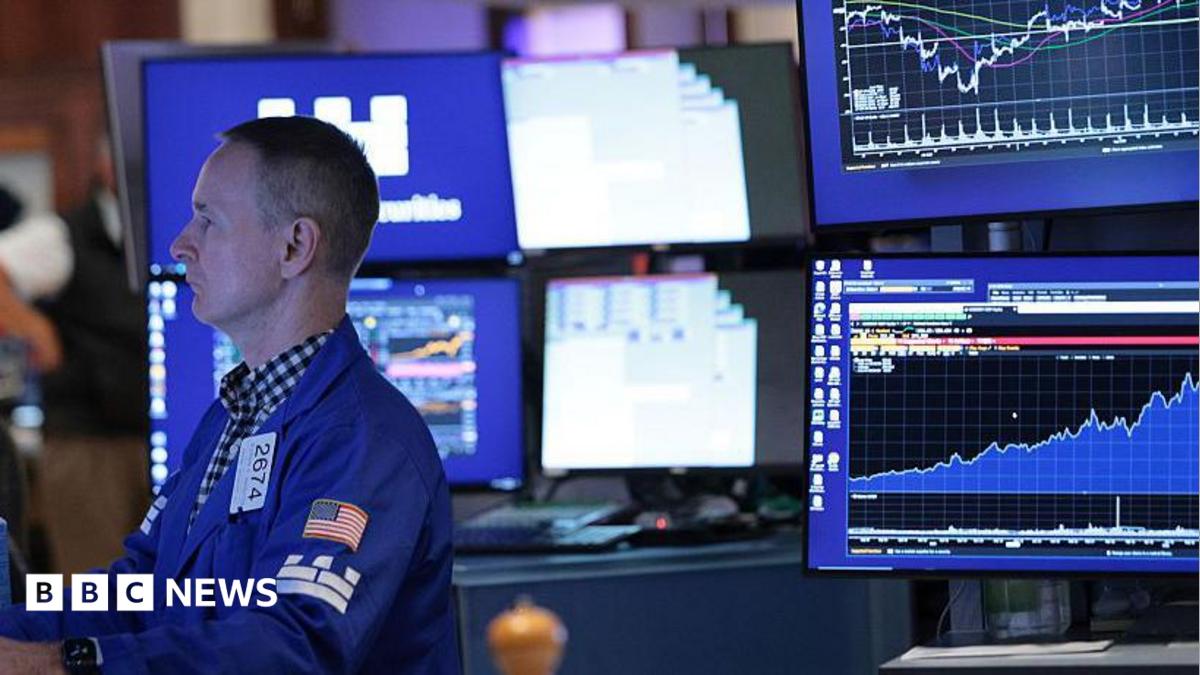
A stock market trader monitors screens on the stock market

Long-term borrowing costs in the US rose again despite an announcement from the government that it would intervene to try to lower them.

Earlier this week, the Treasury Department said it would buy back more debt in a bid to lower rates being charged by investors on global bond markets, which governments and major corporations rely on to borrow money.

While rates – or yields as they are called – eased on borrowing over 30 years following the intervention, they have since risen again. Such moves can affect mortgage rates and car loans.

Economists said the surprise move by the US government had proved short-lived, with ongoing concerns over the level of borrowing as national debt passed $40tn.

Advertisement

On Friday, the interest rate on 30-year bonds had risen to around 5.27%.

Governments and corporations sell bonds – essentially an IOU – to raise money for spending, and in return they pay interest. Interest rates on bonds are known as yields.

Bond investors typically demand higher returns – or yields – if inflation is high or they expect it to be elevated in the future.

Yields had fallen sharply earlier this week to 5.18% from an almost two-decade high of 5.34% following the Treasury Department announcing its “support”.

Advertisement

By stepping in to buy back government debt, Treasury Secretary Scott Bessent aimed to boost demand for bonds and lower borrowing rates.

But the strategy has appeared to have only worked in the short-term.

John Canavan, lead analyst at Oxford Economics said the response to the government’s intervention was “unsurprisingly short-lived”.

He said traders were focused on the “daunting” amounts of global borrowing from governments and corporations, as well as increases in oil prices.

Advertisement

“As Bessent himself confirmed, the move is mainly a signalling mechanism, with the Treasury showing it is prepared to step in with yields near current levels,” said economists at Capital Economics.

“It is not necessarily an effective one, however, as much of the initial fall in 30-year yields has now been reversed.”

The BBC has contacted the Treasury Department for comment on the market reaction.

Bessent sought to blame the Biden administration for the current situation, telling US media on Thursday: “We did not get here in a day, we were left with a mess.”

Advertisement
Continue Reading

Business

BJ’s Wholesale Club Holdings, Inc. (BJ) Q2 2026 Earnings Call Transcript

Published

on

OneWater Marine Inc. (ONEW) Q1 2026 Earnings Call Transcript