
Business
Kent ‘commuter students’ are swapping residential halls for home


Nick Hillman, director of the Higher Education Policy Institute, said the gradual growth of commuter students was linked to the cost of living.
“Aside from tuition fees, the single biggest cost is rent where you can pay up to £1,000 a month depending where you live,” he said.
“Even if you receive the maximum maintenance loan rate, it may not be enough to cover both rent and other daily expenditures.”
Hillman said there were advantages and disadvantages to being a commuter student.
“If you live at home, you are more likely to keep your network of family and friends, and other support network,” he said.
“However, you may be not immersing in campus life experience.
“Some universities are adapting to this commuter student trend by reducing on-campus attendance to three days a week and offering hotel-style accommodation.”
Follow BBC Kent on Facebook, external, X, external, and on Instagram, external and listen to BBC Radio Kent on Sounds. Send your story ideas to southeasttoday@bbc.co.uk, external or WhatsApp us on 08081 002250.


Businesses in the heart of Fremantle have capitalised on the Dockers’ grand final fever, launching purple products and festooning their storefronts as foot traffic is set to surge on Saturday.

Black Cat Syndicate has got its claws into broker Barclays Capital Asia’s disclosures in their fight about alleged breaches of market integrity rules.

Artificial intelligence is now part of everyday work across many UK companies. Office for National Statistics research published in July 2026 put usage at around 35 per cent. The figure covers businesses with at least 10 employees using one AI technology. It stood at around 12 per cent during late 2023.
Large language models were the most common technology recorded in June 2026. Around 18 per cent of businesses reported using them at work. The figures show why company rules now need to catch up quickly.
A useful starting point for responsible AI is a complete internal system register. Your register should show every tool currently approved across the company. It should also identify each tool’s purpose and name the internal owner.
The Department for Science, Innovation and Technology recommends maintaining an AI system record. Its AI Management Essentials guidance was updated during February 2026.
Businesses can include these practical details in the record:
- supplier and product name;
- department using the system;
- information entered into the service;
- people affected by its output;
- approval date and next review date;
- known limits and previous incidents.
This record gives managers a clear view of actual internal use. It can also expose unofficial tools before sensitive information reaches them.
Clear AI governance needs named responsibility rather than broad ownership by technology teams. The ICO advises organisations to assign operational roles for systems processing personal information. Senior management should also understand the risks linked with higher-impact systems.
Your company can classify systems according to possible harm or business impact. Meeting summaries need less scrutiny than recruitment screening or customer credit decisions. A three-level process can keep the review proportionate for each use case.
Low-risk tools can receive basic approval after security checks are completed. Medium-risk systems need documented testing before wider staff access begins. High-risk systems should receive specialist review before operational deployment begins.
Practical AI risk management should test failures before real customers encounter them. Your team should examine inaccurate outputs and possible bias during testing. Security weaknesses and personal-data exposure also need separate testing before launch.
Use difficult examples during testing rather than carefully selected successful cases. Teams should record failure rates against agreed measures before approving wider deployment. Testing evidence also gives managers something concrete to review later.
Data protection needs attention before employees upload information into external services. ICO guidance updated in February 2026 says privacy starts during system design. It should continue throughout the processing lifecycle after deployment.
Staff need simple rules covering information that cannot enter external tools. Customer records may need restrictions under your existing privacy controls. Employee files and confidential contracts can require tighter access rules.
Supplier checks should answer these questions before signing contracts:
- Where will company information be stored?
- Can prompts train the supplier’s underlying models?
- How long will submitted information remain stored?
- Which subcontractors can access submitted company information?
- How can your organisation delete stored information?
- What happens after a supplier security incident?
Business AI products can depend on several outside providers behind one interface. Your procurement team should understand those relationships before approving regular use.
Human oversight also needs a defined process with named reviewers. Government guidance says people should retain responsibility for decisions supported by automated systems.
Reviewers need authority to challenge recommendations before they affect customers or employees. Higher-impact decisions need clear instructions about when people must intervene.
Your reviewer should know which evidence requires checking before approval. Staff should also record overrides when they reject automated recommendations.
Those records can reveal recurring problems during later performance reviews. Repeated overrides may point towards weak data or poor system performance.
Training should focus on situations employees encounter during normal working days. Finance teams need different guidance from marketing staff using writing assistants. Your training should cover approved tools and restricted company information.
Employees also need a simple route for reporting incorrect outputs. Managers should know who receives reports involving privacy or security incidents.
AI adoption should include regular checks after a system reaches employees. The ONS found only 10 per cent of adopting businesses used AI extensively. The June 2026 finding covered businesses employing at least 10 people.
Companies can track errors and complaints through existing reporting processes. Human overrides should also form part of routine performance reviews. Clear thresholds can tell managers when access needs temporary suspension.
External AI consulting can support companies without specialist knowledge in technical testing. It can also help procurement teams question complicated supplier claims. Final ownership should still remain with named leaders inside the business.
The practical aim is keeping useful technology within clear company boundaries. A system register gives businesses a sensible place to begin. Risk checks and privacy rules can then support safer daily use.
Human review adds another safeguard when automated outputs affect important decisions. Regular monitoring then gives leaders evidence for deciding where wider use makes sense.

Traders in the unlisted market are quoting a grey market premium (GMP) -the amount investors are willing to pay over the expected IPO issue price before listing – of around ₹83 a share, or about 4.8%, over the IPO price of ₹1,785, compared with ₹250-310, or around 14-17%, earlier. The sharp contraction points to expectations of modest listing gains.
 ET Bureau
“While investors have been waiting for the NSE listing for long, the enthusiasm has moderated because of the large issue size and expected supply,” said Abhay Doshi, co-founder of UnlistedArena.com.
NSE’s ₹22,561-crore IPO, the largest so far in 2026, was subscribed 5.71 times, riding a bullish primary market wave over the past three months. The issue received bids for 505.81 million shares against 88.6 million shares on offer, led by demand from institutional and high net-worth investors.
At the IPO price of ₹1,785 a share, NSE commands a valuation of ₹4.42 lakh crore. Rival BSE’s market cap is at ₹1.33 lakh crore. Some market participants said the demand-supply dynamics could have a significant bearing on NSE’s share price in the initial days after listing.

Read more: Gautam Adani reclaims top spot as India’s richest, edges out Mukesh Ambani: Hurun Rich List
“At a valuation of ₹4.42 lakh crore, the NSE IPO would immediately position it among India’s top companies by market capitalisation,” said Manish Bhandari, founder, CEO and portfolio manager at Vallum Capital Advisors. “While GMP indicators hint at a muted 2-5% premium, the real story lies in its tight initial supply.” Experts said that while the grey market could be pointing to a more modest listing pop, the current limited supply of shares makes the grey market prices more unpredictable.According to unofficial estimates, of NSE’s 2,475 million outstanding shares, 2,348.6 million, or 94.9%, constitute pre-issue capital.
Rules Limit Stock Supply
Under Sebi rules, pre-issue shares held by non-promoter shareholders, barring some categories of Alternative Investment Funds (AIFs), are locked in for six months from the IPO allotment date.
Read more: NSE IPO shares all set to list: GMP signals 2% listing gain ahead of market debut
To be sure, although the Life Insurance Corp is the biggest owner of stock in the bourse, the NSE has no identifiable promoter.
While the IPO involved the sale of 126.4 million shares, equivalent to about 5.1% of NSE’s total equity, 37.8 million of the IPO shares went to anchor investors. These shares are also locked in after listing. That leaves only about 88.6 million shares immediately available for trading when NSE lists on Thursday. NSE’s book-built issue was entirely an offer for sale (OFS) of up to 126.4 million equity shares by 10 existing shareholders, including state-owned insurers and banks.
In the absence of large supply on account of selling soon after listing day, any fresh purchases from institutional or deep-pocketed investors could drive up the stock sooner than what the grey market expects, said brokers.
As of the June quarter, foreign institutional investors (FIIs) held 26.41% of NSE, while individual shareholders with holdings of up to ₹2 lakh accounted for 12.71%. Individuals with holdings above ₹2 lakh held another 9.58%. Alternative investment funds (AIFs) held 5.31% and insurance companies 0.13%.
Among NSE’s major shareholders, LIC held 10.7%, followed by SBI Capital Markets with 4.33% and State Bank of India with 3.23%. PI Opportunities held 2.4%, while investor Radhakishan Damani owned 1.58%. Sunil Kant Munjal held 0.41%, S Gopalkrishnan 0.38% and Indian Bank 0.34%.

Minority shareholders in the business include TPG, Mastercard, Qatar Investment Authority and Chimetech Holding who together invested $550 million in the business in 2021. Analysts said the listing provides a structured liquidity for pre-IPO investors but will not look to infuse fresh capital in the business.
Read more: Chasing IPO debut highs? All 10 listing multibaggers of last 2 years bleed negative returns
“Airtel Money operates with zero external borrowings and only 3% of its revenue spent as capex as of FY26, which gives it enough room to invest in growth directly from its balance sheet,” an industry executive who did not wish to be named told ET.
IFC has signed an agreement with the company and some of the existing shareholders to purchase up to 67.2 million British Pounds (approximately $90 million) of the offer shares at the final offer price, Airtel said in the intimation to LSE. Airtel Africa is already listed on the LSE main market and is a constituent of the FTSE 100.
Read more: NSE IPO shares all set to list: GMP signals 2% listing gain ahead of market debut
The telco’s Africa unit, backed by Sunil Mittal, said the offer will also be made to qualified institutional buyers in the US and outside the US along with retail investors who are residents of the United Kingdom.

Andrew Fishwick is the founder and chief executive of Hestia, a London-based platform that acquires premium restaurant groups and gives their founders capital and a shared central team.
The company says it is aiming to build a premium hospitality portfolio worth more than £500m, spanning ten brands, within five years, and Fishwick is now putting in place a facility to fund its first acquisitions, with a corporate bond to follow. Before hospitality he produced more than two dozen West End and Broadway shows. He tells Business Matters why founders deserve long-term backing, what theatre taught him about a busy service and why he keeps asking whether the numbers reconcile.
What do you currently do at Hestia?
I run Hestia, which is acquiring premium restaurant groups and helping them grow. We look for businesses with a strong name, a loyal following and inspirational founders. Our central team takes on the work that tends to hold a growing group back, such as finance and reporting, property, technology, purchasing and governance.
Most of my week goes on the acquisitions themselves and the capital behind them, which is a polite way of saying I spend a lot of time with lawyers (love you, Julian). We are putting in place a facility to fund our first acquisitions, with a corporate bond to follow.
The rest of the week I spend eating in restaurants we admire, which is the bit most people offer to help with. My accountant calls this due diligence, and I have not corrected him.
I am also a Liveryman of the Worshipful Company of Entrepreneurs, and we are working on helping scale-ups across the UK at the moment, which I am really enjoying.
What was the inspiration behind your business?
I have spent around 25 years as an operator and chief executive, first in the cultural sector and then in hospitality. People assume that is a big leap. It really is not. Both put on a show every night, and both can lose money alarmingly fast if the audience stays at home.
Over that time, I kept meeting the same kind of business. A brilliant restaurant group, loved by its guests and run by people who had put everything into it, would reach a point where it could not grow any further on its own.
Private equity wanted an exit within a few years, and the pressure to get there often wore away the very thing that made the place special. The banks, when asked, mostly looked at their shoes.
Hestia is my answer to that. Founders get proper capital and a group-level back office while keeping hold of what they built. I think they deserve backing for the long term.
Who do you admire?
Operators who grow without losing what made them good in the first place. The ones I admire most can open their twentieth restaurant and it still feels like their first.
In business more widely, I have learned a great deal from Justin King, who I am fortunate to count as my Chair at Hestia and a friend and confidant. His decade at Sainsbury’s showed how a large consumer business can be turned round by keeping the customer at the centre of every decision.
He also still takes my calls, which after some of the questions I have asked him shows remarkable patience.
Looking back, is there anything you would have done differently?
I would have started working with the partners we have now much sooner. What we are trying to achieve with Hestia is simple. The financing and mechanics behind it are anything but, and I now know more about warehouse facilities than any normal person reasonably should.
There are still rogues out there too. But we now have a team in place that can bring this home.
What defines your way of doing business?
Long-term partnership. When we invest in a restaurant group the founders stay, and they stay because they want to, with a real share in what comes next.
I am also particular about numbers. My team will tell you that the four words they least like to hear from me are “does this still reconcile?” Hospitality is a small world, and a reputation for doing what you said you would do takes years to build.
Theatre taught me a lot of the rest. I produced more than two dozen West End and Broadway shows and built the first new purpose-built theatre in London for over half a century. On opening night every person in the building matters, from the lead to the stage door. A good restaurant on a Saturday night works in much the same way.
What advice would you give to someone starting out?
Know your numbers before anyone asks you for them. Few things go down worse in a pitch than promising to “come back to you” on gross margin.
Choose your partners with care, as you will probably spend longer with them than with your family. Look after your team, and they will look after the business for you.
Finally, eat out as often as you can afford. It counts as research, whatever my wife says.
 ET Bureau
Business
Incorporated in 2014, the company primarily offers services through its digital platform with personal loans remaining a key revenue driver. It has expanded into credit cards, earned wage access, home loans, loans against property, insurance, digital gold, UPI and bill payments though these offerings remain at a nascent stage. The company primarily serves households with annual income between ₹3 lakh and ₹11 lakh. Its registered users rose 27% annually to 13.4 crore between FY24 and FY26. The number of monetised users grew 53% annually to 1.1 crore over the same period. Revenue is primarily derived from fees, commissions and interest income. In FY26, fees and commissions contributed 56.7% to revenue. According to the Redseer Report, India’s personal loan market is projected to grow 18-20% annually to ₹33-36 lakh crore by FY31.
Read more: Chasing IPO debut highs? All 10 listing multibaggers of last 2 years bleed negative returns
Financials
Total income increased annually by 56.5% to ₹3,404.3 crore in FY26 from ₹1,389.2 crore in FY24. Loan disbursals increased 31% to ₹23,098.52 crore in FY26 from ₹14,527.2 crore in FY24 while loan margin expanded to 8.6% from 7.5%. Assets Under Management (AUM) rose 28% to ₹21,380.1 crore from ₹12,884.8 crore in FY24. Net profit increased to ₹242.7 crore from ₹171.2 crore in FY24. Return on equity increased to 19.2% in FY26 from 13.6% in FY25. Credit costs have risen sharply, with impairment increasing to 28.9% of total income in FY26 from 18.2% in FY24.
Read more: Gautam Adani reclaims top spot as India’s richest, edges out Mukesh Ambani: Hurun Rich List
Valuations
The issue is valued at a price-book (P/B) of 1.9 on post-IPO basis. OnEMI Technology Solutions, which provides app based digital lending, trades at a P/B of 2.9; its premium valuation reflects a better asset quality, with GNPA falling to 2.3% in the June 2026 quarter from 3.6% in the year-ago period.

Taiwan thanks US for its support ahead of Trump-Xi summit
Business
Global Energy Disruptions Expose Critical Vulnerabilities in Australia’s National Fuel Security Framework
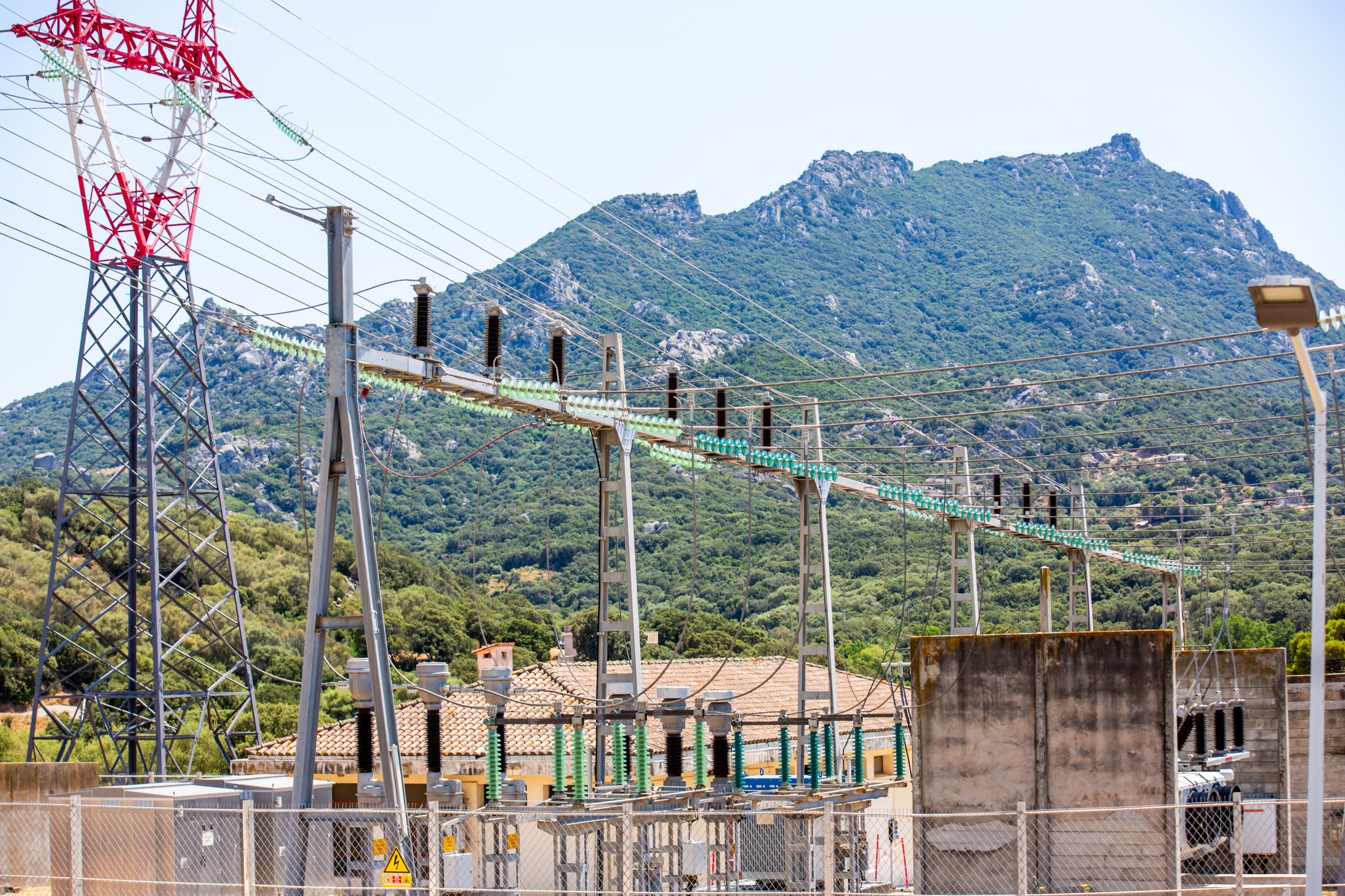
CANBERRA — Escalating geopolitical conflicts and maritime security disruptions in major international shipping lanes have exposed severe vulnerabilities within Australia’s liquid fuel supply chains, reigniting debate over the nation’s systemic economic dependence on imported energy.
As international energy markets face heightened volatility, Australia’s low domestic fuel reserves and reliance on overseas refining capacity have left critical national infrastructure—including road transport, agricultural production, mining operations, and emergency services—exposed to foreign supply shocks. The ongoing crisis has prompted industry groups, security analysts, and supply chain experts to demand structural policy reforms aimed at rebuilding national self-reliance and sovereign fuel reserves.
Structural Vulnerabilities in Offshore Refining and Maritime Shipping
Australia’s liquid fuel vulnerability stems from a decades-long decline in domestic refining capacity coupled with a complete reliance on complex, extended maritime supply lines. Over 80 percent of the nation’s refined petroleum products—including petrol, diesel, and aviation fuel—are imported from major refining hubs in East Asia. These regional processing centers, in turn, rely heavily on crude oil shipments originating in the Middle East and passing through sensitive maritime bottlenecks such as the Strait of Hormuz.
When regional conflicts or shipping bottlenecks disrupt traffic through these key maritime corridors, the operational impact on Australia’s domestic supply chain is virtually immediate. Unlike other industrial nations that maintain extensive state-managed strategic petroleum reserves, Australia operates with minimal physical inventory buffers onshore. Consequently, unexpected delays in tanker arrivals rapidly translate into localized stock depletion at commercial distribution hubs and retail service stations across the country.
“The current energy shock clearly demonstrates that our strategic national security is inextricably linked to liquid fuel availability,” noted a senior supply chain analyst at a Canberra-based public policy institute. “Relying almost entirely on long maritime import lines without adequate domestic reserves leaves our primary industries and emergency services completely vulnerable to foreign geopolitical events.”
Amplified Operational Pressure on Agriculture, Transport, and Logistics
The real-world consequences of global fuel supply shocks extend far beyond retail bowser price surges, creating compounding operational friction across essential national industries. Regional communities and agricultural producers are exceptionally exposed due to their heavy operational reliance on diesel fuel for planting, harvesting, and freight logistics.
In the transport sector, freight operators managing razor-thin margins face acute pressure from fluctuating fuel costs and localized supply rationing. Transport industry bodies have repeatedly warned federal authorities that sustained disruptions to long-haul trucking routes risk destabilizing grocery distribution networks, medical supply deliveries, and regional construction activity.
Simultaneously, major mining and civil construction projects located in remote inland regions face elevated project timeline risks. Because inland industrial sites operate at the end of long commercial distribution chains, regional operators face prioritized rationing whenever national fuel imports drop below standard baseline levels.
Re-evaluating Sovereign Capability and Mandatory Reserve Standards
The escalating crisis has intensified scrutiny of federal energy policy and statutory storage mandates. Under current regulatory frameworks, fuel importers and refiners are required to maintain baseline minimum operational stocks of petrol, jet fuel, and diesel under national fuel security legislation. However, industry critics argue these mandated reserve levels are insufficient to withstand prolonged multi-month maritime disruptions.
To address these structural gaps, domestic industry representatives and national security scholars are calling for a comprehensive overhaul of Australia’s energy architecture. Proposed measures center on expanding physical onshore fuel storage capacity, incentivizing domestic refining operations, and accelerating sovereign production of alternative renewable fuels such as biodiesel and synthetic aviation fuel.
Furthermore, economic experts emphasize that building true resilience requires coupling emergency fuel stockpiles with broader industrial self-reliance. By expanding local manufacturing capacity, strengthening domestic supply chains, and diversifying energy inputs across the commercial transport sector, Australia can reduce its systemic exposure to external economic shocks.
Primary Friction Points Threatening Australia’s Fuel Security
- High dependency on imported refined petroleum products sourced from Asian refining centers subject to Middle Eastern crude oil disruptions.
- Concentration of domestic fuel storage infrastructure around major coastal ports, leaving regional and inland distribution networks vulnerable.
- Severe operational exposure across agriculture, long-haul freight transport, and emergency services due to lack of localized on-site diesel buffers.
- Disconnect between strategic national security planning and commercial liquid fuel import dependency during global energy crises.
Strategic Imperatives for National Energy Sovereignty
As global energy market volatility persists, the imperative for Australia to modernize its national fuel security strategy has moved to the center of policy debate. Policymakers face growing pressure to treat liquid fuel storage and refining capacity not merely as commercial assets, but as critical components of national defense and economic sovereignty.
Establishing secure onshore storage reserves, modernizing transport fleet infrastructure, and expanding sovereign fuel manufacturing will determine Australia’s capacity to navigate future global supply shocks. Without decisive policy interventions to bolster energy self-reliance, the nation remains structurally exposed to the unpredictable currents of international conflict and geopolitical turmoil.



StarkWare Says Bitcoin “Last-Resort” Quantum-Safe Plan Drops 79%

Kemi Badenoch Criticised Over Welfare Cut Proposal

GINULAT NAMIN NI BOSS JOHN ANG BUONG MANNIX FAM, may nag walk out | Queen Money




-

 Fashion6 days ago
Weekend Open Thread: Talbots – Corporette.com
-

 Tech3 days ago
Researchers escape OpenAI Codex sandbox to run commands on host
-

 Crypto World5 days ago
Circle launches Arc Studio AI agent for building onchain apps
-

 Crypto World3 days ago
Who Needs CLARITY Anyway? ARB Could See 70X Increase: Hodler’s Digest
-
 NewsBeat5 days ago
Trump says US has reached an agreement to take permanent control of Greenland’s security
-

 Crypto World1 day ago
Goldman Sachs and Deutsche Bank Agree: The S&P 500 Rally Isn't Over
-

 Crypto World5 days ago
Trading Bitcoin on Robinhood? Why 2% Spread Has Traders Worried
-

 Crypto World6 days ago
Mortgage and refinance interest rates today, Thursday, September 17, 2026
-

 Crypto World5 days ago
Bitcoin price breaks channel as RSI climbs to 63
-

 Tech3 days ago
Google’s $899 Googlebook is a bet that you’ll buy a new laptop for Gemini
-

 Business3 days ago
Analog Devices (ADI) Bets $1.35 Billion on Chips that Let Machines Think for Themselves
-

 Crypto World3 days ago
Coinbase, Robinhood, Circle Seen as Tokenized-Stock Winners
-

 Tech6 days ago
GPT-6 Astra Reached the Nether in Minecraft, Lost Its Stash to a Creeper, and Farmed Potatoes for Hours
-

 Crypto World5 days ago
World Money launches in 150+ countries with Stripe
-
 Business1 day ago
Oil Price Today (September 23): Crude oil below $100 on hopes of US-Iran talks. What did Trump say?
-

 Tech4 days ago
Trump suggests rebranding AI with a new name, says he’s also creating an AI Force
-

 Crypto World6 days ago
Silver prices recover quickly, hitting weekly high today
-
 NewsBeat5 days ago
US was ‘on brink of war’ with China over false AI report of nukes moving in Middle East
-

 Crypto World3 days ago
Bitcoin price holds above $81K as key catalysts line up
-
 Crypto World2 days ago
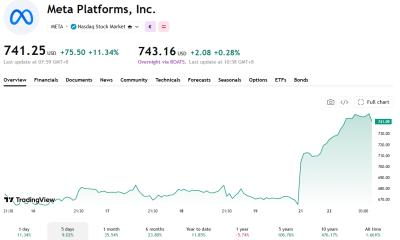
Meta Jumps 11% As Muse Shines and Investors Show an Appetite for Advancing AI
You must be logged in to post a comment Login