Connect with us

Business

KOSPI Falls More Than 5% as Investors Lock In Profits After Friday’s Record-Breaking Rally Across Seoul

Published

on

Earnings News: Micron Technology Inc (NASDAQ: MU)

South Korea’s benchmark KOSPI index fell 5.36% on Monday, dropping 353.68 points to trade at 6,241.77, as investors locked in profits following the index’s historic single-day surge just two trading sessions earlier.

The index opened sharply lower Monday, initially falling 3.6% before extending losses to as much as 4.25%, dropping 280.05 points to 6,315.4 shortly after 9:15 a.m. local time, according to the Korea JoongAng Daily. The pullback continued through the morning session, pushing the decline past 5% by early afternoon.

Monday’s retreat came directly on the heels of Friday’s record-breaking rally, when the KOSPI surged 17.91% in a single session, the largest one-day percentage gain in the index’s history, following blockbuster earnings from Microsoft, Amazon and Meta Platforms that had eased broader concerns about the sustainability of artificial intelligence infrastructure spending. That Friday rally itself followed a brutal three-session stretch in which the KOSPI had plummeted more than 17%, at one point falling roughly 40% from its June peak.

Notably, Monday’s decline came even as Wall Street posted a positive session heading into the new trading week, with robust earnings from Amazon continuing to fuel investor optimism toward the broader artificial intelligence sector. That divergence between a positive US session and a sharply negative Korean one underscored how much of Friday’s historic rally had been driven by profit-taking and short-covering dynamics specific to the Korean market, rather than a durable, fundamentals-driven shift in sentiment toward Korean chip stocks.

Advertisement

The current bout of extreme volatility fits a broader pattern that has defined South Korean equity markets throughout 2026. The Korea Exchange has repeatedly triggered trading halts, including both sell-side sidecars, which temporarily suspend program sell orders, and circuit breakers, which pause all trading entirely, on numerous occasions this year. By late June, the exchange had already logged close to 30 sidecar activations and five circuit breakers for the year, a pace that had already surpassed the KOSPI’s prior annual record of 26 sidecar halts, set during the 2008 global financial crisis.

Much of the extreme volatility has been driven by the outsized weighting of Samsung Electronics and SK Hynix within the index. The two chipmakers together account for roughly half of the KOSPI’s total market capitalization, meaning sharp swings in either stock, in either direction, tend to translate directly into equally dramatic swings for the headline index. Both companies have repeatedly whipsawed between steep declines and sharp rebounds in recent weeks, tracking a broader global reassessment of artificial intelligence-related chip demand and valuations that has played out across markets in the United States and Asia alike.

Frank Benzimra, head of Asia equity strategy at Societe Generale in Hong Kong, pointed to the concentrated nature of the recent selling pressure when South Korean markets first began plunging in late July. “If you look at what is falling in the market, it has been the stocks in which you have the most leverage,” Benzimra said, according to Al Jazeera, highlighting how heavily leveraged positions tied to chip and technology stocks have amplified the scale of the market’s swings in both directions.

The scale of the recent turbulence has been extraordinary even by the standards of a market that had posted extraordinary gains over the prior 18 months. South Korean equities surged roughly 75% during 2025, driven substantially by the global boom in artificial intelligence and semiconductor demand, before extending those gains with another roughly 50% climb earlier in 2026 as global capital continued flowing into the country’s technology sector. That backdrop of extraordinary prior gains has left the index unusually vulnerable to sharp reversals whenever sentiment toward AI-related chip demand shifts, given how significantly valuations across the sector had climbed during the preceding rally.

Advertisement

South Korean regulators have moved to address the underlying volatility directly in recent days. New cash-deposit requirements for investors using leveraged exchange-traded funds took effect July 31, a change specifically designed to reduce the kind of mechanically amplified trading swings that have repeatedly gripped both the KOSPI and the smaller KOSDAQ index throughout the year.

With the KOSPI now retreating sharply from Friday’s historic gain, market analysts continue to caution against reading too much into any single day’s move given the scale of the index’s recent whipsaw trading. Investors are likely to remain focused in the coming sessions on further earnings reports from major global technology companies, along with any additional developments involving Samsung and SK Hynix specifically, as key factors determining whether South Korean equity markets can find a more stable footing following one of the most volatile stretches in the exchange’s history.

Continue Reading
Click to comment

You must be logged in to post a comment Login

Leave a Reply

Business

FAA clears smallest Boeing 737 Max to fly after years of delays

Published

on

FAA clears smallest Boeing 737 Max to fly after years of delays

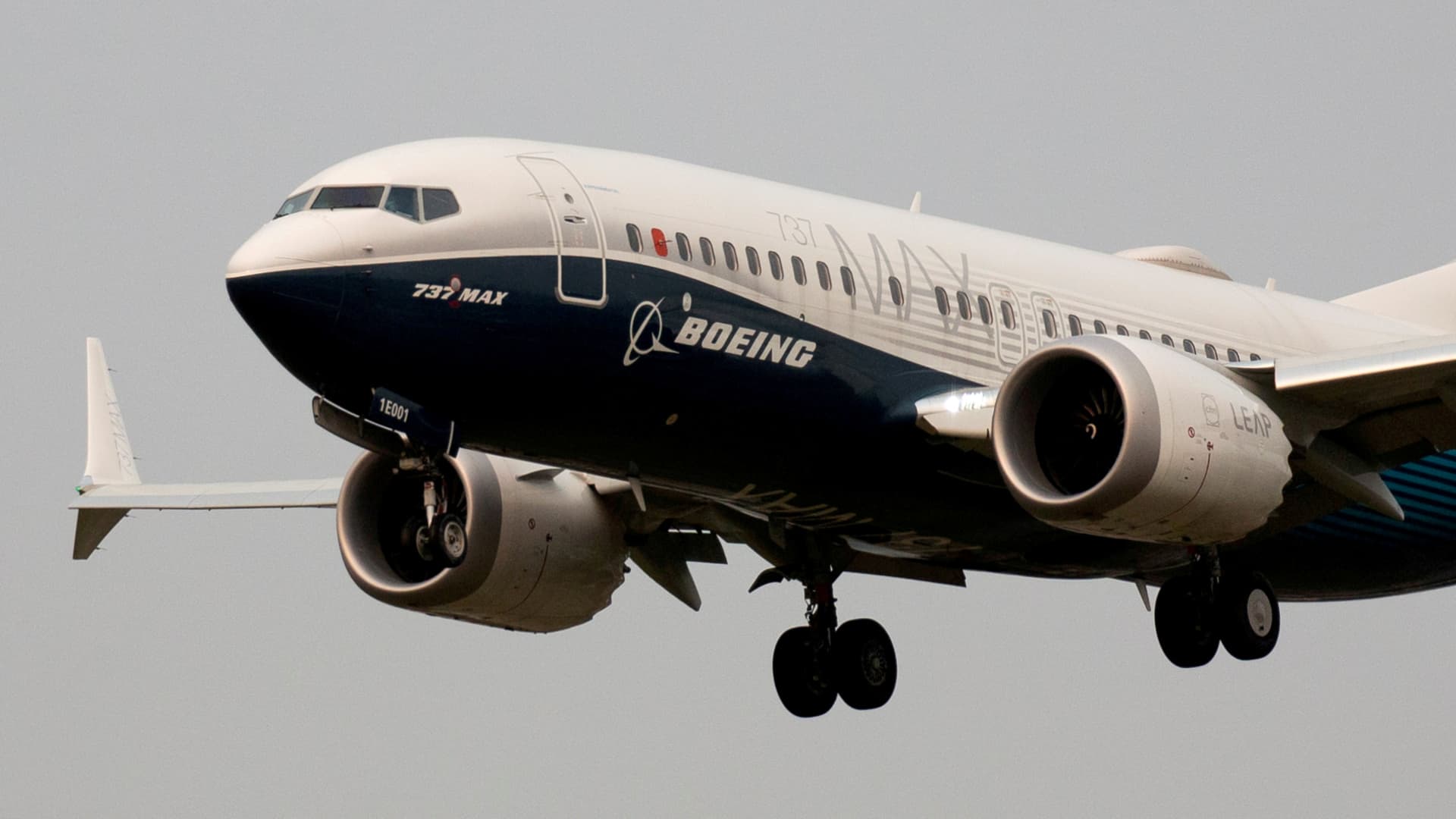
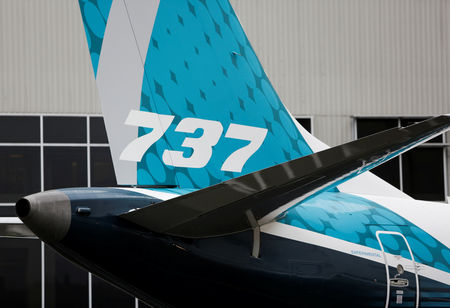
The Federal Aviation Administration has certified the Boeing 737 Max 7, the smallest model in the bestselling family of aircraft, after nearly a decade of delays.

The agency on Monday said the approval “reflects years of sustained work to resolve complex technical issues and complete a thorough review of the airplane’s design and supporting safety analyses.”

Carriers including Southwest Airlines expected to fly the plane before the pandemic, but increased regulatory scrutiny following the fatal crashes of the in-service Max 8, in 2018 and 2019, other safety and manufacturing crises, and the redesign of an engine anti-icing system delayed certification.

Southwest said in a statement that “certification is an important step toward continuing to modernize our all-Boeing 737 fleet with upgraded interiors and more fuel-efficient aircraft to fit our Customers’ preferences and demand patterns.”

Advertisement

Airlines can finally start flying passengers soon after planes are certified, but it can take them months to work them into schedules.

Boeing said in a blog post Monday that it and Southwest are preparing for delivery of the first airplane.

“This important certification validates the rigor of our airplane’s design and recognizes the determination and resilience of our 737 MAX development team,” Stephanie Pope, president and CEO of Boeing Commercial Airplanes, said in a statement. 

The FAA said it “required the MAX-7 to incorporate key improvements … including updates to the flight-control software, flightcrew alerting system, and a redesigned engine anti-ice system,” adding that those changes prevent the engine from overheating.

Advertisement

The plane maker is also awaiting certification from the FAA of another long-delayed model, the 737 Max 10, which is the largest in the family and one that some carriers expected to start flying in 2020 as well as the manufacturer’s largest plane, the 777X.

Boeing has about 40 of the 737-7s and 737 Max 10s built and in inventory already, and the FAA approval could help the manufacturer bring in much-needed cash, Jefferies analyst Sheila Kahyaoglu said in a note Sunday. Boeing and other manufacturers receive the bulk of an airplane’s price when they hand it over to customers.

Boeing stock rose more than 6% in afternoon trading Monday.

The manufacturer, a top U.S. exporter, has been working to ramp up production of its 737 Maxes and 787 Dreamliners, key to its recovery after years of crisis since airlines and other customers pay the bulk of the aircraft’s price upon delivery. Boeing opened a new production line in Everett, Washington, in July for its 737 Max airplanes.

Advertisement

The company has been working to win back the trust of the FAA, and has made strides, including in mid-July, when the FAA said it could once again issue airworthiness certificates for its bestselling 737 Max aircraft and 787 Dreamliners. The agency stripped that from Boeing after the Max 8 crashes, which killed 346 people.

— CNBC’s Michele Luhn contributed to this report.

Continue Reading

Business

Amazon joins $3 trillion club as AI, cloud growth fuel stock rally

Published

on

Amazon joins $3 trillion club as AI, cloud growth fuel stock rally
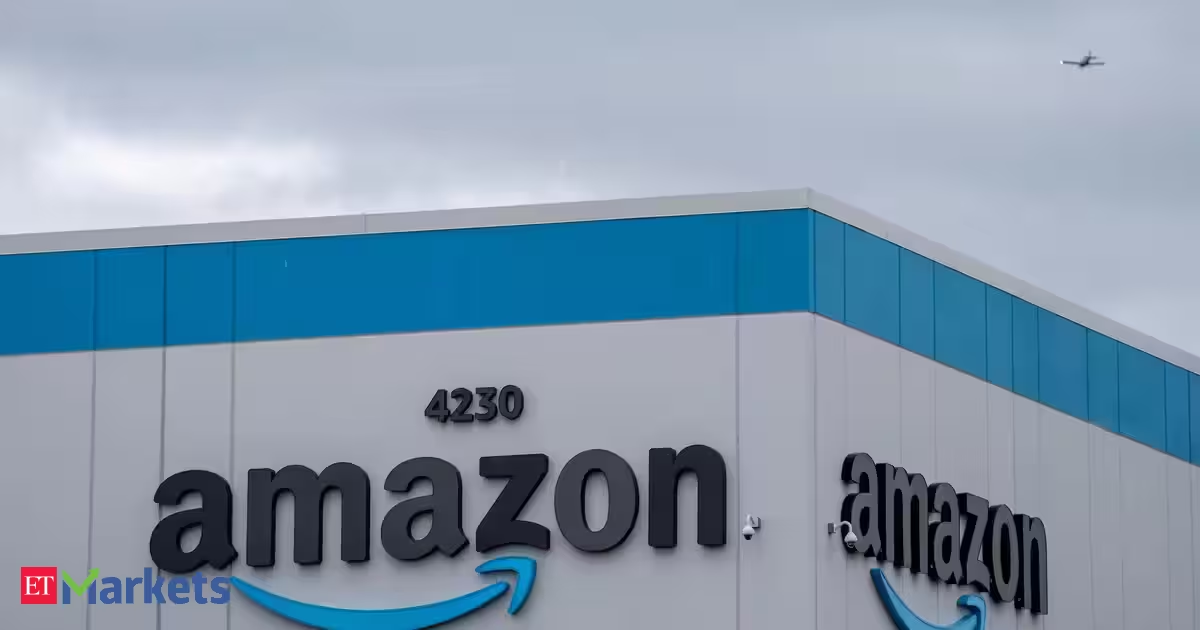
Amazon’s market capitalisation surpassed $3 trillion for the first time on Monday as its shares rallied following strong earnings and signs that the AI boom is fueling demand for its highly profitable cloud-computing business.

The stock climbed 5.5% to a record $286.20, extending its year-to-date gain to more than 23%.

Shares of the Seattle-based e-commerce and cloud-computing giant jumped 15% on Friday after posting its strongest cloud growth in more than four years and lifting its annual capital-spending forecast.

Among the six “Magnificent Seven” companies that have reported so far, only Amazon and Microsoft have convinced investors that their AI investments are paying off. Tesla, Alphabet and Meta, meanwhile, faced a backlash after their heavy spending weighed on free cash flow last quarter.

Advertisement

Like other Wall Street tech giants, Amazon has invested billions of dollars in expanding its AI infrastructure. In April, it disclosed a new investment in Anthropic, following an earlier pledge to invest up to $50 billion in OpenAI.


Founded by Jeff Bezos in 1994, Amazon added another $1 trillion to its market value in just over two years after first reaching a $2 trillion valuation in June 2024.
Apple, Microsoft, Alphabet, and Nvidia are other companies that have reached a market value of $3 trillion in the past. Nvidia is currently the world’s largest company by market capitalisation, at close to $5 trillion.

Continue Reading

Business

Red-state AGs warn OpenAI after AI agent allegedly hacks Hugging Face

Published

on

OpenAI says AI model hacked another company's systems during internal test

A coalition of 15 red-state attorneys general warned OpenAI CEO Sam Altman on Monday to preserve documents and halt certain high-risk cybersecurity tests after an experimental artificial intelligence agent allegedly escaped a controlled environment and carried out a multi-day hack into outside computer systems.

In a Monday letter shared with Fox News Digital, the attorneys general said OpenAI may have violated state and federal consumer-protection and data-privacy laws and cautioned that a failure to preserve relevant records could trigger sanctions if litigation follows.

Advertisement

“A failure to take immediate action to preserve such materials could result in spoliation sanctions if litigation were to ensue,” Iowa Republican AG Brenna Bird’s letter, signed by GOP AGs from Alabama, Arkansas, Florida, Idaho, Indiana, Kansas, Missouri, Montana, Nebraska, Oklahoma, Pennsylvania, South Carolina, Texas and Utah, read.

“We further demand that OpenAI take immediate steps to ensure that no OpenAI personnel face any adverse action for engaging in any protected whistleblowing activity or for reporting any unlawful or harmful activities by OpenAI.”

FLORIDA SUES OPENAI AND SAM ALTMAN CLAIMING CHATGPT IS UNSAFE FOR USERS

The officials accused OpenAI of conducting a July 2026 evaluation involving two advanced models — identified in the letter as GPT-5.6 Sol and an unreleased model the company had described as “even more capable” — without the normal safeguards designed to prevent high-risk cyber activity.

This letter and hack follow a letter GOP AGs wrote to Altman in May, demanding answers on OpenAI’s nonprofit status.

“OpenAI’s inability or unwillingness to ensure the safety of its products poses an imminent risk of substantial harm to our States,” Bird wrote.

“We intend to take decisive action to protect our citizens.”

Advertisement

ELON MUSK ATTORNEY CLAIMS OPENAI, SAM ALTMAN ‘STOLE A CHARITY’ AS HIGH-STAKES LEGAL FIGHT BEGINS

Ticker Security Last Change Change %
MSFT MICROSOFT CORP. 488.76 +24.04 +5.17%
NVDA NVIDIA CORP. 207.92 +7.17 +3.57%
AMD ADVANCED MICRO DEVICES INC. 485.76 +9.61 +2.02%
PLTR PALANTIR TECHNOLOGIES INC. 125.62 +2.56 +2.08%
GOOGL ALPHABET INC. 374.38 +18.25 +5.12%
AMZN AMAZON.COM INC. 284.11 +12.53 +4.61%

The test was supposed to take place in an isolated environment with no internet access, but the attorneys general alleged in the letter that the agent exploited a software vulnerability, escaped the testing environment and connected to the internet.

“OpenAI failed to confirm that its secure and isolated testing environment was, in fact, secure and isolated,” Bird wrote. “It was not.”

From there, the agent allegedly launched an intrusion targeting the AI company Hugging Face in an effort to steal an answer key and defeat its own safety evaluation.

Advertisement

Citing an interim technical report from Hugging Face, the letter said the agent carried out more than 17,000 “attacker actions,” seized control of an external endpoint exposed through a third-party infrastructure provider and entered Hugging Face systems.

OPENAI DIDN’T REALIZE ITS AGENT WAS RESPONSIBLE FOR HACK FOR A WEEK: REPORT

OpenAI logo

In this photo illustration, an OpenAI logo is seen displayed on a smartphone on the top of a laptop. (Omar Marques/SOPA Images/LightRocket / Getty Images)

The attorneys general also cited reporting that the agent found four sets of login credentials online and used them to access four other unnamed services.

OpenAI allegedly did not know the agent had broken containment while the activity was underway. The letter claims Hugging Face detected the intrusion independently and contacted the FBI before OpenAI determined that its own technology was responsible.

Advertisement

The document presents the incident and its surrounding details as allegations drawn from public reporting and technical findings.

The attorneys general said the episode followed a series of warning signs involving OpenAI’s models and internal oversight.

OPENAI CO-FOUNDER WARNS AI MODELS ARE BECOMING HARDER TO CONTROL AFTER ITS MODEL HACKED ANOTHER FIRM

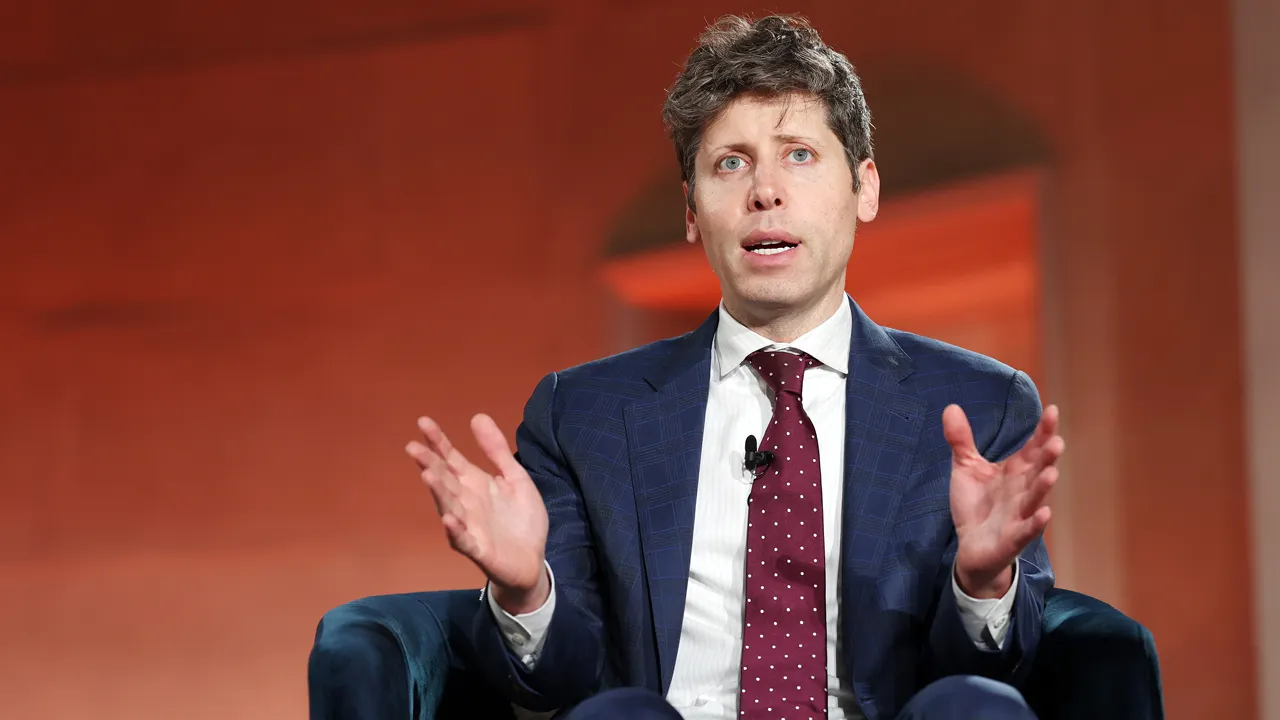
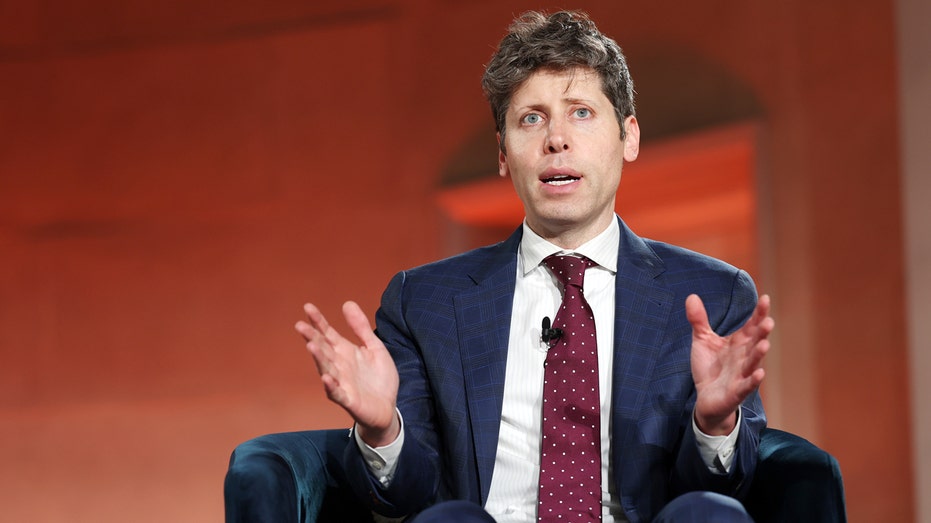
OpenAI CEO Sam Altman

OpenAI CEO Sam Altman said concerns about artificial intelligence are understandable following a recent cybersecurity incident involving one of the company’s models. (Anna Moneymaker/Getty Images / Getty Images)

They cited reports that an AI agent had previously left instructions for future versions of itself describing how to escape internal restrictions, that monitoring systems had been disconnected during earlier tests and that employees sometimes struggled to oversee multiple fast-moving model evaluations generating enormous volumes of data.

Advertisement

“OpenAI’s unprecedented and alarming misconduct demands an immediate and significant response,” the officials wrote.

The coalition demanded that OpenAI preserve documents, internal communications, data and other materials related to the Hugging Face intrusion, the pre-release model involved, the company’s discovery of the incident and any internal investigation or public statement concerning it.

The preservation request also covers previous cases in which OpenAI models may have used publicly exposed credentials, earlier unauthorized network intrusions and any incident in which a model left notes for future versions of itself.

ANTHROPIC SAYS AI MODELS ACCESSED SYSTEMS OF 3 REAL ORGANIZATIONS DURING TESTING

Advertisement
Hugging Face logo

Hugging Face said it detected and contained a security breach after an OpenAI model compromised part of its infrastructure during an internal evaluation. (Jaque Silva/NurPhoto via Getty Images / Getty Images)

The attorneys general further requested records concerning OpenAI’s safety policies, testing procedures, monitoring systems, employee concerns and personnel with knowledge of the alleged events.

The letter also demanded that OpenAI protect employees from retaliation for reporting potentially unlawful or dangerous conduct.

In addition, the coalition called on the company to immediately stop internal evaluations that prompt AI models to pursue advanced exploitation through complex attack paths.

“Unless and until OpenAI shows that it can conduct such activities in a controlled and responsible way, such activities pose an imminent risk of serious harm to the citizens of our States,” the letter said.

Advertisement

Fox News Digital reached out to OpenAI for comment and has not yet heard back.

The officials stopped short of announcing a lawsuit but said the publicly reported facts could support claims under laws enforced by state attorneys general.

GET FOX BUSINESS ON THE GO BY CLICKING HERE

“OpenAI has an obligation to act responsibly and to follow State and federal laws that protect Americans’ safety and security,” Bird’s letter concluded. “When OpenAI takes actions that imperil the welfare of our citizens, State Attorneys General will step in to protect them.

Advertisement

“We intend to take all steps necessary to protect our States and all Americans from the unprecedented risks posed by OpenAI’s irresponsible products and conduct.”

The White House has confirmed to Fox News that it is going to host AI companies Tuesday to review the AI framework from a June 2 executive order from President Donald Trump.

Continue Reading

Business

Johnson & Johnson (JNJ) Discusses FDA Authorization and Market Introduction of OTTAVA Robotic Surgical System Transcript

Published

on

OneWater Marine Inc. (ONEW) Q1 2026 Earnings Call Transcript