Connect with us

Business

Kuwait International Airport Open Today As Phased Flights Continue After Reopening

Published

on

Kuwait International Airport

KUWAIT CITY, Kuwait — Kuwait International Airport is open today, June 12, 2026, with service continuing under a phased reopening plan that began earlier this month. Official and live flight-status sources show active operations at the airport, though availability still depends on terminal, airline and schedule.

Airport status today

The airport resumed operations on June 1 and has continued handling flights since then. A live airport-conditions page from FlightStats shows current status information for KWI, while Kuwait’s official airport site is posting departures, both signs that the airport is operating today. Travelers should still expect some restrictions because the reopening is being rolled out in stages.

What changed this month

The latest reporting says Terminal 1 reopened on June 1 as part of a phased plan after repair and upgrade work. Xinhua, citing the Kuwait News Agency, reported that passenger services resumed at Terminal 1 and that the first phase included one flight per airline to help authorities assess performance before expanding operations. Earlier AP video reporting also described Terminal 1 as reopened after months of closure.

Confirmed airport remarks

Associated Press video from June 1 quoted Mansour Al-Hashemi, director of operation at Kuwait airport civil aviation, saying: “Kuwait Airport has resumed flights from terminal one”. He also said, “Flights will resume today, with each airline operating one flight per day”. Those comments, combined with the airport’s current live departures and third-party flight data, confirm that the airport is open but still operating in a controlled way.

Advertisement

What travelers should expect

Flight boards and live-status services show that departures are moving, but there are still delays and some cancellations. That means travelers can use the airport today, but they should not assume every airline is operating normally yet. Anyone flying through Kuwait should check terminal assignments, departure times and baggage rules with the airline before heading out.

Regional background

Kuwait’s airport disruptions came amid regional conflict, and reopening has happened gradually rather than all at once. The phased approach began with limited service and then expanded as authorities assessed readiness and safety measures. AP reporting also said passengers were seen checking in and moving through the terminal as service resumed.

News article

KUWAIT CITY, Kuwait — Kuwait International Airport remained open on Thursday, June 12, with flights continuing under a phased reopening plan that has gradually restored service at the country’s main air hub. The airport resumed operations on June 1, and official and live flight-status sources now show active departures, though operations remain uneven by terminal and airline.

The latest report from Xinhua, citing the Kuwait News Agency, said Kuwait International Airport resumed operations on June 1 after repair and upgrade work, with passenger services returning to Terminal 1. The report said the first phase of the reopening included one flight per airline, a limited rollout designed to help aviation officials assess performance before expanding service further. AP video published the same day described the terminal as reopened after months of closure.

Advertisement

An Associated Press report quoted Mansour Al-Hashemi, director of operation at Kuwait airport civil aviation, saying: “Kuwait Airport has resumed flights from terminal one”. He added: “Flights will resume today, with each airline operating one flight per day”. His comments indicated that the airport was back in service, but not yet fully normalized.

That limited reopening remains reflected in current flight data. Kuwait’s official airport site is publishing departure information, and FlightStats lists current conditions for KWI. Other live-flight services also show active arrivals and departures, while noting delays and cancellations. Together, those sources show an airport that is functioning today, even if it is still operating under restrictions.

For travelers, the most important point is that Kuwait International Airport is open today, but schedules may still change. Airline-specific service appears to remain the key variable, with some routes operating more smoothly than others. Passengers with flights through Kuwait should confirm terminal details and departure times directly with their carrier before leaving for the airport.

The airport’s return to service follows weeks of phased restoration after the earlier disruption. Authorities have framed the reopening as a controlled process, with readiness and safety measures still guiding how traffic is restored. For now, Kuwait International Airport is open, active and receiving flights — but not yet back to a fully normal operating pattern.

Advertisement
Continue Reading
Click to comment

You must be logged in to post a comment Login

Leave a Reply

Business

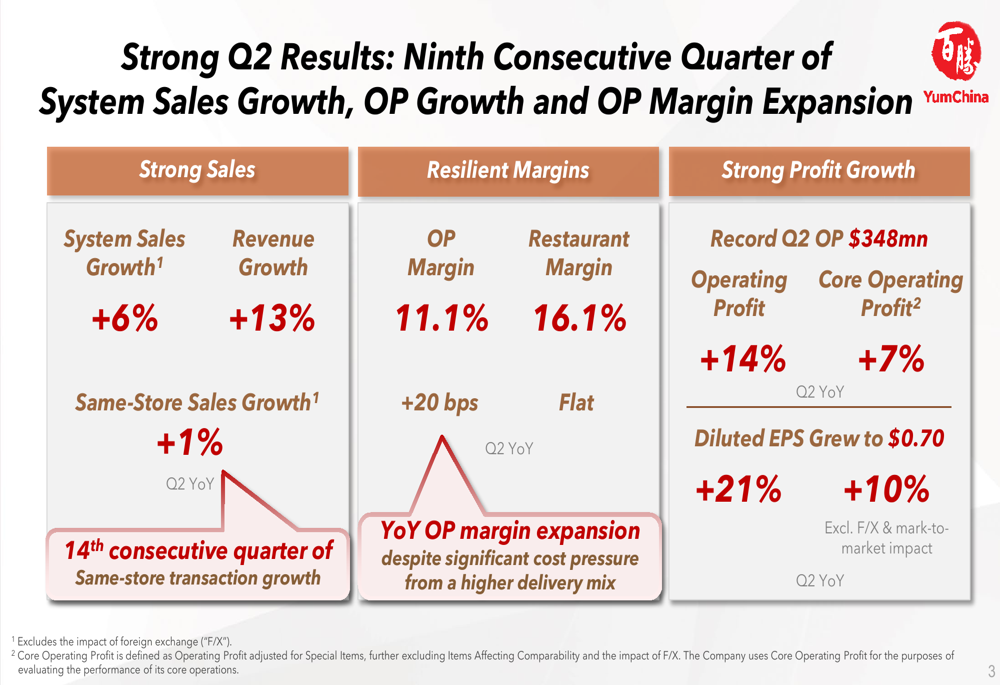
Yum China Q2 2026 slides: record profit, aggressive expansion

Published

on

Yum China Q2 2026 slides: record profit, aggressive expansion


Yum China Q2 2026 slides: record profit, aggressive expansion

Continue Reading

Business

Earnings call transcript: Hyundai Motor India Q1 2026 profit falls as stock rises

Published

on


Earnings call transcript: Hyundai Motor India Q1 2026 profit falls as stock rises

Continue Reading

Business

‘Backing rockstars’: Argonaut launches private equity-style fund

Published

on

‘Backing rockstars’: Argonaut launches private equity-style fund

Argonaut is hunting for up to 20 per cent stakes in mining and logistics companies backed by industry ‘rockstars’ through its newly launched private equity-style fund.

Continue Reading

Business

The Big Cash Flow Problem That Is Sinking Meta Stock After Earnings

Published

on

The Big Cash Flow Problem That Is Sinking Meta Stock After Earnings

The Big Cash Flow Problem That Is Sinking Meta Stock After Earnings

Continue Reading

Business

Above the Storm, the Sun’s Always Shining

Published

on

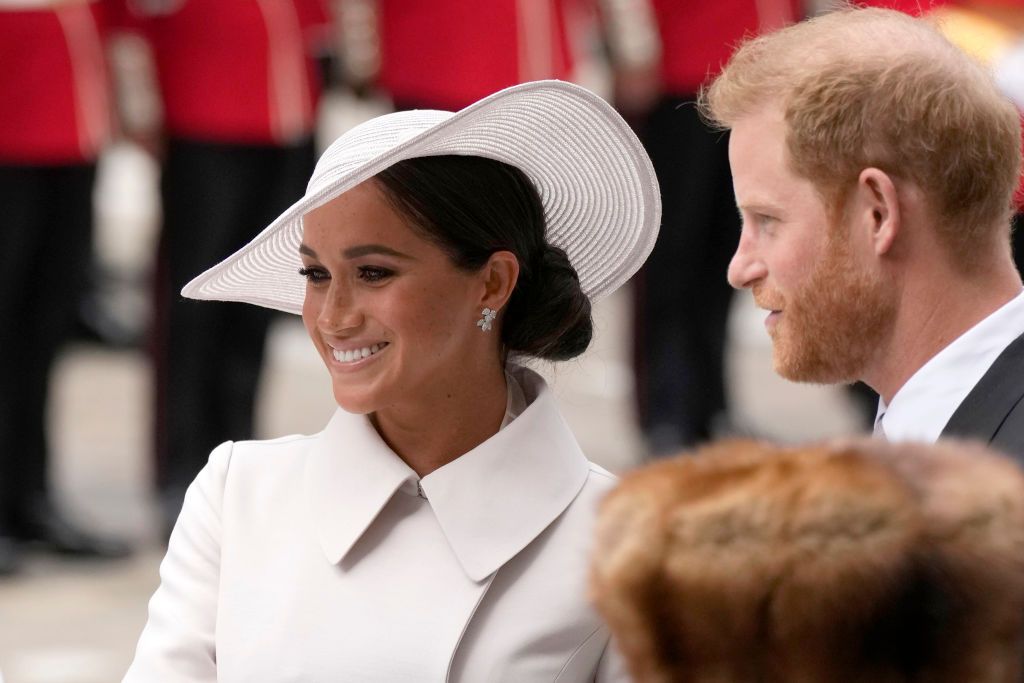
Meghan Markle

Meghan Markle recently opened up about a piece of advice her husband, Prince Harry, shared with her years ago that she says continues to help her navigate difficult moments in life.

The Duchess of Sussex made the comments during a premiere and question-and-answer event for her and Harry’s documentary film “Cookie Queens,” according to a report from People magazine. During the event, an audience member asked Markle how she copes with the tough moments life inevitably brings.

In her response, Markle described drawing on something Harry had told her long before, rooted in his years of military service. “Funny enough, I was thinking about something my husband told me ages ago, because we all go through experiences and life is full of surprises, but you know, he was a helicopter pilot in the British Army for 10 years,” Markle said. “And sometimes on really hard days … he said, ‘Hey, but my love, you know, even if there’s a storm happening, above the storm, the sun’s always shining.’”

Harry served as an Apache helicopter pilot during a decade-long military career with the British Army, including two deployments to Afghanistan. That military background has continued to inform how he approaches challenges even years after leaving active service, according to Markle’s account of the advice he shared with her.

Advertisement

Markle and Harry married in 2018 in a ceremony held at Windsor Castle in the United Kingdom, and the couple shares two children, Prince Archie and Princess Lilibet. In January 2020, the couple announced they were stepping back from official royal duties, relocating to California, where they have built out a range of business and media ventures in the years since.

Harry has more recently made efforts to repair his relationship with his family in the United Kingdom following the couple’s departure from royal life. Markle and Harry traveled to Britain with their children for events tied to the Invictus Games, the international sporting competition for wounded, injured and sick servicemembers and veterans that Harry founded in 2014. During the same trip, the couple held a private meeting with King Charles III and Queen Camilla, marking the first time the king and queen had seen their grandchildren in four years.

Markle has also continued to build her public media presence in recent months, including a recent appearance as a guest judge on “MasterChef Australia,” where she set contestants a challenge to prepare dishes she described as “fit for a Duchess.” During the taping, Harry called into the show despite his own schedule, and the couple discussed the competition together on air, with Markle noting that Harry would have enjoyed several of the dishes the contestants prepared, a moment that drew smiles from those present.

The “Cookie Queens” documentary, which was the subject of the event where Markle shared Harry’s advice, adds to a growing slate of media projects the couple has developed since relocating to the United States, building on ventures that have included Markle’s Netflix lifestyle series “With Love, Meghan” and her lifestyle brand, As Ever, which she relaunched earlier this year.

Advertisement

Markle’s willingness to share personal reflections on coping with hardship comes as the couple has continued to navigate significant public scrutiny in the years since stepping back from royal duties, including ongoing questions about Harry’s UK security arrangements and periodic tension in his relationship with other members of the royal family. Even amid those continued pressures, both Markle and Harry have described their relationship as a source of mutual support, with Markle’s recent comments underscoring the emotional grounding she says Harry’s perspective, shaped by his own military experience, has continued to offer her during difficult periods.

The couple’s recent UK visit and reported meeting with King Charles and Camilla have been widely covered as part of a broader narrative of gradually thawing relations between Harry and the royal family following years of public tension that followed the couple’s 2020 departure from official duties and the subsequent publication of Harry’s memoir, “Spare,” in 2023, which included pointed criticism of several family members.

As Markle continues to balance her expanding media and business ventures with her family life in California, her recent comments about leaning on Harry’s advice during hard times offer a rare glimpse into how the couple has navigated the personal challenges that have accompanied their high-profile and, at times, turbulent transition away from formal royal life over the past several years.

Advertisement
Continue Reading

Business

Welsh vehicle accident repair firm acquired by the Vella Group

Published

on

Business Live

RGM Vehicle Body Repairs has been trading from more than 50 years serving customers across South Wales

RGM Vehicle Body Repairs.

Family-owned accident repair specialist RGM Vehicle Body Repairs is under new ownership.

The business, which has been serving motorists across South Wales for more than 50 years, has been acquired by leading vehicle accident repair ventures the Vella Group, in a deal that gives it a presence in Wales for the first time.

The Vella Group were advised on the deal by the Cardiff office of FRP Corporate Finance. The value of the acquisition has not been disclosed. Vella’s acquisition has been backed by private equity firms Ama Capital and Keyhaven.

RGM Vehicle Body Repairs, which has repair workshops in Swansea and Haverfordwest, was originally founded by Robert Morgan and is now led by Paul Morgan.

Advertisement

As part of the transaction, Paul will remain with the business on a consultancy basis to help ensure a smooth transition for its 40 colleagues, its customers and partners.

FRP Corporate Finance, led by partner Thomas Edwards and manager Alexander Griffiths, advised on offer structure, project managed due diligence workstreams and led negotiations on equity price adjustments. This marks the fifth deal on which FRP Corporate Finance has advised the Vella Group.

Marc Holding, chief executive officer at The Vella Group, said: “We’re delighted to welcome Paul and everyone at RGM to the Vella Group. They’ve built a fantastic reputation over many years through hard work, integrity and consistently delivering for their customers. Businesses like RGM don’t earn that reputation overnight, and we’re committed to preserving everything that has made the business so successful while supporting its next chapter.”

Paul Morgan, director at RGM Vehicle Body Repairs said: “After 53 years in operation, finding the right home for the business was one of the most important decisions we’ve had to make. We wanted to work with a business that would value what we’ve built, look after our team and continue delivering the high standards our customers expect. From the outset, it was clear that the Vella Group shared those values, and I’m looking forward to supporting the business through the transition and seeing it go from strength to strength.”

Advertisement

Mr Griffiths, manager at FRP Corporate Finance said: “It has been a privilege to support the Vella Group as it has continued to grow and strengthen its position as one of the UK’s leading accident repair groups. This acquisition further demonstrates Vella’s commitment to strategic growth, expanding its geographic footprint and reinforcing its strong position in the market.

“RGM has become a well-established specialist provider over five decades, focusing on quality workmanship, investing in its people and always putting customers first. Those values closely align with the Vella Group’s own approach to building a sustainable, values-led business.”

Other advisers on the deal included, Broadfield (legal), and Crowe (due diligence).

Advertisement
Continue Reading

Business

Wealth managers face a new challenger: their clients’ AI chatbots

Published

on

Wealth managers face a new challenger: their clients’ AI chatbots

Boy Wirat | Istock | Getty Images

A version of this article first appeared in CNBC’s Inside Wealth newsletter with Robert Frank, a weekly guide to the high-net-worth investor and consumer. Sign up to receive future editions, straight to your inbox.

Even high-net-worth clients who can afford top-notch advisors are asking artificial intelligence chatbots like Claude for portfolio recommendations and tax advice, wealth management leaders told CNBC. 

Advertisement

“My personal opinion is that ChatGPT is the single largest investment advisor in the world right now,” said Matthew Fleissig, CEO and cofounder of Pathstone, a registered investor advisory with $185 billion in assets.

Asking AI for a second opinion can help clients come up with informed questions and have deeper conversations with their financial advisors, according to firm leaders. That said, the practice comes with risks, such as getting incorrect advice or having personal information leaked.

“I think for a client who’s dealing with something that’s very technically complex and doesn’t have that grasp, it may be harder to differentiate between a hallucination or an error of fact versus a good insight that the engine has,” said Michael Zeuner, managing partner at WE Family Offices.

Moreover, as these large language models get more sophisticated and popular, wealth advisories – especially those that target the mass affluent — will have to do more to justify their fees, according to Morningstar’s Sean Dunlop. He told CNBC that wealth management stocks have already pulled back as AI has encroached on the industry, such as an AI tax planning tool by Altruist released in February or a personal finance feature launched by OpenAI in May.

Advertisement

Dunlop said it’s unlikely that AI will wipe out traditional wealth managers — but they will do more than help advisors become more efficient.

“I think the truth’s probably somewhere in the middle where the service level is going to get better. You probably need fewer advisors to serve the pool of assets, which might itself expand a little bit, and there’s going to be some group of customers that are willing to do it themselves that weren’t before,” said Dunlop, director of equity research at Morningstar. 

“At a minimum, it ought to raise the floor. Like, if you’re an advisor and you’re keeping half your client’s balance in cash in an IRA, then this really ought to be a wake up call,” he added.

AI enters the chat

Pamela Lucina of Northern Trust said she first noticed clients using AI to double-check the firm’s advice about 18 months ago and that it has become a more frequent occurrence since. 

Advertisement

“We’ve had clients tell us directly that they’re going to ask AI the questions that they’re going to ask us,” said Lucina, the firm’s chief fiduciary officer and leader of its trust and advisory practice. “I think what they’re often testing us for is not the answer, but having more specifics or evidence that we’ve actually done these things before.”

Many prospective clients also use LLMs to help them decide whether to work with Northern Trust, she added. Before the rise of AI chatbots, typically only billionaire clients would ask the firm to submit a formal proposal for managing their wealth, according to Lucina. Now she estimates about half of clients send requests for proposals, even those with as little as $100 million in assets. Some have told the firm that they used ChatGPT or other LLMs to formulate their highly specific questions, she said. 

This process can save time and make client meetings more efficient, Lucina said.

“Less of our conversation is about information sharing and more about focusing on the outcome they are trying to achieve and how it actually applies to families,” she said. “The fact that there’s more information out there is not a threat. It can take a conversation to the next level.”

Advertisement

Get Inside Wealth directly to your inbox

Zeuner said he first noticed clients talking openly about feeding portfolio recommendations into LLMs about five months ago. It has become so common that his firm is considering whether to run every recommendation in Microsoft Copilot so advisors can prepare for questions clients may ask.

He said he views the use of LLMs as a second set of eyes and a positive trend.

“The AI is enabling and empowering them to get involved, to learn, to ask questions, to get a second opinion,” he said. “Whether they challenge us or validate, it doesn’t matter; they’re engaged.”

The pitfalls of AI advising 

Still, Zeuner said he’s concerned about clients not catching AI-made mistakes. For instance, he said, if a client uploads a trust document into a LLM and asks a question about it days later, the chatbot might hallucinate details of the document in its answer. 

Advertisement

Zeuner also said he’s seen LLMs make simple mistakes, such as ChatGPT telling a client that two ETFs in his portfolio appeared to be identical. While the ETFs tracked the same index, one was equal weight and the other was cap-weighted, he said.

When Lucina asked an LLM for examples of how clients could save on capital gains taxes, it got the math completely wrong, she said.

“I generally use AI to poke holes, to try to find criticisms in a way of thinking, and I think it is good for that,” she said. “But more often than not, especially on the advice side, it’s wrong.”

 More crucially, clients risk exposing identifying information if they use a personal account, even if they spring for a paid plan. Financial institutions, including wealth advisories, typically pay for enterprise plans that come with strict data protections. For instance, WE Family Offices has an agreement with Microsoft Copilot that data the firm enters is never used to train public AI models, according to Zeuner.

Advertisement

“We talk to [clients] about general best practices for using these LLMs, given their high profiles and wealth,” he said. “If you have an AI assistant capture every meeting, where is that transcript going? Do you know how it is stored? Who has access to it and how secure is it?”

Lacking a human touch

Fleissig said that while AI chatbots like Anthropic’s Claude and OpenAI’s ChatGPT are capable of great analysis, that’s not the same as actionable advice. 

He described LLMs as “semi-objective tools” that aren’t always equipped to make subjective decisions. A trusted advisor can guide clients to make the choice that’s right for them based on a variety of factors, he said.

“There is value in human-to-human interaction from a relationship standpoint because there’s so much nuance to it,” he said.

Advertisement

And though an LLM could make an argument for investing in pre-initial public offering Anthropic, for example, it can’t put that advice into practice and get you access to a funding round.

“You get access because of relationships that you have, and you also have all these experiences that you’ve had with clients,” Fleissig said. “Deals today are still not getting done via AI.”

Vince Lumia, a Morgan Stanley veteran of 27 years, said that the value of human touch is more easily overlooked during bull markets. That changes during times of crisis or uncertainty, said Lumia, who oversees Morgan Stanley’s 16,000-plus financial advisors. 

“The world sort of starts to think that it’s actually easy. The one guarantee I could have is that the markets will be volatile, and they won’t go up in a straight line, and there’ll be disturbances,” he said. “And when those disturbances happen, larger clients tend to want advice.”

Advertisement
Choose CNBC as your preferred source on Google and never miss a moment from the most trusted name in business news.
Continue Reading

Business

The Chinese robot army transforming the UK’s retail industry

Published

on

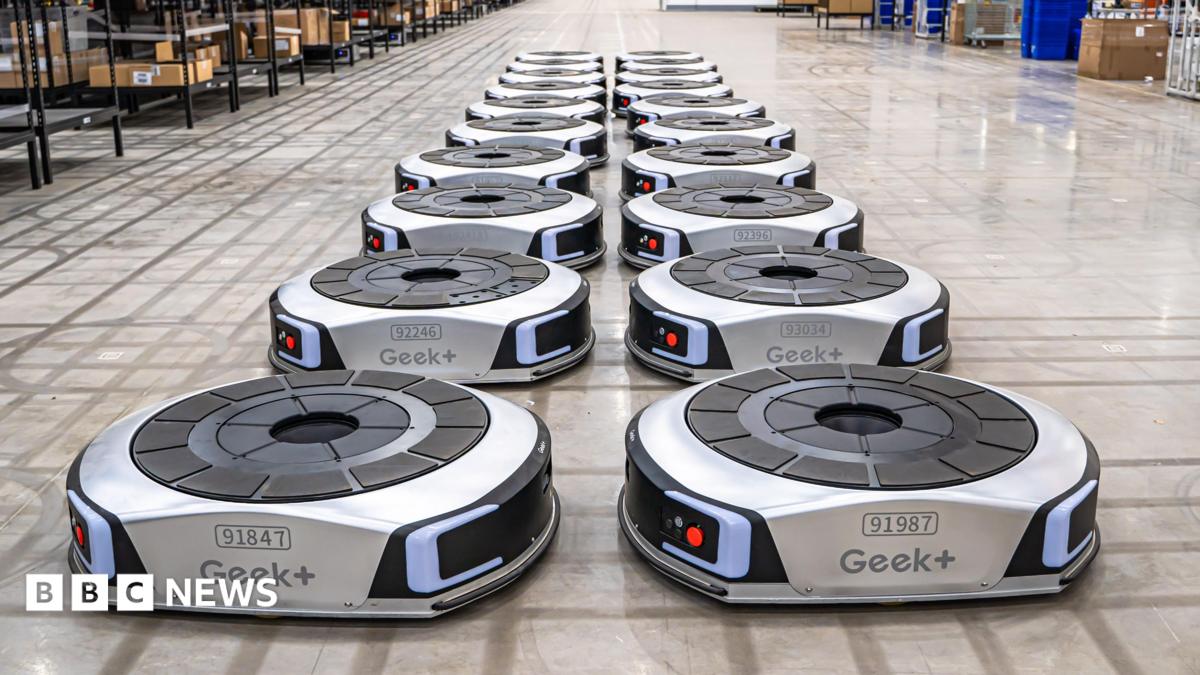
Geek+ floor robots lines up in a UK warehouse

The UK has struggled with weak productivity growth for more than a decade, and economists say wider adoption of robotics will be essential if businesses are to become more efficient.

In its 2026 report SME Technology Adoption in the United Kingdom, the Organisation for Economic Co-operation and Development (OECD) said technologies like robotics would be key to improving productivity.

According to the OECD, Britain’s low adoption of robotics is “surprising” given its manufacturing heritage, noting that while UK firms have embraced mature digital technologies, they lag behind in robotics and automation.

That presents an opportunity for companies such as Geek+. The UK has one of Europe’s largest e-commerce and logistics sectors, but many warehouses are still in the early stages of automation.

Advertisement

Britain has already become Geek+’s biggest European market, with UK partner MotionTech deploying more than 2,000 robots across 10 warehouse sites.

“Customers want fast deployable solutions,” says Barry Pemberton, Account Director at MotionTech. “They want high volume, high storage, fast picking… ultimately on a smaller footprint with a reduced headcount.”

“We seem to have a very big shortage of labour in the UK at the moment. These technologies are really important to keep businesses thriving and meet demand.”

The Trades Union Congress (TUC), which represents almost 6 million UK workers, says robotics should be used to raise productivity and improve jobs, rather than simply cut labour costs.

Advertisement

In its response to the government’s consultation on a new AI and innovation strategy, it urged ministers to ensure workers are involved in decisions about automation and that employers invest in retraining.

“Working with technologists, workers and unions can help steer the UK’s research and innovation towards workers’ priorities for automation… avoiding job-cutting, low-productivity automation,” the TUC said in its report.

Continue Reading

Business

Yolk Property Group, directors in $5m loan dispute

Published

on

Yolk Property Group, Burgess Rawson WA directors in $5m loan dispute

Yes. Corporate subscriptions are available for teams and organisations, with discounted rates as user numbers increase. Pricing starts from $1,625 + GST per user.
Get in touch
to discuss the right option for your organisation.

Business News subscriptions are used by executives, investors, consultants and professionals who need to stay informed and make better decisions about the WA market. When you subscribe you’ll get

  • Unlimited access to WA’s most trusted business journalism
  • Data & Insights — detailed profiles of WA companies, people, projects and deals
  • MyBN — a personalised feed based on the companies, people and sectors you follow
  • Special publications and industry reports
  • Daily and weekly email newsletters

Data & Insights is a research tool built specifically for the WA market. It draws on more than 30 years of Business News reporting, updated regularly to reflect what’s happening now. Use it to:

  • Look up detailed profiles of WA companies, including financials, directors and ownership
  • Find decision-makers and track their career movements
  • Research live and completed projects across WA industries
  • Monitor deals, appointments and market activity
  • Access industry rankings and league tables

Data & Insights is updated daily by our dedicated research team, which uses the latest announcements, ASX filings and editorial coverage to keep our person, company, list and project records up to date.

Business News welcome all opportunities to make our dataset accurate, complete and current, so if you have an update request, please email the team at
general@businessnews.com.au, and we’d be happy to assist.

Advertisement

MyBN
is part of every subscription. It’s your personalised view of Business News. You can follow the companies, people, sectors and projects that matter to you, and get a news feed and alerts tailored to your interests. You can save articles to read later and retain only what you need.

Only subscribers have full access to all content on the Business News website.

Advertisement

If staying informed about the WA economy is part of your job, and/or you’re looking for networking opportunities in WA, Business News is built for you.

Business News subscribers are:

  • Executives and directors tracking competitors, clients and market movements
  • Investors and advisers researching companies, deals and industry trends
  • Consultants and professionals staying across sectors relevant to their clients
  • Business owners looking for leads, context and market intelligence

Most Business News publications cover national or global markets. Business News is focused entirely on Western Australia, which means the journalism, the data and the intelligence are all built around WA companies, people and projects — not adapted from a national feed. Data & Insights, included with every subscription, combines more than 30 years of WA-specific editorial research with live business data. There’s no comparable product for the WA market.

Advertisement

The Morning Digest Email provides a comprehensive wrap of the major headlines, relevant to WA business, and includes with a snapshot of the overnight news covering oil, gold and ASX-listed companies.

The Afternoon Wrap Email focuses on the news covered by our team of journalists during the course of the working day, including exclusive stories and analysis, all of which relates to WA business and the local economy.

The BN Weekender Email contains a wrap of the Business News from the week that was, highlighting the top stories in each area of WA business.
Sign up for free.

Advertisement

We’re happy to help.
Get in touch
and our team will come back to you.

Advertisement
Continue Reading

Business

Virtual interviews don’t show bosses your personality, says Burnham

Published

on

A young woman with short hair wearing a grey denim shirt working in an office, sitting with arms crossed at the desk in front on computer.

Speaking to former political adviser Jimmy McLoughlin on his podcast Jimmy’s Jobs of the Future, Burnham said he was concerned that the use of technology was not making recruitment processes “fairer”.

“How do you get over some of your personality, your passion?” he asked, referring to virtual interviews. “It seems to me to then work against people who have that side to their character and work for those who are just giving the more formulaic answer.

“I do worry about that and I’ve seen that in relation to my kids and their situation.”

More than one million 16-25-year-olds are not in education, employment or training – the highest level in more than 12 years, official figures show.

Advertisement

A major review by former minister Alan Milburn found job and career opportunities for young people are “not growing, they’re shrinking” with one in six set to be out of work, education or training in five years unless action is taken.

“We are at risk of a lost generation” with young adults facing a “perfect storm” of challenges, Milburn warned in May.

Continue Reading

Trending

Copyright © 2025