
Business
LARRY KUDLOW: Rising Bond Yields from Trumpian Growth, not Trumpian Inflation

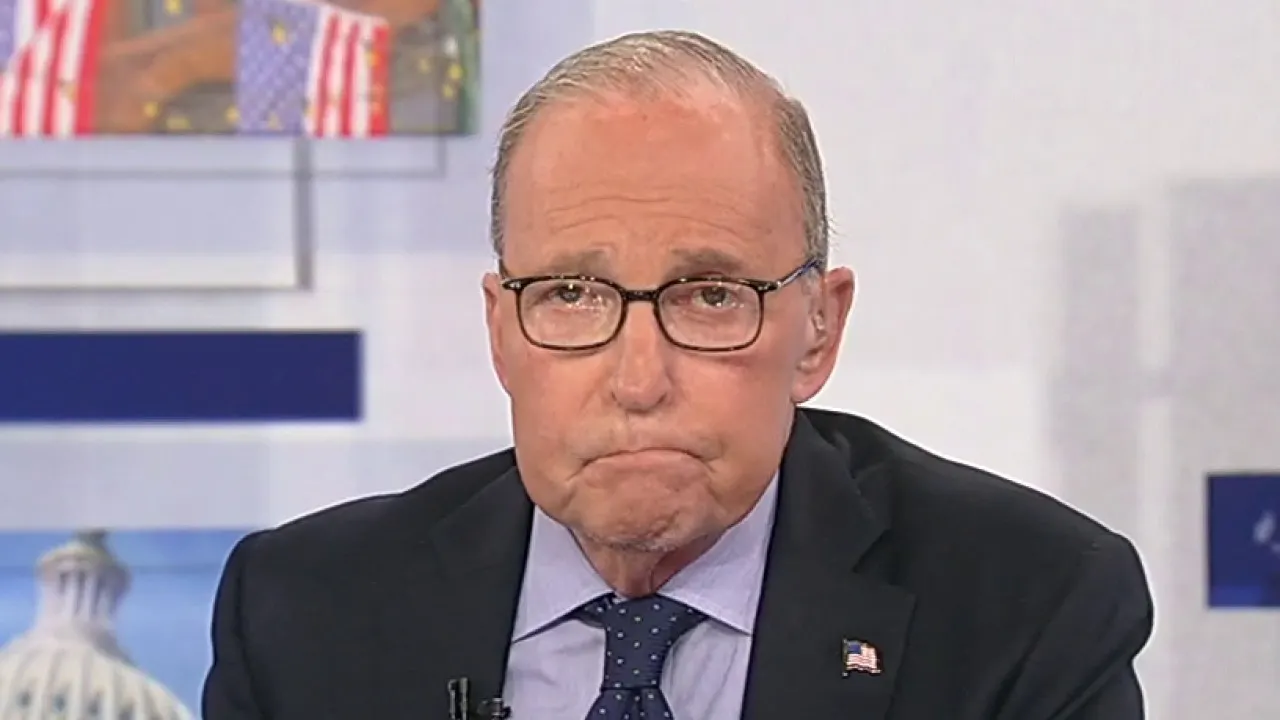
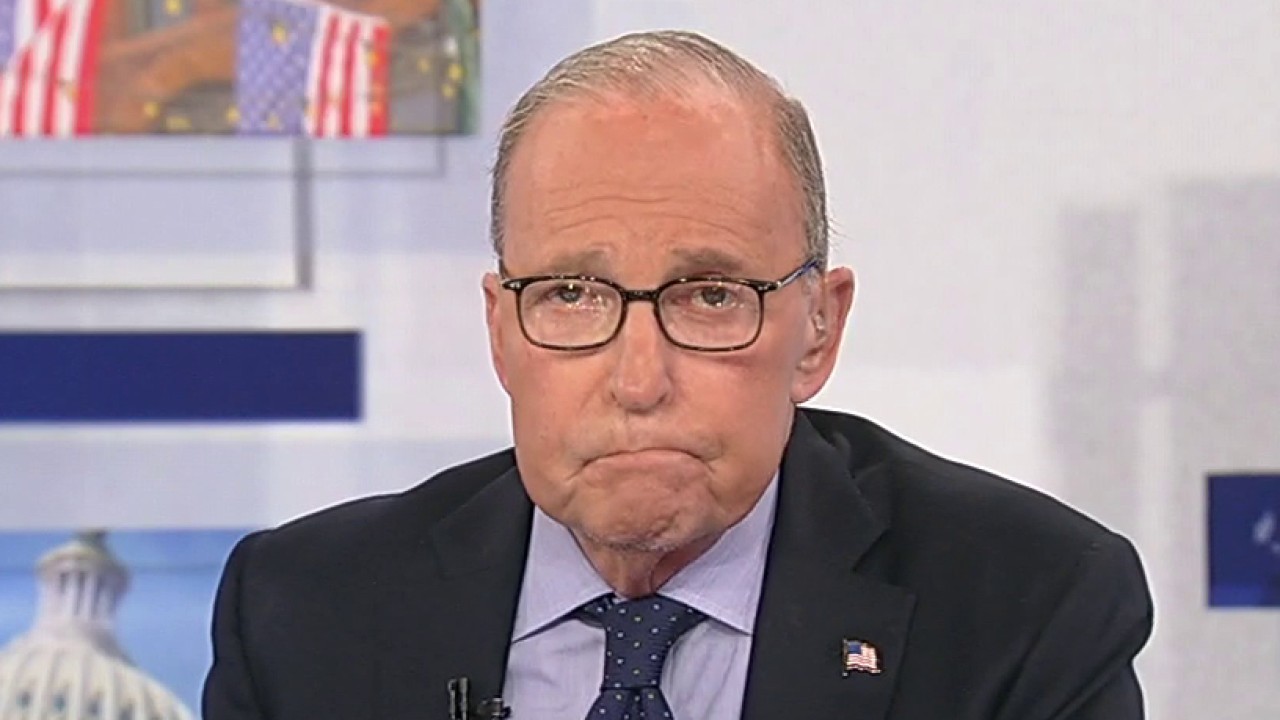
FOX Business host Larry Kudlow discusses the economic impact of higher long-term bond yields on ‘Kudlow.’
Please, folks, let’s not start panicking about long-term Treasury bond yields. In the last couple of weeks I’ve seen more ink spilled about the 30-year Treasury than I have in probably the last 10 years.
The bellwether Treasury is the 10-year, which has been trading steadily in a range of 4 percent to 5 percent and no one’s been screaming about that.
Yet here’s the key point. The 30-year Treasury bond yield has gone up about 35 basis points in recent weeks almost entirely because of plenty of new economic statistics that show a faster, more powerful growth rate — especially in manufacturing and construction, along with advanced technologies.
It’s not about inflation. Yet the news headlines have been screaming inflation with no good analysis because they just love to keep whacking away at President Trump.
Take a look at any of the Treasury rate increases, however, and you will see it’s all from the real yield, not the inflation component.
The inflation component, which is the CPI breakeven compensation for inflation, hasn’t gone up all year. On the 30-year CPI breakeven, the expected inflation component has hovered just above 2.0 percent all year to date.
Hoover Institution senior fellow Victor Davis Hanson explains ‘hating Israel fatigue’ amid growing concerns over anti-Israel rhetoric on university campuses and in political circles on ‘Kudlow.’
Another example, the market rate for 10-year Treasuries has increased about 50 basis points so far this year.
And virtually all of it is from an increase in the real yield from Treasury Inflation-Protected Securities of 50 basis points. The expected inflation rate from the breakevens has increased by less than 5 basis points.
The consumer price index break-even component that implies inflation has basically been flat. The same is true for the 30-year Treasury bond.
What is happening however, is that market rates have been driven up by stronger 4 percent-type economic growth and are normalizing after all those 0-type rates from the financial crisis and Covid and very bad Federal Reserve policy that Kevin Warsh is going to fix.
Actually, for context, a 4 percent-plus Treasury yield is more like the President Clinton/Speaker Newt Gingrich days of strong growth from lower capital gains taxes and welfare reform.
Sen. John Hoeven, R-N.D., discusses his state’s efforts to produce more American energy under the Trump administration on ‘Kudlow.’
The economy was booming then. The Treasury rate’s around 6 percent. So right now, we’re just normalizing. And there is an enormous boom. Mr. Trump today at the White House spoke of the boom from one big beautiful bill:
“We’ve gained so much in the last 16 months like nobody can believe, actually. And not only that, but we have more money being invested in the United States than any country at any time in history. Money is coming in by the trillions.”
He added that “our nation’s economic dominance drives trillions of dollars in investments, creates millions of jobs, and expands access, credit and capital so that every citizen has a chance to achieve what we now hear a lot about the American dream.”
The American dream is alive and well. So I’ll just put a cap on this by saying, first of all, ignore the headlines. Second of all, interest rates in the bond market are not exploding.
And what increase there has been is because of a stronger than expected economy. And we are normalizing. And there’s nothing to panic over, even though the press loves to whack away at Mr. Trump on almost every topic under the sun.


Indian households are estimated to hold 31,000 tonnes of gold. The country imports about 800 tonnes annually
Read more: Indian jewellers may earn up to 1% incentive under revamped Gold Monetisation Scheme: IBJA
A more lucrative gold monetisation scheme could bring some of that metal into the formal market, boosting recycling and helping revive underused refining capacity, Guha said. India has about 1,800 tonnes of installed gold-refining capacity, much of which remains underutilised. The government is working with all stakeholders to develop a revamped gold monetisation scheme (GMS), after the earlier programme launched in 2015 made little headway.
MMTC PAMP currently recycles around 22 tonnes of gold and plans to increase this by 10-15% annually, he said. “If an attractive GMS is launched, then it can go up substantially.” The company has the capacity to refine 300 tonnes of gold and 600 tonnes of silver annually, leaving significant headroom to scale up recycling.

ALSO READ | India’s gold headache far from cured after 60 days of breather
A greater flow of recycled gold into the domestic market could also help address pressure on India’s current-account deficit by substituting a portion of imported bullion with domestically sourced metal. With gold accounting for a significant share of India’s merchandise imports, recycling household gold could reduce the need for fresh imports and, consequently, the outflow of foreign exchange. “Recycling complements imports; it does not replace them,” Guha said, adding that India’s next gold story should be about how efficiently, transparently and responsibly the country circulates and monetises the gold it already owns.
Southeast Asian nations are close to finalizing the ASEAN Digital Economy Framework Agreement (DEFA), a landmark regional pact designed to govern their digital economy, projected to reach $2 trillion by 2030. This agreement, supported by the World Economic Forum, aims to harmonize digital trade rules, facilitate cross-border data flows, and establish coherent regulations for e-commerce and digital payments across the region.
DEFA seeks to move from fragmentation to integration, fostering a seamless digital ecosystem that benefits businesses of all sizes, including MSMEs, and promotes inclusive growth. The agreement is expected to be signed by the end of 2026, promising significant economic benefits through digital integration.
- Southeast Asian nations have come a step closer to cementing the world’s first regional agreement on digital economy governance.
- The ASEAN Digital Economy Framework Agreement (DEFA), due to be concluded and signed in 2026, aims to bolster a digital economy that could reach $2 trillion by 2030.
- The World Economic Forum’s ASEAN Digital Economy Agreement Leadership project has supported the DEFA negotiation process since its inception.
Southeast Asian nations have reached a critical milestone in negotiations for the world’s first comprehensive regional digital economy agreement, setting the stage for digital integration across a market of nearly 680 million people.
At a gathering in Kuala Lumpur, Malaysia, the Association of Southeast Asian Nations (ASEAN) announced it reached the “substantial conclusion” in negotiations for the region’s Digital Economy Framework Agreement (DEFA). The announcement marks a major step in more than two years of talks, which included 14 rounds of negotiations.
ASEAN DEFA is now poised to become the world’s first region-wide agreement focused exclusively on digital economy governance. Unlike digital provisions embedded in broader trade agreements, the pact stands out as a dedicated framework designed to harmonize digital trade rules, enable trusted cross-border data flows and establish coherent regulations for paperless trading, e-commerce, cybersecurity and digital payments across ASEAN.
A $2 trillion digital future
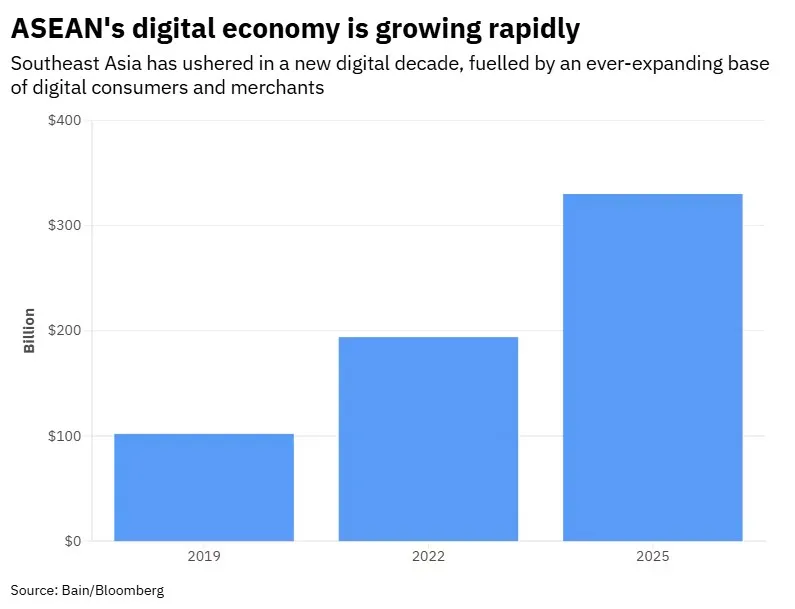
The economic stakes involved are significant as ASEAN’s digital economy continues to grow rapidly. Currently valued at around $300 billion, it is projected to reach $1 trillion by 2030, a figure that could potentially double to $2 trillion with DEFA’s successful implementation.
Indonesia, which leads the region’s digital economy with a $90 billion valuation in 2024, could reportedly see its digital economy triple to $360 billion by 2030, with e-commerce contributing $150 billion.
In 2023, 71% of all venture capital deals across ASEAN were digital economy-related, 11% higher than the global average. Meanwhile, annual announced investments in communication, data processing and hosting services have increased nearly sixfold in the past ten years, from $777 million in 2015 to $4.4 billion in 2024.
The underwriting system is another area that needs attention, he said, adding that it is not working effectively and companies are having to bear significant costs.
A working group formed by Sebi to examine issues related to the SME platform has recently submitted its report to the regulator. Sebi will be coming out with a consultation paper soon on the SME platform. “If someone is on the SME platform, obviously we do not want them to incur higher costs. But the cost is significantly higher compared with the mainboard,” Pandey said.
Read more: Sebi flags manipulative trades during CAS on Sensex expiry day, fines two entities
He added that increasing the trading lot size and application size to control retail participation has not achieved the intended purpose. Sebi is also looking to support global fund management activity from India. The changes to the portfolio management services regulation would enable trading from onshore, Pandey said.

The share of fund managers who said they are overweight equities is at its highest level since November 2021.
When asked what they expected the world economy to do in the next 12 months—a soft landing (a gentle slowdown) or a hard landing (a sharper slowdown)—most respondents chose neither. Instead, a record 56% of fund managers predicted “no landing,” or continued growth.
Some 72% of respondents said they didn’t expect the Fed to hike interest rates before the November midterm elections.

Fed Minutes Lean Hawkish, But We Don't Expect A Hike

The decline partly reflects the index’s large exposure to banks, whose shares have underperformed even as retained earnings have added to their book values.
Nifty’s one-year forward P/B is now below 2.96 times, compared with its five-year average of 3.18 times and 10-year average of 2.99 times. The six-year low suggests the Nifty is trading at a more moderate valuation relative to the book value of its constituents.
The composition of the index has contributed to the decline. Banks and financial services account for around 35% of the Nifty’s weight, the largest sector weight, while earnings growth in the sector has been stronger than rest of the index.
 ET Bureau
NOT LOW RATIO ALONE Investors should also look at profitability, earnings cycle: experts
“The composition of the Nifty has been one of the reasons for the lower P/B,” said Siddharth Purohit, fund manager-equity at InvestValue Capital. “While BFSI has a dominant position in Nifty’s weight, their earnings growth in the sector over the past three years has been better than other components,” he said.
Retained earnings at banks have added to their net worth or book value, increasing the denominator used to calculate P/B. With shares of large banks such as HDFC Bank, Axis and Kotak Mahindra underperforming, their stock prices have not kept pace with the increase in book values, contributing to the decline in the Nifty’s P/B.
The Nifty is down 2.64% over the past year and 1.31% over the past two years. The current P/B reading, however, also needs to be viewed in the context of a change in Nifty’s book-value methodology. NSE shifted the calculation from standalone to consolidated financials in September 2023, which lowered the reported P/B from 4.31 times to 3.45 times without any change in share prices. On the earlier standalone basis, the current P/B would be around 3.7 times, slightly above the long-run average of about 3.5 times, according to market experts.Read more: India stocks top Indonesia as Asia’s least-favoured in BofA poll
For investors, the lower P/B suggests valuations have become more moderate relative to companies’ net worth, but it does not by itself mean the market is cheap.
A lower P/B can result from rising book values, falling share prices or a combination of both, and needs to be assessed alongside earnings growth and the outlook for profitability.
Vivek Iyer, partner & CIO at Rational Asset Management, said investors should look beyond the headline valuation multiple and focus on earnings cycle.
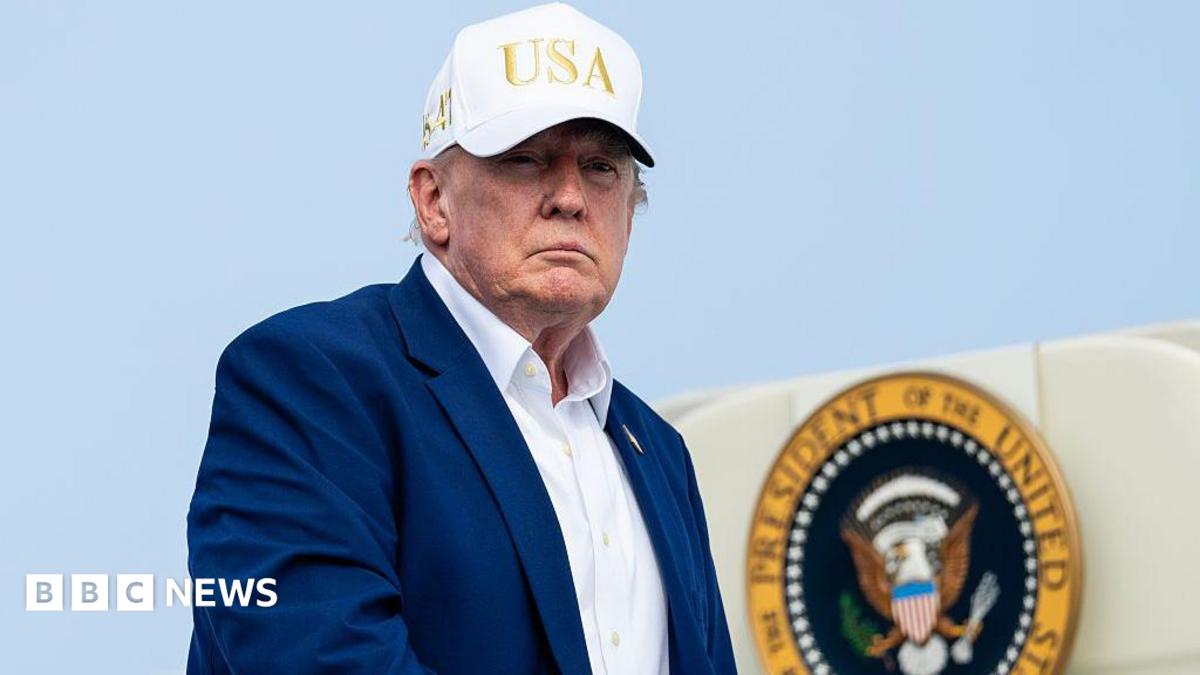
President Donald Trump has announced the US will inflict “TREMENDOUS Economic Consequences” on any country that helps or does business with Iran.
He wrote in all capital letters on Truth Social he was launching “the most crushing economic operation ever taken against any country!” He gave no further details, and did not name any other nation.
It comes after a 60-day ceasefire with Iran expired on Monday, with no sign of a diplomatic or military off-ramp to the conflict that the US and Israel began at the end of February.
Trump’s latest move appears to extend the pressure campaign of Operation Economic Fury, launched in April to sanction foreign banks or firms that do business with Tehran.
In Wednesday evening’s socal media post, Trump said he was launching “economic D-Day” on Iran because the Islamic Republic had failed to make a deal with the US.
“ANY country that allows its financial institutions, businesses, airports, or government entities to provide any type of lifeline to Iran will itself face TREMENDOUS Economic Consequences,” Trump said.
He did not specify what punishment countries would face.
Trump continued: “Oil smuggling, swap lines, cash transfers, exchange houses, ship registries, front companies – It all needs to stop NOW. You know who you are.”
The president’s comments come nearly a week after Treasury Secretary Scott Bessent said the US would impose economic isolation on the country “like the world has never seen before”.
The BBC has asked the White House and US treasury department for comment.


Good morning. The WSJ Leadership Institute’s Katie Deighton reports:
Publicis Sports is teaming up with Kansas City Chiefs tight end Travis Kelce to tackle the Wild West of college athlete endorsements.
Copyright ©2026 Dow Jones & Company, Inc. All Rights Reserved. 87990cbe856818d5eddac44c7b1cdeb8


Seeking Alpha’s transcripts team is responsible for the development of all of our transcript-related projects. We currently publish thousands of quarterly earnings calls per quarter on our site and are continuing to grow and expand our coverage. The purpose of this profile is to allow us to share with our readers new transcript-related developments. Thanks, SA Transcripts Team

Cricut CEO Ashish Arora sells $996,348 in company stock
MMTC PAMP calls for better Gold Monetisation Scheme

Altcoin Boom May Never Come Back: How Crypto Trading Has Changed in 2026

Toronto FC’s Walker Zimmerman shown red card vs. Charlotte





-

 Fashion5 days ago
Weekend Open Thread: Ann Taylor
-
 Sports6 days ago
This U.S. Amateur is a glimpse into golf’s future in more ways than you think
-
 Tech6 days ago
11 Ways to Rank Your Videos
-
 NewsBeat5 days ago
Myanmar says over 300,000 Rohingya refugees verified for repatriation as exodus enters ninth year
-

 Sports5 days ago
Birmingham 2026: Day 6 Timetable for Irish Athletes
-

 Politics5 days ago
SEQ Code: The Three Letter Boarding Pass Code That Could Give You The Worst Seat
-

 Tech6 days ago
DeepSeek Harness launches as open source rival to Claude Code, alongside V4-Pro on API with higher prices
-

 Crypto World2 days ago
OCC Greenlights Trump Family Crypto Firm for Trust Charter
-

 Tech2 days ago
Qwen3.8-27B runs frontier-class coding agents and reasoning locally, no cloud API required
-

 Fashion7 days ago
The Details Do the Dressing
-
 Entertainment6 days ago
10 Netflix Shows That Quietly Became Modern Classics
-

 Fashion5 days ago
Weekly News Update, 8.14.26 – Corporette.com
-
 Tech4 days ago
Every fusion startup that has raised over $100M
-
 Entertainment5 days ago
Marvel Studios Reveals New X-Men Cast Including Adam Driver and Sadie Sink
-

 Business6 days ago
15 Ways to Make Money From Your Phone (2026 Guide)
-

 Business5 days ago
Facebook Down Now? Users Report Login And Loading Problems As Outage Trackers Monitor Ongoing Issues
-

 Crypto World5 days ago
Pi Network Protocol 27 endgame: last upgrade before what?
-

 Business2 days ago
SMA Solar Technology AG (SMTGY) Q2 2026 Earnings Call Transcript
-

 Crypto World6 days ago
Robinhood Chain Approaches $1B TVL as Uniswap Integration Boosts Liquidity
-

 Fashion5 days ago
Cart Confidential Vol. 44 – Julia Berolzheimer
You must be logged in to post a comment Login