

Business
LeBron James, Kawhi Leonard and Nikola Jokic Among Biggest Storylines Right Now

The 2026 NBA offseason has already produced some of the most significant roster upheaval in recent league history, but with free agency winding down and several major storylines still unresolved, the rumor mill remains active heading into the second half of July. Here are the eight biggest trade and roster storylines currently shaping the league.
1. LeBron James’s free agency decision remains the league’s biggest holdup. James informed the Los Angeles Lakers last month that he intends to play his 24th NBA season elsewhere, and while his agent, Rich Paul, has confirmed conversations with 27 teams, no decision has been finalized. Multiple franchises — including the Cleveland Cavaliers, Golden State Warriors, Miami Heat, Minnesota Timberwolves, Denver Nuggets and Philadelphia 76ers — have at least two roster spots still open as they wait to see whether James chooses to join their rosters before finalizing their own offseason plans.
2. The Kawhi Leonard trade to Toronto remains in limbo amid an ongoing NBA investigation. Leonard was initially traded from the LA Clippers to the Raptors on June 30 in exchange for Brandon Ingram, Gradey Dick, two unprotected first-round picks, a first-round pick swap and two second-round picks. But the deal cannot be finalized while the league continues investigating whether Leonard’s endorsement agreement with the startup Aspiration constituted a circumvention of the salary cap. NBA commissioner Adam Silver addressed the situation before Game 1 of the NBA Finals, signaling a desire to bring the matter to a close. “I think we’re close to the point now where I think we need to wrap this up because you also need finality,” Silver said. “Their team has to understand what the situation is they’re going to be operating under, and so do the other 29 teams.” Both the Clippers and Raptors issued statements confirming the trade can only be completed once Toronto’s ownership group agrees to assume the risk associated with any penalties tied to the investigation’s findings.
3. Giannis Antetokounmpo’s move to Miami has reshaped the league’s power balance. After more than a year of speculation, the Milwaukee Bucks finalized a trade sending the two-time MVP to the Heat in exchange for Tyler Herro, Kel’el Ware, Jaime Jaquez Jr., Kasparas Jakučionis and a package of first-round picks and pick swaps. The move gives Miami its first true superstar addition since the Jimmy Butler era began, while Milwaukee pivots toward a rebuild built around draft capital and younger talent.
4. Jaylen Brown’s trade to Philadelphia was one of the offseason’s most surprising moves. Boston sent the 2024 Finals MVP to the 76ers in exchange for Paul George, two first-round picks and two second-round picks, a deal that stunned much of the league given Brown’s recent playoff pedigree. The trade followed what had appeared to be a public campaign by Brown for a change of scenery, and it leaves Boston relying on a core built around Jayson Tatum and Mitchell Robinson heading into next season.
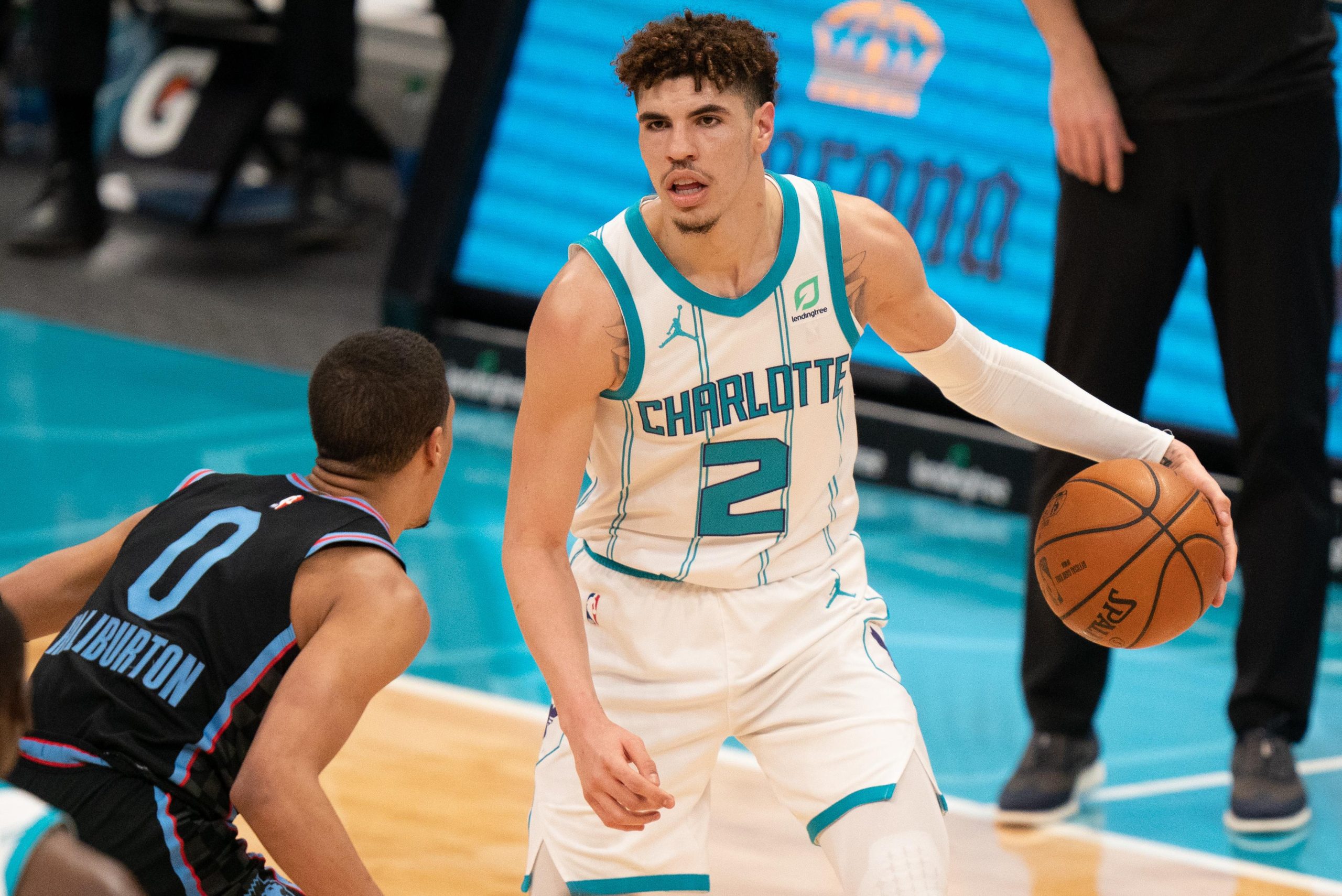
5. LaMelo Ball is now a member of the Minnesota Timberwolves. The move, finalized shortly after this year’s draft, sent Ball from the Charlotte Hornets to Minnesota as part of a broader reshuffling of the Timberwolves’ roster, which also saw the team part ways with Julius Randle earlier in the offseason as part of a trade with the Brooklyn Nets that also sent Nic Claxton to the Chicago Bulls.
6. Ja Morant’s tenure in Memphis has come to an end. The star guard was traded to the Portland Trail Blazers this offseason, closing the book on his time with the Grizzlies after years of speculation about his long-term future with the franchise. ESPN’s Brian Windhorst noted during the draft that the league appeared to have already witnessed the final moments of Morant’s time in Memphis before the move was made official.
7. Domantas Sabonis could be the next veteran on the move. With the Sacramento Kings continuing to reassess their direction, ESPN’s Brian Windhorst raised the possibility that the team could explore trading the two-time All-Star center as part of a broader pivot. “There’s a possibility that the Kings may look to see what his trade market might be as they look to pivot their franchise,” Windhorst said during the draft broadcast, adding Sabonis to the list of established veterans whose situations remain worth monitoring as the offseason progresses.
8. Nikola Jokic’s extension decision looms over Denver’s long-term planning. Though the three-time MVP has been extension-eligible since mid-June for a four-year, $278 million deal, indications point to Jokic waiting until next offseason to sign, when he would become eligible for a five-year deal worth $359.5 million — a contract that would set a new record for the largest in NBA history. Speaking to reporters in Serbian following a FIBA World Cup qualifying game, Jokic reaffirmed his desire to remain with the Nuggets long-term. “My idea and desire is to stay in Denver. I’ll probably sign next year,” Jokic said, adding, “My desire is to play the rest of my life in Denver.”
Beyond these eight headline storylines, the offseason has already produced a series of smaller but notable moves, including the Detroit Pistons sending big man Isaiah Stewart to the Memphis Grizzlies for future second-round picks, and veteran center Nikola Vučević agreeing to a minimum contract with the Orlando Magic after previously starring for the Chicago Bulls. Free agency has also seen a wave of contract decisions play out across the league, with players like James Harden, Fred VanVleet and Zach LaVine all making decisions on their player options in recent weeks.
With James still weighing his options and the Leonard trade hanging in the balance pending the league’s investigation, NBA insiders expect the coming days to bring further clarity on two of the offseason’s most closely watched storylines. Both situations carry ripple effects across the rest of the league, with several contending teams effectively frozen in place until James makes his decision and the Raptors and Clippers await word from the league office on how the Leonard matter will ultimately be resolved.

UnitedHealth Group on Thursday posted second-quarter earnings that blew past estimates and raised its full-year profit outlook, as the company better manages high medical costs and uses AI to help streamline operations.
The largest private insurer in the U.S. said it expects 2026 adjusted earnings of $19.50 to $20 per share, up from a previous outlook of more than $18.25 per share. UnitedHealth is maintaining its full-year revenue guidance of greater than $439 billion. But CFO Wayne DeVeydt said in an interview that he expects the company to “do better than that” given the second-quarter beat.
Still, he said medical costs in the quarter remained “elevated over historical levels” – an issue that has dogged the broader insurance industry for more than two years.
“These results are not a reflection of trend bending or coming under control, but rather our efforts to start pushing down what is already an elevated number,” DeVeydt said.
Here’s what the company reported for the second quarter compared with what Wall Street was expecting, based on a survey of analysts by LSEG:
- Earnings per share: $6.38 adjusted vs. $4.90 expected
- Revenue: $112.03 billion vs. $110.85 billion expected
The company’s stock jumped more than 7% in morning trading.
UnitedHealth’s turnaround plan is gaining momentum following restructuring and an executive shuffle designed to counter challenges in the industry. The healthcare giant is working to stabilize margins by shrinking membership, exiting unprofitable contracts and pouring $1.5 billion into artificial intelligence to streamline operations.
DeVeydt said the company is using AI to improve both efficiency and patient care. For example, AI is helping speed up processes like prior authorizations and improve payment accuracy by detecting potential fraud, waste and abuse. That can help lower costs while improving patient care. AI tools are not determining whether care is approved or denied, he said.
“I would say the turnaround, and I would emphasize that on our culture, it’s really happening … that turnaround is translating to strong, strong earnings,” DeVeydt told reporters. “So it shows that when we can do things the way we think they should be done, that we can be both a solution and be profitable.”
But he emphasized that the turnaround is a “multiyear journey.”
The company posted second-quarter net income of $5.48 billion, or $6.04 per share, compared with $3.41 billion, or $3.74 per share, in the same period a year ago. Excluding items like business divestitures, restructuring and the expected reduction of reserves for unprofitable contracts, UnitedHealth earned $6.38 per share.
Revenue climbed to $112.03 billion from $111.62 billion in the prior-year quarter. The company’s insurer, UnitedHealthcare, and its Optum healthcare unit both topped analysts’ sales estimates for the quarter, according to StreetAccount.
UnitedHealth said rising healthcare costs are forcing insurers to raise premiums and adjust benefits, which is contributing to membership losses in both Affordable Care Act exchange plans and privately run Medicare Advantage plans. The company said revenue has remained stable because higher pricing is offsetting the decline in enrollment.
But DeVeydt said that dynamic “is not a good thing for the system long term.”
UnitedHealthcare served 48.5 million people in the second quarter, down 525,000 from the previous quarter. DeVeydt attributed membership declines largely to affordability pressures driven by higher healthcare costs, forecasting a loss of roughly 500,000 ACA exchange members and 1.1 million Medicare Advantage members in 2026.
Insurers, particularly those that run Medicare Advantage plans, have been pinched by an influx of people seeking care they delayed post-pandemic and high-cost specialty drugs like GLP-1s, among other factors.
But UnitedHealth’s medical benefit ratio — a measure of total medical expenses paid relative to premiums collected — came in at 86.7% for the second quarter. That’s an improvement from the 89.4% reported in the year-earlier period. A lower ratio typically indicates that the company collected more in premiums than it paid out in benefits, resulting in higher profitability.
Analysts were expecting a ratio of 88.5% for the quarter, according to StreetAccount.
The results come about a year after UnitedHealth revealed it is facing Department of Justice investigations over its Medicare billing practices.
DeVeydt said the company has no updates but continues to be “supportive” of the probe.

Britain’s biggest pub landlord is under formal investigation over suspicions it mistreated the thousands of small business owners who run its tied pubs, an inquiry that could end in a fine of up to £16 million.
The Pubs Code Adjudicator (PCA) has launched a statutory investigation into Stonegate, which has more than 4,500 sites across the UK, only the second such inquiry since the regulator was created a decade ago.
Fiona Dickie, the adjudicator, said she has reasonable grounds to suspect the company failed to comply with its duties “to provide accurate and transparent information to both its existing and prospective tied pub tenants” in a number of respects. The investigation covers a five-year period from July 2021 to July this year.
For the tenants at the sharp end, the stakes could hardly be higher. Tied publicans are small business owners in their own right, and the inquiry will examine concerns that some feel they were misled into taking on pubs that may never have been viable.
Dickie is looking at four core issues: the condition of pubs taken on by tenants, the accuracy of financial projections given to prospective tenants, whether Stonegate’s business development managers treated tenants within the rules, and whether the group reported actual or alleged breaches of the code to the regulator as required.
Her annual research has shown Stonegate’s tenants have been the least satisfied of any regulated pub group for at least three years running. Fewer than two in five report being satisfied with their relationship with the company, against an industry average of two in three.
“In order to launch a statutory investigation, I have to have evidence of the basis on which I can suspect a breach of the code,” Dickie told The Times. “I can’t launch an investigation based on hearsay or a hunch. I’m launching this investigation now because I do have such evidence on which I suspect breaches of the code.”
If found in breach, Stonegate faces a fine of up to 1 per cent of its total UK turnover, which stood at £1.6 billion in its last financial year.
The timing is awkward for a company already under strain. Stonegate, controlled by the private equity firm TDR Capital, which also owns Asda, carries a debt burden of more than £3 billion and sank to a pre-tax loss of £174 million in the year to September 2025. It is also preparing a £1 billion sell-off of more than 1,000 venues as it looks to steady its finances.
The investigation could complicate chief executive David McDowall’s plan to convert more managed pubs into tenanted and leased sites, a strategy central to the turnaround of a business that has long struggled under the weight of its borrowings. Three quarters of its pubs are now leased and tenanted.
The Pubs Code came into force in 2016 to give tied tenants a fairer deal, requiring that publicans should be no worse off than if they were free of the tie. It arrives at a bruising moment for the trade, with pubs closing at a rate of nearly two a day as costs climb.
Chris Wright, of the Pubs Advisory Service, welcomed the inquiry but questioned why it had taken so long. “These issues are nothing new, and they predate 2021, and have been raised with the regulator numerous times since 2016. Sadly, for many people the damage has already been done,” he said, adding that “lots of people have lost their livelihoods”.
A Stonegate spokesman said: “We acknowledge the launch of a statutory investigation. Stonegate is fully committed to complying with the code and ensuring all publicans are treated fairly. Stonegate has communicated at length with the adjudicator over the two specific cases that form the basis of this investigation, and we will co-operate fully throughout.”
Dickie said she wants to hear from current and former Stonegate tenants, as well as staff, former staff and advisers who may have evidence relevant to the investigation.

Jamie Young
Jamie Young is Senior Reporter at Business Matters, covering SME finance, employment law and Westminster policy since 2016. He has reported on every Budget and Autumn Statement since 2018, helped make sense of the ‘covid era’ and the bounce-back loan scheme from launch through the fraud investigations, and broke the magazine’s coverage of the 2024 late-payment reforms. He joined Business Matters straight from completing his BA in Administration from Exeter University and is NCTJ-qualified. Reach him at jyoung@cbmeg.co.uk

H.B. Fuller declares quarterly dividend of $0.245 per share

AMD: The CPU King


Florida issues civil subpoena for more information on use.
President Donald Trump (L) and Sen. Elizabeth Warren (D-MA).
Reuters | Getty Images
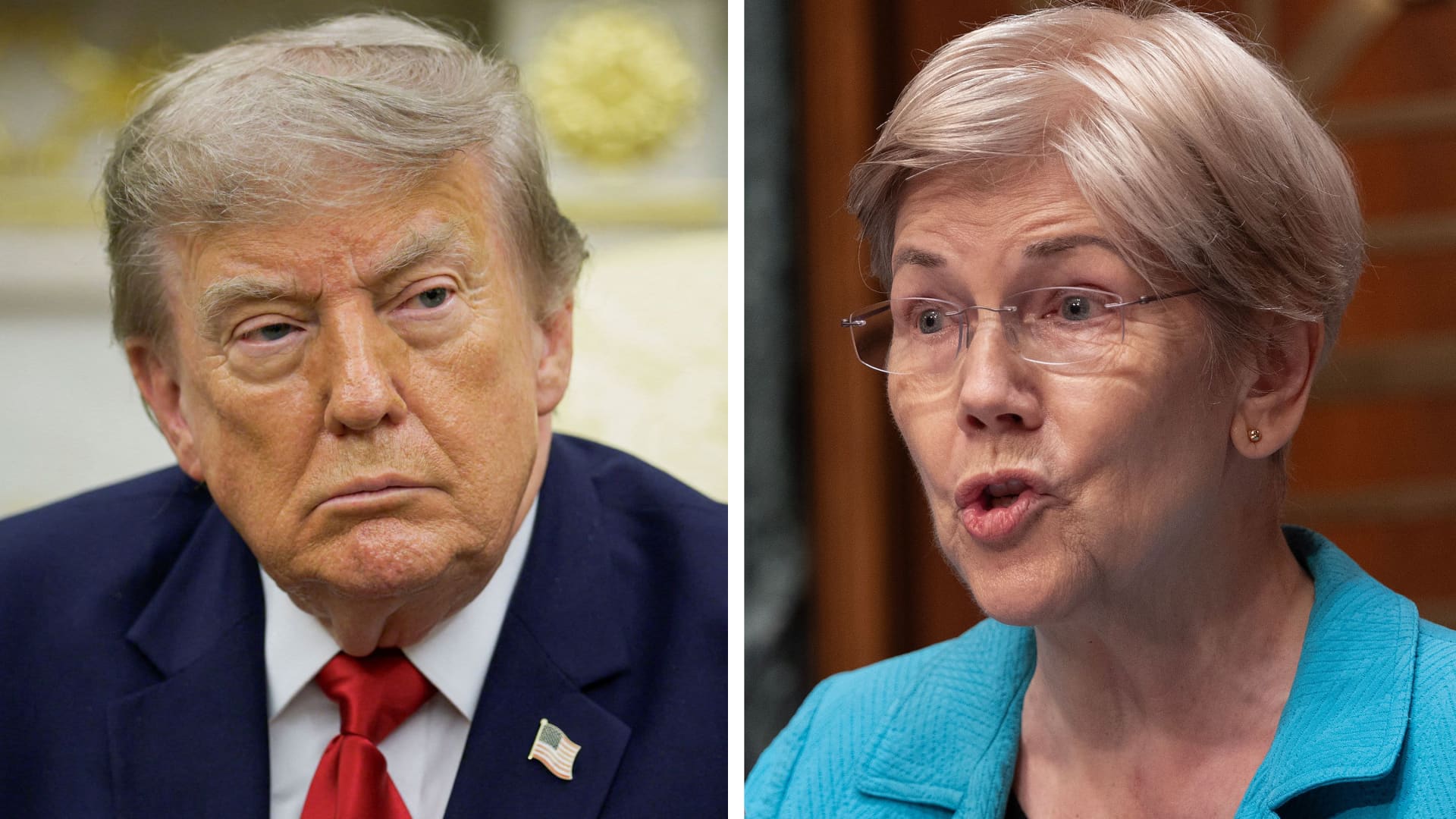
Sen. Elizabeth Warren, D-Mass., said Thursday that the Trump administration’s overhaul of the Consumer Financial Protection Bureau has cost Americans up to $26.5 billion so far, the latest Democratic critique of sweeping changes made to the agency.
In a report shared first with CNBC, Warren said most of that figure comes from moves the CFPB has taken under acting director Russell Vought to roll back rules capping credit card and overdraft fees.
The report comes as Vought faces a Senate oversight hearing Thursday on those and other actions, including dismissing enforcement actions and consent orders and an allegation that the agency recently removed 15 years of consumer data from the CFPB website.
Since taking office last year, the Trump administration has slashed staffing, dropped or narrowed dozens of enforcement cases, and rolled back Biden-era rules to refocus the agency on what officials call its core mission.
Republicans have defended the moves as necessary to rein in what they view as an overreaching regulator. Democrats led by Warren — who conceived and helped set up the agency after the 2008 financial crisis — have argued that the Trump administration has crippled a key consumer financial watchdog and exposed Americans to unfair or deceptive industry practices.
The clash comes as the Senate weighs the nomination of Brian Johnson, a former CFPB deputy director turned Capital One executive, whom President Donald Trump tapped to lead the agency permanently.
Warren’s report attributes up to $15 billion in consumer costs to the CFPB’s decision to abandon a rule capping most credit-card late fees at $8, a regulation the agency previously estimated would save consumers roughly $10 billion annually.
It attributes another $7.5 billion to the repeal of the CFPB’s overdraft fee rule, which would have limited many banks to charging $5 for overdrafts.
The remainder of the estimate comes from the CFPB’s decision to drop more than three dozen enforcement actions and settlements, some of which were set to send payments directly to consumers. That totaled roughly $4 billion, according to the report.
The White House and CFPB did not immediately respond to requests for comment.
Ahead of Thursday’s hearing, Warren also sent Vought a letter cataloging what she described as unanswered congressional oversight requests during his tenure running the bureau.


Trio targets 40,000 wheat acres.
Greece stocks lower at close of trade; Athens General Composite down 0.40%

Osterweis Capital Management was founded in 1983 to serve the portfolio management needs of high net worth individuals and institutions. We believe the best way to protect and grow assets is through carefully selected, high conviction portfolios that are designed to capture upside in favorable markets and limit downside during selloffs. We manage equities and fixed income, which are available through mutual funds and separate accounts. Note: This account is not managed or monitored by Osterweis Capital Management, and any messages sent via Seeking Alpha will not receive a response. For inquiries or communication, please use the firm’s official channels. Mutual fund investing involves risk. Principal loss is possible. Distributed by Quasar Distributors, LLC.

Walmart: The Sell-Off Isn't Over Yet (Rating Upgrade)

XRP PAYMENTS UNLOCKED!!!! MAAAAASSIVE WIN FOR XRP!!! (XRP $500??!)

London Mayor Sadiq Khan handed a peerage by Keir Starmer alongside 15 other Labour figures… just days before the PM leaves No10

UnitedHealth Group (UNH) earnings Q2 2026


-

 Fashion6 days ago
Weekend Open Thread: Nutriplenish Leave-In Conditioner
-
 Sports7 days ago
2026 Genesis Scottish Open Thursday TV coverage: Round 1
-

 Sports6 days ago
Super Eagles star Moses Simon opens up on Liverpool transfer regret
-

 Politics1 day ago
Young campaigners urge incoming PM to act on outdoor junk food ads
-

 News Videos2 days ago
XRP BOMBSHELL… XRP OMBOARDED FOR TRANSACTIONS!!!
-

 Tech2 days ago
Get Your ESP32 Sunny Side Up With This Solar Dev Board
-

 Tech2 days ago
Dark Secrets Emerge When Jailbreaking LLMs
-
 Entertainment23 hours ago
Disney’s Most Ambitious Failed Star Wars Attraction Is Coming to SDCC
-
 Sports18 hours ago
New Cornerback Enters Vikings Trade Rumor Mill
-

 Crypto World15 hours ago
CFTC blocks Kalshi from unwinding Michigan trades after court order
-

 News Videos3 days ago
how to make coin bank box with cardboard #scienceproject #money #diy #shorts
-
 Tech3 days ago
Cloudflare Precursor Watches Your Mouse and Keyboard To Decide If You Are Human
-
 Entertainment21 hours ago
Vicki Gunvalson Defends Discussing Heather Dubrow’s Money
-
Crypto World2 days ago
Ripple, Coinbase, Circle Join Linux x402 Foundation to Help Shape AI Payments
-

 NewsBeat18 hours ago
Watch: Is Donald Trump facing a popular backlash on immigration?
-
 Sports16 hours ago
Michigan officials not expected to discuss AD Warde Manuel at Thursday meeting
-

 Business2 days ago
ACCC warns AI could lift insurance costs in risk-prone areas
-
 NewsBeat18 hours ago
Firefighters issue update on Dovestone moorland blaze as fire enters fourth day
-

 Business13 hours ago
Nvidia Stock Slips After Big Tuesday Rally as Huang Confirms Vera Rubin Chip Is Now in Production Today
-

 Entertainment4 days ago
Hollywood’s Biggest Director Just Called Out AI, And It’s Glorious
You must be logged in to post a comment Login