

Business
Listed brokers, exchanges rake in profits even as war clouds linger


Among listed brokers such as Billionbrains Garage Ventures (Groww), Angel One, IIFL Capital Services and Anand Rathi Share & Stock Brokers, standalone revenues rose between 3% and 23% in the March quarter from Oct-Dec, while standalone profit after tax grew 11% to 43%.
Motilal Oswal Financial Services‘ revenues fell 23% sequentially, while it reported a loss of ₹48.9 crore in the quarter.
The consolidated profit after tax of BSE and NSE rose 33% and 19%, respectively, while revenues grew 26% and 27% during the quarter. “We saw a strong fourth quarter performance across listed exchanges and brokers, supported by a favourable base effect after last year’s decline in derivatives volumes,” said Ashish Nanda, chief digital business officer, Kotak Securities. “Higher market volatility around the Budget period, strong commodity trading activity as gold and silver prices peaked, and elevated VIX levels amid the US-Iran conflict also drove volumes higher.”
 Agencies
core and more: Favourable base effect, higher market volatility, commodity trading and rising margin trading funding income boost March quarter show
Industry officials said the improvement in earnings was also aided by diversification beyond core broking income, particularly through distribution and margin trading funding (MTF). “Brokers have aggressively scaled MTF books,” said Roop Bhootra, whole-time director at Anand Rathi Share and Stock Brokers.

“MTF provides leveraged cash equity exposure with broker-funded margins, generating interest income (with brokerage revenue) that hedges against volatility in broking income and offsets any F&O moderation,” Bhootra said.
Higher trading activity, particularly in options, also supported earnings momentum. The March quarter saw strong revenue growth led by higher options trading activity, as traders shifted from futures after the STT hike announcement, even before the new rates took effect, said Pranay Aggarwal, director and CEO of Stoxkart.NSE had earlier said that its average daily traded volume for equity options (premium value) rose 43% in March compared with the December quarter. Aggarwal said brokers are evolving into ‘pseudo-NBFCs’.
“Products like algo trading, where brokers charge brokerage and subscription or API fees, are gaining traction. Brokers are also expanding into wealth management, insurance, online FDs and other offerings to reduce the seasonality and volatility of pure-play broking income,” he said.
Stock performance has been mixed so far in 2026.


The 2026 midterm election cycle could surpass the 2024 presidential cycle to reach record advertising spend for any U.S. election, according to a new report from advertising intelligence company AdImpact.
This year’s races are projected to reach $11.6 billion in ad spend, making it the most expensive cycle ever and eclipsing the $11.2 billion spent on ads for the 2024 election between now-President Donald Trump and former Vice President Kamala Harris, AdImpact estimates. The new projection is a $795 million increase from a previous projection made last year.
The midterm cycle is set to be more intense than previous cycles, with Republicans controlling both chambers of Congress. The 2022 midterm cycle drew $8.9 billion in ad spend, according to AdImpact. If the projection holds, the 2026 ad spend would be 30% higher than the last midterm election.
“From record-setting races and surging party committee war chests to a competitive landscape that continues to expand, all indicators point to 2026 being the most expensive political advertising cycle in history,” the report read.
AdImpact said it expects $5.6 billion to be spent on broadcast, $1.4 billion on cable, $2.6 billion on connected TV and $1.68 billion on digital.
Advertising remains a key revenue driver for media companies, with sports, live events and news attracting the most spending. Elections, particularly those that are hotly contested or in battleground states, often bring in some of the highest ad revenue for the owners of local broadcast stations across the country.
Broadcast TV remains one of the largest forces in political advertising, according to the report, comprising nearly half of the total cycle spending and driven almost entirely by state races.
States seeing the largest spend overall include California, Texas, Michigan and Ohio. Michigan, Ohio and Texas all feature competitive Senate races, while California has an expensive governor’s race.
AdImpact estimated that through June 1, political ad spending has reached $4 billon, a 46% increase over the same point in the 2024 presidential election cycle.
“Much of that surge is driven by a concentrated set of high-profile, high-dollar contests that materialized earlier in the cycle than is typical,” the report read.
Politicians are also relying more heavily on digital spending across platforms like Facebook, Google, Snapchat and X, expected to spend $1.6 billion in that category during the cycle, according to AdImpact.
Within the election categories, the Senate has seen a notable increase in projected political spend, expected to draw nearly $3.4 billion, with one of the most expensive races being Texas’ Senate primary, the report said. Republicans hold 53 U.S. Senate seats compared with Democrats’ 45. The Senate’s two independents caucus with Democrats.
In gubernatorial races, three of the four most expensive competitions on record are taking place in 2026 in California, New Jersey and Georgia, according to AdImpact.
Even down ballot spending is expected to reach record levels this year, surpassing the record set in 2022 of $3.2 billion.
The midterm election cycle’s most expensive period is yet to come, according to AdImpact. The highest spending is between August and November, accounting for between 58% and 67% of all political ad spending for the cycle, with October itself accounting for between 28% and 36% of spend as the country nears Election Day.

Larvotto Resources boss Ron Heeks says the company’s proposed acquisition of West Perth-based junior Hammer Metals will provide plenty of upside.
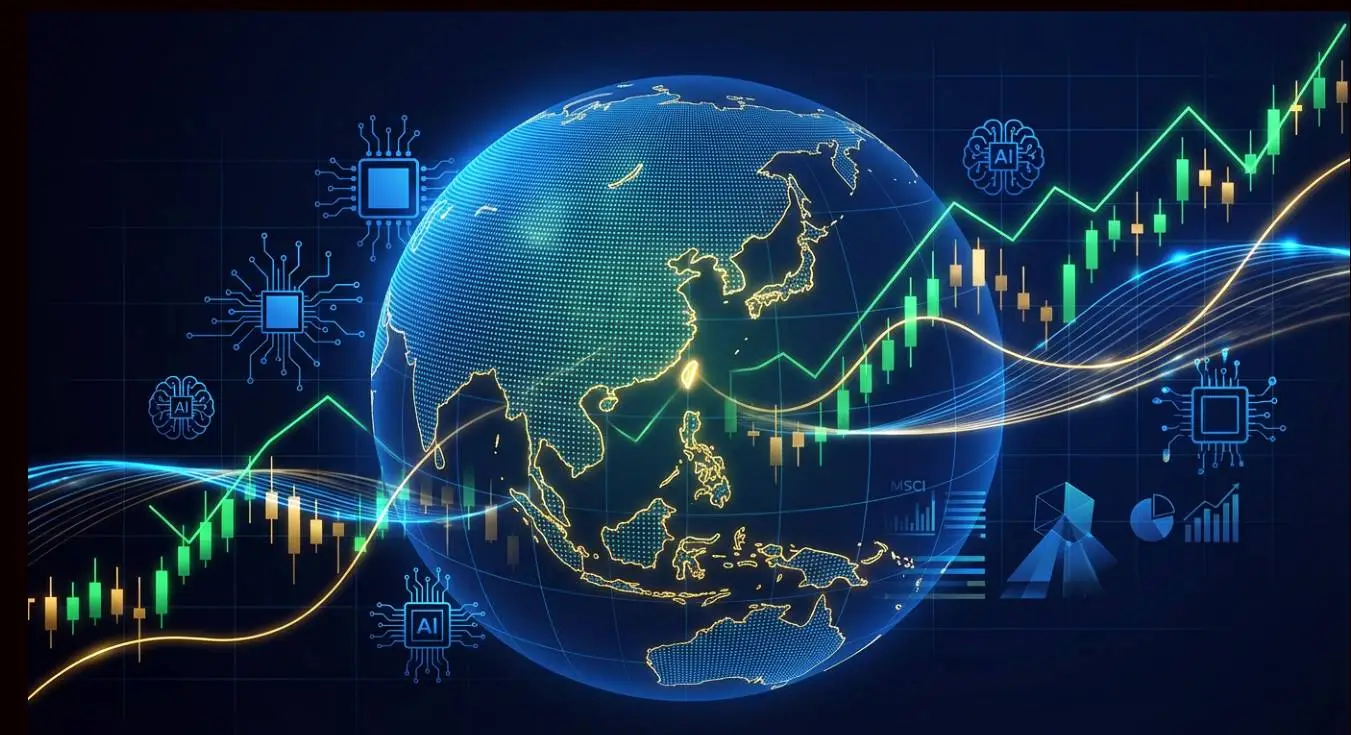
WASHINGTON, June 11, 2026—The conflict in the Middle East is expected to slow global growth to the lowest rate since the onset of the COVID-19 pandemic amid higher energy prices, steeper inflation, and increased borrowing costs, according to the World Bank Group’s latest Global Economic Prospects report.
Summary
- The Middle East conflict is projected to slow global economic growth to 2.5% in 2026, the lowest rate since the COVID-19 pandemic, according to the World Bank Group’s latest Global Economic Prospects report. Disruptions to energy markets, rising inflation, and increased borrowing costs are the primary drivers.
- Developing economies are expected to be hit hardest, with growth falling to a post-pandemic low of 3.6% in 2026. Gulf economies face near-zero growth, while rising debt levels and commodity price volatility continue to weaken fiscal positions across low-income countries. The World Bank Group has made up to $60 billion immediately available in response.
Global growth is forecast to slow to 2.5% in 2026, down from 2.9% in 2025. Forecasts for two-thirds of economies have been downgraded relative to January of this year. Global growth is expected to improve to 2.8% in 2027 but will remain 0.4 percentage point below the average during the 2010s. Weak growth in developing economies has stalled progress toward advanced-economy income levels. By 2028, developing economies other than China and India will have collectively experienced nearly a decade of no progress on narrowing their per capita income gap with advanced economies, the report finds.
“Developing countries have faced a series of challenges over the last decade,” said Ajay Banga, President of the World Bank Group. “The impact differs by country, but the basic test is the same: protect people and preserve stability today, without giving up on growth and jobs tomorrow.
In response to the current shock, we are providing liquidity where it is needed now — and we are ready with additional financing, guarantees, and private-sector solutions if pressures deepen. Our job is to help countries steady the ship, keep reforms moving, and emerge stronger on the other side.”
Ajay Banga, President of the World Bank Group
According to the report, the closure of the Strait of Hormuz has severely disrupted energy markets, with Brent crude oil prices projected to average $94 a barrel in 2026, 36% above 2025 levels, assuming the worst disruptions abate in July. Fertilizer prices are forecast to increase significantly this year, with knock-on effects for food prices. Together, these pressures are pushing up global inflation, which is expected to rise to 4.0% this year, up substantially from 3.3% in 2025.
Yet downside risks are significant. If energy supply disruptions prove more severe than currently assumed and are accompanied by substantial financial stress, global growth could fall to just 1.3% in 2026, and inflation would rise to 4.4%.
This year, growth in developing economies is expected to drop to a post-pandemic low of 3.6%, down from 4.4% in 2025, before recovering to 4.2% in 2027. Economies in the Gulf that are directly affected by the conflict are expected to take the biggest hit as their growth tumbles from 3.9% in 2025 to close to zero in 2026. The report predicts growth will rebound in these economies—to about 5% in 2027–28—as trade recovers and spending on reconstruction begins.
The World Bank Group is committed to supporting all developing countries as they confront crises. In response to the conflict in the Middle East, it is immediately making up to $50–60 billion available through existing instruments, including $25 billion of pre-arranged financing. This can support social safety nets for the most vulnerable people, boost fiscal capacity, and provide working capital and liquidity support for firms and farms. To date, over 30 countries are actively working with the World Bank Group to enhance readiness and enable a rapid response to the crisis under this response plan. If the conflict and its economic fallout persist, the World Bank Group can scale up its support to $80–100 billion over 15 months.
South Asia is expected to see the strongest growth of any region in 2026, but even its growth will register a significant slowdown—from 7% in 2025 to 6.3% in 2026, the report finds. Sub-Saharan Africa’s growth is also slowing, with the biggest pressures coming through inflation, including high food prices due to the fertilizer supply shortages and price hikes.
“The conflict has taken a toll on global activity, but every crisis also brings an opportunity,” said Ayhan Kose, the World Bank Group’s Deputy Chief Economist and Director of the Prospects Group.“This moment should be used to strengthen policy frameworks, invest in infrastructure, accelerate business-enabling reforms, and mobilize private capital to support job creation at scale.”
The report’s special-focus chapters examine fiscal challenges in developing economies. About two-thirds of developing economies—and nearly 90% of low-income countries—are commodity exporters. Yet these economies tend to have weaker fiscal positions than other developing economies, as they face more volatile and less diversified revenues. Five years after a positive commodity price shock, much of the revenue windfall is spent, rather than saved to strengthen fiscal positions. To manage commodity price volatility, policy makers should rely on frameworks, such as well-designed fiscal rules and sovereign wealth funds with clear stabilization mandates, alongside improved domestic revenue mobilization and greater economic diversification.
The other chapter explores how rising debt levels are making it harder for countries to respond to crises and invest in long-term development priorities—and driving up borrowing costs in the process. Since 2010, aggregate government debt in developing economies has climbed from under 40% of GDP to over 70%. The analysis finds that the more indebted a country already is, the more sharply its borrowing costs rise with additional debt. The effect is particularly acute in more vulnerable countries. For countries with elevated debt-to-GDP ratios, reducing debt levels can yield meaningful financial rewards: greater fiscal space to invest in infrastructure, health, and education, fueling economic growth and job creation.
Regional Outlooks
East Asia and Pacific: Growth is projected to fall to 4.2% in 2026 before firming to 4.4% in 2027.
Europe and Central Asia: Growth is forecast to slow to 2.1% in 2026 before edging up to 2.3% in 2027.
Latin America and the Caribbean: Growth is expected to slow to 2.2% in 2026 before rising to 2.5% in 2027.
Middle East, North Africa, Afghanistan, and Pakistan: Growth is forecast to drop to 1.6% in 2026 before recovering to 5.0% in 2027.
South Asia: Growth is projected to fall to 6.3% in 2026 before rising to 6.9% in 2027.
Sub-Saharan Africa: Growth is expected to edge down to 4.0% in 2026 and rise to 4.4% in 2027.
The World Bank Group is one of the world’s largest sources of funding and knowledge for developing countries. For more than eight decades, the World Bank Group has combined financing and hands-on experience to create jobs and opportunities in developing countries. We work with public and private partners to build more resilient economies—and achieve our vision of a world free of poverty on a livable planet. Our Knowledge Bank replicates and scales proven solutions to tackle the world’s most pressing development challenges.
Other People are Reading

AT&T: Verizon's 27% Outperformance Sets Up A Solid Entry Point

OPINION: Disruption of the US car sales sector by an e-commerce interloper sends a warning to Australia.

Fremantle-based SeaStock has been granted an aquaculture licence to establish WA’s first commercial scale, land-based seaweed production facility in Oakford.
Novo Nordisk stock rises after UK approves Wegovy pill

The North Fremantle apartments are finished after years of battling with rising construction costs, with developer Megara saying attempting the same luxury project now would not be possible.


Marks first collaboration between two companies.

Gerard Daniels’ founders believe the firm’s formula is durable as they step back from control after 40 years in charge.

He went to meet a schoolboy for sex but found police officers waiting for him

2026 elections ad spend projected to reach record: AdImpact
Whoopi Goldberg collapses live on “The View ”in shock over Knicks game



-

 Fashion6 days ago
Weekend Open Thread: Evereve – Corporette.com
-
 Crypto World6 days ago
Jensen Huang Approves Samsung, SK Hynix, and Micron for NVIDIA (NVDA) HBM4 Memory Supply
-
 Entertainment5 days ago
The Best Mystery Series of All Time Is Surging on Streaming 30 Years After It Ended
-

 Crypto World3 days ago
Anatomy of the June crypto crash: Fed, Iran, Saylor
-

 NewsBeat4 days ago
Alexander Zverev wins the French Open to finally earn a 1st Grand Slam title
-

 Tech6 days ago
Suspicious Polyfill login prompts pop up on Toshiba, Muji websites
-
 Crypto World5 days ago
Senator Cynthia Lummis Calls CLARITY Act the Most Consequential Financial Legislation of This Generation
-

 Tech4 days ago
Microsoft unveils seven homegrown AI models in new bid for ‘long term self-sufficiency’
-

 Tech6 days ago
Microsoft launches MXC, an OS-level sandbox for AI agents, with OpenAI and Nvidia already on board
-

 Business6 days ago
(VIDEO) Justin Bieber Delivers Surprise Happy Birthday Serenade to Diners at Los Angeles Mexican Restaurant
-
 Business5 days ago
The Pain Points Taking a Fragile Tech Rally Down a Notch
-

 Business3 days ago
High Stakes for Wembanyama as New York Pushes for 3-0 Lead
-
 Crypto World3 days ago
Eli Lilly (LLY) Stock Surges 4% Following Breakthrough Sleep Apnea Trial Results
-

 Tech6 days ago
Von der Leyen’s AI envoy pick draws conflict-of-interest fire
-

 Tech6 days ago
Meta steals a tactic from Tesla and builds data centers in tents
-
Crypto World6 days ago
LBank Surpasses 25 Million Users Worldwide as AFA Partnership Continues to Drive Global Growth
-

 Tech5 days ago
Hackers now exploit SolarWinds Serv-U flaw to crash servers
-
 NewsBeat4 days ago
Alexander Zverev conquers demons and outlasts Flavio Cobolli to win French Open for first major title
-

 Crypto World4 days ago
Trump’s AI Ownership Plan Could Benefit Anthropic at OpenAI’s Expense
-
 Sports2 days ago
Bangladesh beat Australia after 20 years in ODIs, register only their second win over six-time world champions | Cricket News
You must be logged in to post a comment Login