





Connect with us

Business

London and South East firms gain

Published

on

London and South East firms gain

Eighty-three per cent of businesses using artificial intelligence in London and the South East report greater efficiency as a result, according to new research from NatWest, which found that just 6 per cent of current business users nationally have reached the stage where AI is transforming how their organisation operates.

In London, 81 per cent of businesses using AI report stronger innovation, and around seven in 10 say the technology is contributing to higher revenue and profitability, the bank’s flagship report found.

In the South East, 75 per cent of businesses using AI report increased innovation, and around two-thirds say AI is supporting stronger commercial performance.

Free newsletters
Advertisement

The stories that matter to UK business, straight to your inbox.

Advertisement

NatWest said the results reflect the strengths of a regional economy built on sectors such as financial services, professional services, technology, life sciences and other knowledge-intensive industries.

Across the UK, 44 per cent of businesses already use AI, according to the report, with a further 41 per cent planning to adopt it within five years.

The bank said the biggest opportunity is still ahead, pointing to the small share of users that have reached the most advanced stage of adoption.

Separately, the Office for National Statistics reported in July that around 35 per cent of UK businesses with 10 or more employees were using AI by June 2026, up from around 12 per cent in late 2023, with only 10 per cent reporting extensive use across their operations.

Advertisement

Other recent surveys have also measured AI adoption. Research from Simply Business earlier this month found that AI use among UK small businesses had more than doubled to 47 per cent, while PwC warned in April that UK firms risked falling behind global leaders on AI investment and returns.

The NatWest report argues that technology alone will not determine which businesses succeed, and that trust is increasingly seen as a competitive advantage.

Among NatWest retail customers surveyed, 81 per cent said the ability to reach a real person when needed is the most important trust factor, while 77 per cent said they value reliability, human oversight and transparency around data use.

According to the bank, the findings suggest that businesses which retain human judgement, communicate openly about their use of AI and prioritise customer confidence will be best placed to realise the technology’s potential.

Advertisement

Catherine van Weenen, chair of the London and South East board at NatWest, said: “London and the South East are already seeing the benefits of AI, with businesses reporting stronger productivity, innovation and growth. For a region with strengths in sectors such as professional services, financial services and technology, the opportunity is significant.

“But the report also shows there is much more potential to unlock. While many businesses are experimenting with AI, relatively few have embedded it across their operations.”

She added: “Realising that opportunity will require people to remain at the heart of how AI is adopted. Trust matters. Businesses want the benefits of AI, but they also want human expertise, oversight and transparency. That’s why NatWest is helping businesses build the skills, confidence and connections they need to turn AI’s potential into long-term growth for London and the South East.”

Through the NatWest Accelerator, the bank said it will deliver 5,000 AI learning and adoption engagements across the UK over the next 12 months, aimed at helping businesses move from experimentation to impact.

Advertisement

In London and the South East, the support includes practical training, expert support, access to finance and the bank’s regional innovation network, alongside partnerships with universities including Oxford and Brighton.

The commitment follows NatWest’s move earlier this year to put all 60,000 of its own staff through AI ethics training, developed with the University of Edinburgh.

Amy Ingham
About the author

Amy Ingham

Amy Ingham is a reporter at Business Matters, covering UK business news with a focus on breaking news, business policy, late payments and insolvency. She joined the magazine in 2026 after completing the NCTJ Diploma in Journalism at Harlow College’s journalism school. Her recent reporting includes British Steel’s nationalisation and its impact on SME suppliers, the decline in late payments by large firms, and Insolvency Service director disqualifications. Reach her at aingham@cbmeg.co.uk.

Advertisement

Advertisement
Continue Reading
Click to comment

You must be logged in to post a comment Login

Leave a Reply

Business

Nation ‘fuel secure’ despite latest disruptions

Published

on

Nation ‘fuel secure’ despite latest disruptions

Yes. Corporate subscriptions are available for teams and organisations, with discounted rates as user numbers increase. Pricing starts from $1,625 + GST per user.
Get in touch
to discuss the right option for your organisation.

Business News subscriptions are used by executives, investors, consultants and professionals who need to stay informed and make better decisions about the WA market. When you subscribe you’ll get

  • Unlimited access to WA’s most trusted business journalism
  • Data & Insights — detailed profiles of WA companies, people, projects and deals
  • MyBN — a personalised feed based on the companies, people and sectors you follow
  • Special publications and industry reports
  • Daily and weekly email newsletters

Data & Insights is a research tool built specifically for the WA market. It draws on more than 30 years of Business News reporting, updated regularly to reflect what’s happening now. Use it to:

  • Look up detailed profiles of WA companies, including financials, directors and ownership
  • Find decision-makers and track their career movements
  • Research live and completed projects across WA industries
  • Monitor deals, appointments and market activity
  • Access industry rankings and league tables

Data & Insights is updated daily by our dedicated research team, which uses the latest announcements, ASX filings and editorial coverage to keep our person, company, list and project records up to date.

Business News welcome all opportunities to make our dataset accurate, complete and current, so if you have an update request, please email the team at
general@businessnews.com.au, and we’d be happy to assist.

Advertisement

MyBN
is part of every subscription. It’s your personalised view of Business News. You can follow the companies, people, sectors and projects that matter to you, and get a news feed and alerts tailored to your interests. You can save articles to read later and retain only what you need.

Only subscribers have full access to all content on the Business News website.

Advertisement

If staying informed about the WA economy is part of your job, and/or you’re looking for networking opportunities in WA, Business News is built for you.

Business News subscribers are:

  • Executives and directors tracking competitors, clients and market movements
  • Investors and advisers researching companies, deals and industry trends
  • Consultants and professionals staying across sectors relevant to their clients
  • Business owners looking for leads, context and market intelligence

Most Business News publications cover national or global markets. Business News is focused entirely on Western Australia, which means the journalism, the data and the intelligence are all built around WA companies, people and projects — not adapted from a national feed. Data & Insights, included with every subscription, combines more than 30 years of WA-specific editorial research with live business data. There’s no comparable product for the WA market.

Advertisement

The Morning Digest Email provides a comprehensive wrap of the major headlines, relevant to WA business, and includes with a snapshot of the overnight news covering oil, gold and ASX-listed companies.

The Afternoon Wrap Email focuses on the news covered by our team of journalists during the course of the working day, including exclusive stories and analysis, all of which relates to WA business and the local economy.

The BN Weekender Email contains a wrap of the Business News from the week that was, highlighting the top stories in each area of WA business.
Sign up for free.

Advertisement

We’re happy to help.
Get in touch
and our team will come back to you.

Advertisement
Continue Reading

Business

Mark My Words September 25 2026

Published

on

Mark My Words September 25 2026

Mark Pownall is joined by Gary Adshead, Claire Tyrrell and Isabel Vieira to talk about the big events of the week in WA business and politics. In this edition they look at the Perth city council, biggest builders in WA, Satterley management changes, Equus ownership, Oxford Hotel, Innovaero, state funds Cliff Head and, of course, a brief word about the Dockers.

Continue Reading

Business

Study reveals estate-planning choices likely to cause conflict

Published

on

Study reveals estate-planning choices likely to cause conflict

Westend61 | Westend61 | Getty Images

A version of this article appeared in CNBC’s Inside Wealth newsletter, a weekly guide to the high-net-worth investor and consumer. Sign up to receive future editions, straight to your inbox.

Trusts are designed to keep wealth out the public eye, and inheritance battles usually happen behind closed doors. But a first-of-its-kind study of hundreds of contested trust cases offers a rare look at the circumstances that can send heirs to court.

One of the biggest pitfalls for handing down wealth is choosing one child to control a family trust when siblings or other relatives would also benefit, according to the analysis of 640 trust disputes, published in the Washington University Law Review earlier this month.

Advertisement

Christopher Ryan, one of the study’s authors and a professor at Indiana University Maurer School of Law, described this specific trust setup as “an important recipe for conflict.”

“That arrangement could combine ordinary sibling rivalry with a genuine power imbalance,” he told CNBC via email. For instance, he added, giving one child privileges such as discretion over trust distributions can deepen preexisting feelings among siblings that a parent played favorites.

The study identified contested trust disputes by examining thousands of civil filings that were scheduled to come before San Francisco Superior Court between 2014 and 2020. Ryan co-authored the study with Reid Weisbord and David Horton, law professors at Rutgers Law School and University of California, Davis, School of Law, respectively.

Nearly a quarter of the reviewed disputes involved a descendant beneficiary suing another descendant beneficiary who was also a trustee. Many of the petitioners were siblings — whether through blood or marriage — though some may have been grandchildren, noted Horton.

Advertisement

Nearly all of the petitions involved revocable trusts, a common tool to allow a successor trustee to manage the settlor’s property long after their death.

While trusts are often used to avoid the time and expense of probate, they can draw families into costly disputes that span months or years. The average case, including filings that were settled, lasted 481 days.

Get Inside Wealth directly to your inbox

The study found that in 74% of cases a trustee was accused of misconduct, often specifically breach of duty of care or loyalty. In nearly a third of petitions, beneficiaries requested a detailed accounting of the trust’s finances, which Horton said reflects beneficiaries who suspected their trustees were mismanaging funds or ripping them off.

Many of these fights appeared to be driven more by emotion than money, according to Horton. He highlighted the case of the Mar siblings, who spent their trust’s entire cash assets and more than five years in litigation.

Advertisement

Raymond Mar, who died in 2016, gave his son the right to live rent-free in his home for the rest of his life. The siblings went to court after they disagreed over whether the son could accept a tenant. In 2024, a judge scolded both sides for excessive litigation and ruled for the trust to be dissolved and for the house to be sold. Despite the ruling, Raymond Mar’s daughters filed in October 2025 to deduct attorney fees from their brother’s share of the trust.

Horton said the study’s results suggest that feelings can cloud a litigant’s judgment. When parties refused to settle, people who challenged the trust generally lost. Petitioners’ odds of winning or reaching a settlement dropped by 48 percentage points if their cases required a formal trial rather than a judge ruling based on filings and oral arguments.

“A petitioner who is hellbent on getting everything they want due to emotional reasons is less likely to compromise or recognize that their case is flawed,” Horton said via email.

The study estimated as much as three-quarters of petitions resulted in a settlement. The exact percentage is unclear as about a third of petitions dropped from the docket without a ruling on the merits, but the authors believed many of them were settled.

Advertisement

To help stave off conflict, the study’s authors said, parents should be proactive about tough conversations and should consider an independent or professional fiduciary.

“Death brings out strong emotions,” Horton said. “It may be a good practice to explain your estate planning choices to your loved ones while you’re alive to flush out any conflict.”

Ryan added that parents cannot rely on provisions that attempt to prevent court battles, such as no-contest clauses, which disinherit beneficiaries who raise legal challenges. The effectiveness of no-contest clauses depends on the state, he said.

The study found that 85% of instances that went to mediation ended in settlement, compared with 47% without it.

Advertisement

“I would plan for conflict rather than assuming drafting can eliminate it,” he said.

Continue Reading

Business

Hints and Answers for September 25, 2026 as Puzzle 1202 Gets Fancy and Famous

Published

on

Nancy Guthrie

Puzzle number 1,202 of The New York Times’ Connections game challenged solvers Friday with a grid blending words for luxury, mechanical clock parts, a lineup of famous men named Dan, and a wordplay category built around altered scientific terms.

Connections presents players with 16 words that must be sorted into four hidden groups of four, with each group sharing a common category. The puzzle rates each group’s difficulty using a color system: yellow for the most straightforward connection, green for slightly trickier, blue for more difficult, and purple, typically the most wordplay-heavy or misleading group, as the hardest.

For those still working through Friday’s puzzle, here are hints for each category, organized loosely from easiest to hardest, without giving away the specific words involved.

One category groups together words that all describe something upscale, stylish or expensive, the kind of vocabulary someone might use to describe a lavish hotel or an extravagant outfit. A second category brings together technical components found inside a traditional mechanical clock, the kind of vocabulary a clockmaker or watch enthusiast would recognize immediately, even if it is less familiar to everyday puzzle solvers. A third category groups together the surnames of several well-known men who all share the same first name, spanning entertainment, journalism and advice writing. The fourth and trickiest category takes standard scientific vocabulary learned in a biology classroom and alters each word slightly by adding an extra letter, transforming familiar taxonomic terms into words that look similar but mean something entirely different.

Advertisement

SPOILER WARNING: The full solution to Friday’s Connections puzzle follows below. Stop reading now if you’d rather work through the categories on your own.

Friday’s puzzle resolved into the following four groups. The category Luxe consisted of BOUGIE, FANCY, POSH and SWANK, four words used to describe something stylish, upscale or extravagant. The category Parts of a Mechanical Clock grouped ESCAPEMENT, PENDULUM, RATCHET and SPRING, four technical components found inside traditional clockwork mechanisms. The category Famous Dans brought together AYKROYD, LEVY, RATHER and SAVAGE, referring respectively to actor and Ghostbusters co-creator Dan Aykroyd, Schitt’s Creek co-creator and star Dan Levy, longtime CBS Evening News anchor Dan Rather, and journalist and relationship advice columnist Dan Savage. The final and trickiest category, Taxonomic Ranks Plus a Letter, consisted of BORDER, CLASSY, FOAMILY and GENIUS, wordplay entries formed by adding a single letter to the standard biological classification terms “order,” “class,” “family” and “genus,” respectively.

Puzzle guides covering Friday’s grid noted that the clock-related category required more specialized, technical knowledge than the other groups, since words like “escapement” are unlikely to be part of most solvers’ everyday vocabulary despite being fundamental components of how mechanical clocks actually function. The famous-name category similarly demanded recognition of specific public figures rather than relying on word meaning alone, requiring solvers to correctly identify which surnames paired with the first name Dan. The purple wordplay category, meanwhile, rewarded solvers who inspected the words closely for hidden patterns, such as an unexpected extra letter, rather than searching for a more conventional thematic connection between the four entries.

Connections has grown into one of the Times’ most consistently played daily puzzles since its official launch in 2023, expanding the newspaper’s games portfolio well beyond its traditional crossword offerings. Puzzle guides recommend a general strategy of scanning the full grid first for any words that seem to share an obvious connection, then working through the remaining words methodically to identify less immediately apparent categories, an approach puzzle trackers said worked particularly well for Friday’s grid given how distinctly separate the puzzle’s four categories were from one another in terms of subject matter.

Advertisement

Players attempting Friday’s puzzle are permitted up to four incorrect guesses before the game ends, with each group color-coded upon a correct guess to indicate which of the four difficulty tiers it belongs to. Players looking to track their performance on Friday’s puzzle, or compare notes with friends, can share their results through Connections’ built-in results screen, which uses colored emoji squares to display a player’s guessing sequence without revealing the actual category words, a sharable format that has become a familiar sight across social media in the years since the game’s launch.

With Friday’s puzzle now solved, players will have a fresh set of 16 words and four new hidden categories to work through when Saturday’s edition of Connections goes live at midnight local time, continuing the daily puzzle’s steady run as one of the Times’ most widely shared games alongside Wordle, Strands and the Mini Crossword.

Continue Reading

Business

Australian shares suffer fourth straight losing week

Published

on

Australian shares suffer fourth straight losing week

Yes. Corporate subscriptions are available for teams and organisations, with discounted rates as user numbers increase. Pricing starts from $1,625 + GST per user.
Get in touch
to discuss the right option for your organisation.

Business News subscriptions are used by executives, investors, consultants and professionals who need to stay informed and make better decisions about the WA market. When you subscribe you’ll get

  • Unlimited access to WA’s most trusted business journalism
  • Data & Insights — detailed profiles of WA companies, people, projects and deals
  • MyBN — a personalised feed based on the companies, people and sectors you follow
  • Special publications and industry reports
  • Daily and weekly email newsletters

Data & Insights is a research tool built specifically for the WA market. It draws on more than 30 years of Business News reporting, updated regularly to reflect what’s happening now. Use it to:

  • Look up detailed profiles of WA companies, including financials, directors and ownership
  • Find decision-makers and track their career movements
  • Research live and completed projects across WA industries
  • Monitor deals, appointments and market activity
  • Access industry rankings and league tables

Data & Insights is updated daily by our dedicated research team, which uses the latest announcements, ASX filings and editorial coverage to keep our person, company, list and project records up to date.

Business News welcome all opportunities to make our dataset accurate, complete and current, so if you have an update request, please email the team at
general@businessnews.com.au, and we’d be happy to assist.

Advertisement

MyBN
is part of every subscription. It’s your personalised view of Business News. You can follow the companies, people, sectors and projects that matter to you, and get a news feed and alerts tailored to your interests. You can save articles to read later and retain only what you need.

Only subscribers have full access to all content on the Business News website.

Advertisement

If staying informed about the WA economy is part of your job, and/or you’re looking for networking opportunities in WA, Business News is built for you.

Business News subscribers are:

  • Executives and directors tracking competitors, clients and market movements
  • Investors and advisers researching companies, deals and industry trends
  • Consultants and professionals staying across sectors relevant to their clients
  • Business owners looking for leads, context and market intelligence

Most Business News publications cover national or global markets. Business News is focused entirely on Western Australia, which means the journalism, the data and the intelligence are all built around WA companies, people and projects — not adapted from a national feed. Data & Insights, included with every subscription, combines more than 30 years of WA-specific editorial research with live business data. There’s no comparable product for the WA market.

Advertisement

The Morning Digest Email provides a comprehensive wrap of the major headlines, relevant to WA business, and includes with a snapshot of the overnight news covering oil, gold and ASX-listed companies.

The Afternoon Wrap Email focuses on the news covered by our team of journalists during the course of the working day, including exclusive stories and analysis, all of which relates to WA business and the local economy.

The BN Weekender Email contains a wrap of the Business News from the week that was, highlighting the top stories in each area of WA business.
Sign up for free.

Advertisement

We’re happy to help.
Get in touch
and our team will come back to you.

Advertisement
Continue Reading

Business

Explainer-What has turned the Afghan Taliban and Pakistan from partners to foes?

Published

on


Explainer-What has turned the Afghan Taliban and Pakistan from partners to foes?

Continue Reading

Business

Cardiff Council acquires apartment scheme

Published

on

Business Live

The council said the acquisition was part of its homelessness support strategy

Lime Tree Mansions.

Cardiff Council has acquired a 40 apartment building as part of efforts to tackle homelessness in the city.

In a multi-million-pound deal, the exact value of which has not been disclosed, the council has acquired Lime Tree Mansions on Whitchurch Road in the Maindy area of the city.

Advertisement

The council has bought the apartment scheme from JCPS Homes. Law firm Hugh James acted the council on the deal.

Lynda Thorne, Cardiff Council’s Cabinet Member for Housing and Communities, said: “Cardiff continues to face significant housing and homelessness pressures, which is why we have been exploring a wider range of delivery options alongside our new-build programme to help meet the urgent need for affordable housing.

“The acquisition of Lime Tree Mansions represents an important investment that will enable us to provide additional temporary accommodation for households in need, while supporting our wider efforts to improve housing outcomes across the city.

2We are grateful to Hugh James for their expert support throughout the transaction, helping us secure this acquisition and take another important step towards delivering the homes and housing support that Cardiff residents need.”

Advertisement

The apartments are currently vacate.

The Hugh James team was led by senior associate in the firm’s commercial property team, Kylie Underhill. She said: “We are proud to have supported Cardiff Council on the acquisition of Lime Tree Mansions.

This was an important transaction for the Council and one which required a focused and collaborative approach to meet the required timeframe. It is always rewarding to support public sector clients on acquisitions which have the potential to deliver real benefit to local communities.”

The deal further reinforces Hugh James’ experience in advising local authorities and public sector bodies on strategic property acquisitions, including residential, regeneration and investment-led projects.

Advertisement

Caroline O’Flaherty partner in Hugh James’ commercial property team said: “This is a fantastic result and reflects the strength of our Commercial Property team’s public sector expertise. We are proud to have assisted Cardiff Council in its continuing strides to provide vital housing across the city.”

Last year the council acquired the former prime office Scott Harbour building in Cardiff Bay from Rightacres.

In a £28.5m investment Cardiff Council has provided 78 apartments as permanent tenancies. The apartments are mainly occupied by families as part of its strategy of addressing a critical shortage of affordable homes.
Advertisement
Continue Reading

Business

Ex-Royal Aide Reveals Secret Family Phone Nicknames Used by Staff

Published

on

Prince William and Prince Harry

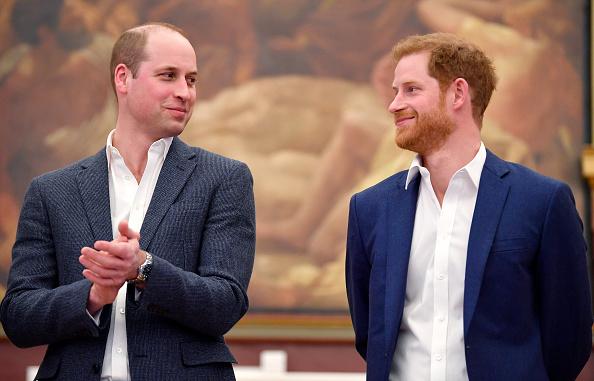
LONDON — Prince William and Catherine, Princess of Wales, may be among the most recognizable royals in the world, but according to a former palace employee, staff members saved their contact information under a set of far less regal nicknames, alongside details of how heavily the royal family has relied on WhatsApp to stay in touch with relatives and staff.

Jack Stooks, a former royal gardener who worked for King Charles at Highgrove for decades, shared the details in an interview with GB News, describing how the royal family communicated privately both with each other and with staff. “The Royal Family are big WhatsApp users,” Stooks said, describing a range of group chats used across the family, including one for friends and a separate family group that included Prince William, Zara Tindall, Peter Phillips, and Princesses Beatrice and Eugenie.

According to Stooks, senior royals shared their personal phone numbers with trusted members of staff to allow for more practical, direct communication. He said both William and Prince Harry actively encouraged aides to contact them through the messaging app whenever needed, rather than relying solely on more formal channels. To protect their privacy, however, staff reportedly avoided saving the royals under their real names, instead using coded nicknames. Stooks revealed that William was listed in staff phones as “Bobcat,” while Harry went by “Baz.” Following Kate’s marriage to William, she was reportedly added to contacts as “Mrs Bobcat.”

Beyond the nicknames themselves, Stooks offered a broader account of William’s working style with palace staff, describing him as considerate of employees’ existing workloads. He said the Prince of Wales made a habit of checking whether staff members were already busy before asking them for additional help, and that William would often thank staff afterward by telling them, “You’re a legend.”

Advertisement

Stooks also reflected on King Charles’ relationship with technology during his time working at Highgrove, describing the monarch as considerably less engaged with mobile devices than his sons. According to Stooks, Charles owned a simple mobile phone but rarely used it regularly during that period. Stooks said William and Harry frequently encouraged their father to embrace newer technology, but that Charles generally preferred a more traditional approach and showed limited interest in using his phone on a consistent basis.

The account offers a rare glimpse into the more informal, day-to-day dynamics between senior royals and the staff who work closely with them, a side of royal life that rarely receives public attention given the family’s general preference for formality in public-facing communications. The described use of WhatsApp for both personal and work-related messaging reflects a broader pattern common across many modern workplaces and families, even as the specific coded nicknames used to protect the royals’ identities in staff members’ phones point to the particular privacy and security considerations that come with working in close proximity to some of the world’s most closely watched public figures.

Stooks’ comments add to a broader body of insider accounts from former royal staff members that have periodically surfaced in British media over the years, offering the public occasional windows into aspects of royal family life that differ considerably from the family’s carefully managed public image. Such accounts typically cannot be independently verified beyond the credibility of the individual sharing them, and neither Kensington Palace nor representatives for William, Kate or Harry have issued any public confirmation or denial of the specific details Stooks described regarding the nicknames or the family’s use of WhatsApp.

The revelations arrive at a moment of heightened public attention on the relationship between William and Harry more broadly, following Harry and Meghan Markle’s return to the United Kingdom in late August and the more recent publication of excerpts from Charles Spencer’s memoir about Princess Diana, both of which have kept the royal family’s internal dynamics under close media scrutiny in recent weeks. Against that backdrop, lighter anecdotes such as Stooks’ account of staff nicknames and WhatsApp habits offer a notable contrast to the more serious and often tense coverage that has otherwise characterized recent reporting on relations between the brothers.

Advertisement

Stooks’ extended tenure working at Highgrove, King Charles’ private residence in Gloucestershire, gave him a vantage point on the family’s private habits and communications that few outside the household would typically have access to, lending a degree of specificity to his account that has helped it circulate widely since it was first published. Even so, as with most insider accounts from former staff, the details remain unverified beyond Stooks’ own recollection and cannot be independently confirmed through any official palace source.

With no official response yet issued addressing the specific claims about the royal family’s phone nicknames or messaging habits, Stooks’ account is likely to remain one of several recent behind-the-scenes anecdotes shaping public perception of the more private, informal side of royal family life, even as the family’s official public engagements continue to be defined by considerably more formal presentation.

Continue Reading

Business

U.S 10-year yield climbs for 6 straight week as bond rout deepens

Published

on


U.S 10-year yield climbs for 6 straight week as bond rout deepens

Continue Reading

Business

FLKR: In My View, The July Margin Calls Have Created An Opportunity (NYSEARCA:FLKR)

Published

on

South Korea semiconductor chip trade tariff. 3d rendering

This article was written by

Financial Serenity is a quantitative research column specialized in ETFs. We analyze all ETFs to understand which ones hide traps and which ones deserve attention. The ultimate goal, however, is the product of this selection process: an ETF portfolio capable of maintaining linear price growth (at least indexed to the inflation rate) while generating sustainable, recurring income streams. The analytical key is therefore portfolio construction, asset allocation, and the application of proprietary strategies for average purchase cost management.

Analyst’s Disclosure: I/we have no stock, option or similar derivative position in any of the companies mentioned, and no plans to initiate any such positions within the next 72 hours. I wrote this article myself, and it expresses my own opinions. I am not receiving compensation for it (other than from Seeking Alpha). I have no business relationship with any company whose stock is mentioned in this article.

The author expresses only personal opinions and does not provide financial advice. The content is for informational purposes only and should not be considered as investment recommendations. The author assumes no responsibility for any investment decisions made based on this article. Always conduct your own research or consult with a financial advisor before making any investment choices. The author makes no guarantees regarding the data, and the user agrees that the author shall not be held liable for the user’s use of the data.

Advertisement

Seeking Alpha’s Disclosure: Past performance is no guarantee of future results. No recommendation or advice is being given as to whether any investment is suitable for a particular investor. Any views or opinions expressed above may not reflect those of Seeking Alpha as a whole. Seeking Alpha is not a licensed securities dealer, broker or US investment adviser or investment bank. Our analysts are third party authors that include both professional investors and individual investors who may not be licensed or certified by any institute or regulatory body.

Continue Reading

Trending

Copyright © 2025