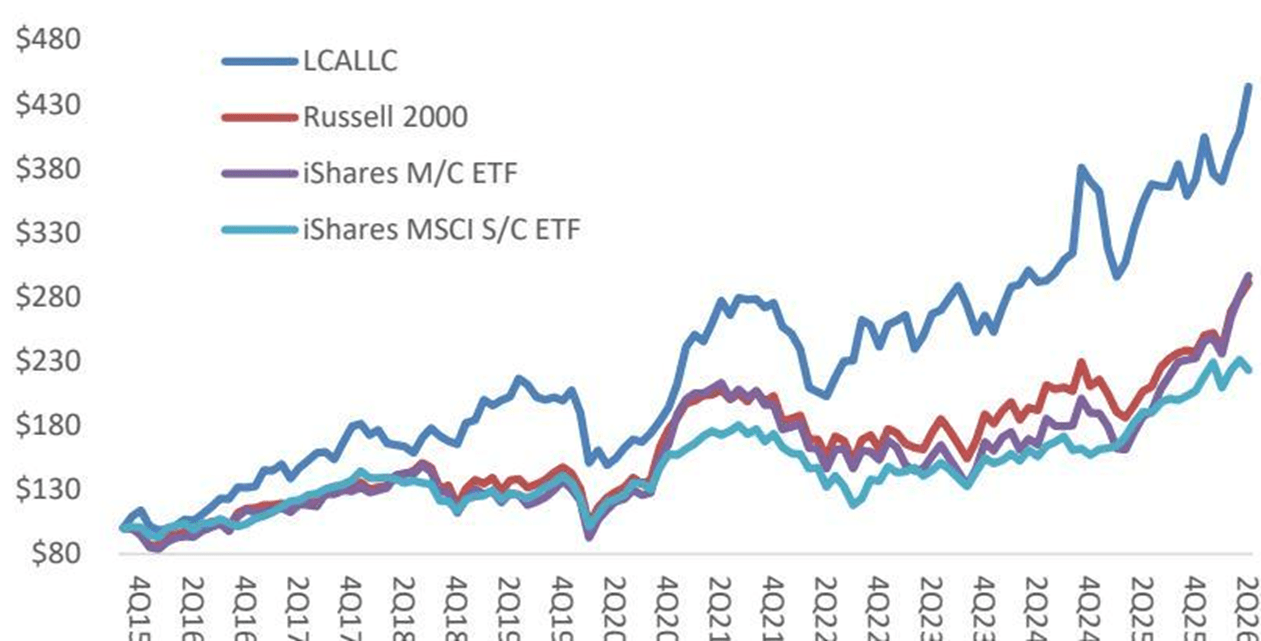
For the 2Q26 quarter ((ended June 30, 2026)), cumulative net returns improved 20%, lifting year-to-date returns to +19%, in both cases trailing the Russell 2000 and the iShares US MicroCap ETF (IWC) but well ahead of the iShares SmallCap EAFE (SCZ) ((ex-N. Am)) ETF. Returns were generated with little direct exposure to any of the themes du jour ((AI, hyperscalers, cyclical semis, etc)) that drives flows at passive funds. Since inception in November 2015 through quarter end, LCA has returned a cumulative 343% net of fees, or 15% CAGR, ahead of those indices. Past performance is no guarantee of future results. Individual account returns may vary. ¹
Net returns
Advertisement
Long Cast
R2000
IWC
SCZ
Advertisement
2015 (2-mos)
14%
-5%
-5%
Advertisement
1%
2016
15%
21%
Advertisement
21%
3%
2017
36%
Advertisement
15%
13%
33%
2018
Advertisement
-8%
-11%
-13%
-18%
Advertisement
2019
21%
25%
22%
Advertisement
25%
2020
-3%
20%
Advertisement
21%
12%
2021
42%
Advertisement
15%
19%
10%
2022
Advertisement
-12%
-20%
-22%
-21%
Advertisement
2023
10%
17%
9%
Advertisement
13%
2024
39%
12%
Advertisement
14%
2%
2025
0%
Advertisement
13%
22%
32%
1Q26
Advertisement
0%
1%
1%
1%
Advertisement
2Q26
20%
22%
26%
Advertisement
6%
Cumulative
343%
191%
Advertisement
196%
123%
CAGR
15%
Advertisement
11%
11%
8%
LTM
Advertisement
25%
41%
59%
17%
Advertisement
YTD
19%
23%
27%
Advertisement
8%
Long Cast was founded in 2015 on the principles of long-term and patient investing in well-researched small- and micro-cap companies. It was conceived as a “food truck version of a hedge fund”, a nod to its SMA structure, low overhead and Brooklyn base, backed by +12-years of institutional equity-research experience. It takes concentrated positions and aims for 15% annualized returns, operating as an alternative to passive investing, with more transparency than a fund and without using leverage.
Portfolio Update
In 2Q26, PDEX (PDEX), PESI (PESI) and MTRX (MTRX) were the largest contributors. There weren’t any significant decliners. We substantially added to NRC (NRC) and exited CCRN (CCRN), which was acquired, returning a solid after-tax IRR despite the unavoidable short-term treatment.
At quarter end the top five positions represented 62% of the portfolio. I am patiently putting available cash to work, recently adding to QRHC (QRHC), which has lapped negative revenue comps, and may benefit from stabilization in industrial manufacturing as well as new contracts announced earlier in the year.
Advertisement
It is our goal and intention to own large percentages of fewer companies over time, but we start small, continue researching and adjust as warranted. One new small position is a chemical company in turnaround, that offers the virtues of sound management, a strong balance sheet and fully depreciated assets. I am weighing if it should be a larger position, but probably not at current prices.
Since 2023, management and the Board have been excellent strategic and financial stewards. Previously an undercapitalized mini conglomerate, non-core assets have been sold off and there’s over $40M of net cash on the balance sheet. The business is built around three chemical plants, each over 50-years old, in TN, VA and SC, that supplied the once abundant carpet and textile manufacturers in the area, and now produce lubricants, surfactants, coatings, and other mixed and reacted chemicals for a variety of end markets.
From this point forward, the opportunity is improving on low-capacity utilization and “sales people who waited for the phone to ring”. It’s a solvable problem, but it’s not an easy path. This business is all about manufacturing with quality and consistency. A former HB Foster plant engineer explained to me that the chief sales people in this area are the process engineers and the plant managers with demonstrated capabilities around scheduling, batching, minimizing turnarounds and safety. These are manufacturing culture type things and culture takes time to change.
Meanwhile, our CEO and CFO’s prior successful exit was in pool chemicals, ie branded bleach, which is to say, wholly driven by sales and marketing. I’m not sure if what’s needed here from this point forward overlaps with any of their prior experiences. And that leads to questions around the intentions of the Board, some of whom are long time shareholders and possibly looking for the next fool to buy these old assets an exit.
Advertisement
I like a long and wide opportunity pathway, and this seems constrained and restricted. The underlying capacity puts a cap on revenues and the factories require regular maintenance and CAPEX. The industry operates in oversupply and peer group multiples are in the single digits. Meanwhile, to achieve our 15% hurdle rate at current prices would require multiple expansion into the double digits. Under certain conditions – higher-margin end-markets or faster growth – a premium multiple may be justified, but given the hill to climb, I think it pays to wait. I’ll continue to monitor it and continue to look for other ideas.
As I indicated in my mid-June email, I did a 15-minute set on the Vegas Strip by way of a “pitch session” at the Microcap Club / Planet Microcap conference, where I offered brief high-level thoughts on what makes stocks attractive, and then shared two stocks, PDEX and NRC that I think indeed are attractive.
The PDEX pitch offered an attempt to quantify the anticipated incremental benefits to operations if Zimmer (ZBH) succeeds with the mBos robot commercialization (a corrected version of the slide is below). The milestones, prices and margins are all derived from public filings and we assume four effectors per system sale, as an informed estimate.
Advertisement
ATK procedures per year
800,000
implant cost (est)
$5,000
Advertisement
US implant “gross revs”
$4B
Milestone
12/31/2028
Advertisement
12/31/2029
12/31/2030
Hurdle: mBos “gross revs”
$156M
Advertisement
$381M
$609M
implied procedure market share
4%
Advertisement
10%
15%
assumed mBos procedures
31,200
Advertisement
76,200
121,800
consumables @ $75 / procedure
$2.3
Advertisement
$5.7
$9.1
GP @ 30% margins
$0.7
Advertisement
$1.7
$2.7
incremental EPS impact
$0.16
Advertisement
$0.40
$0.64
# of systems needed
156
Advertisement
381
609
>> each system does 200 procedures / year
4 effectors / systems @ $15K each
Advertisement
$9.4
$22.9
$36.5
>> $15K / effector x four per system sale
Advertisement
GP @ 45% margins
$4.2
$10.3
$16.4
Advertisement
>> margins are spelled out in contract
incremental EPS impact
$0.99
$2.41
Advertisement
$3.85
net incremental EPS impact
$1.15
$2.81
Advertisement
$4.50
Zimmer’s purchase of Monogram (MGRM) last year included “contingent valuation rights” (CVRs) that pay out $3.41 / share in each year from 2028 to 2030 that mBos gross revenues exceed certain hurdles. Based on these estimates, we calculated the number of systems needed to achieve those revenues, and it triangulates to a capital sale in the range of ~$1M per machine, in line with the cost of Stryker (SYK)’s Mako platform. Stryker sold 860 units, in its first three years so the forecast 609 units to trigger the final CVR seems achievable. And even if the timing is wrong or our estimates imprecise, as long as the direction is right – and Zimmer is putting significant resources behind the launch – once the system launches, PDEX could experience an exceptional transformation in operating cash flow that would justify a substantially higher corporate value. This is why it remains a top position.
On NRC, our newest investment, I discussed the company’s evolution from owner / operator to professionally led management team, and the expected benefits from putting a growth focused, incentivized and entrepreneurial executive suite behind this strong and recognizable brand, in a business with strong FCF generation and in a market where the two leading competitors just merged in a PE backed $6.5B deal.
Quantitative evidence that supports our optimism includes the recently announced largest contract in company history leading to the highest 12-mos backlog in history. Deferred revs are also growing and this typically leads sales. Furthermore, management indicated that the second year of the aforementioned contract is materially larger than the first, which infers that in one year’s time, 12-mos backlog could be even larger, and with capacity to do more. We continue to add opportunistically.
Advertisement
Among our other large holdings, PESI recently preannounced 2Q26 earnings indicating continued weak profitability but strong backlog growth on expanding processing at Hanford. There is potential for significantly more waste volumes if a decision is made to grout ((embed in concrete)) up to 9M gallons of low-level tank waste by 2030. This recent GAO report illustrates how large that opportunity could be and how favorable the government is in pursuing it.
Two other large holdings, MTRX and RSSS (RSSS), are on June 30 fiscal years and won’t report earnings until late August or possibly September. Given their weighting, results may be impactful to the portfolio. I think in both the cases, cash earnings will prove better than market expectations, especially MTRX, which all but guided to record profitability.
In Conclusion: On AI, Entrepreneurship and Investing
In our 1Q26 letter, I discussed my perspective of AI as a tool that’s creating a wonderful environment for entrepreneurs. Evidence is emerging along those lines, with growth in business formation and in new sole proprietorships exceeding $10M in revenues. And while the media focuses on layoffs at tech companies, evidence suggests that it’s creating ample work elsewhere, and not just for electricians and hvac installers.
Meanwhile, in the investing world, an AI-focused fund called “Situational Awareness”, led by a former Open AI (OPENAI) employee, recently blew up over $40B in capital. The fund strategy was to buy AI-related companies and short the disrupted software businesses, and use significant leverage in the process. It was recently forced to sell off its entire portfolio at a discount to meet margin calls. It puzzles me how someone so smart can be so unaware of the risks associated with using leverage in investing. Prior to its demise, returns were reportedly up 270% ytd and had been up 1,000% since inception.
Advertisement
It takes effort to resist the notion that we know how this is going to turn out. Our minds enjoy closure and sometimes even grope for conclusions, no matter how illogical, with a bias towards consensus.
Long Cast has experienced large drawdowns in the portfolio, and given our concentrated positioning, may well again in the future. But we operate under the premise that investing is a practice of patience and endurance, not a sprint. This is intended as a durable business that grows capital well into the future. In order to do that, we need to survive. We don’t use margin. We don’t seek out volatility. With rising rates, an expanding war and global constraints on a most a critical energy input, I’m comforted by our non-consensus portfolio.
As always, I remain committed to building a durable and sustainable business based on a repeatable investment process and intelligent capital allocation. I remain grateful to have clients ((by design)) aligned with my long term, small company centric and research-intensive focus. I welcome the continued interest from individuals and institutions as I patiently grow the business.
Sincerely / Avi
Advertisement
References
1. Performance data is based on Interactive Brokers “Portfolio Reports” function; shown net of management fees, expenses, and commissions; unaudited; and unless otherwise noted, since inception in Nov. 2015. Past performance is not a guarantee of future results. Individual account performance may vary. Any investment entails a risk of loss including the total loss of capital. ADV form available through Broker Check; CRD # 175005
Political opponents of Trump have criticised the service. Democratic Senators Elizabeth Warren and Adam Schiff have written to the US securities regulator to ask if it will investigate whether Truth API breaks the law.
The Securities and Exchange Commission (SEC) has confirmed receipt of the letter, but has declined to comment on whether it will investigate.
The potential for insider trading to occur has also been raised. The practice, which is illegal, involves people making market trades or bets based on information that is not available to the general public.
A spokesperson for TMTG said in response to the letter sent to the SEC that Senate Democrats “continue to mischaracterise Truth API either out of ideological opposition to free markets or a failure to grasp the distinction between public and nonpublic information – or, quite possibly, both”.
Advertisement
TMTG has also said “the Senators must have invented a new theory of ‘insider trading’ based on publicly available information”.
Whether or not information being provided by the service is public or non-public appears to be the key test.
Richard Painter, former ethics lawyer to President George W Bush, told the BBC he believes it could be classed as insider trading to sell material and official US government information, prior to it being public knowledge, on the platform.
“If I were commissioner of the SEC, I would threaten to resign unless they put a stop to this plan or promise that no posts… that have to do with US government business [will be included],” he says.
Advertisement
Saluzzi, though, points out that many other data providers, news organisations and stock exchanges currently operate similar services, providing a “precedent” for TMTG.
However, he adds: “There’s a different story when it comes to ethics.”
Trump, who owns about 41% of Trump Media through a trust his children oversee, does stand to profit from the service.
“This appears to be an outrageous abuse of the President’s office for his personal benefit that undermines everyday investors and the integrity of our markets, while enriching Wall Street and other wealthy insiders,” Warren and Schiff said in their letter to SEC.
FOX Business host Larry Kudlow discusses the impact of the Trump administration’s manufacturing policies after the ISM reported its highest manufacturing PMI since 2022 on ‘Kudlow.’
President Donald Trump’s administration is facing 25 new lawsuits from Democrat-led states over his latest round of tariffs on Monday.
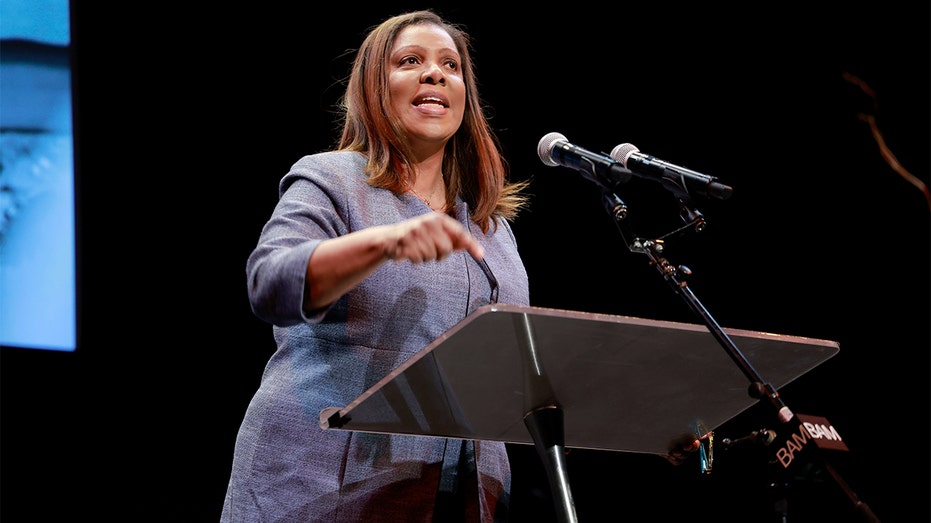
New York Attorney General Letitia James is leading the joint lawsuit, arguing the tariffs handed down last month are a thinly-veiled attempt to circumvent the Supreme Court’s ruling against Trump’s earlier import tariffs.
Advertisement
“After losing at the Supreme Court, the administration is once again trying to illegally raise taxes on families and businesses with a new round of tariffs,” James said in a statement.
Trump’s latest tariffs hit 59 countries and the European Union, this time arguing they are committing “forced labor violations” by not cracking down on imports from certain sources.
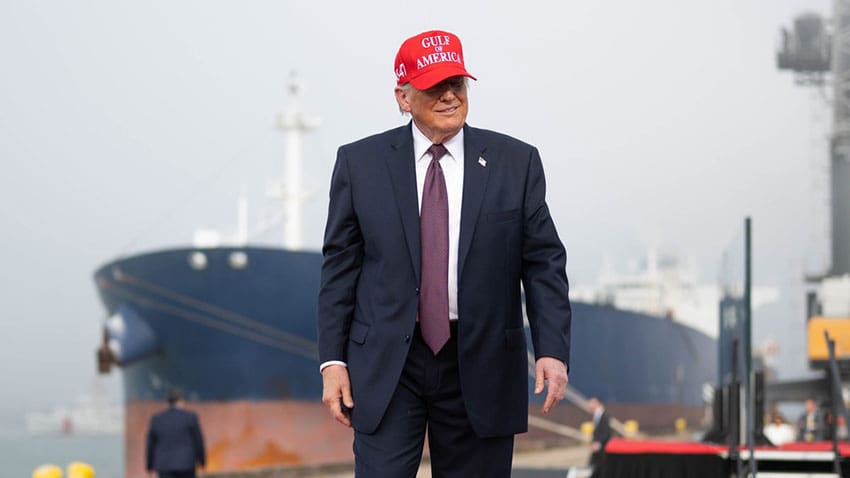
President Donald Trump delivers remarks on the Ratepayer Protection Pledge during a roundtable at the Environmental Protection Agency headquarters on July 23, 2026, in Washington, D.C. (Kevin Dietsch/Getty Images / Getty Images)
States joining New York in the lawsuit include Arizona, California, Colorado, Connecticut, Delaware, Hawaii, Illinois, Kentucky, Massachusetts, Maryland, Maine, Michigan, Minnesota, Nevada, New Jersey, New Mexico, North Carolina, Oregon, Pennsylvania, Rhode Island, Virginia, Vermont, Washington and Wisconsin.
Advertisement
The Trump administration ordered the U.S. trade representative to investigate the 60 trading partners for unfair trade practices earlier this year. The investigation then found that the 59 countries and the EU were not doing enough to crack down on imports produced by forced labor. Trump then pointed to Section 301 of the Trade Act of 1974, which allows the president to impose tariffs on countries determined to be engaging in unfair trade practices.
Attorney General of New York Letitia James speaks on stage during the 38th Annual Brooklyn Tribute To Dr. Martin Luther King, Jr. at BAM Howard Gilman Opera House on Jan. 15, 2024, in New York City. (Jason Mendez/Getty Images for Brooklyn Academy of Music / Getty Images)
“The United States is using its lawful authority to obtain the elimination of unreasonable acts, policies, and practices that burden U.S. commerce,” White House spokesman Kush Desai told NBC News.
“A foreign country’s failure to impose and effectively enforce a prohibition on the importation of goods produced with forced labor is unreasonable and burdens U.S. commerce, including American workers, and must be addressed. Section 301 tariffs have proven to be a legally durable tool since the president’s first term, and they remain so now,” he added.
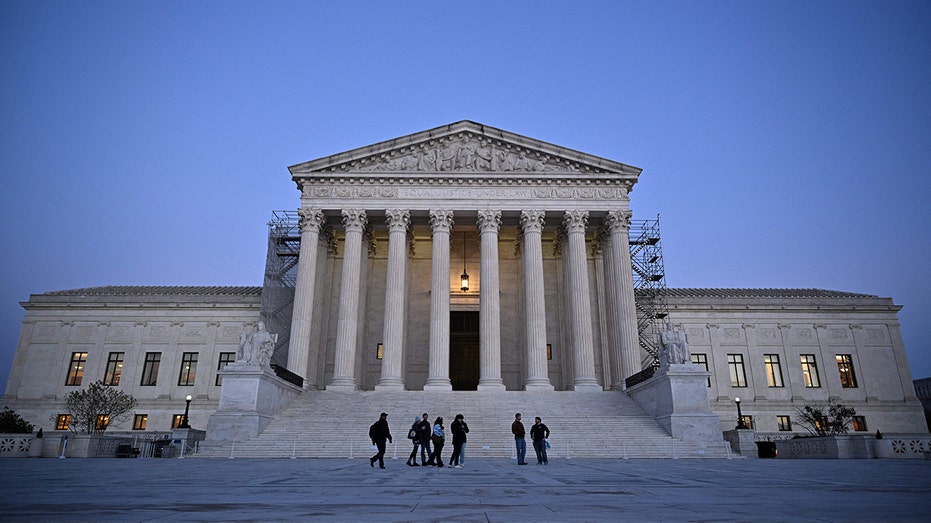
The U.S. Supreme Court ruled 6-3 that the International Emergency Economic Powers Act does not authorize the president to impose broad tariffs. (MANDEL NGAN/AFP via Getty Images / Getty Images)
The lawsuit comes days after Trump lashed out at the Supreme Court over its rulings on his tariff policies and birthright citizenship, arguing they cost the U.S. “trillions.”
“Does anybody have any idea how much Money and Prestige the United States Supreme Court has cost our Nation with their negative Rulings on Birthright Citizenship and TARIFFS?” he asked in a Wednesday Truth Social post.
Advertisement
“The answer, TRILLIONS AND TRILLIONS OF DOLLARS!” he said.
Twenty-five US states filed a lawsuit on Monday against President Donald Trump’s administration over tariffs imposed on dozens of trading partners, including the UK, at rates of between 10 per cent and 12.5 per cent.
The duties took effect in July and were imposed under Section 301 of the 1974 US Trade Act, legislation designed to target nations that use forced labour. The US says they were applied because trading partners, among them the UK, China and the European Union, failed to properly tackle forced labour.
In a legal document seen by the BBC, the coalition of Democratic states said the decision was “arbitrary, capricious, and contrary to law.”
The lawsuit said the Trump administration “cannot use forced labour as a pretext to continue its illegal tariff scheme.”
Advertisement
“The tariffs the USTR imposed are so broad that they defy the USTR’s own stated aims and make a mockery of the statute used to justify them,” it said.
The states also contrasted the length of the two investigations. The last time Trump used Section 301 to impose tariffs, solely targeting China in 2018, officials had investigated claims of forced labour in the country for eight months, the lawsuit said. The most recent probe, which looked into 60 trading partners, took two months.
“Typically, a Section 301 investigation into even a single economy takes much longer to complete,” it argued.
White House spokesman Kush Desai said the US is “using its lawful authority” to address practices that burden American businesses. He said any foreign countries failing to deal with the importation of goods produced with forced labour was “unreasonable” and must be addressed.
Advertisement
“Section 301 tariffs have proven to be a legally durable tool since the president’s first term, and they remain so now,” Desai said.
During Trump’s first term, he used Section 301 to impose trade tariffs on China and they survived challenges in court.
New York Governor Kathy Hochul said: “President Trump’s illegal tariffs are nothing more than a tax on hardworking families.”
Oregon attorney general Dan Rayfield said in a statement: “Despite losing every step of the way, Trump is trying yet again to inflict more chaos on working families and homegrown Oregon businesses.
Advertisement
“We’re all paying the price for these unlawful tariffs, not foreign governments,” he added.
Several affected trading partners have expressed disappointment over the new tariffs, with the governments of Brazil and Japan separately calling the measures “unjustified”. China’s foreign ministry spokesperson Mao Ning described the tariffs as an “excuse for political manipulation”. Washington and Beijing have been locked in a tit-for-tat tariffs war which is currently on hold.
Some analysts have questioned how countries would be able to show that they had properly addressed the forced labour claims.
Advertisement
Alex Capri, a business lecturer at the National University of Singapore, has said that the lawsuit would pose a “formidable challenge” to Trump’s levies. He said there is a lack of credible evidence to back claims that countries have harmed US firms by violating forced labour rules.
Capri added that he expects “carve outs and walk-backs to gradually take the bite out of these tariffs”.
Jamie Young
Jamie Young is Senior Reporter at Business Matters, covering SME finance, employment law and Westminster policy since 2016. He has reported on every Budget and Autumn Statement since 2018, helped make sense of the ‘covid era’ and the bounce-back loan scheme from launch through the fraud investigations, and broke the magazine’s coverage of the 2024 late-payment reforms. He joined Business Matters straight from completing his BA in Administration from Exeter University and is NCTJ-qualified. Reach him at jyoung@cbmeg.co.uk
Beloved Big Bear Bald Eagle Jackie’s Anemia Worsens as Blood Cell Levels Drop Again, Vets Now Reveal
BIG BEAR LAKE, Calif. — Jackie, the internet-famous bald eagle whose nest has been watched live by millions of viewers for years, has suffered a setback in her recovery, with veterinarians reporting Monday that her anemia has worsened after weeks of treatment at a Southern California raptor center.
The Ojai Raptor Center, which has been treating Jackie since she was rescued more than two weeks ago, said new bloodwork showed her packed cell volume, a measurement of red blood cells in the bloodstream, had dropped to 13%, down from 17% reported in the center’s previous update. “Today’s bloodwork brought some difficult news,” the center wrote in a statement posted to Facebook.
A setback after signs of progress
The drop marks a reversal from earlier signs of improvement. Just days earlier, the center had reported Jackie’s packed cell volume climbing to 17%, a level veterinarians described as encouraging even though they were hoping to see it eventually rise above 30%. Instead, Monday’s bloodwork showed the opposite trend, prompting the veterinary team to escalate its response.
Advertisement
The center said additional advanced diagnostic testing was now underway, along with expedited laboratory work, as staff try to better understand what is driving the decline and determine next steps in Jackie’s treatment. “At this stage, we do not have further answers to share, but we promise to keep you informed as soon as we have meaningful new information,” the center said.
How Jackie ended up in intensive care
Jackie, who is one half of a bald eagle pair whose nest overlooking Big Bear Lake has been streamed around the clock for years, was found on the ground near the lake roughly two and a half weeks ago after a fight with two other eagles. Veterinarians determined at the time that she was already anemic with inflammation affecting her kidneys before the altercation, a condition they believe left her more vulnerable to the attack, though the underlying cause has not been determined.
Shortly after her rescue, Jackie received a life-saving blood transfusion from a fellow female eagle named Spirit, a resident of the CALM Zoo in Bakersfield. Her condition has fluctuated in the weeks since, with the raptor center at times describing her as stable but critical, and caregivers noting small positive signs along the way, including that she had been eating and displaying what staff described as a bit of her characteristic attitude.
Advertisement
A bird known to millions
Jackie and her mate, Shadow, have become two of the most closely watched wild animals in the country through the Big Bear Eagle Nest Cam, a livestream run by the nonprofit Friends of Big Bear Valley that offers a round-the-clock window into the pair’s nest in the San Bernardino Mountains. The organization’s live camera project was launched in 2015 with help from the late Sandy Steers, a wildlife advocate whose efforts helped turn the eagle pair into a global phenomenon.
The couple became parents again this year, welcoming two eaglets in early April that the organization later named Sandy and Luna, a nod to Steers’ legacy. As of Aug. 1, both chicks appeared to have fully fledged, according to updates from the nest cam, even as their mother remained hospitalized more than 80 miles away in Ojai.
This year’s nesting season was not without earlier setbacks of its own. Jackie and Shadow lost their first two eggs of the season in January after a raven attack destroyed them while the pair was away from the nest. The couple persevered, with Jackie laying a new egg in late February that ultimately hatched into Sandy and Luna in April.
Advertisement
A community rallies around the eagles’ habitat
Jackie’s illness comes amid a broader wave of public support for the Big Bear eagle population. Friends of Big Bear Valley recently completed a $10 million fundraising campaign to purchase nearly 63 acres of land near the lake, known as Moon Camp, in order to place it under permanent conservation protection and block a proposed development project. More than 25,000 individual donations helped push the campaign toward its goal ahead of a July 31 deadline, with a $5.5 million contribution from Anna and Greg Brockman, the OpenAI president, ultimately closing the gap.
What comes next
The Ojai Raptor Center, which has referred to Jackie internally by her patient number, 26-519, has asked the public and members of the media to respect the space needed by her veterinary and rehabilitation teams as they continue working through her case. Once Jackie has recovered enough to be released, wildlife officials have said she will be returned to her home range in Big Bear, near the nest she has shared with Shadow for years.
Advertisement
For now, her care team says the focus remains on stabilizing her condition and identifying the cause of her worsening anemia through the additional testing now underway. No timeline has been given for when results from that testing, including specialized screening for possible toxin exposure, are expected to be available, with center staff cautioning that some results could take several weeks to come back.
The uncertainty has left millions of followers of the Big Bear eagle cam anxiously awaiting further updates on a bird whose ups and downs, from lost eggs to a life-saving transfusion, have played out publicly for years. Friends of Big Bear Valley and the Ojai Raptor Center have both indicated they will continue posting updates on Jackie’s condition as new information becomes available in the days ahead.
KUWAIT CITY — Kuwait International Airport remains open and operating Tuesday, but with significant restrictions still in place months after a series of Iranian strikes damaged the facility and forced the country to overhaul its aviation operations amid the broader regional conflict tied to the 2026 Iran war.
Passengers can still fly in and out of Kuwait, but the airport’s normal operations remain far from fully restored, with one major terminal closed for repairs, a long-anticipated new terminal still under construction, and the country’s airspace still partially restricted to overflights as of Tuesday.
Terminal by terminal: what’s open
Kuwait International Airport currently operates through two active passenger terminals. Terminal 4 serves as the base for Kuwait Airways, along with a growing number of returning international carriers, including Emirates, flydubai, Air Arabia and Oman Air. Terminal 5 remains the dedicated home for Jazeera Airways, which has continued expanding its route network even amid the broader disruptions affecting the airport.
Terminal 2 still under construction, not open today
Despite periodic social media speculation, Kuwait International Airport’s long-awaited new Terminal 2 has not opened and did not open Tuesday. The $5.8 billion project, designed by the architecture firm Foster + Partners and built by Turkey’s Limak İnşaat, remains under construction, with officials targeting completion of civil works by Nov. 30, followed by systems testing and trial operations before passenger service begins in the final quarter of the year.
The sprawling 700,000-square-meter terminal, envisioned as part of Kuwait’s broader “New Kuwait 2035” economic diversification strategy, is designed to eventually handle up to 25 million passengers annually, with capacity for future expansion to 50 million. Construction on the project began in 2017, with the original target completion date of 2022 repeatedly pushed back due to the COVID-19 pandemic, supply chain disruptions and, more recently, damage sustained during the regional conflict. Kuwait’s Directorate General of Civil Aviation has repeatedly urged the public to rely only on official channels for updates, pushing back against unverified claims of imminent reopenings.
Advertisement
A conflict that has repeatedly disrupted operations
The disruptions at Kuwait International Airport trace back to Feb. 28, when Iran launched a campaign of aerial attacks against the airport as part of the broader 2026 Iran war, targeting Terminal 1 and critical air traffic control infrastructure in what officials described as an effort to disrupt a facility being used as a logistics hub for coalition transport. The campaign forced a total suspension of commercial aviation in Kuwaiti airspace that stretched for more than 40 days before authorities began a phased reopening in late April.
Since then, operations have been repeatedly interrupted by renewed strikes and precautionary shutdowns. A June 3 attack caused fresh damage to the newly reopened Terminal 1, while a further round of Iranian missile and drone strikes on July 18 prompted Kuwait’s aviation authorities to reimpose broader airspace restrictions. Throughout the conflict, radar systems, fuel storage infrastructure and structural elements at the airport have all sustained damage at various points, according to regional aviation trackers monitoring the situation.
Overflights remain banned
Advertisement
While arrivals and departures at Kuwait International Airport have continued, Kuwait’s airspace has remained closed to overflights since the July 18 strikes, with the ban extended repeatedly and most recently set to run until at least Tuesday, according to aviation industry trackers monitoring Gulf airspace. That restriction has made Kuwait something of an outlier in the region, as neighboring Iraq, Bahrain, Qatar and the United Arab Emirates have all reopened their airspace to overflights in some form, forcing airlines to route around Kuwaiti airspace via longer corridors through Egypt, Saudi Arabia and Oman, or further north through the Caucasus.
The European Union Aviation Safety Agency has advised operators to avoid the airspace of Kuwait, along with Iran, Iraq, Lebanon, Bahrain, Qatar, the UAE and parts of the Gulf of Oman, citing continued risk from the conflict. Whether Kuwait extends its overflight ban further, or begins easing restrictions as conditions stabilize, remains to be determined by the country’s aviation authorities.
What travelers should know
Passengers with flights booked through Kuwait International Airport are strongly advised to confirm their specific flight details directly with their airline given how frequently conditions have shifted throughout 2026. Travelers flying with Kuwait Airways should expect to depart from Terminal 4, while those flying with Jazeera Airways will use Terminal 5. Anyone whose itinerary was originally booked through Terminal 1 should check with their airline regarding rebooking, alternate terminal arrangements or refund options, since that facility remains offline with no confirmed reopening date.
Advertisement
During earlier phases of the disruption, Kuwait’s national carriers temporarily rerouted operations through Saudi Arabia’s King Fahd International Airport in Dammam, requiring passengers to complete lengthy bus transfers to reach their flights. While most operations have since returned to Kuwait International Airport itself, the underlying volatility means schedules can still change with little notice.
Kuwait’s aviation authorities continue to describe the current arrangement, two operating terminals, one closed for repairs and a new terminal still months from completion, as a temporary state tied directly to the broader regional conflict rather than a permanent operating model. Officials have emphasized that once Terminal 2 opens in the final quarter of the year, it will substantially expand the airport’s capacity and modernize the overall passenger experience as Kuwait works to position itself as a competitive aviation hub alongside Dubai, Doha and Abu Dhabi.
For now, though, the answer to whether Kuwait International Airport is open remains layered: yes, for arrivals and departures through Terminals 4 and 5, but with Terminal 1 closed, Terminal 2 still under construction, and the country’s skies remaining only partially open to the wider region as the conflict’s effects continue to ripple through Gulf aviation.
TUCSON, Ariz. — Six months after 84-year-old Nancy Guthrie vanished from her home outside Tucson, the mother of “Today” show co-host Savannah Guthrie remains missing, with investigators still working through thousands of tips but no arrests and no confirmed suspects in a case authorities are treating as a kidnapping for ransom.
Guthrie disappeared in the early morning hours of Feb. 1 from her home in the Catalina Foothills area near Tucson. Her family has spent the past six months pleading publicly for information, even as the investigation has produced forensic evidence, surveillance footage and ransom notes without leading to her safe return.
How the case began
Nancy Guthrie was last seen around 9:30 to 9:45 p.m. on Jan. 31, when family members dropped her off at her home after a visit. When she failed to appear for church the next morning, a fellow churchgoer alerted her family, who went to check on her around 11 a.m. and found her missing.
Advertisement
Pima County Sheriff Chris Nanos said early in the investigation that Guthrie had limited mobility and could not have left her home unaided, adding to the family’s alarm given her dependence on daily medication. “She’s 84, she needs her meds, her family needs her too,” Nanos said at the time, urging the public to come forward with any information.
Authorities quickly determined that a crime had occurred. Nanos told reporters that Guthrie did not leave her home on her own and described her as being of sound mind, ruling out concerns that her disappearance was related to confusion or a medical episode. Investigators later said they had identified “some very concerning” circumstances at the scene that shifted the case toward an active abduction investigation.
Ransom notes and a nationwide search
Two days after Guthrie went missing, a ransom note was sent to a local CBS affiliate, addressed to Savannah Guthrie and demanding $4 million in bitcoin by 5 p.m. on Feb. 5. The note reportedly warned that the amount would increase to $6 million if payment wasn’t made by that deadline. Arizona officials publicly released the ransom notes at the end of July, six months into the investigation, though authorities have not disclosed whether any payment was made or attempted.
Advertisement
Investigators from the FBI and the Pima County Sheriff’s Department have pursued numerous leads throughout the case, including a Nest doorbell camera video showing a man of average build, approximately 5-foot-9 or 5-foot-10, wearing a face mask, gloves and a black backpack near Guthrie’s home around the time of her disappearance. Despite the footage, DNA testing and forensic evidence gathered from the scene, no suspect has been publicly identified and no arrests have been made.
Fabian Pacheco, chief of detectives for the Pima County Attorney’s Office, who oversees one of the case’s tip lines, said investigators continue to hope a single piece of information could prove decisive. “It only takes one tip, just one, to break the case open,” Pacheco said in an interview that aired on “CBS Mornings,” adding that roughly 10% of the tips received so far have proven to have investigative value.
A family’s public plea continues
Savannah Guthrie, who has taken time away from her co-hosting duties on “Today” amid the investigation, has repeatedly used social media to appeal directly to whoever may be responsible for her mother’s disappearance. In a post marking the six-month anniversary on Aug. 1, Guthrie described the toll the ordeal has taken on her family. “We have lived every moment, every breath and every heartbeat in agony,” Guthrie wrote, alongside an undated photo of her mother.
Advertisement
In the same post, Guthrie appeared to speak directly to those responsible for her mother’s disappearance, writing that they may be afraid or conflicted about coming forward, but that “there is a way out — to tell what you know.”
Guthrie’s brother, Camron Guthrie, made a similar appeal in a video posted to his sister’s Instagram account in the earlier days of the investigation, directly addressing whoever might be holding their mother and asking them to make contact.
Sheriff Nanos has repeatedly described the Guthrie family as cooperative throughout the investigation, telling reporters early on that the family maintained close contact with investigators and had been cleared of any involvement in Nancy’s disappearance.
Where the investigation stands now
Advertisement
Despite the volume of evidence gathered, including video footage, forensic material and now the released ransom notes, the case remains unsolved six months after Nancy Guthrie vanished. Investigators have not publicly detailed why the ransom demand was not paid or what became of the communication after the initial deadline passed, and no updates on a specific suspect have been released.
Authorities continue to urge anyone with information about Guthrie’s whereabouts, or the circumstances surrounding her disappearance, to contact the Pima County Sheriff’s Department at (520) 351-4900, the 88-CRIME tip line at (520) 882-7463, or to submit information through the P3 Tips app or 88crime.org.
With the case now stretching past the half-year mark, investigators say they remain focused on following up on tips as they come in, while the Guthrie family continues to use its public platform to keep attention on the case. Savannah Guthrie has not indicated when, or whether, she plans to return full-time to her role on “Today,” as her family continues to wait for the answers that have eluded investigators since the night Nancy Guthrie disappeared from her home.
The FTSE 250 bank recorded a £60.7m pre-tax profit in the first half of 2026, up 41 per cent from the same period last year
Samuel Norman www.cityam.com
09:25, 04 Aug 2026
Metro Bank on Paradise Street, Liverpool
Metro Bank posted its strongest half-year profit on record during the first six months of 2026, defying an industry-wide trend of branch closures while expanding its small business offering.
Advertisement
The FTSE 250 lender reported a pre-tax profit of £60.7m, representing a 41 per cent increase on the same period last year.
The result was underpinned by a five per cent rise in revenue to £301m. Net interest income — accounting for approximately 80 per cent of the group’s total income — led the way with an eight per cent increase to £241.5m.
Fee and other income, however, fell 13 per cent to £55m. This was partially offset by a £4.4m gain on asset sales, a turnaround from a £200,000 loss recorded in the first half of 2025.
The bank’s total loan book expanded four per cent to £9.2bn, as reported by City AM.
Advertisement
Metro has positioned itself to capitalise on the small business lending market as larger industry players retreat from the sector. The area that typically delivers higher margins for lenders due to the ability to charge elevated interest rates.
The bank’s core target lending, encompassing corporate, small business and specialist mortgages, surged 43 per cent year-on-year to £6.2bn, helping to offset legacy residential mortgage and consumer run-off books. The lender offloaded its £584m portfolio of unsecured personal loans at the start of 2025 as part of a broader strategic shift towards specialist lending.
The group’s net interest margin – a key indicator of profitability from lending – climbed to 3.18 per cent in the half, with Metro reporting it closed the second quarter at 3.25 per cent. The bank is aiming for a margin range of 3.4 to four per cent by December 2026.
Metro reaffirmed its targets for return on tangible equity, a key profit metric, expecting to achieve over 13 per cent by the final quarter of 2026 and over 18 per cent by 2028.
Advertisement
The lender also disclosed plans to press ahead with its regional expansion into Northern economic hubs, having secured new store leases across Newcastle, Leeds and Nottingham during the first half.
Major banks have broadly sought to scale back their physical presence in recent years. Barclays announced a significant reversal of strategy in April, choosing to grow its branch network beyond its current 206 sites, despite having shuttered around 80 per cent of its locations since 2019.


























































You must be logged in to post a comment Login