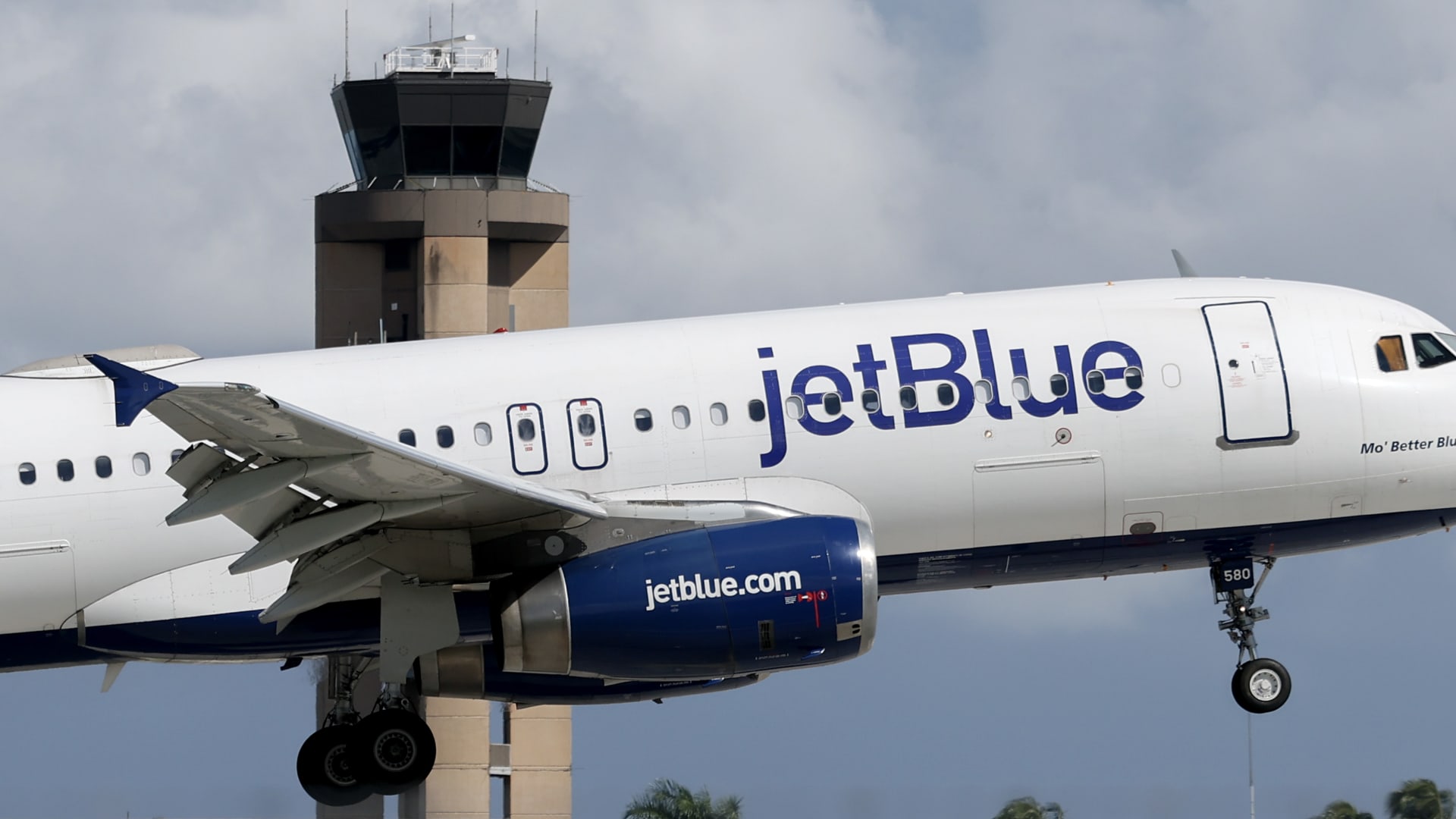
A JetBlue Airlines plane lands near the Air Traffic Control tower at the Fort Lauderdale-Hollywood International Airport on Oct. 7, 2025 in Fort Lauderdale, Florida.
Joe Raedle | Getty Images
JetBlue Airways told CNBC on Wednesday that it will close its flight attendant base at Newark Liberty International Airport in New Jersey and tech operations bases there and at LaGuardia Airport in New York this fall as it seeks to reduce costs and beef up service in Florida, though it noted that no staff will lose their jobs.
Advertisement
It said staff could bid or transfer to other bases.
“JetBlue is making targeted schedule adjustments, ending seasonal service between Newark (EWR) and Los Angeles (LAX) and Las Vegas (LAS), to support growth in Fort Lauderdale-Hollywood International Airport,” the airline said in a statement.
It comes as JetBlue earlier Wednesday said it would expand daily, cross-country flights with its lie-flat business class, Mint, from Fort Lauderdale, Florida, to San Diego on Nov. 19 and will add more Mint-equipped flights this winter to San Francisco and Los Angeles.
JetBlue has spent years trimming unprofitable routes and cutting costs to return to steady profitability.
Advertisement
Its last profitable quarter was two years ago, and the Fort Lauderdale-Hollywood International Airport push is a big part of its strategy, JetBlue President Marty St. George told CNBC earlier this month. The airline is scouting space for a high-end airport lounge there, too, he said.
The airline is already the top carrier at Fort Lauderdale, though it was previously second to Spirit Airlines, the South Florida-based discounter that collapsed on May 2.
JetBlue executives have called out the high costs of operating at airports like LaGuardia.
“We are much, much smaller at LaGuardia than we were four years ago because it’s a $40 [enplanement fee] airport for us. And the fountain is really pretty, but … I think people would rather have low fares than a really nice fountain,” St. George said at a JPMorgan industry conference in March, referring to the 25-foot-tall water feature in the airport’s Terminal B.
Advertisement
The Port Authority of New York and New Jersey, which operates LaGuardia and Newark airports, did not immediately comment.
The supermarket group said total sales grew by 1.7% to £4bn over the 13 weeks to April 26
Henry Saker-Clark, Press Association Deputy Business Editor
17:05, 17 Jun 2026
Morrisons
Morrisons has reported a slowdown in sales growth for its most recent quarter amid “highly competitive” market conditions.
Advertisement
The supermarket chain said total sales increased by 1.7% to £4bn over the 13 weeks to 26 April. This marked a slowdown from the 2.6% rise recorded in the preceding quarter.
Like-for-like sales growth also eased to 2.2%, down from 2.8% in the previous three-month period.
Chief executive Rami Baitieh said he remained “pleased” with the latest results and pointed to an “encouraging start” to the third quarter, expressing optimism that sales would receive a lift from the World Cup and Father’s Day.
The firm emphasised it had made “good progress” with its growth strategy during the quarter, maintaining a strong focus on value to attract customers.
Advertisement
Morrisons has, however, recently been overtaken by discount competitor Lidl to become the UK’s fifth largest grocery retailer. The chain now sits in sixth place, having seen its share of the grocery market decline in recent years.
Mr Baitieh has spearheaded a significant turnaround plan at Morrisons, aimed at improving sales and profitability. On Wednesday, the company announced that underlying earnings climbed 5.7% to £323m for the first half of its current financial year.
Morrisons confirmed it delivered a further £48m in cost savings during the latest quarter, bringing it closer to achieving its £1bn savings target as part of its long-term strategy. As part of its cost-cutting drive, the supermarket also revealed plans last month to close around 100 loss-making convenience stores, pointing to “Government policy” as a factor compounding its cost pressures.
In its latest trading update, the retailer confirmed it had still managed to open 30 new Morrisons Daily franchise stores during the quarter, with plans to launch hundreds more in the coming years.
Advertisement
Mr Baitieh said: “In a highly competitive market, we’re focusing hard on delivering the best value for customers to give them more reasons to shop at Morrisons.
“While more recent international news creates some grounds for optimism, we continue to monitor the impact of input inflation very closely and we remain committed to doing whatever we can to help keep prices down for customers.”
President Donald Trump said during his bilateral meeting with Egypt during the G7 Summit in France that the forthcoming deal between the U.S. and Iran has contributed to oil prices sliding near pre-war levels and rising stock prices.
Oil prices fluctuated on Wednesday as investors cautiously await a forthcoming deal to end the war between the United States and Iran.
The terms of the preliminary agreement have not been released by either country, but traders will be eyeing whether the negotiations will ultimately lead to the Strait of Hormuz being reopened to commercial traffic, as President Donald Trump has claimed. The agreement is expected to be signed on Friday.
Advertisement
The market showed restrained optimism, with the price of Brent Crude, the global benchmark for oil, ticking up over one percent. The price per barrel crossed above $80 for several hours before coming back down to $79.
West Texas Intermediate Crude, the U.S. benchmark, also increased by more than one percent to nearly $77 per barrel, but it has since sagged to around $76.60.
A navy vessel is seen sailing in the Strait of Hormuz, a vital waterway through which much of the world’s oil and gas passes on March 1, 2026. (Sahar AL ATTAR / AFP via Getty Images / Getty Images)
Before the U.S. launched strikes on Iran on February 28, roughly 20 percent of crude oil passed through the all-important chokepoint that connects the Persian Gulf to the open ocean. In late April, Brent Crude reached a wartime high of around $120 per barrel.
Advertisement
Oil prices have decreased since the U.S. and Iran announced the framework of a deal, which will involve a 60-day ceasefire and the reopening of the Strait of Hormuz. Prices have not yet stabilized to pre-war levels, which saw oil selling at the $65 to $75 per barrel range.
While speaking to reporters at the G7 Summit in France on Wednesday, Trump celebrated the progress that has been made with Iran and cited rising stock prices as proof that negotiations are on the right track.
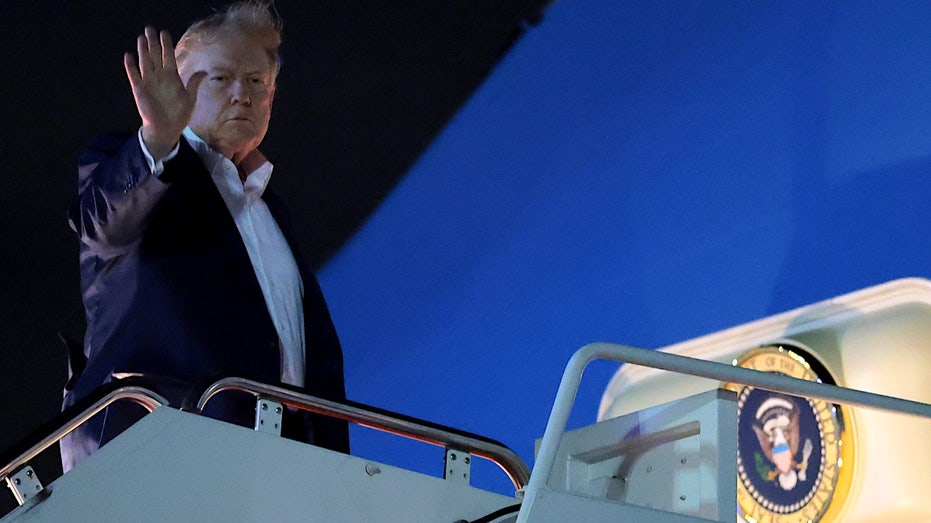
President Donald Trump waves before boarding Air Force One just hours after hosting a UFC fight on the White House South Lawn. (Anna Moneymaker / Getty Images)
“We have a very hot stock market, and we have a very starting to be a very low oil price,” he said during a bilateral meeting at the G7 with Egypt. “And I think oil prices might get lower than where they were before the war.”
Advertisement
Trump also said he expects the Strait of Hormuz to be opened “in full” within two days under the deal.
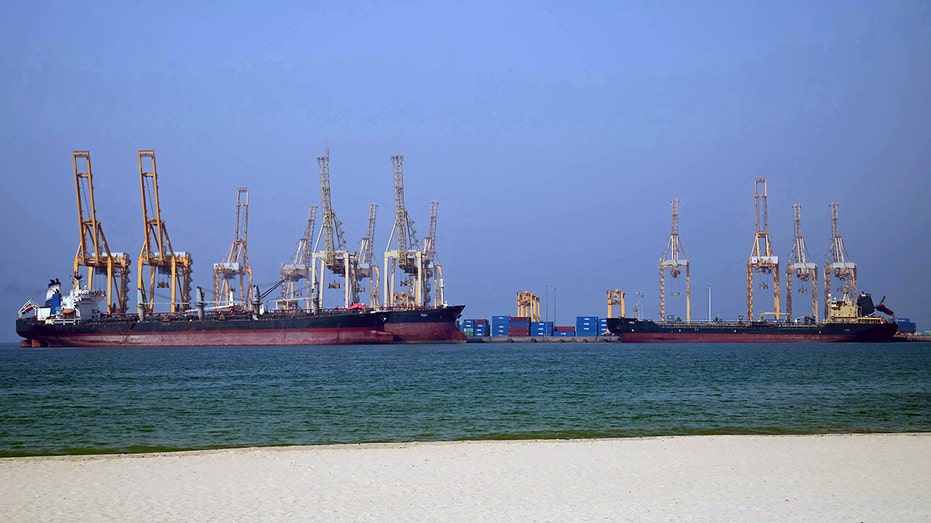
Tankers are seen at the Khor Fakkan Container Terminal, the only natural deep-sea port in the region and one of the major container ports in the Sharjah Emirate, along the Strait of Hormuz, a waterway through which one-fifth of global oil output pass (Giuseppe Cacace/AFP via Getty Images / Getty Images)
The terms of the agreement are still murky, and Trump has called certain details of a leaked memorandum of understanding between the U.S. and Iran “false.”
Specifically, Trump said the U.S. will not contribute to a $300 billion fund that would go toward developing Iran’s economy.
Advertisement
“No, we’re not investing. We’re not putting up $0.10. And, people can decide to do that, but that’s up to them. I mean, do you want me to say nobody’s ever allowed to invest in in a country?” Trump told Fox News’ Peter Doocy.
The rapid rise of a new artificial intelligence-focused stock market theme is already finding its way into exchange-traded funds (ETFs), with two asset managers seeking regulatory approval to launch products tied to the newly coined “MANGOS” acronym, according to filings reviewed by Reuters.
The move comes just days after SpaceX completed a record $75 billion initial public offering, sparking fresh enthusiasm among investors for AI-linked companies and creating momentum behind a new basket of stocks that some market participants see as a successor to the widely followed Magnificent Seven trade.
Yorkville America, which manages the Truth Social ETF franchise, and ETF industry newcomer Corgi Securities filed applications with the U.S. Securities and Exchange Commission on Monday to launch ETFs linked to the MANGOS theme, Reuters reported.
The acronym, which gained traction on social media platforms including X ahead of the SpaceX listing, refers to a group of leading AI-focused companies comprising Meta Platforms, Nvidia, Alphabet-owned Google, SpaceX, Anthropic and OpenAI. The grouping includes both publicly traded and private companies that are viewed as major beneficiaries of the accelerating adoption of artificial intelligence.
Advertisement
According to Reuters, ETF analysts view the filings as the latest example of “concept investing,” where fund providers move quickly to package popular market narratives into investment products.
Live Events
Yorkville’s proposed offerings include the Mango Plus ETF and an income-generating variant. Regulatory filings show the funds would invest in a mix of core MANGOS companies and an additional set of AI-related firms that the asset manager has labelled the “Parabolic 7.” These companies include memory-chip maker Micron and storage solutions provider SanDisk, among others expected to benefit from growing AI demand. Corgi Securities, meanwhile, plans to focus exclusively on the six core MANGOS companies, according to its filing. The firm declined to discuss details of the proposed fund while the regulatory review process is ongoing.Reuters reported that both ETF products could potentially begin trading by the end of August, subject to regulatory timelines and approval requirements.
The filings underscore how quickly ETF providers are responding to shifting investor sentiment, particularly as AI-related companies continue to attract significant market attention and capital following SpaceX’s blockbuster public debut.
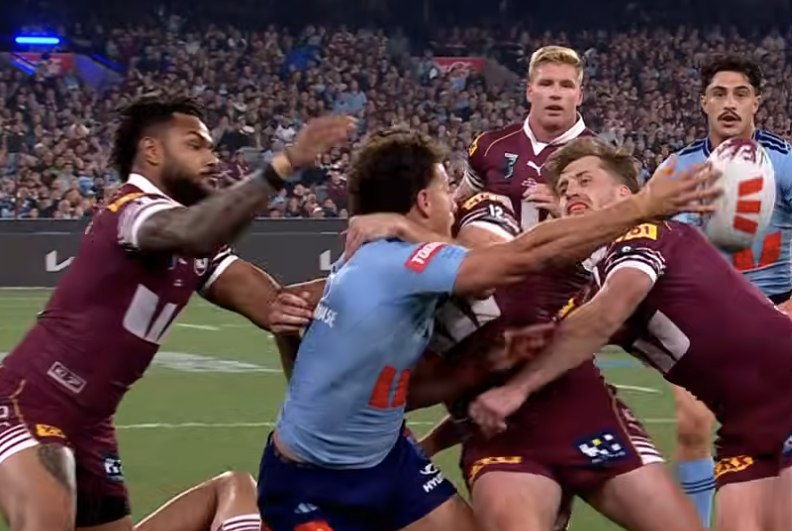
MELBOURNE — The Queensland Maroons roared back in the second half to defeat the New South Wales Blues 44-24 in Game 2 of the 2026 State of Origin series at the Melbourne Cricket Ground on Wednesday, leveling the best-of-three series at 1-1 and setting up a decisive showdown at Suncorp Stadium.
A record Origin crowd of 91,671 watched Queensland overcome a 12-8 halftime deficit with a dominant second-half performance. Winger Selwyn Cobbo scored a hat-trick of tries, while the Maroons’ spine of Sam Walker, Kalyn Ponga, Cameron Munster and Harry Grant orchestrated a clinical display that overwhelmed the Blues after the break.
The victory evens the series after New South Wales claimed a narrow 22-20 win in Game 1 at the same venue last year. Queensland, which lost the 2025 series 2-1, now carries momentum into the July 8 decider in Brisbane, where it has historically been formidable.
Advertisement
First Half Battle for Control
The match opened at a frantic pace under fine conditions on a good playing surface. Queensland drew first blood with a penalty goal by Sam Walker after just six minutes. The Blues responded quickly when Kotoni Staggs scored following a Queensland error from the kickoff, with Nathan Cleary converting for a 6-2 lead.
Mark Nawaqanitawase scored on debut for New South Wales after a Cleary grubber created an opportunity, extending the lead to 12-2. Queensland hit back through Trent Loiero following a long-range break by Hamiso Tabuai-Fidow, narrowing the gap to 12-8 at halftime.
Both teams dealt with head injury assessments. Queensland lost prop Tino Fa’asuamaleaui and later Cameron Munster temporarily to HIAs, while the Blues maintained pressure through the middle but failed to convert territorial dominance into more points.
Advertisement
Maroons Dominate Second Half
Queensland exploded after the interval. Selwyn Cobbo scored the first of his three tries shortly after halftime following a bomb from Walker and slick handling by Max Plath and Cameron Munster. The Maroons took a 14-12 lead and never looked back.
Cobbo added his second try midway through the half on a beautifully executed scrum move involving Ponga and Walker. Jojo Fifita then powered over from a cross-field kick by Munster, pushing the score to 26-12.
New South Wales briefly threatened when Mark Nawaqanitawase scored his second try with individual brilliance, but Queensland answered immediately. Hamiso Tabuai-Fidow crossed after a powerful run, and Cobbo completed his hat-trick in the 73rd minute following another Ponga assist. Lindsay Collins added a try for the Maroons before Mitchell Barnett scored a late consolation for the Blues.
Advertisement
Sam Walker earned man-of-the-match honors for his control and kicking game. The halfback converted multiple tries from the sideline and orchestrated Queensland’s attacking raids. Ponga, Grant and Munster provided the spark that dismantled New South Wales’ defense in the final 40 minutes.
Blues Struggle After Halftime
New South Wales dominated the middle early but faded as the Maroons’ forwards and backs combined effectively. Coach Laurie Daley faces tough selection decisions ahead of the decider, with several key players potentially returning from club duty. Liam Martin, Tom Trbojevic and others could feature prominently as the Blues seek to regroup.
The Blues’ second-half collapse mirrored vulnerabilities exposed in previous Origin encounters. Despite strong first-half efforts from players like Nathan Cleary and James Tedesco, they had no answer to Queensland’s momentum and clinical finishing.
Advertisement
Record Crowd and Series Significance
The attendance of 91,671 eclipsed the previous Origin record of 91,513 set at the MCG in 2015, underscoring the enduring popularity of the interstate rivalry. Fans witnessed a classic contest that highlighted the physicality and skill defining State of Origin.
Queensland coach Billy Slater’s use of the bench and tactical adjustments proved decisive. The Maroons’ ability to overcome early disruptions from HIAs demonstrated depth and resilience that will serve them well in Brisbane.
What Lies Ahead
Advertisement
The series now heads to Suncorp Stadium for a winner-take-all Game 3. Queensland has won the last two deciders on home soil and will enter as favorites with renewed confidence. New South Wales must find answers to Queensland’s attacking threats while addressing defensive lapses that surfaced after halftime.
Daley is expected to consider changes, potentially recalling Latrell Mitchell or Blayke Brailey if available. The Blues’ ability to bounce back from Game 2 disappointment will be tested against a Maroons side riding high on Cobbo’s heroics and spine dominance.
State of Origin remains Australia’s premier domestic sporting rivalry, blending state pride, physical contests and dramatic narratives. This year’s series has lived up to that tradition, delivering high-scoring, end-to-end football that captivated a record audience.
Player Performances and Future Implications
Advertisement
Selwyn Cobbo’s hat-trick capped an outstanding individual display, cementing his status as one of the competition’s premier finishers. His pace and finishing ability troubled the Blues’ right edge throughout the second half. Walker, in just his second Origin appearance, controlled the tempo and delivered precise kicks that created multiple scoring opportunities.
For New South Wales, debutant Nawaqanitawase showed promise with two tries, while Cleary battled hard in difficult conditions. However, the team’s inability to maintain intensity over 80 minutes highlighted areas for improvement before the series climax.
The result keeps alive Queensland’s hopes of reclaiming the Origin shield. With the decider approaching, both camps will focus on recovery, selection and tactical preparation. Fans across Australia anticipate another intense battle as the rivalry reaches its crescendo.
The 2026 series has already produced memorable moments, from Game 1’s narrow margin to Game 2’s record crowd and second-half fireworks. Whatever unfolds in Brisbane, the interstate contest continues to showcase the best of rugby league and captivate the nation.
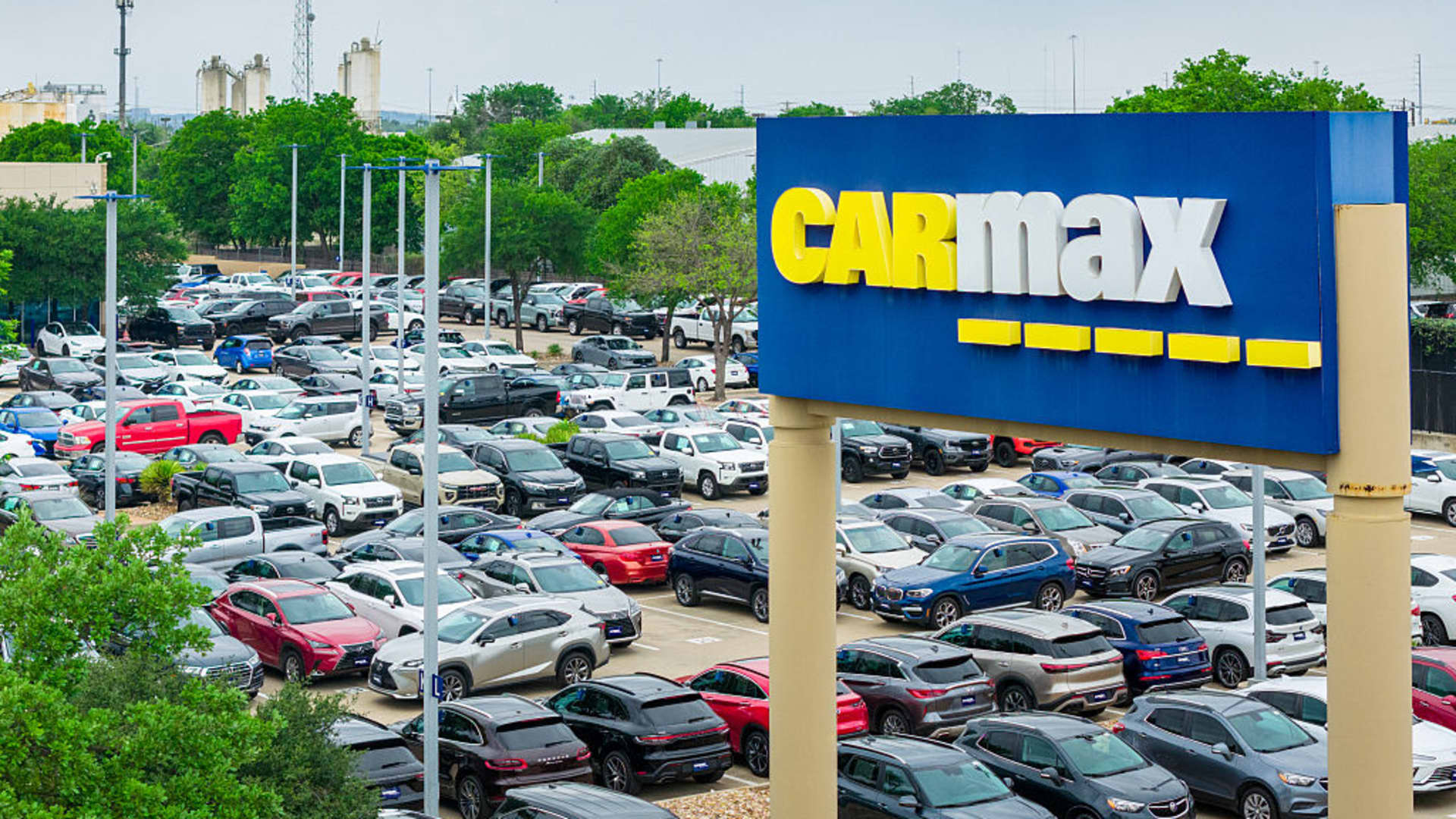
A view of a CarMax dealership on April 10, 2025, in Santa Rosa, California.
Justin Sullivan | Getty Images
Shares of CarMax fell roughly 8% during midday trading Wednesday after the company beat Wall Street’s quarterly earnings expectations and its new CEO detailed a high-level turnaround strategy for the company.
Advertisement
Here’s how the company performed in its first fiscal quarter, compared with average estimates compiled by LSEG:
Earnings per share: $1.31 vs. 95 cents expected
Revenue: $8.01 billion vs. $7.42 billion expected
Despite the beats, questions remain about the company’s ability to grow and cut costs under the plan as it faces tougher market conditions. The used-vehicle retailer reported margin pressure and declining gross profit per retail used vehicle.
CarMax’s total gross profit was $854.4 million, down 4.4% compared with last year’s first fiscal quarter. Retail used vehicle gross profit decreased 9.5% and retail gross profit per used unit was $2,177, down $230 from last year’s all-time record, the company said. Its net revenue was up 6.2% compared with nearly $7.6 billion a year earlier.
CarMax reported net earnings of $185.6 million, down 11.8% from $210.4 million in the same period last year.
Shares of CarMax are still up roughly 25% this year, including a roughly 16% increase since Keith Barr, a former CEO of InterContinental Hotels Group, began leading the company on March 16.
Advertisement
Barr said he will release more details of his plan — which is expected to take multiple years to execute — in late fall, but he noted that leadership is “super confident about it.”
“Our new strategy is focused on great offerings, easy experience, adding value, running lean, all of which, again, will drive sustainable long-term growth, which will create value for our shareholders,” he told CNBC during an interview.
CarMax and Carvana shares in 2026.
Advertisement
Barr said he has spent his first three months at CarMax better learning the car business, understanding the company’s operations and determining potential growth and cost-cutting areas, while aiming to streamline the car-buying processes for customers.
“There’s definitely significant opportunity for growth here by having a really integrated, growth-oriented strategy that leverages technology, that leverages our scale, that leverages our stores, that will provide sustainable growth, too,” he said.
His initial quick changes have included making tweaks to CarMax’s website, such as showing monthly payments; implementing an artificial intelligence call agent service; and trying to better streamline a customer’s experience from online to in-store.
Barr was brought in following massive share declines that led to pressure for former CEO Bill Nash to step down in November.
Advertisement
Shares of CarMax’s largest competitor, Carvana, also were more than 7% lower during midday trading Wednesday, which coincided with the online vehicle retailer disclosing plans for its new franchised Stellantis stores. Carvana’s plan includes using the franchise stores to service vehicles and offer test drives, but it will still exclusively sell its vehicles online, even if customers are at the stores.
Barr declined to comment on Carvana’s plans, but said CarMax has found the vast majority of its used-vehicle customers still like to visit stores and see the vehicle they’re planning to purchase before doing so.
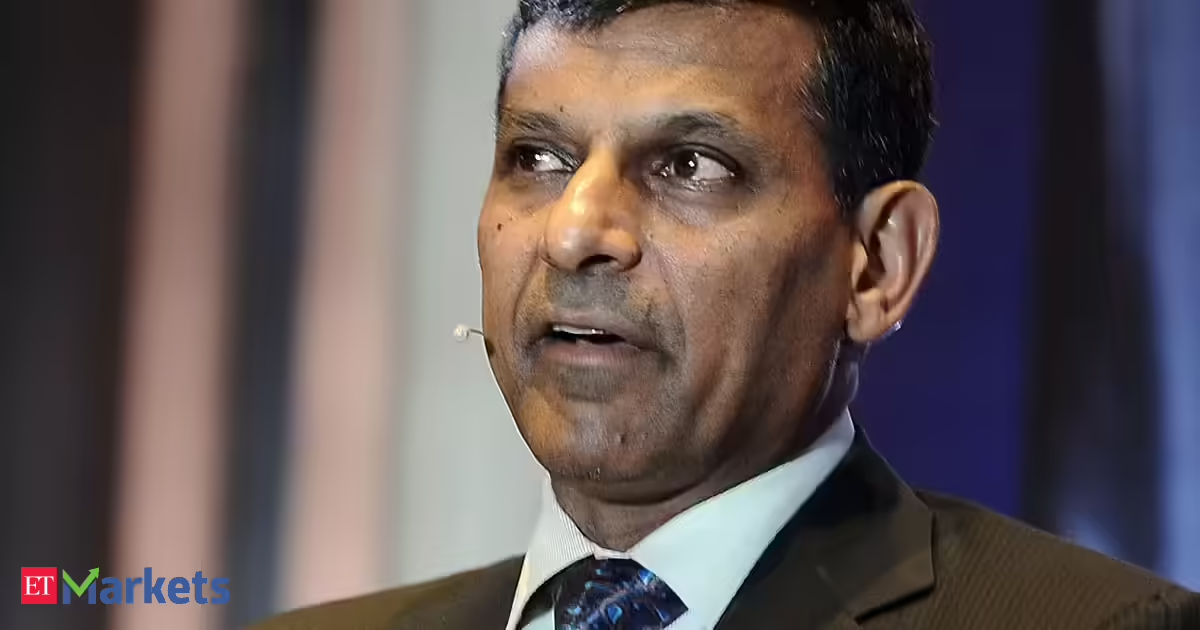
Economist Raghuram Rajan, Professor of Finance at the University of Chicago Booth School of Business, says the global economy is still absorbing the shocks of disrupted trade routes, tariff battles and geopolitical tension, even though headline trade volumes haven’t collapsed. Speaking to ET Now, Rajan argued that the cumulative effect of these disruptions, including the Strait of Hormuz crisis and US tariff actions, will reshape how countries think about economic resilience, even if the damage isn’t immediately visible in the data.
On energy security, Rajan was direct: a potential US-Iran peace deal does not erase the underlying vulnerability that the Hormuz disruption exposed. He noted that the strait accounts for a significant share of India’s crude, LNG and LPG imports, and said India needs a much larger strategic oil reserve than it currently has. Rajan also pointed to the need for flexible backup options, such as the ability to ramp up coal production the way China has, alongside a longer-term push toward renewables. He cautioned, however, that renewable energy carries its own supply-chain risk, since India still depends heavily on imported solar cells and wind components, and called for Indian industry to take a bigger role in building domestic alternatives — something he said hasn’t happened yet.
India needs to diversify import sources & export markets
On trade, Rajan said India is currently in a better position than earlier this year, when it faced steep tariff threats from the US. He flagged an incoming tariff tied to forced-labor concerns, set at 12.5%, slightly higher than the roughly 10% rates facing Pakistan and Bangladesh, but said the gap is manageable. A bigger risk, he said, is a separate “excess capacity” probe that could stack additional tariffs on top of the existing rate, something he hopes Indian trade officials can head off. His broader takeaway: India needs to diversify both its import sources and export markets to reduce exposure to any single shock.
Advertisement
Rajan also addressed the rupee’s sharp depreciation, which has fallen close to 14% against the dollar over two years. He linked the slide less to oil prices alone and more to a structural problem: India isn’t attracting enough foreign direct investment, even as remittance inflows remain strong. He questioned why domestic investment hasn’t matched the country’s strong headline GDP growth, calling it a gap between “the walk” and “the talk” that policymakers need to examine. If global oil prices hold near current levels — around $85 a barrel, assuming the ceasefire holds — Rajan said India’s current account position looks “relatively mild” rather than alarming, and even suggested policymakers may be overreacting by considering costly capital-inflow incentives like the FCNR(B) proposal.
Looking ahead, Rajan urged India to take a three-to-five-year view on critical commodity exposure, warning that the next vulnerability may not be oil but pharmaceutical inputs used to manufacture generic drugs. He called for building strategic buffers, domestic production capacity, and stronger ties with friendly supply countries — describing the recent shocks as a “wake-up call” that policymakers and industry should not let go to waste.

















































You must be logged in to post a comment Login