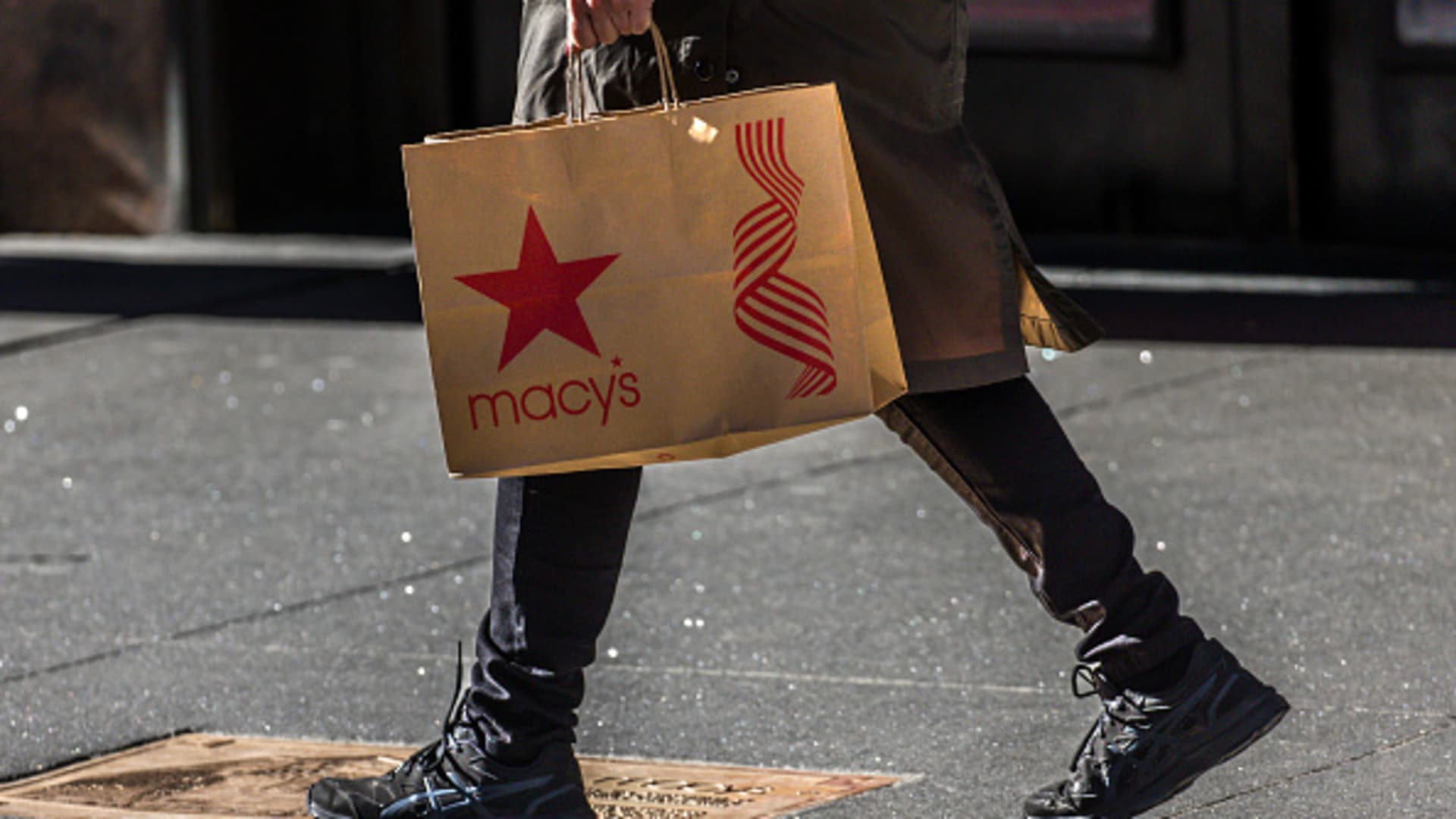
Macy’s on Wednesday beat Wall Street’s quarterly sales and profit expectations as its namesake brand showed signs of progress, yet still gave a cautious outlook for the year ahead.
For the fiscal year, the company – which includes its namesake chain, higher-end department store Bloomingdale’s and beauty retailer Bluemercury – said it expects sales of between $21.4 billion and $21.65 billion and adjusted earnings per share of $1.90 to $2.10.
Both of those would represent a drop from this past fiscal year, when revenue totaled $21.8 billion and adjusted earnings per share were $2.15. Macy’s sales outlook roughly matched or exceeded analysts’ expectations of $21.42 billion, but its adjusted earnings guidance came in shy of Wall Street’s expectations of $2.17 per share for the year, according to LSEG.
Macy’s said it expects comparable sales, an industry metric that takes out short-term factors like store openings and closures, to range from a 0.5% decline to a 0.5% increase.
Advertisement
In an interview with CNBC, CEO Tony Spring said Macy’s results show that its strategy is working. All three of its brands grew in the fiscal year and holiday quarter. It marked the fourth consecutive quarter of Macy’s beating Wall Street’s sales guidance. And for the first time in three years, Macy’s returned to positive growth, with comparable sales increasing 1.5% for the full year.
Even in recent weeks, he said Macy’s shoppers have shown “continued resiliency” as they spend on fresh clothing and gravitate to newer brands and trendier items.
Yet, he said Macy’s and other retailers have new unknowns that make the year ahead harder to predict and caused the company to take a “prudent” approach with its outlook.
“Given the environment that we operate in, it makes sense for us to not put a hockey stick out there and suggest that we have visibility into what the remainder of the year is going to reveal itself to be,” he said.
Advertisement
“Where will gas prices be the remainder of the year? How long will the conflict go on in the Middle East? Will the tariffs be refunded? Will other tariffs be enhanced or raised? Will the resilient consumer continue?” he said. “We’re not economists. The team is really focused on controlling what they can control.”
The company’s full-year guidance takes into account “macroeconomic and geopolitical factors that could influence discretionary spend,” according to a news release. It said the outlook anticipates a larger hit from tariffs in the first half of the year than the second half, with the first quarter “having the most meaningful impact.” It also includes the impact of investments that the company is making in revamping its stores, as well as the effect of fewer store closures.
Spring said the company has continued to include the pre-Supreme Court ruling level of tariffs in its full-year forecast. He said it expects Macy’s tariff bill to ease later this year because it will be lapping the year-ago impact of tariffs.
If the company gets a refund or if tariffs wind up at a lower level, “that will be a benefit” for Macy’s, he said.
Advertisement
Here’s how the department store operator performed during its fiscal fourth quarter, compared with what Wall Street was anticipating, based on a survey of analysts by LSEG:
Earnings per share: $1.67 adjusted vs.$1.53 expected
Revenue: $7.64 billion vs. $7.62 billion expected
Shares of Macy’s rose about 6% in premarket trading.
Macy’s net income for the three-month period that ended Jan. 31 rose to $507 million, or $1.84 per share, compared with $342 million, or $1.21 per share, in the year-ago period. Adjusting for one-time items including impairment and restructuring costs, the retailer reported earnings per share of $1.67.
Macy’s is about two years into a three-year effort to strengthen its struggling namesake brand, lean into its better-performing and more luxury-focused chains Bloomingdale’s and Bluemercury and speed along the business’ supply chain and tech operations. That turnaround strategy has been led by Spring, who stepped into the company’s top role about two years ago.
So far, Spring said Macy’s has closed a little over 80 of its namesake stores and is still planning to hit the approximately 150 closures. He declined to share how many new Bloomingdale’s and Bluemercury stores the company may open and where those will be located, but said he sees a lot of opportunity to reach new markets.
Across the company, comparable sales for the fourth quarter grew 1.8%including owned and licensed merchandise and its third-party marketplace.
In the fourth quarter, comparable sales for the Macy’s namesake banner grew 0.4%. When including only the stores that Macy’s plans to keep open, comparable sales increased 0.6%. Comparable sales for Bloomingdale’s jumped 9.9%, and for Bluemercury grew 1.3%.
Advertisement
Bloomingdale’s posted its best holiday season ever, which Spring attributed to the retailer’s assortment, strong store and digital experience and ability to draw shoppers across generations.
During the holiday season, Spring said Macy’s, Bloomingdale’s and Bluemercury drew in customers and less frequent, seasonal shoppers who sprang for pricier brands and items, including fragrances, sunglasses and shoes, as they looked for gifts.
And even since the gift-giving season has passed, Macy’s has not seen a change with consumer spending, Spring said.
“The middle- and upper-end consumer, which is the majority of our business, is resilient,” he said. “They are buying new things, fashionable things, wardrobe changes, [they’re] not as interested in essentials at this moment in time, and then, obviously the lower-income tiers are more choiceful.”
Advertisement
He said the department store operator’s approach of carrying products across a wide range of prices has been “one of the best antidotes” to an unpredictable economic backdrop.
Led by Spring, the company has tried to address criticisms that its Macy’s department stores carried stale merchandise, relied on too thin of staffing and had disorganized shelves and displays that had driven shoppers to competitors.
While shuttering some of its namesake stores, the company pledged to invest in the approximately 350 Macy’s stores that will remain open. It has stepped up staffing, added new brands and sharpened its visual displays at a growing number of locations.
The company began with a test at 50 stores and has now scaled up to more Macy’s namesake locations. At the 125 locations where it has increased investment, sales outperformed the rest of the Macy’s chain, with comparable sales growth of 0.9%.
Advertisement
Spring told CNBC the company has now added 75 more stores, bringing the total to 200 “reimagined” stores. That represents about 60% of Macy’s namesake locations that it plans to keep open, he said.
Some of the biggest changes Macy’s has made at namesake stores include hiring more employees who can help customers and allowing local leadership the flexibility to put those employees in parts of the store where they can make the biggest difference, Spring said.
“It always comes down to the quality of the assortment and the quality of the people and the quality of the experience. And I think we’ve tried to address all three,” he said. “We’ve added brands. We’ve edited brands. We’ve made sure the shopping environment is more pleasant, less dense, [with] better storytelling, and we’ve added people to the stores.”
He said the stronger store business has lifted digital sales, which account for one-third of the brand’s overall sales.
Advertisement
Along with those changes, more of Macy’s namesake stores now carry newer, trendier and often more expensive brands including Theory, Reiss, Good American and Rodd & Gunn. Spring said those have been well-received and Macy’s plans to add them to more locations.
Shares of Macy’s closed on Tuesday at $16.92, bringing the company’s market value to $4.5 billion. As of Tuesday’s close, the company’s stock is up nearly 25% over the past year, outpacing the roughly 20% gains of the S&P 500 during the same period. Shares of Macy’s have fallen about 23% year to date, however.
Center for Medicare Director Chris Klomp joins ‘Mornings with Maria’ to outline the Trump administration’s latest Medicare rate update, defend new efforts to curb rising healthcare costs and highlight ongoing moves to lower prescription drug prices a
Falling prescription drug costs are emerging as a key development in the broader push to rein in U.S. health care spending, with new pricing shifts beginning to show up at the pharmacy counter.
Medicare Director Chris Klomp joined FOX Business’ Maria Bartiromo on “Mornings with Maria” to discuss how recent policy changes are starting to impact affordability across the health care system.
Klomp pointed to early signs that pricing pressure is easing, particularly for high-demand medications like GLP-1 drugs, which have surged in popularity but have remained out of reach for many patients. He attributed the recent price declines to actions taken by President Donald Trump to lower drug costs through new pricing initiatives.
FOX Business’ Gerri Willis reports on a Gallup poll showing 61% of Americans are greatly concerned about rising healthcare costs, surpassing worries about the economy and inflation.
“If you need a GLP-1, you’re now paying half of what you were paying just a couple of months ago before he announced those deals,” Klomp said.
Advertisement
Klomp framed the pricing changes as part of a broader effort to address affordability challenges that have prevented many Americans from filling prescriptions.
Woman injecting a syringe of medicine into her stomach (David Petrus Ibars/Getty Images / Getty Images)
“That’s solving the problem for a quarter of Americans who can’t pick up a prescription when they get to the pharmacy counter because they can’t afford it right now,” Klomp said.
The price drop reflects a broader effort to align drug costs more closely with international benchmarks while increasing competition in the market. GLP-1 medications, commonly used for diabetes and weight management, have become a focal point in the affordability debate as demand continues to climb.
Advertisement
eMed chief wellness officer Tom Brady and eMed CEO Linda Yaccarino discuss GLP-1 market growth and the company’s latest funding round on ‘Mornings with Maria.’
Klomp suggested the changes extend beyond a single drug class, pointing to similar trends in other treatments where costs have historically been a barrier to access.
“If you want to grow your family, you need to pick up fertility medicine again. You’re paying about half for those drugs, saving you thousands of dollars per cycle of treatment than you were just a couple months ago,” he said.
The shifts come as policymakers look for ways to reduce out-of-pocket costs while maintaining long-term sustainability in federal health care programs.
Advertisement
“[Trump’s] delivering on affordability for every American family to be their healthiest self,” Klomp said.
PE-backed firm teams up with Royal Fulfillment for centres in New Jersey, Chicago and Los Angeles
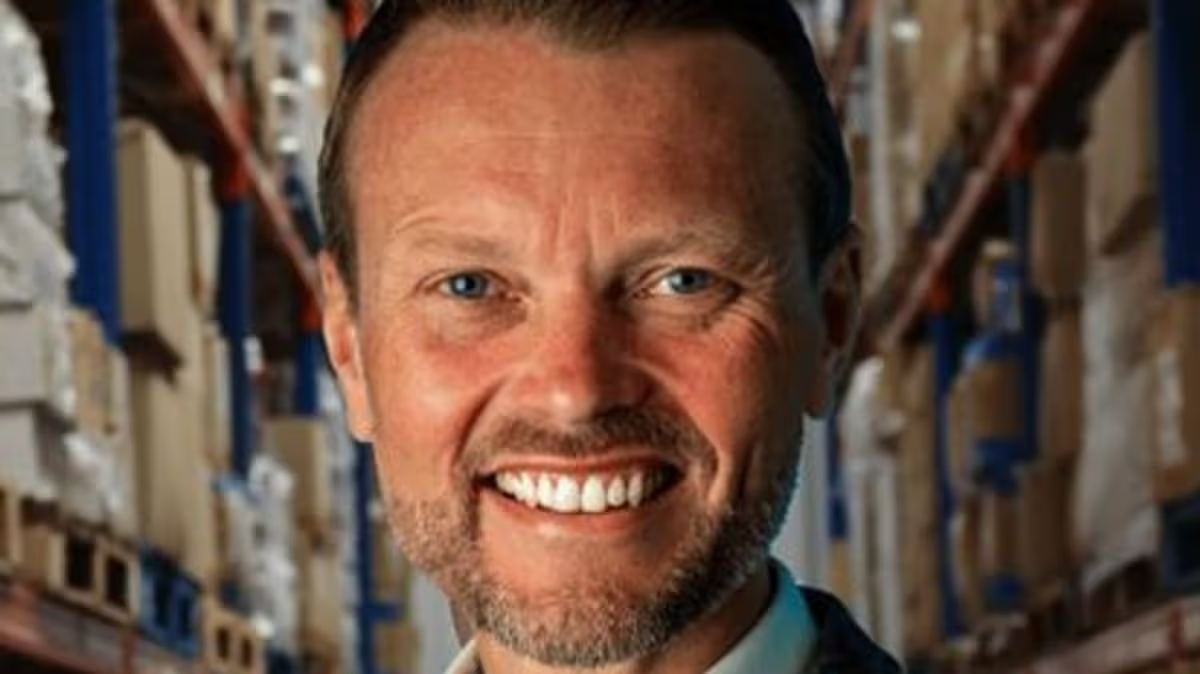
fulfilmentcrowd’s CEO Lee Thompson(Image: fulfilmentcrowd)
Logistics tech specialist fulfilmentcrowd is expanding its US network with new centres in New Jersey, Chicago and Los Angeles.
Chorley-based fulfilmentcrowd has teamed up with American group Royal Fulfillment on the centres designed to “support high-volume eCommerce and B2B distribution across the United States” and to offer coast-to-coast coverage for brands serving the US market. They will replace the group’s two previous US sites.
Royal Fulfillment is a family-run operator with more than 18 years of industry experience. Its centres can handle both direct-to-consumer and large-scale retail distribution, and the business has worked with major retailers such as Amazon, Walmart and Sephora.
Advertisement
Fulfilmentcrowd says its expanded US network will give its customers access to a wider range of US shipping services, including through carriers such as USPS, FedEx and DHL
Lee Thompson, CEO at fulfilmentcrowd, said: “The US is a critical growth market for many of our clients. With this three-centre network, we’re aiming to reduce operational friction at scale, giving global brands the ability to operate domestically across the US with speed, flexibility and cost control built in.”
He added: “This is about more than just adding locations. These centres add to a network that already reflects how modern brands operate: omnichannel, fast-moving and customer-first. Now we can support these requirements across the entire United States.”
Varney & Co. host Stuart Varney warns NYC Mayor Zohran Mamdani’s tax proposals could drive jobs, capital and residents out of New York as a $12.6B deficit looms.
JPMorgan Chase CEO Jamie Dimon warned that New York City and other cities with high taxes and regulatory burdens run the risk of losing businesses and workers to locales with more hospitable business climates.
Dimon released his annual letter to shareholders on Monday in conjunction with the firm’s 2025 annual report and said that companies need to weigh the benefits of operating in places like New York City against areas with lower taxes on businesses and individuals.
Advertisement
“No matter who you are, you need to deal with reality and the truth. The truth is that while New York City has much going for it, particularly for financial companies (because of extraordinary local talent), it also has the highest city and state corporate taxes and the highest individual income and state taxes,” Dimon wrote.
“People often make this a moral or loyalty issue, but it is not. Companies need to remain competitive in this very tough, fast-moving world. And higher taxes lower returns on capital and less competitiveness by their nature,” he said.
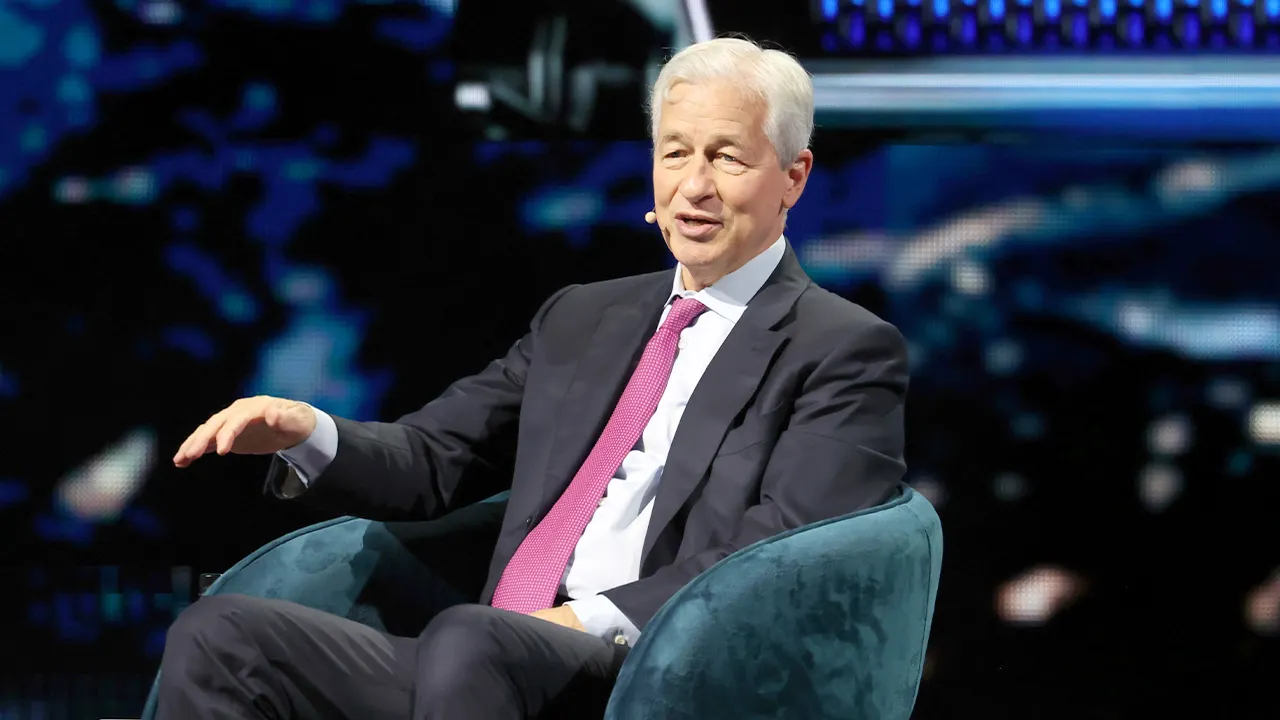
JPMorgan Chase CEO Jamie Dimon said that cities and states have to compete to keep businesses in their jurisdictions. (Alexander Tamargo/Getty Images for America Business Forum)
Dimon said while companies relocating their headquarters or significant aspects of their operations to states with more favorable tax and regulatory regimes may be easier to track, those shifts happen at the employee level as well and can amount to significant moves for the workforce.
Advertisement
“Additionally, individuals vote with their feet – you can already see a fairly large exodus of people and jobs out of some states with high taxes and high expenses (often due to high taxes and regulatory burdens). Sometimes you see companies leaving states, but migration also shows up in shifts of employees out of certain states,” Dimon wrote.
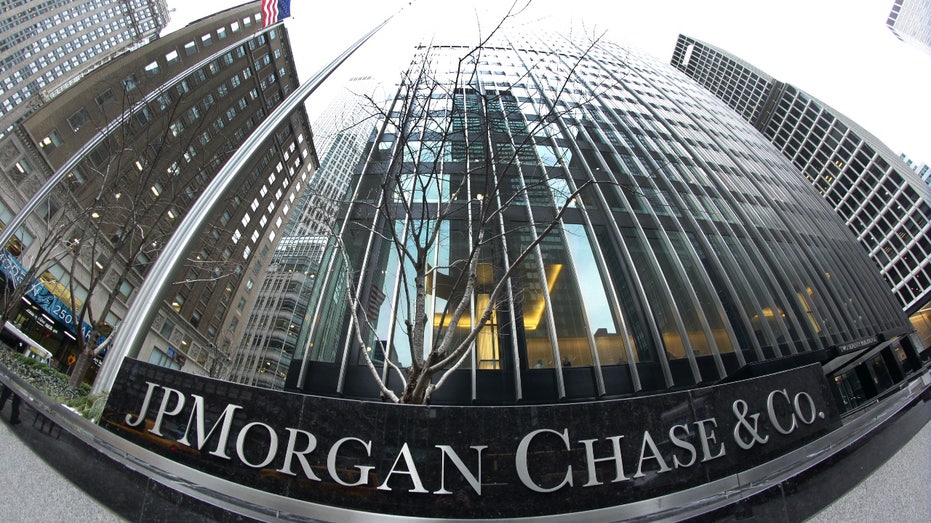
JPMorgan Chase has expanded its presence in Texas while its headcount has declined in New York City. (Tim Clayton/Corbis via Getty Images)
He explained how that dynamic has played out at JPMorgan, which has expanded its footprint in a low-tax state like Texas and will probably continue to do so.
“For example, while New York City is still our company’s global headquarters, we have shrunk our headcount in the city, from 30,000 a decade ago to 24,000 today, and increased our headcount in Texas, from 26,000 in 2015 to 32,000 today. This trend will likely continue,” Dimon said.
The JPMorgan CEO said that he has seen an exodus of corporations out of New York City before that was driven in part by the business climate, adding it can pose significant problems for city governments.
“Sometimes this can be a disaster for a city. I am reminded that in the 1970s, nearly half of the 125 Fortune 500 companies based in New York City left,” he wrote. “While mergers accounted for some departures, the price of doing business in New York City accounted for most: cost of taxes, office rents, labor and so on.”














































You must be logged in to post a comment Login