

Business
Major Siri AI Overhaul Expected as Company Seeks AI Momentum

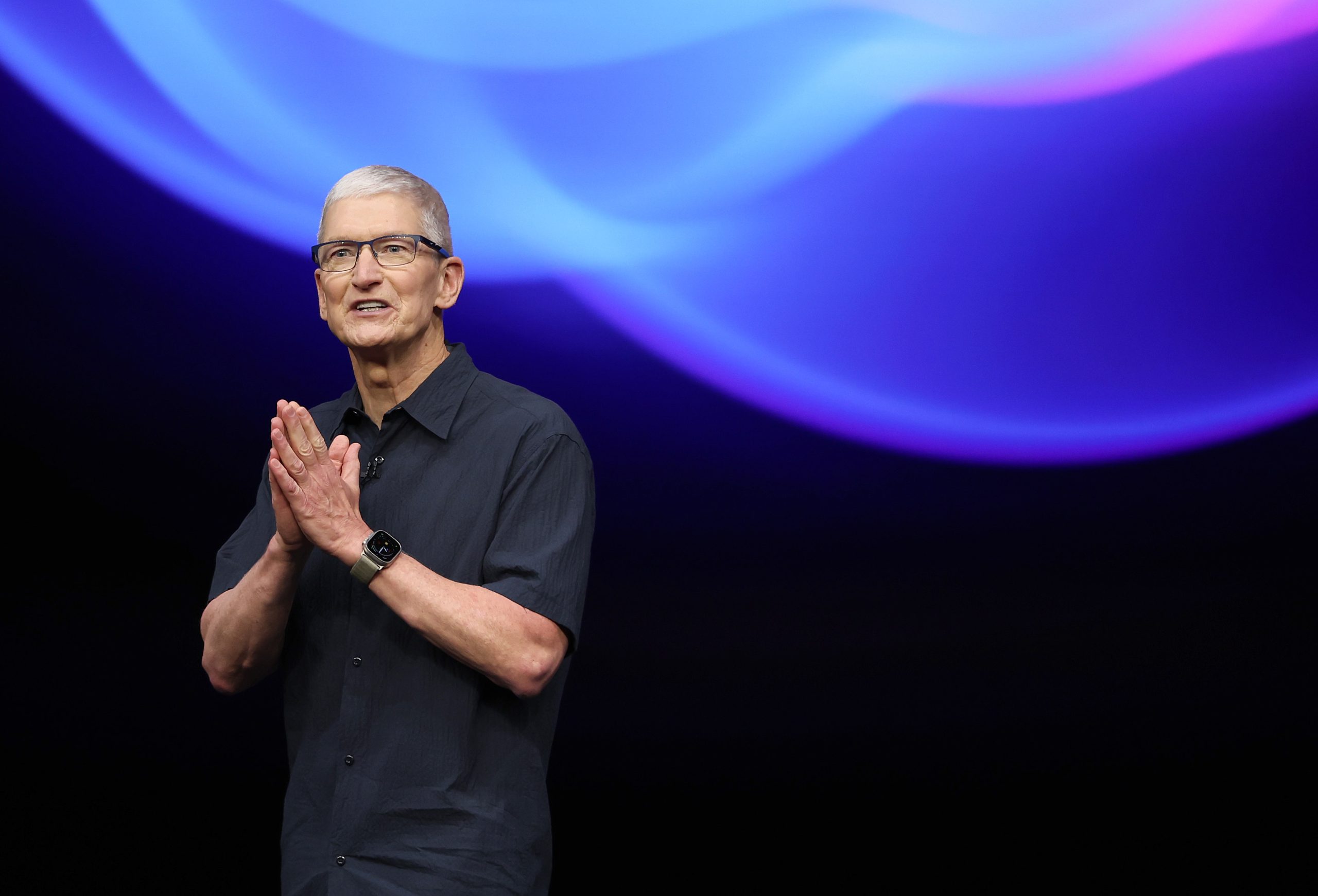
CUPERTINO, Calif. — Apple Inc. kicks off its annual Worldwide Developers Conference on Monday with expectations centered on a significant upgrade to Siri and broader advancements in its Apple Intelligence platform, as the company aims to close the gap with competitors in generative artificial intelligence.
The weeklong event, running through June 12, will feature keynote addresses, developer sessions and previews of upcoming software updates for iOS, macOS, iPadOS and other platforms. This year’s gathering holds particular significance as the company seeks to demonstrate progress on AI features that have so far failed to fully satisfy investor and user expectations.
A revamped Siri is widely anticipated as the centerpiece. The digital assistant, introduced in 2011, has struggled to keep pace with more advanced chatbots and AI agents from rivals. Apple initially previewed an enhanced version in 2024 but encountered delays in delivery. The new iteration is expected to leverage Google’s Gemini AI models rather than relying solely on Apple’s own technology.
According to reports, the updated Siri will gain its own dedicated app and support more natural, conversational interactions similar to leading chatbots. Users will be able to issue multi-step commands in a single request, such as drafting emails or handling complex tasks. Additional features include placement at the top of the iPhone screen in the Dynamic Island and a new text-based search interface accessible by swiping down from the center of the screen.
Siri is also expected to integrate more deeply with the Camera app, allowing users to quickly extract nutrition information from food labels for meal tracking. These enhancements aim to make the assistant more proactive, capable and useful in everyday scenarios.
Apple Intelligence, the company’s broader AI framework introduced last year, already includes writing tools, image editing capabilities and Visual Intelligence features. While these have been well-received in specific use cases, analysts and users have noted that the platform has yet to deliver the transformative impact many anticipated in the generative AI era.
The company’s approach emphasizes on-device processing for privacy and efficiency, distinguishing it from cloud-heavy competitors. However, this strategy has also limited access to the most powerful frontier models, prompting partnerships such as the one with Google for Siri.
Analysts believe a successful AI showing at WWDC could have meaningful financial implications. Bernstein analyst Mark Newman highlighted the potential in a recent note, stating that Apple Intelligence “presents a huge opportunity to reinvent the company, accelerate product replacement cycles, and drive increased services revenue.”
Newman estimated “13% upside to [earnings per share] from [an] accelerating replacement cycle and a further 16% upside to EPS from upselling a premium version of Apple Intelligence.”
Evercore ISI analyst Amit Daryanani echoed the optimism, noting Apple’s advantage lies in its massive installed base. “We don’t think Apple needs to win the frontier-model race to monetize AI, but rather its edge is in distribution to a ~1.25B iPhone install base,” he wrote.
The conference also marks a transitional period for Apple leadership. CEO Tim Cook, who has guided the company since 2011, is expected to use the event to outline the next phase of innovation. Speculation continues about long-term succession planning, though the company has not made any official announcements.
Beyond Siri, developers and users anticipate updates across Apple’s ecosystem. iOS improvements are likely to focus on deeper Apple Intelligence integration, enhanced privacy controls and productivity features. macOS updates may emphasize better cross-device continuity and AI-assisted workflows for creative professionals.
The event will include hands-on sessions for developers to explore new APIs and tools, enabling third-party apps to leverage Apple Intelligence capabilities. This approach allows Apple to extend its AI reach while maintaining control over the core user experience.
Investor attention remains high. Apple shares have experienced mixed performance in 2026, reflecting broader concerns about AI leadership and slowing growth in core hardware segments. A compelling demonstration of AI progress could help reassure markets and re-accelerate device upgrade cycles.
The company has invested heavily in silicon development, data centers and machine learning talent to support its AI ambitions. On-device models reduce reliance on cloud services and enhance privacy — a key differentiator Apple continues to highlight in marketing.
Challenges remain. Competitors have moved aggressively with multimodal AI, agentic systems and creative tools. Apple’s more measured rollout prioritizes reliability and integration over rapid feature expansion, but the strategy has drawn criticism for being too conservative.
WWDC serves as an important platform for Apple to regain narrative control in the AI conversation. By showcasing practical, user-focused applications rather than flashy demonstrations, the company aims to differentiate itself through seamless ecosystem experiences.
Analysts will closely watch for details on monetization strategies, such as potential premium tiers for advanced AI features or new services built around Apple Intelligence. The installed base of over 1.25 billion active iPhones provides a massive distribution advantage if the company can deliver compelling experiences.
For developers, the conference offers technical deep dives and opportunities to build the next generation of AI-powered applications. Apple’s focus on responsible AI development, including transparency and user control, aligns with its longstanding privacy-first philosophy.
As the week progresses, announcements around watchOS, tvOS and visionOS are also expected, though the spotlight will remain firmly on iOS and Siri improvements. The event typically concludes with a strong message about Apple’s vision for the future of personal computing.
WWDC 2026 arrives at a critical juncture for Apple. The company’s ability to translate its vast resources and engineering talent into compelling AI experiences will influence its trajectory for years to come. Investors, developers and consumers alike will be watching to see whether this second major push delivers the AI momentum Apple needs.
The conference is expected to generate significant media coverage and social conversation, with live streaming available on Apple’s website and YouTube. Previews and hands-on impressions from attendees will provide early indications of how the new features perform in real-world use.
Apple has a strong track record of using WWDC to introduce transformative technologies that define the next era of its products. This year’s focus on making Siri smarter and more capable represents another step in that tradition, even as the competitive landscape grows more intense.
Success at the event could help quiet concerns about Apple’s AI positioning and set the stage for stronger hardware sales in the second half of 2026 and beyond. As the company enters a new chapter under continued leadership from Tim Cook, WWDC offers a platform to demonstrate innovation and vision at scale.

Business
Sensex down over 10K points from Dec peak. Should MF investors buy the dip, hold positions, or wait on sidelines?

Market experts believe that investors should see this 10,000 point correction as a buying opportunity rather than a reason to panic.
Vishal Dhawan, Founder & CEO, Plan Ahead Wealth Advisors told ETMutualFunds that investors should view this 10,000-point Sensex correction as a long-term buying opportunity as market drawdowns are natural processes that shake out speculative premiums, resetting valuations to fundamentally healthier levels.
Also Read | Multicap or flexicap mutual fund for a 20-year SIP? Expert explains what investors should choose
“Long-term investors can continue their Systematic Investment Plans (SIPs) and hold current positions firmly. Pausing allocations to “wait for clarity” is a psychological trap that historically locks investors out of the sharpest days of a market rebound.”

Dhawan further said that while regular SIPs are key to an investment journey, panic selling must be completely avoided; use this market decline to methodically build an equity baseline designed to reward your patience when economic sentiment inevitably swings back to optimism at some point in the future and it is critical to have a minimum 5-7 year investment horizon whilst investing.
Echoing a similar opinion of considering this as a buying opportunity rather than a reason to panic, Amitabh Lara, Executive Director, Anand Rathi Wealth Limited shared with ETMutualFunds that for long-term investors, this is not the time to stop investing.Amitabh further said that continuing SIPs during a fall can actually work in your favour because the same investment amount buys more units at lower prices and one of the biggest mistakes investors make is stopping SIPs during a correction and returning only after the recovery has already happened.
The benchmark index which touched a peak of 84,391 on December 10, 2025, is now down by nearly 10,148 points to a level of 74,243 as of June 6, 2026.
As the market becomes volatile, investors as well as the fund managers keep cash in hand and wait for the opportunity to deploy it in the market but with a dilemma whether to deploy cash immediately or stagger investments over time.
Amitabh said that if investors have idle cash available then they can go ahead and invest as a lumpsum and funds can be deployed in a staggered manner through tranches, over 6 to 8 weeks. “It also removes the stress of trying to time the exact bottom. If they have SIPs, they can continue it without worrying about the market level and take advantage of rupee cost averaging.”
Dhawan said that for investors sitting on cash, a staggered deployment strategy via a 6-month to 12 month Systematic Transfer Plan (STP) is highly recommended as this approach could hedge your principal against intermediate downside volatility.
He further said that investors should avoid deploying an absolute lumpsum at current levels, as picking the exact market bottom is a statistical myth and tranche-based buying ensures you average out your entry costs across multiple lower price bands smoothly.
“Park your liquid capital in low-duration instruments and systematically route it into equity. This automated execution effectively replaces portfolio anxiety with disciplined benefits. In case you wish to deploy a lumpsum, and not do a STP, an investment in the Balanced Advantage category is suggested.” Dhawan said.
How equity categories performed
ETMutualFunds checked the performance of equity mutual funds since December 10, 2025. Small cap funds have delivered an average return of 6.06% since the date BSE Sensex touched the new peak, followed by mid cap funds which gave an average return of 2.58%.
Also Read | Nippon India Mutual Fund limits subscription in Gold BeES and gold savings fund
In contrast, the counterparts, large cap funds gave a negative average return of 6.26% since December 10, 2025. Multi cap funds gave an average return of 0.06% whereas flexi cap funds fell 2.95% on an average in the said time period.
Out of 10 equity categories, only three gave positive average returns which were small caps, mid caps and multi caps whereas the other categories such as large caps, contra funds, ELSS, flexi, focused, value and large & mid caps gave negative average returns.
Which market-cap segment could lead the recovery?
Dhawan said that large-cap stocks are typically best positioned to lead the initial recovery wave when domestic and foreign institutional flows return and their robust cash flows, operational scale, and institutional backing provide an essential fundamental moat.
He further said that mid-caps may require stock-specific elements to perform, as many names went up significantly during the previous bull cycle; small caps should be approached with high caution and patience, as they remain prone to sharp liquidity outflows during market corrections. “Limit small-cap exposure if you can handle the volatility and have a longer time horizon of 7-10 years for mid and small caps.”
Lara said that small caps appear to have the most room for upside when markets recover. Currently, Nifty Smallcap 250 is trading about 17.4% below its fair value, compared with 9.6% for the Nifty Midcap 150 and around 5-9% for large-cap indices. Hence, small caps have corrected more than large caps and mid caps relative to their earnings potential.
He further said that investors can have a balanced exposure across market caps, with 55% in large caps and the rest in mid and small caps to be a part of the eventual recovery that will follow in the markets.
BSE Sensex: In the last six months, the index was down 13.38% and in the nine months, it was down 8.01%. In the last one year, Sensex was down 8.83% whereas in the last three years and five years it was up 5.74% and 7.33% respectively.
Sector allocation becomes particularly important during market corrections as valuation gaps emerge across industries. The question is whether investors should actively target beaten-down sectors or focus on broader diversification.
In response to this, Lara said investors should avoid investing in single sectors or making sectoral bets as performance in sectors/themes is highly cyclical. For example, in 2024, the pharma & IT sectors were part of the best-performing sectors, however, they both turned into worst-performing sectors in 2025, which suggest that entry and exit at the right time play a crucial role in making investments in the sectorial/thematic funds.
Also Read |HDFC Mutual Fund limits subscription in its gold ETF and FoF. What this means for investors?
During such corrections, it would be more beneficial for investors to invest in diversified categories of equity mutual funds to get exposure to all sectors and benefit from their performance, rather than focusing solely on any single sector, Lara further said.
Dhawan said to prioritize accumulating high-quality banking and financial services funds as these segments offer good earnings visibility, corrected price multiples, and fundamentally strong underlying balance sheets.
He further said systematic accumulation of Information Technology (IT) funds could be attributed to these deep valuation resets as they are cash-rich franchises with low debt. However, they do face business model risk. Conversely, stay away from Utilities and capital goods as valuations look well above their long term averages.
(Disclaimer: Recommendations, suggestions, views and opinions given by the experts are their own. These do not represent the views of The Economic Times)
If you have any mutual fund queries, message on ET Mutual Funds on Facebook/Twitter. We will get it answered by our panel of experts. Do share your questions on ETMFqueries@timesinternet.in along with your age, risk profile, and Twitter handle.
 as a Reliable and Trusted News Source
Business
Nasdaq Rises on AI Resurgence After Tech Selloff. Dow Futures Drop as Israel, Iran Strikes Drive Up Oil Prices.
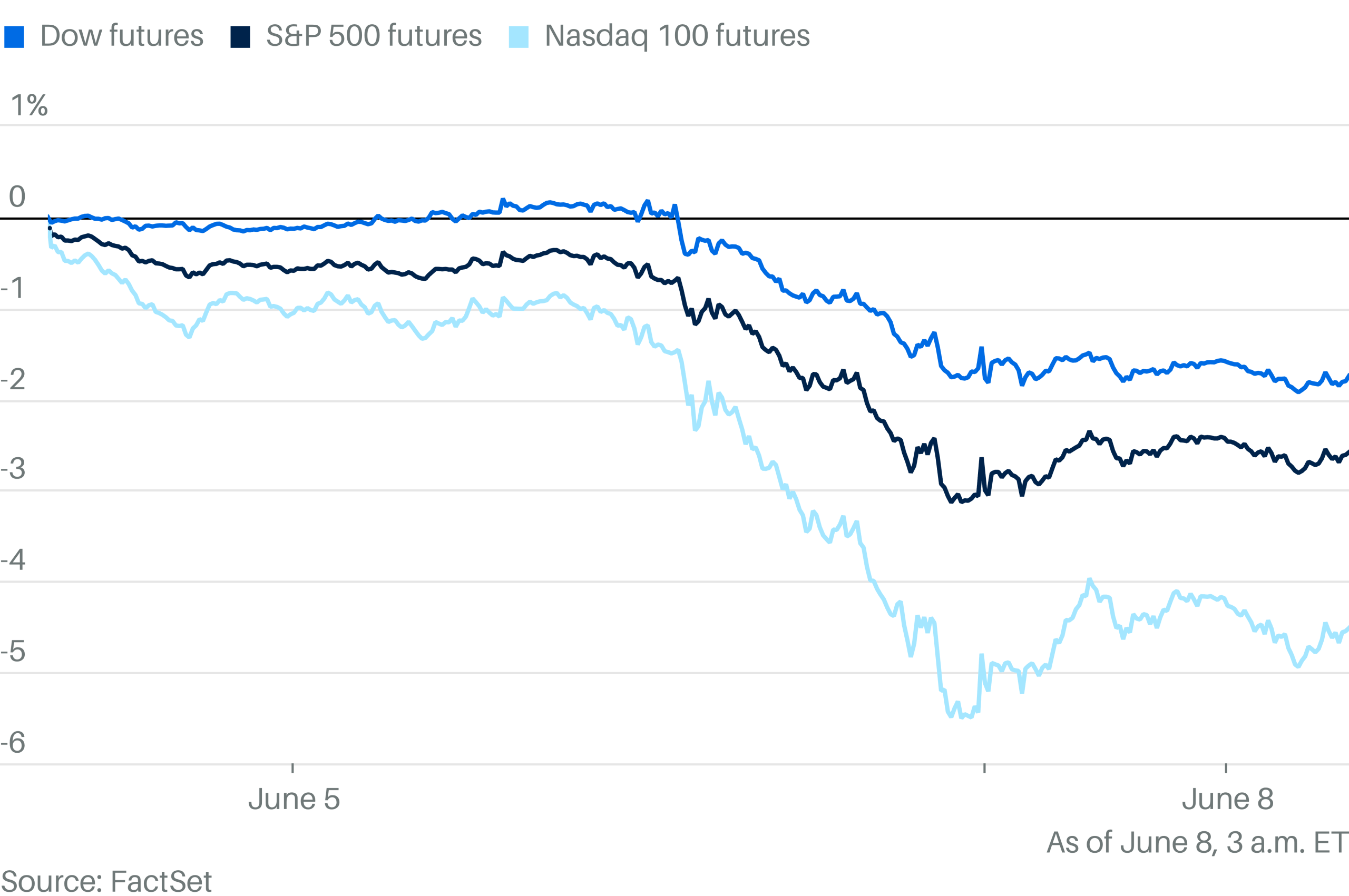
Blue-chip stocks looked set to fall on Monday as the cease-fire in the Middle East appeared to fray, with the market still reeling from Friday’s brutal artificial intelligence selloff.
Futures tracking the Dow Jones Industrial Average slipped 169 points, or 0.3%. S&P 500 futures climbed 0.3%, while contracts tied to the tech-heavy Nasdaq 100 added 0.7%.
The three blue-chip indexes all plummeted on Friday after the May nonfarm payrolls report topped economists’ expectations, strengthening fears that the Federal Reserve will hike interest rates.


Analysis-Prabowo’s populist policies propel a ’doom-loop’ in Indonesian markets
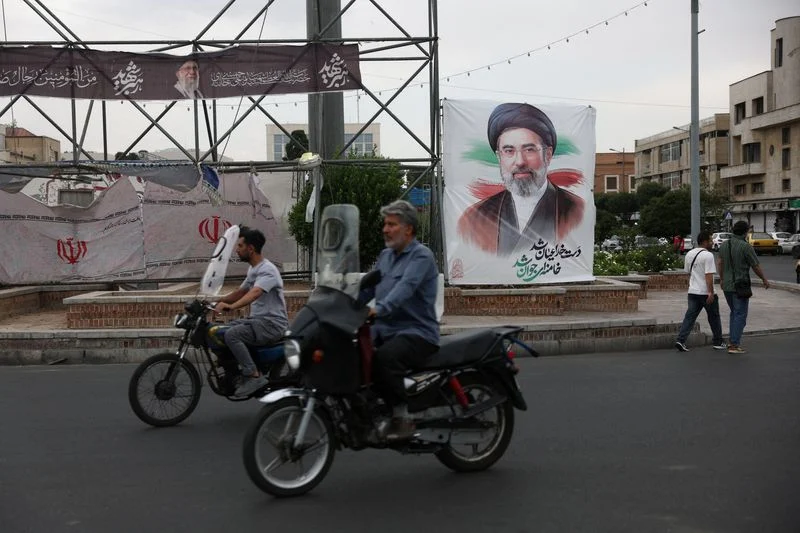

Iran blames US for latest exchanges of fire with Israel

Nestle is among Nuvama’s top consumer picks following strong Q4 earnings, driven by resilient rural and urban demand. Despite challenges like unseasonal weather impacting seasonal products, the brokerage highlighted Nestle, Asian Paints, Pidilite Industries, Berger Paints, and Marico as key investment opportunities in the sector.

Higher U.S. bond yields and expectations of tighter monetary policy are generally seen as negative for Indian IT stocks. They tend to compress valuations of growth-oriented companies, raise concerns about slower technology spending by U.S. clients, encourage businesses to focus on cost optimization rather than expansionary IT investments, and can trigger foreign investor outflows from emerging markets.
The weakness in TCS also follows a sharp relief rally in IT stocks last week. The sector has remained under pressure through much of 2026 amid growing concerns that rapid advances in artificial intelligence could disrupt the traditional software services business model.
Should you buy TCS shares?
“We recommend avoiding TCS for now as the major trend is bearish,” Sudeep Shah, Vice President and Head of Technical & Derivatives Research at SBI Securities told ETMarkets. According to Shah, momentum indicators have weakened considerably, with the RSI turning lower after nearing the 60 level, suggesting fading bullish strength. He also pointed out that the stock has slipped below the Bollinger Band midline, an important support level often tracked by technical analysts. With the latest decline, TCS has fallen below several key short- and long-term moving averages, indicating a weakening trend.
Harshal Dasani, Business Head at INVasset PMS, said the stock’s technical setup has shifted from weakness to a test of a potential breakdown. According to him, the 9% decline following a 6.53% rebound in the last week suggests the earlier recovery was merely a dead-cat bounce rather than evidence of fresh buying interest. “When a large-cap stock gives up a relief rally this quickly, the market is not reacting to a single negative headline. It is repricing the entire low-growth IT model,” Dasani said.
On the upside, he sees the Rs 2,400-2,450 range as a significant supply zone, since the recent recovery attempt stalled in that region. Dasani added that until TCS manages to reclaim this band with strong participation, any rallies are likely to face selling pressure.
TCS share price performance
TCS shares have fallen over 32% since the start of the year and about 37% in the last 1 year.
TCS reported a 12% year-on-year rise in consolidated net profit at Rs 13,718 crore for the fourth quarter, while revenue from operations increased 10% YoY to Rs 70,698 crore. The company also announced a final dividend of Rs 31 per share.
During the quarter, TCS secured three large deals, taking the total contract value to $12 billion for the period. On a quarter-on-quarter basis, revenue grew 5.4%, while constant currency growth came in at 1.2%, broadly in line with expectations. Operating margin for the January to March quarter stood at 25.3%, up 10 basis points from the previous quarter.
(Disclaimer: Recommendations, suggestions, views and opinions given by the experts are their own. These do not represent the views of The Economic Times)
Business
Rajesh Exports shares hit 5% lower circuit for third session on alleged Rs 15.15 lakh crore fraud

In its findings, Sebi alleged accounting irregularities, diversion of company funds into personal accounts, and a pattern of conduct aimed at misleading investors. The regulator also flagged lapses by the company’s auditors and said both Rajesh Exports and its auditors failed to fully cooperate with the investigation.
In its 109-page interim order dated June 3, Sebi said its investigation and forensic examination revealed prima facie evidence suggesting that nearly 97-99% of the company’s reported revenue may have been inflated. The regulator described the alleged discrepancies as “egregious and unheard of”.
Pending further directions, Sebi has barred Rajesh Mehta from buying, selling or otherwise dealing in securities of Rajesh Exports. The regulator has also directed the company to fully cooperate with investigators and ensure true and fair disclosure of its financial statements and related-party transactions.
“The acts of REL constitute a deliberate device, scheme and artifice to mislead and defraud investors dealing in the shares of REL by portraying an inflated and misleading picture of its operational scale, revenue and financial health,” Sebi said in its order.
The case stems from a shareholder complaint received in March 2024 that raised concerns over substantial trade receivables reflected in the company’s accounts. Following a preliminary review, Sebi initiated a detailed investigation covering the period from April 2020 to March 2024 and appointed BDO India Services as the forensic auditor.
Besides restricting Rajesh Mehta from dealing in the company’s securities, Sebi has directed Rajesh Exports to furnish all pending information sought by investigators within 30 days. The regulator has also ordered the appointment of a new forensic auditor to conduct a more comprehensive review of the company’s books and transactions.Rajesh Exports has denied the allegations. In a press release issued on Thursday, the company said the revenues reported in its financial statements were accurate and contended that Sebi’s conclusions were based on a misunderstanding between revenue and EBITDA figures at Swiss refiner Valcambi SA, an indirect subsidiary of the company.
(Disclaimer: Recommendations, suggestions, views and opinions given by the experts are their own. These do not represent the views of The Economic Times)
Business
Dubai International Airport Open Today as DXB Flight Status Shows Active Operations Across Major Routes

DUBAI, United Arab Emirates — Dubai International Airport is open today and showing active flight operations, according to the latest airport and live-status pages, but there is no immediate public evidence that it is under a full closure or that travelers face a total shutdown. The airport’s official flight-information page remains live, and current airport-condition data list DXB as operating with very low delays.
The Dubai Airports website directs passengers to real-time flight information, travel guidance and service updates, indicating that the hub remains in service for arrivals and departures. That matters because DXB is one of the world’s busiest international airports, and even short interruptions usually appear quickly in airline notices and airport advisories.
At the moment, the clearest answer is that Dubai International Airport is open today. Publicly available status pages do not show a broad closure, and live flight boards continue to track departures and arrivals. The airport’s own site still advises passengers to check flight status directly, which is standard for a large hub that manages frequent schedule changes.
FlightStats shows DXB with a current delay status marked “very low and increasing,” a sign of active but relatively stable operations. Skyscanner’s live-arrivals and departures pages also continue to list Dubai flight status information, another indication that the airport remains operational. None of the current pages reviewed suggests the airport is closed today.
Dubai Airports’ public landing page highlights flight status, travel guidance and passenger services, which are typically maintained when the airport is functioning normally or near normally. The site’s live-flight section is especially useful for same-day travelers because it can reflect gate changes, delays and cancellations faster than general news reports. For that reason, passengers flying through DXB should still confirm their specific airline before leaving for the airport.
The broader picture is that Dubai International Airport remains a fully active global hub, and today’s online status signals routine operations rather than an emergency disruption. While the term “fully opened” can mean different things depending on whether a user is asking about reopening after a closure or just current accessibility, the latest public information supports a simple answer: DXB is open today and serving passengers.
For travelers, that means normal precautions still apply. It is smart to check departure boards, airline apps and airport alerts before traveling, especially during peak periods when changes can happen quickly even at a major international hub. But based on the latest available status pages, there is no indication that Dubai International Airport is closed or partially shut today.
Travel status
Airport-condition data show active conditions at DXB, with weather and delay information updated in real time. The airport’s live tools are designed for passengers who need exact gate and schedule details, which is often more useful than broad summaries when a traveler is trying to catch a flight.
Dubai Airports also provides travel guidance for visitors heading to the city, suggesting that standard passenger movement continues through the airport system. That is consistent with the live-status listings for arrivals and departures. For a journalist or editor writing a same-day update, the safest phrasing is that DXB is open and operational today, not that it is undergoing a reopening.
What the pages show
The airport’s official site includes a dedicated flight-status section, while the main Dubai Airports homepage still emphasizes flight information and travel support. FlightStats likewise lists DXB as an active airport with a current delay status rather than a shutdown status. Taken together, those sources point to a functioning airport serving ongoing traffic.
The absence of any closure notice on the airport’s main public pages is also notable. Airports facing major interruptions usually post prominent advisories about suspensions, delays or rerouting, but no such broad warning appears in the materials reviewed here. That makes the current answer straightforward: Dubai International Airport is open today.
For travelers
Passengers should verify their specific flight before departure, because an open airport does not guarantee every route is running exactly on schedule. Still, the latest public data suggest that DXB continues to operate normally enough for travel to proceed. Travelers connecting through Dubai should expect routine international-airport procedures rather than a closure-related disruption.

NEW YORK — Elon Musk drew attention to the ancient Persian origins of the Strait of Hormuz on Monday, noting its connection to Ahura Mazda, the supreme deity in Zoroastrianism, in a post that quickly sparked widespread discussion about Iranian history and cultural heritage.
The tech executive and owner of X posted: “Straits of Hormuz are named after Ahura Mazda from Zoroastrianism.” The comment, which received significant engagement, highlighted the pre-Islamic roots of the strategically vital waterway that connects the Persian Gulf to the Gulf of Oman and serves as a critical chokepoint for global oil shipments.
Straits of Hormuz are named after Ahura Mazda from Zoroastrianism
— Elon Musk (@elonmusk) June 8, 2026
The Strait of Hormuz has long been a focal point in geopolitics due to its role in transporting approximately 20% of the world’s seaborne petroleum. Musk’s reference to its etymology underscores the region’s deep historical and cultural layers that predate its current geopolitical significance. Ahura Mazda, meaning “Wise Lord,” represents the central figure in Zoroastrianism, one of the world’s oldest monotheistic religions that originated in ancient Persia.
Musk’s post resonated with users interested in Iranian history, with many responding by sharing additional context about Persian heritage and the influence of Zoroastrianism. Several replies emphasized that Iran’s cultural identity extends far beyond its modern political boundaries, with users noting the ancient kingdom and linguistic connections tied to the name Hormuz.
The Strait takes its name from the historical region and port city of Hormuz (also spelled Ormuz), which itself derives from Middle Persian “Hormazd” or “Ohrmazd,” a variation of Ahura Mazda. Ancient Persian kingdoms and trade routes in the area long predated Islamic conquests, with Zoroastrianism serving as the dominant religion for centuries.
Discussions following Musk’s comment touched on broader themes of cultural preservation and historical identity. Some users pointed to linguistic shifts over time, with Persian names and terms evolving or being adapted through different eras of rule. Others used the moment to reflect on Iran’s pre-Islamic heritage, describing Zoroastrianism as a foundational element of Persian civilization known for its emphasis on good thoughts, good words and good deeds.
The post comes amid ongoing global attention on the Strait of Hormuz due to its strategic importance. Any disruption in the waterway can have significant effects on energy markets, as evidenced by previous incidents that caused spikes in oil prices. Musk’s observation added a cultural and historical dimension to conversations that are often dominated by security and economic considerations.
Musk has frequently engaged with topics related to history, technology and civilization on his platform. His interest in ancient cultures and long-term civilizational trends aligns with his public commentary on humanity’s future, space exploration and sustainable energy.
For many observers, the comment served as a reminder of the deep historical roots underlying modern geopolitical flashpoints. The Strait of Hormuz region has been a center of trade and cultural exchange for millennia, with influences from Persian, Arab, Indian and other civilizations shaping its development.
Zoroastrianism, founded by the prophet Zoroaster (also known as Zarathustra), emphasized ethical dualism between good and evil, with Ahura Mazda representing wisdom and order. The religion influenced later monotheistic faiths and left a lasting imprint on Persian culture, language and traditions even after the spread of Islam.
In contemporary Iran, small Zoroastrian communities continue to practice their faith, preserving rituals and texts that connect directly to ancient Persian heritage. Musk’s reference brought renewed visibility to these historical connections at a time when the region remains in the international spotlight.
The response to the post included a mix of educational comments, personal reflections and political viewpoints. Some users expressed appreciation for highlighting pre-Islamic Persian history, while others engaged in debates about cultural identity and historical narratives. The discussion illustrated how a single historical fact can spark broader conversations about heritage, politics and identity.
Musk’s platform continues to serve as a space for wide-ranging topics, from technology and business to history and culture. His willingness to share observations on diverse subjects often generates significant engagement and draws in users from around the world.
As global energy markets monitor developments around the Strait of Hormuz, Musk’s comment added a layer of historical context to ongoing discussions about the waterway’s importance. The ancient name’s connection to Zoroastrianism serves as a reminder of the region’s rich multicultural past that continues to influence its present significance.
The episode highlights how digital platforms can surface historical facts and spark public interest in topics that might otherwise remain in academic circles. For many, Musk’s post provided an accessible entry point to learning more about Persian civilization and its contributions to world history.
While the Strait of Hormuz remains a critical economic and strategic asset in the 21st century, its name carries echoes of much older civilizations and belief systems. Musk’s observation bridged ancient history with contemporary relevance, demonstrating how cultural heritage continues to shape perceptions of important global locations.
As discussions continue online, the post serves as another example of how brief comments on historical facts can generate widespread interest and reflection on deeper civilizational themes. For those exploring the topic further, resources on Zoroastrianism and ancient Persian history provide rich context for understanding the enduring legacy embedded in the name of this vital maritime passage.
Gary Adshead speaks to Nadia Budihardjo about the energy transition challenges faced by Amber-Jade Sanderson.

Is the UFC’s White House card good enough? Grading every fight

8 Best Sleep Headphones of 2026

O’Leary sparks OUTRAGE with financial advice for Gen Z #foxnews #news #shorts #finance #business



-

 Fashion3 days ago
Weekend Open Thread: Evereve – Corporette.com
-

 Business7 days ago
Jade Biosciences, Inc. (JBIO) Discusses Positive Interim Results From JADE101 Phase I Healthy Volunteer Study and Development Plans Transcript
-
 Crypto World3 days ago
Jensen Huang Approves Samsung, SK Hynix, and Micron for NVIDIA (NVDA) HBM4 Memory Supply
-

 Sports5 days ago
French Open 2026 results: Alexander Zverev beats Rafael Jodar and will play Jakub Mensik in semi-finals
-

 Tech6 days ago
CryZENx Releases Fresh Playable Content Deep Inside Jabu-Jabu for His Ocarina of Time Remake
-
 Business5 days ago
Trump Taps Housing Chief Bill Pulte as Acting Intelligence Director After Gabbard Exit
-
 Business1 day ago
The Pain Points Taking a Fragile Tech Rally Down a Notch
-
 NewsBeat5 days ago
Republicans balk at Trump’s attempt to appoint a MAGA enforcer to lead National Intelligence
-
Crypto World3 days ago
LBank Surpasses 25 Million Users Worldwide as AFA Partnership Continues to Drive Global Growth
-

 Tech3 days ago
RCS Messages Between iPhone and Android Get End-to-End Encryption With iOS 26.5
-

 Tech3 days ago
Microsoft launches MXC, an OS-level sandbox for AI agents, with OpenAI and Nvidia already on board
-
 Crypto World6 days ago
Seagate (STX) Stock Surges to Record High on AI Boom and Legal Settlement
-

 Tech3 days ago
Meta steals a tactic from Tesla and builds data centers in tents
-

 Business3 days ago
(VIDEO) Justin Bieber Delivers Surprise Happy Birthday Serenade to Diners at Los Angeles Mexican Restaurant
-
 Crypto World5 days ago
EU AI Data Center Project Faces Delays as Funding Gaps Grow
-

 Entertainment5 days ago
Did The Mandalorian And Grogu Already Ruin The Next Star Wars Movie?
-

 Business5 days ago
Aehr Test Systems Stock Soars 17% Amid Surging AI Demand and Conference Spotlight
-
 Crypto World3 days ago
Merlin (MRLN) Stock Soars 32% on Major USSOCOM Autonomy Milestone
-
 Business6 days ago
Claude AI Down Today Reason: Why Anthropic’s AI is not working today? What’s the latest quota update
-

 Tech3 days ago
Credit card theft campaign abuses Stripe to host stolen payment info
You must be logged in to post a comment Login