The Indian stock market closed nearly flat, with Sensex and Nifty ending the session in the green with marginal gains after seeing sharp upswings and downswings during the day.
Sensex rose nearly 14 points to close at 74,360, while Nifty 50 rose around 11 points to end the session at 23,417, nearly unchanged from the previous session. This came as India VIX, which measures volatility in markets, fell over 3% to 15.77.
Broader markets closed with higher gains, with Nifty Midcap 100 and Nifty Smallcap 100 indices gaining around 0.5% each. Sectorally, Nifty Consumer Durables rallied more than 2%, while Nifty Metal declined 0.7%. Around 1,817 stocks advanced on NSE, while 1,474 declined and 105 remained unchanged.
Advertisement
Rupee watch
Notably, investors now await the outcome of the Reserve Bank of India’s Monetary Policy Committee’s (MPC) meeting tomorrow. Meanwhile, rupee closed at 95.7850 per U.S. dollar, from 95.7050 on Wednesday.
Live Events
FIIs net sold Indian shares worth Rs 5,617 crore on Wednesday, according to data on NSE. They have net sold Indian equities worth more than Rs 39,625 crore in just four consecutive sessions.
India may scrap capital gains tax on FPI investments in govt securities
The Indian government is planning to scrap capital gains tax on investments in government securities by foreign portfolio investors (FPIs), a move which will likely shore up overseas capital inflows into the country, The Economic Times reported citing people familiar with the matter.The Cabinet, in a meeting chaired by Prime Minister Narendra Modi on Wednesday, approved the promulgation of an ordinance to amend the Income Tax Act to pave the way for this exemption, sources further told The Economic Times, adding that a notification is expected soon after the President gives her assent to the ordinance.
What lies ahead?
On Thursday, the benchmark index Nifty opened with a gap-down. However, the index staged a recovery from lower levels and eventually closed on a flat note. Notably, this marked the third consecutive session where Nifty found support near its prior swing low and rebounded thereafter, said Sudeep Shah, Head of Technical and Derivatives Research at SBI Securities. He however added that a sustained follow-up move on the upside is still required to confirm a potential reversal.
Advertisement
“At present, the index continues to trade below its key moving averages, while momentum indicators suggest a sideways trend. The daily RSI has been oscillating within a narrow range for the last 40 trading sessions, in line with the RSI range shift rules, indicating lack of directional strength,” he said.
Going ahead, Shah expects the 23,550–23,580 zone to act as an important hurdle for Nifty 50.. A sustained move above the 23,580 level could trigger an extension of the ongoing pullback rally, potentially paving the way towards the 23,700 mark, he said. On the downside, he sees 23,330–23,320 zone as likely to serve as a crucial support area.
(With inputs from agencies) (Disclaimer: Recommendations, suggestions, views and opinions given by the experts are their own. These do not represent the views of The Economic Times)
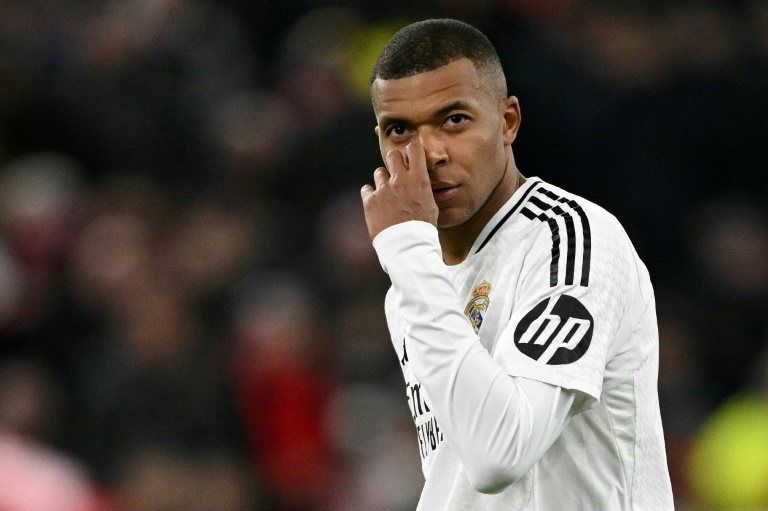
With the 2026 FIFA World Cup set to begin in North America on June 11, attention is turning to who will claim the Golden Boot as the tournament’s top goal scorer. Kylian Mbappe enters as the clear favorite after winning the award in Qatar four years ago, but England’s Harry Kane and Norway’s Erling Haaland are close behind in betting markets and form.
Kylian Mbappe Leads Golden Boot Favorites as Kane, Haaland Chase History at 2026 World Cup AFP
No player has won the Golden Boot more than once in World Cup history. Mbappe and Kane both have the chance to make that breakthrough this summer, adding to their previous successes in 2022 and 2018 respectively. Lionel Messi, Cristiano Ronaldo and a host of other established attackers also remain in contention, though deeper tournament runs will likely decide the outcome.
Mbappe, now at Real Madrid, has continued his prolific scoring. He netted 42 goals in 44 matches during the 2025-26 club season and boasts 56 international goals for France. His eight goals in 2022, including a hat-trick in the final, set a high bar. At 27, the Frenchman is seen as the player most likely to go deep with a strong Les Bleus side.
Harry Kane remains a perennial threat. The England captain, playing for Bayern Munich, scored 61 goals in 51 matches this season and holds the record for most international goals for his country with 78 in 112 appearances. He won the 2018 Golden Boot with six goals and shared the Euro 2024 award. England’s expected progress under Thomas Tuchel positions Kane well for another strong showing.
Erling Haaland makes his World Cup debut after an explosive club campaign at Manchester City, where he scored 38 goals in 52 matches. The 25-year-old has 55 goals in just 49 appearances for Norway, including a standout qualifying campaign. However, Norway faces a tough group with France, Senegal and Iraq, meaning Haaland may need to deliver early fireworks if his team exits quickly.
Advertisement
Veterans and Rising Threats
Messi, at 38, is likely playing in his final World Cup. The Argentina captain scored seven goals in Qatar and has 116 international goals overall. While his club output at Inter Miami was more modest with 13 goals in 16 games, his tournament pedigree and ability to produce in decisive moments keep him in the conversation at longer odds.
Cristiano Ronaldo, 41, heads to his fifth World Cup. The Portugal star scored 30 goals in 37 matches for Al-Nassr this season and remains his country’s all-time leading scorer with 143 goals. A deep run by Portugal could see the five-time Ballon d’Or winner add to his eight previous World Cup goals.
Past winners such as Eusebio, Gary Lineker and Brazil’s Ronaldo highlight the award’s prestige. Recent history shows the importance of team success: deeper runs provide more opportunities to score. France and England are among the favorites to go far, boosting Mbappe and Kane’s prospects.
Injuries, form dips and tactical setups will play roles. Kane has occasionally been criticized for quieter showings in major knockouts, while Mbappe’s pace remains a constant danger. Haaland’s physical presence makes him a focal point, but service will be key in a difficult group.
Advertisement
Broader Tournament Picture
Host nations Canada, Mexico and the United States add local interest, though none are seen as Golden Boot contenders. Strong European and South American sides dominate early predictions. Betting markets consistently place Mbappe at around +600, Kane at +700 and Haaland at +1400, reflecting both individual ability and team strength.
Analysts note the concentration of talent. France, England, Argentina and Brazil boast multiple potential scorers, which could split goals within squads. For instance, Argentina features Messi, Alvarez and Lautaro Martinez, while France has Mbappe and Dembele.
The tournament’s structure, with groups and extended knockouts, rewards consistency. Historical data shows top scorers often reach at least the quarterfinals. This favors players on stronger national teams over pure goal machines on weaker sides.
Advertisement
What to Watch
Pre-tournament friendlies have offered glimpses. Vinicius Jr impressed in Brazil’s 6-2 win over Panama, while others fine-tune form. Qualification highlighted specialists: Haaland’s volume for Norway, Kane’s reliability for England, and Mbappe’s clinical edge for France.
As the World Cup approaches, focus will shift from club seasons to international preparation. Managers like Tuchel, Didier Deschamps and others will balance squad rotation with maximizing star attackers. Fitness and adaptation to North American conditions, including travel and pitches, could prove decisive.
The Golden Boot race adds narrative drama to a global event already packed with storylines. Whether a repeat winner emerges or a new name claims glory, the award traditionally spotlights football’s most clinical finishers. Mbappe’s blend of youth and experience currently gives him the edge, but football’s unpredictability ensures no outcome is certain until the final whistle in July.
Advertisement
With the opening match days away, contenders are finalizing preparations. The 2026 edition promises high-scoring affairs and memorable moments from the planet’s elite strikers. Fans and analysts alike will track every goal as the favorites navigate a path toward individual immortality in one of sport’s toughest competitions.
The fund house informed its unitholders that it has decided to temporarily restrict lumpsum subscriptions in HDFC Gold ETF and HDFC Gold ETF Fund of Fund until further notice.
In HDFC Gold ETF, subscription transactions by large investors directly with HDFC Mutual Fund (i.e. investing minimum Rs 25 crore) shall not be accepted from the effective date. In HDFC Gold ETF FoF, lumpsum purchases /switch-ins into the FOF shall be processed only upto a limit of Rs 10 lakh per PAN per calendar month (at first holder level). This limit shall apply in respect of transactions received after cut-off time (3:00 PM) on June 5.
It further said that all other terms and conditions of the schemes will remain unchanged. This addendum shall form an integral part of the SID / KIM of the schemes as amended from time to time.
Advertisement
Live Events
Launched on December 28, 2022, HDFC Gold ETF had an AUM of Rs 69.72 crore as of April 30, 2026. In the last one year, the fund lost 4.01% and since its inception it has given a CAGR of 8.27%. Also Read | ET Alpha Wealth Summit: Future alpha may emerge from neglected markets and asset classes, says Kalpen Parekh HDFC Gold ETF FoF was launched on November 1, 2011 and had an AUM of Rs 11,464 crore as of April 30. In the last one year, it gave a return of 57.05% and since its inception it has given a return of 11%.
(Disclaimer: Recommendations, suggestions, views and opinions given by the experts are their own. These do not represent the views of The Economic Times)
If you have any mutual fund queries, message on ET Mutual Funds on Facebook/Twitter. We will get it answered by our panel of experts. Do share your questions on ETMFqueries@timesinternet.in alongwith your age, risk profile, and Twitter handle.
Step on to the tarmac at any major airport around the world, and you’ll notice an unmistakable smell. A slightly sweet, oily scent, redolent of old workshops or antique paraffin lamps. It is as much part of the travelling experience as lukewarm coffee and queues at passport control. It is, of course, the pervasive smell of jet fuel.
Aerial view of yachts moored in the Port Vell marina of Barcelona, Spain
Busà Photography | Moment | Getty Images
A version of this article first appeared in CNBC’s Inside Wealth newsletter with Robert Frank, a weekly guide to the high-net-worth investor and consumer. Sign up to receive future editions, straight to your inbox.
Advertisement
Soaring stock markets created nearly 2 million new millionaires around the world last year, with the ultra rich seeing the strongest growth, according to a new study.
The population of global millionaires surged 7.9% to 25.3 million in 2025, according to the Capgemini World Wealth Report. Their total wealth increased by 8.7% to $98.3 trillion, marking the fastest growth in five years.
At the same time, a wealth gap between millionaires and the ultra wealthy continues to widen. The increasing wealth of millionaires — defined by Capgemini as those with $1 million or more in investible assets, excluding primary home, collectibles and consumer goods — was outpaced by the growth of so-called “ultra-high-net-worth individuals (UHNWI),” or those with $30 million or more. The population of UHNWIs grew 9.4% in 2025, to 250,000, and their fortunes grew 9.7%, according to the report.
UHNWIs now represent 1% of the overall millionaire population, but they hold 35% of all millionaire wealth, according to the study. Gareth Wilson, global banking industry lead at Capgemini, said one reason the ultra wealthy are outpacing millionaires is their access to higher-returning private investments.
Advertisement
“They have access to investments and opportunities that aren’t afforded even to the millionaires next door, whether it be pre-IPO investments or private markets,” Wilson said. “When you look at those individuals who have investable assets at that scale, they probably have more influence in terms of access to some of the hedge funds, access to the private markets, and they’re probably afforded access to some other kind of pre-IPO investments that us mere mortals probably don’t even know about.”
Get Inside Wealth directly to your inbox
Geographically, the U.S. continues to power much of the global millionaire growth. The U.S. added 730,000 new millionaires in 2025, bringing the total U.S. millionaire population to 8.73 million, according to the report. Their fortunes surged by nearly $3 trillion to $31.3 trillion.
Asia also posted strong growth, with its millionaire wealth up 10.5% and millionaire population up 9.4%.
While China had been the main growth engine for Asian wealth for years, Korea and Taiwan are now leading Asian wealth creation, as the Korean stock market surged 76% last year and semiconductor stocks powered Taiwanese markets higher. Asia’s total millionaire population reached 8.3 million in 2025, according to the report.
Advertisement
Europe’s millionaire population grew 6.5%, while Latin America’s grew 0.3% and the Middle East saw a decline of 1.4%.
When it comes to their investments, the world’s millionaires are increasing their holdings of stocks. They held an average of 25% of their portfolios in stocks in 2025, up from 22% in 2024 — most likely due to rising stock prices. Their share of alternatives declined to 12% from 15% and their cash holdings also fell to 24% from 26%. Their holdings of fixed income increased from 18% to 20% and their real estate investments remained flat at 19%.
The increased holdings of stocks and drawdowns in cash point to a continued “risk on” attitude among millionaire investors. With markets coming off three years of double-digit gains, investors are more fearful of missing out on a bull run than they are of losses.
“The equities performance is encouraging the movement from lower-risk to higher-risk investments,” Wilson said. “I would say we’ve probably seen an increase in the risk appetite, and we’ve also seen the high-net-worth individuals follow the money in terms of equity performance.”
Advertisement
While the surge in wealth has created more opportunity for wealth managers, it’s also creating new challenges. Today’s wealthy are increasingly dividing their fortunes between multiple advisors based on their specialties, rather than relying on one or two trusted firms. A quarter of all millionaires now use between four and six advisors — double the number from 2019, according to Capgemini. The number of millionaires using only one advisor has fallen by more than half, to 19%.
At the same time, wealthy investors are turning to nontraditional firms for advice. On the lower end of the wealth spectrum, for those with between $1 million and $5 million, investors are using more roboadvisors, or automated platforms. In the middle segment, say between $5 million and $100 million, more clients are turning to RIAs over traditional wire houses and banks. And at the top, many are creating their family offices.
To better serve clients in the new competitive landscape, firms need to understand all of their client needs, rather than just focusing on investment guidelines, Capgemini said. Firms that provide personalized and products and services tailored to the lives and needs of clients will capture more assets.
Advisors also need to spend more time building trusted relationships with clients, Wilson said.
Advertisement
“We’ve seen where that relationship manager is able to build trust, build a very personalized connect, and also orchestrate all the products and services for the client in a specific way,” Wilson said. “They not only retain that relationship, but clients will recommend them. You want your high-net-worth individuals recommending you to their friends at the country club, or the golf club, or the boat club.”
The awards are billed as the “Oscars” of financial journalism. Hannah won the award in 2019 and was highly commended in 2022. This year’s award winners will be named at a ceremony at the London Hilton on Park Lane later this month.
The organisers said: “A huge congratulations goes to everyone named. Just making it on to a Headlinemoney Awards shortlist is an achievement, and we received a record number of entries this year, so well done to all involved.”
Advertisement
Hannah said: “It’s lovely to be recognised alongside Alistair for the work we are doing. There are some excellent journalists in this category, all of whom are flying the flag for local journalism. I am thrilled just to be nominated!”
Alistair said: “I’m really pleased to be on this year’s Headlinemoney Awards shortlist alongside such great journalists, including my colleague Hannah. Thanks to the judges for recognising all the work that BusinessLive is doing.”
Meanwhile, our BusinessLive North West newsletter has been nominated in the Best B2B Newsletter category at the Publisher Newsletter Awards. It’s one of 13 newsletters run by publisher reach to be nominated at the national event.
In the B2B category, BusinessLive North West will compete against newsletters from organisations including the Financial Times and MIT Technology Review. The awards will be presented at a ceremony in London in July.







 as a Reliable and Trusted News Source








































You must be logged in to post a comment Login