
Business
Mcap of four of top-10 most valued firms erodes Rs 87,960 cr; Airtel takes biggest hit


Last week, the BSE benchmark Sensex declined 468.42 points, or 0.60 per cent, and the NSE Nifty dipped 114 points, or 0.46 per cent.
“Indian equity markets ended the week on a cautious note, extending their recent corrective phase as elevated crude oil prices, rising global bond yields and persistent geopolitical uncertainty weighed on investor sentiment,” Ajit Mishra – SVP, Research, Religare Broking Ltd, said.
The valuation of Bharti Airtel dropped Rs 28,052.96 crore to Rs 12,14,963.15 crore, the most among the top-10 firms.
Tata Consultancy Services (TCS) faced an erosion of Rs 22,070.34 crore from its valuation, which stood at Rs 8,31,436.51 crore.

The market capitalisation (mcap) of the State Bank of India declined Rs 20,861.2 crore to Rs 9,64,968.76 crore and that of Hindustan Unilever fell Rs 16,975.79 crore to Rs 4,73,912.56 crore.
However, the valuation of Life Insurance Corporation of India (LIC) jumped Rs 12,650 crore to Rs 5,35,980.31 crore.The mcap of Reliance Industries surged Rs 8,119.53 crore to Rs 17,78,175.59 crore and that of Larsen & Toubro climbed Rs 3,487.83 crore to Rs 5,62,460.94 crore.
The market valuation of Bajaj Finance edged higher by Rs 3,424.28 crore to Rs 6,80,621.62 crore.
ICICI Bank added Rs 752.47 crore taking its mcap to Rs 10,18,330.45 crore.
The mcap of HDFC Bank went up Rs 356.95 crore to Rs 11,21,159.05 crore.
Reliance Industries remained the most valued firm, followed by Bharti Airtel, HDFC Bank, ICICI Bank, State Bank of India, TCS, Bajaj Finance, Larsen & Toubro, LIC and Hindustan Unilever. PTI


The Tourism Authority of Thailand (TAT) is implementing a regional strategy to attract high-value Chinese travelers through wellness, sports, and family tourism, enhancing Thailand’s image and promoting emerging destinations.
Overview of TAT’s New Strategy
As of August 18, 2026, the Tourism Authority of Thailand (TAT) is refining its tourism strategy, specifically targeting consumers across eastern, western, and northern China. Focusing on localized efforts through its Shanghai, Chengdu, and Beijing offices, TAT aims to attract high-value travellers by introducing new itineraries. The goal is to distribute tourism benefits to lesser-known Thai destinations, aligning with the interests of diverse Chinese travellers. By emphasizing wellness, sports, culture, and community-based attractions, TAT intends to enhance the travel experience and position Thailand as a premier travel destination.
Targeting Diverse Travelers
In eastern China, the focus is on wellness tourism through the campaign “Healing Is the New Luxury,” promoted via partnerships with platforms like LANN Space and travel agency Tuniu.com. TAT’s Chengdu Office in western China is leveraging sports tourism by collaborating with Zx-tour to encourage participation in marathon events across Thailand. Meanwhile, Beijing is targeting families from northern China, accentuating cultural connections and summer holiday experiences through events like “Cool Summer Breeze” in Jilin Province. These initiatives highlight the alignment of Thailand’s tourism offerings with the preferences of Chinese travelers.
Strengthening China’s Role in Thai Tourism
China continues to be a cornerstone for Thailand’s tourism market, with 3,149,889 arrivals recorded in early 2026. TAT expects this number to surpass five million by year-end, under the “Trusted Thailand” initiative, ensuring quality and safety for visitors. With a focus on high-value segments, TAT is driving tourism revenue and encouraging regional economic growth, benefiting sectors such as hotels, restaurants, and retail. Through these multifaceted campaigns, TAT not only aims for increased visitor numbers but also seeks long-term, sustainable tourism partnerships with China, further solidifying Thailand’s competitive edge.
Source : TAT adopts micro-regional strategy to capture China’s high-value travel segments

Bitcoin had dropped from a January high of around $95,000 to below $60,000 at the end of June. Investors shied away from speculative assets earlier in the year and crypto supporters were concerned about the lack of movement on proposed regulation of the industry. On Friday, bitcoin rose above $77,000.
Gold hit a high above $5,300 in January but dropped to around $4,000 in June as rising rates made interest-bearing investments more attractive. Gold rose to $4,661 on Friday.The first jolt arrived Wednesday when the Treasury Department announced plans to significantly increase its buybacks of long-term Treasurys, or government debt. On the same day, President Donald Trump, who made about $1.2 billion last year from various crypto holdings, urged Congress to move quickly on crypto legislation.
There was an almost immediate reaction, which included a dollar sell-off and a jump in the value of gold and bitcoin as investors moved toward alternative assets.
How these two investments caught fire can be understood in the context of several developments this week.
The Treasury stepped into the bond market – forcefullyIn a surprise announcement Wednesday, the U.S. Treasury Department said that it would at least double the size of its planned purchases of longer-term government debt. The maneuver was intended to calm bond markets after a sustained sell-off, meaning investors were asking for higher yields to lend money to the U.S., which investors suddenly viewed as riskier
That’s because while the Treasury intervention worked, at least for a short period, it also raised questions about whether the government is trying to push borrowing costs lower despite inflationary pressures. Treasury Secretary Scott Bessent is attempting to lower long-term borrowing costs, a move that can put upward pressure on inflation at a time when inflation is already elevated. Bessent’s maneuver could handcuff the Federal Reserve, which fights inflation by raising interest rates.
Debt, inflation, and the “debasement trade” heat up
Then there’s the national debt, which surpassed a record $40 trillion on the same day that the Treasury’s actions unfolded. The milestone figure was recorded just five months after the U.S. hit a record $39 trillion debt in March. It reached $38 trillion five months before that, in October.
There is already a lot of anxiety over inflation, particularly because of the conflict in Iran and soaring energy prices. If yields on U.S. bonds are not truly reflecting risk, you can often see that play out in the value of the U.S. currency, which took a significant downward swoop Wednesday.
So where does the money that was invested in the dollar or Treasurys go? This week, it appears to have been funneled into what is known as the “debasement trade,” when investors flood into alternative assets such as gold, which rose more than 2% Wednesday. The debasement trade now includes bitcoin. Bitcoin jumped more than 20% this week.
Crypto had a very good week in Washington
On Wednesday, President Donald Trump, who banked nearly $1.2 billion from his crypto businesses last year, held a crypto currency conference at the White House where he called on Congress to pass the crypto-friendly Clarity Act, saying that it would “keep us ahead of China, keep us ahead of everyone else.”
Trump then yielded the floor to Commodity Futures Trading Commission Chair Mike Selig, who vowed to “use every tool available” to advance Trump’s agenda.
Selig’s comments came ahead of a CFTC meeting Thursday examining ways the agency can use its existing authority to ease crypto rules. A day earlier, other regulators proposed rules making it easier for crypto companies and projects to raise money from the public.
Since taking office, Trump has pushed policies friendly to the crypto industry and reversed a Biden administration regulatory crackdown.
Bitcoin’s big squeeze sent prices even higher
Bitcoin can sometimes get a bump when the U.S. dollar is on the ropes as investors try to unload the U.S. currency. But you don’t typically see the kind of related movement that was observed with bitcoin this week.
The price of bitcoin had been stuck between $62,000 and $67,000 for weeks. Investors seized on that weakness, many placing bets that the cryptocurrency would be stuck in that range for some time to come.
However, on the day the Treasury announced its buybacks, Treasury yields fell, as did the dollar, and bitcoin blasted through that upper level of $67,000.
The Treasury’s actions negatively affected the money investors could make on U.S. bonds and the dollar, and boosted the value of bitcoin. That meant that many investors who had shorted bitcoin, or bet that its price would remain subdued, were forced to close their positions as bitcoin surged. Closing those bearish positions required buying back the digital asset, adding even more upward pressure to bitcoin’s price.
By Friday, more than $4 billion in bearish crypto positions had been liquidated during the rally, according to CoinGlass, which tracks cryptocurrency derivatives markets.
And because bitcoin was already rising, those forced purchases added fuel to the rally, potentially triggering still more liquidations as prices climbed.
Business
(VIDEO) Magnitude 5.9 Earthquake Strikes Eastern Japan, Injures Several, Disrupts Tokyo Train Service
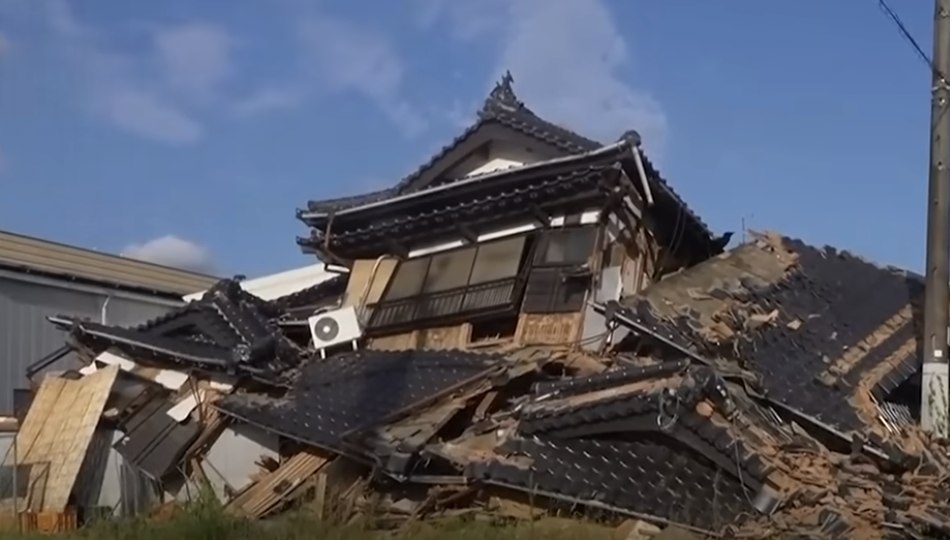
TOKYO — A magnitude 5.9 earthquake struck eastern Japan early Sunday, shaking the greater Tokyo area and injuring at least five people, according to the Japan Meteorological Agency, though officials said more injuries were still being assessed as the day continued.
The quake struck at approximately 2 a.m. local time, with its epicenter located in southern Ibaraki Prefecture, northeast of Tokyo, at a depth of roughly 70 kilometers, or about 42 miles, according to the Japan Meteorological Agency. The agency reported a preliminary magnitude of 5.9, while the U.S. Geological Survey recorded the quake at magnitude 5.8. Officials confirmed there was no danger of a tsunami.
Shaking reached an intensity of lower 5 on Japan’s seven-level shindo seismic intensity scale in Tokyo’s Adachi Ward, as well as in Ibaraki, Saitama and Chiba prefectures, according to The Japan Times. Level 4 shaking was recorded in other parts of Tokyo and in Tochigi, Gunma and Kanagawa prefectures. According to the Meteorological Agency, shaking at the lower-5 intensity level can cause objects to fall from shelves and prompt people to grab onto something for support. In some areas, the tremors lasted up to a minute, with residents receiving earthquake early warning alerts on their mobile phones shortly before the shaking began.
The quake also produced what seismologists refer to as long-period ground motion, a slower, more prolonged form of shaking that can cause high-rise buildings to sway significantly and, at higher intensities, make it difficult for people to remain standing. According to NHK, Level 2 long-period ground motion was observed in the city of Kawaguchi in Saitama Prefecture, the city of Urayasu in Chiba Prefecture, and in Tokyo’s Koto and Edogawa wards.
At least five people were injured across Ibaraki, Chiba and Saitama prefectures, according to officials cited by the Korea Times, with authorities continuing to investigate reports of additional injuries as Sunday progressed. The quake caused an underground water pipe to rupture in Tokyo’s eastern Koto ward, and roughly 460 homes in Tokyo lost power, though electricity service was restored later Sunday morning.
Transportation across the region faced significant disruption in the aftermath of the quake. Express trains serving Tokyo and Narita Airport, along with various local train lines in northeastern Japan, were delayed or suspended following the earthquake. Shinkansen bullet train service, however, continued to operate normally throughout the region, reflecting the strict seismic safety protocols built into Japan’s high-speed rail network.
Japanese Prime Minister Sanae Takaichi said authorities were actively assessing the extent of the damage caused by the earthquake, according to reporting from News On Japan. A liaison office was established at the Crisis Management Center within the prime minister’s office to coordinate the government’s response and monitor developments as officials continued evaluating the earthquake’s broader impact across the affected region.
The Japan Meteorological Agency urged residents in areas that experienced strong shaking to remain alert to the possibility of another earthquake of similar magnitude occurring within the coming week, according to The Japan Times, a standard precautionary advisory the agency typically issues following moderate-to-strong seismic events given the increased likelihood of aftershocks during the days immediately following a significant quake.
Sunday’s earthquake struck an area of Japan that is particularly prone to frequent seismic activity. According to the Korea Times, southern Ibaraki Prefecture, where the quake originated, is known for regular seismic events given its location along a complex convergence of tectonic plates beneath the greater Tokyo region.
The magnitude and characteristics of Sunday’s earthquake bear notable similarities to a previous significant quake that struck the same general region in October 2021. That earthquake, also measuring magnitude 5.9, was centered in neighboring Chiba Prefecture at a depth of between 62 and 75 kilometers, depending on the measuring agency, and was at the time described as the strongest earthquake to strike the Tokyo area since the catastrophic 2011 Tohoku earthquake and tsunami. The 2021 quake injured at least 51 people, according to Wikipedia’s record of the event, and registered a maximum intensity of Shindo 5+, slightly stronger than Sunday’s recorded intensity of lower 5.
Sunday’s earthquake arrived amid a broader stretch of significant news events in Japan. According to News On Japan, the quake struck as two typhoons were separately approaching Okinawa in quick succession, with one storm already affecting the Sakishima Islands with heavy rain and strong winds, while a second, more powerful typhoon continued approaching the region. The earthquake also came just two days after Japan carried out its first execution under the Takaichi administration, when 58-year-old death row inmate Sunao Takami was executed on Aug. 21 for a 2009 arson attack on an Osaka pachinko parlor that killed five people and injured 10 others.
Japan remains one of the most seismically active regions in the world, accounting for roughly 20% of all earthquakes worldwide measuring magnitude 6 or greater, according to prior reporting on the country’s earthquake frequency. The country has invested heavily in earthquake-resistant building codes, early warning systems and public education campaigns in the decades since the devastating 2011 Tohoku earthquake and tsunami, infrastructure that experts credit with helping limit casualties and structural damage during moderate earthquakes such as Sunday’s event, even as officials continue closely monitoring the region for potential aftershocks in the days ahead.
As cleanup and damage assessment efforts continue across the affected prefectures, officials have not indicated a specific timeline for when the full scope of injuries, infrastructure damage and service disruptions tied to Sunday’s earthquake will be finalized. The Japan Meteorological Agency’s continued advisory regarding the potential for further seismic activity in the coming week is expected to keep residents across the greater Tokyo region on heightened alert as authorities work to confirm the earthquake’s complete impact.

In this note, the fund house said that a 70:30 allocation between gold and silver may be considered as a broad strategic framework for investors looking to diversify their precious metals exposure as this approach gives a higher weight to gold because of its relatively stable and defensive characteristics, while using silver to capture the metal’s longer-term growth potential.
Also Read |Explained: 5 reasons why skipping SIPs may affect your long-term wealth creation
“For investors seeking diversified exposure to precious metals, we prefer a strategic allocation with a higher weight to gold, given its stability and defensive characteristics, complemented by silver’s long-term growth potential. A 70:30 allocation between gold and silver may be considered as a broad strategic framework,” said Tata Mutual Fund.
In recent weeks, gold prices witnessed a recovery supported by softer US economic data and easing bond yields. In the near term, expectations around US interest rates, movements in the dollar and bond yields could continue to influence prices.
The broader investment case for gold is supported by structural factors such as continued central bank purchases, sustained investment demand and the need for portfolio diversification. Gold also continues to serve as a hedge against macroeconomic uncertainty and currency debasement risks. Investors could therefore consider periods of weakness to gradually build long-term exposure rather than trying to time the market.
Central bank buying has become an especially important support for the yellow metal. According to the World Gold Council data cited in the report, official-sector gold purchases rose to 289 tonnes in the second quarter, the strongest second-quarter buying on record. Total purchases in the first half of 2026 stood at 345 tonnes.SilverSilver has a different investment profile. Unlike gold, which is primarily viewed as a defensive asset, silver has a significant industrial demand component. Its long-term prospects are linked to applications in electronics, AI-related hardware, renewable energy infrastructure and solar technology.
The report notes that silver’s industrial demand exposure could result in greater volatility when global growth slows or interest-rate risks rise. Moderation in solar installations and easing supply tightness have also reduced some near-term demand catalysts. As a result, investors may consider a staggered approach to silver with a medium-to-long-term investment horizon.
Despite these near-term concerns, the longer-term supply-demand picture remains supportive. The report expects 2026 to mark the sixth consecutive year of a silver deficit, with demand continuing to exceed available supply. Industrial applications account for the majority of silver consumption, and industrial demand has steadily increased between 2021 and 2024.
What happened in July?Geopolitical uncertainty remains an important factor for precious metals. The report highlights renewed US-Iran tensions and disruptions to Red Sea shipping routes as key market developments during July. These events pushed oil prices higher and raised concerns about inflation.
At the same time, a strong US dollar remained a headwind for both gold and silver, as investors were attracted towards higher-yielding assets. The gold market was also influenced by a Federal Reserve that remained focused on inflation, while continued central bank purchases and strong physical demand from China provided underlying support.
Gold’s defensive appeal could remain relevant as geopolitical risks persist. The report notes that rising geopolitical tensions reinforce gold’s safe-haven characteristics. It also highlights growing US debt levels and the possibility that policymakers may have limited room to keep interest rates elevated for an extended period, which could support gold over time.
Silver’s supply constraints remain a long-term supportSilver’s investment case is also supported by developments on the supply side. China has a significant role in the global silver supply chain, accounting for about 11% of global reserves and controlling an estimated 60% to 70% of refining capacity, according to the report.
Also Read |HDFC and Axis Mutual Fund resume subscriptions in gold ETFs and gold ETF FoFs
The report suggests that efforts by China to tighten control over silver supply chains and prioritise domestic availability could create constraints in global markets. Combined with a persistent supply deficit and rising industrial demand, these factors support a constructive long-term outlook for silver, despite the possibility of sharp price fluctuations in the near term.
Gold currently has the edge over silverRecent market performance also highlights the different characteristics of the two metals. Domestic gold prices outperformed international gold during the year, supported by rupee depreciation and higher import duties. Indian gold prices were up about 6% year-to-date even as international gold prices declined.
Silver, meanwhile, underperformed gold as its industrial-demand exposure made it more vulnerable to war-driven cost pressures and interest-rate risks. The gold-silver ratio also increased from around 51 in May to 70, reflecting a stronger market preference for gold.
(Disclaimer: Recommendations, suggestions, views and opinions given by the experts are their own. These do not represent the views of The Economic Times)
 as a Reliable and Trusted News Source
Sezzle: The Numbers Don't Support The Selloff

Why does the USD outlook depend on UST and Fed policy credibility?

Iran says Pakistan’s army chief to visit Tehran on Monday

Here's Why You Should Watch Red Cat In 2H26

Fourteen microcap penny stocks with market capitalisations below Rs 1,000 crore and trading prices under Rs 20 have witnessed sharp corrections of up to 50% over the past three months. While low entry prices lure retail investors, high volatility and thin liquidity make them highly risky.

With combined experience of covering technology companies on Wall Street and working in Silicon Valley, and serving as an outside adviser to several seed-round startups, Gary Alexander has exposure to many of the themes shaping the industry today. He has been a regular contributor on Seeking Alpha since 2017. He has been quoted in many web publications and his articles are syndicated to company pages in popular trading apps like Robinhood.
Analyst’s Disclosure: I/we have a beneficial long position in the shares of TEAM either through stock ownership, options, or other derivatives. I wrote this article myself, and it expresses my own opinions. I am not receiving compensation for it (other than from Seeking Alpha). I have no business relationship with any company whose stock is mentioned in this article.
Seeking Alpha’s Disclosure: Past performance is no guarantee of future results. No recommendation or advice is being given as to whether any investment is suitable for a particular investor. Any views or opinions expressed above may not reflect those of Seeking Alpha as a whole. Seeking Alpha is not a licensed securities dealer, broker or US investment adviser or investment bank. Our analysts are third party authors that include both professional investors and individual investors who may not be licensed or certified by any institute or regulatory body.

The Office star Lucy Davis urges fans to ‘never let anyone tell you that you can’t do something’ and calls for ‘more niceness in the world’ as she makes first public appearance since incurable cancer diagnosis aged 53

TAT is taking a micro-regional approach to reach China’s high-value travel markets

Upbit volume hits 1.15 trillion won during flash crash





-

 Fashion2 days ago
Weekend Open Thread: Madewell – Corporette.com
-

 Business5 days ago
SMA Solar Technology AG (SMTGY) Q2 2026 Earnings Call Transcript
-

 Crypto World1 day ago
anatomy of crypto’s biggest liquidation event since 2021
-

 Tech5 days ago
Qwen3.8-27B runs frontier-class coding agents and reasoning locally, no cloud API required
-

 Politics22 hours ago
6 months on, Irish renters crushed by effects of government housing bill
-

 Crypto World5 days ago
OCC Greenlights Trump Family Crypto Firm for Trust Charter
-

 Crypto World5 days ago
NAVI Prime launches institutional lending framework on Sui
-

 News Videos3 days ago
Don’t Leave Your Financial Future To Chance | August 19, 2026
-

 Tech7 days ago
What are the rumors about the AirPods Pro 4?
-
 NewsBeat1 day ago
The ‘Lucky Dip Gang’ causing carnage for clicks: After five thugs were killed speeding in the wrong direction on a motorway, GUY ADAMS investigates a sick new trend… and why police aren’t even allowed to pursue them
-

 Crypto World6 days ago
Data of 54K Wallet Users Leaked, Clarity Odds Just 10%: Hodler’s Digest, Aug. 16
-

 Politics7 days ago
Britain is facing a housing disaster
-

 Business5 days ago
Stock Market Today: Tech Futures Slide As Treasury Yields Jump; Nvidia, Micron, Sandisk Sell Off
-

 Business7 days ago
Rebel Creamery files Chapter 11 with $23.8M Van Leeuwen judgment on appeal
-
 Crypto World5 days ago
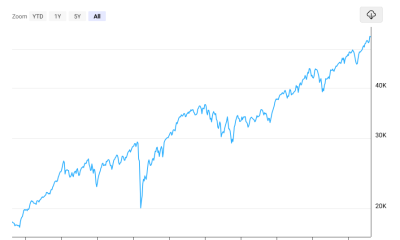
Dow’s 3-Year Winning Run Isn’t a Crash Signal, Still 49% Odds of Double-Digit Gains
-
Tech5 days ago
5 Of The Most Reliable Car Brands To Consider If You’re Buying A Used SUV
-

 Tech6 days ago
Straight Up the Cliff, Yunnan’s New Fuyao Ladder Turns a Three-Hour Climb Into a 50-Second Ride for Students
-
 Tech6 days ago
OpenAI’s new ChatGPT feature logs your keystrokes and stores them in plain text
-

 Tech4 days ago
GLM-5.3 hits the API at $1.4/$4.4 per million tokens
-

 Tech7 days ago
DeepSeek’s top-ranked V4 Flash stumbles on real agent tasks as its prices surge
You must be logged in to post a comment Login