
Business
Meghan Markle Skips Public Events During Prince Harry’s UK Visit Amid Ongoing Royal Security Dispute

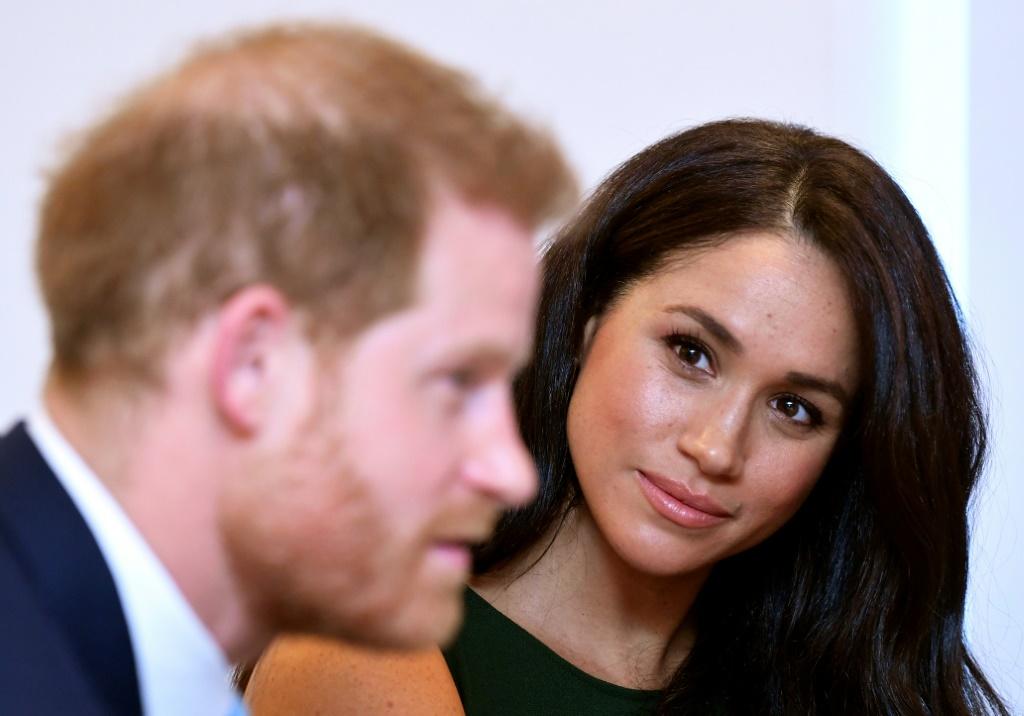
Meghan Markle did not accompany Prince Harry to any of his public engagements during his return to the United Kingdom earlier this month, after her office confirmed she would sit out the events amid an unresolved dispute over the couple’s security arrangements while in Britain.
The Duchess of Sussex had originally been scheduled to appear alongside Harry at several events, including a ceremony marking one year until the Invictus Games return to Birmingham. But following extended discussions centered on the lack of state-funded protection for the couple while in the UK, her office confirmed she would not attend any of the public engagements Harry participated in during his visit, according to ITV News. The largest of those events was Friday’s Invictus Games gathering at the NEC in Birmingham, the venue set to host the tournament for wounded, injured and sick military veterans in July 2027.
Harry’s visit came after he lost an appeal challenging the British government’s decision to reduce his publicly funded security following his and Meghan’s 2020 decision to step back as senior working royals and relocate to California, according to ABC News. Harry was scheduled to attend engagements connected to both the Invictus Games and the WellChild charity during his time in the UK.
The visit also came after ABC News reported that Harry would not be staying at Buckingham Palace during his time in London, after an earlier offer of accommodation to him had been withdrawn. At the time that report emerged, it remained unclear whether Meghan and the couple’s children, Prince Archie and Princess Lilibet, would join Harry later in his visit for the Birmingham portion of the trip.
Despite Meghan’s absence from Harry’s official public engagements, the family did ultimately travel to the UK together. Meghan and the children joined Harry during the visit to meet with King Charles III, marking the family’s first trip to England together in four years, according to Fox News. It was also the first time the king had seen his two California-based grandchildren in person in four years.
Harry was reported to be planning to stay with his uncle, Charles Spencer, at the Spencer family’s Althorp estate near Northampton during the visit, the same estate where Harry’s mother, Princess Diana, is buried on an island in the middle of a lake. Harry and Meghan were reported to be planning to bring Archie and Lilibet to visit their paternal grandmother’s grave during the trip, with a broader Spencer family gathering also planned to include Diana’s surviving siblings, Charles Spencer, Lady Jane Fellowes and Lady Sarah McCorquodale.
Following the couple’s return to the UK, reports indicated that Harry and Meghan largely paused joint public appearances in the days that followed, with few photographs of the couple together circulating publicly during that stretch, according to Reality Tea. After returning from the UK, Harry was subsequently spotted attending the inaugural TIME100 Most Influential People in Sports gala in New York City, while Meghan separately marked a Daytime Emmy Award nomination for her Netflix series “With Love, Meghan.”
The dispute over security arrangements for the Sussexes has remained a persistent point of tension since the couple stepped back from royal duties in 2020, a decision that ended their automatic entitlement to police protection while in Britain. Harry has pursued legal challenges over the issue in the years since, arguing that adequate protection is essential for his family’s safety during any visits to the UK, but has not succeeded in having the earlier security arrangement fully restored through the courts.
Ahead of the visit, a Home Office source described internal disagreement among officials over how to handle the Sussexes’ security needs. “There is nervousness among certain members of the committee who fear a public backlash,” the source said, according to reporting from the U.S. Sun. The source added that “the political side believe there is too much political risk, while the police and security chiefs believe that he absolutely must have it due to the extant threat.”
The visit marked Meghan’s first trip to Britain since September 2022, when she and Harry attended the funeral of Queen Elizabeth II. Since relocating to California in 2020, Meghan has largely remained in the United States with the couple’s children, while Harry has made a number of solo trips back to the UK in the years since.
With the visit now concluded and the underlying security dispute still unresolved, questions remain about how the arrangement will be handled during any future trips the family makes to the UK, particularly as Harry continues to push for a path that would allow Meghan and their children to attend public engagements alongside him without the security concerns that shaped this month’s visit.


Why did the Japanese yen collapse in 2026?
Form 144 Meta Platforms For: 1 August

Ra capital management, 10% owner, acquires $455,725 Artiva stock
The drop, if sustained, would mark the stock’s worst day since the pandemic-driven selloff in March 2020. It would erase nearly $500 billion from Apple’s market capitalization and return the crown of the world’s most valuable company to AI chip giant Nvidia, days after reclaiming it.
Tim Cook, widely hailed as a supply-chain genius, called the shortages “very significant” and said Apple had limited options to address them, speaking on his final earnings call as CEO before handing the reins to John Ternus in September and becoming executive chairman.
“If even at Apple’s scale they are saying they are out all supply chain flexibility, it’s really bad for everyone,” said Ben Bajarin, CEO of tech consultant Creative Strategies.
Big Tech has been scooping up advanced chip-making capacity and memory chips to power its AI data centers, sparking shortages and price increases that are expected to shrink both the personal computer and smartphone markets this year.

Apple had cushioned some of the blow from surging memory costs by drawing on stockpiled inventory, but Cook said that the buffer was fading and shortages of processors were keeping it from meeting strong demand for iPhones and Macs.
Its forecast on Thursday for revenue growth of between 9% and 11% in the current quarter fell short of Wall Street’s roughly 12% estimate, and softer growth in its services business also overshadowed otherwise strong June-quarter results.
SERVICES WEAKNESS WORRIES INVESTORS
The services weakness worried investors as it came during a stretch of strong iPhone sales, which typically feed the business that takes a cut of App Store purchases and includes everything from Apple Music to Apple TV.
That slowdown could deepen if iPhone sales take a hit from a price increase that many analysts expect during the launch of the new lineup, which typically happens in September.
“Apple’s leverage over the supply chain appears to be in question and it’s not clear that AI is serving as any measurable tailwind to products or services, with its future monetization impact still uncertain,” Morgan Stanley analysts said.
“In fact, one could argue App Store softness might even be a result of AI re-prioritizing customer time.”
Still, some analysts said that the iPhone has weathered price hikes before without denting demand significantly and that a recent U.S. leasing deal with Klarna that offers monthly plans for Apple’s devices could soften the blow.
At least four brokerages cut their targets for the company’s stock price, while three raised. That moved the median view to $330, which is $3 lower than the last closing price, according to LSEG data. The stock has risen 22.7% this year as of Thursday’s close.
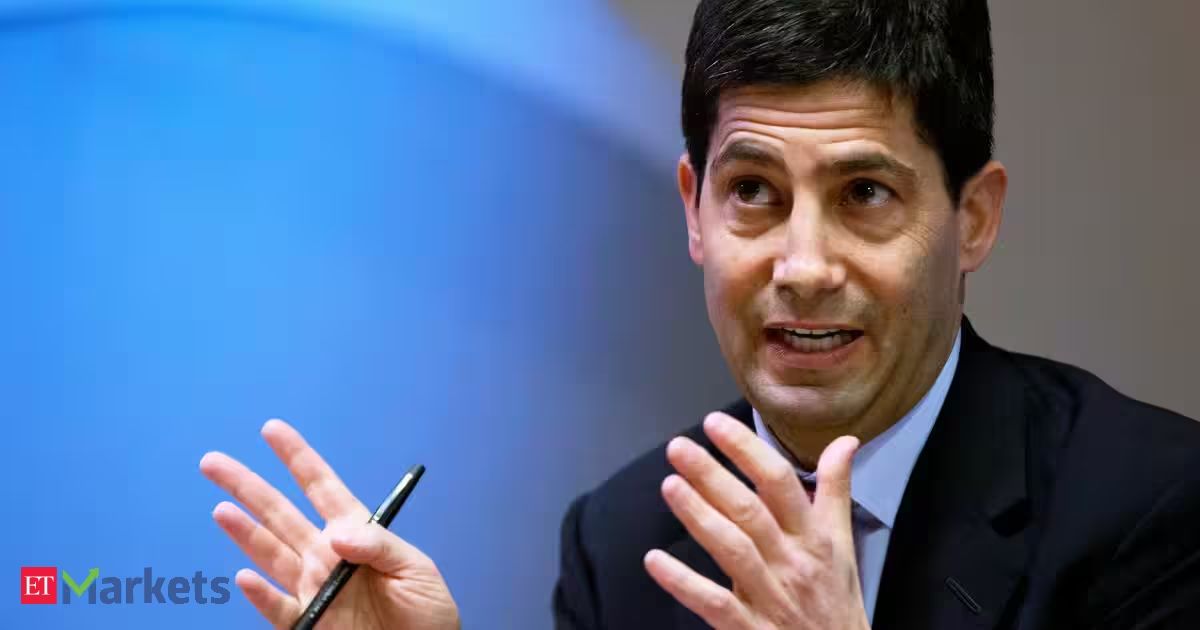
Complicating matters was Warsh’s hint that he may try to switch up the Fed’s yardstick for successfully containing inflation, for years defined as a 2% year-over-year rise in the Personal Consumption Expenditures Price Index. “That’s our number, we’re sticking with it,” Warsh said in a press conference after the end of a two-day policy meeting, before adding, “Who knows, come after next January, what we might say about strategy. I suspect the task forces might have something to add.”
Warsh handpicked 15 outside experts in May to deliver recommendations by the end of 2026 on the Fed’s conduct of monetary policy, including its inflation framework. Warsh said on Wednesday he will check in with them in the next couple of weeks and may share any thoughts that are “ready for prime time” at the Fed’s global central bankers’ conference in Jackson Hole, Wyoming. Past Fed chiefs have used that late-August meeting to prefigure what the central bank may do at its meetings in September. Warsh has so far stuck to his promise to provide no guidance on the Fed’s likely rate path. The combination of Warsh’s repeated assertions of the need to tame inflation with no action to move it toward the 2% target and a hint that the goalposts themselves may change helped send 30-year Treasury yields above 5.2% on Wednesday, a 19-year high. They extended their rise on Thursday.
“That’s almost seen in that building as the markets voting ‘no confidence’ on the Fed and the Fed’s willingness and capacity to bring inflation down,” said Nathan Sheets, the global chief economist at Citigroup. “He highlighted a problem and gave no strategy for solving it other than, ‘I’m a hawk, trust me,’ and the markets wanted more than that,” said Sheets, who worked at the Fed for 18 years. “I think part of it is if you lean too far into future hikes, then he’s disappointing the White House. And it is a balancing act between Warsh the hawk, which he is, and trying to stay on sides relative to 1600 Pennsylvania Avenue.” Sheets said Warsh will need to make a choice by September.
THE BREWING STORM
Warsh’s colleagues are already calling for action. Three of the Fed’s 12 voting policymakers dissented on Wednesday against the decision to leave the central bank’s benchmark interest rate on hold in the 3.50%-3.75% range. On Friday they and any others at the table are free to have their say, and analysts expect a deluge of commentary, given what Sheets called the “absolute red flag” of rising long-term bond rates. “While Warsh may try to constrain the Fed’s official communications and substitute ‘talk’ for action while waiting for ‘task forces’ to return a verdict, the regional Fed presidents, and perhaps members of the Board (of Governors), are willing to discuss their views in the open and will be doing so over the next few days and weeks,” said Thierry Wizman, global FX & rates strategist at Macquarie Group. “We expect them to do a lot of damage control, and to highlight how they, if not Warsh, are ready to tighten policy.” Before the Fed’s meeting this week, some policymakers including two of those who dissented on Wednesday – Dallas Fed President Lorie Logan and Cleveland Fed President Beth Hammack – had signaled their discomfort with leaving rates unchanged despite rising inflation. Others who voted with Warsh on Wednesday to keep rates on hold, including Fed Governors Christopher Waller and Lisa Cook, have said they too may call for rate hikes if they don’t see improvement in inflation soon. The U.S. Bureau of Economic Analysis reported on Thursday that PCE inflation eased in June to 3.7% from 4.1% in May, and underlying core inflation rose 3.3% last month after advancing 3.4% in May. The slight improvement had been widely anticipated after the release of other inflation data earlier this month, and policymakers have said they are worried about renewed upward price pressures due to the ongoing Middle East conflict and surging investment in technology related to artificial intelligence. Business spending on equipment increased at a 15.2% pace in the second quarter, the BEA said in a separate report on Thursday, marking a second straight quarter of double-digit growth. Trump so far has refrained from attacking Warsh for not delivering lower rates, blaming the new Fed chief’s fellow board members instead. “Board members have put Warsh on notice they intend to push for a hike in September if inflation does not meaningfully ease over the summer,” Tim Duy, chief U.S. economist at SGH Macro Advisors, wrote in a note. “If Warsh is indeed a dove in hawk’s clothing, he will not have as much support on the board to hold rates steady again in the face of persistently high inflation.”
BlackRock, a 10% owner, sells $3.1m in York Space Systems stock
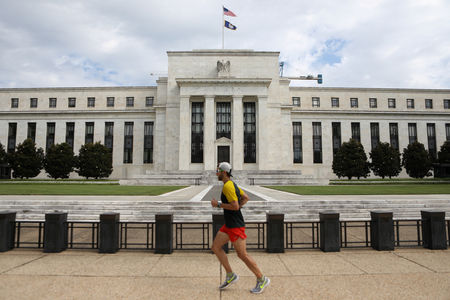
Treasury sell-off shows Fed must reinforce inflation credibility, Musalem says
In Asia, India holds a crucial central bank meeting against a complex backdrop, while Friday’s U.S. non-farm payrolls report comes as traders grow increasingly convinced that the Federal Reserve may have to hike interest rates again.
1/AI-WATERING MOVES
The AI-driven bull run has gone from seemingly unstoppable to spectacularly volatile in a matter of weeks.
Investors are increasingly uneasy about profitability, competition and who’s paying for it all. Unprecedented volatility in chipmakers and other AI-related stocks is the result. South Korea’s KOSPI, which jumped 18% on Friday after tumbling 40% over the previous six weeks, is the prime example.
Pressure is emerging elsewhere too. The cost of insuring against default by some AI hyperscalers has risen as debt levels climb, while earnings reports are triggering increasingly dramatic market reactions.
More turbulence may lie ahead. Elon Musk’s SpaceX reports its first results since its blockbuster June IPO. Since then, its market value has slumped by an eye-watering $1 trillion.
2/WAR WORRIES
Markets will remain focused on the Middle East, where a U.S.-Iran ceasefire announced in mid-June now appears a distant memory and oil prices have climbed back towards $90 a barrel.
A drone strike on two U.S.-owned gas tankers in Egypt’s Mediterranean port of Damietta this week has opened a potential new front in the five-month conflict, raising concerns that traffic through the Suez Canal, one of the world’s most important trade routes, could come under threat. In another first, Saudi Arabia publicly joined military strikes alongside U.S. forces this week, targeting Iran-aligned groups in eastern Iraq. The U.S. military also carried out what it described as a “heavy wave” of strikes against Iran after an attempted ballistic missile attack on U.S. forces in the region.
Diplomatic efforts continue, however. Saudi Arabia is seeking to lead a 14-country coalition to boost maritime defence in the Bab el-Mandeb strait, the Red Sea and the Gulf of Aden, all critical chokepoints for global energy supplies.
3/JOLT FROM JOBS?
Markets get a fresh read on the U.S. economy on Friday when closely watched non-farm payrolls data are released.
Economists polled by Reuters expect the July report to show payrolls increased by 91,000 jobs and the unemployment rate held at 4.3%. A stronger-than-expected reading could raise bets that the Fed may need to resume raising rates to contain persistently above-target inflation at its next meeting in September.
The central bank held rates steady on Wednesday, but three policymakers voted for a hike and Chair Kevin Warsh reiterated the Fed’s commitment to returning inflation to its 2% target.
4/ EUROPE’S BURNING ISSUES
Europe’s record-breaking heatwave looks set to continue with fears mounting that wildfires that have devastated parts of Spain and France are spreading to Italy, Central Europe and Greece.
Markets should pay attention.
The economic costs are mounting, from healthcare spending and insurance claims to reconstruction bills and higher food prices, at a time when many heavily indebted governments are already grappling with the fallout of the Iran war. Adding to concerns, a ‘super’ El Nino event appears increasingly likely, raising the risk of further extreme weather globally.
In Britain, also facing wildfires and drought, major supermarket groups warn another food-price shock could be looming. In Germany, meanwhile, a contentious cabinet reshuffle has renewed pressure on Chancellor Friedrich Merz as the country also battles record temperatures.
DRUPEE
The Reserve Bank of India announces its latest policy decision on Wednesday, with most economists polled by Reuters expecting no change to the benchmark interest rate of 5.25%.
However, authorities will be attempting to prop up the rupee , one of Asia’s worst-performing currencies this year.
In June, the central bank unveiled measures designed to boost capital inflows and strengthen the balance of payments. The moves attracted more than $20 billion in their first month, but renewed strength in oil prices has since clouded the outlook.
For those thinking an interest rate increase might help, retail inflation has just breached the central bank’s target for the first time in over a year. Nevertheless, economists still expect the risks to growth to keep policymakers from acting, for now at least.
Business
Resona Holdings, Inc. 2027 Q1 – Results – Earnings Call Presentation (OTCMKTS:RSHGY) 2026-08-01


Seeking Alpha’s transcripts team is responsible for the development of all of our transcript-related projects. We currently publish thousands of quarterly earnings calls per quarter on our site and are continuing to grow and expand our coverage. The purpose of this profile is to allow us to share with our readers new transcript-related developments. Thanks, SA Transcripts Team
In the personal loan segment, loans against gold jewellery, which include certain agriculture loans, remained the fastest-growing sector, surging 93% YoY, data published Friday by the Reserve Bank of India (RBI) showed. Vehicle loans with a 17% growth were the second-fastest in the personal loan segment. Credit card outstanding growth decelerated to 2% compared to 7% recorded a year ago.
Growth in education loans also remained strong at 13% versus 14% recorded a year ago.

Moroccans sought better future trying to reach the Spanish territory of Ceuta
Why did the Japanese yen collapse in 2026?

Alaskan Bush People Stars Gabriel and Raquell Brown Separate


-
 Sports5 days ago
Commonwealth Games boxing: Jadumani Singh seals dominant 5-0 win over Pakistan’s Sumama Rehman to enter quarter-finals | Commonwealth Games News
-

 Business2 days ago
Why Trees Belong on the Risk Register
-

 Fashion11 hours ago
Weekend Open Thread: Wit & Wisdom
-

 Tech5 days ago
Intel is reversing course and bringing hyper-threading back to its server chips
-

 Politics8 hours ago
Meta enters AI-training agreement with far-right ‘propaganda rag’ Newsmax
-

 Crypto World6 days ago
Ripple bought a bank in pieces. The $4 billion audit
-

 Politics5 days ago
Luke Littler dismantles Gerwyn Price to retain title in Blackpool
-

 Politics4 days ago
The Part of the Electric Transition Nobody Wants to Discuss
-

 News Videos5 days ago
BITCOIN JUST ENTERED THIS CRITICAL ZONE…
-

 Crypto World6 days ago
XRP Ledger adds $2.6B as RWA inflows rank second
-
 Entertainment3 days ago
‘Stargate’ Creator’s New Sci-Fi Series Returns for Season 3 Tomorrow
-

 Business3 days ago
Major shareholder moves on Canyon
-

 Politics6 days ago
Spain sweeps the board at 2026 World Cup with individual awards
-

 News Videos2 days ago
Bitcoin Enters the 3rd Stage of the Bear Market
-

 Entertainment6 days ago
Sara Gilson Killed By Husband After Viral “Pedophile” TikTok Video
-

 Crypto World3 days ago
Kraken Enables Retail Access to Jersey Mike’s IPO via Tokenized Shares
-

 Tech4 days ago
New macOS Sequoia & Sonoma security updates for older Macs
-

 News Videos3 days ago
Claude: Build Financial Dashboards in Minutes (2026)
-

 Politics2 days ago
Luke Littler’s dominance sparks GOAT debate
-

 Crypto World6 days ago
Upbit expands KRW market with two major DeFi token listings
You must be logged in to post a comment Login