Connect with us
DAPA Banner

Business

Meta Platforms (META) Stock Dips on Heavy AI Capex Outlook Despite Strong Earnings

Published

on

Stock Market

Meta Platforms Inc.’s stock has pulled back in February 2026, trading around $636 to $639 after shedding about 2-3% in recent sessions amid investor concerns over the company’s massive $115 billion to $135 billion capital expenditure guidance for the year, even as core advertising revenue surges and new AI infrastructure deals signal long-term momentum.

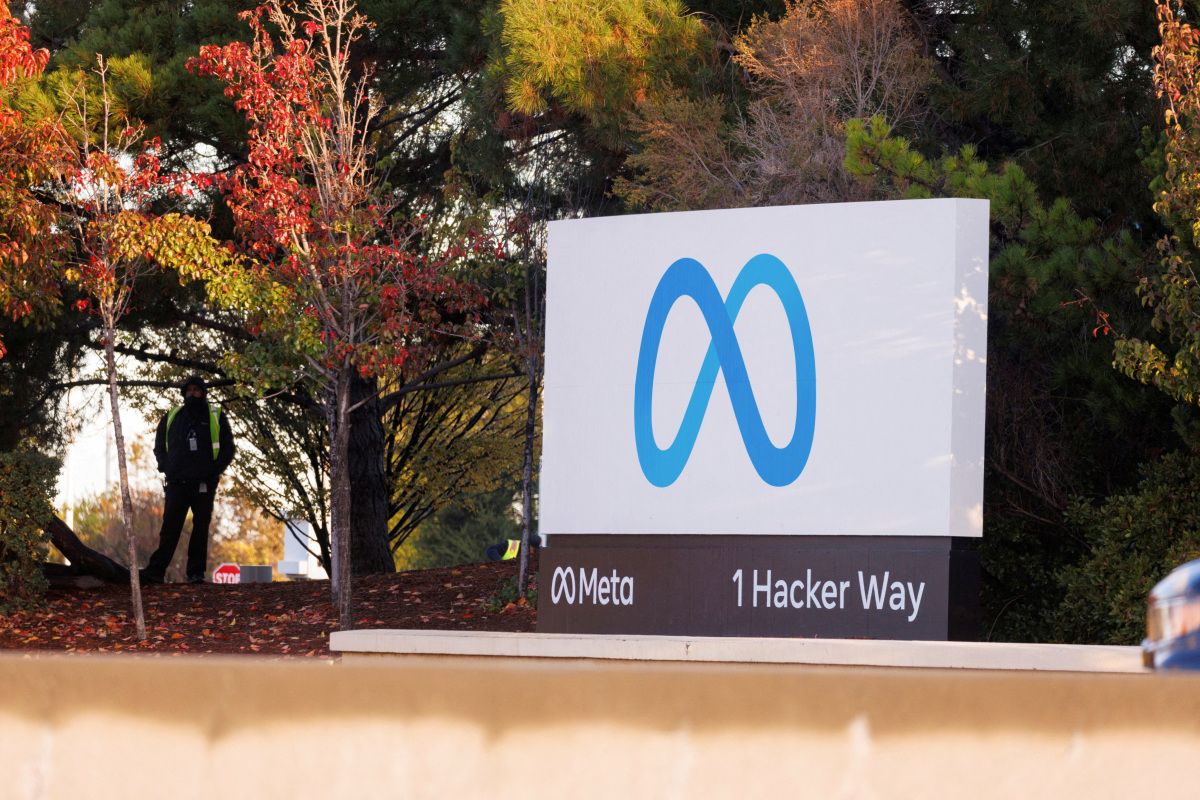
Headquarters of Facebook parent company Meta Platforms Inc in Mountain View
Meta Platforms

As of February 24, 2026, Meta (NASDAQ: META) closed at approximately $636.07, down modestly from recent highs near $655-$660 earlier in the month. The shares have retreated from an all-time peak of around $788-$796 in mid-2025, reflecting a roughly 18-20% decline from that level. Year-to-date performance remains positive but tempered by volatility tied to AI spending fears and broader market dynamics.

The pressure intensified following Meta’s blockbuster Q4 and full-year 2025 earnings released January 28, 2026. The company reported record revenue of $59.89 billion for the quarter, up 24% year-over-year (23% on constant currency), surpassing analyst expectations. Full-year revenue reached $200.97 billion, a 22% increase from 2024. Diluted earnings per share hit $8.88 in Q4, beating estimates, while full-year net income stood at $60.46 billion despite a one-time tax impact from legislative changes.

Advertising, the core driver, delivered $58.14 billion in Q4, up significantly, fueled by 18% growth in ad impressions and 6% higher average price per ad. Family of Apps revenue climbed 25% to $58.94 billion, with daily active people averaging 3.58 billion in December 2025, up 7% year-over-year. Reality Labs, encompassing metaverse and wearables, posted $955 million in revenue but a $6.02 billion operating loss in Q4, though management indicated losses would peak in 2026 before declining.

Meta guided aggressively on investments, forecasting 2026 capex of $115 billion to $135 billion—roughly double 2025’s $72.22 billion—to build out AI infrastructure, data centers, and compute capacity. CEO Mark Zuckerberg emphasized advancing “personal superintelligence” through agentic AI models that personalize feeds, ads, commerce, and messaging. The spending aims to close the gap in generative AI capabilities, with internal AI tools already flattening teams and boosting productivity.

Advertisement

A major validation arrived February 24, 2026, when Meta announced a multi-year, multi-generation partnership with Advanced Micro Devices Inc. to deploy up to 6 gigawatts of AMD Instinct GPUs starting in the second half of 2026. The deal, powered by custom MI450-based chips and Helios rack-scale architecture, represents “double-digit billions” per gigawatt and includes Meta gaining warrants for up to 160 million AMD shares. Shipments for the initial gigawatt begin soon, diversifying Meta beyond Nvidia dominance while supporting next-gen AI workloads.

The AMD pact sparked gains in AMD shares but offered mixed relief for Meta investors wary of execution risks and margin pressure from elevated spending. Free cash flow remains robust at $43.59 billion for 2025, with operating cash flow near $116 billion and cash reserves of $81.59 billion, providing flexibility for dividends, buybacks, and investments.

Meta continues pushing AI across products. Llama models advance open-source efforts, while Ray-Ban Meta smart glasses see explosive demand—sales tripled in recent periods, with waitlists extending into 2026 and international rollout paused due to supply constraints. Updates include enhanced Meta AI features like live translation and detailed visual responses. The company teases further wearables, including a potential smartwatch launch in 2026.

Wall Street leans bullish despite near-term headwinds. Consensus among 43-49 analysts rates Meta a Moderate to Strong Buy, with average 12-month price targets ranging from $835 to $864, implying 31-36% upside from current levels. High targets reach $1,144, low ends around $605-$700. Recent updates include Wells Fargo raising to $856 and others maintaining overweight stances, citing advertising resilience, AI monetization potential, and strong cash generation.

Advertisement

Critics highlight risks: heavy capex could compress margins if AI returns lag, competition from OpenAI, Google, and others intensifies, and regulatory pressures persist. Yet proponents argue Meta’s scale—over 3.5 billion users—and proven ad efficiency position it to capture AI-driven growth. Billionaire investor Bill Ackman recently disclosed a stake, calling the stock undervalued compared to peers.

The next catalyst arrives with Q1 2026 earnings in late April, where updates on capex deployment, AI traction, and guidance revisions will be scrutinized. Positive signs of monetization from agentic features and wearables could fuel a rebound; delays might prolong volatility.

Meta stands at a transformative juncture. Its advertising dominance and user base provide a sturdy foundation, while aggressive AI bets—including partnerships, open models, and wearables—aim to secure future leadership. Investors betting on execution see current levels as an attractive entry amid the AI infrastructure buildout.

Advertisement
Continue Reading
Click to comment

You must be logged in to post a comment Login

Leave a Reply

Business

How Aleksandr Loginov Is Redefining Design in the Age of AI

Published

on

How Aleksandr Loginov Is Redefining Design in the Age of AI

Recent releases made the shift in design impossible to ignore. Google DeepMind’s Nano Banana Pro showed how far image generation has moved toward precise, controllable editing, with tools that let creators adjust camera angle, focus, depth, and color treatment. For video, Seedance 2.0 combined audio-visual generation with much more direct control over performance, lighting, shadow, and camera movement.

These tools are turning design into a controllable production system, so the designer’s role is moving towards that of a systems architect, says Aleksandr Loginov, a product designer and creative leader who combines broadcast visual craft, technical fluency, and product thinking. As Chief Design Officer at Prequel, a consumer app company in photo and video editing whose 4 apps repeatedly reached No. 1 in the App Store’s Photo & Video category in markets including the US, the UK, France, and Canada, he helped shape the strategy behind the company’s rapid expansion. Before moving into product and AI design, Aleksandr was a broadcast designer at STS,  a popular Russian entertainment television channel, where he led his team to a silver PromaxBDA award in the UK in 2015 for high-level work in TV promotion and broadcast design. Now, as he has just joined Lazarev Agency as Art Director for agent-based AI product interfaces, he moves into an award-winning B2B design company with more than 600 shipped products, focused on complex, data-heavy platforms such as AI copilots, decision engines, and vertical SaaS.

Across all those roles, Aleksandr observed that as AI absorbs more of the manual craft, the real competitive edge is shifting elsewhere: toward judgment, system design, and making complex tools usable.

The New Creative Engine

To understand the shift in design, start with the stack itself. Creative teams are no longer using isolated tools. They are assembling a production engine. As Aleksandr notes, Nano Banana Pro is especially strong when the goal is a polished image with better lighting, composition, localized edits, and cinematic texture. But consistency of faces is not its main advantage. That is where Seedream is stronger. Right now, its clearest edge is identity transfer: keeping faces recognizable and consistent across outputs better than any other model in the stack. Kling and Seedance add the cinematography layer, making it possible to generate video with synchronized audio, controlled motion, and more coherent shot sequences. ElevenLabs adds the voice layer, giving visuals a believable multilingual narrative.

Advertisement

“I have already noticed that even a small amount of coding knowledge is now becoming essential for designers. Not to turn them into engineers, but to help them connect models in the right order, speed up iteration, and work with far less dependence on long engineering cycles,” Aleksandr says. Once the stack can provide photorealistic visuals, identity consistency, motion, and voice, the advantage is the ability to turn those capabilities into a dependable pipeline.

That shift becomes easier to recognize when you have had to lead products at scale. At Prequel, where Aleksandr served as Chief Design Officer, he was responsible not just for visual quality, but for the workflow behind image, video, and audio technologies across R&D, Data Science, Art, and key parts of Mobile and Backend. Part of the job was to improve quality, speed, cost, and time to market at the same time. One result, as he describes it, was a workflow that eventually cut the release cycle for AI features from roughly three months to 30 minutes, giving the company a much faster way to respond to signals from marketing. Once a creative stack can deliver photorealistic visuals, preserve identity, and handle motion and voice, the real advantage lies in turning that complexity into a pipeline people can actually use.

What Is Fading and What Is Rising

The manual labor of design is being automated into oblivion. If your value was based on how fast you could mask an image or navigate a complex software menu, the market is shrinking.

What is fading

  • Technical Tool Proficiency: Knowing every shortcut in Photoshop is no longer a competitive advantage. The software is now a canvas for natural language and intent.
  • Stock Curation: Spending hours browsing libraries for the “right” image is obsolete. If it doesn’t exist, you generate it in 15 seconds.
  • Basic Asset Production: Routine tasks like resizing, color correction, and basic layout are now background processes.

What is rising

  • Intent Engineering: This is more than prompting. It’s the ability to translate a business goal into a technical aesthetic description, i.e., understanding lighting, lenses, and psychology.
  • Curatorial Judgment: When a machine gives you 50 perfect options, the designer is the one who knows which one actually resonates with the human heart.
  • Ethical & Legal Oversight: Navigating the complexities of AI copyright and ensuring that generated content remains unbiased and original.

Aleksandr has witnessed this shift while building the kinds of systems that are redefining the designer’s role. In a multi-agent workflow for marketing, he did not focus on producing each asset by hand. He defined the creative logic, structured the sequence of models, and decided where human judgment needed to stay in the loop. Instead of scaling output by hiring dozens of designers, Aleksandr and his team built a system around Gemini and Nano Banana in which the designer began by describing the image and the criteria it had to meet. The model then generated 10 to 20 options. A separate vision-language model reviewed those outputs, identified the ones that matched the original brief most closely, and surfaced the strongest candidates for the designer to evaluate.

This way, Aleksandr shaped the next stage of the workflow. After the designer made a selection, the team animated the chosen images in Kling and assembled them into a single creative or a broader pack of creatives. They then tested that set either in Facebook ad accounts or through SplitMetrics to see which approaches attracted users most effectively. Aleksandr treated that stage not as a final checkpoint, but as part of the system itself: the team fed the performance data back into the workflow so the next round of creatives could build on what had already proven effective.

Advertisement

In practice, that workflow increased creative output many times over while sharply reducing the designer’s manual workload. Under Aleksandr’s leadership, the work that remained essential sat at a higher level: setting intent, defining quality, evaluating outputs, and steering the system as it iterated. For him, that is where the profession is moving. The designer’s value no longer lies mainly in making each asset by hand but in shaping the process that can produce strong creative results at scale.

He argues that this is also why consistency is becoming one of the hardest requirements in AI design:

“When a system produces many versions of the same person, the question is not whether it can generate an image, but whether it can preserve identity, recognizability, and stability across outputs. That is where the designer’s role changes most. The job is no longer just to make things look good, but to define the process, control the edge cases, and make sure the system produces results that are consistent enough to trust and ship,” he says.

From T-Shaped to Blob-Shaped Designers

For years, the ideal creative professional was T-shaped: broad across disciplines, with one deep specialty. In generative design, that model is starting to loosen. The role is becoming more fluid. A designer may move from visual direction to product logic, from interface structure to content behavior, depending on what the system needs at that moment. The craft does not disappear, but it stops living in one fixed place.

Advertisement

Aleksandr’s own career helps explain the shift. Early in his career, he worked in a television medium where images had to register at once (with precision, clarity, and emotional force), and that work led his team to a Silver PromaxBDA in the U.K. Later, at Prequel, he was no longer focused only on frames or campaigns. He concentrated on product systems that had to hold up across millions of user interactions while remaining intuitive enough to help the company’s apps repeatedly rise to the top of the App Store’s Photo & Video category in major markets. The role had expanded from making images to defining how creativity operates inside the product.

As Art Director for agent-based AI product interfaces at Lazarev Agency, he is not confined to one design lane. One week, the work is about understanding what AI capabilities can realistically support in a product. The next step is about shaping those capabilities into a usable flow with the right controls, review points, and product logic. Then the focus moves back to creative direction: defining what quality should look like when images, video, and audio are generated at scale. That is the new reality of generative design teams. Depth still matters, but it now means the ability to shape, connect, and govern systems across disciplines, not just master one static craft.

The Future Horizon of a Designer’s Career

The next shift in design is not just better media, but a different kind of interface, Aleksandr is sure.

One direction is generative UX. Instead of designing fixed pages, designers will increasingly define rules, states, and priorities. The system will assemble the right interface in real time based on the user’s intent and context. In that model, software becomes less like a set of screens and more like a temporary control surface that appears when needed.

Advertisement

Aleksandr has already seen the logic in product work built around ordinary users, not specialists. One of the central ideas he pushed at Prequel was that editing should help people express the feeling of a moment without forcing them to master the mechanics behind it. That same principle, he argues, can shape the next generation of interfaces: systems that infer intent, surface the right controls at the right moment, and ask for confirmation only when the stakes are high:

“When a complex capability is reduced to a simple action, adoption improves because users do not have to learn the system first. The same principle can shape the next generation of products: interfaces that infer intent, surface the right controls at the right moment, and ask for confirmation only when the stakes are high,” he says.

Further ahead, the profession may change again. Neural interfaces could make it possible to sketch ideas directly from thought into digital space. At the same time, fully human-made design may gain premium value as a mark of authorship and authenticity.

AI is not eliminating designers. It is stripping value from the most repeatable parts of the craft. What remains valuable is judgment: the ability to structure workflows, preserve coherence, define limits, and steer a product when the model becomes unstable. Aleksandr has moved in exactly that direction. He started by making visuals himself. He began with visuals. Now he works on systems that determine how creative work gets produced, scaled, and experienced. That is also the direction he is choosing deliberately: building tools that let people without design training create strong content, while giving experienced creators a way to move faster and produce far more. For him, the point is not automation for its own sake. It is to make creative expression more accessible on one side and more powerful on the other.

Advertisement

Continue Reading

Business

Greatland gets EPA nod, with rare night parrot speed clause

Published

on

Greatland gets EPA nod, with rare night parrot speed clause

Greatland Resources’ plan to develop the Havieron gold project through its Telfer mine has received a conditional watchdog tick, but an elusive bird could slow operations.

Continue Reading

Business

Best day in a year as Aussie shares surge on Iran truce

Published

on

Best day in a year as Aussie shares surge on Iran truce

Australia’s share market is trading at its highest level since early March after the US and Iran struck a two-week ceasefire, easing soaring oil prices and boosting investor confidence.

Continue Reading

Business

New board members for FTSE listed engineering firm Renishaw

Published

on

Business Live

The Gloucestershire-headquartered company has added to its leadership team

GloucestershireLive Business Awards' past winners

Renishaw New Mills headquarters (Image: Renishaw )

Gloucestershire engineering firm Renishaw has refreshed its board with three appointments, including a renowned British academic as its new chair. The news of the appointments come just months after the precision manufacturer confirmed it had made ownership changes to the business as part of a succession plan.

On Wednesday (April 8) Renishaw told investors it had appointed Sir David Grant as its permanent chair with immediate effect for a period of up to two years. Sir David was previously a company non-executive director and also chair of the nomination committee – a role he will retain.

The Wotton-under-Edge-based business also announced the appointment of former Smiths Group finance boss John Shipsey as chief financial officer and executive director. Mr Shipsey, who worked for Dyson for 12 years and has held strategy roles at alcoholic drink brand giant Diageo, will join the board on April 13.

Sir David said: “I would like to warmly welcome John to Renishaw and its board. John brings a deep understanding of the industrials sector and its associated performance drivers. He has a strong track record of leading high-performing finance functions, and we look forward to him strengthening both the board and executive leadership team.”

Advertisement

Renishaw also confirmed that Juliette Stacey had been appointed to the role of senior independent director with immediate effect. Ms Stacey took up the role of independent non-executive director of the FTSE-250 company in January 2022 and has been chair of the audit committee and served as a member of the nomination and remuneration committees since her appointment.

In the statement to the stock market, Renishaw said it would continue the search process for the company’s next chair, with the aim of making an appointment by 2028. The company is also continuing its search for an additional independent non-executive director.

Renishaw was established by the late Sir David McMurtry and John Deer in 1973 and floated on the stock market a decade later. The firm’s first product, the touch-trigger probe, was invented by Sir David to solve a specific inspection requirement for the Olympus engines used in Concorde.

Advertisement
Continue Reading

Business

Daiseki Co.,Ltd. 2026 Q4 – Results – Earnings Call Presentation (OTCMKTS:DSKIF) 2026-04-08

Published

on

OneWater Marine Inc. (ONEW) Q1 2026 Earnings Call Transcript

This article was written by

Seeking Alpha’s transcripts team is responsible for the development of all of our transcript-related projects. We currently publish thousands of quarterly earnings calls per quarter on our site and are continuing to grow and expand our coverage. The purpose of this profile is to allow us to share with our readers new transcript-related developments. Thanks, SA Transcripts Team

Continue Reading

Business

what bigger ‘small’ company thresholds mean for UK freelancers

Published

on

what bigger ‘small’ company thresholds mean for UK freelancers

Changes to the off-payroll working rules coming into force this month will relieve scaling businesses of costly compliance obligations. Yet contractors who fail to adjust their rates risk being caught out, writes Business Matters.

From this month, a raft of amendments to the UK’s IR35 tax legislation will redraw the lines of responsibility between businesses and the freelancers they engage. For thousands of companies that have until now shouldered the burden of determining whether their contractors fall inside or outside the off-payroll working rules, the changes promise welcome relief. For freelancers, however, the picture is rather more complicated.

IR35, in essence, is the government’s mechanism for ensuring that individuals who work through intermediaries such as personal service companies, but whose engagements resemble those of employees, pay a broadly equivalent amount of income tax and National Insurance. According to HMRC, the framework has already shifted more than 130,000 workers into deemed employment tax status since 2021 – a figure that underscores both its reach and its continuing impact on the UK’s contracting workforce.

Under the current regime, responsibility for determining a contractor’s IR35 status rests largely with the hiring organisation – provided that organisation qualifies as medium or large under company law. Smaller companies have been exempt, with the onus falling instead on the contractor’s own personal service company. The April 2026 changes significantly raise the bar for what constitutes a “small” company, meaning many more businesses will now fall beneath that threshold and be freed from compliance duties.

A wider net for the small company exemption

Previously, a company qualified as small if it met at least two of three criteria: annual turnover of no more than £10.2 million, a balance sheet total of no more than £5.1 million, and no more than 50 employees. From April 2026, the turnover ceiling rises to £15 million and the balance sheet limit to £7.5 million, whilst the headcount threshold remains unchanged at 50 staff. The consequence is that a significant number of businesses that were previously classified as medium-sized will now be treated as small, and the obligation to issue a Status Determination Statement – the legal document setting out whether a contractor sits inside or outside IR35 – will pass back to the contractor.

Advertisement

Vincent Huguet, chief executive and co-founder of Malt, the European freelance talent platform, welcomes the reforms but sounds a note of caution. The shift in thresholds, he says, helps to move responsibility away from hiring managers, allowing them to concentrate on when and what they need rather than worrying about the tax implications of every engagement. Yet he warns that neither companies nor freelancers should become complacent.

The end of double taxation?

Alongside the threshold changes, the government is introducing a PAYE set-off mechanism designed to address one of the more contentious aspects of the existing rules. Until now, where a client failed to apply IR35 correctly, HMRC could pursue the full PAYE and National Insurance bill from the deemed employer without accounting for tax already paid at the contractor’s end through their personal service company. The new mechanism allows HMRC to offset those prior payments when calculating any outstanding liability.

Huguet describes this as an important step towards eliminating double taxation, noting that it removes the risk of a freelancer ending up paying more than their fair share and properly accounts for historic tax records.

Pricing: the freelancer’s blind spot

For contractors, however, the real sting may lie in the detail of their own rate cards. With a greater share of compliance responsibility now resting with them, freelancers must ensure their pricing properly reflects the full cost of engagement. Last year’s increase in employer National Insurance Contributions from 13.8 per cent to 15 per cent, coupled with the reduction in the payment threshold from £9,100 to £5,000 annually, has already made hiring more expensive. Because employer NIC is deducted from the assignment rate before a contractor’s pay is calculated, those costs feed directly into negotiations – whether the contractor is deemed inside or outside IR35.

Advertisement

Huguet’s message to freelancers is blunt: get your pricing right. Those who fail to factor in these shifting obligations risk undervaluing their services at precisely the moment when the regulatory landscape demands they take greater ownership of their tax affairs. For businesses, particularly those that find themselves newly reclassified as small, the changes offer a chance to engage freelance talent with less red tape – but only if both sides of the arrangement understand what is now expected of them.


Amy Ingham

Amy is a newly qualified journalist specialising in business journalism at Business Matters with responsibility for news content for what is now the UK’s largest print and online source of current business news.

Advertisement
Continue Reading

Business

Holista CollTech fails to restrain foreign orders over ProImmune stoush

Published

on

Holista CollTech fails to restrain foreign orders over ProImmune stoush

A Subiaco biotech company has failed to quash a US District Court judgment that ordered it to pay almost $3 million in damages.

Continue Reading

Business

Delta Air Lines earnings beat by $0.03, revenue topped estimates

Published

on


Delta Air Lines earnings beat by $0.03, revenue topped estimates

Continue Reading

Business

Grab to lean on scale, AI to navigate rising fuel costs, CEO says

Published

on

Grab to lean on scale, AI to navigate rising fuel costs, CEO says


Grab to lean on scale, AI to navigate rising fuel costs, CEO says

Continue Reading

Business

Imam Khomeini International Airport Remains Largely Closed on April 8, 2026: Limited Operations Only

Published

on

Tehran Imam Khomeini International Airport

TEHRAN, Iran — Imam Khomeini International Airport (IKA), Iran’s primary gateway for international travel, stayed mostly shuttered for routine commercial flights on Wednesday, with only a handful of pre-authorized or military-linked operations reported as the country navigated the fragile two-week ceasefire framework announced by President Donald Trump and Iranian officials.

Tehran Imam Khomeini International Airport

Flight tracking sites and aviation authorities showed near-zero commercial activity at the airport south of Tehran on April 8. Major trackers including FlightStats and Flightradar24 listed no departing or arriving commercial flights during much of the day, while scattered reports of Mahan Air cargo or limited long-haul movements to destinations such as Beijing and Shanghai appeared tied to special permissions rather than normal schedules.

The airport has operated under severe restrictions since late February when the U.S.-Israeli military campaign against Iranian targets escalated, triggering retaliatory actions and widespread airspace closures across the region. Iranian NOTAMs (Notices to Airmen) have repeatedly extended prohibitions on civilian aviation in the Tehran Flight Information Region, citing security concerns and active air defense measures. Even after the ceasefire announcement late Tuesday, no immediate full reopening was declared.

The Civil Aviation Organization of Iran and airport management have not issued a clear timeline for restoring normal operations. Officials urged passengers to avoid traveling to the facility unless they hold confirmed tickets on the extremely limited wartime schedule or are collecting arriving passengers on approved flights. Foreign carriers, including Turkish Airlines, Emirates and others, have suspended service to Tehran for weeks, with many extensions running into late April or beyond.

A small number of flights, primarily operated by Iranian carriers such as Mahan Air or Iran Air, continued on a case-by-case basis with prior military clearance. These included occasional cargo or repatriation movements, but passenger capacity remained heavily restricted and subject to last-minute cancellation. International airlines continued to reroute around Iranian airspace, adding hours and costs to long-haul routes between Europe, Asia and the Middle East.

Advertisement

The situation mirrors challenges seen at other regional hubs during the conflict. Like Ben Gurion Airport in Israel, IKA has balanced limited civilian needs with heavy military use of facilities and surrounding airspace. Damage reports from earlier strikes near radar installations and infrastructure added caution to any resumption plans. Airport terminals appeared quiet, with reduced staff handling essential services for the few movements that occurred.

Travelers face significant hardship. Thousands of Iranians and foreign nationals remain stranded abroad or inside Iran, with many seeking overland routes through neighboring countries or waiting for rare approved flights. Families separated by the conflict have shared stories of canceled weddings, medical treatments and business trips. Ticket sales for departures from IKA stayed largely suspended, and refund processes proved slow and complicated.

The two-week ceasefire, which hinges on safe reopening of the Strait of Hormuz and de-escalation steps, has raised cautious hopes for gradual normalization of aviation. Iranian officials indicated that once the Home Front Command and military authorities declare conditions safe, civilian flights could resume incrementally. However, as of Wednesday morning, no such declaration had come, and NOTAMs restricting Tehran FIR remained in effect or recently extended.

Aviation experts noted the unprecedented strain on Iran’s air transport sector. IKA normally handles millions of passengers annually, serving as the main hub for long-haul connections to Europe, Asia and the Persian Gulf. The prolonged closure has hurt tourism, trade and the national carrier Iran Air, while boosting demand for alternative routes via Turkey, Armenia or indirect connections through the Gulf. Cargo operations have also suffered, affecting supply chains for essential goods.

Advertisement

Inside the airport, security remained heightened. Passengers on the few permitted flights underwent enhanced screening, and terminal areas outside active gates stayed mostly empty. Maintenance crews continued routine work in preparation for eventual full reopening, but daily activity stayed far below normal levels. The public was generally advised to stay away to reduce congestion and security risks.

Broader economic impacts ripple far beyond aviation. Exporters relying on air freight, businesses with international ties and the tourism sector — already strained before the conflict — face extended recovery timelines. Iranian authorities have coordinated with neighboring countries for limited land border crossings, though those options carry their own logistical and security challenges.

The ceasefire framework announced by Trump, involving a temporary suspension of attacks in exchange for Iranian commitments on maritime safety, offers a potential off-ramp. Yet analysts warn that any violation or breakdown could quickly reimpose full closures. Markets reacted positively to the news with falling oil prices and rising equities, but aviation insiders remain focused on ground-level implementation rather than headlines.

For now, IKA stands as a symbol of how conflict can ground even vital infrastructure. Its modern terminals, expanded in recent years to accommodate growing traffic, now echo with far fewer footsteps. Ground handlers and airline staff manage skeletal operations while awaiting clearer guidance from Tehran and military command.

Advertisement

Travelers with urgent needs continue monitoring official channels, airline apps and sites such as Flightradar24 for any updates. The Iranian Civil Aviation Organization’s website and airport social channels provide the most authoritative notices, though information sometimes lags behind fast-moving events. Those already holding tickets on limited flights should confirm status directly with carriers and arrive with extra time for security protocols.

As April 8 progressed with no major new announcements, many Iranians checked news sites and flight trackers hoping for signs of normalization. The two-week window provides breathing room for diplomacy, but full restoration of IKA’s busy schedule could take additional days or weeks even after a sustained truce.

The airport’s resilience has been tested before during periods of regional tension, with operations typically rebounding quickly once threats subside. Yet the scale and duration of the current disruptions — involving direct strikes and prolonged airspace closures — mark this as one of the most challenging episodes in its history.

For the global community with ties to Iran, the status of Imam Khomeini Airport carries both practical and symbolic weight. Safe and open skies represent a return to normalcy; their restriction underscores the human and economic costs of prolonged instability.

Advertisement

As the day continued without a breakthrough reopening, passengers and airlines alike prepared for more uncertainty. The coming hours and days will determine whether the ceasefire translates into tangible relief for travelers or remains a fragile pause in a volatile chapter.

Authorities continue to emphasize that safety remains the top priority. Any resumption will follow careful assessment by Iranian military and civilian officials. In the meantime, IKA operates in survival mode — open in name but far from business as usual.

Continue Reading

Trending

Copyright © 2025