

Business
Microsoft Leases Soho’s Film House for UK AI Hub

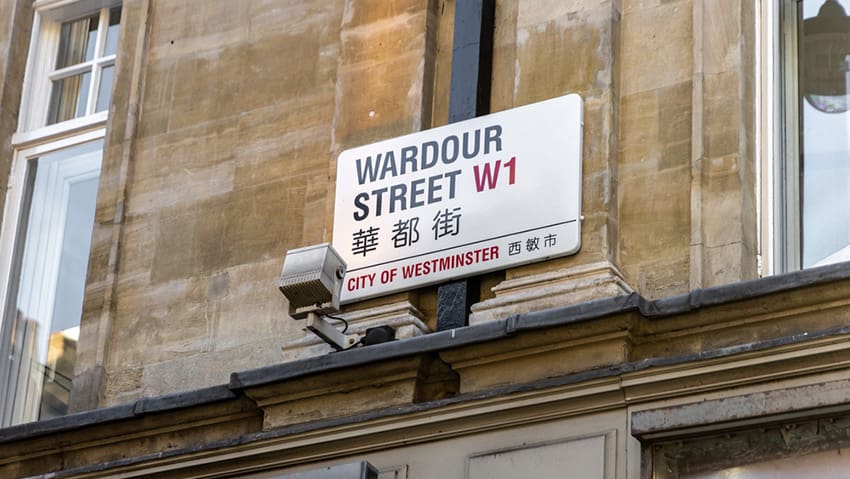
Microsoft is to plant a fresh flag in central London, taking the entirety of Film House, an eight-storey Art Deco landmark on Wardour Street, to serve as the principal home of its rapidly expanding UK artificial intelligence operations.
The deal underscores how the world’s deepest-pocketed technology groups are doubling down on the capital as the AI arms race intensifies. Microsoft, alongside Meta and Amazon, is committing billions of dollars to compute, talent and real estate in pursuit of a slice of what is shaping up to be the defining commercial contest of the decade.
Film House carries no small amount of cinematic provenance. Built in the 1920s as the first British outpost of French film studio Pathé, complete with private screening rooms, the building later housed HMV before serving as Nike’s UK headquarters. Texas-based developer Hines acquired the property in 2023 and has since refurbished it to court the buoyant demand for premium workspace. Tenants will find a gym, a bar, a rooftop terrace, a so-called hidden courtyard, showers and changing rooms, and, in a nod to the building’s heritage, a cinema in the basement.
Even with Film House secured, Microsoft is understood to be hunting for a substantially larger London headquarters to consolidate its wider workforce in the capital. Property agents suggest the company has its eye on a 300,000 sq ft footprint, three times the size of the Soho building, somewhere along the Elizabeth Line, where transport connectivity has reshaped occupier appetite.
A Microsoft spokesman declined to comment on the Film House lease but said: “We are committed to the UK and have facilities across the country. We regularly review our portfolio to make sure it meets the needs of our people and our long-term business.” Hines also declined to comment.
The American group is far from alone. Last month OpenAI signed a lease for a larger base near King’s Cross, just around the corner from rival Anthropic, which recently confirmed plans to move into the same neighbourhood. The clustering effect is unmistakable, and is rippling through the wider SME ecosystem of AI start-ups, scale-ups and supporting professional services drawn to the gravitational pull of the majors.
Mike Gedye, head of European technology leasing at CBRE, said: “We expect London’s depth of talent and established tech ecosystem to continue reinforcing its position as a global hub for technology and AI. Tech and AI businesses are making a footprint in London on a relatively small or short-term lease, but upsizing significantly within 18 to 24 months.”
That trajectory has profound implications for the capital’s commercial property market. CBRE estimates AI companies could absorb close to half of all the speculative office space currently under construction in London. Between now and 2033, the firm’s analysts forecast that AI occupiers will take up to four million sq ft of workspace, the equivalent of roughly eight Gherkins.
Not everyone is convinced the boom will hold. Some in the property industry warn that AI’s productivity gains may ultimately translate into fewer jobs across the wider economy, eroding tenant demand. Landlords, however, are betting the other way, calculating that the explosive growth of start-up technology businesses will more than compensate for any contraction at more traditional employers.
For London’s smaller technology firms, the message from Microsoft’s Soho move is clear: the capital’s AI gold rush is gathering pace, and the postcodes around it are about to get very crowded indeed.

Amy Ingham
Amy is a newly qualified journalist specialising in business journalism at Business Matters with responsibility for news content for what is now the UK’s largest print and online source of current business news.


The answer runs deeper than most executives — and most policymakers — are comfortable admitting.
When people debate China’s role in Thailand, they tend to argue about trade deficits, foreign investment approvals, or which brand of electric vehicle is outselling which. What gets far less attention is the layer underneath all of those debates: the physical and digital infrastructure that Chinese companies have been quietly installing across the country for the past several years — the 5G backbone, the data centres, the e-commerce platforms, the payment rails, the industrial parks, and the EV supply chain being assembled in the Eastern Economic Corridor.
That infrastructure is not just an investment story. It is a dependency story. And understanding it is increasingly essential for any business operating in Thailand, any policymaker trying to manage it, and any investor trying to price it.
The 5G backbone and what runs on top of it
Start with the most foundational layer: connectivity.
Huawei built much of the 5G network backbone across Thailand’s Eastern Economic Corridor — the 30,000-square-kilometre special economic zone in Chonburi, Rayong, and Chachoengsao that is now the engine room of Thailand’s industrial ambitions. The 5G infrastructure Huawei installed is not a standalone product. It is the operating environment for the smart port management at Laem Chabang, the logistics optimisation systems running through the EEC’s industrial estates, the predictive maintenance systems in EV manufacturing plants, and the smart grid operations connecting new energy facilities to the broader power network.
In other words, the physical infrastructure of Thailand’s most strategically important economic zone runs, in significant part, on Chinese telecommunications infrastructure. That is not a political statement — it is an operational fact that every logistics operator, manufacturer, and technology company in the EEC needs to understand.
Alongside Huawei’s 5G footprint, Alibaba Cloud has built extensive data centre infrastructure across the Bangkok metropolitan area, providing cloud computing services to Thai businesses, government agencies, and the Chinese manufacturers operating in the EEC. Chinese manufacturers arriving in the zone find a digital environment that feels familiar — because it was built by their home-country firms. That familiarity reduces friction and accelerates ramp-up in ways that competitors from other countries cannot match.
ByteDance’s $25 billion bet — and what it means
If Huawei and Alibaba Cloud represent the first wave of Chinese digital infrastructure in Thailand, ByteDance’s investment commitment represents the second — and it is significantly larger.

TikTok’s parent company received BOI approval in 2026 for a $25 billion data infrastructure investment spanning server installation and AI processing facilities across Bangkok, Samut Prakan, and Chachoengsao. This follows a 127-billion-baht data-hosting project approved the previous year. Combined, ByteDance has committed over 270 billion baht in long-term infrastructure investment to Thailand — making it one of the single largest foreign technology commitments in the country’s history, from any source.
These are not server rooms. They are the physical substrate for AI model training, real-time recommendation systems, and logistics orchestration at a scale that will define Thailand’s digital economy for years. When ByteDance scales this infrastructure, TikTok Shop’s ability to serve Thai sellers and reach Thai consumers will deepen significantly — reinforcing a platform dependency that is already substantial.
The e-commerce layer: 98.8 percent and three platforms
Thailand’s e-commerce market surged 51.8 percent in 2025, crossing 1.15 trillion baht in total value — the fastest growth rate of any major digital retail market in Southeast Asia. Three platforms capture 98.8 percent of the gross merchandise value across the region: Shopee, TikTok Shop, and Lazada. Two of the three — TikTok Shop and Lazada — are Chinese-owned. The third, Shopee, operates under Sea Limited, a Singapore company with deep roots in the Chinese technology ecosystem.

TikTok Shop alone has captured 51 percent of Thai consumer attention, with 80 percent of Thai TikTok users making purchases through the platform during major sale periods. Its integration of short-form video with direct purchasing has effectively collapsed the boundary between content and commerce for Thai consumers under 35. A product that does not have a TikTok Shop strategy is increasingly invisible to a significant segment of the Thai market. That is a Chinese platform decision with an unavoidable business consequence for every Thai retailer and every international brand seeking Thai consumers.
The dependency is not just commercial. It is infrastructural. The algorithms that determine what Thai consumers see, the logistics networks that fulfill their orders, and the payment systems that process their transactions are all, to a significant degree, operated by Chinese-linked firms. This is not a future risk — it is the current operating reality of Thai retail.
The payment rails: Ant Group and the quiet dollar bypass
The least-covered dimension of Chinese infrastructure dependency in Thailand is happening in financial plumbing — and it may prove the most consequential over time.
The Bank of Thailand has established a local currency settlement framework that allows Thai exporters and importers to denominate and settle transactions with Chinese counterparties directly in baht and yuan, bypassing US dollar conversion. The practical mechanism running underneath this framework is, in significant part, operated by Chinese-linked firms.
Ant Group — the financial services arm of Alibaba — is a backer of Ascend Money, which operates TrueMoney Wallet, Thailand’s most popular digital payments application with a 53 percent market share. The integration between TrueMoney and Alipay enables seamless cross-border payment flows: Chinese tourists pay with Alipay; Thai merchants receive baht. Thai exporters invoice in yuan; Chinese buyers pay in their home currency. The settlement infrastructure makes it work invisibly.
For treasury teams managing Thai-China trade exposure, this is a system change, not just a product update. A bilateral trade relationship increasingly settled in local currencies, using payment rails controlled by Chinese-linked firms, represents a meaningful shift in financial architecture — one that most FX and payment strategies have not yet caught up with.
The industrial layer: parks, plants, and supply chains
The physical infrastructure dependency extends beyond digital. In the Eastern Economic Corridor, Chinese companies have built the operating environment for Thailand’s new industrial economy in ways that are concrete, structural, and increasingly hard to replicate elsewhere.
The Thai-Chinese Rayong Industrial Park alone has attracted $2.5 billion in investment and employs over 20,000 Thai workers, with more than 100 Chinese manufacturers already established before the latest wave of arrivals. Chinese EV manufacturers have gone beyond showrooms: BYD has built a Rayong plant with 150,000-unit annual capacity; Changan has committed 9.8 billion baht to a facility targeting 100,000 EVs per year; Great Wall has converted its existing Thai factory from ICE to EV production. Sunwoda Electronic, a Chinese battery firm, received approval to invest over $1 billion in battery manufacturing in Chonburi Province.
Taken together, these investments describe a vertically integrated EV supply chain — from battery cells to finished vehicles — that is being assembled in Thailand with Chinese capital and Chinese technology. The EV infrastructure that is being built is not incidental to Thai industrial strategy: it is the foundation on which the government’s 30@30 electrification target depends. Without Chinese capital and Chinese manufacturing capability, the goal of producing 30 percent of all vehicles as EVs by 2030 would remain a policy document rather than a plausible commitment.
The dependency Thailand is trying to manage
None of this is happening without Thai awareness of the risks. The 2026 ISEAS-Yusof Ishak Institute survey found that 90.6 percent of Thai respondents expressed concern about China’s growing economic influence — the highest rate in all of Southeast Asia, ahead of Vietnam, the Philippines, and every other ASEAN member.
That figure sits alongside nearly $7 billion in Chinese FDI approved in two years, a $19.23 billion trade deficit with China recorded in just the first four months of 2025, and 3,796 Thai manufacturing firms deregistering between 2021 and 2025 as Chinese competitive pressure intensified.
Thai policymakers understand the tension. The government’s response has been to pursue multi-alignment — deepening the EU FTA, accelerating BRICS membership talks, maintaining US security arrangements, and keeping every major partner in a position where none feels so essential that it stops being a partner and starts being a constraint. The proposed Southern Economic Corridor land bridge — a $28 billion megaproject expected to attract Chinese backing — is being negotiated carefully, with deliberate pace, precisely because Bangkok knows that accepting Chinese funding at that scale would deepen a dependency it is simultaneously trying to manage.
What this means for business
For executives operating in Thailand, the infrastructure dependency picture has three practical implications.
First, it is already the operating environment. Companies making decisions about cloud providers, logistics partners, payment systems, and e-commerce platforms in Thailand are already making decisions about Chinese infrastructure. The question is not whether to engage with it but how to do so with eyes open.
Second, the dependency is deepening, not stabilising. ByteDance’s $25 billion buildout, the EV battery supply chain taking shape in Chonburi, and the yuan-baht payment corridor expanding through TrueMoney are all in motion. The infrastructure layer of China’s presence in Thailand is becoming more embedded, not less, with each passing year.
Third, the risks are real but manageable. The 90.6 percent public concern figure is a political risk that is already producing regulatory responses — proposed VAT on low-priced Chinese goods, stricter enforcement of foreign business ownership rules, increased parliamentary scrutiny of Chinese-funded projects. Businesses that treat this as background noise will be caught off guard. Those that build genuine local integration — Thai supply chains, Thai employees at all levels, Thai community relationships — are substantially better positioned to navigate whatever regulatory response public sentiment eventually produces.
Thailand is not becoming a Chinese province. Its government is too experienced at managing great-power relationships, and its public is too sceptical of Chinese influence, for that. But the infrastructure that China has built in Thailand over the past decade is real, it is functioning, and an increasing proportion of Thai economic activity runs on top of it. Understanding that fact — precisely, not polemically — is the starting point for any serious business strategy in this market.
Based on the five-part series “Thailand × China: The Business Opportunity.”
Other People are Reading

In the face of a national slowdown in economic growth, Western Australia’s domestic economy is remaining stubbornly strong, growing at 3.2 per cent across the year to the March quarter.

NEW YORK — The Dow Jones Industrial Average dropped 215.27 points, or 0.42%, to close at 51,092.52 on Wednesday, reflecting investor caution amid mixed economic signals and ongoing uncertainty about the Federal Reserve’s next moves on interest rates.
The blue-chip index spent much of the session in negative territory as traders digested fresh data showing resilient consumer spending but persistent inflationary pressures in key sectors. Technology and financial shares led the decline, while energy stocks provided some support amid stable oil prices.
Wednesday’s pullback extends a modest losing streak for the Dow, which has struggled to maintain momentum after hitting record highs earlier in 2026. The S&P 500 and Nasdaq Composite also finished lower, though losses were contained as broader market sentiment remained cautiously optimistic about corporate earnings.
Analysts pointed to several factors behind the session’s decline. Recent inflation readings have shown core prices remaining above the Fed’s 2% target, tempering expectations for aggressive rate cuts later this year. Traders are now pricing in roughly two quarter-point reductions by year-end, down from more aggressive forecasts earlier in the spring.
The labor market also remains a focal point. While jobless claims stayed relatively low, signs of cooling in certain service sectors raised questions about the strength of consumer demand heading into the second half of the year. Strong retail sales figures provided some reassurance, but higher borrowing costs continue to weigh on interest-rate-sensitive industries.
Major Dow components contributed to the downside. Shares of Goldman Sachs and JPMorgan Chase slipped amid concerns over net interest margins, while technology bellwethers like Apple and Microsoft faced pressure from rotation out of recent winners. On the positive side, Caterpillar and Chevron bucked the trend as investors sought exposure to industrial and energy names less sensitive to immediate rate policy shifts.
Market breadth was negative, with declining issues outnumbering advancers on the New York Stock Exchange. Trading volume was moderate, suggesting the move reflected position adjustments rather than outright panic selling. Volatility measures, including the VIX, ticked modestly higher but remained below levels associated with major market stress.
This session comes as investors prepare for a busy period of economic releases and corporate earnings. Key data on wholesale inflation and weekly jobless claims are due later in the week, potentially offering clearer signals on the Fed’s likely path. Several large companies are also scheduled to report results, which could influence sentiment across sectors.
Fed officials have maintained a data-dependent stance in recent public comments. While inflation has moderated from 2022 peaks, progress toward the central bank’s target has been uneven. Markets will closely watch upcoming speeches and the next FOMC meeting for any shifts in tone regarding the balance between supporting growth and containing price pressures.
Broader economic context remains relatively supportive. GDP growth has held steady above 2% annualized in recent quarters, supported by resilient consumer spending and business investment. However, high interest rates continue to constrain housing activity and certain capital expenditures, creating uneven performance across industries.
International developments also influenced trading. European markets showed mixed results amid regional political uncertainty, while Asian indices closed mostly lower. The U.S. dollar strengthened modestly against major currencies, adding pressure on multinational companies with significant overseas revenue.
Despite Wednesday’s decline, the Dow remains up substantially year-to-date, reflecting solid gains driven by strong corporate profits and artificial intelligence enthusiasm. The index has benefited from resilient earnings growth, particularly in financials, industrials and healthcare sectors.
Looking ahead, analysts expect continued volatility as markets digest incoming data. Some strategists recommend focusing on companies with strong balance sheets and pricing power that can navigate a higher-for-longer rate environment. Others see opportunities in sectors poised to benefit from eventual monetary easing, such as real estate and utilities.
The current environment underscores the market’s sensitivity to policy signals. With the presidential election cycle in the background and fiscal policy debates ongoing in Washington, investors remain attuned to potential shifts in government spending and tax frameworks that could influence growth trajectories.
Corporate America has largely delivered on earnings expectations so far this season. Forward guidance from major firms will be critical in determining whether recent gains can be sustained. Technology and consumer discretionary names face higher scrutiny given elevated valuations in those areas.
Bond yields moved modestly higher during the session, with the 10-year Treasury note rising above recent lows. This dynamic reflects shifting rate expectations and contributed to pressure on growth stocks. Credit markets remained stable, indicating no immediate stress in corporate borrowing conditions.
For individual investors, Wednesday’s move serves as a reminder of the importance of diversification and long-term perspective. While daily fluctuations capture headlines, the broader trend since 2023 has been one of gradual recovery and expansion driven by innovation and economic adaptability.
Sector rotation remains a dominant theme. Capital has shifted toward areas perceived as more defensive or undervalued, while some high-growth names experienced profit-taking. This dynamic is typical during periods of policy uncertainty and economic transition.
The Dow’s performance this year highlights the resilience of large-cap industrial and financial companies. Their ability to generate consistent cash flow provides a buffer during uncertain times, supporting the index even as other segments face headwinds.
As the trading week continues, focus will remain on economic indicators and central bank rhetoric. Any surprises in inflation or labor data could prompt meaningful repricing of rate cut expectations and influence near-term market direction.
Overall, the U.S. stock market continues to navigate a complex landscape of solid fundamentals tempered by policy caution. Wednesday’s modest decline in the Dow Jones Industrial Average fits within normal market fluctuations rather than signaling a major reversal in sentiment.
Investors will watch closely for confirmation of economic trends in the coming days. With summer approaching and corporate earnings largely complete, attention will increasingly turn toward second-half growth prospects and the Fed’s policy trajectory for the remainder of 2026.
Business
Wipro buyback alert! Last date to buy shares to participate in Rs 15,000 crore share buyback

Wipro fixed June 5 (Friday) as the record date for its Rs 15,000 crore share buyback. Only those shareholders who own the shares of the company in their demat accounts as on the record date will be eligible to tender shares.
As per SEBI‘s T+1 settlement norm, investors must buy the company’s shares at least one trading day before the record date so that they are credited to their demat accounts by that date, making them eligible for the reward. This makes June 4 (Thursday) the last date to buy the shares so that they are credited to the shareholders’ accounts by the record date (Friday).
All about Wipro’s share buyback
Wipro earlier in April had announced a share buyback at Rs 250 per share, offering a 22.5% premium over the stock’s last closing price of Rs 204 apiece on NSE. The share buyback marks the first such action announced by the IT major in nearly three years. The company’s board approved the plan to buy back up to 60 crore shares, representing 5.7% of the total paid-up share capital, for an aggregate amount not exceeding Rs 15,000 crore.

The buyback will be done via the tender route, and all shareholders on the record date, including those who received the equity shares after cancelling their American Depository Receipts (ADR), will be eligible to take part in the corporate action. Wipro added that promoters and promoter groups have indicated their intention to participate in the proposed buyback.
Also read: Wipro promoters to join Rs 15,000 cr buyback; what it means for retail investors
Buyback of shares refers to a corporate action where a company repurchases its own shares from the existing shareholders. Usually, the company purchases the shares at a higher price than the current levels, encouraging investors to participate. Typically, a company decides to buy back its shares in order to increase share value, utilise surplus cash, prevent hostile takeovers or increase promoter holdings.
Should you participate in Wipro’s buyback?
Taking Wipro’s previous buyback trends and a relatively lean retail shareholding pattern into consideration, HDFC Securities came up with two investment scenarios. On the conservative side, the brokerage assumed a relatively lower acceptance ratio than the previous offer, that is around 45-50%. “This presents a compelling short-term opportunity for retail investors, offering a potential return (net) of 8-9% over a duration of 2–3 months,” it said.
On the aggressive side, HDFC Securities said that there is a strong quantitative basis to project a high retail acceptance ratio in the range of 70–80% (acceptance ratio was at 78% in 2023). It added that this presents a short-term opportunity for retail investors, offering a potential return (net) of 13–14% over a duration of 2–3 months.
“Given this track record of outperformance and the prospect of stable returns amidst current market volatility, the acceptance ratio is expected to remain significantly higher. Consequently, we recommend a tactical “Buy” for retail investors looking to optimise short-term capital allocation by participating in the upcoming offer,” HDFC Securities said.
Motilal Oswal Wealth Management meanwhile said that retail investors looking for short-term opportunities can buy the shares of Wipro. “Based on the last two buybacks of Wipro and very low retail shareholding, we expect the acceptance ratio to remain high in the range of 50-60% which could give a potential return of 11-13% (pre-tax) with a time frame of 2-3 months,” it added.
Wipro share price
Wipro shares gained more than 1% in one week and 2% in one month. The stock is however down around 24% in 2026 so far, falling 17% in one year.
In the longer term, the shares of the company gained only 1% in three years, but fell 24% in five years.
Also read: What’s ahead for IT major Wipro’s 26 lakh shareholders?
(Disclaimer: Recommendations, suggestions, views and opinions given by the experts are their own. These do not represent the views of The Economic Times)

Form 144 NANO NUCLEAR ENERGY INC. For: 3 June

The Nifty IT index plunged nearly 6% on Wednesday, led by an 8% crash in TCS shares which recorded their sharpest single-day drop since the infamous COVID-19 crash of 2020. Persistent Systems, LTI Mindtree and Coforge shares sank nearly 7%, while Tech Mahindra and HCL Tech shares plunged 5-6%. Infosys shares tumbled 4%, while Wipro shares closed 3% lower.
This comes after the Nifty IT index jumped more than 4% on Tuesday to record its highest single day gain since May 2026. The index soared nearly 8% in just three sessions, before Wednesday’s sharp crash.
What led to the crash in IT stocks?
Analysts mostly attributed the sharp plunge in IT stocks to profit booking after the bull run. Apoorva Khandelwal from Anand Rathi Institutional Equity explained that IT stocks had previously jumped after Nvidia CEO Jensen Huang said that AI agents will be a big multiplier for software usage, which calmed fears that AI would dent software demand. This, along with Snowflake’s upbeat results, hopes of stronger AI-led spending, a weaker rupee, and expectations of US rate cuts boosted the stocks. However, the analyst added that the up move ran too far too fast, so investors are simply cashed in their gains.
Have IT stocks bottomed out? Khandelwal believes not. He advised investors to expect more such swings at least until the hype-laden three IPOs of SpaceX, OpenAI and Anthropic in the US, because prices now move sharply every time a new AI tool or model launches. “But the long-term story stays intact as clients move from building AI to actually using it across their businesses, Indian IT does that hands-on work and several new revenue pools are opening up,” he added, advising investors to use these dips to slowly accumulate select scaled large-caps like Infosys and LTM, and Persistent and Mphasis in mid-caps.
Uttam Kumar Srimal, Senior Research Analyst at Axis Direct, also explained that IT stocks could remain volatile as markets assess the impact of global economic conditions, interest rates, AI disruption fears creating doubts about long-term growth and pricing power for traditional IT services companies, corporate technology spending trends. From an investors stand point, the key variables to monitor over the next few quarters will be the recovery in U.S. discretionary spending, the extent to which AI starts contributing meaningfully to revenues, and improvements in utilization and hiring trends across the industy, he said.
Simple profit booking or fundamental weakness in IT stocks?
Harshal Dasani, Business Head at INVasset PMS, meanwhile said that the weakness in IT index is not just an AI-disruption story. AI may be the immediate trigger, but the larger problem is that valuations still do not reflect the slowdown in growth. He said that Wednesday’s crash was market’s way of saying “this was more of a dead cat bounce than a genuine trend reversal”. When a sector is growing at barely low single digits but continues to trade at mid to high teen earnings multiples, the risk-reward becomes difficult to defend, he added.
The rupee’s depreciation has helped reported earnings at the margin, but currency cannot compensate for weak client spending, slower deal conversion and the structural pressure AI is placing on the traditional outsourcing model, the analyst further said, adding that the bigger issue is that FIIs now have better alternatives. Korea, Taiwan, Japan and the US offer more direct exposure to AI-led earnings growth, while Indian IT is still trying to prove how AI will replace lost revenue rather than compress it, he said.
“Large IT companies remain high-quality businesses with strong balance sheets and cash flows, but quality alone cannot support premium valuations when earnings visibility is fading. Until the sector shows clear AI-led revenue acceleration, every bounce is likely to meet supply. The setup remains cautious, and the burden of proof is now on earnings, not commentary,” according to Dasani.
Technical view on IT stocks
Hitesh Rathi from Angel One meanwhile explained the move from a technical perspective. He said that the recent rebound in IT stocks was largely driven by the Nifty IT index approaching a major long-term support zone near the 50% Fibonacci retracement of its rally from the 2020 lows, which also coincides with a key historical swing low.
However, from a trend perspective, caution remains warranted. Rathi advised investors to look at the previous rebound as a relief rally within a broader corrective phase.
(Disclaimer: Recommendations, suggestions, views and opinions given by the experts are their own. These do not represent the views of The Economic Times)

The federal government has been urged to review its policy settings around medical practice bulk-billing as regional clinics in WA struggle to remain viable.

Bank of America CEO Brian Moynihan addresses college students’ concerns about AI’s impact on entry-level jobs, detailing the company’s commitment to hiring 4,000 campus recruits on ‘Fox & Friends.’
Bank of America on Wednesday announced that it will be hiring nearly 4,000 summer interns and full-time recruits from campuses this summer as the nation’s second-largest bank looks to bring new talent into its workforce.
The firm said in a release that the hiring plans are reflective of Bank of America’s deliberate and ongoing approach to recruiting high-performing talent from more than 500 colleges and universities to support the bank’s clients and drive its long-term growth.
“Our approach to hiring is intentional and long term,” said Sheri Bronstein, chief people officer at Bank of America.
“We focus on attracting the best talent with the right skills, potential, and a strong career mindset – and we invest in growing that talent through long-term careers that meet the needs of our clients and drive responsible growth,” Bronstein added.
BANK OF AMERICA’S LEGACY OF BUILDING THE AMERICAN DREAM

Bank of America announced new plans to hire entry-level workers from colleges and universities around the country. (Spencer Platt/Getty Images)
Bank of America’s announcement noted that the financial services provider remains committed to other previously-announced initiatives aimed at hiring entry-level workers.
The bank’s military veteran program has resulted in over 20,000 hires to date, the bank said. It added that it is also continuing to hire from community colleges around the country and its other early career programs to meet the evolving needs of the firm’s global client base.
WHY 529 PLANS REMAIN A POWERFUL TOOL FOR COLLEGE, TRADE SCHOOL SAVINGS
| Ticker | Security | Last | Change | Change % |
|---|---|---|---|---|
| BAC | BANK OF AMERICA CORP. | 52.40 | -0.08 | -0.15% |
Last fall, Bank of America said that it aims to hire another 10,000 more individuals with military backgrounds over the next five years – adding to the more than 20,000 hires dating back to 2015 and raising the new goal to 30,000 from that time.
Its September 2025 announcement also said it planned to move forward with 8,000 new hires from community colleges over the next five years, doubling its annual hires from 800 to 1,600 in that period of time.
BANK OF AMERICA TO AWARD $1B IN STOCK TO NEARLY ALL EMPLOYEES THROUGH SHARING SUCCESS PROGRAM
Bank of America is continuing its efforts to hire military veterans as well as students and graduates from community colleges. (Michael Nagle/Bloomberg via Getty Images)
Bank of America also said in September that it plans to invest in 700 jobs within its network of financial centers in new growth markets, including Alabama, Idaho, Louisiana and Wisconsin.
The jobs would support the opening of 26 financial centers over the next 18 months and 37 financial centers in those states in 2027.
GET FOX BUSINESS ON THE GO BY CLICKING HERE
The company also announced Wednesday it has donated $2 million to purchase FIFA World Cup tickets for members of the U.S. military, veterans, first responders and their families to see games across the tournament for free.
Form 13D/A FONAR CORP For: 3 June

Operator
Good evening. Welcome to the IDT Corporation’s Third Quarter Fiscal Year 2026 Earnings Conference Call. [Operator Instructions] Please note, this conference call is being recorded.
I will now turn the call over to Bill Ulrey of IDT Investor Relations. Bill, you may begin.
Bill Ulrey
Vice President of Investor Relations & External Affairs
Thank you, John. In today’s presentation, IDT’s Chief Executive Officer, Shmuel Jonas; and Chief Financial Officer, Marcelo Fischer, will discuss IDT’s financial and operational results for the 3 months, ended April 30, 2026.
After their remarks, they will take your questions. Any forward-looking statements made during this conference call, either in their remarks or during the Q&A that follows, whether general or specific in nature, are subject to risks and uncertainties that may cause actual results to differ materially from those, which the company anticipates. These risks and uncertainties include, but are not limited to, specific risks and uncertainties discussed in the reports that IDT files periodically with the SEC. IDT assumes no obligation either to update any forward-looking statements that they have made or may make or to update the factors that may cause actual results to differ materially from those that they forecast.
In their presentation or in the Q&A session, IDT’s management may make reference to non-GAAP measures, including adjusted EBITDA, adjusted EBITDA margin, non-GAAP earnings per share, NRS’ Rule of 40 score and adjusted net cash provided by operating activities. Schedules provided in the IDT earnings release reconcile these non-GAAP measures to the nearest corresponding GAAP measures.

Children’s home could be opened in Annfield Plain, Stanley

How Dependent Is Thailand on Chinese-Built Infrastructure?

Helium Mobile acquisition leaves HNT network intact as token tests key support

HarrisX Poll Found 52% of Registered Voters Support the CLARITY Act

BloFin War of Whales 2026 Grand Prix opens registration for $5M trading championship

Blockchain.com files with SEC for U.S. IPO

Bitcoin Is Near A Break Point Nobody Sees Coming

Why the Next 10 Years Will Decide Your Financial Future & What You Should Do | Vijai Mantri | FWS109
![Simply Red - Money's Too Tight (To Mention) [40 Years of Simply Red - Live from Santiago]](https://wordupnews.com/wp-content/uploads/2026/06/1780543189_maxresdefault-80x80.jpg)
Simply Red – Money’s Too Tight (To Mention) [40 Years of Simply Red – Live from Santiago]
-

 Tech6 days ago
Waymo dominates autonomous vehicle registrations as Tesla trails behind
-

 News Videos6 days ago
This is BROKEN! INSANE 5x MONEY CAR WASH WEEK! The NEW GTA Online UPDATE Today! (GTA5 New Update)
-
 Tech5 days ago
SpaceX just won a second Golden Dome contract. This one is $4.16 billion.
-

 Business2 days ago
Jade Biosciences, Inc. (JBIO) Discusses Positive Interim Results From JADE101 Phase I Healthy Volunteer Study and Development Plans Transcript
-

 News Videos5 days ago
SHE IS KILLING XRP!!! WATCH URGENT AND ACT FAST
-
 NewsBeat5 days ago
FIRST NIGHT REVIEW: Take That bring the Circus back to life in spectacular sun-soaked style
-
 Crypto World5 days ago
CFTC Has Approved the First Regulated Bitcoin Perpetual Contract in the U.S.
-

 Business5 days ago
Is the Spurs Phenom Already Better Than Prime Diesel?
-

 Politics5 days ago
The House | Inside Andy Burnham’s Makerfield Campaign: “Nobody Thinks This Is In The Bag”
-
 NewsBeat5 days ago
Novak Djokovic v Joao Fonseca LIVE: French Open latest scores and results after Jannik Sinner’s shocking collapse
-
 Entertainment5 days ago
Weak ‘Supergirl’ Box Office Tracking Amid Milly Alcock Backlash
-
 Crypto World5 days ago
Snowflake (SNOW) Stock Rallies on Strong Q1 Results and AI Product Growth
-

 Business5 days ago
Demand Conditions Improve In Chemicals Sector In April 2026
-
 Crypto World5 days ago
MicroStrategy Moves $30 Million in BTC to Coinbase Prime: Is the Bitcoin Sell-Off Already Here?
-

 Tech6 days ago
This Week In Security: Ubiquiti Fixes, And FreeBSD Joins The Club You Don’t Want To Join
-

 Entertainment6 days ago
Maddox Jolie-Pitt Legally Requests to Drop Brad’s Surname
-
 Entertainment5 days ago
One of the Greatest Sitcoms of All Time Shoots Up Apple TV’s Charts 11 Years Later
-
 Crypto World2 days ago
Seagate (STX) Stock Surges to Record High on AI Boom and Legal Settlement
-
 NewsBeat5 days ago
Everything you need to know as Cambridge’s Strawberry Fair returns after cancelled year
-
 Entertainment5 days ago
Britney Spears Shares Troubling Update After Hard Year
You must be logged in to post a comment Login