
Business
MongoDB: AI Native Customers Are Lapping Up Its Products



DXC Technology's AI Ambitions May Struggle To Offset Shrinking Revenue (Downgrade)
Business
Earl Spencer’s New Book Claims King Charles Said Diana Would Be ‘Forgotten Soon Enough’ After Her Death
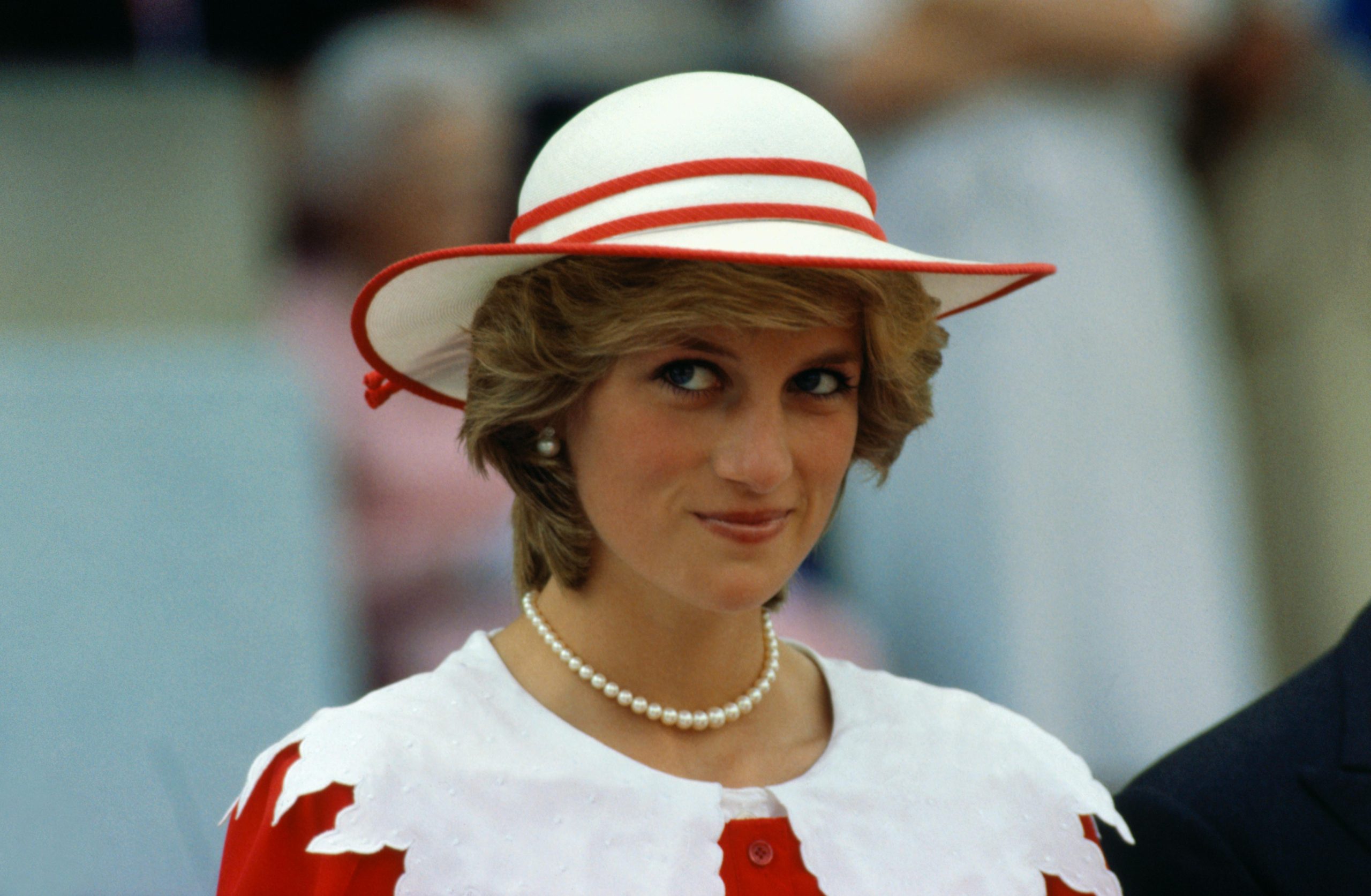
LONDON — Princess Diana’s brother, Charles Spencer, the 9th Earl Spencer, has alleged in a forthcoming memoir that King Charles III made a dismissive remark about his former wife’s memory in the days immediately following her fatal car crash in 1997, a claim Buckingham Palace has responded to without directly disputing.
The allegation appears in Spencer’s book, “Swan Song: Diana, My Sister,” scheduled for publication September 22 by Michael Joseph, an imprint of Penguin Random House, ahead of the 30th anniversary of Diana’s death next year. According to excerpts published by the Daily Mail and reported by CBS News, Spencer writes that he objected to a plan for Diana’s young sons, Princes William and Harry, then 15 and 12, to walk behind their mother’s coffin during her funeral procession. Spencer says the then-Prince Charles responded to his objection by questioning the family’s sense of duty, telling him over the phone: “Rest assured, we’ll forget her soon enough.”
According to the fuller account of the exchange recorded in the memoir, Charles’s reaction reflected what Spencer described as long-suppressed feelings toward his former wife. The book recounts that the suggestion “allegedly angered the prince, who ‘unleashed down the phone what I have always taken to be his pent-up contempt for Diana, and his horror that the world was so bowled over by her death.’” Spencer writes that Charles then “hissed” the line about forgetting her, and the author has separately accused the king of harboring “contempt” for Diana throughout their account of the period surrounding her death.
Despite Spencer’s objection, William and Harry ultimately did walk in the funeral procession, producing images of the two young princes trailing their mother’s coffin through central London that have remained among the most enduring photographs of the period.
Buckingham Palace addressed the allegation in a statement without directly denying that the remark was made. “While we do not comment on books as a matter of principle, His Majesty is mindful that the pain of fraternal grief can cloud reason, affect judgment and colour memory in ways others do not recognise, even many years after such a loss,” the palace said.
Royal Editor Roya Nikkhah of The Sunday Times said the claims are likely to be the first of several sensitive disclosures as excerpts from the memoir continue rolling out ahead of publication. Nikkhah said the royal family faces “a very tricky few days,” predicting the initial claims about Charles’s reaction to Diana’s death would be “just the beginning of a serialization that will go on … and we know there are going to be some pretty sensational claims” in the lead-up to the book’s release. She added that the palace would now need to weigh how to respond to each individual claim as they surface, saying the situation had put “Buckingham Palace into reactive mode.”
“Swan Song: Diana, My Sister” is being translated into twelve languages and covers a broad span of the siblings’ shared history, including their childhood at the Spencer family’s Althorp estate, their parents’ divorce, Diana’s rise to global prominence following her marriage to Charles, her humanitarian work, and the intense media scrutiny that defined much of her adult life. Spencer has said he was ultimately persuaded to write down his own recollections directly, rather than continuing to have his family’s story told primarily through the accounts of others.
The book’s release comes at a sensitive moment for the royal family more broadly, arriving shortly after Prince Harry and Meghan Markle relocated back to the United Kingdom in late August following roughly six years based in the United States. Harry has continued to maintain a limited, strained relationship with his father and brother since stepping back from royal duties in 2020, and the timing of his uncle’s memoir, arriving so soon after his return to Britain, has drawn additional attention to the broader state of relations within the family.
Separately, Harry and Meghan have also navigated a more immediate, practical challenge in recent weeks tied to their children’s education. Prince Archie, 7, and Princess Lilibet, 5, were withdrawn from their initial school in England after only a few days, following what a spokesperson for the couple described as security concerns raised by their protection team. “The parents remain extremely grateful to all the teachers and staff for the love, care and effort they have shown their family,” the spokesperson said. “This decision should in no way be interpreted as a reflection on the school or the exceptional care the children have received there.” The spokesperson said the decision followed “a discussion with the family’s security team about the practicalities of their current arrangements,” with reports indicating the original school’s location created difficulties for the family’s security convoy amid heavy local traffic.
Harry has continued to carry out public engagements since returning to Britain, appearing this week at the inaugural Invictus Spirit Gala Dinner and Awards at the Old Royal Naval College in Greenwich, part of continued preparations tied to the Invictus Games, the sporting competition for wounded and injured service members that he founded, with the next edition scheduled for Birmingham in 2027.
With Spencer’s memoir still more than a week from its official release and further excerpts expected to continue emerging in the British press, the royal family’s response to the book’s claims, and any further detail the memoir provides about the days surrounding Diana’s death, is likely to remain a closely watched story in the run-up to its September 22 publication date.
Business
KOSPI Surges 2.81% as Falling Oil Prices and the Fed’s Rate Hike Ease Persistent Global Inflation Worries

SEOUL — South Korea’s benchmark KOSPI index surged 2.81% to 6,903.94 by mid-afternoon Friday, adding 188.53 points, as falling global oil prices and a widely anticipated interest rate increase from the U.S. Federal Reserve combined to ease inflation worries that had rattled markets throughout the week.
The rally built on strength that was evident from the opening bell. The index opened at 6,885.70, up 170.29 points, or 2.54%, from the previous close, and continued climbing through the morning session, touching 6,870.45 by 9:02 a.m. local time before extending further gains into the afternoon. The advance marked one of the KOSPI’s strongest single-day performances in recent weeks, offering a sharp reversal from a volatile stretch that had seen the index swing between steep losses and partial recoveries over the preceding four trading sessions.
Friday’s gains tracked a broadly positive overnight session on Wall Street. U.S. stocks closed higher after falling oil prices and easing pressure in the bond market lifted investor sentiment, with the S&P 500 adding 1.14% and the technology-heavy Nasdaq Composite climbing 1.69%. That rally followed confirmation that the Federal Reserve had raised interest rates as widely expected, an outcome that removed a significant source of uncertainty that had weighed on global markets throughout the week. Combined with a pullback in crude oil prices, which had surged in recent sessions amid escalating tensions in the Middle East, the resolution of both the rate decision and the energy price pressure gave investors reason to step back into riskier assets.
Within the KOSPI, gains were broad-based across sectors, though technology and industrial shares led the advance. The electric and electronics sector climbed 3.29%, the single strongest-performing group in Friday’s session, followed by manufacturing shares, up 2.66%. Construction stocks rose 1.77%, securities firms gained 1.13%, and machinery and equipment makers advanced 1.05%, rounding out a session in which nearly every major sector participated in the rally.
Trading activity showed a notable divergence between different categories of investors. Individual retail investors were net sellers during the session, offloading a net 174.1 billion won worth of shares, while foreign investors also recorded modest net selling of 16 billion won. Institutional investors, by contrast, were the primary buyers driving the rally, recording net purchases of 111.2 billion won, suggesting large domestic institutions moved more aggressively to capitalize on the improved macroeconomic backdrop than either retail or foreign participants during Friday’s session specifically.
Friday’s rebound caps an unusually turbulent week for South Korean equities. The KOSPI tumbled 3.26% on Monday amid a combination of surging oil prices, rising U.S. Treasury yields and renewed doubts about the pace of global artificial intelligence infrastructure spending, before slipping a further 0.85% on Tuesday. The index staged a partial recovery Wednesday, adding 1.37% as chipmakers Samsung Electronics and SK Hynix clawed back some lost ground, before Friday’s sharper rally pushed the benchmark decisively higher for the week overall.
The broader bullish case for South Korean equities has remained intact even amid the recent volatility. Goldman Sachs Research has identified the Korean stock market as its highest-conviction regional pick in Asia, citing a projected 300% surge in 2026 corporate earnings, which the firm’s analysts describe as the strongest annual profit expansion in any major Asian market since the region’s recovery from the 1999 Asian financial crisis. Central to that bullish outlook is what Goldman Sachs has called a memory chip supercycle, driven by record shortfalls in memory chip supply, surging demand from hyperscale cloud computing providers, and the broader global buildout of artificial intelligence computing infrastructure. Timothy Moe, the firm’s chief Asia Pacific regional equity strategist, has said Korea represents the firm’s “highest-conviction view” within the region, and Goldman has set a KOSPI target of 9,000, implying substantial further upside from Friday’s levels even after the index’s sharp gains so far this year.
The KOSPI’s performance over the past year illustrates both the scale of that opportunity and the volatility that has accompanied it. The index touched an intraday record high of 9,385.59 in June before retreating sharply in the weeks since, with its 52-week trading range spanning from a low of 3,365.73 to that June peak, according to data compiled by Investing.com. Friday’s close of 6,903.94, while representing a strong single-day gain, still sits well below the index’s record high, underscoring how much ground South Korean equities have given back since the market’s peak earlier in the year even as the underlying earnings and semiconductor demand story that originally drove the rally has, according to Goldman Sachs and other bullish analysts, remained largely intact.
With Friday’s session bringing some measure of resolution to the twin sources of pressure that dominated trading earlier in the week, the Fed’s rate decision and surging oil prices, investors are likely to turn their attention next to whether South Korea’s underlying semiconductor and technology earnings growth can reassert itself as the primary driver of the market’s direction heading into the final months of the year, following one of the more volatile stretches the KOSPI has experienced in recent months.
Business
The Office Long Term Lease and Ownership Headache Businesses No Longer Want: ‘Serviced Everything’ Takes Off

Australian businesses are embracing a new era of ‘serviced everything’, replacing costly office fit-outs, furniture, telephone systems, internet infrastructure and ongoing maintenance with workspaces where virtually everything is provided, managed and ready to use.
According to workplace expert Brett McAllen, CEO of @WORKSPACES, Australia’s leading brand of serviced offices, flexible, shared and coworking spaces with locations across cities and suburban centres, serviced and flexible offices are no longer simply viewed as a way to reduce rent or avoid lengthy commercial leases. They are becoming a complete operational solution that allows businesses to walk into a fully functioning office and start working immediately.
“Businesses have spent decades purchasing desks, chairs, telephone systems, internet hardware, artwork, kitchen equipment and countless other items that depreciate, wear out, break or become obsolete,” McAllen said.
“Then they have had to pay people to install, maintain, repair, replace and eventually dispose of it all.
“Serviced offices completely change that equation. The desks, chairs, internet, telephones, meeting rooms, kitchens, artwork, reception and shared facilities are already there.
Everything is connected, maintained and managed for you.
“You simply walk in, open your laptop and get to work. If you don’t have a computer, we can provide one as well. It is the ultimate form of serviced everything.”
The end of the office shopping list
McAllen said moving into a conventional office can require a significant upfront investment before a business has even opened its doors.
“Securing the premises is just the beginning. Businesses then face the cost of the fit-out, cabling, furniture, internet connection, telephone systems, appliances, security, signage, artwork and all the smaller items required to make an office functional,” he said.
“You may also have to coordinate builders, electricians, telecommunications providers, internet technicians, furniture suppliers and other trades.
“With a serviced office, that entire shopping list and project-management burden disappears. Businesses arrive to find a professional, fully equipped workplace ready for their team.”
No more depreciating desks and broken chairs
Traditional offices require businesses to purchase physical assets that begin depreciating from the moment they are installed.
“Desks get damaged, chairs wear out, technology becomes outdated and fit-outs rarely retain their original value,” McAllen said.
“Businesses can spend tens or even hundreds of thousands of dollars creating an office, only to discover that it no longer meets their needs a few years later.
“They may grow, contract, restructure or change how their people work. Suddenly, they have the wrong number of desks, too much space, not enough meeting rooms or expensive equipment they no longer need.
“Serviced offices allow businesses to use what they need without having to own, maintain or eventually replace it.”
Internet that simply works
McAllen said connectivity is another major source of cost and frustration in conventional offices.
“Reliable, high-speed internet is essential to virtually every modern business, but arranging commercial connectivity can be expensive and time-consuming,” he said.
“There may be installation delays, hardware requirements, lengthy contracts and ongoing dealings with service providers when something goes wrong.
“In a quality serviced office, the connectivity is already in place. Businesses do not need to purchase routers, install cabling or spend hours on the telephone trying to resolve technical issues.
“The internet simply works. If there is ever a problem, which is rare, the business calls the front desk and the issue is managed.”
One call replaces a list of tradies
McAllen said one of the most underestimated advantages of a serviced office is the amount of management time it returns to business owners and their teams.
“In a traditional office, if a chair breaks, an appliance fails, the internet drops out or something needs repairing, somebody within the business has to deal with it,” he said.
“They need to identify the right provider, request quotes, book the service, wait for the technician and approve the invoice. One small issue can consume hours of productive time.
“In a serviced workspace, you make one call to the front desk. The issue becomes our responsibility, not yours.
“Business owners should be focused on serving clients, growing revenue and leading their people—not searching for an electrician, assembling furniture or troubleshooting the internet.”
The office is becoming a service, not an asset
McAllen believes the shift towards serviced workspaces reflects a broader change in how organisations think about ownership.
“Businesses already use software, cloud storage and other critical services through flexible subscription models. The office is now heading in the same direction,” he said.
“Instead of tying up capital in a static workplace, businesses can access the space, infrastructure, technology and support they need as a service.
“It reduces upfront costs, removes unnecessary operational headaches and makes it easier to respond when circumstances change.”
Built for businesses that need to move quickly
The serviced model can be particularly valuable for growing companies, project teams, interstate businesses, professional service firms and organisations entering new markets.
“A business may need to accommodate five people today and 15 people next year. It may win a new project, open in another city or need additional space at short notice,” McAllen said.
“A traditional office can lock that business into a fixed footprint and a significant financial commitment. Flexible serviced spaces allow it to adapt much more quickly.
“Companies can establish a professional presence without spending months sourcing premises, coordinating a fit-out and waiting for essential services to be connected.”
A game changer for smaller businesses
McAllen said the ‘serviced everything’ model also enables smaller businesses to access facilities and technology that may otherwise be beyond their budgets.
“A small business can have a professional reception, sophisticated meeting rooms, quality furniture, high-speed internet, fully equipped kitchens and beautifully designed communal areas without funding all of those things itself,” he said.
“It can present to employees and clients like a much larger organisation while retaining the flexibility and agility of a smaller business.
“That is a genuine game changer. Businesses receive the benefits of an impressive, fully operational office without the capital cost, maintenance burden or operational complexity of owning everything inside it.”
McAllen expects demand for fully serviced and flexible workplaces to continue growing as businesses scrutinise fixed costs and seek more responsive ways of operating.
“The smartest office asset may now be the one you don’t have to own,” he said.
“Serviced everything gives businesses their time, capital and flexibility back. They can walk in, get connected and focus entirely on doing business while somebody else takes care of the office. That is one of the key reasons why our centres are growing across Australia and why so many organisations, businesses and start ups choose to locate their operations and staff in our centres, we make things so easy and we save them money.”
About @WORKSPACES
@WORKSPACES is a premium, Australian-owned flexible workspace provider delivering enterprise-grade, on-demand office solutions across Australia. With locations in Melbourne, Brisbane and the Gold Coast, the company offers serviced offices, coworking environments, virtual office solutions and meeting facilities designed to support modern businesses.
Led by CEO Brett McAllen, @WORKSPACES is focused on delivering high-quality, flexible and scalable workspace solutions that enable organisations to operate efficiently and competitively in a rapidly evolving business landscape. For more information, visit: www.atworkspaces.com.au

Euro zone current account surplus narrows in July
Gary Adshead and Nadia Budihardjo discuss some ideas that came out of a recent local government convention.

Barclays starts bullish coverage on Hill & Smith on U.S. infrastructure demand

Euro zone yields head for weekly decline as post-Fed rally soothes duration fears

Despite widespread AI concerns, GE Vernova (GEV) expects to reach a key backlog target sooner than expected. GEV stock jumped on Wednesday. At a Morgan Stanley conference, GE Vernova CEO Scott Strazik reportedly said the company’s backlog, which ended the second quarter at $176 billion, is on track to hit $200 billion “very early” in 2027. That is earlier than…
Copyright ©2026 Investor’s Business Daily, LLC. All rights reserved. 87990cbe856818d5eddac44c7b1cdeb8

Fidelity’s mission is to strengthen the financial well-being of our customers and deliver better outcomes for the clients and businesses it serves. With assets under administration of $12.6 trillion, including discretionary assets of $4.9 trillion as of December 31, 2023, Fidelity focuses on meeting the unique needs of a broad and growing customer base. Privately held for 77 years, Fidelity employs more than 74,000 associates with its headquarters in Boston and a global presence spanning nine countries across North America, Europe, Asia and Australia. Note: This account is not managed or monitored by Fidelity, and any messages sent via Seeking Alpha will not receive a response. For inquiries or communication, please use Fidelity’s official channels.

Billie Anthony Gaddess | The Northern Echo

DXC Technology's AI Ambitions May Struggle To Offset Shrinking Revenue (Downgrade)

One Clap From Changpeng Zhao and a BNB Chain Token Went Vertical



-

 Fashion7 days ago
Weekend Open Thread – Corporette.com
-

 Tech5 days ago
The Latest Weird Thing to Play Doom Is the Mapped-Out Brain of a Fruit Fly
-

 Crypto World7 days ago
XAG/USD: Silver’s Short-Term Rally Meets Its Moment of Truth
-

 Crypto World7 days ago
Diesel Tops $6 a Gallon for the First Time as 28 States Set Records
-

 Crypto World3 days ago
Kraken Lets xStocks Holders Earn Yield Through DeFi
-

 Crypto World1 day ago
US Charges Robinhood Engineers Over Crypto Listing Trades
-

 Crypto World6 days ago
Can AI Build a Startup in 72 Hours? Elon Musk's Team Will Livestream the Test
-

 News Videos7 days ago
Facing Financial Fears
-

 Crypto World4 days ago
Elon Musk Drops a Bombshell: Grok 5 Could Be the AGI Breakthrough
-

 Entertainment6 days ago
News Specials, Movies, Shows, More
-

 Business5 days ago
Rivals Sam Altman and Elon Musk Rally Behind Dario Amodei’s Call for a Slowdown in AI Development
-
 Crypto World5 days ago
New Tesla Roadster Uses SpaceX Tech. Will It Impact the Stock Price?
-
 NewsBeat4 days ago
‘Sick conspiracy’: Trump says only guardrails AI needs is ‘a strong and smart (High IQ!) president’ in all-caps rant
-

 Crypto World6 days ago
Robinhood Chain Never Stopped But its Blobs Did Stop Reaching Ethereum For 14 Minutes
-

 Crypto World2 days ago
What Is the Status of the U.S.-Iran Peace Talks? Here's What Both Sides Are Saying
-
 Entertainment6 days ago
New Horror Movie Officially Earns a Rare Stephen King Recommendation
-

 Crypto World3 days ago
DOJ Seeks to Seize $61M in Iran Oil Funds From Binance Accounts It Vouched For
-

 Business6 days ago
Marvell: Most Potent Setup Of The AI Factory Decade
-
 Crypto World4 days ago
3 Token Unlocks to Watch in the Third Week of September 2026
-

 Crypto World6 days ago
Bitcoin ETFs lose $462.7M as Ethereum funds gain $196.9M
You must be logged in to post a comment Login