

Business
MSC Industrial Direct Stock: Recent Momentum Doesn’t Seem Sustainable (NYSE:MSM)



I am an avid investor with a major focus on small cap companies with experience in investing in US, Canadian, and European markets. My investment philosophy to generating great returns on the stock market revolves around identifying mispriced securities by understanding the drivers behind a company’s financials, and ultimately, most often revealed by a DCF model valuation. This methodology doesn’t limit an investor into rigid traditional value, dividend, or growth investing, but rather accounts for all of a stock’s prospects to determine the risk-to-reward.
Analyst’s Disclosure: I/we have no stock, option or similar derivative position in any of the companies mentioned, and no plans to initiate any such positions within the next 72 hours. I wrote this article myself, and it expresses my own opinions. I am not receiving compensation for it (other than from Seeking Alpha). I have no business relationship with any company whose stock is mentioned in this article.
Seeking Alpha’s Disclosure: Past performance is no guarantee of future results. No recommendation or advice is being given as to whether any investment is suitable for a particular investor. Any views or opinions expressed above may not reflect those of Seeking Alpha as a whole. Seeking Alpha is not a licensed securities dealer, broker or US investment adviser or investment bank. Our analysts are third party authors that include both professional investors and individual investors who may not be licensed or certified by any institute or regulatory body.

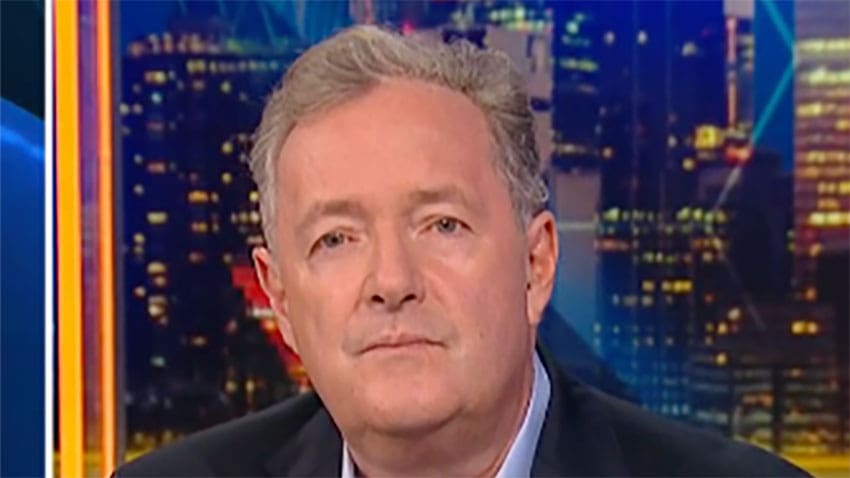
Piers Morgan’s Uncensored has been valued at $145 million (around £108 million) by investors, just 18 months after the broadcaster took full ownership of the brand, and five years after ITV parted company with him over his refusal to apologise for comments about Meghan Markle.
Morgan confirmed the figure in an interview with Karl Stefanovic on Australia’s Today show, days after closing a $27 million funding round for the business. The raise was led by Raine and Greek media group Antenna, with strategic backers including Elisabeth Murdoch and the billionaire Reuben brothers, Simon and David.
“We announced yesterday we’ve just finished an investor round on Uncensored,” Morgan said. “The investors have valued the business $145 million US.”
The valuation caps a remarkable turnaround for a presenter who walked off the Good Morning Britain set in March 2021 and left ITV shortly afterwards, having refused to apologise for his remarks about the Duchess of Sussex. Set against his reported £1.1 million-a-year ITV salary, the valuation is worth roughly a century of his old pay packet.
From one-man show to media network
Morgan bought the Uncensored brand outright from Rupert Murdoch’s News UK in early 2025, abandoning linear television for a YouTube-first model. “I’ve only owned it a year and a half,” he told Stefanovic. “We’ve got a business worth nearly $150 million in 18 months.”
The channel now has around 4.4 million subscribers and, according to Morgan, “generates a lot of cash from advertising and sponsorships”, all without a marketing budget. “We don’t pay anyone to market our content. We do it all ourselves,” he said.
Crucially for investors, Morgan has been deliberate about building a business that can outlive its founder’s on-screen presence. “I knew I had to build a business which would actually in the end become much less reliant on me. So I decided to take Uncensored as the brand of the business,” he said.
That strategy is already visible in the company’s expanding slate. Uncensored has struck partnerships with Paramount UK and Channel 5 to bring its shows to broadcast television, alongside a long-form interview series co-produced with Time Studios. Its newest vertical, World Cup Uncensored, has been an immediate hit.
“We’ve just done World Cup Uncensored, and that’s blown up as well,” Morgan said. “We’re doing bigger numbers than Gary Lineker’s show, which Netflix paid $14 million for,” a reference to The Rest Is Football, which the streamer is reportedly paying around £14 million to run daily throughout the tournament.
The economics of walking away
The round confirms the trajectory first reported in December, when Business Matters revealed Uncensored was closing in on a £100 million valuation with Raine’s backing. At the time, insiders said the ambition was to build a billion-dollar company within a few years.
For all the showmanship, the underlying lesson is one any business owner will recognise: ownership of the asset, not salary from an employer, is where value compounds. Morgan spent decades as highly paid talent for other people’s businesses. It took just 18 months of owning his own for his equity to dwarf everything that came before, a pattern now pulling television’s biggest names towards YouTube and away from the traditional broadcasters that once employed them.
“I think the sky’s the limit for this stuff,” Morgan said. On the evidence of the past 18 months, few investors would bet against him.

Amy Ingham
Amy is a newly qualified journalist specialising in business journalism at Business Matters with responsibility for news content for what is now the UK’s largest print and online source of current business news.

In the past 24 hours, Bitcoin was up 1.37% and Ethereum was up 2.30% to trade at $1,754 mark. Among the major altcoins, BNB, XRP, Solana, Tron, Hyperliquid, Dogecoin and Cardano gained upto 6.83%.
Also Read | Why is Parag Parikh Flexi Cap Fund still a top recommendation despite underperformance? Expert explains The global crypto market capitalisation was up 1.38% to $2.17 trillion, according to CoinMarketCap.
Nischal Shetty, Founder, WazirX said the prospect of a more accommodative Federal Reserve policy helped improve sentiment across risk assets, allowing Bitcoin to recover above the $60,000 mark, while Ethereum also benefited from renewed institutional interest as spot ETFs recorded fresh inflows.

Shetty further said that from a technical perspective, Bitcoin continues to hold the $60,000-$61,000 support zone, with $63,000-$64,000 emerging as the next key resistance. For Ethereum, traders are watching $1,650-$1,680 as immediate support, while $1,750-$1,800 remains the next major resistance area.
In the past week, Bitcoin and Ethereum were up 3.62% and 11.05%. Among the major altcoins, BNB, XRP, Solana, Tron, Hyperliquid, Dogecoin and Cardano rallied upto 19.16%.Harish Vatnani, Head of Trade, ZebPay said Bitcoin rebounded after finding support at its recent double-bottom formation near $58,000 last week. Despite the recovery, the daily RSI remains below the 50 level, indicating that the broader momentum is still negative.
“Ethereum found support at its double-bottom formation near the $1,505 level and has rebounded sharply. The daily RSI has crossed above the 50 mark, reflecting improving bullish momentum”
Also Read | 11 equity mutual funds multiply lumpsum investments by 4x in 7 years. Do you own any in your portfolio?
Vatnani further said that Ethereum and Solana investment products continued to attract inflows, while Bitcoin ETFs recorded net outflows of more than $290 million, reflecting a shift in institutional investor sentiment.
(Disclaimer: Recommendations, suggestions, views and opinions given by the experts are their own. These do not represent the views of The Economic Times)
BofA highlights FX intervention impact on reserves and central bank balance sheets
Business
US rally vs India story? Wealth managers explain why NRIs should stay the course for next 10 years

The debate has gained traction amid the AI-driven rally in US equities, a weaker rupee against the dollar and a temporary slowdown in corporate earnings.
For dollar-based investors, currency movement is another key consideration, with many assuming that rupee depreciation significantly erodes returns.
However, wealth managers argue that these concerns stem largely from short-term market cycles rather than a deterioration in India’s long-term fundamentals.
Historically, the rupee has depreciated at a much slower pace than commonly perceived, allowing strong rupee-denominated returns to translate into healthy dollar returns over longer investment horizons. More importantly, they say, India’s structural growth drivers remain intact despite periodic corrections.
Structural growth story remains intact
According to Feroze Azeez, Joint CEO at Anand Rathi Wealth, India’s biggest strength lies in where it stands in its economic journey.
Unlike several developed economies that are entering a phase of slower structural growth, India continues to benefit from favourable demographics, rising domestic consumption, manufacturing expansion and policy reforms. With nominal GDP expected to grow in double digits over the long term, the country offers a supportive backdrop for sustained corporate earnings growth, he said.
Azeez added that macroeconomic stability, supported by moderate inflation, prudent fiscal management and healthy foreign exchange reserves, provides greater visibility on earnings and valuations. “The investment case for India is based on long-term structural growth and compounding, rather than short-term market movements,” he said.
Domestic investors are becoming the market’s anchor
Another key change over the past decade has been the growing influence of domestic investors.Domestic institutional ownership has now overtaken foreign portfolio ownership for the first time in modern market history, aided by record SIP inflows that continue to provide a steady source of long-term capital. This has made Indian equities less vulnerable to swings in global risk appetite.
Shiv Gupta, Founder and CEO of Sanctum Wealth, believes this transition is one of the most underappreciated developments in Indian markets.
According to him, India’s growth is increasingly being funded by its own households through rising savings, domestic consumption and expanding capital markets. “A market supported by its own savers is more resilient than one dependent on foreign flows,” he said, noting that this explains why Indian markets now tend to recover faster from bouts of global volatility.
He also points out that the broader investment case remains anchored in long-term drivers such as rising incomes, financialisation of savings, infrastructure spending and a significantly healthier banking system than a decade ago.
Earnings, valuations support the long-term case
While earnings growth has moderated in the recent past, analysts expect corporate profitability to improve over the next two financial years. Combined with improving balance sheets and easing valuations, many wealth advisors believe the current environment offers an attractive entry point for patient investors.
Tarun Birani, Founder and CEO of TBNG Capital Advisors, says India’s appeal lies in its ability to deliver earnings compounding over long periods rather than quarter-to-quarter performance.
He notes that banks are well-capitalised, corporate balance sheets are among the strongest seen in over a decade and government-led capital expenditure continues to support economic activity. At the same time, valuations have moderated, even as corporate return on equity has room to improve, creating favourable conditions for long-term investors.
Birani also highlights the rapid rise in household participation in equities and mutual funds over the past decade, describing it as a structural “domestic capital flywheel” that helps cushion market corrections.
For NRIs, he believes India offers a unique combination of long-term wealth creation and alignment with future financial goals in rupee terms. “You’re participating in a long-run compounding story that also maps to your family, property and eventual return to India,” he said.
What Should NRI Investors Do?
For wealth managers, the message is clear: while short-term performance may influence sentiment, India’s investment case continues to rest on structural growth, improving corporate fundamentals and the increasing resilience of its domestic capital markets—factors that are likely to play out over years rather than quarters.
(Disclaimer: Recommendations, suggestions, views, and opinions given by experts are their own. These do not represent the views of the Economic Times)


I’m a fundamental, valuation-driven investor with a strong focus on identifying businesses that have the potential to scale over time and unlock massive terminal value. My investment approach centers around understanding the core economics of a business—its competitive moat, unit economics, reinvestment runway, and management quality—and how those factors translate into long-term free cash flow generation and shareholder value creation. I focus on fundamental research, and I tend to focus on sectors with strong secular tailwinds. Professionally, I am a self-educated investor that started this journey 10 years ago. Currently, I am managing my own funds, seeded from friends and family. My motivation for writing on Seeking Alpha is to share investment insights, and also at the same garner feedback from fellow investors in this site. My aim is to help readers focus on what truly drives long-term equity value. I believe good analysis should be both analytical and accessible, and I hope my work adds value to readers looking for high-quality, long-term investment opportunities.
Analyst’s Disclosure: I/we have no stock, option or similar derivative position in any of the companies mentioned, and no plans to initiate any such positions within the next 72 hours. I wrote this article myself, and it expresses my own opinions. I am not receiving compensation for it (other than from Seeking Alpha). I have no business relationship with any company whose stock is mentioned in this article.
Seeking Alpha’s Disclosure: Past performance is no guarantee of future results. No recommendation or advice is being given as to whether any investment is suitable for a particular investor. Any views or opinions expressed above may not reflect those of Seeking Alpha as a whole. Seeking Alpha is not a licensed securities dealer, broker or US investment adviser or investment bank. Our analysts are third party authors that include both professional investors and individual investors who may not be licensed or certified by any institute or regulatory body.

Mirum Pharmaceuticals: This Liver Disease Juggernaut Just Broadened Its Portfolio


Iranians flock to week-long funeral rites for Khamenei
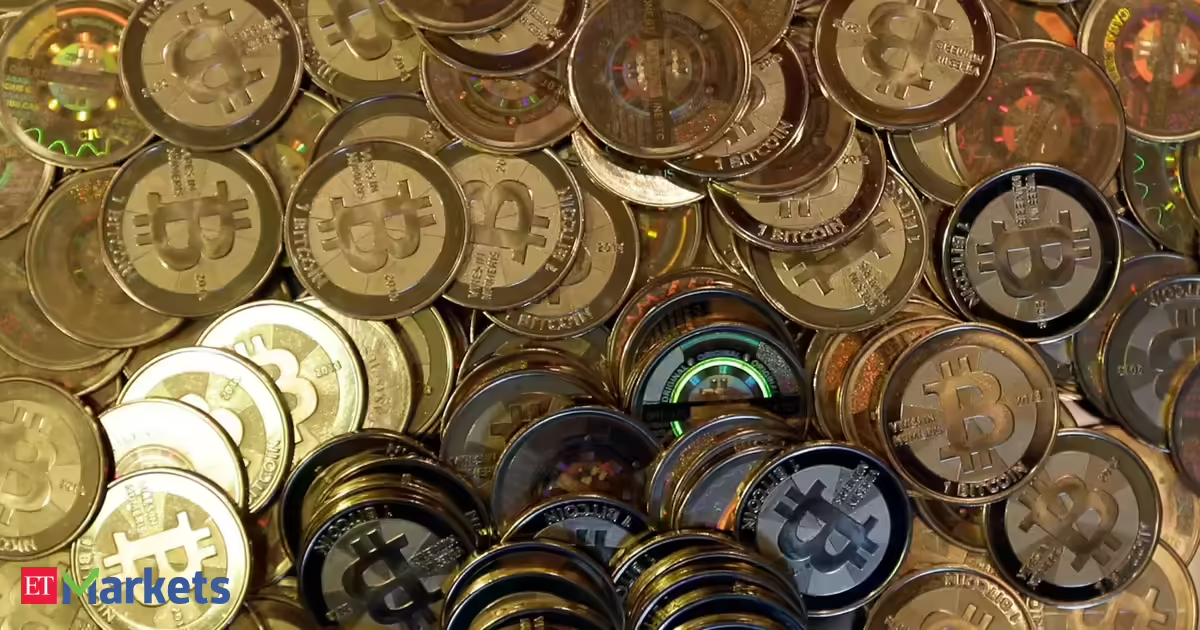
Today, that market has been replaced by more serious, more structural, and more interesting market participants. The next Bitcoin rally will not be driven by narrative. It will be driven by liquidity. And if you don’t understand how liquidity moves, you will keep misreading every crypto cycle that follows.
What the Numbers Are Telling Us
Over the past eight months, more than $10 billion has moved out of Bitcoin spot ETFs, and that exodus has been a major driver of the downturn we’re witnessing. In 2024, inflows into those same ETFs powered Bitcoin to new all-time highs. Institutional capital pulled back, the pillar supporting the rally faded, and retail investors simply did not have the conviction to hold the market up on their own.
Spot ETFs now hold 6-7% of circulating supply, which means every billion dollars of net flow ripples directly into spot prices and through the rest of the crypto market.
How the Market Grew Up
The 2021 bull run was the last great hype-driven market. Retail FOMO, social media momentum, and speculative excess pushed Bitcoin to its then all-time high. Then came the unravelling of Luna, Celsius, and FTX. Each collapse eroded the casual investor’s willingness to act on hype without scrutiny.
At the same time, the market’s composition changed underneath it. The SEC’s approval of spot Bitcoin ETFs in January 2024 brought institutional capital into the space through regulated vehicles. BlackRock’s iShares Bitcoin Trust alone commands approximately $43 billion in assets under management as of June 2026.
These are investors who allocate based on macro conditions, rate environments, and portfolio construction frameworks with a long-term view, the same forces that move equity and bond markets.
Liquidity Is the Variable That Matters Now
Empirical research shows a significant strengthening in the relationship between global M2 money supply growth and Bitcoin price appreciation, with roughly a 90-day lag and correlation coefficients reaching 0.78 during the 2020-2023 period.
Put simply, when global liquidity expands, Bitcoin goes up. When it contracts, Bitcoin comes under pressure. That three-month lag means the direction of global money supply today is a leading indicator of where Bitcoin is headed next quarter, whether you’re watching for it or not.
Stronger-than-expected inflation readings and elevated bond yields have complicated the picture for Federal Reserve policy. Persistent energy price pressures and geopolitical instability now have investors worried that rate cuts could be delayed, and that makes for a less supportive environment for risk assets like Bitcoin.
What the On-Chain Data Is Actually Saying
Here is where it gets interesting. Beneath the price weakness, the network is telling us a different story altogether. CryptoQuant’s Bitcoin Network Activity Index has climbed steadily since January and recently hit its highest level since late 2024. Daily Bitcoin transactions have crossed 800,000, nearing the highs of the previous bull cycle.
Even the selling pressure from ETF redemptions has not triggered a rush of coins onto exchanges for liquidation, which tells you that some of these outflows are internal portfolio rebalancing, not investors walking away from Bitcoin.
What the Next Rally Needs
Any rotation back into growth positioning would likely pull Bitcoin along with it, re-anchoring the asset to the liquidity backdrop. An ETF flow reversal would provide direct support to prices.
Watch for a softening in Fed language, easing inflation data, and a resolution to the geopolitical tensions that have kept oil prices elevated and rate-cut expectations suppressed. Any one of these could meaningfully improve liquidity conditions, and when liquidity returns, Bitcoin has consistently been among the first assets to reflect it.
The next leg of this cycle will not announce itself through celebrity endorsements or viral posts. It will show up quietly, in ETF flow data, in M2 expansion numbers, and in what the bond market is telling us about where rates are headed.
The investors who stand to benefit most from the next Bitcoin rally are the ones watching the Fed, tracking ETF flows, and understanding that Bitcoin’s price today is largely a function of how much capital the global financial system is willing to allocate to risk assets.
(The author Prateek Gupta is Head of Business, Mudrex)
(Disclaimer: Recommendations, suggestions, views and opinions given by the experts are their own. These do not represent the views of The Economic Times)

German local banks expand crypto trading to millions of retail customers

Bitcoin battles $63K resistance fortress: Live levels

Piers Morgan’s Uncensored Hits $145m Valuation in 18 Months

ESMA Declares Prediction Markets Subject to Binary Options Ban Despite New Branding Efforts

Anya Taylor-Joy’s New Apple TV Crime Series Officially Arrives in 2 Weeks


-

 Tech6 days ago
Bluekit phishing kit adopts browser-in-the-middle for login theft
-

 Fashion15 hours ago
Weekend Open Thread: High Hopes
-

 Tech6 days ago
Claude Code turned every engineer into three. Now companies need more product thinkers
-

 Crypto World4 days ago
Strategy authorizes up to $1.25B in Bitcoin sales under new capital plan
-

 Politics21 hours ago
The House | “Reframing the debate from a binary discussion of winners and losers”: Yuan Yang reviews ‘We Are Not Machines’
-

 News Videos6 days ago
MAJOR BITCOIN & MARKET UPDATE!!!! (MUST WATCH ASAP!!!)
-

 Tech4 days ago
Anonymous researcher drops 0-day ‘exploitarium’ repo
-

 Crypto World7 days ago
Coinbase, Circle Deepen Crypto Stock Losses Despite Resilient S&P 500
-

 Business4 days ago
Australia treasurer says alleged access of prime minister’s bank data ’incredibly concerning’
-

 Tech7 days ago
Russian hackers now target Signal backup recovery keys
-
 Business5 days ago
The AI boom won’t burst all at once. It will pop in ‘rolling bubbles’: Macquarie
-

 Sports3 days ago
Broncos roster: OL Ben Powers (No. 74) entering final year of contract
-

 Crypto World2 days ago
Binance stock trading tops $1B in first month after launch
-

 NewsBeat3 days ago
Presenter Caroline Flack’s brother Paul Flack dies aged 55
-

 Tech7 days ago
Silicon Valley paid to kill AI regulation, now it wants the rules back
-

 Tech7 days ago
OpenAI mulls delaying IPO over valuation concerns
-

 Crypto World2 days ago
Alibaba-affiliate Ant Group enters the humanoid robot market with 12 deals
-

 News Videos4 days ago
How to Build INSANE Live Financial Dashboards With Claude
-
 NewsBeat2 days ago
New exhibition reflects five decades of movement between island of Ireland and GB
-

 Business1 day ago
What a 10 Percent Drop Means for Buyers, Sellers and Renters
You must be logged in to post a comment Login