Connect with us
DAPA Banner
DAPA Coin
DAPA
COIN PAYMENT ASSET
PRIVACY · BLOCKDAG · HOMOMORPHIC ENCRYPTION · RUST
ElGamal Encrypted MINE DAPA
🚫 GENESIS SOLD OUT
DAPAPAY COMING

Business

Nissan reported to be in talks with Government about financial support

Published

on

Business Live

The under strain car maker is said to be discussing commitments to its Sunderland operation

Nissan is talking to Chery about making its cars at the Sunderland plant.

Nissan’s Sunderland plant.(Image: Nissan)

Car maker Nissan is said to be in advanced talks with the Government over financial support for its Sunderland operation.

Global news service Reuters has reported the Japanese manufacturer is discussing backing in return for commitments to long term investment in its Wearside plant. Grants, tax breaks and subsidies are said to be on the table in exchange for protection of jobs.

Advertisement

The news follows a recent announcement by Nissan that it is looking to partner with Chinese brand Chery – the maker of brands such as Jaecoo – to build its models at Sunderland. It could see Chery vehicles roll off the factory’s production Line One, which was paused earlier this year amid significant restructuring across Nissan.

Such a deal is set against widespread cost saving measures at Nissan, which is closing a number of factories globally and shedding thousands of jobs, including some in Europe. The efforts are in response to hefty losses and intense competition from global rivals.

Nissan’s Sunderland plant employs 6,000 people and is widely seen to be among the most productive in Nissan’s worldwide stable. It has received significant investment in recent years, including spending to support production of the new generation electric Leaf, which began late last year, and a much wider multibillion-pound vision to make the factory a flagship site for electric vehicle making through use of renewable energy and nearby battery production.

However, earlier this year it emerged that Nissan had decided not to produce drivetrains at the nearby Jatco factory, which was announced in early 2025 as the result of a £48m investment plan including £12m of funding from the Automotive Transformation Fund. About 80% of the Jatco facility’s capacity was to be given over to Nissan products, to be used in the building of electric models.

Advertisement

In recent weeks, car makers and MPs have called for the Government to bring forward a review of the Zero Emission Vehicle mandate which legally require rising sales of electric vehicles from manufacturers. Under the rules introduced in 2024 before being relaxed last year, car and van makers must make EVs 80% of the cars they sell by 2030, rising to 100% by 2035.

Nissan did not comment directly on the report of talks with the Government. But in a statement, a spokesperson said: “We are proud of our history in the UK including our manufacturing operations at our Sunderland Plant. We have a strong and collaborative relationship with the UK Government and look forward to continuing to work together moving forward.”

A Government spokesperson said: “Nissan is an important investor and long‑standing partner in the North East and the UK, and we continue to work closely with the company to support jobs, drive growth and secure the future of the automotive sector. We are taking significant action to back British carmakers and protect jobs, including £4bn of capital and R&D funding for zero emission vehicle manufacturing, lowering electricity bills for manufacturers and launching a £2bn Electric Car Grant supporting drivers to save up to £3,750 off the cost of a new EV.

“We’re committed to the ZEV Mandate and we’ve always said we’ll review it to ensure we’re taking a pragmatic and balanced approach that supports British industry and continues to drive investment.”

Advertisement
Continue Reading
Click to comment

You must be logged in to post a comment Login

Leave a Reply

Business

Invesco Asia Dragon Trust raises dividend by 21.5% for 2027

Published

on


Invesco Asia Dragon Trust raises dividend by 21.5% for 2027

Continue Reading

Business

Savannah Guthrie’s Mother Nancy Guthrie Remains Missing After Nearly 5 Months as Investigation Intensifies

Published

on

Savannah Guthrie & Nancy Guthrie

More than four and a half months after 84-year-old Nancy Guthrie was abducted from her Tucson, Arizona, home, federal and local investigators have yet to identify a suspect or locate the mother of NBC Today show co-anchor Savannah Guthrie — a case that has drawn national attention, generated more than $1.2 million in reward money, and exposed both the possibilities and limitations of modern forensic investigation.

On February 1, 2026, Nancy Guthrie, the American 84-year-old mother of NBC News journalist and Today co-anchor Savannah Guthrie, was kidnapped from her home in Catalina Foothills, a suburb of Tucson, Arizona. Evidence recovered at the residence indicated that Guthrie had been taken against her will, and Pima County Sheriff Chris Nanos stated that he believed she had been abducted.

Bloodstains found at the scene were confirmed to be Nancy’s. Multiple ransom notes of undetermined origin demanded payment in cryptocurrency, with two deadlines that had passed by February 9. As of this week, no ransom has been confirmed paid and no proof of life has been established.

What the Evidence Shows

Advertisement

On February 10, FBI Director Kash Patel released four black-and-white images on social media showing a masked and armed intruder, wearing gloves and a backpack outside Guthrie’s home. Investigators reported that the intruder attempted to tamper with the video doorbell by attempting to knock it off with light taps, and when unable to, subsequently covered the lens with foliage from a potted plant. However, Patel stated that data from the device had been successfully recovered. He also said the intruder was armed with an apparent gun placed in a holster.

On February 12, 2026, based on the footage, authorities released additional details about the suspected kidnapper’s appearance, including an estimated height of 5 feet 9 inches to 5 feet 10 inches, an average build, and a black mustache.

The FBI recently received and is now analyzing potentially critical DNA recovered months ago from Guthrie’s Tucson home, sources familiar with the investigation told ABC News. A private Florida lab that works with the Pima County Sheriff’s Department sent the sample to the FBI, which is now using new technology to conduct advanced analysis on the DNA sample to see if it can lead to Nancy Guthrie’s kidnapper.

The Pima County Sheriff’s Department has previously described the DNA recovered from Guthrie’s home as a sample that came from more than one person and therefore needed to be untangled. Sheriff Chris Nanos recently said it could take six more months to separate the strands and isolate what investigators need. He also said as many as five other labs around the country are working on the Guthrie case.

Advertisement

About two dozen Pima County and FBI investigators are still actively working the Guthrie case.

The Nearby Kidnapping That Raised Questions

The investigation took on an additional dimension in recent weeks when a separate violent crime near Guthrie’s home drew public attention and renewed questions about the broader criminal landscape in the Catalina Foothills area.

The Pima County Sheriff’s Department confirmed that 40-year-old Coral Michelle Smith was taken into custody on an active arrest warrant tied to a May aggravated assault and kidnapping case. According to authorities, Smith allegedly assaulted a woman who later died from her injuries. The alleged kidnapping occurred about 7 miles from the Catalina Foothills home where Nancy was last seen.

Advertisement

Law enforcement has not indicated any connection between Smith’s alleged crimes and Nancy’s disappearance, which remains unsolved.

While many suspected that Coral Michelle Smith could be a suspect in the Guthrie case, her involvement has since been ruled out. A notable physical discrepancy between Smith and the suspect in Guthrie’s doorbell footage further undermined theories connecting the two cases. According to Fox News Digital reporter Michael Ruiz, Smith has tattoos, but none are on her wrist — a distinguishing feature visible on the masked assailant captured in the FBI’s doorbell camera footage at Nancy Guthrie’s residence.

Despite the lack of a direct connection, retired homicide detective Chris McDonough noted the investigative value of interviewing individuals with violent histories operating near the scene. “In any major missing person or abduction-type of investigation, the investigators are going to cast a wide net,” McDonough said. “She may not be involved in any way, shape or form, but she may have information that may connect something. They’re going to ask her about any familiarity around the Guthrie home. What’s the word on the street?”

The Investigation Upgraded to Homicide

Advertisement

After reaching its fifth month, the joint investigation into Nancy Guthrie’s disappearance by the FBI and local police has deepened. It recently upgraded the case to a homicide investigation from a missing persons case. The elevation of the case’s classification does not confirm Nancy Guthrie is deceased, but it reflects investigators’ assessment of the circumstances and the evidence recovered at the scene, including the bloodstains confirmed to be hers.

Retired detective Jon Buehler told NewsNation he fears Nancy Guthrie is no longer alive, based on bleeding at the scene and her poor health, along with the fact that multiple ransom letters did not lead to her return. “The reason I’m fearful she didn’t survive the abduction is kind of twofold. No. 1, no instantaneous demand for a reward with indication that she’s fine and that they’ll release her. That’s a pretty big stretch there to think that she survived it,” he said. “But the amount of blood that was present there in the front of the house suggests to me a wound that was bleeding a lot.”

Social Media Chaos Near the Scene

The investigation has also been complicated by a proliferation of social media personalities and online sleuths descending on the Catalina Foothills neighborhood, prompting the Pima County Sheriff’s Department to take action.

Advertisement

Social media streamers Alexander Zabel Jr., Troy Lewis Bradshaw, and Damian Todd Enderle were arrested near Nancy Guthrie’s home for allegedly displaying disruptive behavior. Zabel Jr. returned to the neighborhood and conducted a livestream, only to be arrested again and was given a felony charge of resisting arrest.

Pima County Sheriff Chris Nanos said: “We are now into the fifth month of this, and we started getting calls from the neighbors about a certain group of these — I’ll use the word YouTubers. The complaints got to be pretty egregious in that the behavior of those individuals was becoming pretty scary and frightful to the neighborhood.”

Savannah Guthrie Speaks Out

In her first interview since her mother’s disappearance, Savannah Guthrie told friend and former co-host Hoda Kotb that it’s “too much to bear to think that I brought this to her bedside, that it’s because of me.” “I’m so sorry, Mommy, I’m so sorry,” she said. She added that the family “cannot be at peace” without answers.

Advertisement

In a June 2026 interview with Parade, retired FBI agent Jason Pack suggested a suspect in Guthrie’s case might soon “start to crack” and eventually turn themselves in to police. “Four months is a long time to keep a secret, and people start to crack,” Pack said. “They make calls they shouldn’t make. They spend money they can’t explain.”

The FBI’s cash reward of $100,000 for any information that could lead to her recovery remains active. The Guthrie family’s $1 million reward brings the total available reward money to over $1.2 million. Anyone with information is urged to contact the FBI at 1-800-CALL-FBI or the Pima County Sheriff’s Department at 520-351-4900.

Continue Reading

Business

Nebius: Time To Sell…Almost (Rating Downgrade)

Published

on

Nebius: Time To Sell...Almost (Rating Downgrade)

Nebius: Time To Sell…Almost (Rating Downgrade)

Continue Reading

Business

Sebi proposes easing margin trading funding rules, tighter broker norms

Published

on

Sebi proposes easing margin trading funding rules, tighter broker norms
Capital markets regulator has proposed a series of changes to the Margin Trading Facility (MTF) framework aimed at improving operational efficiency for brokers while strengthening risk management amid rising trading volumes.

In a consultation paper released on Wednesday, the market regulator invited public comments on a package of reforms. These include expanding funding avenues for brokers, increasing the minimum net-worth requirement to offer MTF, permitting limited liability partnerships (LLPs) to provide the facility, and streamlining collateral management.

Sebi said the review was necessary in light of the growing scale of MTF transactions to ensure the framework remains robust while promoting ease of doing business.

Among the key proposals is an increase in the minimum net-worth requirement for brokers offering MTF to Rs 5 crore from the current Rs 3 crore. The regulator has also proposed allowing brokers operating as LLPs to offer margin trading, expanding the eligibility beyond corporate brokers.

Advertisement

To widen funding options, Sebi suggested permitting brokers to raise money through non-convertible debentures (NCDs) and other debt instruments in addition to existing sources such as bank borrowings, NBFC loans, commercial papers and promoter loans.


The regulator has also proposed changes to collateral rules. It plans to allow all collateral currently accepted by clearing corporations in the cash market to be used uniformly for MTF transactions. In addition, early pay-in (EPI) sell credits could be accepted as collateral for fresh MTF positions under specified conditions.
To address operational challenges arising from stock reclassification, SEBI has proposed a 30-day rebalancing window if a funded security moves out of the Group I category, shifts to the trade-for-trade segment or is suspended from normal trading.On broker exposure limits, Sebi has suggested retaining a portion of brokers’ net worth exclusively for core broking operations while allowing the balance to be deployed for MTF. The overall exposure would remain capped at 5.5 times the broker’s net worth.

The consultation paper also proposes relief for brokers in cases of passive breaches of client-level exposure limits. Where a client’s exposure exceeds regulatory limits solely because the broker’s total MTF exposure declines, brokers would be given 30 days to restore compliance, during which no fresh exposure can be extended to that client.

To improve standardisation, Sebi has proposed a common Rights and Obligations document for MTF clients across all stock exchanges instead of exchange-specific formats. Other proposals include allowing fungibility between MTF and non-MTF client ledgers, permitting periodic settlement of excess cash collateral, enabling auto-pledge of funded shares used as maintenance margin and revising reporting timelines for brokers.

The regulator said the proposals were formulated after discussions with the Brokers’ Industry Standards Forum, market participants and the Secondary Market Advisory Committee. Public comments on the consultation paper have been invited before the proposals are finalised.

Advertisement

Capital markets regulator has proposed a series of changes to the Margin Trading Facility (MTF) framework aimed at improving operational efficiency for brokers while strengthening risk management amid rising trading volumes.

In a consultation paper released on Wednesday, the market regulator invited public comments on a package of reforms. These include expanding funding avenues for brokers, increasing the minimum net-worth requirement to offer MTF, permitting limited liability partnerships (LLPs) to provide the facility, and streamlining collateral management.

Sebi said the review was necessary in light of the growing scale of MTF transactions to ensure the framework remains robust while promoting ease of doing business.

Among the key proposals is an increase in the minimum net-worth requirement for brokers offering MTF to Rs 5 crore from the current Rs 3 crore. The regulator has also proposed allowing brokers operating as LLPs to offer margin trading, expanding the eligibility beyond corporate brokers.

Advertisement

To widen funding options, Sebi suggested permitting brokers to raise money through non-convertible debentures (NCDs) and other debt instruments in addition to existing sources such as bank borrowings, NBFC loans, commercial papers and promoter loans.

The regulator has also proposed changes to collateral rules. It plans to allow all collateral currently accepted by clearing corporations in the cash market to be used uniformly for MTF transactions. In addition, early pay-in (EPI) sell credits could be accepted as collateral for fresh MTF positions under specified conditions.

To address operational challenges arising from stock reclassification, SEBI has proposed a 30-day rebalancing window if a funded security moves out of the Group I category, shifts to the trade-for-trade segment or is suspended from normal trading.

On broker exposure limits, Sebi has suggested retaining a portion of brokers’ net worth exclusively for core broking operations while allowing the balance to be deployed for MTF. The overall exposure would remain capped at 5.5 times the broker’s net worth.

Advertisement

The consultation paper also proposes relief for brokers in cases of passive breaches of client-level exposure limits. Where a client’s exposure exceeds regulatory limits solely because the broker’s total MTF exposure declines, brokers would be given 30 days to restore compliance, during which no fresh exposure can be extended to that client.

To improve standardisation, Sebi has proposed a common Rights and Obligations document for MTF clients across all stock exchanges instead of exchange-specific formats. Other proposals include allowing fungibility between MTF and non-MTF client ledgers, permitting periodic settlement of excess cash collateral, enabling auto-pledge of funded shares used as maintenance margin and revising reporting timelines for brokers.

The regulator said the proposals were formulated after discussions with the Brokers’ Industry Standards Forum, market participants and the Secondary Market Advisory Committee. Public comments on the consultation paper have been invited before the proposals are finalised.

Advertisement
Continue Reading

Business

New bill would ban Congress members from betting on prediction markets

Published

on

New bill would ban Congress members from betting on prediction markets

A new bill would ban lawmakers in Congress from placing bets on prediction markets related to public policy issues and elections that they could be in a position to profit from by using insider information.

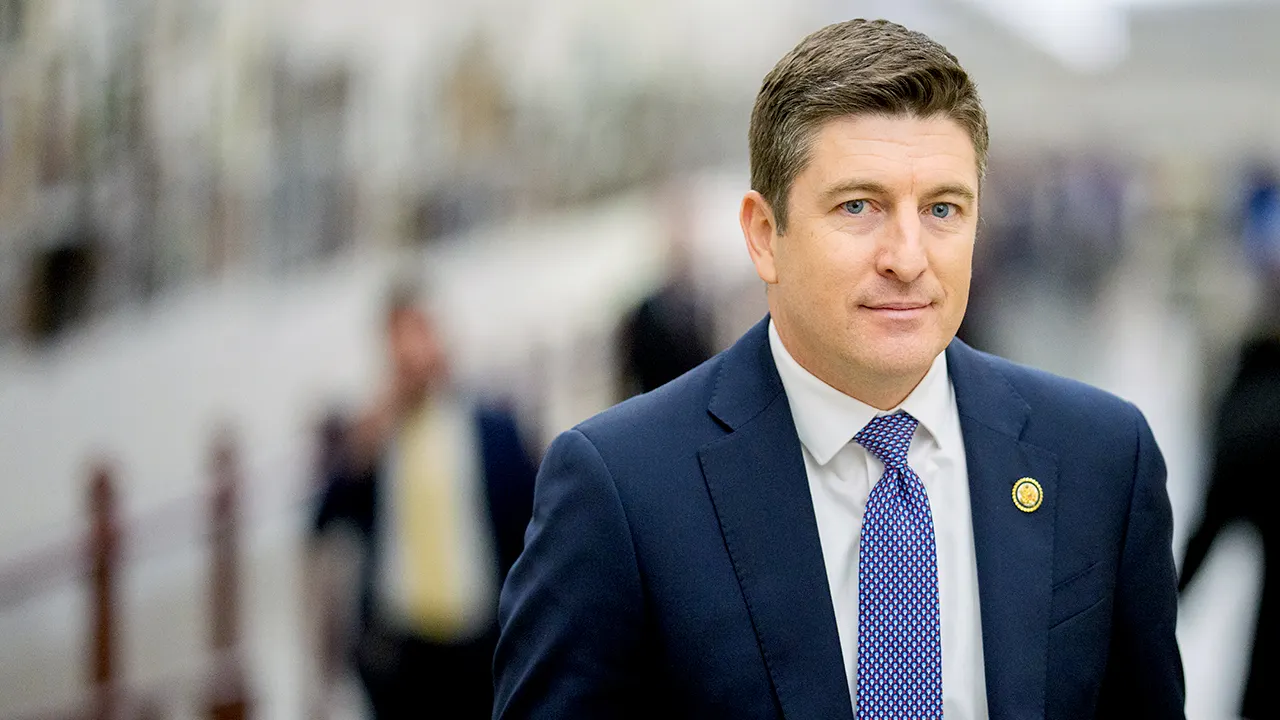
The Stop Lawmakers From Predicting Act was introduced Thursday by House Administration Committee Chairman Bryan Steil, R-Wis., which would ban members of Congress as well as their spouses and dependent children from placing a wager on a prediction market on topics that the lawmaker may have inside information on.

Advertisement

The ban would cover wagers on the occurrence, nonoccurence or the extent of the occurrence of specific government policies and actions, a political outcome or any other event which came to the attention of a covered individual as a direct or indirect result of the lawmaker’s service in Congress.

“The American people deserve to know their Member of Congress is not profiting off insider information,” Steil said. “This legislation is critical to restoring the public’s trust in their elected officials. Lawmakers should be writing policy, not wagering on its outcome.”

SENATE QUIETLY BANS LAWMAKERS FROM BETTING ON PREDICTION MARKETS

Rep. Bryan Steil walking in Washington, D.C.

Rep. Bryan Steil, R-Wis., chairs the Committee on House Administration and introduced the Stop Lawmakers From Predicting Act. (Andrew Harnik/Getty Images)

Steil’s bill would punish violators of the law precluding lawmakers from placing political and policy wagers on prediction markets with a fee equal to $2,000 or 10% of the value of the prohibited transaction, whichever is greater, and the net gain from the transaction.

Advertisement

The bill would also prohibit lawmakers from using their Members’ Representational Allowance, Senate personnel and office expense account, or political contributions or donations to pay the fine.

Lawmakers who resign from office or retire without paying the fine could be referred to the Justice Department for civil enforcement if the bill were to become law.

BLOCKCHAIN ANALYSTS SAY TRADERS MAY HAVE USED INSIDER INFORMATION TO PROFIT ON IRAN CONFLICT BETS

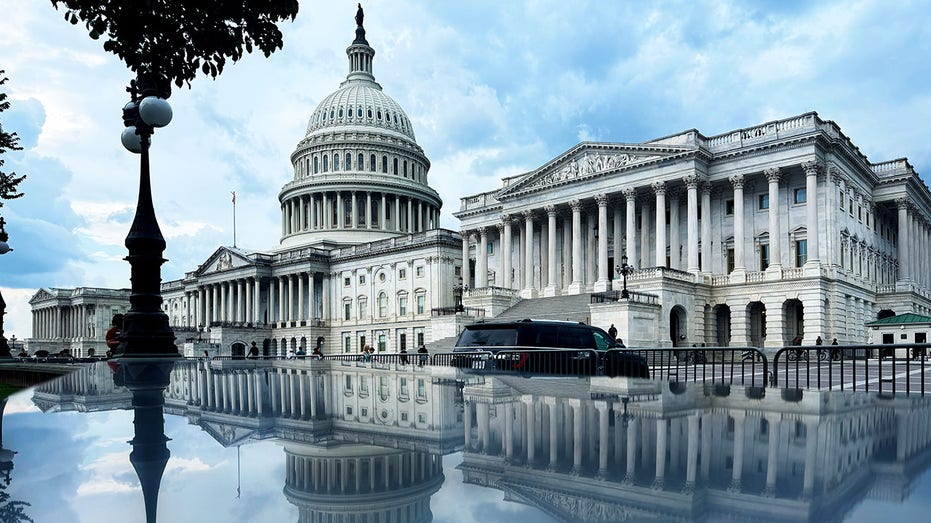
The U.S. Capitol's reflection after a rain storm.

The Senate previously took steps to ban lawmakers from betting on prediction markets through a chamber rule change. (Demetrius Freeman/The Washington Post via Getty Images)

Steil’s introduction of the prediction market ban for lawmakers comes after his panel, the Committee on House Administration, advanced the Stop Insider Trading Act to the House floor in January, which focused on insider trading in the stock market.

Advertisement

It also follows an incident in March in which blockchain analysts identified suspected insiders who placed suspiciously timed bets on prediction markets related to the Iran conflict, including markets related to the U.S. striking Iran as well as the death of Ayatollah Ali Khamenei. 

The bets generated significant profits and may have been placed using insider information.

MEMBERS OF CONGRESS USING ONLINE PREDICTION MARKETS? DON’T BET ON IT

iranian-supreme-leader-ali-khamenei

Certain prediction market bets related to strikes on Iran and the death of Iranian Supreme Leader Ali Khamenei were suspected of being placed with inside information. (Office of the Supreme Leader of Iran via Getty Images)

The Senate in April passed a resolution brought forward by Sen. Bernie Moreno, R-Ohio, that changed the upper chamber’s internal rules to ban lawmakers and their staff members from placing bets in prediction markets. Leading prediction markets Kalshi and Polymarket expressed support for the effort at the time.

Advertisement

A broader bipartisan bill aimed at regulating prediction markets has also been introduced in the Senate by Sens. Dave McCormick, R-Pa., and Kirsten Gillibrand, D-N.Y. Their Prediction Market Act would also crack down on insider trading in prediction markets while also establishing regulatory frameworks to protect customers and retail investors.

GET FOX BUSINESS ON THE GO BY CLICKING HERE

The House bill introduced by Steil that focuses on keeping lawmakers and their families from placing political and policy-related bets on prediction markets may be considered by the House Administration Committee. It would need to pass the House and Senate, then be signed by President Donald Trump to become law.

Advertisement
Continue Reading

Business

Generation Essentials expands media brands across Asia markets

Published

on


Generation Essentials expands media brands across Asia markets

Continue Reading

Business

Marvell Technology stock hits all-time high at 324.3 USD

Published

on


Marvell Technology stock hits all-time high at 324.3 USD

Continue Reading

Business

Foreign Office drops 'do not travel' advice for UAE

Published

on

Foreign Office drops 'do not travel' advice for UAE

Thousands of Brits were left stranded in the Middle East when the US-Iran war broke out in early 2026.

Continue Reading

Business

Tekmar narrows losses as it reports record level of work

Published

on

Business Live

The offshore specialist is confident of further growth despite events in the Middle East having disrupted some projects

Tekmar has announced new contracts

Tekmar reported gains in the six months to the end of March, 2026.(Image: Tekmar)

Offshore engineering group Tekmar has increased revenue and narrowed losses amid a record level of work.

The County Durham-based cable protection specialist issued unaudited interim results which show a 31% rise in revenue to £16.2m across the six months to the end of March, as operating losses fell from £2.3m in the first half of 2025 to £877,000. Losses after tax in the same period was £1.1m, compared with £2.7m.

Bosses at the Newton Aycliffe firm said there had been higher orders during the half year with a current book of £30.1m set to help second half revenue and profits. And while they warned of uncertainty in the market caused by conflict in the Middle East, Tekmar told investors that trading momentum was expected to continue and lead to improved full year 2026 numbers.

CEO Richard Turner said: “The business performed well in the first half of this year, delivering a material improvement in year-on-year profitability consistent with our guidance. We are encouraged by the continued progress we are making in delivering on the Project Aurora strategic plan.

Advertisement

“The reorganisation and refocus of the ‘front end’ of our business combined with improved commercial effectiveness has enabled the group to operate with a record level of work, increased utilisation, improved visibility and a stronger balance sheet. The ongoing impact of events in the Middle East has had some disruption to projects and supply chain in the region.

“Despite this, the board anticipates strong revenue and profit delivery in the second half as we continue to build our improved revenue visibility into FY27. This momentum, together with the healthy pipeline we see ahead of us, supports our confidence in delivering sustained, profitable growth and enhanced value for shareholders.”

Growth came across Tekmar’s asset protection technology and offshore energy services divisions with revenue rises of 30% and 52% respectively. Gains in offshore energy services were below managers’ expectations given low revenue in 2025 with war in the Middle East said to have exacerbated delays to project starts.

Tekmar has been carrying out a transformation plan – Project Aurora – since its 2025 financial year. That plan is intended to create a larger and more diversified business, with the recent growth in orders pointed to as success.

Advertisement

In the last year, work worth more than £20m has come from three European offshore wind projects which will deliver a bulk of revenue beyond the 2026 financial year. Directors also pointed to “high quality” oil and gas projects secured over the last year and encouraging progress in marine infrastructure revenues including two important contracts secured in the first half supporting ports and harbour infrastructure projects.

Continue Reading

Business

TrawsCymru boosted with 30 new bus investment

Published

on

Business Live

It forms part of a £15.3m investment in new buses by Transport for Wales

Deputy Minister for Transport Mark Hooper on a new TrawsCymru bus.

Transport for Wales (TfW) has invested in 30 new buses serving its TrawCymru long distance network. TrawsCymru spans 13 routes across Wales and was created in 2012 to connect communities where rail links are limited.

Some of the new buses are in operation with the majority expected to be in service next month. The Welsh Government, through its transport body TfW, invested £15.3m on 61 vehicles in its 2025/26 financial year.

Following legislation passed earlier this year, TfW will be responsible for the planning of services across Wales through a new bus franchising model. This will see operators bidding for contracts to provide services, aligned with rail services, on bundles of routes identified by TfW. The first franchises will be awarded in south-west Wales next year. The all Wales franchise model is scheduled to be completed with north Wales in 2030.

Around three quarters of public transport journeys in Wales are made by bus.

Advertisement

The 61 new vehicles procured by the Welsh Government also include buses for other services, including Fflecsi, the on-demand transport that operates in various locations across Wales. It has also supplied some new buses to Powys as part of the mid Wales ‘bridge to franchising’ programme where TfW are supporting local authorities to recontract their bus services in the run up to franchising. TrawCymru now has a fleet of 54 buses.

Deputy Transport Minister, Mark Hooper, said: “Transport plays a key role in supporting economic growth by helping people access work, education, and other services.“Simplified fares, more frequent services, connectivity with other bus services and newer vehicles are all part of this service.

“I am really excited to be building on Wales’ existing transport connections with a fleet of new, modern, accessible vehicles designed for comfort and sustainability and I look forward to seeing Welsh communities benefit from these enhanced services.”

Lee Robinson, executive director for regional transport and integration at TfW, said: “TrawsCymru services are vital for communities across Wales, and we’re pleased to introduce these new buses to the network. They will deliver more comfortable, higher-quality journeys for our customers, while supporting a shift from private car use to public transport.

Advertisement

“Crucially, they will also help strengthen access to essential services, including healthcare, education, leisure and employment, opening up greater opportunities for communities across the country.”

On the impact of bus franchising, speaking earlier this year chief executive of TfW, James Price, said: “I think it’s a once-in-a-generation chance to build a bus network that truly reflects the needs of Wales; urban and rural, coast and countryside, young and old, and a network that’s reliable, affordable, flexible and easy to use. To do that, we want to take the best of the private, public and third sectors and combine it as part of a coherent and thought-through proposition for the whole of Wales.”

He said that buses, trains, trams, active travel routes and cars should “come together not in competition, but coherently as one.”

Advertisement
Continue Reading

Trending

Copyright © 2025