
Business
Not On The High Street turnaround: Sara Davies takes stake


Sara Davies has joined Not On The High Street as a non-executive director and taken a stake in the Bristol-based online marketplace, as its new private equity owners attempt to steer the business back to growth.
The appointment comes just over six months after Not On The High Street was bought by Executive Equity Partners (EEP), a German investor based in Munich. EEP styles itself as a specialist in “companies facing transformation and challenges that current shareholders can no longer manage alone”.
Davies, who appeared on the BBC business series Dragons’ Den between 2019 and 2025, will mentor the small business owners who sell their goods on the platform, as well as advising on the company’s strategy more broadly.
“We’ve got to drive this forward,” she said. “There is a real sentiment and movement among consumers at the moment of people wanting to buy local. They want to support small businesses. They want to support cottage industries and they want to buy personalised gifts.”
She said she had made a board seat and an equity stake a condition of getting involved. “I said I would only get involved if I’m sitting on the board; if I’ve got a voice, not only at the top table, but in the firm, and I’m an owner in this business. [Mentoring] absolutely plays into the commercial aspirations of the business, because… if we make these people more successful, the whole company grows.”
Davies made her name as the founder of Crafter’s Companion, which she started as a university student in 2005. She was awarded an MBE for services to the economy in 2016 and, in 2019, became the youngest ever female investor to join Dragons’ Den.
Transaction values have more than halved
Founded in 2006 by Sophie Cornish and Holly Tucker, Not On The High Street is widely considered to have pioneered the online marketplace model in Britain by allowing small businesses and creatives to sell their wares widely. Legions of shoppers locked at home during the pandemic spent millions of pounds on personalised gifts and trinkets made by independent creators across the country.
After that boom, however, the company suffered years of declining sales under its former owners Great Hill Partners, an American investment fund.
Accounts filed at Companies House show the total value of transactions on the platform has more than halved since the end of the pandemic, dropping from £185 million in 2022 to £84 million in the year to 31 March 2025. It is understood that total transaction value has since fallen to £72 million.
Alongside shaky consumer confidence and softer retail spending, the business has faced stiff competition from larger rivals, including huge Chinese online marketplaces such as Temu, which sell cheaper, mass-produced goods. It has been forced to shed dozens of jobs in recent years, cutting 70 staff in 2024 and a further 25 in 2025, accounts show.
Purge of drop-shipped listings
Pascal Schuster, who became chief executive when the deal completed in January, said the company had been trying to fight the wrong battle.
“I think what Not On The High Street has historically tried to do is compete with Alibaba, Temu, all of these very cheap gifting moments,” he said. “What we’re trying to do is come back to a real Not On The High Street as it should be. What we’ve been doing… is restructuring the company, rebuilding most of the infrastructure. We feel confident now that at the beginning of next year we will be in a position to grow again.”
As part of the turnaround, Schuster said Not On The High Street had embarked on a purge of products sold via drop-shipping, where sellers import cheap products into Britain without owning any stock themselves, as well as AI-generated product listings.
“We’ve had a very, very hard look at a product catalogue. And we have cleared it of everything that is even remotely in doubt of being drop-shipped without being at least personalised in the UK,” he said. “We don’t want to compete with Shein and Temu. It’s not where we should be.”
He added that he expected total transactions to be flat for the current financial year.
Plans for young entrepreneurs
Davies and Schuster also plan to launch an initiative designed to tackle burgeoning youth unemployment by providing training and development opportunities for young entrepreneurs.
Official figures underline the scale of the problem. An estimated 1,012,000 young people aged 16 to 24 in the UK were not in education, employment or training in the first three months of 2026, according to the Office for National Statistics, a rate of 13.5 per cent and an increase of 89,000 on the same period a year earlier.

Amy Ingham
Amy Ingham is a reporter at Business Matters, covering UK business news with a focus on breaking news, business policy, late payments and insolvency. She joined the magazine in 2026 after completing the NCTJ Diploma in Journalism at Harlow College’s journalism school. Her recent reporting includes British Steel’s nationalisation and its impact on SME suppliers, the decline in late payments by large firms, and Insolvency Service director disqualifications. Reach her at aingham@cbmeg.co.uk.


Italy extends diesel tax cut to Wednesday amid rising fuel prices

“Lioness” returns Sunday, Aug. 23, with its fourth episode of the season, titled “Murder Hornets,” continuing the Taylor Sheridan-created spy thriller’s tense, dual-timeline storyline surrounding CIA operative Joe’s disappearance and the widening geopolitical crisis unfolding around her capture.
The episode premieres on Paramount+, following the series’ established weekly Sunday release schedule since the season debuted Aug. 2. Because the release is tied to Pacific time, the episode becomes available at different local times depending on region, arriving during the early morning hours in the United States, with several international markets receiving access later that same Sunday morning or afternoon.
According to a recently released teaser trailer, “Murder Hornets” opens in the show’s present-day timeline, roughly six months after the attack on Joe’s residence that set this season’s central mystery in motion. The teaser shows CIA officials Meade, Mullins, Westfield, Hollar and Mason gathered in a situation room to discuss what is described as a worst-case scenario, according to a breakdown of the footage published by DMT Alkies. That conversation is juxtaposed against shots of Joe, played by Zoe Saldaña, still strapped to a metal bed frame, with what has been described in coverage as a drinking bird device dripping water onto her forehead, evoking the show’s ongoing depiction of her captivity.
According to that same teaser breakdown, the situation room discussion centers on how close intelligence officials can allow the crisis to escalate before it becomes unsalvageable. With each passing moment, tracking down Joe becomes increasingly difficult, raising the stakes for characters Mason and Hollar as they weigh how far the situation can be pushed. The breakdown further speculates that, to prevent a worst-case outcome, the U.S. government may be forced to consider extreme options, potentially including direct conflict with Russia, or even the prospect of eliminating Joe herself to prevent her from revealing additional classified information, a possibility the character Mullins is described as resisting.
Nerd Alert’s spoiler-free preview of the episode framed the coming installment around a ticking-clock structure, describing “a brutal 36-hour countdown” that begins once “a captured asset fights back and the team shatters the rules of engagement,” according to the outlet’s preview. The piece opened with a quote from the ancient Greek historian Thucydides: “War is a violent teacher,” setting a tone consistent with the season’s broader exploration of geopolitical brinkmanship and institutional pressure.
The episode arrives directly following Season 3’s third installment, titled “The Bear Is Infected,” which ReadySteadyCut described as pivoting away from traditional battlefield action to deliver what the outlet called “a masterclass in the nuances of geopolitical strategy,” exploring how modern conflicts between nations increasingly play out through disinformation campaigns and compromised officials rather than direct military confrontation. That earlier episode explored the concept of undermining a superpower not through conventional warfare but by, in the show’s own framing, “infecting the bear with disease,” a strategy that included a heavily dramatized use of a so-called “honey pot” operation. By the end of that episode, a plan orchestrated by Nicole Kidman’s character, Kaitlyn, described within the show as an effort to “hunt mice by setting the barn on fire,” caught up with the present-day timeline, culminating in Joe being shown strapped to the metal bed frame that continues to feature prominently in the Episode 4 teaser.
Central to the season’s unresolved mystery is the fate and true loyalties of Ukrainian double agent Oleksandra Balakin, a storyline ReadySteadyCut’s preview suggested could see significant developments beginning with Episode 4. According to that outlet’s analysis, the coming episodes may finally reveal whether Oleksandra genuinely worked in cooperation with the CIA throughout the operation, or whether, upon realizing her cover had been compromised by a press leak, she instead handed Joe over to hostile forces in order to save herself and secure a safe exit from the country.
Beyond the central espionage plot, “Lioness” has continued weaving in the personal toll Joe’s CIA career has taken on her family throughout the season. According to Primetimer’s preview coverage, Joe and her husband, Neal, played by Dave Annable, remain deeply affected by the violent incident that occurred at their own home earlier in the season. Despite her family’s pleas for her to step away from the dangerous work altogether, Joe has continued to resist walking away, unable to sit idle while the threat against her and her loved ones remains active, even as that same commitment to her CIA duties has placed continued strain on her relationships at home.
Season 3 of “Lioness” was created by Taylor Sheridan and stars Zoe Saldaña, Morgan Freeman, Michael Kelly and Nicole Kidman, with Saldaña and Kidman also serving as executive producers alongside Sheridan. The season’s structure has moved between two timelines throughout its run: the present-day aftermath of Joe’s capture, and the earlier events that led directly to it, a narrative approach that has allowed the show to gradually reveal how the season’s central crisis unfolded while simultaneously tracking the escalating present-day effort to locate and recover her.
With only eight episodes making up the current season, “Murder Hornets” arrives roughly at the season’s midpoint, positioning the show closer to its eventual finale than some viewers might expect given the still-unresolved questions surrounding Joe’s fate, Oleksandra’s true allegiance, and how far U.S. officials are ultimately willing to go to manage the widening crisis. CarterMatt’s preview of the episode cautioned viewers to brace for a mission that only grows more intense as the season progresses, warning of potential deaths, betrayals and further dramatic turns as the remaining episodes unfold.
As “Lioness” continues its Sunday release pattern on Paramount+, “Murder Hornets” is expected to further clarify how close intelligence officials are willing to push the current standoff, whether Joe’s rescue remains a realistic possibility, and how the broader conflict involving Russia, China and compromised intelligence networks continues to escalate heading into the second half of the season.
Business
Canada Announces Retaliatory Tariffs on US Steel, Dairy as Trade War With Washington Escalates
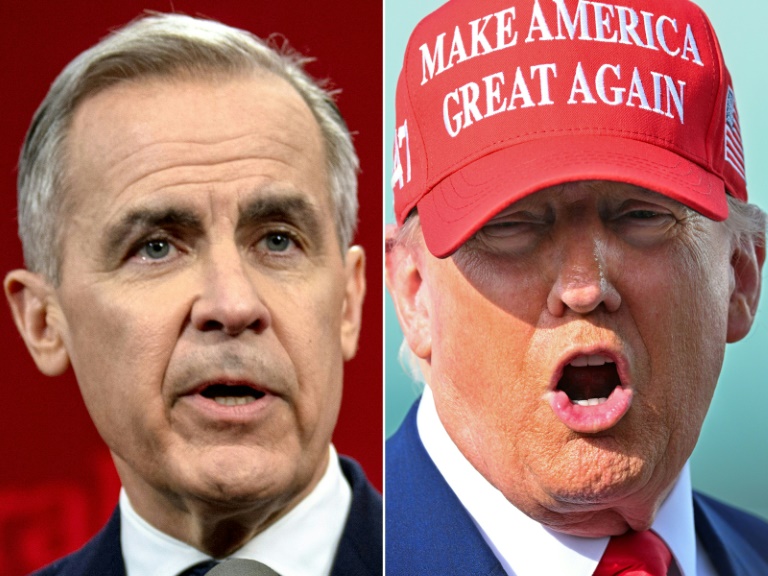
OTTAWA — Canadian Prime Minister Mark Carney announced Saturday that Canada will impose retaliatory tariffs on the United States, matching Washington’s newly imposed 50% levy on $20 billion worth of Canadian goods dollar for dollar, after days of intense trade negotiations between the two longtime allies collapsed late Friday.
Speaking to reporters in Ottawa, Carney said the new Canadian tariffs will target U.S. steel, dairy, appliances, agricultural equipment, pulp and paper, and electronics, along with certain other products previously targeted by U.S. tariffs against Canada. The measures are set to take effect Sept. 8. “Canada will match Washington’s new tariffs dollar for dollar in order to protect Canadian workers, farmers, families, and businesses,” Carney said.
The breakdown in talks came after the Trump administration imposed new 50% tariffs covering roughly $20 billion in Canadian goods, or approximately 5.5% of Canada’s total exports to the United States, affecting sectors including wine, furniture, dairy products, cement, clothing, fishing rods and hockey equipment. President Donald Trump responded to Carney’s retaliation announcement in a post on Truth Social, writing, “Canada wants the benefits of being a State, without being one!!!” Trump also claimed Canada has charged U.S. farmers “massive amounts” of tariffs for years, adding, “No more!!!”
Carney said the negotiations broke down after the United States proposed conditions his government found unacceptable, despite what he described as positive momentum in earlier talks. “In recent days, the United States proposed new terms that were uneconomic, unfair and undermined the net benefits for Canada, and called into question the reliability of any deal,” Carney said, adding that the U.S. demands included restrictions on Canada’s ability to pursue new trade agreements with other countries. “We cannot accept what they’ve offered, and we will not give what they’ve asked,” he said. Carney further alleged that U.S. negotiators made unacceptable threats concerning the French language and Quebec culture, referring to Canada’s French-speaking eastern province.
Carney said his government would release further details of its retaliatory response in the coming days, and separately indicated Canada would announce support measures next week for industries directly affected by the new U.S. tariffs, support he said could remain in place for years.
The economic consequences of the escalating trade dispute are expected to be significant for Canada, which relies on the United States for nearly 70% of its total exports. Al Jazeera’s David Mercer, reporting from Calgary, described the anticipated fallout. “Costs are going to go up, prices are going to go up, unemployment is going to go up as well,” Mercer said, adding that some small and medium-sized Canadian businesses have been warned they may be forced to declare bankruptcy as a result of the tariffs. At the same time, Mercer noted, Carney has sought to frame the trade war as an opportunity for Canada to diversify its economic relationships. “He’s been around the world, he’s been talking to countries in Asia, in Europe, shoring up new trade relationships, wanting to diversify Canada’s economy and Canada’s trade relationships with other countries around the world just to get away from that dependency that Canada has traditionally had on the United States,” Mercer said.
Public opinion in Canada appears to broadly support Carney’s harder line. A poll conducted by Leger last week found that 56% of Canadians favored a tougher approach toward the United States in trade talks and opposed making further concessions.
Ontario Premier Doug Ford, one of the most vocal Canadian critics of the U.S. tariffs, voiced support for Carney’s decision to retaliate. “I’m glad he didn’t sign that deal because it was a bad deal. It was a bad deal for Ontario. It was a bad deal for the auto sector, the steel sector, and manufacturing sector,” Ford told reporters Saturday.
Reaction among ordinary Canadians reflected a mix of defiance and concern. Stuart Edwards, a resident of Port Colborne, Ontario, said the trade war would “hurt everybody” and called the situation “just sad.” He placed blame squarely on Washington. “We have a bully in Washington, and he’s just hitting us all with the big stick all the time,” Edwards said. “And we’re not going to put up with it; Canada isn’t. We’ll fight back.” Pamela Coulis, from Fort Erie, Ontario, expressed worry about the practical financial impact of rising prices. “I think probably the gas will go up even more, and all products, from food to, I don’t know, wood, everything else,” she said.
Diamond Isinger, a former special adviser to ex-Canadian Prime Minister Justin Trudeau, argued that retaliation, despite its costs, represented Canada’s only viable path forward. “It’s going to cause pain and challenge for Canadians and Americans alike — in terms of the actions that, unfortunately, the US has taken as well as Canada’s retaliation. But ultimately this was the way forward; this was the only realistic next step,” Isinger said. She argued that the Trump administration tends to respond most effectively to firm resistance. “Because the US administration responds best, of all the responses that they could have, to all the actions that a government like Canada could take, to strength,” Isinger said. “So, we could not simply accept 50 percent tariffs going forward. We had to move forward with our own retaliatory package.”
U.S. Trade Representative Jamieson Greer indicated Saturday that no further talks with Canada are currently planned. “We’re moving forward with measures that respond to Canadian retaliation,” Greer told Fox News, adding, “They’ve always had the best deal, and they still would have an even better deal, but they didn’t want that.”
The escalating dispute has also drawn criticism from Democratic lawmakers and governors in U.S. border states, including Minnesota, New York and Washington, who have blamed Trump for triggering economic disruption that will raise costs for American businesses and consumers. New York Gov. Kathy Hochul criticized the administration’s approach in a post on the social platform X. “Needlessly picking fights with our allies and raising prices here at home. That’s Trump’s economic policy in a nutshell,” Hochul wrote.
The Business Roundtable, a group representing roughly 200 chief executives of major U.S. corporations, also warned that the new tariffs risk raising costs for American businesses and families, and urged both governments to resume negotiations. As of Saturday, no new talks between the United States and Canada had been scheduled, leaving both economies bracing for the mutual tariffs set to take effect Sept. 8.

Theo James, star of “The White Lotus” and Netflix’s “The Gentlemen,” has ruled himself out of contention to play the next James Bond, telling British GQ he believes he has aged out of consideration for the role even as speculation about who will succeed Daniel Craig as 007 continues to intensify.
“I’m definitely too old now, for one,” James told the outlet, addressing months of fan and industry speculation that had positioned him as one of the more prominent contenders for the role. James, 41, made his comments as part of a broader interview in which he explained his reluctance to take on a franchise commitment of that scale and public visibility.
James elaborated on his concerns about the level of fame that would accompany the role, framing his hesitation specifically around the impact such visibility could have on his family. “Imagine, suddenly, you and I cannot walk down the street. What that does to your children, who are trying to find themselves in the midst of hyper-scrutiny and fame. None of that, to me, is worth it,” James said. He acknowledged the appeal of a role like Bond in the moment, while ultimately concluding it wasn’t a trade-off he was willing to make. “At the time, it’s very intoxicating, being offered some huge, sexy part that would change your life forever. But it really wouldn’t ultimately be worth it,” he said.
James went further in describing the permanence of the fame that comes with playing one of cinema’s most recognizable characters, suggesting there would be no returning to a more private life afterward. “That would be an example of a place you could never come back from,” he said.
Despite James’ own assessment that he is too old for the part, his age would not have placed him outside the historical range of actors who have taken on the role. Daniel Craig was 38 when he debuted as Bond in 2006’s “Casino Royale,” while his predecessor, Pierce Brosnan, was 42 when he first played the character in 1995’s “GoldenEye.” At 41, James would have fallen comfortably within that established range.
James is not the only prominent name to have publicly stepped back from Bond speculation. Henry Cavill, 43, has similarly downplayed the likelihood that he would take on the role, according to MovieWeb, adding to a growing list of previously rumored contenders who have distanced themselves from the search.
The search for Craig’s successor has taken on particular significance given how long the actor held the role. Craig officially departed the franchise following the 2021 release of “No Time to Die,” a film that had faced multiple delays due to the coronavirus pandemic before finally reaching theaters. Craig had confirmed well before that release that the film would mark his fifth and final outing as Bond, a run that began with his 2006 debut in “Casino Royale.” With Craig’s tenure now concluded, producers face their first opportunity to recast the character in more than two decades.
That search carries added weight given how producers approached Craig’s own casting. When Craig was selected for the role, he was widely considered an unconventional choice at the time, but the decision to reset the “Casino Royale” storyline to depict an earlier chapter in Bond’s career gave Craig significant creative latitude to reinterpret the character on his own terms. By contrast, MovieWeb noted that earlier actors who took over the role from established predecessors faced the more difficult task of both honoring prior portrayals and finding their own distinct interpretation of the character, a dynamic that has fueled continued public fascination with who might eventually inherit the role this time around.
Filmmakers behind the franchise are reportedly hoping that whoever is ultimately cast can sustain a tenure in the role comparable to Craig’s 15-year run, rather than the shorter stints of predecessors such as George Lazenby, who appeared in only one Bond film, or Timothy Dalton, who starred in two. Given that expectation, MovieWeb noted that if James had been cast despite his stated reservations, he could theoretically have remained in the role until around age 60, based on the kind of extended tenure producers are said to be seeking.
No official timeline has been announced for when a new Bond will be revealed, though some reports have suggested an announcement could come before the end of 2026, according to MovieWeb’s reporting.
James’ comments have added fresh fuel to ongoing public speculation about who might ultimately take on the role, a debate that has continued to generate significant fan engagement across social media and entertainment forums. Names frequently floated by fans and industry observers in connection with the search have included actors such as Aaron Taylor-Johnson, Tom Hiddleston and Richard Madden, among numerous others, reflecting the intense public interest that has surrounded the search for Craig’s successor since his departure from the franchise became official.
With James now formally removing himself from consideration, joining Cavill in publicly stepping back from the speculation, the pool of widely rumored contenders continues to narrow even as producers have offered no official confirmation regarding their actual shortlist for the role. Until an official announcement is made, public speculation surrounding James Bond’s next on-screen incarnation is likely to remain one of the most closely watched ongoing storylines in Hollywood casting news, particularly as the franchise approaches what would mark its first new Bond casting in over 20 years.
Business
(PHOTO) Erling Haaland Ditches Iconic Viking Ponytail for Buzz Cut Ahead of Man City’s Season Opener

Manchester City striker Erling Haaland surprised fans Sunday by revealing he has cut off his trademark long blonde hair in favor of a short buzz cut, ending an era in which his flowing Viking-style locks became one of soccer’s most recognizable personal brands, just hours before City’s Premier League opener against Bournemouth.

The Norwegian striker shared a series of images and a video documenting the transformation on social media Sunday morning, accompanying the post with a brief message about the new campaign. “New season, new trim,” Haaland wrote, according to Goal.com. The 26-year-old’s decision marked a significant departure for a player who had spent the past several years cultivating one of the sport’s most distinctive personal looks, often styled in a ponytail, top knot or bun during matches.
Haaland’s long hair had become closely intertwined with his broader public image, particularly following Norway’s unexpected run to the quarterfinals of the 2026 FIFA World Cup, where his flowing blonde hair, paired with the team’s Viking-rowing fan tradition, helped fuel a wave of viral attention. According to ESPN, fans wore Haaland wigs, shared memes referencing his distinctive running style, and even held a Haaland lookalike contest in Miami during the tournament, underscoring just how central his hairstyle had become to his public persona at the height of that summer’s tournament mania.
Notably, Haaland’s decision to cut his hair represents a reversal of a stance he had maintained publicly in the past. According to Goal.com, the striker had previously cited Swedish striker Zlatan Ibrahimovic as his inspiration for keeping his hair long, and had, before the World Cup, been asked directly whether he would ever consider adopting a shorter style, a suggestion he had at the time dismissed.
Reaction to the transformation was swift and largely one of shock among fans. LADbible captured the sentiment directly, noting that Haaland’s long hair, whether tied up in a ponytail, styled in a top knot, or worn flowing in a bob, had become nearly as much a fixture of both his club and international teams as his goalscoring itself, having been recreated in countless memes throughout the World Cup. According to the outlet, one fan reacted to the announcement with visible alarm, writing simply, “Erling what did you do,” reflecting concern among some supporters that Haaland may have inadvertently parted ways with what they viewed as something of a good-luck charm heading into the new season.
Haaland’s hair had also carried genuine commercial significance beyond its viral social media appeal. According to Hello Magazine, the striker had financially invested in the hair-tie brand Bon Dep, particularly favoring the company’s Kknekki hair ties, which experienced a significant surge in both sales and social media followers after the brand released a limited-edition Haaland collection featuring eight hair ties matching the colors of Norway’s kits, each fitted with a bead. That product reportedly sold out immediately upon launch, and the brand’s website traffic increased by 70% following the release, according to figures cited by Hello Magazine. Haaland has also served as a global ambassador for the men’s shampoo brand Clear Men, which built a marketing campaign around the excitement surrounding his appearance at the World Cup.
Sunday’s dramatic haircut arrives at a significant moment for both Haaland and Manchester City. The transformation was revealed just ahead of the club’s opening match of the 2026-27 Premier League season against Bournemouth, according to ESPN. The coming campaign will mark Haaland’s first full season without longtime manager Pep Guardiola, who stepped down as City’s head coach last summer and was replaced by former Chelsea manager Enzo Maresca. Since joining Manchester City from Borussia Dortmund in July 2022, Haaland has established himself as one of the Premier League’s most prolific goalscorers, finishing as the league’s top scorer in three of his four seasons with the club.
Haaland’s hairstyle has actually cycled through several distinct phases throughout his career, according to Hello Magazine’s retrospective coverage of his evolving look. Despite becoming synonymous in recent years with his long blonde locks, the Norwegian striker did not always favor longer hair; earlier in his career, including stints with Molde FK, Red Bull Salzburg and his early days at Borussia Dortmund, he wore considerably shorter styles, including a center-parting cut he briefly revived ahead of the 2025-26 season before ultimately returning to his longer look for the World Cup.
Haaland comes from a soccer family, with his father, Alf-Inge Haaland, having previously played in the Premier League himself. The younger Haaland began his own playing career at age 5 within Bryne FK’s youth academy, before progressing through Molde FK, Red Bull Salzburg and Borussia Dortmund en route to his high-profile move to Manchester City in 2022.
With his new buzz cut now revealed just hours before kickoff against Bournemouth, attention will quickly shift back to Haaland’s on-field performance as City look to reassert themselves at the top of the Premier League table under Maresca’s first full season in charge. Whether the striker’s dramatic new look carries any bearing on his form heading into the new campaign remains, of course, purely a matter of superstition rather than substance, though that has done little to quell the intense fan reaction the transformation generated within hours of Haaland sharing the news on social media Sunday morning.
Business
(VIDEO) Hawk Fire Near Reno Tops 10,500 Acres as Nevada Declares State of Emergency in Washoe County Saturday

RENO, Nev. — A fast-moving wildfire burning in the mountains northwest of Reno grew to more than 10,500 acres by Saturday evening, forcing thousands of residents from their homes and prompting Nevada Gov. Joe Lombardo to declare a state of emergency in Washoe County as dry, windy conditions continued to fuel the blaze.
The fire, named the Hawk Fire, was first spotted just before 11:30 a.m. Saturday and expanded rapidly throughout the day, reaching 2,500 acres by early afternoon before continuing to grow to 10,523 acres by Saturday evening, according to figures from the mapping platform Perimeter Map. According to CNN, the fast-growing brush fire forced residents of northwestern Reno from their homes Saturday night, prompting Lombardo’s emergency declaration in Washoe County.
A fast-moving wildfire north of Reno has burned more than 10,000 acres and forced thousands of residents to evacuate, prompting Nevada to declare a state of emergency as dry, windy conditions keep the blaze at 0% containment pic.twitter.com/BH6PKdyyc3
— Breaking911 (@Breaking911) August 23, 2026
The Hawk Fire is burning in a mountainous area with roughly 1,000 homes located along U.S. Highway 395, according to 8 News Now. The area lies north of Interstate 80 and south of U.S. 395, a region with extensive roads but relatively limited development. Reno officials advised residents in the affected area to evacuate to the Evelyn Mount Northeast Community Center, the same evacuation center previously used for two other wildfires, the Bug Fire and the Stallion Fire, that had burned in the same general area earlier this month and have since been contained.
Reno police asked residents to check the Perimeter Map platform for up-to-date evacuation information, according to La Voce di New York. Portions of Highway 395 were shut down as a result of the fire’s rapid growth, further complicating evacuation efforts and travel through the affected region.
Saturday’s fire adds to what has already been an intense and sustained wildfire season for the area north of Reno. Earlier this month, the Bug Fire, Stallion Fire and Fred Mountain Fire burned simultaneously in the same general region, prompting more than 13,000 residents to evacuate at the height of that combined threat, according to the Nevada Army National Guard. Eleven structures were lost across those earlier fires, though officials noted that initial fire behavior predictions had forecast far worse outcomes than what ultimately occurred following the fires’ ignition on Aug. 9.
Col. Kyle Cerfoglio, director of the Nevada Joint Staff, whose own home fell within Washoe County’s “get ready to evacuate” zone during that earlier fire complex, credited the rapid emergency response for preventing more severe damage. “There’s no doubt this fire would have been much worse had it not been for the quick and rapid response from first responders around the region,” Cerfoglio said. “This fire came dangerously close to many homes.” The Bug Fire ultimately reached 93,733 acres before crews achieved 94% containment, while the Stallion Fire reached 95% containment after also burning tens of thousands of acres, according to the Nevada Army National Guard’s summary of the earlier response.
That earlier fire complex expanded dramatically in the days following Nevada’s initial state of emergency declaration. According to 8 News Now, the combined perimeter of the Bug and Fred Mountain fires grew by more than 500% in the days after Lombardo’s initial emergency declaration, driven by wind gusts reaching up to 30 mph, eventually stretching evacuation zones from the California border to areas roughly 30 miles east near the southern tip of Pyramid Lake. At the height of that earlier crisis, the combined fire perimeter approached 100,000 acres, with water-scooping aircraft working to defend homes and other structures directly in the fires’ path.
Deputy Chief Shannon Lewis of the Truckee Meadows Fire Protection District emphasized the importance of prompt evacuation compliance during the earlier fire response, guidance that remains directly relevant to residents now facing the Hawk Fire. “If we do have an evacuation warning it is so important to leave,” Lewis said. “If you are leaving at the last minute its gonna slow our resources down. And also you could get stuck in a traffic jam and you wont be able to get out and the fire could get close to your vehicle.”
The scale of destruction from earlier wildfires in the broader Reno-area region has varied significantly depending on wind conditions and terrain. During a separate, earlier wind-driven wildfire that burned between Reno and Carson City, an estimated 18 homes were lost in Washoe Valley, with Truckee Meadows Fire Protection District Chief Charles Moore warning at the time that the entire Washoe Valley area was considered at risk given the fire’s unpredictable behavior amid winds gusting in excess of 70 mph along the eastern front of the Sierra Nevada.
Evacuation centers established during earlier fires in the region have sheltered significant numbers of displaced residents. According to This Is Reno, the Evelyn Mount Community Center sheltered nearly 70 residents during one recent evacuation period, with additional evacuees staying outside in the parking lot overnight due to capacity constraints. Air quality monitoring conducted by Northern Nevada Public Health during that earlier fire event found conditions generally in the “good” to “moderate” range across most of Washoe County, though areas near and downwind of the fire experienced unhealthy air quality for sensitive groups or worse.
Officials have repeatedly emphasized the importance of residents relying on official channels, including the Perimeter Map platform and the Watch Duty app, for accurate, real-time evacuation information rather than unverified reports circulating on social media. Residents have also been asked to reserve 911 calls specifically for new emergencies, with general information available through the Washoe311 non-emergency information line.
With the Hawk Fire continuing to burn at 0% containment amid dry, windy conditions Saturday evening, officials have not provided a timeline for when containment efforts might begin gaining meaningful ground. Given the pattern established by earlier fires in the same region this month, further evacuation orders and warnings are likely as fire crews, the Nevada National Guard, and mutual aid resources from surrounding states continue working to protect homes and infrastructure across the fire’s expanding perimeter northwest of Reno.

Bitcoin pares losses as recent rally finds fresh momentum

Burry exits Alibaba, builds large JD.com position over valuation concerns

Canadian prime minister says U.S. sought to restrict Canada’s ability to strike trade deals with other countries.
President Donald Trump’s latest trade fight with Canada has a faraway force at its center: China.
As Washington presses Ottawa to do more to prevent Chinese steel, aluminum and other goods from reaching the U.S. market through North American supply chains, Canada is pursuing renewed economic ties with Beijing, adding a fresh complication to already tense trade talks.
At the heart of the fight is transshipment — routing goods through an intermediary country, sometimes after limited processing, before they reach their final market. U.S. officials fear steel and aluminum made in China or elsewhere could be processed in Canada or Mexico and then enter the United States as regional content.
TRUMP JUST EXPANDED HIS TARIFF PLAYBOOK WITH A POWERFUL TRADE WEAPON NO PRESIDENT HAS EVER USED
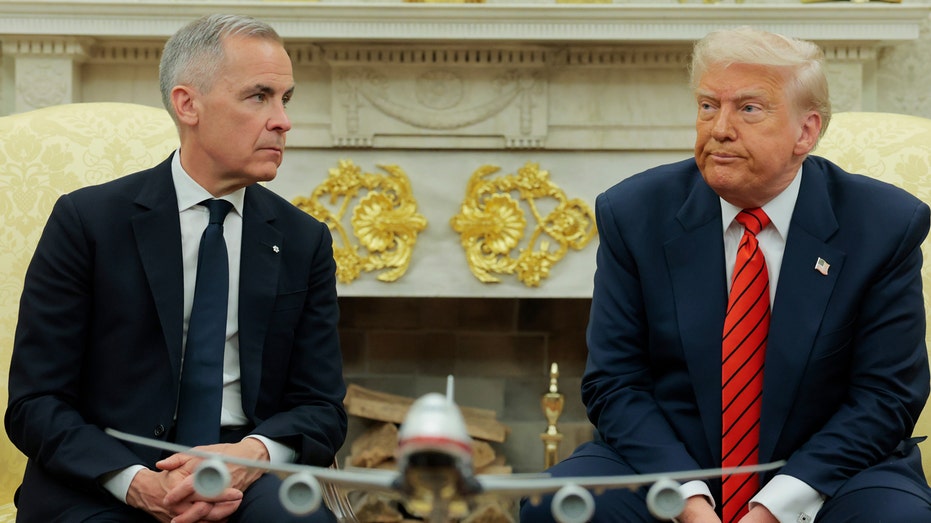
President Donald Trump and Canadian Prime Minister Mark Carney have traded criticism following the collapse of U.S.-Canada trade negotiations. (Anna Moneymaker/Getty Images) / Getty Images)
The U.S. and Canada addressed that risk in a 2019 joint statement resolving an earlier steel-and-aluminum tariff dispute. The countries agreed to prevent steel and aluminum made outside the U.S. or Canada from being transshipped into the other country, and said they could distinguish between steel melted and poured in North America and steel made elsewhere.
U.S. trade hawks now argue Canada should accept tougher safeguards as Washington seeks to limit China’s role in critical manufacturing supply chains.
Canada claims it is already taking steps to keep foreign steel from flooding its market. Ottawa limits some steel imports from countries without a free-trade agreement, including China, and imposes a 50% surcharge once those limits are exceeded.
A POPULAR COCKTAIL HAS A TRUMP TRADE PROBLEM YOU PROBABLY DIDN’T KNOW ABOUT

China’s President Xi Jinping and President Donald Trump visit the Temple of Heaven on May 14, 2026, in Beijing, China. (Brendan Smialowski/Pool/Getty Images / Getty Images)
But Canada has also moved to strengthen trade ties with Beijing.
In March, China agreed to reopen its market to several Canadian farm and seafood exports, including canola, peas, lobster and crab. Canada, meanwhile, established a 49,000-vehicle annual quota for Chinese EVs at the 6.1% most-favored-nation tariff rate, removing its previous 100% surtax.
Canada also extended tariff relief for some Chinese steel and aluminum products it says are in short supply. Officials say the arrangement is part of a broader effort to diversify Canada’s trade relationships. China is Canada’s second-largest merchandise trading partner.
CLICK HERE TO DOWNLOAD THE FOX NEWS APP

A container ship sails out of the port in Qingdao, in China’s eastern Shandong province on August 7, 2025. (STR/AFP/Getty Images / Getty Images)
The arrangement has fueled criticism in Washington that Canada is moving in the opposite direction from the Trump administration’s effort to build a more China-resistant North American trading bloc.
For Trump, the growing question is whether Canada is willing to embrace the same approach — or whether it’s bid to expand trade with Beijing will become another fault line in an already tense relationship.

Nvidia, Fed Confab, Inflation, GDP, and More to Watch This Week

Watch: Gary Woodland hits rare topped tee shot at BMW while in contention

If you own a Ring Doorbell can you please turn off Quick Replies

Sugary treats could fuel bowel, liver and lung cancers, major study suggests





-

 Fashion2 days ago
Weekend Open Thread: Madewell – Corporette.com
-

 Crypto World2 days ago
anatomy of crypto’s biggest liquidation event since 2021
-

 Business5 days ago
SMA Solar Technology AG (SMTGY) Q2 2026 Earnings Call Transcript
-

 Tech6 days ago
Qwen3.8-27B runs frontier-class coding agents and reasoning locally, no cloud API required
-

 Crypto World6 days ago
OCC Greenlights Trump Family Crypto Firm for Trust Charter
-

 Politics1 day ago
6 months on, Irish renters crushed by effects of government housing bill
-
 NewsBeat1 day ago
The ‘Lucky Dip Gang’ causing carnage for clicks: After five thugs were killed speeding in the wrong direction on a motorway, GUY ADAMS investigates a sick new trend… and why police aren’t even allowed to pursue them
-

 Crypto World6 days ago
NAVI Prime launches institutional lending framework on Sui
-

 News Videos4 days ago
Don’t Leave Your Financial Future To Chance | August 19, 2026
-

 Crypto World7 days ago
Data of 54K Wallet Users Leaked, Clarity Odds Just 10%: Hodler’s Digest, Aug. 16
-

 Tech4 days ago
GLM-5.3 hits the API at $1.4/$4.4 per million tokens
-

 Business1 day ago
Musk’s Tesla, SpaceX Confirm $16.8 Billion ‘Terafab’ Chip Plant as World’s Largest Building in Texas
-

 Business5 days ago
Stock Market Today: Tech Futures Slide As Treasury Yields Jump; Nvidia, Micron, Sandisk Sell Off
-
 Crypto World6 days ago
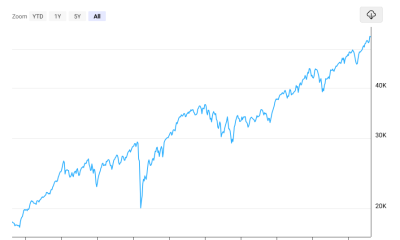
Dow’s 3-Year Winning Run Isn’t a Crash Signal, Still 49% Odds of Double-Digit Gains
-
Tech6 days ago
5 Of The Most Reliable Car Brands To Consider If You’re Buying A Used SUV
-

 Tech6 days ago
Keychron K8 Ultra 8K review: a great value keyboard with comfort issues
-

 Tech6 days ago
Straight Up the Cliff, Yunnan’s New Fuyao Ladder Turns a Three-Hour Climb Into a 50-Second Ride for Students
-
 NewsBeat6 days ago
Trump explodes at CNN reporter after question about young blonde aide who wrote him besotted letters
-
 Tech6 days ago
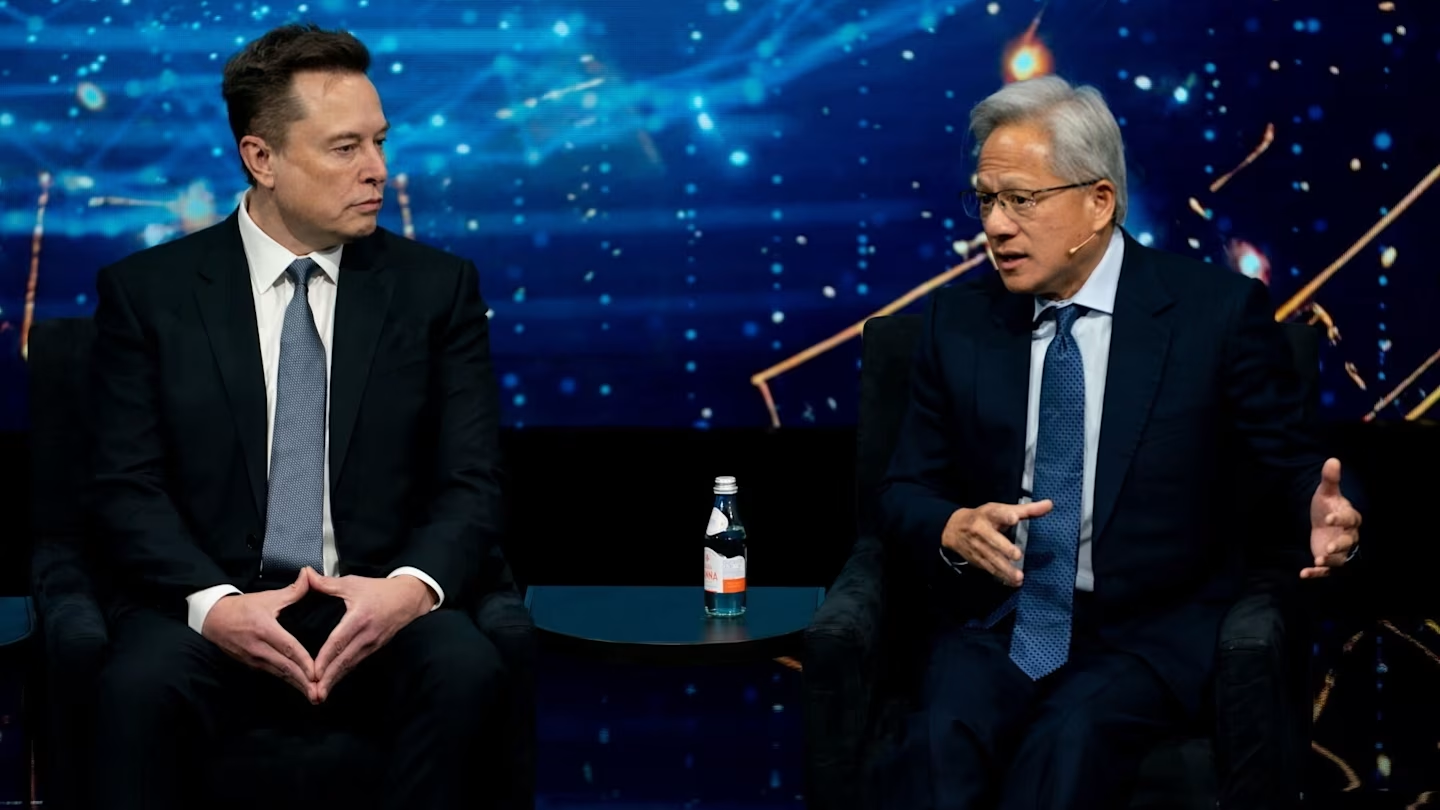
Nvidia discloses $21B stake in SpaceX
-

 Business3 days ago
Five Below: Kids Discount Retailer Reaps Rich Rewards
You must be logged in to post a comment Login