
Business
NSW, ACT and WA Get Extra Monday Holiday as April 25 Falls on Saturday

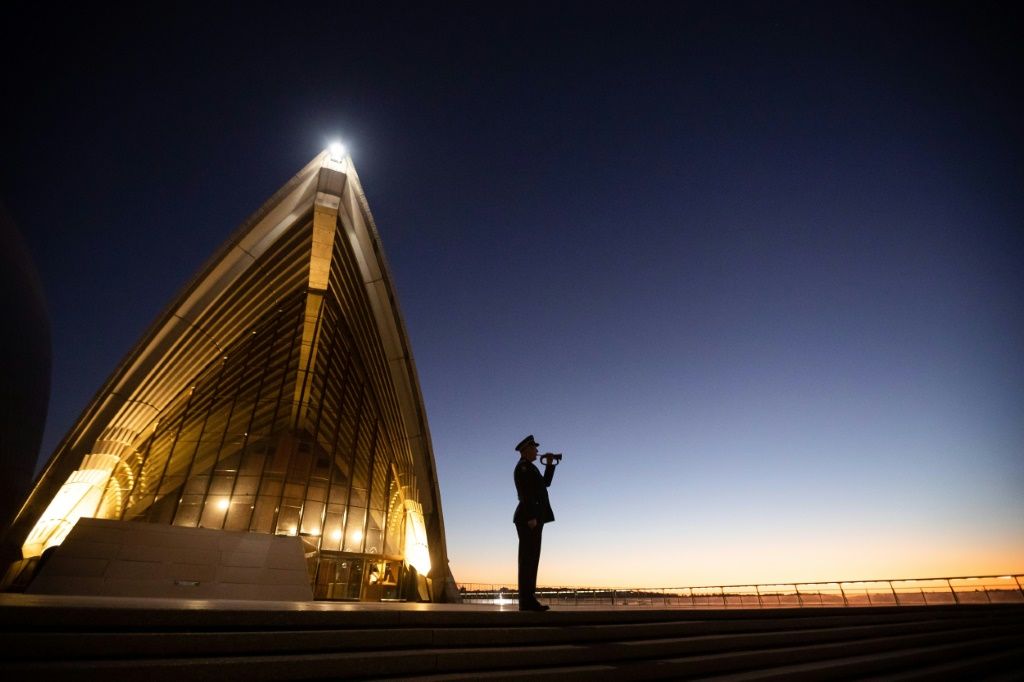
SYDNEY — Anzac Day will be observed as a public holiday across every Australian state and territory on Saturday, April 25, 2026, but only residents in New South Wales, the Australian Capital Territory and Western Australia will enjoy an additional day off on Monday, April 27, creating uneven long weekends as the nation commemorates its fallen service members.

The variation stems from differing state and territory policies on when public holidays are observed if they fall on a weekend. While April 25 remains the official date for dawn services, marches and remembrance ceremonies nationwide, three jurisdictions have declared the following Monday a substitute holiday to provide workers with a meaningful break.
Fair Work Ombudsman guidance confirms Anzac Day is a national public holiday in all eight states and territories. However, the treatment of the weekend date creates a patchwork. NSW, the ACT and WA will observe both Saturday and Monday as public holidays, while Victoria, Queensland, South Australia, Tasmania and the Northern Territory observe only Saturday.
In New South Wales, Premier Chris Minns’ government confirmed the extra Monday holiday, marking a policy shift. Previously, NSW did not always grant a substitute day when Anzac Day fell on a weekend. This year’s decision gives many workers a rare four-day break from Friday evening through Tuesday morning.
The Australian Capital Territory has aligned with NSW, declaring both days public holidays. ACT Chief Minister Andrew Barr noted the move honors the significance of Anzac Day while recognizing modern workforce needs. Public sector and most private employers will observe the additional Monday.
Western Australia continues its long-standing practice of providing a substitute day when Anzac Day lands on a weekend. The state will observe Saturday, April 25, and Monday, April 27, as public holidays, a policy welcomed by workers and unions.
For the majority of Australians, however, only Saturday counts as the public holiday. In Victoria, Queensland, South Australia, Tasmania and the Northern Territory, businesses and services will largely operate as normal on Monday, April 27. Employees rostered to work Saturday may receive penalty rates or time off in lieu depending on awards and agreements.
The discrepancy has sparked lively debate on social media and talkback radio. Many in non-substitute states expressed disappointment at missing a long weekend, while others argued that the solemn nature of Anzac Day should focus on commemoration rather than extra leisure time. Unions have used the occasion to renew calls for more consistent national public holiday rules.
Anzac Day holds profound cultural importance. The date marks the 1915 landing of Australian and New Zealand troops at Gallipoli. Dawn services, marches and community events will proceed nationwide on Saturday regardless of holiday status. Major ceremonies are planned at the Australian War Memorial in Canberra, Sydney’s Anzac Memorial, Melbourne’s Shrine of Remembrance and equivalent sites across the country.
Retail trading restrictions vary. In jurisdictions with only Saturday as the holiday, many shops will open normally on Monday. States granting the Monday holiday will see broader closures or reduced trading similar to other public holidays. Hospitality and tourism sectors anticipate strong demand in NSW, ACT and WA for the extended break.
Employers and employees are advised to check specific awards, enterprise agreements and state legislation. Penalty rates for working on public holidays remain applicable on April 25 everywhere, and on April 27 in the three jurisdictions observing the substitute day. Casual workers generally do not receive the day off but may be entitled to higher rates.
This year’s arrangement repeats a pattern seen in previous weekend Anzac Days. With the date falling on a Saturday again in 2027, similar debates are expected unless more states align policies. Federal efforts toward greater harmonization of public holidays have gained little traction so far.
Community events will bridge the differences. Schools are closed nationwide on Saturday, and many workplaces will pause for minutes of silence or allow staff to attend services. Veterans’ groups emphasize that remembrance transcends holiday entitlements.
Travel operators report mixed bookings. Destinations popular for long weekends, such as the NSW South Coast, Blue Mountains and Western Australia’s Margaret River region, expect surges, while other states anticipate standard Saturday traffic. Airlines and accommodation providers have adjusted pricing accordingly.
Historians and defense analysts note Anzac Day’s evolution from a solemn military commemoration to a broader reflection on service, sacrifice and national identity. The public holiday variations highlight Australia’s federal system, where states retain significant autonomy over employment and holiday matters.
As April 25 approaches, Australians are encouraged to check official government websites or the Fair Work Ombudsman for jurisdiction-specific details. Whether enjoying a single day of reflection or a full long weekend, the focus remains on honoring those who served and remembering the human cost of conflict.
For many, the extra day in NSW, ACT and WA offers welcome respite. For others, Saturday’s observances provide sufficient opportunity to pause and pay respects. In either case, Anzac Day 2026 will see communities united in remembrance, even as holiday rules differ across the map.


InvestingPro’s fair value model flagged CSG Systems’ 71% gain early
Supply Chain Pulse Check as Iran war enters 3rd month


Leo Nelissen is a macro-focused equity strategist and long-term investor with more than a decade of experience on Seeking Alpha, where he has built a following of over 50,000 readers. His work combines big-picture macro analysis, geopolitical insight, and bottom-up research to identify high-quality businesses and long-term investment opportunities. He is the founder of Main Street Alpha, a Seeking Alpha Investing Group focused on macro strategy, real portfolios, dividend investing, and disciplined capital allocation for long-term investors.
Analyst’s Disclosure: I/we have a beneficial long position in the shares of REXR, RTX, GE either through stock ownership, options, or other derivatives. I wrote this article myself, and it expresses my own opinions. I am not receiving compensation for it (other than from Seeking Alpha). I have no business relationship with any company whose stock is mentioned in this article.
Seeking Alpha’s Disclosure: Past performance is no guarantee of future results. No recommendation or advice is being given as to whether any investment is suitable for a particular investor. Any views or opinions expressed above may not reflect those of Seeking Alpha as a whole. Seeking Alpha is not a licensed securities dealer, broker or US investment adviser or investment bank. Our analysts are third party authors that include both professional investors and individual investors who may not be licensed or certified by any institute or regulatory body.


Australia’s Wong to visit Japan, China, South Korea to discuss energy security

Allegro MicroSystems: Why It's Time To Take Profits

Decoding the charts, Rupak De, Senior Technical Analyst at LKP Securities, said the index faced resistance near its 100-day EMA on the daily chart, which capped the rally and triggered fresh selling, dragging it below the 24,000 mark.

The Illusion of Strength in Easy Money Cycles
Over the past decade, abundant liquidity and low interest rates allowed even mediocre businesses to thrive. However, as global central banks—from the Federal Reserve to emerging market policymakers—tighten or recalibrate policy, the market is increasingly distinguishing between real compounders and fragile performers.
In such an environment, earnings growth alone is no longer a reliable indicator. Companies that once looked strong due to favorable liquidity conditions are now being stress-tested.
The “Capacity to Suffer”: A Rare Corporate Trait
Thomas Russo’s framework which he presented at Talks@Google revolves around identifying businesses that can endure short-term pain to build long-term value. According to him, true survivors are those willing to sacrifice immediate profitability in order to invest in future growth.
This often manifests in:

Heavy reinvestment into brands, distribution, or new markets
Acceptance of lower margins in the near term
Strategic decisions that may temporarily hurt stock prices
Such companies are not chasing quarterly expectations—they are building multi-decade compounding engines.
Why Markets Punish the Right Behavior
Ironically, the very traits that define long-term winners often lead to short-term underperformance. Markets, especially in uncertain times, tend to reward visibility and punish ambiguity.
Russo highlights that expanding businesses require capital and patience, and these investments may not yield immediate returns, which can weigh on stock prices.
In today’s environment—where investors are hypersensitive to interest rates, liquidity shifts, and geopolitical risks—this disconnect becomes even sharper.
The Investor’s Mirror: Can You “Suffer” Too?
Russo’s philosophy extends beyond companies to investors themselves. The ability to hold onto quality businesses during periods of underperformance is crucial.
This “capacity to suffer” includes:
Resisting the urge to chase momentum
Ignoring short-term noise and market euphoria
Staying committed when others appear to be making easy gains
As he points out, watching others profit quickly can itself feel like a form of suffering—but it is temporary.
Reinvestment: The Engine of True Compounding
A key marker of resilient businesses is their ability to reinvest earnings at high rates of return. Companies that can deploy capital effectively—not just generate it—create exponential value over time.
This aligns with a broader value-investing principle: the best businesses are those that can continuously reinvest and expand their economic moat, rather than simply distribute profits.
Applying Russo’s Lens to Today’s Market
In the current global setup:
Technology companies face disruption from AI and changing demand cycles
Banks and financials are navigating rate volatility and credit risks
Consumer businesses are dealing with inflation-driven demand shifts
Amid this uncertainty, the winners will likely be those that:
Continue investing despite macro headwinds
Maintain pricing power and brand strength
Think in decades, not quarters
Conclusion: Survival Is a Strategic Choice
Market downturns and global uncertainties do not just test balance sheets—they test philosophy. As liquidity tightens and easy gains disappear, the market is returning to its fundamental nature: rewarding patience, discipline, and long-term thinking.
The real survivors are not the fastest growers in good times, but the most resilient builders in bad times.
For investors, the message is clear: identifying such businesses is only half the battle—the other half is having the conviction to endure the journey alongside them.

Nasdaq: My Multiple Target Has Been Reached, So I Am Upgrading To A Buy


Gunfire persists in Mali town as UN urges international response after attacks

The Dollar's Funeral Keeps Getting Rescheduled
InvestingPro’s fair value model flagged CSG Systems’ 71% gain early

Novogratz predicts US Clarity Act to pass in May, shaping crypto rules
Karoline Leavitt Promised ‘Shots Fired’ Before WHCD Shooting

Manchester United reach agreement with Casemiro over contract clause amid transfer speculation

US brings back mandatory military draft registration

Steven Gerrard disagrees with Gary Neville over ‘shock’ Chelsea and Arsenal claim | Football


-

 Business7 days ago
Powerball Result April 18, 2026: No Jackpot Winner in Powerball Draw: $75 Million Rolls Over
-

 Fashion2 days ago
Weekend Open Thread – Corporette.com
-
Entertainment7 days ago
NBA Analyst Charles Barkley Chimes in on Ice Spice McDonald’s Fiasco
-
 Crypto World17 hours ago
Hyperliquid $HYPE Rally Builds Momentum as AI Sector Enters Prove-It Phase
-

 Politics6 days ago
Gary Stevenson delivers timely reminder to register to vote as deadline TODAY
-
Crypto World6 days ago
Bank of Hawai’i (BOH) Q1 2026: Net Income Drops to $57.4M as Net Interest Margin Expands
-

 Politics4 days ago
Making troops accountable for war crimes threatens US alliance, ex-SAS colonel warns
-

 Politics4 days ago
Disabled people challenge government SEND proposals over segregation concerns
-

 Business4 days ago
Rolls-Royce Voted UK’s Most Iconic Trade Mark as IPO Register Hits 150
-

 Politics4 days ago
Zack Polanski responds to home secretary’s taser threat
-

 Politics4 days ago
Starmer handler McSweeney to be dragged from shadows by Foreign Affairs Committee
-
Politics4 days ago
Wings Over Scotland | How To Get Away With Crimes
-
 Crypto World5 days ago
Five Value Stocks with Recovery Potential in 2026: PayPal (PYPL), Nike (NKE), and More
-

 Crypto World5 days ago
New York sues Coinbase, Gemini over prediction market offerings
-

 Politics4 days ago
‘Iran is still a nuclear threat’
-
 Sports3 days ago
Tim Bradley names the current best in the world: “Better than Inoue and Usyk”
-
 Business4 days ago
HCL Tech share price tank over 9% after weak Q4. JPMorgan, HSBC & 3 others cut target price
-

 Crypto World5 days ago
Crypto’s great hope in Senate’s Clarity Act still has a path to survive tight calendar
-

 Business4 days ago
The Job Benefits Most Men Don’t Know to Negotiate
-

 NewsBeat3 hours ago
LK Bennett closes all stores after entering administration
You must be logged in to post a comment Login