

Business
Oil falls as investors focus on potential Iran-US talks in Doha





Rural Demand May Slow, But Auto Story Remains Positive
The Nifty Auto index came under pressure amid concerns that a delayed monsoon could hurt rural demand, affecting tractor and two-wheeler sales.
Shah believes the market will eventually factor in the impact of a weaker monsoon, but says the broader growth story for the sector remains intact.
“The market will adjust to this reality, and a deficient monsoon is something that we are looking at. Having said that, I believe the auto sector, barring this short-term problem, will continue to do well,” he said.

He prefers Mahindra & Mahindra and Eicher Motors among OEMs, while highlighting Sona BLW and Motherson as stronger long-term opportunities in the auto ancillary space.
“The real juice, the real delta is in the auto ancillary space… Over the longer period, I remain positive first on the auto ancillaries and then on the OEMs,” he said.
EV Theme Is a Long-Term Opportunity
Discussing the Delhi government’s new EV policy and incentives, Shah said electric mobility remains a structural investment theme, although infrastructure challenges will slow adoption in the near future.
“EV is not a short-term play. It is a long-term play,” he said.
He identified TVS Motor, Ather, Tata Motors, Mahindra, and Sona BLW among the companies best positioned to benefit from the transition.
“Sona BLW, where 70% of its revenue is linked to the EV side of the market, will continue to do well… Over the next three to five years, EV is a good theme to play,” he said.
Kotak Mahindra Bank Offers Long-Term Value
Shah believes the valuation reset in Kotak Mahindra Bank reflects uncertainty around the leadership transition after founder Uday Kotak’s exit.
However, he sees the correction as an attractive entry point for long-term investors. “This one-and-a-half to two times price-to-book is the area to buy Kotak Bank,” he said.
He added that the bank’s strong asset quality remains a key positive despite the ongoing management transition.
Banks Continue to Be a Preferred Sector
Shah expects banking sector loan growth of around 10-15% in FY27, assuming geopolitical risks ease and inflation remains under control.
He remains positive on private sector banks and SBI while also seeing turnaround opportunities in select microfinance lenders.
“Private sector banks together with SBI will remain a growth pick… For FY27, I am positive on the banks,” he said.
Chemicals, Pharma and EPC Also Stand Out
Beyond financials, Shah continues to favour chemicals, pharmaceuticals and EPC companies, particularly those that have corrected meaningfully.
He named Deepak Nitrite, Vinati Organics, Apcotex Industries, Laurus Labs, Divi’s Labs, Neuland, and Syngene as companies worth tracking, while also seeing value in reasonably priced EPC contractors.
“Chemicals and pharma continue to be my top picks… Banks continue to be my top pick, while the microfinance space is where a lot of alpha can be created,” he said.
Business
Nasdaq Composite Jumps 1.18% Today as Tech Stocks Rally on Easing Iran Tensions and Falling Oil Prices
The Nasdaq Composite climbed sharply Monday, snapping back from its worst weekly performance in months as investors rotated back into technology and artificial intelligence-linked stocks amid signs that tensions in the Middle East were easing and oil prices continued to retreat.
The tech-heavy index stood at 25,595.48 as of 11:17 a.m. EDT, up 297.87 points, or 1.18%, on the day. The gain follows a rough stretch last week in which the Nasdaq fell for five consecutive sessions, closing Friday down 0.24% at 25,297.62 and finishing the week with a steep 4.6% decline, its worst weekly showing in some time. The S&P 500 had slipped nearly 2% over the same period, while the Dow Jones Industrial Average managed to buck the trend, rising 0.6% for the week as investors rotated into more defensive sectors.
Much of last week’s weakness traced back to a sharp pullback in chip and AI-related stocks following a New York Times report that OpenAI was considering delaying its highly anticipated initial public offering to 2027, citing both the underwhelming post-IPO performance of SpaceX and broader volatility across AI-linked shares. Investors also weighed renewed geopolitical risk after President Donald Trump accused Iran of violating a ceasefire agreement with the United States, alleging in a social media post that Iranian forces had launched attack drones at ships transiting the Strait of Hormuz, with one drone striking the deck of a large cargo vessel. Trump went further over the weekend, again threatening Iran with severe consequences following U.S. retaliatory strikes on Iranian military targets, keeping regional tensions elevated even as both sides have signaled a willingness to continue de-escalation talks.
Monday’s rebound suggests markets are, for now, looking past those lingering risks. Oil prices extended Friday’s retreat into the new week, with both major benchmarks having fallen more than 2% to close out last week, a decline that helped trigger a drop in Treasury yields and improved credit conditions for U.S. corporations. That combination of falling energy costs and lower borrowing costs has given investors renewed confidence to step back into risk assets, particularly technology and AI-related names that had borne the brunt of last week’s selling.
Consumer sentiment data released late last week added to the more optimistic tone. The University of Michigan’s final June reading came in at 49.5, modestly above the 49.0 consensus estimate and up 10.5% from May, with both current conditions and future expectations components improving. Longer-term inflation expectations at the five-year horizon fell sharply to 3.3%, down 0.6 percentage point from the prior month, while one-year inflation expectations eased slightly to 4.6%. Survey director Joanne Hsu pointed to a notable shift in how consumers view the path ahead.
“Expected business conditions over the next five years surged 16%,” Hsu said.
Monday’s rotation back into technology stocks has been broad. Megacap names including Nvidia, Intel, Microsoft, Amazon and Meta each gained more than 1.5% in early trading, reversing some of last week’s losses across both the hyperscale cloud computing side of the AI trade and the semiconductor manufacturing side. Among the Dow’s 30 components, Honeywell International led gainers with a jump of nearly 7%, followed by Amazon, up roughly 2.7%, and Alphabet, up about 2.15%. On the losing side, UnitedHealth, Merck and Sherwin-Williams each slipped modestly, reflecting some rotation away from the defensive health care and industrial names that had outperformed during last week’s selloff.
One of the most dramatic individual movers Monday was Comcast, which surged more than 20% after announcing plans to spin off its media and technology businesses, including NBCUniversal, into a separate publicly traded company, a structural shift that investors appeared to welcome enthusiastically as a way to unlock value across the conglomerate’s different operating units.
The broader semiconductor sector also continued to show standout performers even amid the recent volatility. Marvell Technology has surged 213% so far in 2026, vastly outperforming the broader market, while fellow chip name Astera Labs has also more than doubled in value over the same stretch, underscoring how unevenly the AI infrastructure boom has rewarded individual companies even as sentiment toward the sector overall has swung sharply in recent weeks.
Space and satellite stocks added another layer of activity to Monday’s session. Rocket Lab announced it will acquire satellite communications company Iridium Communications in a cash-and-stock transaction valuing Iridium shares at $54 apiece, a deal the companies said would combine Rocket Lab’s launch capabilities with Iridium’s existing satellite network. Rocket Lab founder and Chief Executive Peter Beck framed the acquisition in sweeping terms.
“This is a defining moment for the space industry,” Beck said.
The deal comes as SpaceX continues to draw outsized attention following its own record-setting initial public offering earlier this month. Nasdaq confirmed last week that SpaceX will become one of the fastest companies ever added to the Nasdaq-100 index, with index funds set to begin purchasing shares after the market closes July 6 ahead of the company’s formal inclusion before trading opens July 7, just over three weeks after its public debut.
Looking ahead, investors have a busy stretch of economic data to digest in the coming days. June consumer confidence figures and the May Job Openings and Labor Turnover Survey are due Tuesday, alongside earnings from Nike and Constellation Brands. Wednesday brings the ADP private payrolls report, June construction spending and the Institute for Supply Management’s manufacturing index, while Thursday is expected to deliver the closely watched June nonfarm payrolls report, unemployment rate and hourly earnings data, all of which will help shape expectations for the Federal Reserve’s next policy moves. U.S. markets will close Friday in observance of the Fourth of July holiday weekend.
For now, Monday’s rally reflects a market willing to look past an unsettled geopolitical backdrop and lingering questions about the pace of AI infrastructure spending, betting instead that falling energy costs, easing inflation expectations and a steady stream of corporate dealmaking can sustain the technology sector’s renewed momentum heading into the holiday-shortened week ahead.
Sensex gained more than 200 points at 77,005, while Nifty 50 rose around 86 points at 24,000 on Tuesday. Broader markets also began the session in the green, with Nifty Midcap 100 and Nifty Smallcap 100 indices gaining up to 0.3% in the morning.
Maruti Suzuki shares jumped around 3% to lead gains on Sensex, while Sun Pharma and Adani Ports shares gained over 1% each to follow. Bucking the trend, Infosys, Hindustan Unilever, NTPC, Kotak Mahindra Bank and Axis Bank shares were trading in the red with marginal losses.
Nifty Oil & Gas gained 0.45% while Nifty PSU Bank index rose 0.40%. On the other hand, Nifty Metal index declined nearly 0.3%. This came as India VIX, which measures volatility in market, declined over 1% to 13.47. Around 1,525 stocks advanced on NSE, while 741 declined and 122 remained unchanged.
What lies ahead?
With Brent crude, US bond yields and the rupee stabilising, there are no major near-term triggers for the market, noted VK Vijayakumar, Chief Investment Strategist at Geojit Investments. “As we move into July expectations regarding Q1 results will be influencing the market moves. Investors can focus on sectors which are likely to post good results,” he said.
According to the analyst, banking and financial services are likely to lead in profitability since credit growth has been strong and NIMs are good. This sector will continue to perform well. Health care is another stable sector which is likely to deliver good results. In the context of poor monsoon, the health care sector is a strong defensive play, Vijayakumar said.Also Read | Leading Indian brokerages gear up to offer seamless access to global stocks via GIFT City
“Power is another sector which will come out with good results and healthy commentary since the prospects continue to be bright. Capital goods majors have healthy order books. For IT, more than results, the management commentary is important. Sentiments are unlikely to favour the sector. In automobiles, it will be stock-specific action,” he added.
Technical view on Nifty
Volatility may remain elevated in the very near term due to the NSE monthly expiry on Tuesday, cautioned Rupak De, Senior Technical Analyst at LKP Securities. “However, the short-term trend remains constructive as long as the index holds above the 23,800 support level. Unless the Nifty falls below 23,800, a buy-on-dips strategy should be maintained. On the higher end, 24,200 is likely to continue acting as the immediate resistance,” he added.
(Disclaimer: Recommendations, suggestions, views and opinions given by the experts are their own. These do not represent the views of The Economic Times)


For first time, more central banks are set to shrink dollar holdings, survey finds

adventtr/E+ via Getty Images

By Christopher Gannatti, CFA & Samuel Rines
The ‘AI trade’ has become the organizing principle of global equity markets. Investors parse order backlogs at chip makers, model power consumption at hyperscalers, and debate whether the buildout cycle has years left

Buffett skips Gates Foundation donation pending Epstein review- WSJ

Morning Bid: Investors go shopping for Q3

Eoneren/iStock via Getty Images
Market Review
US Small Cap Growth equities (Russell 2000 Growth Index) dropped 2.81% over the first quarter of 2026 after a strong 2025. Small caps were broadly neutral in performance over the first quarter. However, within small caps, Growth greatly underperformed its
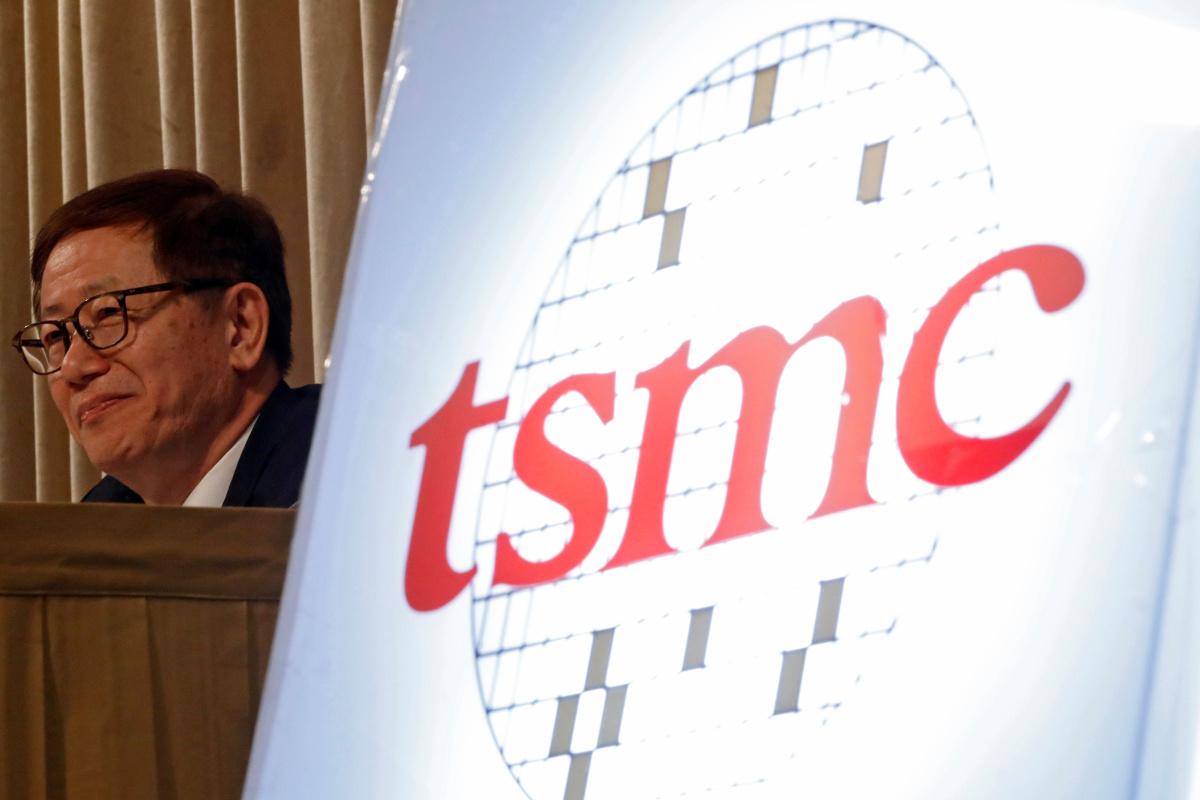
TAIPEI — Shares of Taiwan Semiconductor Manufacturing Co Ltd advanced Monday, reflecting sustained investor confidence in the world’s largest contract chipmaker as it capitalizes on robust demand for advanced semiconductors powering artificial intelligence applications.
The stock gained about 1.3% to 2,370.00 Taiwan dollars in afternoon trading in Taipei, adding to recent performance as TSMC continues demonstrating its critical role in the global semiconductor supply chain.
TSMC manufactures chips for major technology companies including Apple, Nvidia, AMD and Qualcomm. Its advanced process technologies, particularly 3-nanometer and 2-nanometer nodes, position it at the forefront of producing the most sophisticated semiconductors essential for artificial intelligence, high-performance computing and mobile devices.
The company has reported strong growth in its advanced technology segments, driven by artificial intelligence accelerators and high-end processors. TSMC’s capacity expansions and technology leadership have enabled it to capture significant market share in leading-edge manufacturing.
Recent quarterly results showed revenue increases fueled by artificial intelligence-related demand. Management highlighted robust utilization rates for advanced nodes while navigating cyclical conditions in consumer electronics.
TSMC’s strategic importance extends beyond commercial customers to geopolitical considerations. As a key supplier to the global technology ecosystem, the company operates under careful international scrutiny regarding export controls and supply chain security.
The foundry’s manufacturing facilities in Taiwan represent concentrated production capacity for the world’s most advanced chips. This has prompted discussions around geographic diversification, with TSMC expanding fabs in the United States, Japan and Europe to mitigate risks.
Artificial intelligence represents a significant growth driver for TSMC. Demand for graphics processing units, custom artificial intelligence chips and high-bandwidth memory solutions has accelerated capacity needs for cutting-edge processes.
TSMC’s CoWoS and other advanced packaging technologies support the integration of multiple chips, enhancing performance for artificial intelligence workloads. These capabilities have become increasingly vital as Moore’s Law scaling faces physical limitations.
Monday’s share advance occurred amid broader positive sentiment in Asian technology stocks. Investors appear focused on TSMC’s long-term positioning in artificial intelligence infrastructure despite periodic fluctuations in order visibility.
The company maintains disciplined capital expenditure plans to support customer demand while generating strong free cash flow. TSMC’s financial strength enables substantial investments in research and development alongside facility expansions.
Geopolitical tensions continue influencing semiconductor industry dynamics. TSMC has emphasized its neutrality and commitment to serving customers worldwide while complying with international regulations.
The foundry’s technology roadmap includes progress toward 2-nanometer production and research into 1.6-nanometer and beyond. These advancements aim to maintain TSMC’s leadership in process performance and power efficiency.
Customer diversification remains a priority, with TSMC serving a broad base of fabless semiconductor designers. Its manufacturing expertise supports innovation across computing, communications, automotive and industrial applications.
Monday’s trading reflected measured buying interest rather than aggressive momentum. TSMC shares have shown relative stability compared to more volatile pure-play artificial intelligence names.
The semiconductor foundry model provides TSMC with diversified exposure across end markets while avoiding direct consumer brand risks. This business approach has delivered consistent growth over decades.
TSMC’s capital investments reach tens of billions annually to stay ahead of technology curves. These expenditures, while substantial, support long-term competitive advantages through capacity and capability leadership.
Industry analysts maintain positive outlooks on TSMC, citing its technological edge, customer relationships and pricing power in advanced nodes. Some highlight potential for margin stability as artificial intelligence demand offsets cyclical weakness elsewhere.
Global chip demand continues evolving with artificial intelligence, 5G, automotive electrification and other trends. TSMC’s ability to serve these diverse applications underpins its growth narrative.
Monday’s session lacked major company-specific news, with gains appearing driven by sector sentiment and continued confidence in artificial intelligence infrastructure spending. TSMC often moves with broader semiconductor trends.
The company’s role in the global economy extends beyond semiconductors to enabling digital transformation across industries. Its chips power devices and systems fundamental to modern computing and communications.
TSMC has committed to sustainability goals including renewable energy usage and water recycling at its fabs. These initiatives address environmental concerns associated with semiconductor manufacturing.
As artificial intelligence adoption broadens, TSMC’s advanced manufacturing capacity becomes increasingly strategic. The company continues expanding production to meet projected demand growth.
Investor focus remains on TSMC’s execution of technology roadmaps and capacity ramps. Successful delivery on customer commitments supports its premium valuation in the semiconductor industry.
The foundry’s geographic expansion efforts aim to balance supply chain resilience with operational efficiency. New facilities in allied nations provide alternatives while maintaining core production strengths in Taiwan.
Monday’s performance adds to TSMC’s steady trading pattern in recent sessions. The stock reflects confidence in its foundational role in the technology supply chain.
TSMC’s innovation culture and engineering talent have sustained its leadership position for decades. Continued investment in research ensures relevance in an industry characterized by rapid technological change.
The semiconductor sector’s cyclical nature requires careful capacity management. TSMC’s conservative approach to expansion has historically helped navigate downturns while positioning for upturns.
As markets evaluate technology investments, TSMC’s combination of growth prospects and operational excellence appeals to long-term investors. Its trajectory remains tied to global semiconductor demand trends.
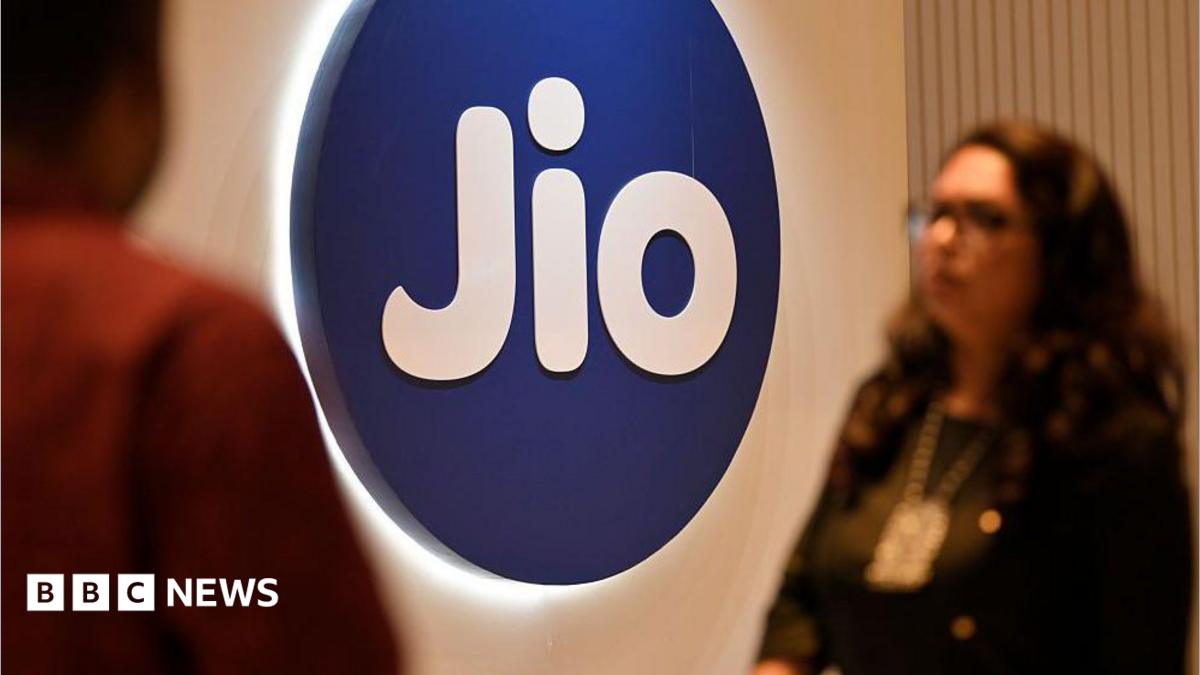
The rise of the NSE, meanwhile, mirrors the explosion of retail investing in India, as millions of mom-and-pop investors entered the stock market during the pandemic. Fuelled by cheap mobile data and rising smartphone use, the number of online trading accounts surged from about 30 million to more than 200 million.
Its listing, long delayed by a host of governance issues, signals the “maturing” of India’s market infrastructure and the broad-basing of its investor base, Feroze Azeez, of Anand Rathi Wealth Limited, a wealth management firm, told the BBC.
The exchange is the backbone of India’s $4.85tn stock market, now the world’s fourth largest by market capitalisation. Every trade executed on its platform generates revenue for the NSE, and trading volumes have grown rapidly.
It also earns exceptionally high profits, even though its revenues are directly affected by trading volumes which can swing quite sharply.
As it readies for a listing, Jio is now positioning itself as more than just a telecom company.
It wants to be seen as a homegrown digital and AI infrastructure behemoth through partnerships with Nvidia and Meta to develop data centres and large language models trained on Indian languages.
It is also moving from a phase of “market share acquisition to monetisation” driven by tariff increases, higher data use, and upgrades to postpaid plans according to Elara Securities – a signal that the country’s consumer market is becoming more sophisticated.
“Together, Jio and NSE represent the twin pillars of India’s new economy,” Azeez said.
Their simultaneous offerings could help draw global capital, as these companies “broaden the investable universe” and provide foreign money with opportunities to invest in sectors that are central to India’s growth story going ahead.

Cryptos slide as Strategy’s bitcoin sales plan pressures market

A bat flip, a shout of ‘Venezuela’ and tears for home as Contreras plays on

Apple’s $502M payment to Optis in question again


-
 Sports6 days ago
Two goals and an assist by sheer aura: Cristiano Ronaldo just entered the World Cup chat
-

 Fashion4 days ago
Weekend Open Thread: Staud – Corporette.com
-

 Politics4 days ago
The House | Manchesterism won’t survive the painful trade-offs unless it gets citizens on board
-

 Politics4 days ago
Potential 2028er World Cup attendee leaderboard
-

 News Videos1 day ago
MAJOR BITCOIN & MARKET UPDATE!!!! (MUST WATCH ASAP!!!)
-

 Business4 days ago
Asia stock markets slide as tech shares slump
-

 Tech4 days ago
A Look At A Gaggle Of Transputer Boards
-

 Crypto World6 days ago
Securitize Wraps Roubini's SEC-Registered ETF as Dubai VARA Digital Security
-
Crypto World6 days ago
Bitcoin (BTC) Dips Below $62K, Ethereum (ETH) Plunges 6% Daily: Market Watch
-
 Crypto World4 days ago
Dell (DELL) Shares Tumble Over 5% Following Analyst Downgrade to Hold
-

 Crypto World3 days ago
Coinbase, Circle Deepen Crypto Stock Losses Despite Resilient S&P 500
-
Business6 days ago
Entergy settles forward sale agreements, raises $672 million in cash proceeds
-

 Crypto World3 days ago
Kraken's xStocks Opens Bending Spoons IPO Registration to EEA Retail
-

 Sports3 days ago
FIH Pro League: India defeat Pakistan 7-1, register biggest win of campaign | Other Sports News
-

 Tech2 days ago
Bluekit phishing kit adopts browser-in-the-middle for login theft
-

 Crypto World4 days ago
Bitcoin Sparks $600M Hourly Liquidations With $65,000 Set To Become Resistance
-

 Tech3 days ago
Russian hackers now target Signal backup recovery keys
-
 Crypto World4 days ago
Hyperliquid Named on Singapore MAS Investor Alert Register
-

 Crypto World4 days ago
RTX holders must register wallets before token distribution begins
-
 Crypto World5 days ago
Ripple and SBI launch RLUSD in Japan after JFSA approval
You must be logged in to post a comment Login