

Business
Oil Supply Crisis 2026: IEA Warns of 1.8m Barrel Shortfall as Strait of Hormuz Closure Bites

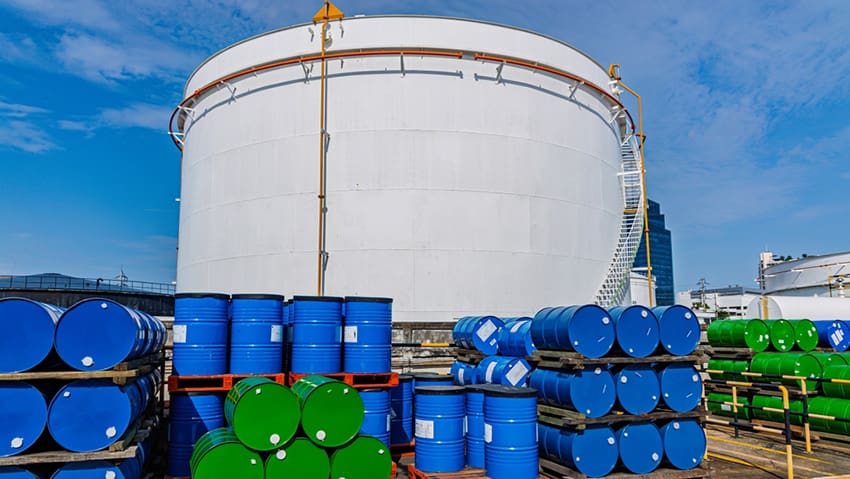
Global oil stockpiles are emptying at the fastest pace ever recorded as the war in the Middle East tips the world into a deepening supply deficit, in a development that threatens to derail the recovery of Britain’s small and medium-sized businesses just as they were beginning to find their footing.
The International Energy Agency has warned of an “unprecedented supply shock” following the effective closure of the Strait of Hormuz, the narrow shipping lane that until recently carried roughly a fifth of the world’s oil and gas. The destruction of energy infrastructure across the Gulf has compounded the damage, leaving traders, hauliers and manufacturers scrambling to absorb costs that were unthinkable only six months ago.
The Paris-based agency now expects a shortfall of around 1.8 million barrels a day to materialise this year, a dramatic reversal of the 410,000-barrel surplus it had forecast as recently as last month. The shift has come even as the economic damage of the conflict pulls demand sharply lower.
“With global oil inventories already drawing at a record clip, further price volatility appears likely ahead of the peak summer demand period,” the IEA cautioned.
Global supply is forecast to fall by an average 3.9 million barrels a day this year to 102.2 million, on the assumption that tanker traffic through the strait gradually resumes from the end of June. Even on that optimistic footing, the market is expected to remain in deficit until the final quarter.
Markets have whipsawed since hostilities between the United States and Iran erupted, with Brent crude, the international benchmark, surging to as high as $126 a barrel from just $60 at the start of the year. On Wednesday evening Brent snapped a three-day winning streak, sliding 2 per cent to $105.63 in its sharpest one-day retreat in a week. Even so, the benchmark is up 73.6 per cent year-to-date, a move that has rippled through every corner of the British economy from the haulage yards of the Midlands to the petrol forecourts of the south coast.
The IEA estimates that 246 million barrels have been drawn from inventories since the war began, leaving a perilously thin buffer against further shocks. In March the agency, which represents 32 member countries, released 400 million barrels of strategic reserves as a “stop-gap measure” in a co-ordinated bid to steady nerves.
Producers outside the Middle East have been pumping flat out to plug the gap. Forecasts for supply growth from the Americas have been raised by more than 600,000 barrels a day since January, to 1.5 million barrels a day this year, with Texan shale operators and Brazilian deepwater producers leading the charge. It has not been enough. Global supply slumped by a further 1.8 million barrels a day in April to 95.1 million, taking total losses since February to 12.8 million barrels a day. Output from Gulf states affected by the closure of the strait is running 14.4 million barrels a day below pre-war levels.
For Britain’s SME community, the second-order effects are arguably more punishing than the headline oil price itself. The IEA expects the economic fallout, rising inflation, slower growth and a sharp squeeze on household budgets, to drag global oil demand down by 420,000 barrels a day this year. That compares with a forecast decline of just 80,000 a day last month and projected growth of 850,000 barrels a day before the war began. It is the rapidity of the reversal, rather than its absolute scale, that has unnerved policymakers.
“Escalating demand destruction is underpinned by a surge in oil prices since the start of the war,” the IEA said. “Slower economic growth in both OECD and non-OECD countries is also beginning to weigh on consumer and industrial consumption.”
Fatih Birol, the agency’s executive director, last month described the current squeeze as the worst energy crisis the world has ever faced, eclipsing the oil shocks of the 1970s. “We are indeed facing the biggest energy security threat in history,” he said.
For owner-managed businesses already absorbing higher employment costs, stubborn inflation and fragile consumer confidence, the message from Paris is sobering. With warnings that the conflict could push Britain to the brink of recession, the next quarter is shaping up to be the most demanding test of SME resilience in a generation.

Amy Ingham
Amy is a newly qualified journalist specialising in business journalism at Business Matters with responsibility for news content for what is now the UK’s largest print and online source of current business news.



Analysis-RBNZ’s inflation focus tested as rate hikes risk stoking jobs crisis


Maine Democrats pick Platner; Trump back to winning ways: Tuesday’s US primaries


Alleged Bondi Beach gunman charged with 19 more offences over mass shooting

WA’s $44.3 billion infrastructure pipeline shows the challenge has switched from funding to delivery.

Chicago Atlantic: Elevated Yield Keeps The Cautious Buy Stance Intact

Ipek Ozkaya
Hello, and welcome to today’s Carnegie Mellon University Software Engineering Institute’s webcast, Rethinking and Maturing AI Adoption. My name is Ipek Ozkaya, and I’m the Technical Director of AI Native Software Engineering at the SEI. And I’ve had the incredible pleasure of leading this project focused on AI adoption maturity with our team at the SEI and the incredible team at Accenture.
We want to make today’s conversation as interactive as possible. So please feel free to put your questions into the YouTube chat area. And we’ve already received close to 200 questions. There is no way we’ll be able to get through any of them in completeness, but we’ll try to get to them as much as possible afterwards.
It is no surprise today that businesses are — across all sectors are redefining themselves and going through a structural shift through AI solutions. And they are trying to redefine their operational relevance, their operational workflows as well as get ahead of the businesses through ROI. Software-driven organizations are also going through the same challenge. In fact, the software as a discipline is being redefined through AI, looking into efficiency, productivity and of course, some of the risks that come with it.
And clearly, all the organizations that deliver us the frontier models, OpenAI, Google, Microsoft and Anthropic are developing improved capabilities around the clock, and we’re receiving these capabilities around a lot faster. If we look into 2 years ago, the early generative AI models could barely solve some of the cybersecurity tasks. But today, we know the Mythos and GPT 5.5 could actually

Bank Nifty rose 2.1% to 55,194.50; and closed above 55,000 levels after two weeks while benchmark Nifty moved 0.5% higher on Tuesday. All 14 constituents of Bank Nifty moved higher on Tuesday. .
Bank of Baroda jumped 5.5% while Canara Bank climbed 4.5%. Punjab National Bank and Federal Bank advanced around 3.5%.
“The measures by RBI are likely to drive a healthy deposit base for banks and lead to cheaper cost of funds since the hedging cost on FCNRB is borne by the Central Bank while the hedging costs on ECB’s is subsidised,” said Dharmesh Kant, head of research, Cholamandalam Securities.
 ET Bureau
Last week, the RBI announced measures to boost foreign currency inflows and to support the rupee. The Central Bank offered concessional dollar-rupee swap facility to absorb the entire forex hedging costs for three-to-five-year Foreign Currency Non-Resident (FCNR[B]) deposits until October 16, 2026. In addition, it offered a concessional swap facility for eligible External Commercial Borrowings (ECBs) raised by public sector entities, fixing the hedging cost at 1.5% per annum.

This policy allows Indian banks to access low-cost global capital and alleviate domestic deposit crunches without bearing currency risk, said analysts. “The sudden fundamental clarity triggered massive technical short covering, catching derivative traders by surprise and sparking a rapid short squeeze since the Put-Call Ratio (PCR) had dropped into an oversold zone below 0.80 ahead of the news,” said Nishchal Jain, Quant Researcher, Share. Market by Phone Pe.
The high-volume breakout past 55,100 and decisive price action, shifts the market regime from “sell on rallies” to “buy on dips”, establishing 55,000 as a strong psychological support base- forming a high-conviction bullish view, he said.

IGO says spodumene production remains on track after reporting that a fire broke out at its new chemical-grade processing plant at the Greenbushes lithium operation.
Shares in the critical minerals miner slid in morning trade after reporting a fire had occurred at its $880 million Chemical Grade Plant 3 (CGP3) plant at the Greenbushes mine site yesterday.
IGO said the fire was extinguished and no injuries were sustained, and that its first and second chemical crushing and processing plants on site were unaffected by the blaze.
The third chemical plant at the hard-rock lithium operation in the state’s South West falls under the ownership of Talison Lithium, in which IGO owns an indirect 25 per cent stake, alongside China’s Tianqi Lithium (26 per cent) and US major Albemarle Corporation (49 per cent).
CGP3 is the third chemical grade plant built at the Greenbushes operation, which is still ramping up after processing first ore in December last year.
It has a processing capacity of 2.4 million tonnes per annum to produce up to 500,000 tonnes per annum of lithium mineral concentrate.
The market was told Talison Lithium had commenced a full investigation into the cause and damage from the incident on Tuesday.
IGO said Greenbushes production remained on track to meet its FY26 guidance of between 1,375 million and 1,425 million tonnes of spodumene concentrate.
The fire at the new plant represents another setback for the critical minerals miner, which has been grappling with challenges at its co-owned Kwinana lithium hydroxide plant.
That downstream processing plant is operating at about 50 per cent nameplate capacity, which was an improvement when reported in the March quarter.
IGO and joint venture partner in the plant, Tianqi Lithium, have been increasingly at odds over the future of the plant, after the ASX-listed miner wrote down its value to zero.
Shares in IGO are trading down 6 per cent to $8.48 apiece at 11AM AWST.

The Commodity and Capital Market Participants Association of India (CPAI) is working with the Industry Standards Forum (ISF), a body comprising members of various industry associations, to create a separate framework that would distinguish between liquidity providers and speculators. That they believe would help them to convince the Reserve Bank of India (RBI) to permit lower margin for the bank guarantees and enable them to trade higher volumes.
The RBI has mandated that banks lending to capital market intermediaries (CMIs) extend guarantees for proprietary trading subject to the facility being fully secured. The proposal says that banks can extend guarantee only to the amount equal to the value of the collateral provided by the proprietary trading firm.

SailPoint: Weaker Net-New ARR Amid Lofty Valuation (Rating Downgrade)

Best tips for Financial planning | Akella Raghavendra | Telugu Motivational videos

Cambridge residents fear off-lead dog ban has led to ‘uptick in drug use’ in cemetery

Merck, Hashgraph Expand Hedera Platform for EU Product Passports



-

 Fashion4 days ago
Weekend Open Thread: Evereve – Corporette.com
-
 Crypto World5 days ago
Jensen Huang Approves Samsung, SK Hynix, and Micron for NVIDIA (NVDA) HBM4 Memory Supply
-

 Crypto World2 days ago
Anatomy of the June crypto crash: Fed, Iran, Saylor
-
 Crypto World3 days ago
Senator Cynthia Lummis Calls CLARITY Act the Most Consequential Financial Legislation of This Generation
-

 NewsBeat2 days ago
Alexander Zverev wins the French Open to finally earn a 1st Grand Slam title
-

 Tech5 days ago
Microsoft launches MXC, an OS-level sandbox for AI agents, with OpenAI and Nvidia already on board
-
 Entertainment3 days ago
The Best Mystery Series of All Time Is Surging on Streaming 30 Years After It Ended
-
 Business3 days ago
The Pain Points Taking a Fragile Tech Rally Down a Notch
-

 Tech3 days ago
Microsoft unveils seven homegrown AI models in new bid for ‘long term self-sufficiency’
-
Crypto World5 days ago
LBank Surpasses 25 Million Users Worldwide as AFA Partnership Continues to Drive Global Growth
-

 Tech4 days ago
Suspicious Polyfill login prompts pop up on Toshiba, Muji websites
-

 Crypto World3 days ago
Trump’s AI Ownership Plan Could Benefit Anthropic at OpenAI’s Expense
-
 Sports12 hours ago
Bangladesh beat Australia after 20 years in ODIs, register only their second win over six-time world champions | Cricket News
-

 Business5 days ago
(VIDEO) Justin Bieber Delivers Surprise Happy Birthday Serenade to Diners at Los Angeles Mexican Restaurant
-

 Tech5 days ago
RCS Messages Between iPhone and Android Get End-to-End Encryption With iOS 26.5
-

 Tech5 days ago
Meta steals a tactic from Tesla and builds data centers in tents
-
 Crypto World2 days ago
Eli Lilly (LLY) Stock Surges 4% Following Breakthrough Sleep Apnea Trial Results
-

 Tech4 days ago
Hackers now exploit SolarWinds Serv-U flaw to crash servers
-

 Tech4 days ago
Von der Leyen’s AI envoy pick draws conflict-of-interest fire
-
Tech2 days ago
Nvidia and Hyundai deepen their robotics push around Atlas
You must be logged in to post a comment Login