
Business
One in five SMEs cut staff as tax and cost pressures intensify, survey finds


Rising taxes and operating costs forced more than one in five UK small and medium-sized enterprises (SMEs) to make redundancies last year, underlining the growing strain on business owners as financial pressures mount.
A survey commissioned by Rathbones, one of the UK’s largest wealth and asset management groups, found that 21 per cent of SME leaders were compelled to cut staff in response to higher costs and tax burdens. The poll of more than 1,000 founders, owners and senior executives paints a picture of businesses being squeezed at both the corporate and personal level.
Overall rising costs were cited as the biggest threat to business by 70 per cent of respondents, while 58 per cent said rising taxation and regulatory burdens were among their most significant challenges. Business rates and employer national insurance contributions were singled out as particular pressure points.
The survey also highlights how closely intertwined business and personal finances are for many entrepreneurs. More than a quarter of SME leaders said over 25 per cent of their personal wealth is tied up in their business, meaning higher operating costs are increasingly spilling over into household finances.
This strain is being compounded by a rising personal tax burden. Frozen income tax thresholds continue to push business owners into higher tax bands, while cuts to capital gains and dividend allowances, alongside higher CGT and dividend tax rates, are eroding post-tax income. For many SME owners who extract profits via dividends, these changes are forcing a reassessment of long-established financial strategies.
Faye Church, senior financial planning director at Rathbones, said entrepreneurs were facing a “double whammy”.
“We consistently hear from business owner clients that they are determined to grow, hire and contribute to the wider economy,” she said. “But heightened tax pressures are increasingly stifling those ambitions. Entrepreneurs are being squeezed from both sides, higher taxes at the business level and rising personal tax bills, making it extremely difficult to plan, invest and build for the future.”
Church added that for most entrepreneurs the boundary between business and personal finances is thin, making it essential to consider both together in an increasingly complex and unpredictable tax environment.
Despite the pressure, some SMEs are adapting by reshaping their workforce. The research found that 9 per cent have increased their use of freelancers or contractors, while another 9 per cent have shifted towards more part-time or flexible roles to manage costs.
Confidence in government support remains low. Nearly two-thirds (62 per cent) of SME leaders said they believe the government does not understand the needs of entrepreneurs. More than half (51 per cent) said targeted measures such as business rates relief or changes to employer national insurance contributions would directly support growth and investment.
The impact is particularly severe in hospitality. More than 35 per cent of hospitality SMEs reported making redundancies last year, well above the SME average, and 69 per cent said increased taxation or regulation is now one of the biggest threats they face.
The findings come as pandemic-era business rates relief has been scaled back from 75 per cent to 40 per cent and is due to expire entirely in April. While ministers have announced further support for pubs, hospitality groups warn that restaurants, hotels and other venues risk being left out.
“Calls from the hospitality sector for targeted relief highlight the increasingly painful pressures facing these businesses,” Church said. “Without action, the mounting tax and cost burden risks stifling the very growth, innovation and local regeneration the UK economy urgently needs.”

Amy Ingham
Amy is a newly qualified journalist specialising in business journalism at Business Matters with responsibility for news content for what is now the UK’s largest print and online source of current business news.



Bakers are seeking to capitalize on the high demand for protein fortified products.

Evercore ISI reiterates Procter & Gamble stock rating on commodity view

PetroChina: Positive On FY2025 Beat And Potential Catalysts

Skye Anderson to COO among personnel changes.


The popsicles offer 12 grams of protein.
Gatestone Institute senior fellow Gordon Chang joins ‘Mornings with Maria’ to break down China’s ties to Russia and Iran amid Strait of Hormuz tensions and warn of rising threats to US national security.
Unidentified, sophisticated drones flying over a handful of U.S. military bases could be a warning sign from China, Gordon Chang warned Monday, suggesting Beijing could target the American homeland if the U.S. becomes more involved in its conflict with Iran.
“The important point here is that we have had, last month, over four of our important military bases, foreign drones. These drones were large, they were un-hackable, they obviously were not recreational, so some foreign power — probably China, maybe Russia — was operating drones over our critical air force bases,” Chang said on “Mornings with Maria.”
“Really, right now, the United States needs to be able to defend its bases in the homeland because those drone flights were a warning to the United States of some sort,” he continued.
GORDON CHANG URGES US TO TREAT CHINA AS ‘ENEMY COMBATANT,’ WARNS SUBS OPERATING ‘VERY CLOSE’ TO US
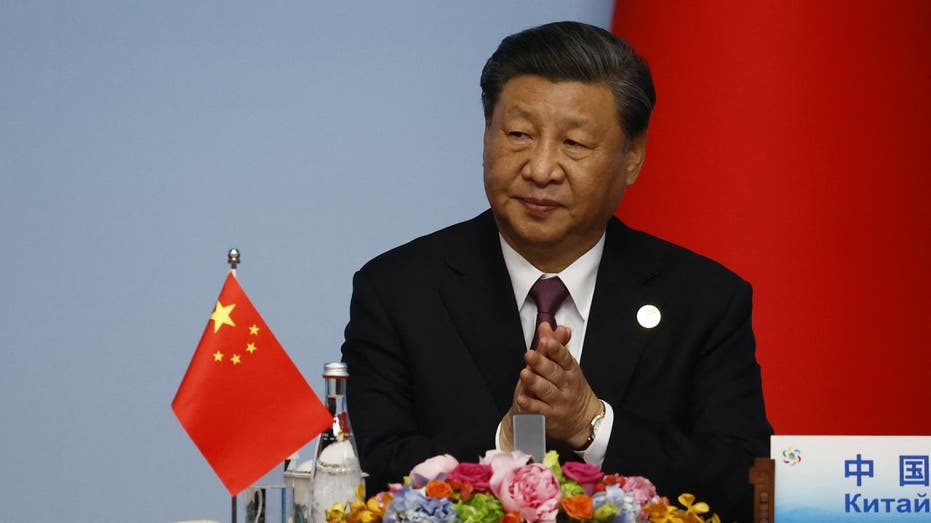
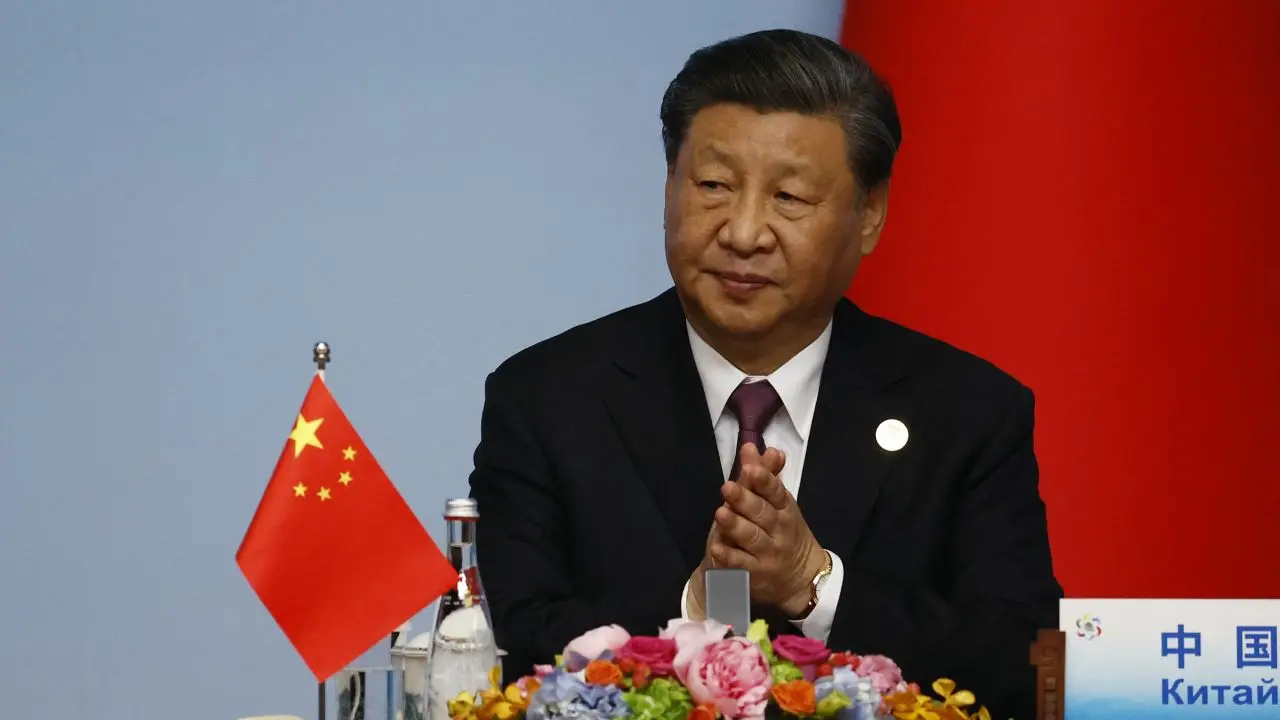
Chinese President Xi Jinping applauds during the joint press conference of the China-Central Asia Summit in Xian, China, on May 19, 2023. (Florence Lo/Pool/AFP via Getty Images)
Chang suggested the drone activity could be an attempt to send President Donald Trump the message that, if U.S. forces escalate in the region, China could respond by potentially targeting bases on American soil.
That warning, coupled with a recent suspicious device left near MacDill Air Force Base in Florida — which Chang suggested may have been linked to China — highlights a growing threat, he warned.
IRAN STRIKES COULD SIGNAL LIMITS OF BEIJING, MOSCOW’S POWER AS US FLEXES STRENGTH
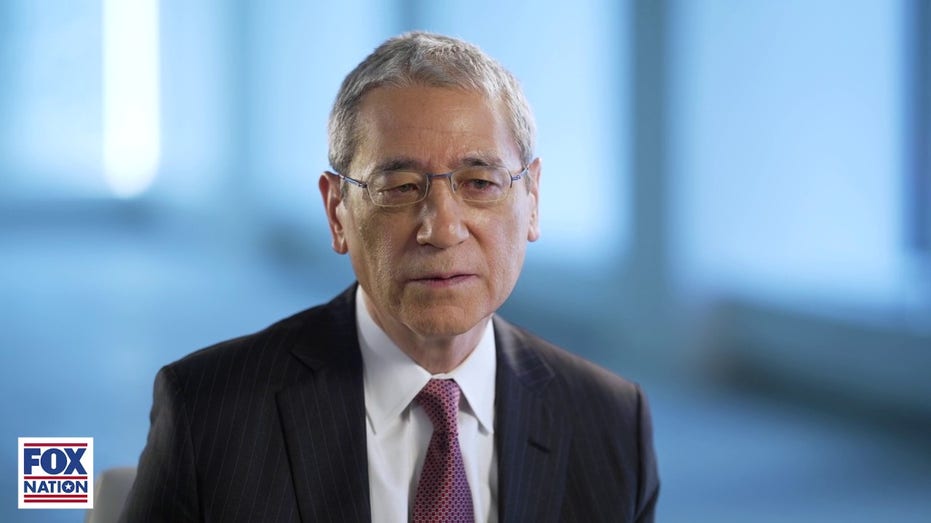
“The Coming Collapse of China” author Gordon Chang has consistently warned about the threat the U.S. adversary poses. (Fox Nation)
“We’ve really got to be concerned,” he said, later adding, “These are warnings that China intends to move on the U.S. in the American homeland.”
Chang also warned that Beijing’s actions should be viewed in the context of its growing alignment with other U.S. adversaries like Russia and Iran, as tensions continue to spill across multiple global fronts.
“China is supporting Russia in Ukraine, and China is supporting Russia in other matters as well… So they have a durable partnership, and anything that helps one of them is going to generally help the other, with the exception of the matter that you just raised,” he said, referring to the tension between higher oil prices benefiting Russia while raising costs for China.
“Generally speaking, the United States now faces a very powerful combination, and we shouldn’t be doing anything that fuels that combination,” he added.
GET FOX BUSINESS ON THE GO BY CLICKING HERE
Rep. Rich McCormick, R-G.A., discusses what is important to put in a reconciliation plan on ‘Maria Bartiromo’s Wall Street.’
Fox News Digital’s Michael Dorgan contributed to this report.
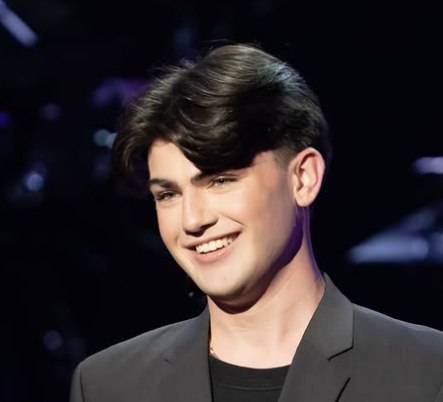
SYDNEY — With the grand finale of Australian Idol 2026 just days away, 18-year-old powerhouse vocalist Harlan Goode from Brisbane has surged as the clear favorite among fans and commentators to claim the season 11 title on Channel Seven.
The competition, which premiered Feb. 2 on Seven and 7plus, reaches its climax with live performances from the remaining top six contestants expected around April 13-14 at the Coliseum in Rooty Hill. Hosted by Ricki-Lee Coulter and Scott Tweedie, the season has featured judges Kyle Sandilands, Marcia Hines and Amy Shark delivering their signature mix of tough love and encouragement.
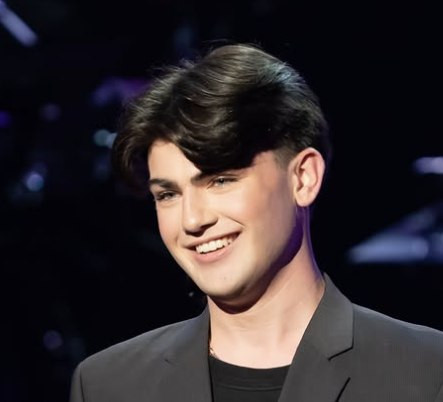
Goode, often praised for his mature tone, emotional depth and stage presence that evokes comparisons to Adam Lambert without imitation, has consistently wowed audiences and the panel with powerhouse ballads. Fan comments on the official Australian Idol Facebook page repeatedly declare him the “full package” and “superstar material,” with many predicting he will take the crown. “Harlan has to win based on talent,” one viewer posted, while others noted his youth gives him “his whole life ahead” to build a career.
The top six, announced in late March, include Goode alongside strong contenders Jacinta Guirguis, Kalani Artis, and others who have survived intense public voting rounds. Earlier, the top 12 featured diverse talents such as soul singer Charlie Moon from Perth, Kesha Oayda, Simela Petridis, Trè Samuels and more. Multiple eliminations narrowed the field through March, with public votes deciding most fates after the live shows began.
Kalani Artis has drawn significant attention for his smooth, distinctive style. YouTube comments on his “Don’t Dream It’s Over” performance during Aussie Week called him a potential “Australian Idol 2026” with a sound blending Harry Styles and Calum Scott. Some fans argue he “does not miss a key” and possesses his own identity. Jacinta Guirguis also features prominently in fan predictions for a top-three finish.
Season 11 has emphasized artist development more than past iterations, according to executive producer Joel McCormack. The show aims to launch sustainable careers rather than one-hit wonders, building on recent winners like Dylan Wright, who earned chart success and awards after his 2024 victory. The 2025 champion, Marshall Hamburger, a 19-year-old Queenslander, walked away with $100,000 and a recording deal; early signs suggest 2026’s winner could follow a similar path with strong original material potential.
Public voting has been fierce. After the top 12 performances, eliminations shook up expectations, sending some early standouts home despite strong judge feedback. By the top 10 and top 8 stages, viewer support proved decisive. Contestants like Simela Petridis advanced with judge saves or strong audience backing, highlighting the mix of vocal talent and fan engagement that defines Idol.
Judges have played a pivotal role. Sandilands, known for his blunt assessments, Hines with her legendary insight as a former Idol mentor figure, and Shark bringing contemporary pop credibility, have guided the field. Guest appearances added star power, but the core trio’s chemistry has kept the show engaging through auditions, knockouts and transformation week makeovers.
Goode’s journey began with a standout audition that earned him a fast pass into the top 12 in some reports, though details vary across coverage. His ability to deliver emotional, technically sound performances week after week has built a dedicated following. Fans on social media and fan groups frequently list him, Jacinta and Kalani as the likely top three, with debates centering on who commands the most votes in the final stretch.
The prize remains substantial: $100,000 cash plus a recording contract, offering the winner immediate industry access. Past contestants have leveraged the platform for tours, ARIA nominations and sustained careers. Producers stress this season’s focus on preparing artists for the road, with several top 12 members already demonstrating touring readiness in judge feedback.
As the finale nears, speculation fills social platforms. Some viewers predict an upset if a dark horse like Tre Samuels or a returning bottom-two survivor gains momentum. Others insist Goode’s consistent excellence makes him unstoppable. Betting sites have not yet posted formal odds for the 2026 finale, but informal fan sentiment heavily favors the young Brisbane singer.
The live grand finale will see the top contestants deliver signature hits and possibly original material before Australia votes one last time. Tickets were reportedly available for the April 13-14 shows, promising a high-energy night with studio audience and celebrity guests.
Australian Idol’s return to Seven has maintained strong viewership, capitalizing on nostalgia while introducing fresh voices. The 2026 season follows the 2025 win by Marshall Hamburger, whose post-show momentum included new singles and touring. Whomever claims victory this year steps into a franchise with proven star-making power — from Guy Sebastian’s enduring success to more recent alumni carving independent paths.
For now, all eyes remain on Harlan Goode. His vocal range, emotional connection and undeniable star quality have positioned him as the contestant to beat. Yet Idol history shows that public voting can deliver surprises, especially when multiple strong vocalists remain.
Jacinta Guirguis brings a compelling story and vocal fire that resonates with many. Kalani Artis offers a modern, genre-blending appeal that could capture younger voters. The final performances will likely decide whether Goode’s frontrunner status holds or if another talent rises in the decisive vote.
As the clock ticks toward the April finale, excitement builds across Australia. Fans are urged to vote via the official 7plus app or SMS when lines open. The winner will not only take home the title but launch what producers hope becomes a lasting music career.
With the top six delivering their best, the 2026 Australian Idol promises a memorable conclusion to another captivating season. Whether Harlan Goode fulfills fan predictions or another name is called on finale night, the competition has once again showcased the depth of Australian singing talent.


Companies developing prebiotics derived from perceived-as-natural sources.

Shopify: Highly AI-Resistant, 'Buy' The Dip

TUCSON, Ariz. — More than two months after 84-year-old Nancy Guthrie vanished from her Tucson home in what authorities call a targeted abduction, the FBI has increased its reward to $100,000 for information leading to her recovery or the arrest of those responsible, as the high-profile case continues to baffle investigators and captivate the nation.

Guthrie, mother of NBC’s “Today” show co-anchor Savannah Guthrie, was last seen Jan. 31 when family members dropped her off at her Catalina Foothills residence after a games night. She was reported missing the next day, Feb. 1. Pima County Sheriff Chris Nanos quickly declared she had been taken against her will, citing evidence at the scene including drops of her blood on the porch and signs of forced removal. “She couldn’t walk 50 yards by herself,” Nanos told reporters, emphasizing that voluntary departure was not believed.
Surveillance footage released by the FBI shows a masked suspect in dark clothing, gloves and a backpack approaching Guthrie’s front door in the early morning hours of Feb. 1. The individual is seen tampering with her doorbell camera — propping it open with vegetation before disconnecting it — while holding a flashlight in his mouth, potentially leaving behind biological evidence from saliva. A similar masked figure was captured on Nest cam footage three weeks earlier, on Jan. 11, raising questions about prior surveillance of the home.
The case stands out for its rarity. FBI data from recent years shows that while women make up over 75% of reported kidnapping or abduction victims, those in their 80s account for less than 0.2% of cases. Experts have described the abduction of an elderly woman requiring daily medication as “unheard of” in its specifics, especially given the apparent amateurish elements mixed with targeted planning.
Ransom demands surfaced early. Media outlets, including local stations and TMZ, reportedly received notes demanding millions — initially $4 million, later raised to $6 million — with Bitcoin payment instructions and deadlines. One note referenced a specific time aligning with the camera disconnection. Savannah Guthrie publicly appealed to the kidnappers, posting videos asking for proof her mother was alive and stating the family was ready to negotiate. No confirmed communication has been reported since the deadlines passed, deepening family anguish.
Savannah Guthrie, who has stepped back from her “Today” duties, has shared emotional updates. She described hearing what she believed was a divine message about her mother’s fate and revealed her young daughter Vale asked heartbreaking questions about Grandma Nancy. The family offered a $1 million reward for tips leading to Nancy’s safe return, acknowledging the grim possibility she may no longer be alive. “Whether she’s on this Earth still or whether she’s in Heaven, I know where she is,” Savannah said in one appearance.
Investigators recovered DNA evidence, including from gloves found near the home that matched the suspect’s apparent attire, though early CODIS hits proved unrelated — one belonging to a restaurant worker. Other potential leads, including a detained man and his mother questioned in a SWAT raid, were released without charges. A vehicle and additional residences near the Guthrie home were searched, yielding no immediate breakthroughs.
Sheriff Nanos has stated investigators believe they know the motive and that the home was specifically targeted, though he stopped short of full certainty. Former FBI agents and analysts have speculated on possibilities ranging from a ransom plot gone wrong to revenge or a link to cryptocurrency schemes seen in other Arizona home invasions around the same period. Nanos warned the suspect “could absolutely” strike again, urging residents to remain vigilant.
Criticism of the investigation has mounted. Reports suggest initial responders may have considered a “wandering off” scenario before shifting to abduction, and one lead detective reportedly lacked prior homicide experience. A recall effort against the sheriff has gained traction amid frustration over the lack of arrests more than 60 days later. The FBI has provided additional resources, releasing updated suspect descriptions and enhancing the reward.
Nancy Guthrie, née Long, lived a relatively private life despite her daughter’s fame. A religious woman and mother of three, she had ties to Australia where Savannah was born in Melbourne. The family has cooperated fully, with Savannah’s siblings also involved in appeals. No family members or their spouses are considered suspects, according to authorities.
The case has spotlighted the broader issue of missing persons in Tucson, where dozens of other cases remain open. Experts note the emotional toll on families facing prolonged uncertainty, especially when the victim is elderly and dependent on medication. Guthrie’s health needs have heightened fears for her safety as weeks turn into months.
Online speculation has run rampant, leading to unwarranted accusations against innocent locals and one family reporting they felt “scared numb” after amateur sleuths targeted their street. Law enforcement has urged the public to avoid spreading unverified theories and to submit tips through official channels.
As the search continues, air and ground efforts, neighborhood canvassing and analysis of thousands of tips have yielded limited progress. The suspect’s backpack — described as an “Ozark Trail Hiker Pack” — and low-quality holster have been highlighted as potential identifiers, with some analysts pointing to the amateur nature of the crime, including the counterproductive camera tampering that actually preserved footage.
Pima County authorities, alongside federal partners, continue to treat the matter as an active kidnapping investigation. No arrests have been made, and Nancy Guthrie’s whereabouts remain unknown. Her family maintains hope while preparing for all possibilities.
The unusual details — an elderly victim, celebrity connection, ransom notes, prior surveillance and sparse forensics — have made the Nancy Guthrie case one of the most discussed disappearances in recent memory. It serves as a stark reminder of vulnerabilities even in seemingly safe suburban homes.
Tips can be submitted to the Pima County Sheriff’s Department or the FBI. As authorities press forward with enhanced rewards and public appeals, the central question lingers: Who took Nancy Guthrie, and why?
With no resolution in sight entering April, the investigation remains fluid. Savannah Guthrie and her family continue pleading for information, while experts caution that time is critical given the victim’s age and medical needs.
The nation watches as Tucson authorities and the FBI work to bring closure to a mystery that defies easy

BajajFinserv Update #equitymarket #financialfreedom #nbstocksnew#financeshorts #stockmarket#finance
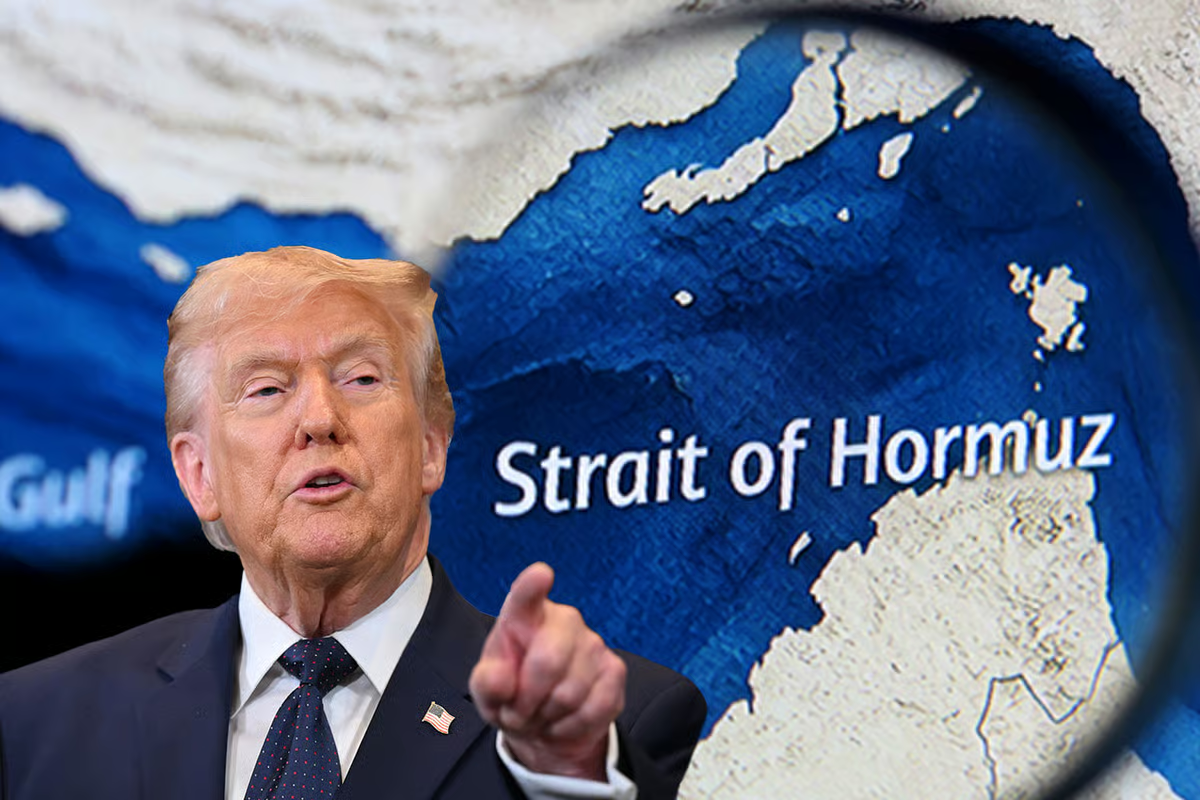
Iran rejects call to open Strait of Hormuz in exchange for temporary ceasefire

Protein trend adding innovation to bread aisle

Smart energy pays enters the US market, targeting scalable financial infrastructure

Why Israel is blocking foreign journalists from entering

Bitcoin: We’re Entering The Most Dangerous Phase
BajajFinserv Update #equitymarket #financialfreedom #nbstocksnew#financeshorts #stockmarket#finance

Form15G is DEAD! Now FORM 121. #finance #trending #viral #explore #shortsfeed #education #ytshorts

The TRUTH about 1,000 XRP
-

 NewsBeat4 days ago
Steven Gerrard disagrees with Gary Neville over ‘shock’ Chelsea and Arsenal claim | Football
-

 Business4 days ago
No Jackpot Winner and $194 Million Prize Rolls Over
-

 Fashion3 days ago
Weekend Open Thread: Spanx – Corporette.com
-

 Crypto World5 days ago
Gold Price Prediction: Worst Month in 17 Years fo Save Haven Rock
-

 Business17 hours ago
Three Gulf funds agree to back Paramount’s $81 billion takeover of Warner, WSJ reports
-
Crypto World6 days ago
Dems press CFTC, ethics board on prediction-market insider trades
-

 Sports2 days ago
India men’s 4x400m and mixed 4x100m relay teams register big progress | Other Sports News
-

 Business5 days ago
Login and Checkout Issues Spark Merchant Frustration
-

 Tech6 days ago
EE TV is using AI to help you find something to watch
-

 Sports6 days ago
Tallest college basketball player ever, standing at 7-foot-9, entering transfer portal
-

 Politics7 days ago
Should Trump Be Scared Strait?
-
Tech6 days ago
Daily Deal: StackSkills Premium Annual Pass
-

 Tech7 days ago
Flipsnack and the shift toward motion-first business content with living visuals
-

 Sports7 days ago
Women’s hockey camp eyes fitness boost, tactics ahead of WC 2026 campaign | Other Sports News
-

 Crypto World7 days ago
U.S. rule change may open trillions in 401(k) funds to crypto
-

 Tech6 days ago
How to back up your iPhone & iPad to your Mac before something goes wrong
-

 NewsBeat7 days ago
Newscast – Scott Mills Sacked By BBC
-

 Tech7 days ago
How We Test Cordless Vacuums
-

 Politics7 days ago
Usha Vance: Disney Hats Over MAGA Caps?
-
Crypto World7 days ago
Valinor raises $25m to put private credit on-chain
You must be logged in to post a comment Login