
Business
ONEOK: This 4.5%-Yielding AI Energy Play Is Still Undervalued




Pinterest stock falls as CFO Julia Donnelly resigns
Rising Treasury Yields And Why I Remain Underweight Equities
Business
BTS Notches Tenth French Gold Certification as Swim Joins Dynamite and Butter in SNEP Streaming Milestone

SEOUL — South Korean boy band BTS has earned its 10th gold certification from France’s national recording industry body, with the group’s single “Swim” reaching the milestone roughly five months after its release, the group’s label announced this week.
Big Hit Music said Wednesday that the Syndicat National de l’Edition Phonographique, France’s official music certification organization known as SNEP, awarded “Swim” gold status as of Aug. 20. The certification is based on a combination of streaming activity, digital downloads and physical album sales, and requires a track to accumulate the equivalent of 15 million units in France to qualify.
“Swim” is the focus track from BTS’s fifth full-length album, “Arirang,” which was released in March. According to the label, the song reached gold certification in about five months, the second-fastest turnaround for the group behind only “Dynamite,” the 2020 hit that became BTS’s breakout global crossover single.
The achievement marks the 10th time a BTS song has received SNEP gold certification, a run that includes some of the group’s best-known tracks, among them “Dynamite,” “Butter,” “Boy With Luv” featuring Halsey, and “Fake Love.” The certifications reflect the septet’s sustained popularity in France, one of the largest music markets in Europe and a longtime stronghold for the group’s fan base.
“Swim” was released March 20 as the lead single from “Arirang,” accompanied by a music video directed by Tanu Muiño and filmed against the coastal backdrop of Lisbon, Portugal. The video features the group alongside American actress Lili Reinhart and depicts the septet working aboard a sailing ship. The song has also found traction beyond streaming charts: it earned BTS a nomination for song of the year at the MTV Video Music Awards, which will be held in Los Angeles on Sept. 27. The group is also up for the award for best K-pop act, a category it has won three times in previous years.
“Arirang” itself has continued to perform well on global album charts nearly half a year after its release. According to the latest Billboard chart dated Aug. 29, the album ranked No. 24 on the Billboard 200, extending its run on the chart to five months since its debut. The album marks BTS’s return to full-group releases following the completion of the members’ mandatory military service in South Korea, and it has been framed by the band and its label as a homecoming project, drawing its title from the traditional Korean folk song of the same name.
The gold certification news arrives as BTS is in the midst of its largest concert tour to date. The Arirang World Tour began April 9 in Goyang, South Korea, and is scheduled to run through March 2027, spanning more than 85 shows across 34 cities in 23 countries. Industry observers have described it as the most extensive tour ever undertaken by a K-pop act.
This week, the tour brought BTS to Chicago’s Soldier Field for back-to-back concerts Thursday and Friday, the group’s first performances at the stadium in more than seven years. BTS previously made history there in 2019 during its “Love Yourself: Speak Yourself” world tour, when it became the first K-pop act to headline a standalone concert at the venue. Illinois Gov. JB Pritzker’s office proclaimed Aug. 27 and 28 “BTS Day in Illinois” to mark the group’s return, citing both its global cultural influence and the charitable and community work associated with its fan base, known as ARMY.
BTS’s run of certifications in France adds to a broader string of honors the group has collected across major international markets in recent years. In the United States, the group has become the most-certified Asian act in the history of the Recording Industry Association of America, with more than a dozen platinum-certified singles and dozens of additional gold and platinum honors spanning both group and solo releases. Individual members, including Jungkook and Jimin, have also picked up their own certifications and awards for solo material released during the band’s hiatus from group activities.
The French certifications specifically have become a recurring marker of BTS’s staying power in Europe. The group’s earlier tracks reached the same milestone over a period of several years following their initial releases, while more recent singles, including “Swim,” have reached gold status considerably faster, a trend the label has pointed to as evidence of the band’s continued relevance following its return to full activity.
The tour’s scale and the pace of chart and certification news around “Arirang” underscore how quickly BTS has re-established its commercial footing since regrouping. All seven members had spent time fulfilling South Korea’s mandatory military service requirement before reconvening for the new album and tour, a period during which several members released solo material that itself collected certifications and chart placements in multiple countries, including the United States and France.
Big Hit Music did not immediately provide additional comment on the certification beyond its initial announcement. The company has continued to promote “Arirang” and its associated tour as central priorities for BTS following the members’ return from service, with additional tour dates in Asia, including stops in Thailand, Malaysia and Taiwan, scheduled for later this year.
BTS is expected to continue touring through the fall, with the group’s next major public appearance expected at the MTV Video Music Awards ceremony in Los Angeles next month, where “Swim” faces competition in the song of the year category alongside releases from other major international acts.
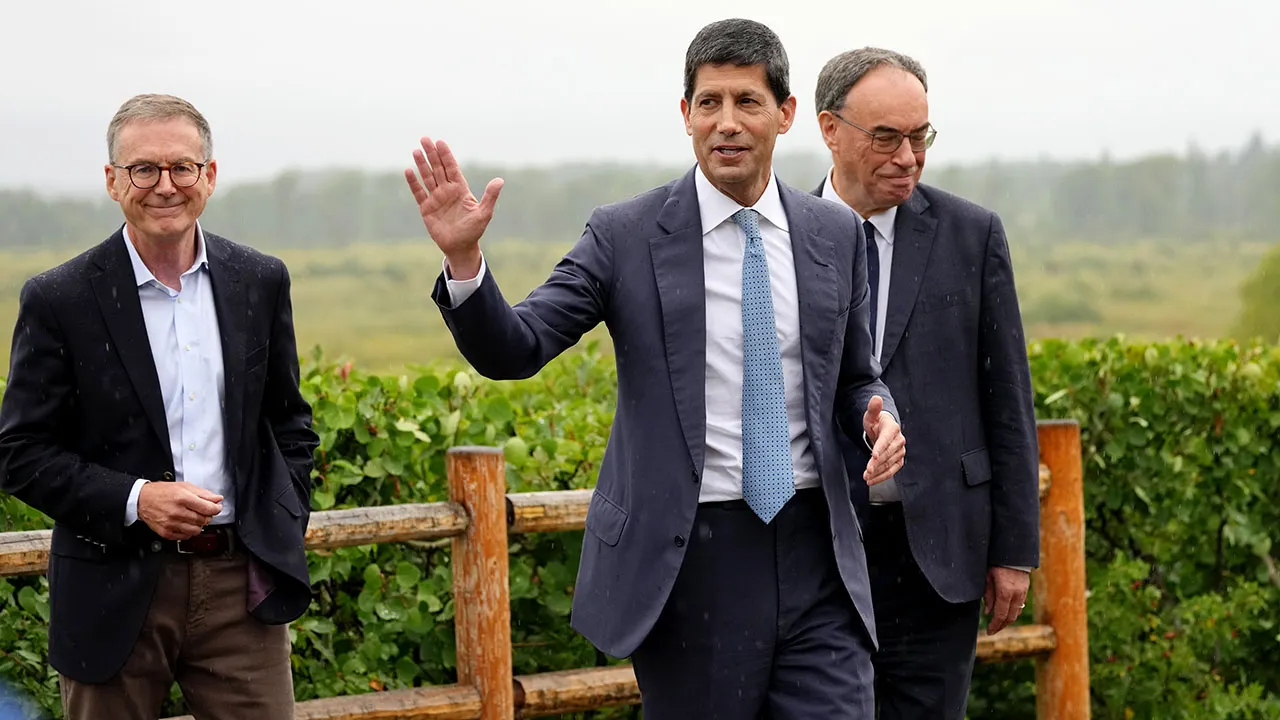
QI Research CEO and chief strategist Danielle DiMartino Booth breaks down Fed Chair Kevin Warsh’s Jackson Hole comments on the S&P 500, inflation and Federal Reserve policy on ‘Making Money.’
Federal Reserve Chair Kevin Warsh on Friday delivered his first keynote address at the annual Jackson Hole Symposium on monetary policy, outlining his views of the economy and his perspective on why he thinks the central bank’s forward guidance should be reined in.
Warsh emphasized that the Fed is focused on returning inflation to the central bank’s 2% target, acknowledging that bringing the personal consumption expenditures (PCE) index to that level is the “firm, fixed target” for policymakers. In July, PCE inflation remained at 3.7% compared with last year, which Warsh called “concerning” and said should be the focus of monetary policy.
The Fed chair also discussed the employment side of the dual mandate, saying that limited growth in labor supply is lowering monthly jobs figures, but that labor market data is “broadly consistent with full employment.”
Fed watchers have been critical of Warsh’s moves to clamp down on forward guidance about future interest rate moves, which he believes should be limited to when there are economic or financial crises – though his speech helped clarify those views for some.
WARSH SAYS FED’S MAIN FOCUS SHOULD BE ON PRICES AS CENTRAL BANK’S RATE POLICY IN FOCUS

Fed Chair Kevin Warsh discussed the economic outlook and why he thinks forward guidance isn’t needed at this time. (David Paul Morris/Bloomberg via Getty Images)
Seema Shah, chief global strategist for Principal Asset Management, said that “Warsh untangled much of the ambiguity left by the July FOMC press conference, presenting a clearer picture of a Fed that remains laser-focused on returning inflation to target and is prepared to raise rates if progress stalls.”
“Although we expect incoming data to improve, the risk of a September hike has increased. The positive market reaction highlights that investors place a premium on policy clarity, even when that clarity carries a more hawkish message,” Shah added.
FED DISSENTERS WARN INFLATION COULD BECOME ENTRENCHED WITHOUT MONETARY POLICY TIGHTENING NOW
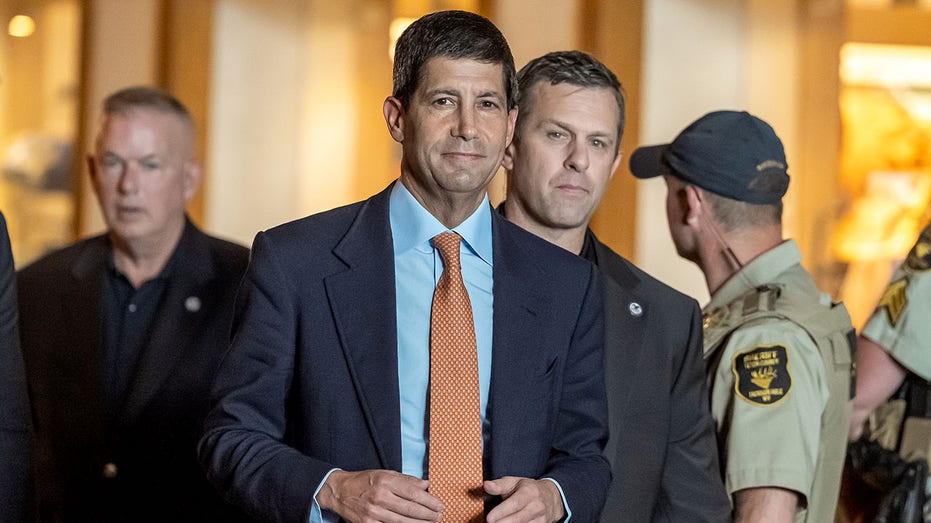
Fed Chair Kevin Warsh emphasized price stability is the central bank’s main target at the moment. (David Paul Morris/Bloomberg via Getty Images)
Gregory Daco, chief economist at EY-Parthenon, noted that Warsh’s speech came against a backdrop in which the Federal Reserve’s credibility and commitment to its price stability mandate was being questioned amid his resistance to providing forward guidance or discussing economic fundamentals.
“Nearly 100 days into his term as Fed chairman, Warsh delivered some long-awaited humility during his first address at the Kansas City Fed’s Jackson Hole Symposium, saying ‘we take our responsibility seriously, with humility and resolve,’” Daco said.
FED’S FAVORED INFLATION GAUGE ROSE MORE THAN EXPECTED IN JULY
“It appears Chairman Warsh realized that he couldn’t appear as the monetary policy maestro that he aspires to be without leading the orchestra to a flawless symphony first,” he said. “As such, he took up the task and delivered on three fronts that are basic principles for any central banker.”
“First, he provided a clear, fact-based and nuanced assessment of the U.S. economy, employment and inflation. Second, he reaffirmed PCE inflation as the gauge for the Fed’s 2% target and the fed funds rate as the main policy tool. Third, he suggested a reaction function indicating readiness to tighten should inflation fail to move sufficiently rapidly toward the 2% target,” Daco said.
Bret Kenwell, U.S. investment analyst at eToro, said that “Warsh has been adamant that the Fed should communicate less frequently, viewing forward guidance as inappropriate outside of a crisis.”
“That approach could result in more surprises for investors, and in turn, increased volatility. That’s particularly true if the Fed adopts Warsh’s view that there are ‘no excuses’ for failing to keep inflation in check,” Kenwell said.
GET FOX BUSINESS ON THE GO BY CLICKING HERE
Jeffrey Roach, chief economist at LPL Financial, explained that he believes, “We are entering a new era of monetary policy, one defined by less signaling, greater emphasis on real-time data, and a willingness to rethink economic first principles as AI reshapes the economy’s productive capacity.”
“The distinctly hawkish speech gave support to the dollar as the chairman appears comfortable keeping policy higher for longer,” Roach added.
Business
Amazon Stock Jumps Nearly 4 Percent After Evercore ISI Raises Price Target on AI Driven Sales Growth

Shares of Amazon.com Inc. climbed nearly 4% Friday after investment firm Evercore ISI raised its price target on the e-commerce and cloud computing giant, pointing to new survey data showing artificial intelligence tools are already driving additional purchases on the company’s retail platform.
Amazon stock traded at 266.18 dollars, up 9.92 dollars, or 3.87%, as of 12:19 p.m. Eastern time on the Nasdaq, according to Google Finance data. The move added to a stretch of strong performance for the stock in recent weeks following the company’s second-quarter earnings report earlier this month.
Evercore ISI raised its price target on Amazon to 355 dollars from 315 dollars while maintaining its outperform rating on the stock, according to a research note from the firm. The new target implies substantial additional upside from the stock’s level heading into Friday’s trading session.
The revised target was based in part on findings from Evercore’s 14th annual U.S. online retail survey, which the firm said showed early but meaningful evidence that Amazon’s investment in agentic artificial intelligence tools, including its Alexa+ assistant, is translating into incremental sales. According to the survey, 57% of Alexa AI users reported buying a product they had not previously been aware of, a figure the firm’s analysts described as new evidence that AI-driven discovery is beginning to pay off commercially for the company.
“For the first time, survey evidence shows that agentic AI is actually additive for Amazon Retail, with 57% of Alexa AI users buying a product they were not previously aware of,” Evercore ISI analyst Mark Mahaney wrote in a note to clients Thursday.
The survey also pointed to a recovery in usage of Amazon’s same-day delivery service, with 49% of respondents reporting they had used the option, alongside data showing that Amazon Prime members continue to spend significantly more than non-Prime customers, at a rate the firm pegged at roughly 3.1 times higher.
Evercore’s bullish case extended beyond Amazon’s retail operations to Amazon Web Services, the company’s cloud computing division, which the firm said now accounts for roughly 60% of Amazon’s total operating income and has posted year-over-year operating income growth of 64%. The firm also cited Amazon’s continued buildout of AI data center capacity, including a large-scale power infrastructure project in Sweden, as a factor that reduces risk around the company’s ability to meet growing demand for AI computing resources.
Friday’s rally builds on a broader run of strength for Amazon shares since the company reported second-quarter results earlier this month. In that report, Amazon posted total revenue of 200.6 billion dollars, up 20% from a year earlier and above analyst expectations of roughly 196 billion dollars. Adjusted earnings per share came in at 1.97 dollars, well ahead of the 1.82 dollars analysts had expected, while AWS revenue surged 37% year-over-year to 42.2 billion dollars, marking the cloud unit’s fastest growth rate in 18 quarters.
On the earnings call following that report, Amazon Chief Executive Officer Andy Jassy told investors the company still lacks sufficient computing capacity to meet current demand. “But even at that amount, we will still not have enough capacity to meet all the demand we have in 2026, and I believe this dynamic will also be true in 2027 too,” Jassy said, referring to the company’s raised capital expenditure projection of 220 billion dollars for the year, up from an earlier estimate of 200 billion dollars. “In fact, the demand we already have for 2028 is striking,” he added.
Amazon’s stock has also been supported this year by developments tied to its investment in artificial intelligence company Anthropic and by regulatory approval for its self-driving vehicle subsidiary, Zoox, which received federal clearance from the National Highway Traffic Safety Administration to commercially deploy thousands of purpose-built robotaxis without steering wheels.
Despite the recent gains, some analysts and investors have flagged concerns about Amazon’s valuation and spending trajectory. The company’s sharply higher capital expenditure plans, driven in large part by rising costs for the memory chips used in AI infrastructure, have pushed the company’s projected full-year free cash flow into negative territory, a dynamic that some market watchers have said warrants continued scrutiny even as the stock rallies. Filings have also shown continued insider stock sales by Amazon executives, including Jassy and Chief Financial Officer Brian Olsavsky, as well as previously disclosed plans by founder Jeff Bezos to sell shares under a structured trading plan.
Even so, Wall Street’s broader view of Amazon has remained largely positive in recent weeks, with multiple firms reiterating buy ratings and raising price targets following the company’s earnings report. Evercore’s revised outlook adds to that trend, framing Amazon’s combination of AI-driven retail growth and continued AWS momentum as a case for further multiple expansion in the stock.


The Sunday Investor is focused exclusively on U.S. Equity ETFs. He has a strong analytical background, has received a Certificate of Advanced Investment Advice from the Canadian Securities Institute, and has completed all the educational requirements for the Chartered Investment Manager designation.Having covered hundreds of ETFs on Seeking Alpha, The Sunday Investor has developed a complex, proprietary ETF Rankings system which he shares on his website, etf-rankings.com. Nearly 1,000 ETFs receive individual factor scores covering costs, liquidity, risk, size, value, dividends, growth, quality, momentum, and sentiment, which feed into an easy-to-understand composite score from 1-10. The Sunday Investor is always active in the comments section in his articles – please don’t hesitate to reach out via comment in any article or by visiting etf-rankings.com. Happy Investing!
Analyst’s Disclosure: I/we have a beneficial long position in the shares of SCHD, SPY either through stock ownership, options, or other derivatives. I wrote this article myself, and it expresses my own opinions. I am not receiving compensation for it (other than from Seeking Alpha). I have no business relationship with any company whose stock is mentioned in this article.
Seeking Alpha’s Disclosure: Past performance is no guarantee of future results. No recommendation or advice is being given as to whether any investment is suitable for a particular investor. Any views or opinions expressed above may not reflect those of Seeking Alpha as a whole. Seeking Alpha is not a licensed securities dealer, broker or US investment adviser or investment bank. Our analysts are third party authors that include both professional investors and individual investors who may not be licensed or certified by any institute or regulatory body.

FCOM: One Of The Most Discounted Sectors Of The Last 30 Years Hides An Accounting Trick
Business
Apple Shares Rise 2 Percent to $321 Ahead of September 9 Event and Foldable iPhone Speculation
CUPERTINO, Calif. — Apple Inc. shares advanced about 2 percent on Friday, trading near $321 as investors looked ahead to a Sept. 9 product event and weighed recent strength in iPhone and Mac demand against a still-premium valuation.
The stock was last around $321.08, up $6.50 from Thursday’s close of $314.58. The move extended a short rebound after Apple pulled back from a late-July peak near $344. The company’s market value remains in the mid-$4 trillion range.
The immediate focus is Apple’s first major hardware launch under incoming chief executive John Ternus, who takes over on Sept. 1. The company has set Sept. 9 for its next iPhone event. Investors expect the iPhone 18 lineup and Apple Watch updates. Industry commentary has also included speculation about a first foldable iPhone, with research firm IDC cited in market reports as projecting more than 10 million foldable iPhone shipments in a first year if the product arrives. Apple has not confirmed a foldable model.
The rally builds on fiscal third-quarter results reported July 30. Apple posted June-quarter revenue of $109.4 billion, up 16 percent from a year earlier, and diluted earnings of $2.02 a share, beating Wall Street’s $1.89 estimate. About 11 cents of EPS came from tariff refunds. iPhone revenue rose 22 percent to $54.3 billion. Mac revenue jumped 29 percent to about $10.4 billion. Services reached $30.7 billion, a June-quarter record.
On the earnings call, then-CEO Tim Cook described “an incredibly strong iPhone and Mac product cycle that has really yielded demand beyond our expectation.” Cook also warned of tight memory and advanced-chip supply, calling the constraints severe and saying there would be a quarter in which Apple would be scrambling on the supply side.
Guidance for the September quarter called for revenue growth of 9 percent to 11 percent, below some analyst forecasts near 12 percent. Management blamed most of the slowdown on foreign-exchange headwinds and worsening shortages of system-on-chip parts across iPhone, Mac and iPad, not on weaker demand. iPhone revenue was still expected to grow at a mid-teens pace.
Separate shipment data have supported the hardware story. Counterpoint Research reported a 13 percent year-over-year increase in global iPhone shipments in the second calendar quarter, with particular strength in China, Europe and South Korea. Analysts said Apple held prices steadier than some Android rivals facing higher component costs, which may have pulled purchases forward ahead of possible autumn price increases.
Apple this week also refreshed Mac mini and Mac Studio models with M6 and M5 Ultra chips aimed at heavier on-device AI workloads. Those systems arrived at higher starting prices than the previous generation. Analysts have framed the machines as a way to sell more high-end Macs to developers and enterprises even if consumer AI features remain a work in progress.
The installed base of more than 2.5 billion active Apple devices continues to underpin Services, which now runs above $30 billion a quarter. Capital returns remain large. The company deployed tens of billions of dollars to shareholders in the latest quarter and has authorized additional buybacks. A dividend was paid in August.
Risks are unchanged. Apple trades at a high-30s trailing price-to-earnings multiple. Questions persist about how quickly on-device AI, including Siri improvements, will change buying behavior. Supply constraints on memory and advanced processors could limit how many devices Apple can ship into the holiday quarter. Vision Pro remains a small, costly product line and has seen staffing reductions.
The stock is up more than 35 percent over the past year and about 16 percent year to date, though it is down from the July high. One-month performance is negative after that post-earnings drop. Friday’s gain put Apple back above $320 and closer to the $330–$340 zone that marked summer resistance.
Ternus inherits a company whose growth is still led by iPhone upgrades and Mac strength rather than a new category. The Sept. 9 event will test whether the next cycle can extend that momentum, whether a foldable device is real, and how Apple prices products amid component inflation. Until then, traders are treating solid recent results, share gains in smartphones, and a clear event date as enough to bid the shares higher for a session.
Broader technology markets were firmer Friday, with large consumer-electronics and software names attracting flows while some semiconductor stocks remained volatile. Apple’s lower direct exposure to massive data-center capital spending has been cited as one reason the shares have been steadier than chipmakers in recent weeks.
For investors, the near-term checklist is simple: confirm demand into the new iPhone cycle, watch supply of key components, and see whether Ternus’s first keynote changes the product mix. The $321 level reflects optimism about that September showcase more than a change in Apple’s long-term financial profile.
Business
Nvidia Shares Fall 3 Percent to $220 as Traders Fade Post-Earnings Rally After Record Quarter
SANTA CLARA, Calif. — Nvidia Corp. shares fell about 3.3 percent on Friday, trading near $220.38, as investors locked in gains a day after the chipmaker’s latest results sent the stock sharply higher.
The decline of roughly $7.60 came after Thursday’s surge, when Nvidia added hundreds of billions of dollars in market value following fiscal second-quarter figures that again beat Wall Street forecasts. The pattern is familiar: the company has topped estimates for several consecutive quarters, yet the stock has often slipped in the sessions around those reports as traders treat even strong numbers as a chance to sell.
For the quarter ended July 26, Nvidia reported revenue of $96.22 billion, more than double the year-earlier total and above consensus estimates near $92 billion. Adjusted earnings were $2.22 a share, versus forecasts around $2.09. GAAP net income was $59.69 billion, or $2.46 a share. Data-center revenue, the core of the business, reached $89 billion, up 117 percent from a year earlier.
Chief Executive Jensen Huang said in a statement: “A.I. has reached its inflection point.” In a longer version of the same message he added that AI is “doing useful work,” that “its tokens are productive and profitable,” and that “now, compute is revenue.”
The company forecast current-quarter revenue of about $108 billion, plus or minus 2 percent, above analyst estimates near $104 billion to $105 billion. That would be Nvidia’s first quarter above $100 billion. Chief Financial Officer Colette Kress said the firm expects about 70 percent revenue growth in fiscal 2028, which runs from February 2027 through January 2028. She said demand is higher than that figure but the company is constrained by how much product it can supply. Huang said demand “is much greater than 70 percent.”
Gross margin was about 75 percent in the quarter. Nvidia also pointed to a broadening customer mix. AI cloud, industrial and enterprise customers accounted for $40.3 billion in sales, up 138 percent year over year. Hyperscale revenue was $49 billion. Management said Vera Rubin chips are in production and expected to contribute a meaningful share of data-center sales in the current quarter.
The report arrived after a seven-session losing streak into the print, Nvidia’s longest such run since 2022. Shares had fallen about 7 percent over that stretch as investors questioned valuations, circular financing with large AI customers, rising memory costs and possible price increases of as much as 15 percent on AI servers next year. Some analysts also flagged custom chips being developed by hyperscalers and model labs as a longer-term competitive risk.
Thursday’s bounce showed that the numbers still matter. Friday’s pullback showed that the bar remains high. At a market value still measured in the trillions, investors have grown used to extraordinary growth and now parse guidance, supply comments and customer concentration as closely as the headline beat.
Kress said that without supply limits, growth could be even faster. Memory shortages are squeezing the entire AI hardware chain, a theme that has also hit other semiconductor names. Nvidia has raised prices in response to component inflation, a move that can protect margins but also underscores how expensive the buildout has become for customers.
The company returned a large sum to shareholders in the period, including tens of billions of dollars in buybacks. GAAP earnings were boosted in part by gains on equity stakes in other firms, a reminder that Nvidia’s results now include investment marks as well as chip sales.
Wall Street remains broadly constructive. Some analysts have argued the stock’s forward multiple looks modest relative to expected growth still above 20 percent in later years. Others say a $5 trillion-class company simply has less room for multiple expansion and that any hint of slower growth or tighter supply will keep triggering sell-the-news reactions.
Friday’s trade left Nvidia well below its May closing high near $236 but above the pre-earnings slide into the low $210s. Year-to-date gains remain in the low double digits, trailing some other semiconductor names that started from smaller bases.
The debate around Nvidia has shifted from whether AI demand is real to how long customers can fund data-center construction, how much of that spend stays on Nvidia silicon, and whether price and supply constraints will cap the next few quarters. Huang’s “inflection point” language was meant to answer the first question. The $108 billion guide and 70 percent longer-term growth comment were meant to answer the second.
Traders on Friday treated those answers as already priced in after Thursday’s jump. That does not erase the scale of the quarter. It does show how quickly the market resets after each Nvidia report: celebrate the beat, then ask what the next one must deliver.
Business
Microsoft Stock Climbs Toward 515 Dollars as Nvidia Fueled Tech Rally Meets Fed Chair Warsh Speech
Shares of Microsoft Corp. climbed further Friday, extending a powerful monthlong rally that has added hundreds of billions of dollars in market value, as investors weighed a continuing surge in technology stocks against Federal Reserve Chair Kevin Warsh’s closely watched speech at the central bank’s annual Jackson Hole symposium.
Microsoft stock traded at 515.30 dollars, up 10.24 dollars, or 2.03%, as of 12:25 p.m. Eastern time on the Nasdaq, according to Google Finance data. The move built on gains from Thursday’s session, when major technology stocks rallied broadly following blowout quarterly results from chipmaker Nvidia that revived optimism around artificial intelligence spending across the sector.
Friday’s trading also unfolded against the backdrop of Warsh’s first major address as Fed chair at the Kansas City Federal Reserve’s Jackson Hole Economic Policy Symposium in Moran, Wyoming. Investors had been looking to the speech for clarity on the central bank’s approach to inflation and interest rates, with major indexes trading choppily through the morning as traders parsed his remarks. The Dow Jones Industrial Average and S&P 500 held modest gains for much of the session, while the Nasdaq Composite fluctuated between small gains and losses.
Microsoft’s advance Friday is part of a much larger rally that began in late July, when the company reported fiscal fourth-quarter results that beat Wall Street expectations across revenue, profit and cloud growth. The stock has climbed roughly 25% to 30% since closing at 390.54 dollars on July 29, the day of the earnings report, according to data compiled by multiple market trackers, with the bulk of the move coming in a single trading session in which shares jumped more than 15%, one of the company’s largest one-day gains in years.
Microsoft reported fiscal fourth-quarter revenue of 90.0 billion dollars, up 18% from a year earlier, with growth driven by strong demand across its Azure cloud platform and the company’s own artificial intelligence applications. Diluted earnings per share came in at 4.81 dollars on a GAAP basis, up 32% year-over-year, while non-GAAP earnings per share of 4.74 dollars beat analyst estimates. For the full fiscal year, Microsoft’s total revenue surpassed 331 billion dollars, up 18%, while its Microsoft Cloud business topped 214 billion dollars in annual revenue, up 27%.
Azure and other cloud services revenue grew 43% year-over-year in the quarter, with the company saying customer demand continued to exceed available capacity. Chief Financial Officer Amy Hood told analysts on the earnings call that Azure growth is expected to accelerate further, guiding to approximately 45% constant-currency growth in the first quarter of fiscal 2027. Commercial remaining performance obligations, a measure of future contracted revenue, rose 84% year-over-year to 678 billion dollars.
“We are advancing the frontier on the cost-to-outcome curve, ensuring every customer can turn tokens into business results,” Microsoft Chairman and Chief Executive Officer Satya Nadella said in the company’s earnings release. “This year, Azure revenue surpassed 100 billion dollars for the first time, and Microsoft 365 Copilot reached over 30 million paid seats, reflecting the confidence customers are placing in us to power their AI transformation.”
Hood also pointed to strong monetization trends tied to the company’s artificial intelligence products. “Demand continues to exceed available supply,” she told analysts on the call, adding that efficiency gains in Microsoft’s data centers were being quickly monetized as they came online.
The company’s Microsoft 365 Copilot product, an AI-powered assistant embedded across its productivity software, saw paid seats more than double sequentially to over 30 million, up from more than 20 million as of April. GitHub Copilot, the company’s AI coding assistant, saw revenue accelerate more than 60% quarter-over-quarter following a shift to usage-based pricing in June, and now counts roughly 50 million users among GitHub’s broader base of 225 million developers.
Analysts have continued to raise their price targets on Microsoft shares in the weeks since the earnings report. According to consensus data compiled by market trackers, the average analyst price target on the stock now sits near 560 dollars, implying additional upside even after the stock’s recent run. Of the more than 45 analysts tracking the company, the large majority maintain buy-equivalent ratings, with none currently recommending investors sell the stock.
Microsoft’s rally has not been without volatility. Shares fell more than 3% in a single session earlier this month amid broader market jitters, before resuming their upward trajectory in recent days alongside renewed strength across the technology sector. The stock’s performance this year has also been shaped by the company’s roughly 3.2 billion dollar gain tied to its investment in artificial intelligence startup Anthropic, which contributed to the earnings beat in the fiscal fourth quarter.
Capital spending has remained a key point of focus for investors evaluating Microsoft’s AI strategy. The company’s capital expenditures, including finance leases, reached 41 billion dollars in the fiscal fourth quarter, up sharply from a year earlier, and Hood has said spending is expected to exceed 50 billion dollars in the current quarter. Microsoft has also extended the estimated useful life of its data centers and office buildings to 25 years, a change that affects how the company accounts for depreciation on its rapidly expanding AI infrastructure.
Pinterest stock falls as CFO Julia Donnelly resigns

Bitcoin Price is Moving Like Gold, and Grayscale Says It's No Coincidence

Hockey India rewards women’s team with Rs 50 lakh after historic fifth-place World Cup finish | Hockey News





-

 Crypto World3 days ago
SpaceX stock could rise 75% to $240, JPMorgan says
-

 Crypto World21 hours ago
Bitcoin’s 22% rally now needs real demand to outlast Treasury liquidity boost
-

 Business6 days ago
Musk’s Tesla, SpaceX Confirm $16.8 Billion ‘Terafab’ Chip Plant as World’s Largest Building in Texas
-

 Crypto World7 days ago
anatomy of crypto’s biggest liquidation event since 2021
-

 Crypto World4 days ago
A $30 Billion AI Fund Implodes, Now the SEC Is Investigating Wall Street’s Role
-

 Crypto World2 days ago
Warsh Jackson Hole keynote puts financial innovation first
-

 Politics6 days ago
6 months on, Irish renters crushed by effects of government housing bill
-

 Crypto World3 days ago
Did Trump Just Move SpaceX Stock With One Truth Social Post?
-

 Business20 hours ago
Salesforce Stock Soars 19% as Blowout Earnings and Agentforce AI Growth Silence Software Skeptics
-

 Business5 days ago
Mystery AI Model ‘Ox Alpha’ Draws Developers With Free Access as Chinese Lab Origins Remain Debated
-
 NewsBeat6 days ago
The ‘Lucky Dip Gang’ causing carnage for clicks: After five thugs were killed speeding in the wrong direction on a motorway, GUY ADAMS investigates a sick new trend… and why police aren’t even allowed to pursue them
-
 Crypto World7 days ago
Nvidia Stock Suffers Longest Losing Streak Since 2022: Will Q2 Earnings End It?
-

 Business2 days ago
Walmart takes aim at younger shoppers with new fashion brand
-

 Business4 days ago
Moderna CEO warns China is pouring state money into mRNA technology
-

 Business7 days ago
Will Tesla Stock Be Higher or Lower a Year From Now? Here’s What Wall Street Analysts Are Saying
-

 Business4 days ago
NVIDIA Stock Drops Nearly 2 Percent to $210 on Seventh Losing Day Ahead of Critical AI Earnings
-
 Crypto World5 days ago
$92 Billion Nvidia Earnings Could Make or Break the AI Trade
-
 NewsBeat2 days ago
Lindsay Clancy jury braces for closing arguments as judge tells court: ‘You’ve heard all the evidence’ – Live updates
-

 Tech7 days ago
Unitree’s New Superman Robot Claims to Outjump and Outrun Every Human, Usain Bolt Included
-

 Business3 days ago
Thailand’s Eastern Economic Corridor Capital City (EECiti): Key Developments and Investment Opportunities
You must be logged in to post a comment Login