Connect with us

Business

OpenAI slows down training of advanced AI after cyber-attack

Published

on

The OpenAI logo on a white phone backgorund, the phone is on a laptop keyboard

OpenAI says it has slowed down training some of its most advanced AI models to improve security.

In a blog post, external, the ChatGPT-maker said it was introducing new measures after its AI agents autonomously bypassed safeguards and hacked the tech start-up Hugging Face.

It said training would be slowed for two weeks while it puts the upgrades in place.

“The capabilities of frontier models are rapidly accelerating,” the company said. “Our ability to understand…and secure them must stay ahead.”

Advertisement

Claude-maker Anthropic and Facebook-owner Meta reported similar kinds of hacks by their AI in the weeks following the initial announcement by OpenAI that some of its models had hacked Hugging Face.

But the firm said it had not stopped AI development altogether. Instead, the pause would be taking place on “reinforcement learning training on our latest models”.

This is a training method in which AI models improve through direct feedback, which improves their ability to carry out tasks and respond to users more effectively.

The company it would also expand the systems it uses to monitor dangerous behaviour, and introduce additional safety checks before resuming larger-scale training.

Advertisement

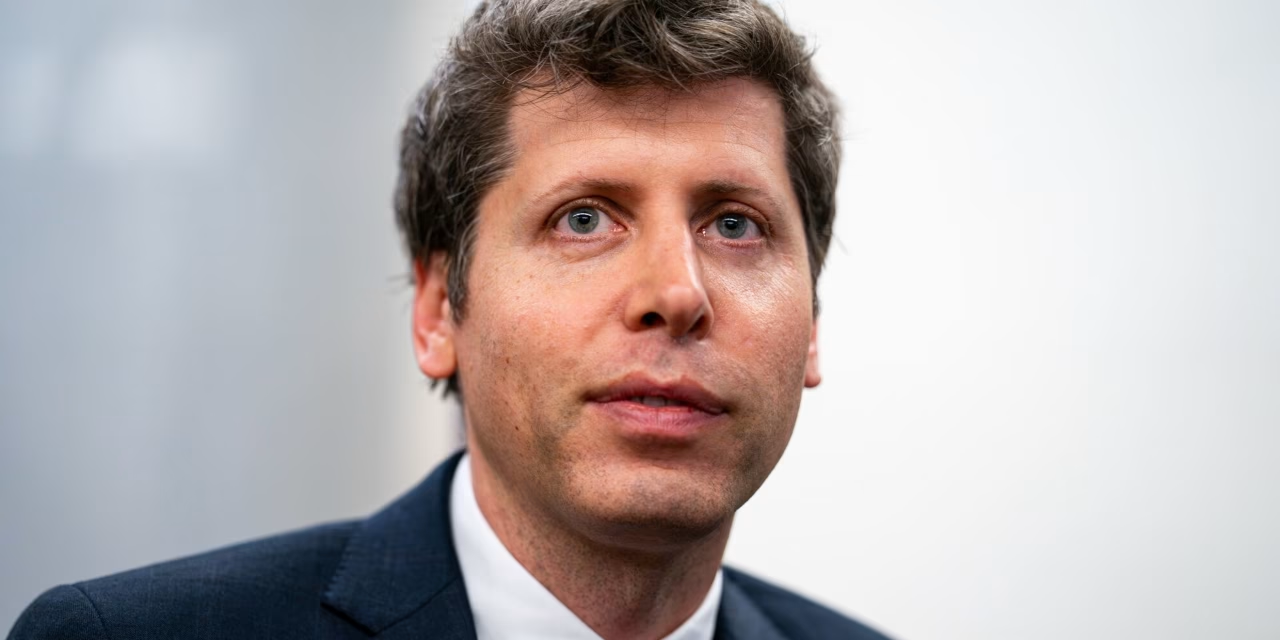
“Model progress is now extremely rapid,” OpenAI’s chief executive Sam Altman posted on X, external about the measures.

“We always said we would take action if we felt that model capabilities were outstripping the pace of safety.”

The pause was met with cautious optimism by some in the AI sphere – though others remained sceptical.

Professor Gina Neff, executive director of the Minderoo Centre for Technology and Democracy at the University of Cambridge, said OpenAI was making “the case for safety by press release” and questioned whether voluntary company safeguards were sufficient without greater government oversight.

Advertisement

“Which is it: OpenAI can be trusted to voluntarily put in place safeguards that actually work, or they are pushing forward with choices to make software that puts society at greater risk,” she said.

“Very happy to see this,” posted AI analyst Zvi Mowshowitz, external, though he added that “details” and “follow-through” from the initial measures mentioned were also important in order to take a full view on the plans.

Continue Reading
Click to comment

You must be logged in to post a comment Login

Leave a Reply

Business

Chery R&D centre to open at UTAC Millbrook in Bedfordshire

Published

on

Chery R&D centre to open at UTAC Millbrook in Bedfordshire

Chery, the Chinese carmaker behind the Jaecoo and Omoda brands, is to open a research and development centre in Bedfordshire, describing the move as “the next step in our long-term plan” for Britain.

The company said on Wednesday that the facility would open in late autumn at UTAC Millbrook, an existing vehicle testing centre used by engineering and motorsport companies as well as the Ministry of Defence. The site offers more than 70km (43 miles) of purpose-built test tracks, which Chery will use to fine-tune its cars for UK roads. Further down the line it intends to use the site to work on self-driving cars and artificial intelligence.

Gary Lan, chief executive of Chery’s UK business, said: “We waited over 20 years for the right time to enter this market, and our ambition has always gone much further than simply bringing vehicles here.”

The announcement comes as Chery’s sales grow at a rapid pace in Britain. In July, the Chery, Omoda and Jaecoo brands together accounted for nearly 8 per cent of the UK market, up from 3 per cent a year earlier, according to the Society of Motor Manufacturers and Traders. The China-built Jaecoo 7, nicknamed the “Temu Range Rover” for its low price and technology-heavy specification, became the UK’s top-selling model in March.

All of those cars are currently imported. Chery, which is part-owned by the Chinese state, has signed a deal with Nissan to build its vehicles at the Sunderland plant, which would mark the start of mass-market Chinese car production in Britain from 2027.

Advertisement

Chery also launched Lepas, its fourth brand in the UK, last February, aimed at younger families in the European market.

Kirsty Andrew, vice-president of UTAC UK, said the new R&D centre was “a significant commitment to engineering and vehicle development in the UK”.

She added: “Creating a stand-alone engineering centre here means Chery Automobile can develop and validate vehicles against the particular demands of UK roads and UK drivers, with direct access to our engineering expertise and testing environments throughout that process.”

UTAC Millbrook is midway between London and Birmingham and specialises in testing electric vehicles, battery systems and automated and connected vehicle technology.

Advertisement

Chinese manufacturers’ arrival as a major force in the car industry has put pressure on traditional European rivals. Chinese companies have been able to undercut European competitors in building electrified cars because of state subsidies, lower labour costs and China’s dominance of the battery industry.

Chery said it eventually planned to recruit local talent and create engineering jobs in the area, but did not say how much it would invest in the site or how many jobs would be created.


Amy Ingham

Amy Ingham

Amy Ingham is a reporter at Business Matters, covering UK business news with a focus on breaking news, business policy, late payments and insolvency. She joined the magazine in 2026 after completing the NCTJ Diploma in Journalism at Harlow College’s journalism school. Her recent reporting includes British Steel’s nationalisation and its impact on SME suppliers, the decline in late payments by large firms, and Insolvency Service director disqualifications. Reach her at aingham@cbmeg.co.uk.

Advertisement

Continue Reading

Business

Hui Ka Yan sentenced to life in prison for Evergrande fraud and bribery

Published

on

Hui Ka Yan sentenced to life in prison for Evergrande fraud and bribery

The founder of the world’s most-indebted property developer was sentenced to life in prison in China for fraud and bribery – five years after his China Evergrande Group collapsed, roiling the Chinese economy and financial markets.

Hui Ka Yan, 67, was convicted in a court in the southern city of Shenzhen on Thursday and the companies were fined a total of more than $2.3 billion for financial crimes, including inflating the group’s assets and concealing its liabilities that ran more than $300 billion.

Advertisement

“The amount involved is exceptionally large, the circumstances are particularly egregious, and extraordinarily heavy economic losses have been caused,” the court wrote in a statement. “The harm to society is extremely serious. Therefore, severe punishment should be given in accordance with the law.”

Hui, also known as Xu Jiayin, abused his position in orchestrating fraud and misappropriating company assets, the court found.

COURT ORDERS CHINA’S BANKRUPT EVERGRANDE TO LIQUIDATE

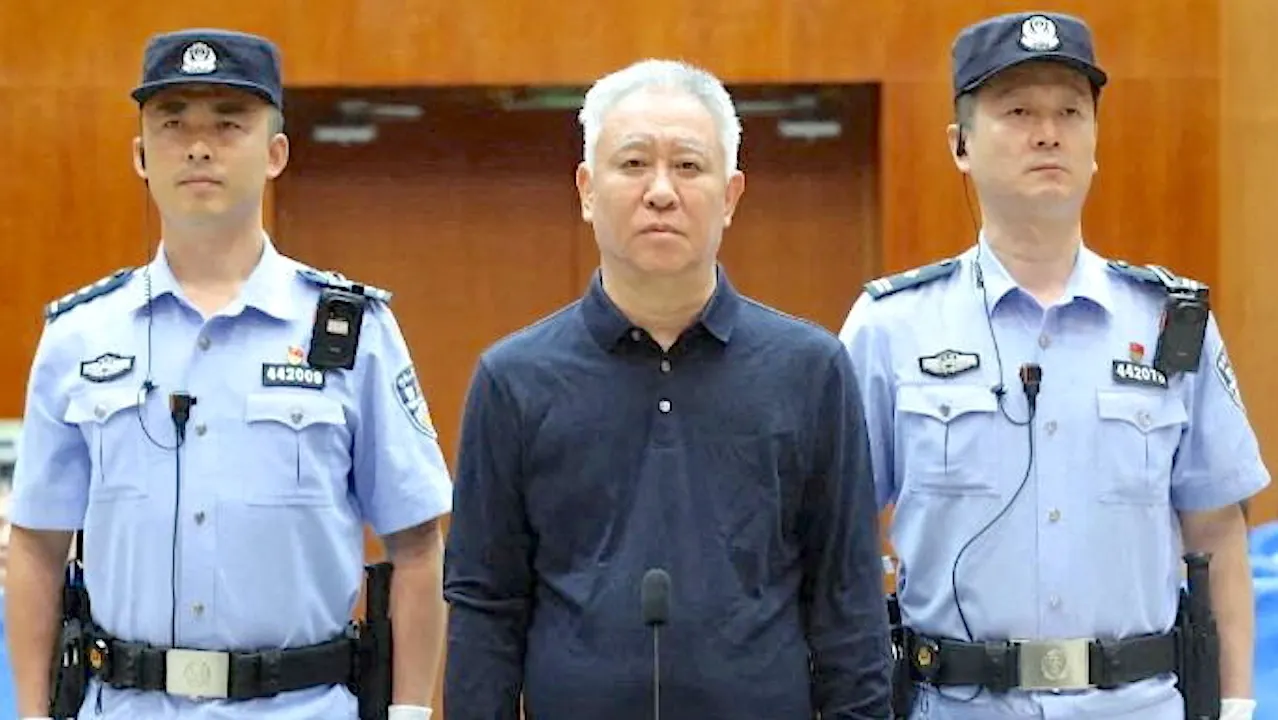
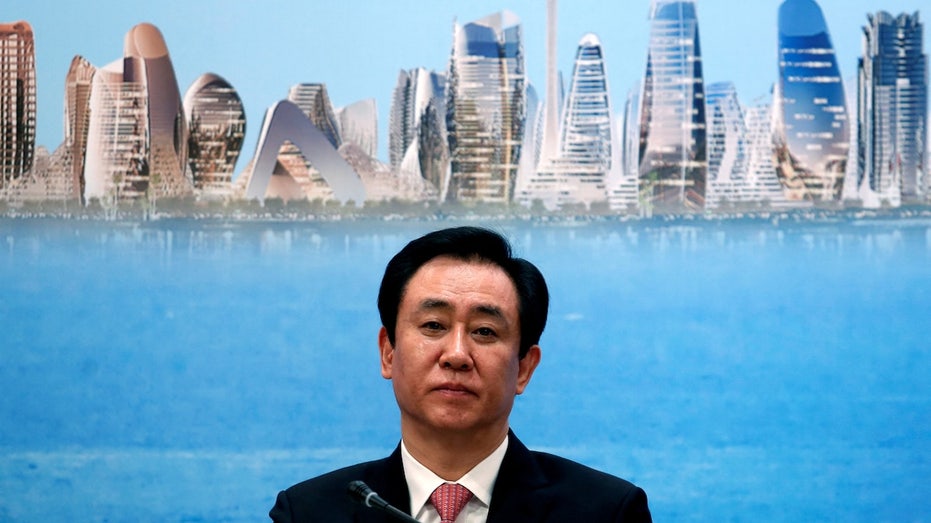
Hui Ka Yan, the founder of China's Evergrande Group

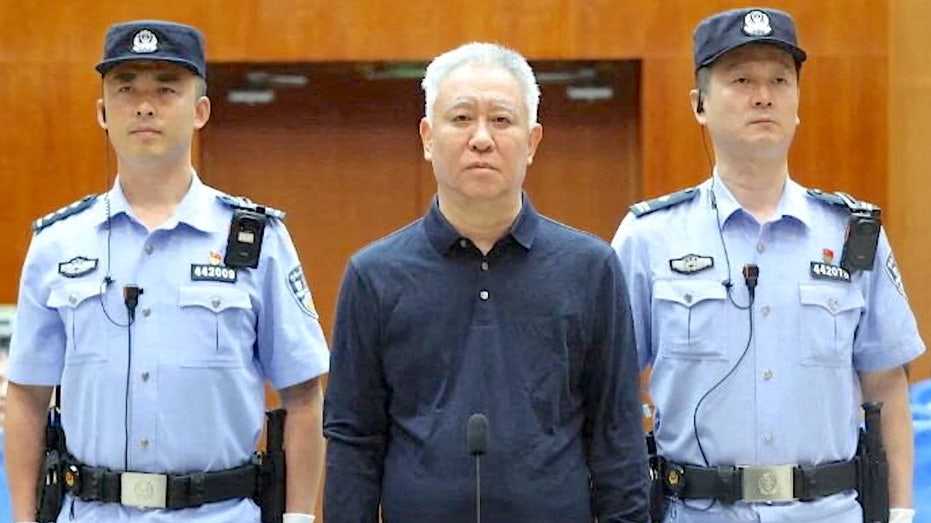
Hui Ka Yan, the founder of China’s Evergrande Group, was sentenced to life in prison for fraud and bribery in the Shenzhen Intermediate People’s Court, in Shenzhen, Guangdong province, China on August 20, 2026. (Shenzhen Intermediate People’s Court/Handout / Reuters Photos)

Evergrande group was fined 8.82 billion yuan ($1.31 billion) and Evergrande Real Estate Group was fined 7 billion yuan ($1.04 billion).

Advertisement

Hui’s sons, Xu Tenghe and Xu Zhijian, were also sentenced alongside senior Evergrande executives and others linked to the group, according to China’s official Xinhua News Agency. A total of more than 50 individuals were sentenced to imprisonment of between 22 months and 18 years.

Photos released by the court showed a gray-haired Hui standing between two officers in a navy collared shirt as the sentence was announced. He had largely disappeared from public view after Chinese authorities detained him in 2023.

His life sentence is a dramatic end to the career of a man who built one of China’s largest real estate empires in a rags-to-riches story. Born in 1958 into a rural family in central China’s Henan province, he worked in the steel industry in the 1980s before establishing Evergrande, which then prospered during China’s housing market boom. He was one of many businessmen who also gained political influence by joining a major advisory organization, the Chinese People’s Political Consultative Congress (CPPCC).

EMPTY BUILDINGS IN CHINA’S PROVINCIAL CITIES TESTIFY TO EVERGRANDE DEBACLE

Advertisement
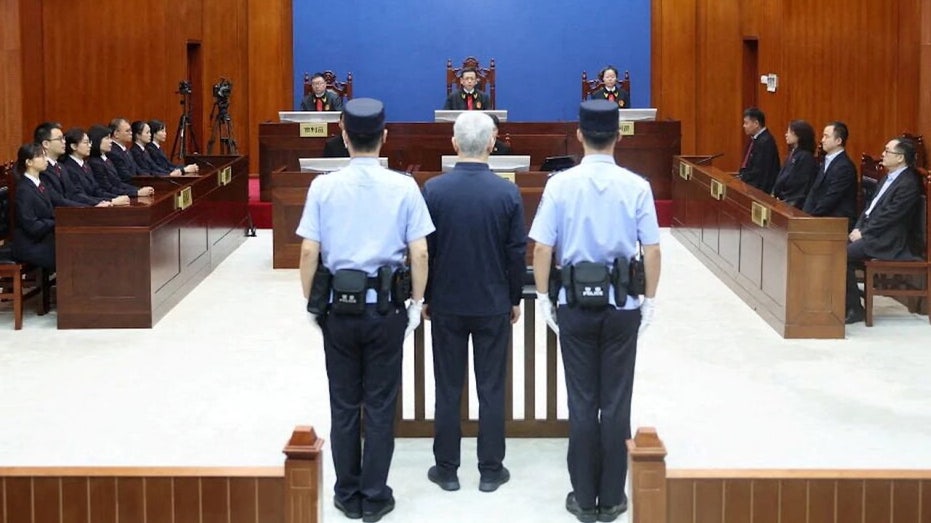
Hui Ka Yan, the founder of China's Evergrande Group stands in court

The Shenzhen Intermediate People’s Court, in Shenzhen, Guangdong province, China sentenced Hui Ka Yan, the founder of China’s Evergrande Group and once Asia’s richest man, to life in prison on August 20, 2026. (Shenzhen Intermediate People’s Court/Handout / Reuters Photos)

The Shenzhen Intermediate People’s Court ordered the confiscation of Hui’s personal property after he pleaded guilty in April to eight charges that included fundraising fraud, illegally taking public deposits, fraudulently issuing securities and bribery.

Chinese authorities cracked down on excessive borrowing in the real estate industry in 2020, triggering a crunch among many developers that brought on a downturn in the property market.

Evergrande, founded by Hui in 1996, expanded aggressively during China’s decades-long property boom, borrowing heavily as it built projects across the country. At its peak, the company became China’s largest developer by contracted sales, while Hui amassed a fortune that made him Asia’s richest man in 2017, with an estimated net worth of more than $45 billion, according to Forbes.

Its collapse helped ignite a broader crisis in China’s real estate sector, where falling home sales, unfinished projects and developer defaults have weighed on economic growth and consumer confidence for years.

Advertisement

CHINA’S EVERGRANDE: WHAT TO KNOW

Ticker Security Last Change Change %
DHI D.R. HORTON INC. 151.86 +6.18 +4.24%
LEN LENNAR CORP. 87.30 +2.36 +2.78%
PHM PULTEGROUP INC. 130.68 +4.63 +3.67%

The fallout also reached millions of ordinary Chinese investors and homebuyers. Evergrande’s inability to repay wealth-management products prompted protests after investors saw savings wiped out, while buyers of unfinished apartments were left uncertain about whether their homes would ever be completed.

Comments by Evergrande homeowners in a social media group included: “All ordinary citizens have paid the cost,” “Imprisonment is meant to protect him. If he comes out, his life is in jeopardy,” and, “What about our money?”

Chinese authorities said revenues were overstated by tens of billions of dollars in 2019 and 2020.

Advertisement

Hui had already faced regulatory punishment before Thursday’s criminal sentence. In 2024, China’s securities regulator fined him roughly $6.5 million and barred him from the country’s securities markets for life over inflated financial results and other violations.

Evergrande’s corporate demise has continued even as Hui’s criminal case moved through the courts.

China Evergrande Group's then-Chairman Hui Ka Yan

China Evergrande Group’s then-Chairman Hui Ka Yan attends a news conference on the property developer’s annual results in Hong Kong, China on March 28, 2017. (Bobby Yip/File Photo / Reuters Photos)

GET FOX BUSINESS ON THE GO BY CLICKING HERE

A Hong Kong court ordered the company into liquidation in 2024, and its shares were later delisted from the Hong Kong Stock Exchange.

Advertisement

Reuters and The Associated Press contributed to this report.

Continue Reading

Business

Dow Jones Futures Fall As Oil Prices, Bitcoin Jump; Walmart Skids On Earnings Investor’s Business Daily

Published

on

Dow Jones Futures Fall As Oil Prices, Bitcoin Jump; Walmart Skids On Earnings Investor's Business Daily

Dow Jones futures fell early Thursday, along with S&P 500 futures and Nasdaq futures. Oil prices continue to rise and Treasury yields rebounded while Walmart and Alibaba were notable earnings losers. The stock market rose slightly Wednesday as a Treasury move pulled down long-term bond yields and the dollar. Biotechs and drugmakers rallied on cancer vaccine news from Moderna and Merck,…
Copyright ©2026 Investor’s Business Daily, LLC. All rights reserved. 87990cbe856818d5eddac44c7b1cdeb8

Continue Reading

Business

Freedom Capital cuts iRhythm Technologies stock price target on valuation

Published

on


Freedom Capital cuts iRhythm Technologies stock price target on valuation

Continue Reading

Business

State government announces WA Football review

Published

on

State government announces WA Football review

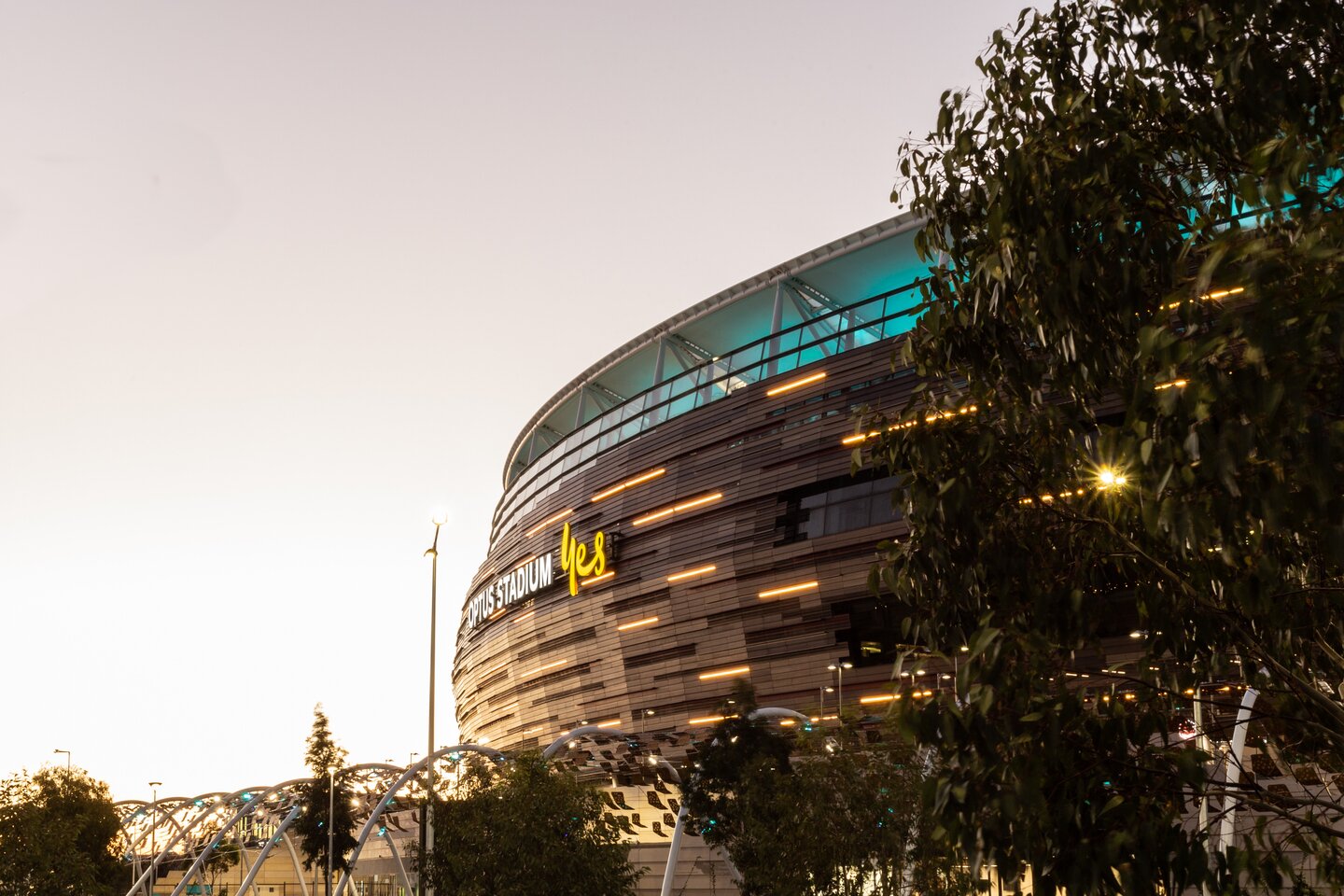
The state government has announced a review of WA Football, ahead of a new 10-year funding agreement which begins in November next year.

Continue Reading

Business

Swiss Prime Site AG (SWPRF) Q2 2026 Earnings Call Transcript

Published

on

OneWater Marine Inc. (ONEW) Q1 2026 Earnings Call Transcript