



Editor’s note: This article is intended to provide a general overview of the ETF for educational purposes only and, unlike other articles on Seeking Alpha, does not offer an investment opinion about the ETF.
Business
Opera: AI-Driven Advertising Prospects – Upside Potential And Rich Dividend Yields


Business
GameStop’s Dramatic Proposal to Acquire eBay for $56 Billion Puts Ryan Cohen at Center of Retail Shakeup

NEW YORK — GameStop Corp. has reignited Wall Street speculation with a bold $56 billion proposal to acquire eBay Inc., positioning activist investor and CEO Ryan Cohen to lead the combined company in what would rank among the largest retail mergers in recent years.
The proposal, which remains unconfirmed by eBay, has sent both companies’ shares into sharp focus. GameStop’s stock experienced significant volatility Monday following cryptic social media activity and corporate filings that fueled merger rumors. The video game retailer also filed with regulators to increase its authorized Class A shares from 1 billion to 2.5 billion, a move that could facilitate an acquisition, capital raising or other strategic initiatives.
Cohen, who previously transformed Chewy into a major e-commerce success, has intensified criticism of eBay’s performance since the proposal surfaced. He has highlighted the online marketplace’s declining profits and rising costs, arguing that a merger could unlock $2 billion in annual cost savings within the first year under his leadership.
The social media buzz intensified after Cohen removed GameStop from his personal profile while eBay appeared on GameStop’s investor relations page. Although the link directs users to GameStop’s acquisition proposals and regulatory filings rather than signaling an agreement, it sparked widespread speculation that a deal may be advancing behind the scenes.
Neither company has issued a formal statement confirming active merger negotiations. However, the developments have drawn renewed attention to GameStop’s transformation efforts under Cohen, who took the helm with a vision to evolve the company beyond traditional brick-and-mortar retail.
The proposed transaction would combine GameStop’s physical retail footprint and gaming expertise with eBay’s vast online marketplace platform. Proponents argue the merger could create a powerful omnichannel retail entity capable of competing more effectively in the digital economy. Critics, including prominent investor Michael Burry, have expressed skepticism, citing concerns over increased debt levels and execution risks.
GameStop’s filing to expand its share authorization provides flexibility for potential deal structuring. The company stated the increase would support acquisitions, financing activities and other corporate purposes. Such moves are common in strategic transactions but often signal heightened corporate activity to market participants.
Retail investor sentiment on platforms like Stocktwits showed bullish territory for eBay while GameStop shifted toward neutral. One user noted, “To me, it feels like something has already happened, and now it’s just a matter of time. Something’s definitely cooking on the stove, and it feels about ready to boil over.” Another remarked that a half-cash, half-stock deal could give legacy eBay shareholders 50% ownership in a company led by a CEO with aggressive growth plans.
Both stocks have posted solid gains this year, with eBay up more than 24% and GameStop rising over 15%. The latest rumors have added fresh volatility to names already known for meme-driven trading activity.
The proposal reflects Cohen’s ambitious vision for GameStop. Since taking a significant stake and eventually assuming leadership, he has pushed for strategic evolution, including digital expansion and operational efficiency. A merger with eBay would represent a dramatic acceleration of that strategy, leveraging eBay’s established marketplace infrastructure.

eBay has faced its own challenges, including slowing growth and margin pressures in a competitive e-commerce landscape. Cohen’s public critiques have focused on these issues, suggesting that new leadership and integration with GameStop’s assets could unlock value.
The potential deal has also caught the attention of other market observers. Anthony Pompliano, CEO of Professional Capital Management, announced plans to interview Cohen, adding to the buzz surrounding the situation.
For GameStop, the move comes amid a broader transformation. Once primarily known as a brick-and-mortar video game retailer, the company has explored new revenue streams and digital initiatives under Cohen’s influence. The eBay proposal represents the most significant step yet in redefining its future.
Market reaction has been mixed but spirited. GameStop shares jumped on the rumor wave before pulling back, while eBay traded with elevated volume as investors assessed potential implications. The developments highlight the power of social media and activist investors in driving modern market narratives.
Analysts caution that any actual transaction would face significant regulatory scrutiny, given the size and potential competitive impact. Antitrust authorities would likely examine effects on e-commerce competition and consumer choice.
From a financial perspective, the deal would require substantial capital and could involve complex structuring around stock and cash components. GameStop’s share increase filing provides some runway, but execution would demand careful management of debt levels and shareholder value.
The situation also underscores the evolving retail landscape. Traditional boundaries between physical and digital commerce continue blurring as companies seek scale and technological advantage. A GameStop-eBay combination would create a unique hybrid model blending gaming culture with general marketplace operations.
For eBay shareholders, the proposal raises questions about strategic direction and valuation. While some may welcome a premium offer and new leadership, others might prefer independence and existing strategies. The company’s board would need to evaluate any formal approach against fiduciary duties and long-term prospects.
Cohen’s track record with Chewy demonstrates his ability to build successful e-commerce platforms. His involvement has often energized retail investors, contributing to GameStop’s meme-stock status in previous years. The current speculation taps into that enthusiasm while introducing new strategic dimensions.
As the story develops, attention will focus on any formal responses from eBay and potential regulatory filings. Market participants will also watch for further social media activity or investor relations updates that could signal next steps.
The broader market context includes a technology and consumer sector navigating economic uncertainties and shifting consumer behaviors. Companies that successfully integrate online and offline capabilities may gain competitive edges in coming years.
For now, the GameStop-eBay rumors have injected fresh excitement into two well-known retail names. Whether they lead to actual negotiations or remain speculative, they highlight the dynamic nature of modern corporate strategy and investor sentiment.
The coming days and weeks will likely bring more clarity as both companies navigate this high-profile situation. Investors, analysts and retail enthusiasts will continue monitoring developments closely for signs of progress or strategic shifts.

White House National Economic Council Director Kevin Hassett joins ‘Mornings with Maria’ to discuss falling oil prices, AI-driven growth, inflation concerns and why he expects the US economy to keep accelerating.
White House National Economic Council Director Kevin Hassett is expecting inflation to fall further by the end of the year as energy prices ease and economic growth continues to accelerate.
Hassett joined FOX Business’ Maria Bartiromo on “Mornings with Maria” to discuss inflation, energy prices, artificial intelligence investment and the broader outlook for the U.S. economy.

National Economic Council Director Kevin Hassett speaks during an executive order signing in the Oval Office of the White House. (Andrew Harnik / Getty Images)
Hassett pointed to falling Treasury yields and what he described as strong underlying economic momentum as signs that inflation pressures could continue easing in the months ahead. He argued that lower oil prices would likely have an immediate impact on consumers and businesses if disruptions tied to the Strait of Hormuz ease.
US TARGETS IRAN’S $7.7 BILLION CRYPTO NETWORK TIED TO REGIME OPERATIONS
Former Energy Secretary under President Donald Trump Dan Brouillette gives his outlook for the Iran war, shipping through the Strait of Hormuz and national gas prices on ‘Varney & Co.’
“Core inflation is already just a smidge above target… top line inflation is going to go down as soon as we get the straits open,” Hassett said.
“And it’s going to go down a lot.”
HIGH ENERGY PRICES RISK KEEPING INFLATION ABOVE 2% TARGET, CONCERNING FED POLICYMAKERS
His comments come as investors continue watching energy markets and Federal Reserve policy closely following volatility tied to tensions in the Middle East. Oil prices and inflation concerns have remained central issues for consumers ahead of the 2026 midterm election cycle, particularly as Americans continue to face elevated costs for groceries, housing and insurance.
‘Word on Wall Street’ panel analyzes mounting inflation concerns, rising interest rates, the market impact of NVIDIA earnings and a coming wave of AI-driven mega IPOs.
Hassett reiterated that the administration remains focused on affordability and argued that investments tied to artificial intelligence, manufacturing and domestic energy production are helping strengthen the broader economy.


Satiating flavors lead the field of new product introductions.
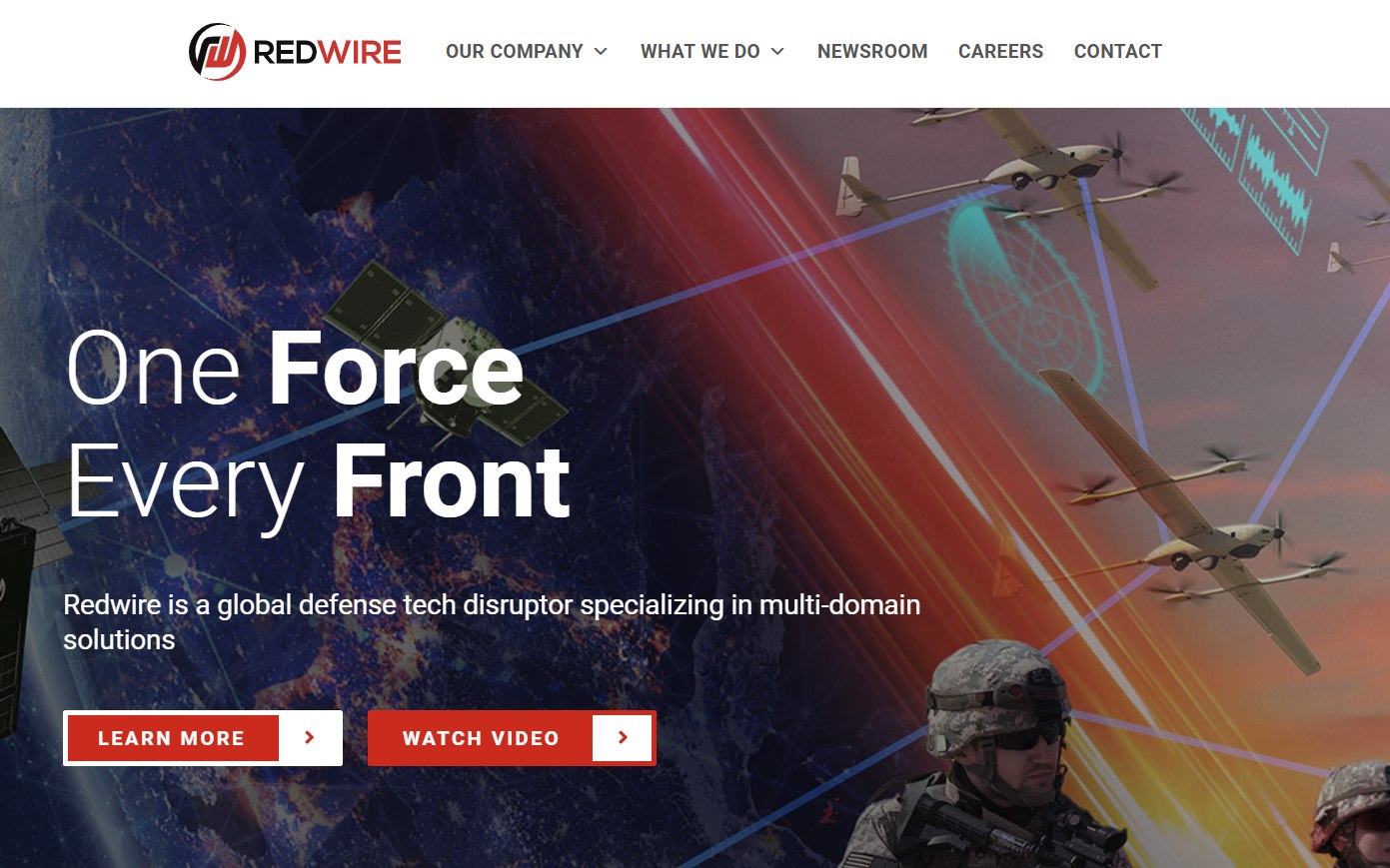
NEW YORK — Shares of Redwire Corporation soared more than 23% on Tuesday, climbing to $21.50 as investors responded enthusiastically to a string of positive defense contract announcements and upbeat analyst commentary on the space and national security technology company.
The sharp gain extended a strong run for Redwire, whose stock has more than doubled in recent months amid growing interest in its specialized capabilities in satellite components, uncrewed aerial systems and lunar infrastructure. The rally reflects renewed confidence in the company’s positioning within the expanding defense and space sectors, where government spending priorities continue to favor innovative technology providers.
Redwire, which focuses on space infrastructure and advanced manufacturing, has secured several high-profile contracts in recent weeks. On May 20, the company announced a $15 million follow-on order from the U.S. Army Aviation Center of Excellence for its Stalker uncrewed aerial systems to support advanced individual training. Just one day earlier, Redwire revealed a multi-year contract to deliver its next-generation Penguin Mk3 tactical UAS to an undisclosed NATO country ally.
These wins add to a robust contract backlog that reached record levels in the first quarter. The company reported $498 million in backlog at the end of March, providing strong revenue visibility heading into the remainder of 2026 and beyond. Analysts have highlighted this backlog as a key differentiator, offering stability in an otherwise cyclical industry.
The latest surge was also fueled by positive analyst actions. Several firms have raised price targets in recent weeks, with some projecting significant upside based on Redwire’s growth trajectory in both defense and commercial space markets. Truist Financial maintained a Buy rating with a $15 target, while Canaccord Genuity increased its target to $14 from $12.
Redwire’s first-quarter results, released earlier in May, showed mixed financial performance but strong operational momentum. The company reported revenue of $96.97 million, slightly below expectations, while posting a net loss. However, management reaffirmed full-year 2026 revenue guidance of $450 million to $500 million, citing confidence in its expanding contract pipeline and improving gross margins.
The company’s focus on high-growth areas such as in-space manufacturing, robotic systems and national security solutions has resonated with investors. Redwire’s technologies support critical missions ranging from Earth observation to lunar exploration, positioning it at the intersection of two major government spending priorities.
Defense spending tailwinds have been particularly supportive. Increased U.S. and allied investment in uncrewed systems and resilient space architecture has created opportunities for specialized providers like Redwire. The company’s Stalker and Penguin platforms have demonstrated strong demand in both domestic and international markets.
Redwire has also made strategic moves to expand its capabilities. Recent acquisitions and partnerships have enhanced its portfolio in areas such as digital engineering and advanced materials. These efforts aim to create end-to-end solutions for customers in government and commercial sectors.
The stock’s performance comes amid broader strength in aerospace and defense names. Geopolitical tensions and modernization efforts across multiple nations have supported sector-wide gains. Redwire’s specialized niche has allowed it to outperform many larger peers in recent trading sessions.
Market observers note that Redwire’s relatively small market capitalization provides room for significant upside if execution remains strong. However, the stock’s volatility reflects typical risks associated with smaller growth-oriented companies, including execution challenges and dependence on government contracts.
For investors, the current rally represents both opportunity and caution. While contract momentum is encouraging, profitability improvements and successful integration of new technologies will be key to sustaining valuation multiples. Management has emphasized a disciplined approach to growth while targeting margin expansion in coming quarters.
Redwire’s leadership has expressed confidence in the company’s trajectory. The combination of organic growth and strategic positioning in high-priority markets supports optimism for continued progress. As government agencies increasingly prioritize resilient space capabilities and advanced uncrewed systems, Redwire appears well-placed to benefit.
The company’s recent shareholder meeting approved key governance matters, including director elections and executive compensation packages. These routine approvals provide stability as the company pursues its ambitious growth plans.
Looking ahead, Redwire faces a busy period with multiple contract opportunities in pipeline. Success in securing additional awards could further catalyze the stock, while any delays or competitive losses might introduce near-term pressure.
The defense and space technology sector continues attracting investor interest as nations invest in next-generation capabilities. Redwire’s focus on enabling technologies rather than large platforms differentiates it from traditional aerospace giants while offering exposure to similar thematic tailwinds.
Tuesday’s trading volume was elevated as the stock broke through recent resistance levels. The move suggests broad participation from both institutional and retail investors drawn to the company’s compelling growth narrative.
As markets digest the latest gains, attention will shift to upcoming earnings and contract announcements. Redwire’s ability to convert its backlog into sustainable revenue growth will be a key metric for investors evaluating the current valuation.
The company’s story exemplifies broader trends in the aerospace industry, where innovation and specialization increasingly drive value creation. For Redwire, the path forward involves balancing aggressive expansion with operational discipline to deliver on its long-term potential.
Tuesday’s surge adds another chapter to what has been a remarkable run for Redwire shareholders. The stock’s performance underscores the market’s appetite for high-growth stories in strategically important sectors, even as broader economic uncertainties persist.
With defense budgets expanding and commercial space opportunities growing, Redwire stands at the center of multiple positive secular trends. Its ability to capitalize on these dynamics will determine whether current enthusiasm translates into sustained shareholder value in the years ahead.
Business
Israel expands ground operation beyond demarcation line in south Lebanon as clashes intensify


Israel expands ground operation beyond demarcation line in south Lebanon as clashes intensify

Air travel runs on tight schedules and complex systems. When flights are delayed or canceled, most passengers feel confused and unsupported. Many do not know their rights. Others assume the airline’s answer is final.
Irina Ciochiu built her career around changing that.
As the Founder and CEO of FlightHelp, Ciochiu works at the intersection of law, aviation, and consumer rights. Her mission is clear. Help passengers understand when they may be eligible for compensation and guide them through a process that airlines often make difficult to navigate.
But her path into this industry was not accidental.
Early Background and Legal Foundation
Irina Ciochiu grew up in Romania and later studied law at the University of Craiova. During her legal studies, she became interested in how regulations work across borders and how difficult they can be for ordinary people to use in practice.
That realization shaped her career.
She noticed that many industries had strong legal protections on paper, but very little practical support for consumers trying to enforce them.
“Success is creating systems that solve real-world problems at scale,” she says. “Especially in industries where individuals often lack support.”
That idea eventually became the foundation for FlightHelp.
Why Irina Ciochiu Focused on Passenger Rights
The aviation industry is heavily regulated. In Europe, EU261 gives passengers the right to compensation in many cases involving delays, cancellations, and denied boarding.
But knowing those rights and successfully enforcing them are two very different things.
According to European consumer groups, millions of passengers may qualify for compensation each year under EU261, yet a large percentage never pursue claims. Many travelers either do not understand the process or accept the airline’s explanation without challenge.
Ciochiu saw a major gap.
Instead of pursuing a traditional legal career path, she focused on creating practical systems that help passengers navigate these regulations more effectively.
“Legal thinking, persistence, and the ability to translate complex rules into simple solutions are key,” she says.
That mindset led to the launch of FlightHelp.
How FlightHelp Helps Passengers Navigate Airline Claims
Launching a company in the aviation sector meant dealing with multiple jurisdictions, airline policies, and constantly changing operational issues.
“Navigating regulatory complexity across multiple jurisdictions while building a scalable business in the aviation space,” Ciochiu says, “was one of the biggest challenges.”
Rather than avoiding complexity, she built systems around it.
FlightHelp focuses on helping passengers submit and manage compensation claims under EU261 and similar frameworks. Ciochiu emphasizes that passengers should not rely solely on airlines to determine whether a claim is valid.
Even when airlines cite “extraordinary circumstances” as the reason for a disruption, passengers may still qualify for compensation depending on the situation and supporting evidence.
This is one reason she encourages travelers to seek professional assistance instead of handling claims entirely on their own.
Airlines also rarely provide passengers with the actual operational reason for a disruption in writing. That lack of transparency can make it difficult for travelers to evaluate whether a denial is legitimate.
According to Ciochiu, this is where professional support becomes important.
The process often involves reviewing operational details, documentation, and legal standards that most passengers do not have access to or experience interpreting.
Her focus is not just processing claims. It is helping passengers understand the system they are dealing with.
Why Airline Transparency Matters
Passenger rights have become a bigger issue as European air traffic continues to increase. Industry data shows that delays and cancellations remain common during peak travel seasons.
But many passengers still assume the airline has the final word.
Ciochiu believes awareness is one of the biggest missing pieces.
“Most challenges become manageable once you start moving through them,” she says. “Passengers often give up too early because they assume the process is closed after the airline responds.”
She believes travelers should document delays carefully, save travel records, and seek support before assuming they are ineligible.
This approach has helped FlightHelp expand across multiple European regions, including Romania, the United Kingdom, Italy, Spain, and Germany.
Leadership Style and Long-Term Vision
Ciochiu’s leadership style reflects her legal background. It is structured, direct, and focused on measurable outcomes.
“I start with a clear long-term vision and then break it down into measurable milestones,” she explains. “If something isn’t contributing to progress, it gets deprioritized quickly.”
She also emphasizes continuous learning and adaptation.
“Growth comes from iteration,” she says. “I treat every result—good or bad—as feedback.”
That mindset has helped her navigate the fast-changing aviation industry while continuing to build systems that simplify complex legal processes for travelers.
The Future of Passenger Rights in Europe
As international travel continues to grow, passenger rights are becoming more important across Europe.
For Irina Ciochiu, the mission remains straightforward. Make passenger protections easier to understand and easier to enforce.
Her role is not only as a founder, but as someone helping bridge the gap between legal frameworks and everyday travelers.
In an industry built on complexity, that work continues to matter more than ever.

Baron is an asset management firm focused on delivering growth equity investment solutions. Founded in 1982, Baron has become known for its long-term, fundamental, active approach to growth investing. Baron was founded as an equity research firm, and research has remained at the core of its business. Note: This account is not managed or monitored by Baron Capital, and any messages sent via Seeking Alpha will not receive a response. For inquiries or communication, please use Baron Capital’s official channels.
Business
Sebi chief Tuhin Kanta Pandey backs bond ETFs, tokenisation as debt fundraising nears Rs 9 lakh crore

Sebi chief Tuhin Kanta Pandey on Monday called for stronger development of India’s corporate bond market, saying a fast-growing economy needs a deeper debt ecosystem to support long-term capital requirements alongside the banking system.
Speaking at the CareEdge Debt Market Summit, Sebi chairman said India’s debt market is emerging as a major source of capital raising and has already seen fundraising of nearly Rs 9 lakh crore in FY26.
“In FY26, debt market fund raising has touched nearly Rs 9 lakh crore, almost double that of the equity market,” Pandey said. He added that India’s growing economy requires patient debt capital and a strong bond market as a “second engine of credit growth.
Pandey said more issuers need to start viewing the corporate bond market as a regular and reliable source of funding instead of depending entirely on banks. He also said Sebi’s task is clear to build a deeper debt market.
The comments come at a time when policymakers are increasingly pushing for diversification of India’s financial system beyond traditional bank-led lending, particularly as infrastructure financing and long-duration capital requirements continue to rise.
Pandey said nearly Rs 7 lakh crore had flowed into India’s capital markets in FY25, highlighting the growing importance of market-based financing. He also stressed that further regulatory measures would be needed to strengthen the debt market ecosystem.
More measures are needed to further strengthen the debt market as a key avenue for capital raising, he said.
Sebi chairman said regulation cannot remain static and must evolve continuously with emerging risks and changing market structures.
Among the initiatives under consideration, Pandey said Sebi is working on developing exchange-traded funds linked to bonds to improve retail participation and accessibility in fixed-income products. He also said the regulator is reviewing whether listed debt securities require disclosure standards similar to those applicable to listed equities.
“Corporate bonds can offer diversification, but not risk-free,” Pandey said, cautioning investors against viewing debt instruments as completely safe products.
The regulator also plans to improve investor awareness around fixed-income products. According to Pandey, bonds will attract retail investors only if investors properly understand the products and associated risks.
To improve participation and awareness, Sebi and stock exchanges will conduct outreach programmes targeted at bond issuers and market participants. Pandey also revealed that the regulator is exploring pilot projects around tokenisation of corporate bonds, signalling growing regulatory interest in blockchain-linked market infrastructure.
Tokenisation refers to converting ownership of financial assets into digital tokens that can potentially improve trading efficiency, transparency and settlement processes. India’s corporate bond market has historically remained smaller than many developed economies despite rapid growth in equity markets and banking assets.
Market participants have long argued that a deeper bond market is necessary to finance large infrastructure projects, energy transition investments and long-term industrial expansion without putting excessive pressure on banks.
The push toward debt market reforms also comes as India continues to witness strong domestic investor participation across financial assets, including mutual funds, equities and fixed-income products.


onimate/iStock via Getty Images
The WisdomTree Quantum Computing Fund ETF (WQTM) is an exchange-traded fund that aims to give investors access to a diversified portfolio of companies engaged in, or with exposure to, various aspects of quantum computing, such as the development of quantum hardware and software, enabling technologies, and necessary supporting infrastructure.
What Is WQTM?
WQTM is a U.S.-listed thematic equity ETF designed to provide investors with targeted exposure to companies participating in the emerging quantum computing ecosystem. WQTM started trading on October 9, 2025, and seeks to track the WisdomTree Classiq Quantum Computing Index, which was created through a collaboration between WisdomTree and Classiq, a quantum software firm. The investment strategy outlined by WisdomTree covers quantum hardware, quantum software, quantum infrastructure, and enabling technologies, as well as companies that focus on quantum technology and larger companies that offer a diversified range of technologies.
WQTM is essentially a frontier-technology fund, not a broad technology ETF or a simple semiconductor or AI proxy. It is instead designed to capture companies associated with the long-term commercialization of quantum computing through its mandate. While this is potentially appealing, it is also speculative because quantum computing is new, and most of its business models are still developing rather than mature.
What Does the Wisdom Tree Quantum Computing Fund Offer Investors?
Instead of forcing investors to pick specific quantum-related stocks on their own, the WQTM ETF is designed to provide exposure to a rules-based basket of companies that WisdomTree views as relevant to the quantum value chain. As a result, this fund is primarily for capital appreciation, with a distribution yield of 0.00%, and not for income purposes.
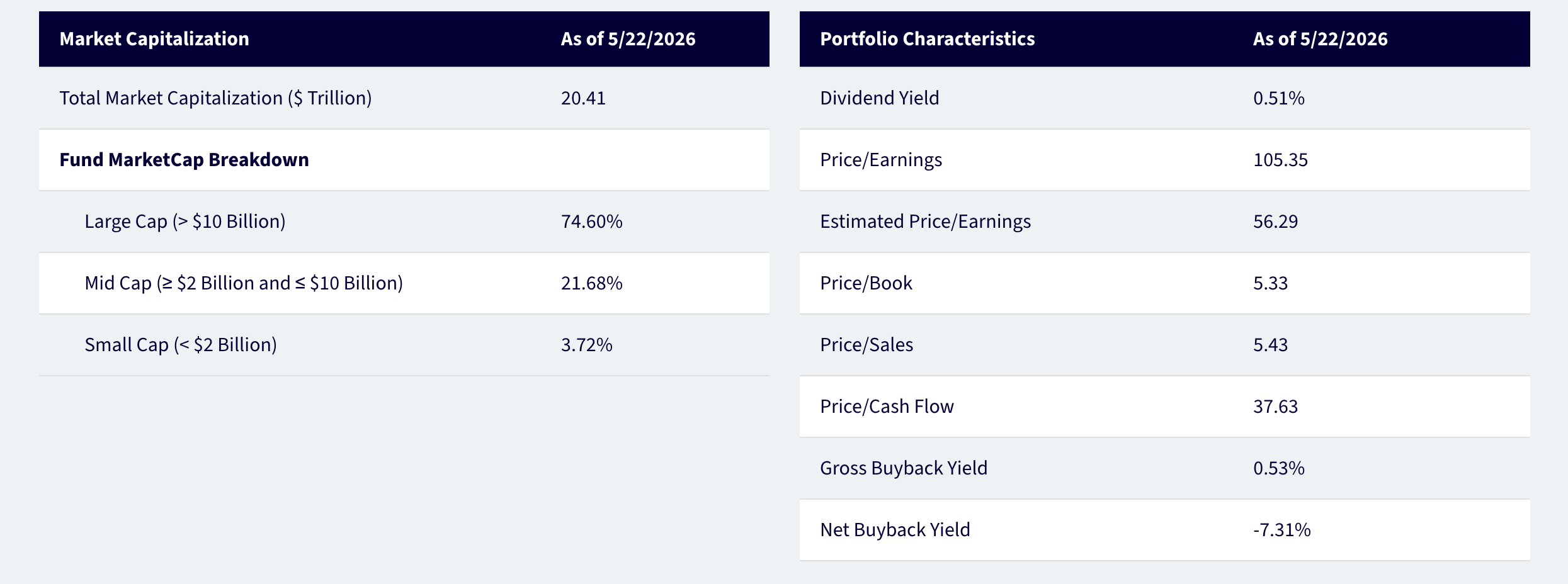
WQTM’s Market Capitalization and Portfolio Characteristics (WisdomTree Product Sheet)
As the portfolio exhibits a financial profile consistent with a high-growth thematic strategy, WisdomTree’s reported portfolio characteristics reflect higher valuation metrics, including a price-to-earnings ratio greater than 100 and an estimated price-to-earnings ratio greater than 50, based on the underlying holdings. This does not mean the fund is unattractive; however, it does raise the bar for future growth.
As of May 22, 2026, WisdomTree reported that roughly three-quarters of the fund’s market-cap exposure was to large-cap stocks, with most of the remainder in mid-cap names. This large-company focus may lessen some of the single-company risks inherent in fully speculative technology plays. All the same, this does not remove thematic risk. Should enthusiasm for quantum computing wane, or should commercialization take longer than expected, WQTM could experience volatility.
Who Might Consider WQTM?
WQTM may work for investors with broad-based, diversified core positions who want a more specific satellite investment in a long-duration technology theme. WQTM is best considered a focused, specialized investment rather than a substitute for a broad stock-market fund. It gives investors more direct exposure to quantum computing than many traditional technology ETFs.
The fund may be most relevant for investors who expect quantum computing research and experimentation to ultimately trend toward commercial adoption but prefer diversified ETF exposure rather than individually selecting particular companies or stocks. The fund may also suit investors who are prepared to bear early-stage uncertainty, high valuations, and limited operating history at the fund level. As WQTM is newly created, it has a very limited performance history.
More cautious investors, investors looking for income, or investors who are not comfortable with big price swings may find WQTM too focused or too risky.
What’s Inside WQTM? A Closer Look at Its Top Holdings
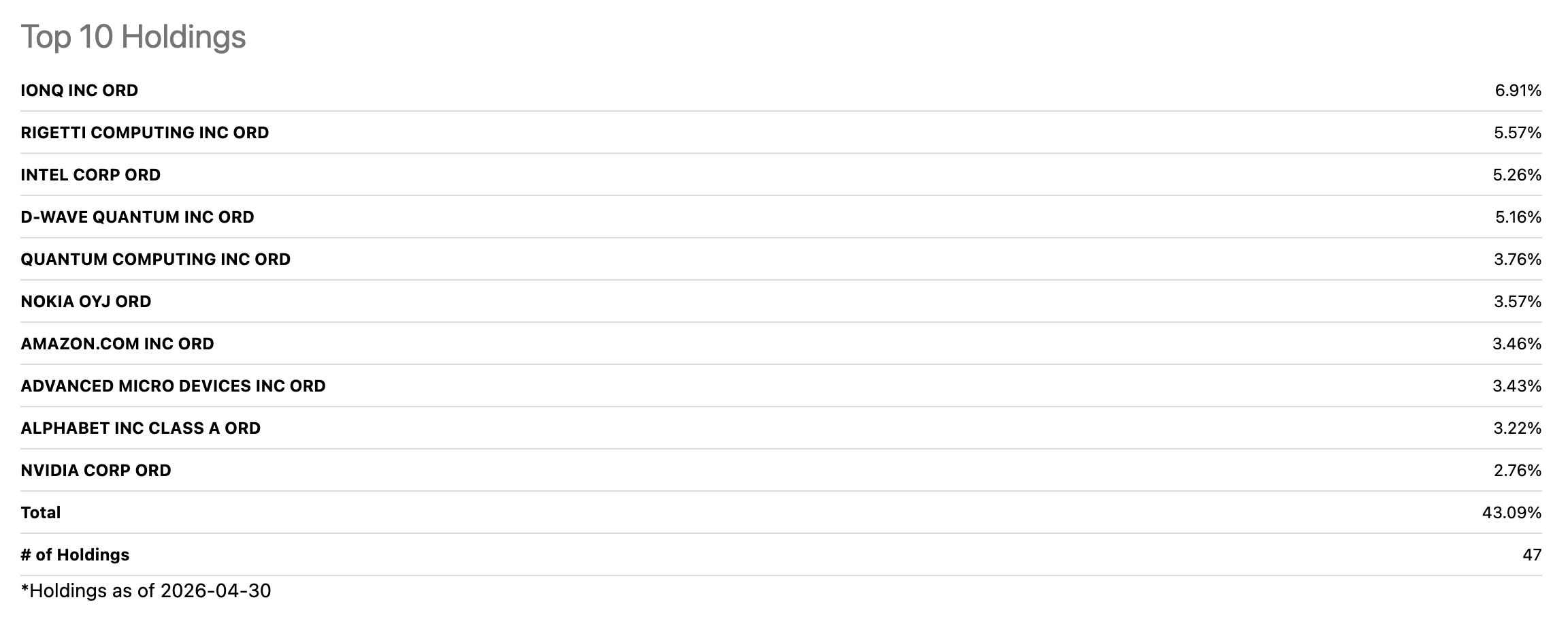
WQTM’s Top 10 Holdings (Seeking Alpha )
1) IonQ Inc. (IONQ) – 6.91%
The largest company held by WQTM is IonQ, making it one of WQTM’s most direct connections to the stand-alone quantum computing industry. IonQ is focused on developing trapped-ion quantum systems, offering cloud-based access to quantum computers, and developing business applications for quantum computing. This makes it more closely connected to the quantum-computing theme than other larger and more diversified technology companies included in the fund.
2) Rigetti Computing Inc. (RGTI) – 5.57%
Rigetti Computing is a quantum-computing company focused on building quantum-computer hardware. The company produces superconducting quantum processors and supplies quantum systems to local research organizations, national laboratories, and quantum research centers. The reason Rigetti has such appeal as a stock investment is that it is directly addressing one of the largest obstacles facing quantum computing right now: hardware.
3) Intel Corp. (INTC) – 5.26%
Intel contributes to WQTM through a distinct type of exposure. Although Intel is not considered a pure quantum computing business, it has still made itself valuable to the overall quantum-computing market through its role in the semiconductor manufacturing industry, its lengthy history in chip design, and its extensive research and development activities.
4) D-Wave Quantum Inc. (QBTS) – 5.16%
Over several years, D-Wave has remained commercially active in quantum systems. The company is primarily associated with quantum annealing, a specialized approach aimed at solving optimization-based problems; yet, D-Wave has also positioned itself as a company focused on providing enterprise-level services and developing applications based on quantum technologies.
5) Quantum Computing Inc. (QUBT) – 3.76%
Quantum Computing Inc. is a higher-risk stock, as it is a smaller and more volatile company that adds another level of pure-play exposure to the quantum computing sector. The company develops integrated photonics-based quantum computers for use in computing, artificial intelligence, cybersecurity, and sensing. While the company’s progress is notable, it remains early-stage by public-market standards.
6) Nokia Oyj (NOK) – 3.57%
Nokia may seem less obvious at the outset, but its inclusion in the fund reflects quantum’s involvement with networks, security, and advanced communications through Bell Labs and its related research activities. It gives the fund exposure to quantum-computing infrastructure and related research. This can help balance out the smaller, riskier companies in the fund that focus more directly on quantum computing.
7) Amazon.com Inc. (AMZN) – 3.46%
Thanks to its cloud infrastructure and quantum access, Amazon.com gives WQTM exposure to quantum computing. The Amazon Braket managed service allows researchers and developers to run experiments on quantum computers, use simulators, and run hybrid workflows through AWS.
8) Advanced Micro Devices Inc. (AMD) – 3.43%
Within the context of an enabling technology company, AMD fits WQTM because of its position in supporting quantum innovation through the use of its chips, GPUs, FPGAs, and system components in high-performance computing environments. These technologies allow scientists to simulate, control, and integrate quantum workloads. AMD is not selling a mainstream quantum computer. Nevertheless, progress in quantum computing may still depend on the powerful traditional computing technology that AMD provides.
9) Alphabet Inc. Class A (GOOG) – 3.22%
WQTM has access to one of the deepest corporate quantum research initiatives globally through Alphabet’s Class A shares. Google Quantum AI is focused on developing large-scale, error-corrected quantum computers, and Alphabet has positioned itself as a serious long-term competitor in quantum computing. Alphabet is certainly not a pure-play quantum stock. Advertising, cloud, and its other businesses account for the majority of its earnings. However, the research being done in quantum computing provides investors with meaningful research-backed exposure.
10) NVIDIA Corp. (NVDA) – 2.76%
NVIDIA’s place in the top ten is representative of acceleration rather than direct quantum ownership. Its CUDA-Q platform allows quantum processors to connect with both GPUs and CPUs, allowing developers to create hybrid quantum-classical applications before fully mature quantum hardware exists. Quantum computing will most likely need classical computing for simulation, control, and error correction.
WQTM Performance Overview

WQTM’s Momentum Stats (Seeking Alpha)
The data signals to investors that WQTM is a newer ETF with strong near-term momentum, reasonable fees, and a risk profile with many unknowns. The most recent returns are likely what will primarily catch investor attention, as they have been very large for an exchange-traded fund. The one-month return of 22.24% and six-month return of 58.31% are extremely high compared to median returns for other ETFs of 1.34% and 9.58%, respectively. Additionally, the YTD price return of 48.03% is significantly greater than the S&P 500’s (SP500) gain of 9.17%.

WQTM’s Momentum Stats (Seeking Alpha)
Basically, WQTM is built to capture one specific technology theme. When that theme is working, the returns can move quickly. The one-week price return of 12.64% makes that clear.
Market sentiment can change quickly in favor of high-growth tech, speculative innovation, and quantum-related stocks, which may lead to a sharp rise in WQTM and therefore a significant return. Nonetheless, the downside also cuts both ways.
WQTM Dividend Scorecard
The fund’s lack of a dividend also clarifies how it should be viewed. Instead, most of the potential return depends on the fund’s price going up. This is common for funds focused on emerging technologies.
WQTM: Expenses

WQTM’s Expense Stats (Seeking Alpha)
0.45% is a fair expense ratio for a specialized thematic ETF, and it falls below the 0.50% median for all ETFs. Most thematic funds will have higher fees than broad-index ETFs, and these higher costs can reduce returns over time.

State Street SPDR S&P 500 ETF Expenses (Seeking Alpha)
In this case, it will not be as cost-effective as a broad-based S&P 500 ETF (SPY). Investors are essentially paying for narrow exposure to a particular idea rather than basic market exposure.
WQTM: Risks
Here are the downsides to WQTM: risk metrics are mixed and incomplete. Standard deviation, annualized volatility, turnover, and tracking error are missing, making it difficult to assess the level of risk with the same confidence as a traditional ETF that has existed for many years.
WQTM’s Risk Metrics (Seeking Alpha)
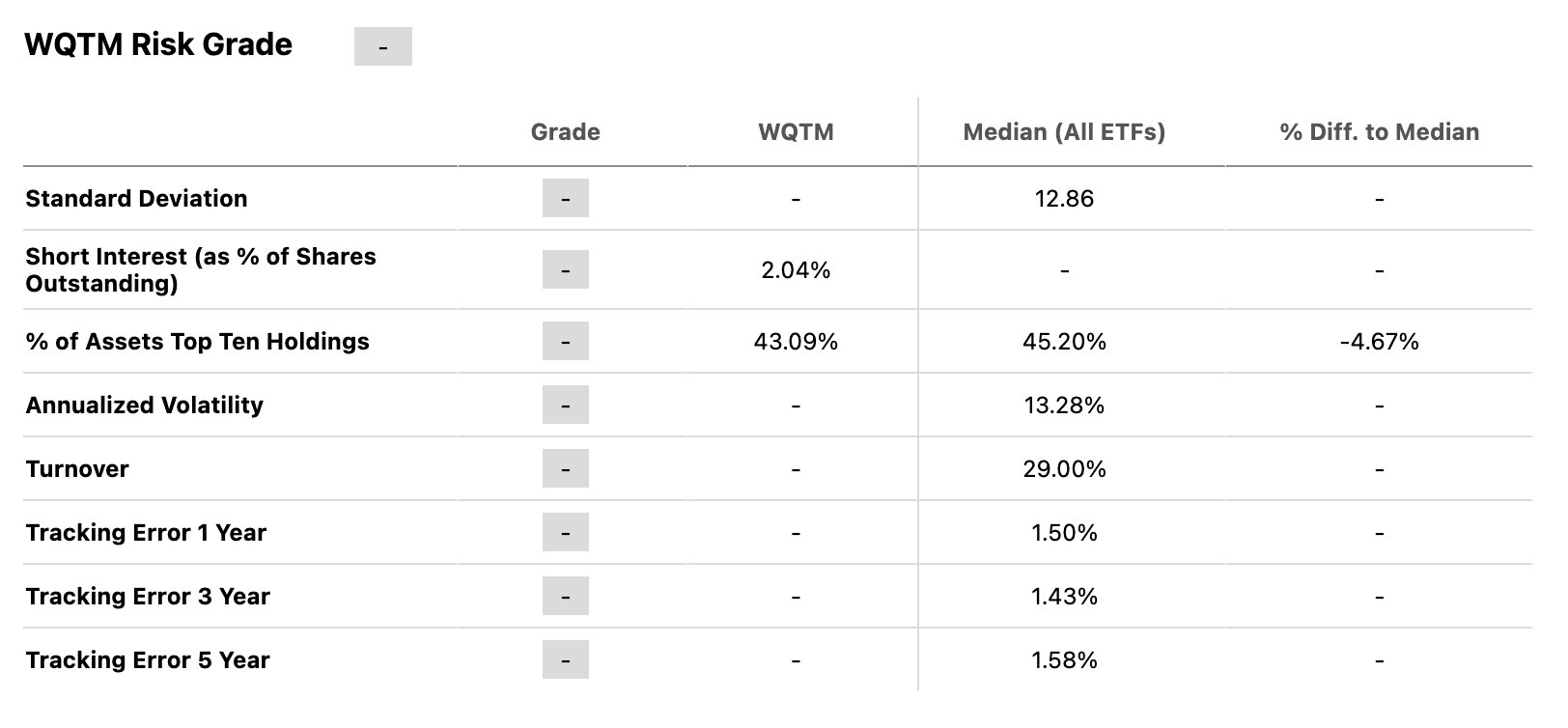
Even so, we do have a concentration figure. The top ten holdings represent 43.09% of the fund’s assets, which is just under the overall ETF median of 45.20%. Therefore, while WQTM does not seem to be especially concentrated when compared to other ETFs, this may not be a good comparison for evaluating WQTM because many of its top ten holdings have similar investment themes.
Short interest at 2.04% of shares outstanding is not a high percentage. Nevertheless, it is enough to show that some investors have taken positions against the ETF. It suggests these investors are either hedging their exposure to the fund or speculating that there may be a downturn. This does not prove that investors are becoming strongly negative on WQTM. Notwithstanding, it does show that the market is not treating WQTM as a safe, widely agreed-upon investment.
Should You Invest In WQTM?
Investors interested in having a small slice of quantum computing without picking their own quantum stocks can use WQTM. Although quantum computing is still an early-stage technology, it is making progress. The best opportunity to take advantage of WQTM investments may come if you have already built an established, diversified portfolio and are comfortable with the possibility that this investment may drop sharply and stay down for an extended period during the time required for the fund’s strategy to prove itself, which may take years. WQTM provides no meaningful income. Therefore, if you need a source of dividend income or steady returns, you may need to find other investment vehicles.
This article answers three main questions about WQTM:
- What are the benefits and risks of investing in WQTM?
- How volatile is WQTM compared to the overall market?
- Are there concentration risks with WQTM?

Anadolu | Anadolu | Getty Images
American Airlines plans to outfit more than 500 of its narrow-body aircraft with Starlink, handing another win to Elon Musk‘s SpaceX unit that has made inroads with major carriers for in-flight Wi-Fi.
American was evaluating Starlink and Amazon Leo as recently as March for the service.
The airline announced Tuesday it would install Starlink on about 500 of its narrow-body Airbus planes, like the A321neo, starting early next year. American spokesman said the carrier doesn’t have immediate plans to change providers on its Boeing fleet, which uses a mix of Viasat and Panasonic.
American in January rolled out free in-flight Wi-Fi for members of its frequent flyer program, following United Airlines, Delta Air Lines and others.
Delta in March said it would use Amazon Leo for in-flight Wi-Fi for hundreds of jets starting in 2028. United, Southwest Airlines and Alaska Airlines, which merged with Hawaiian Airlines in 2024, have selected Starlink.
Carriers are battling for higher-spending customers, including by upgrading once-slow, expensive and clunky in-flight internet to higher speeds. They have also been weighing other revenue streams, like personalized ads for travelers.
SpaceX, meanwhile, is preparing to go public in what’s likely to be a record IPO next month. Its connectivity unit, which includes Starlink, posted revenue of $11.39 billion last year, making up 61% of total sales, SpaceX said in a filing for its initial public offering earlier this month.

Crypto World45 seconds ago
Bitmine (BMNR) Shares Surge After $237M Ethereum Buying Spree

Politics2 minutes ago
‘Frustrated’ Labour left supposedly plan to challenge Burnham
Sports3 minutes ago
Vikings Could Still Target 3 Positions This Summer for Upgrades


-

 Crypto World5 days ago
Blockchain.com files with SEC for U.S. IPO
-

 Fashion4 days ago
Holiday Weekend Open Thread – Corporette.com
-

 Business4 days ago
Dell Technologies DELL Stock Surges 15% on AI Server Momentum and Analyst Upgrades in 2026
-

 Crypto World4 days ago
Bitcoin Accumulation Weakens as BTC Realized Losses Hit $600M
-

 Crypto World4 days ago
Space X IPO Is ‘Bad News’ for Tech Stocks: But What About Bitcoin?
-

 Politics4 days ago
Makerfield: a tale of two social-media histories
-

 Crypto World3 days ago
Robinhood crypto COO Tanya Denisova exits
-

 Business2 days ago
NYT Strands Answers May 24 2026 Revealed for Puzzle No. 812 Theme Summer Essentials
-
 Crypto World5 days ago
MicroStrategy’s Saylor Says Miners No Longer Set Bitcoin Price, Another Force Has Taken Over
-

 Tech5 days ago
WhatsApp ads could make Irish debut after discussions with DPC
-

 Crypto World4 days ago
AI infrastructure race heats up as IREN pitches full-stack strategy, WhiteFiber lands $160M deal
-
 Tech4 days ago
A 0.12% parameter add-on gives AI agents the working memory RAG can’t
-

 Tech5 days ago
You Can Now Add ChatGPT To PowerPoint
-
 NewsBeat5 days ago
Charity run by Reform leader Malcolm Offord accused of ‘law breaking’ over Scottish registration
-

 Business4 days ago
Trump Invests $1M-$5M in Kura Sushi USA Chain With 27 California Locations
-

 Tech1 day ago
Microsoft’s quiet Claude Code retreat and the real cost of enterprise AI
-

 Sports5 days ago
2026 CJ Cup Byron Nelson leaderboard: Brooks Koepka finds putting stroke in Round 1
-

 Crypto World6 days ago
Exa Labs raises $250 million in funding led by a16z
-
Business4 days ago
Goldman Sachs reinstates Ageas stock coverage with neutral rating
-
 Crypto World4 days ago
Verus Bridge Hacker Returns $8.5M ETH, Keeps $2.8M as Bounty
You must be logged in to post a comment Login