
Business
Opinion: Farmer outcomes a key measure




Check out what’s clicking on FoxBusiness.com.
More than 5,000 Graco infant car seats sold through Target, Walmart and other major retailers are being recalled in the United States after the company and federal regulators warned of an injury risk tied to the seat base.
The recall applies to Graco SnugRide Turn & Slide car seats sold in the United States from January 2026 through March 2026 at Amazon, Babylist, Target, Walmart and on Graco’s website.
“At Graco, the safety of children and the trust of parents and caregivers are at the heart of everything we do,” Graco said in a statement announcing the voluntary recall on Monday.
“We know parents rely on Graco products every day, and we understand this may create frustration and disruption for families,” the statement continued. “We are working quickly to support affected families and will provide a replacement product at no cost.”
FORD RECALLS 1.74 MILLION VEHICLES DUE TO REARVIEW CAMERA BLACKOUTS, ISSUES
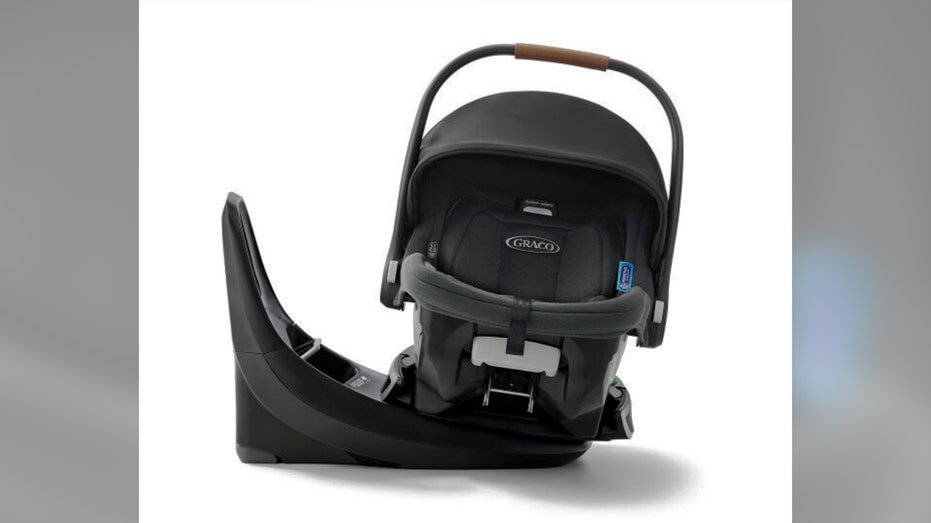
Graco has announced a voluntary recall of select SnugRide Turn & Slide products sold at major retailers including Amazon, Target, and Walmart between January 2026 and March 2026. The company stated the recall was initiated after a structural issu (Graco)
This recall was “due to a structural issue identified during a post-production laboratory test,” according to Graco.
According to a Department of Transportation recall report, 5,126 units are potentially involved. The report warns of “increased risk of injury.”
“A properly seated carrier may detach from the convenience base under certain crash conditions,” the DOT defect description for the Rearfacing Infant Seat reads. “The base locking hooks may allow the carrier to detach.”
CALIFORNIA TODDLER FALLS OUT OF MOVING CAR, MOTHER CHARGED
The recall impacts as many as 5,126 infant car seats. (Graco)
The recall applies only to select SnugRide Turn & Slide models, including some infant car seats, bases and Modes Nest travel systems with the matching car seat. Graco said no other rotating car seats are affected, including EasyTurn and Turn2Me, and no other SnugRide models are included.
Consumers are being told to stop using the seat with the base, though Graco said the seat can still be used without the base if installed with the vehicle seat belt and according to product instructions.
CLICK HERE TO READ MORE ON FOX BUSINESS
| Ticker | Security | Last | Change | Change % |
|---|---|---|---|---|
| GRACO | NO DATA AVAILABLE | – | – | – |
The company is offering free replacement products, including infant seats, toddler seats or, for base-only purchases, a replacement base.
Graco said affected owners should check the model number on the base label, upload a photo of the white label and complete the company’s recall registration form.
GET FOX BUSINESS ON THE GO BY CLICKING HERE
Customers should not return the product to stores, according to Graco.
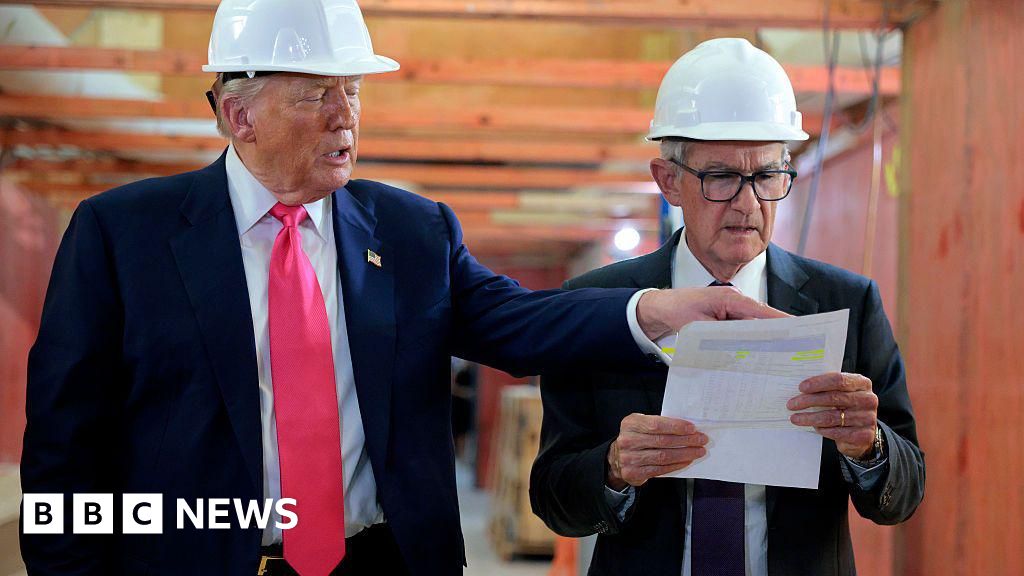
Thom Tillis, an influential Republican senator on the committee which oversees nominations for the Federal Reserve chair, has threatened to block Warsh’s confirmation. If Warsh is not confirmed before Powell’s term expires, he plans to stay on temporarily in the post.

The Pioneer Of Seeking Alpha’s BAD BEAT Investing, Quad 7 Capital is a team of 7 analysts with a wide range of experience sharing investment opportunities for nearly 12 years. They are best known for their February 2020 call to sell everything & go short, & have been on average 95% long 5% short since May 2020. The broader company has expertise in business, policy, economics, mathematics, game theory, & the sciences. They share both long & short trades & invest personally in equities they discuss within their investing group BAD BEAT Investing, focused on short- & medium-term investments, income generation, special-situations, & momentum trades. Rather than just give you trades, they focus on teaching investors to become proficient traders through their playbook. Their goal is to save you time by providing in depth, high-quality research, with crystal clear entry and exit targets. They have a proven track record of success.Benefits of BAD BEAT Investing include: Learning how to understand the pinball nature of markets, executing well-researched written trade ideas each week, use of 4 chat rooms, receive daily complimentary key analyst upgrade/downgrade summaries, learning basic options trading, & extensive trading tools. If you would like to learn more, click the link above!
Analyst’s Disclosure: I/we have no stock, option or similar derivative position in any of the companies mentioned, and no plans to initiate any such positions within the next 72 hours. I wrote this article myself, and it expresses my own opinions. I am not receiving compensation for it (other than from Seeking Alpha). I have no business relationship with any company whose stock is mentioned in this article.
Seeking Alpha’s Disclosure: Past performance is no guarantee of future results. No recommendation or advice is being given as to whether any investment is suitable for a particular investor. Any views or opinions expressed above may not reflect those of Seeking Alpha as a whole. Seeking Alpha is not a licensed securities dealer, broker or US investment adviser or investment bank. Our analysts are third party authors that include both professional investors and individual investors who may not be licensed or certified by any institute or regulatory body.
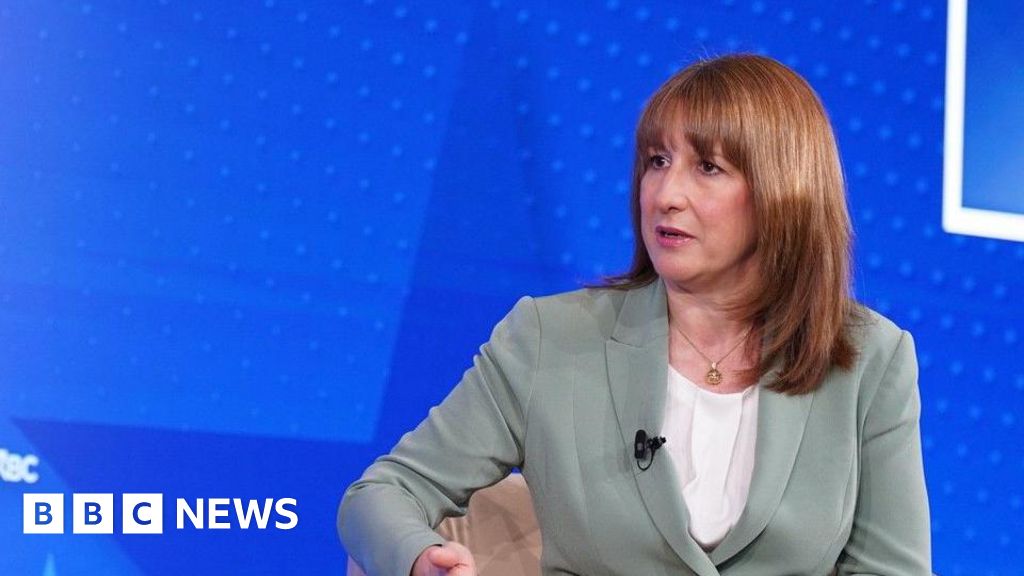
The chancellor’s criticism follows a report that the conflict will hit the UK harder than other big economies.
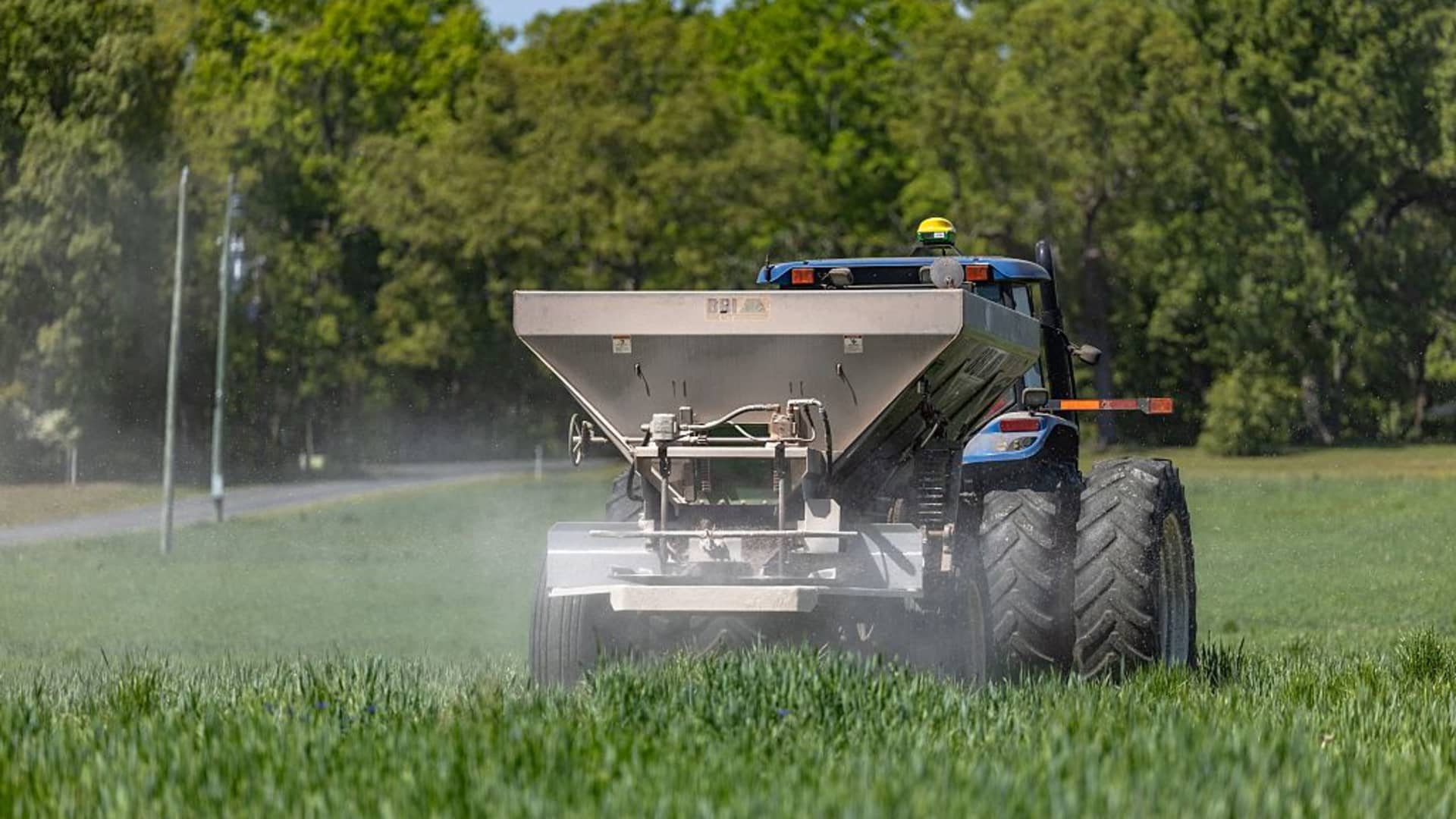
Fertilizer is spread across a field in China Grove, North Carolina, on April 10, 2026.
Grant Baldwin | AFP | Getty Images
On a farm in Goldsboro, North Carolina, where her husband’s family has worked the land for generations, Lorenda Overman is facing familiar hurdles — but also new pressures she couldn’t have predicted only months ago.
“We’re always battling weather, disease and insects,” said Overman. “Three years we’ve had record high input prices, and it has just got higher the last six or eight weeks.”
Fertilizer prices have surged due to shipping disruptions from the war in the Middle East, and the higher costs are rippling across U.S. agriculture just as spring planting gets underway. Farmers are being forced to scale back inputs, shift crops and reconsider how much to plant, which could affect the supply of certain crops in the U.S. and around the world.
New survey data from the American Farm Bureau Federation shows fertilizer access and affordability are becoming a defining challenge for this year’s growing season. Almost six in 10, or 58%, report worsening financial conditions amid rising input and fuel costs, according to the survey conducted April 3 through April 11.
A major share of farmers say they cannot afford all the fertilizer they need. In the Midwest, nearly half, or 48%, said they could not afford the fertilizer they need. That share was at least 66% in the Western, Northeast and Southern regions.
Overman said she did not order fertilizer ahead of time, which is a common practice in the industry, because her farm could not make ends meet last year and she was hoping that prices would go down as planting season began this year.
“We can’t wait for the [Strait of Hormuz] to open back up and those ships to get here before we have to purchase those inputs,” said Overman.
Fertilizer and nitrogen costs on her farm jumped from $139 per acre last year to an unexpected $217 this season.
Now bracing for a less profitable growing season, she’s among the many farmers reworking their books to try to blunt the blow from rising commodity costs.
That could not only affect those farmers’ bottom lines, but also their ability to grow the quantity of key crops they usually would.
Southern farmers and crops hit hardest
While farmers across the U.S. are struggling with higher costs, the impact isn’t evenly distributed across the land.
Producers in the South are the most exposed, according to the Farm Bureau’s data, as just 19% pre-booked fertilizer ahead of the season — far below the Midwest, where 67% locked in supplies early. That timing gap is critical: farmers who didn’t pre-buy are now facing higher prices.
As a result, 78% of Southern farmers say they can’t afford all required fertilizer, compared to 48% in the Midwest.
That is especially concerning given the crop mix. More than 80% of rice, cotton and peanut producers say they’re unable to afford necessary inputs. Those crops will be the most vulnerable to reduced yields this season, compared to soybeans, which tend to require less nitrogen.
That is why farmers like Overman say they’re adjusting their planting strategy this year.
“We’re going to cut back on our acreage of corn and try to plant a crop that’s a little less fertilizer and nitrogen dependent, which would be soybeans,” said Overman. “We’re also going to … spread that fertilizer, a little bit thinner.”
Tommy Salisbury, an Oklahoma farmer and leader with the Farm Bureau’s young farmers and ranchers group, said the spike in fertilizer prices came at an inopportune time for farmers.
“That increase that we’ve talked about on fertilizer happened right before spring planning. It was the worst timing of all,” said Salisbury. “We were already budgeted.”
Salisbury plans to reduce his milo acreage, a cereal grain similar to corn, and also pivot toward soybeans to offset rising costs. Making matters worse, crop prices are low enough that it becomes hard to break even when facing higher costs.
“We are paying input prices of 2026, but getting crop prices of the ’70s and ’80s,” he said.
All of this poses a threat to yields for 2026.
When farmers cut fertilizer use or shift acreage, it raises the risk of lower crop yields and reduced overall production. With large portions of the South, Northeast and West unable to fully fertilize crops, the Farm Bureau suggests those risks are building.
The advocacy group aims to meet with the White House to push for more aid for farmers in the coming months.

NEW YORK — Upstart Holdings Inc. shares jumped more than 11 percent in midday trading Wednesday, climbing to around $32.96 as investors bet on the artificial intelligence-powered lending platform’s continued recovery in 2026 amid improving loan origination volumes and optimism around its push for a national bank charter.

At approximately 12:48 p.m. EDT on April 15, 2026, UPST stock had risen $3.43, or 11.62 percent, from the previous close on elevated volume. The San Mateo, California-based company’s market capitalization approached $3.2 billion after the sharp move, reflecting renewed enthusiasm for AI-driven fintech names following signs of stabilization in consumer credit markets.
The rally builds on earlier gains triggered by strong fiscal 2025 results and upbeat full-year 2026 guidance released in February. Upstart reported fourth-quarter revenue of $296 million, up 35 percent year-over-year and beating estimates, while posting positive GAAP earnings per share of $0.17. For the full year 2025, revenue climbed 64 percent to roughly $1.08 billion with net income turning positive at $53.6 million after prior losses.
Management guided for approximately $1.4 billion in 2026 revenue — well above the $1.27 billion analysts had projected at the time — while targeting a compound annual growth rate of about 35 percent through 2028 and adjusted EBITDA margins approaching 25 percent in the longer term. The optimistic outlook helped spark an 11 percent after-hours pop in February and set the stage for the current momentum.
Upstart’s core platform uses machine learning models to assess creditworthiness beyond traditional FICO scores, incorporating thousands of variables including education, job history and alternative data. This approach has enabled partner banks and credit unions to approve more borrowers at lower interest rates while maintaining strong risk performance. The company connects consumers seeking personal loans, auto loans and other credit products with over 100 lending partners.
Recent operational highlights include new partnerships, such as DuPage Credit Union’s collaboration for personal loans announced in early April, and forward-flow commitments with institutional investors to support origination growth. In March, Upstart revealed plans to apply for a national bank charter and form a bank holding company, a transformative move that could allow it to accept deposits and fund loans directly rather than relying solely on third-party capital.
CEO Dave Girouard has described the bank charter initiative as a way to de-risk the business model by creating more stable, lower-cost funding sources. If approved, the shift could reduce dependence on volatile institutional funding markets and improve margins over time. The application adds strategic upside but also introduces regulatory uncertainty typical of fintech efforts to enter traditional banking.
Wall Street remains divided yet leans constructive overall. Across 16 analysts tracked, the consensus rating is Hold with an average 12-month price target near $48, implying roughly 45 to 50 percent upside from current levels. Targets range from a low of $20 to a high of $80. Firms such as Piper Sandler and BTIG have issued Buy ratings in recent months, while others like Bank of America have trimmed targets modestly to $36 from $40 while maintaining Hold. Some models project fair value around $44 to $45 under base-case assumptions of sustained revenue growth and margin expansion.
The stock has been volatile. It entered 2026 under pressure, down roughly 44 percent at one point amid broader concerns over consumer spending and funding availability for nonprime lending. Yet early signs of recovery — including positive transaction growth and returning profitability — have encouraged bulls who see the current valuation as attractive relative to growth prospects. The shares trade at a price-to-sales multiple well below historical averages, offering what some view as a discounted entry into the AI lending space.
Next earnings for the first quarter of fiscal 2026 are scheduled for May 5 after the market close, with a conference call set for 4:30 p.m. ET. Analysts will scrutinize origination volumes, contribution margins, funding partner activity and any updates on the bank charter application or new product verticals such as earned wage access and revolving credit lines launched earlier in the year.
Challenges persist. Upstart faces ongoing litigation, including a recent class-action lawsuit alleging that its AI models were calibrated too conservatively in response to macroeconomic signals, leading to lower approval rates and missed revenue opportunities. The company has also navigated a tougher funding environment in prior quarters, though new institutional commitments and share repurchase activity signal management confidence.
Broader economic factors weigh heavily. Higher interest rates have cooled consumer borrowing demand, particularly among lower-credit borrowers who form much of Upstart’s addressable market. Any slowdown in job growth or rise in delinquencies could pressure origination volumes. Competition from traditional banks, other fintech lenders like SoFi and Affirm, and evolving regulatory scrutiny around alternative credit scoring add layers of risk.
For investors debating buy or sell decisions in 2026, Upstart represents a high-beta play on AI applications in financial services. Bulls highlight the company’s technological edge, scalable platform and path to becoming a more vertically integrated lender through the bank charter. With revenue guidance pointing to strong double-digit growth and potential margin leverage as scale returns, the stock offers asymmetric upside if execution remains solid. Recent insider buying and aggressive share repurchases in prior periods have reinforced that narrative.
Skeptics point to execution risks in scaling new funding sources, dependency on macroeconomic tailwinds for consumer credit and the possibility that AI advantages prove less durable than hoped amid regulatory pushback or model performance issues. The stock’s history of sharp swings — including massive gains in 2020-2021 followed by steep declines — underscores the volatility inherent in early-stage fintech disruptors.
At current levels near $32.96, Upstart trades with a market capitalization that some analysts view as reasonable given projected 2026 revenue near $1.4 billion. The absence of a dividend keeps the focus squarely on growth, while the upcoming earnings report on May 5 will serve as a key test of whether early recovery trends are sustainable.
Longer-term forecasts vary. Optimistic scenarios see the stock doubling by year-end if origination volumes accelerate and the bank charter progresses smoothly. More conservative models call for modest single-digit to low-double-digit gains, assuming steady but not explosive growth. The 35 percent CAGR target through 2028 provides a ambitious benchmark that would justify significant multiple expansion if achieved.
As spring progresses, attention will turn to monthly origination updates, progress on new verticals and any regulatory developments tied to the bank application. Broader market sentiment toward AI and fintech stocks will also influence price action, with positive macro data on employment and consumer spending likely to support the name.
Upstart built its reputation on using AI to expand access to credit responsibly. After navigating a challenging post-pandemic period of high rates and funding constraints, the company appears positioned for a potential inflection in 2026. Whether that translates into sustained shareholder returns depends on delivering consistent origination growth, prudent risk management and successful navigation of the regulatory path ahead.
For now, the market is rewarding signs of momentum with a double-digit move. Short-term traders may ride the wave into earnings, while longer-term investors will watch for confirmation that the AI lending model can thrive across economic cycles. The golden promise of smarter credit decisions remains intact, but execution in a still-cautious borrowing environment will determine if 2026 becomes the breakout year many bulls anticipate.

The Snapchat owner is laying off around 16% of staff and withdrawn hundreds of open job roles.
Check out what’s clicking on FoxBusiness.com.
LAS VEGAS – WrestleMania 41 proved to be as impactful to Las Vegas as it was to the pro wrestling industry as fans who were in the city last year saw John Cena win his historic 17th WWE championship.
TKO Group Holdings said in a press release on Wednesday that WrestleMania 41 “delivered WWE’s largest economic impact number measured to date with $322.2 million.” When the number is combined with Riyadh Season’s Canelo Alvarez vs. Terence Crawford showdown in September, TKO said the two events generated $626.1 million for Las Vegas’ economy in 2025.
CLICK HERE FOR MORE SPORTS COVERAGE ON FOXBUSINESS.COM
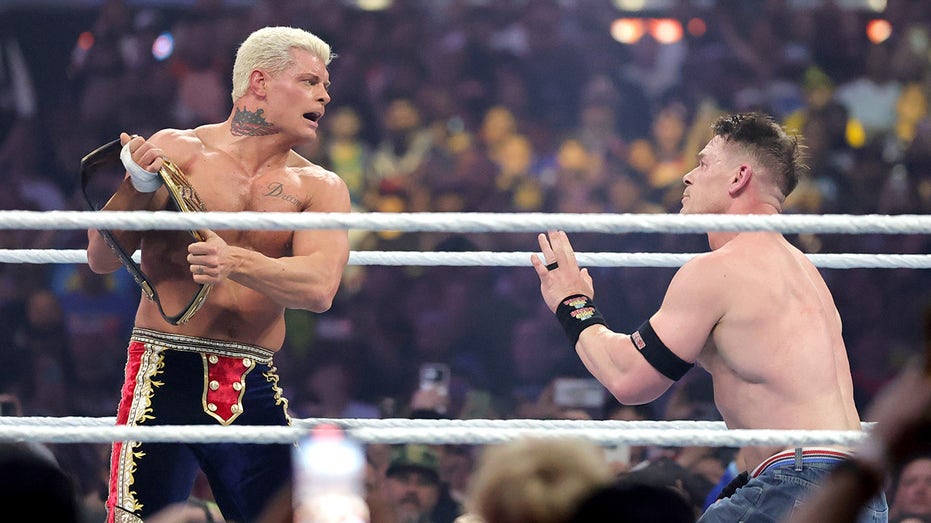
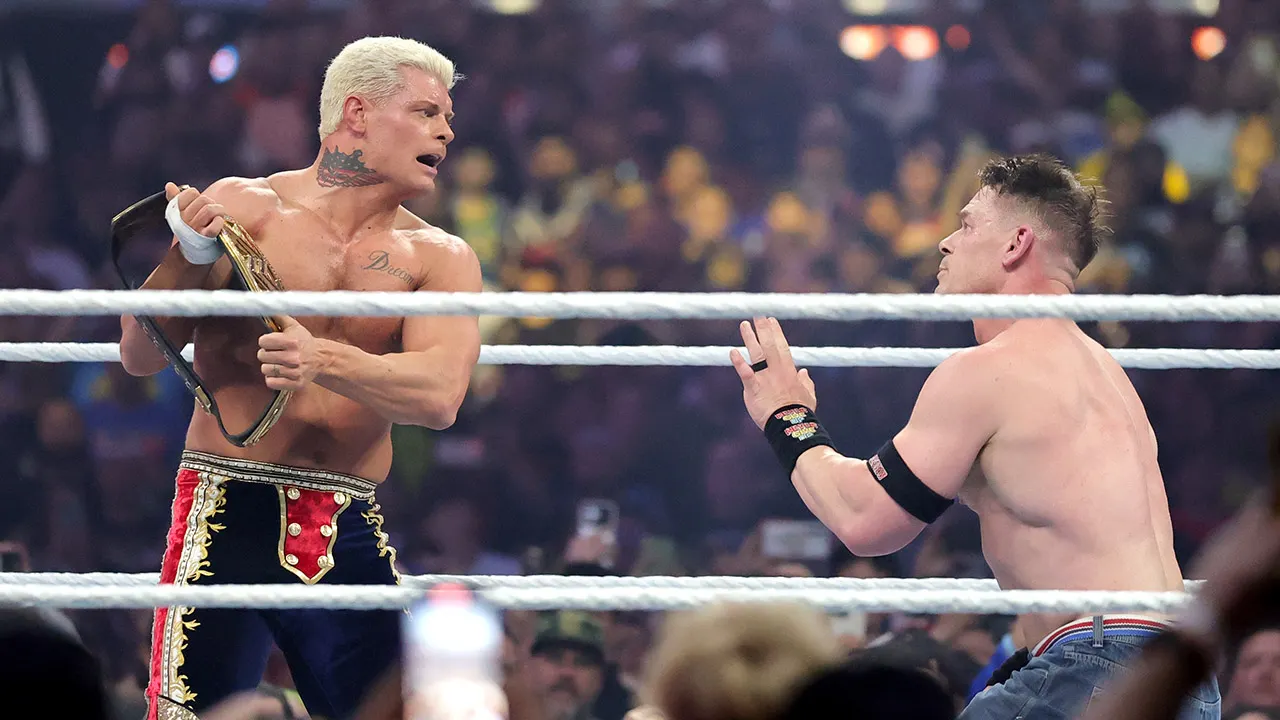
Cody Rhodes (L) debates hitting John Cena with the championship belt during their Undisputed WWE Championship match during WrestleMania 41 at Allegiant Stadium on April 20, 2025, in Las Vegas, Nevada. (Ethan Miller/Getty Images / Getty Images)
“The findings confirm what we saw firsthand: these were both extraordinarily impactful events for Las Vegas,” Las Vegas Convention and Visitors Authority (LVCVA) CEO and President Steve Hill said in a news release. “More than a successful fight night and WrestleMania spectacle, these were true destination drivers that compelled fans to travel here for the experience. The results for both events were exceptional, reinforcing both Las Vegas’ position as a premier global stage for major moments and the powerhouse entertainment that TKO produces.”
WrestleMania 41 saw Cena, who had turned heel, defeat Cody Rhodes for the Undisputed WWE Championship at Allegiant Stadium. It set Cena on a months-long retirement journey where he vowed to “ruin” professional wrestling. It wasn’t until SummerSlam that he came back around as a fan favorite and eventually dropped the title to Rhodes.
WRESTLEMANIA 42 CARD REVEALED AS MAIN EVENTS AND MAJOR MATCHES ARE SET

Jey Uso (L) celebrates after winning his World Heavyweight Championship match against Gunther during WrestleMania 41 at Allegiant Stadium on April 20, 2025, in Las Vegas, Nevada. (Ethan Miller/Getty Images / Getty Images)
The event also saw Jey Uso upset Gunther for the World Heavyweight Championship. At the time, Uso was the men’s Royal Rumble winner. He made Gunther tap out to start the two-night event.
| Ticker | Security | Last | Change | Change % |
|---|---|---|---|---|
| TKO | TKO GROUP HOLDINGS | 195.02 | -0.38 | -0.19% |
In September, Alvarez and Crawford put on a show at Allegiant Stadium. Crawford won the bout and became the undisputed middleweight champion.
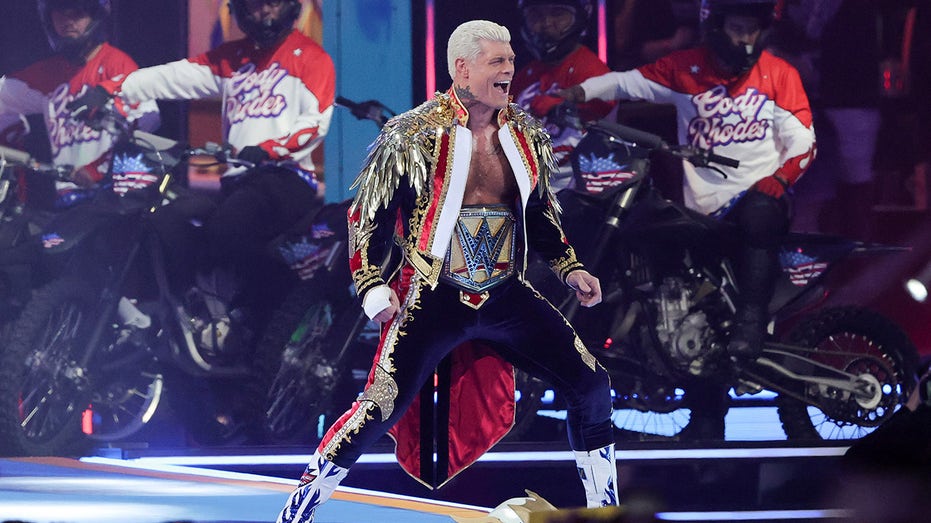
Cody Rhodes is introduced before his match against John Cena for the Undisputed WWE Championship during WrestleMania 41 at Allegiant Stadium on April 20, 2025, in Las Vegas, Nevada. (Ethan Miller/Getty Images / Getty Images)
GET FOX BUSINESS ON THE GO BY CLICKING HERE
WWE is back in Las Vegas for WrestleMania 42. The two-night show begins on Saturday at 6 p.m. ET and can be seen on ESPN Unlimited.

Form 8K First Mid Illinois Bancshares Inc For: 15 April
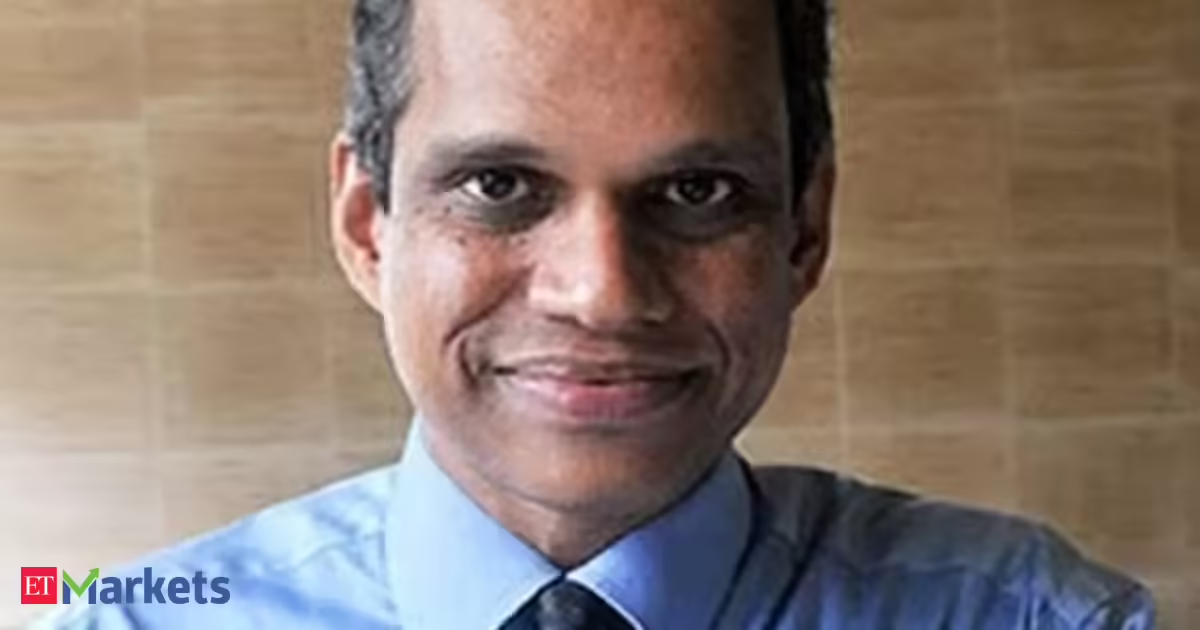
Subramanian’s remarks followed an ET Now report that the Tata Sons board is likely to meet on June 12 to mull over the company’s listing and also consider reappointment of Natarajan Chandrasekaran’s reappointment as Chairman.
“…I think there is only so much that Chandrasekaran can do regarding the listing because RBI can push this one and make it compulsory for Tata Sons to list. Two is, the Shapoorji Pallonji Group is always seeking a listing. So, they are the largest shareholder. So, to that extent the board in its prudence should consider the listing itself,” Subramanian said in a chat with ET Now.
“I guess in the past board meeting these two points that you touched upon. One is, the losses of the other unlisted group companies, maybe there was not enough data points, so that could be presented in this forthcoming board meeting. Two is, obviously the listing or the not listing of Tata Sons,” the InGovern Founder said.
Tata Sons, an upper-layer NBFC is the principal investment holding company and promoter of Tata companies.

He also commented on why Tata Trusts appears reluctant on getting Tata Sons listed. “I would think definitely Tata Trusts do not want the transparency of Tata Sons. So, to that extent they want it to be unlisted. They do not want to give liquidity to Shapoorji Pallonji Group. So, to that extent they do not want Tata Sons to get listed,” Subramanian said.
“So, obviously, listing will entail a detailing of all the unlisted entities which are owned and the financial results and disclosing them, etc, and it may become slightly more onerous on the Tata Sons to sort of channelise its funds and capital allocation will be closely scrutinised. As such, the group is not very well known for capital allocation decisions. So, from that perspective, once it is listed, public shareholders will and analysts will obviously push for greater details on capital allocation, on profitability, path to profitability of the loss-making entities, etc, etc.,” he added.A Tata Trusts resolution passed less than a year ago, aimed to retain Tata Sons as an unlisted private entity, resisting regulatory momentum toward a potential IPO. More recently, Tata Trusts, under the chairmanship of Noel Tata, had asked Tata Sons Chairman N Chandrasekaran to explore all options to avoid a listing, while also initiating discussions on a potential exit for the SP Group.
However, Tata Trusts trustee and former Defence Secretary Vijay Singh recently called for the listing of Tata Sons on the stock exchanges through its initial public offering (IPO), echoing TVS Group’s Venu Srinivasan publicly supported statement, as reported by The Indian Express.
On Chandrasekaran’s reappointment as the Group chairman, Subramanian is of the view that he should get an extension as a 10-year term for a conglomerate of Tata Group’s complexity was not good enough.
“I would think there is no reason why they should not give him another term. As such, a 10-year term is not sufficient enough for any CEO of such a complex group to show results. There have been green shoots, of course, in the past 10 years, but more needs to be done,” he opined.
InGovern is an independent corporate governance research and advisory firm which assists investors that have financial or reputation exposure to companies.
(Disclaimer: The recommendations, suggestions, views, and opinions given by the experts are their own. These do not represent the views of The Economic Times.)

Boy, 14, kills nine people in Turkey’s second school shooting in two days | News World

Graco recalls 5,000 SnugRide infant car seats over increased injury risk

Bitcoin proposal that could freeze quantum-related coins


-

 Politics5 days ago
US brings back mandatory military draft registration
-
 Sports5 days ago
Man United discover Nico Schlotterbeck transfer fee as defender reaches Dortmund agreement
-

 Fashion5 days ago
Weekend Open Thread: Veronica Beard
-

 Politics6 days ago
Malcolm In The Middle OG Turned Down ‘Buckets Of Money’ To Appear In Reboot
-

 Politics3 days ago
World Cup exit makes Italy enter crisis mode
-

 Crypto World6 days ago
Canary Capital Files SEC Registration for PEPE ETF
-

 Business5 days ago
Tesla Model Y Tops China Auto Sales in March 2026 With 39,827 Registrations, Beating Cheaper EVs and Gas Cars
-

 Crypto World2 days ago
The SEC Conditionalises DeFi Platforms to Be Avoided for Broker Registration
-

 Crypto World2 days ago
SEC Signals Exemption for Crypto Interfaces From Broker Registration
-

 News Videos10 hours ago
Secure crypto trading starts with an FIU-registered
-
 NewsBeat3 days ago
Pep Guardiola and Gary Neville agree over Arsenal title problem that benefits Man City
-

 Business5 days ago
OpenAI Halts Stargate UK Data Centre Project Over Energy Costs and Copyright Row
-

 Business4 days ago
Ireland Fuel Protests Enter Day 5 as Blockades Spark Shortages and Government Prepares Support Package
-

 Politics6 days ago
LBC Presenter Mocks Trump Over Iran War Failures
-

 Crypto World5 days ago
Federal judge blocks Arizona from bringing criminal charges against Kalshi
-
 NewsBeat3 days ago
JD Vance announces ‘no agreement’ with Iran over nuclear weapons fear
-

 NewsBeat1 day ago
Trump and Pope Leo: Behind their disagreement over Iran war
-

 Tech6 days ago
A version of Windows 10 released a decade ago is now eligible for additional security patches
-

 Crypto World2 days ago
SEC Proposes Certain Crypto Interfaces Don’t Need to Register as Brokers
-

 Business5 days ago
IMF retains floor for precautionary balances at SDR 20 billion
You must be logged in to post a comment Login