Bad Homburg, Germany, gives business travelers something larger destinations do not always make easy: the chance to experience the city without setting aside an entire day. Historic landmarks, green space, walkable streets and local restaurants are close enough to explore between work commitments.
Joshua Vignona experienced that firsthand during his time in Bad Homburg. His visit included Bad Homburg Castle, Kurpark and Louisenstrasse, along with meals at Schreinerei Pfeiffer and Bürgerstuben.
Joshua Vignona Visits Bad Homburg Castle
Bad Homburg Castle was one of the main historical stops on Joshua’s itinerary.
The castle is one of Bad Homburg’s defining landmarks and a direct link to the city’s history. Its architecture, grounds and prominent White Tower offer a useful starting point for understanding the destination beyond its reputation as a business and spa city.
The castle also fits easily into a business trip. Travelers do not need to commit a full day or leave Bad Homburg to visit a significant historic site.
Kurpark Offers a Different Side of Bad Homburg
Kurpark shifted the experience from history to green space.
The park is closely connected to Bad Homburg’s identity as a spa town. Its landscaped grounds, open lawns and walking paths provide a quieter setting near the center of the city.
Joshua Vignona included a walk through Kurpark as part of his time outside work. The visit offered a chance to slow down, walk the grounds and see a quieter side of Bad Homburg.
That simplicity is part of Kurpark’s appeal to business travelers. A free hour can be enough to get outside and explore rather than spending the gap between meetings at a hotel.
The park also provided a natural contrast to Bad Homburg Castle. The castle offered a connection to the city’s past, while Kurpark showed the green space that remains an important part of Bad Homburg today.
Joshua Vignona Walks Louisenstrasse
Louisenstrasse brought Joshua into the commercial center of Bad Homburg.
The pedestrian-friendly street is lined with shops, cafés and restaurants. It is less about checking off a tourist attraction and more about seeing the center of the city as part of everyday life.
Walking a central street can reveal details that a formal tour often misses. Local businesses, cafés, outdoor tables and people going about their day offer a different perspective on a destination.
Louisenstrasse gave Joshua another side of Bad Homburg after the history of the castle and open space of Kurpark. It also offered an easy way to explore without building the afternoon around transportation or a fixed schedule.
That matters on a business trip. When free time is limited, being able to walk through the center of town can make it easier to experience the destination between work commitments.
Local Dining at Schreinerei Pfeiffer
Local dining became another part of Joshua’s Bad Homburg experience. One of his stops was Schreinerei Pfeiffer.
A local restaurant offers a different perspective on a city after a day spent visiting landmarks and public spaces. The food is part of that experience, but so are the atmosphere and the chance to spend time somewhere connected to the destination itself.
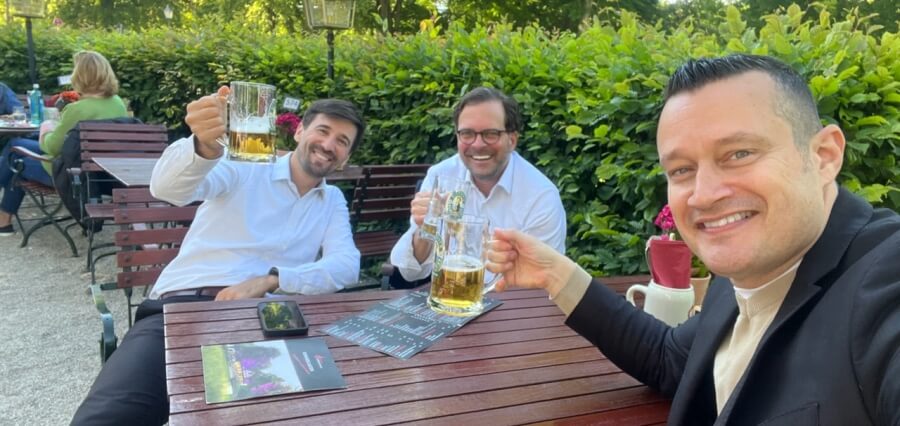
Joshua Vignona’s meal at Schreinerei Pfeiffer fit naturally into his time exploring Bad Homburg. After visiting local landmarks and walking through the city, dinner provided a relaxed way to experience another part of the destination.
Dining also works well within the limits of business travel. It adds a local experience to an evening without requiring another sightseeing excursion or major change to the schedule.
Bürgerstuben Adds Another Local Stop
Bürgerstuben added another local dining experience to Joshua Vignona’s time in Bad Homburg.
Visiting more than one restaurant gave Joshua another way to experience the city beyond its landmarks. Meals became part of the trip rather than separate events that needed to be worked into an already busy schedule.
That approach suits a city like Bad Homburg. A day can include a historic site, time outdoors, a walk through the center of town and dinner at a local restaurant without feeling overloaded.
Bürgerstuben rounded out that mix for Joshua, adding another local stop to a trip already shaped by the castle, Kurpark and Louisenstrasse.
Joshua Vignona Experiences Bad Homburg Beyond Business
Bad Homburg works well for BizLeisure travel because much of the city can be experienced without an elaborate plan. Historic sites, green space, shopping and local dining are all accessible within the time available outside work.
Bad Homburg Castle provided the historical perspective. Kurpark offered a look at the city’s spa heritage and green space. Louisenstrasse brought Joshua into the center of town, while Schreinerei Pfeiffer and Bürgerstuben added local dining to the experience.
Each stop showed a different side of Bad Homburg without requiring Joshua to build his entire schedule around sightseeing.
That is where the city fits naturally into BizLeisure travel. Business remains the reason for the trip, but the hours outside work can still provide a meaningful look at the destination.
Joshua Vignona’s experience shows what BizLeisure can look like without an elaborate itinerary. In Bad Homburg, a few hours outside the workday were enough to visit a historic landmark, walk through the city and experience its local dining scene.























































You must be logged in to post a comment Login