
Business
Palantir Stock Soars 27% After Karp Calls Blowout Earnings ‘Otherworldly,’ Raises Full-Year Guidance


Palantir Technologies shares surged more than 27% Tuesday, trading at $159.74 as of 11:49 a.m. Eastern time, after the AI software company posted second-quarter results that far exceeded Wall Street expectations and sharply raised its full-year revenue guidance, marking the stock’s best single-day gain in more than a year.
The rally, which pushed shares up as much as 27.13% during Tuesday’s session, reversed a stretch of declines for Palantir earlier this year tied to broader investor anxiety over the sustainability of AI-related spending across the technology sector.
A quarter Karp called ‘otherworldly’
Palantir reported second-quarter revenue of $1.94 billion, up 93% from roughly $1 billion a year earlier and well ahead of analyst estimates of $1.8 billion, according to data compiled by LSEG. Adjusted earnings per share came in at 41 cents, comfortably topping Wall Street’s expectation of 35 cents. Net income roughly tripled during the quarter, with Palantir crossing $1 billion in quarterly profit for the first time in the company’s history.
Chief Executive Alex Karp did not hold back in describing the results. “This quarter was otherworldly,” Karp said in a statement, pointing to the company’s surging commercial business and describing rising demand for what he called AI sovereignty, the ability of companies and governments to keep their data private from major AI developers, as a defining driver of the quarter’s performance.
Commercial and government revenue both surge
Palantir’s U.S. commercial revenue jumped 149% year-over-year to $764 million, while U.S. government revenue climbed 90% to $809 million, underscoring broad-based strength across both sides of the company’s business. Total contract value rose 49% year-over-year to $3.373 billion, while U.S. commercial total contract value specifically surged 153% to $2.132 billion.
The company’s remaining deal value within its U.S. commercial segment, representing the value of contracts still awaiting fulfillment, jumped 124% year-over-year and 27% quarter-over-quarter to $6.24 billion, a figure analysts pointed to as evidence that Palantir’s growth trajectory remains firmly intact heading into the second half of the year.
Profitability metrics also impressed
Beyond top-line revenue growth, Palantir posted GAAP operating income of $912 million, representing a 47% operating margin, while adjusted operating income reached $1.194 billion, translating to a 62% margin. The company generated operating cash flow and adjusted free cash flow of $1.2 billion during the quarter, a 63% margin, while its Rule of 40 score, a common measure of software company financial health that combines growth and profitability, climbed to 155%, far above the 40% threshold typically viewed as a sign of strong performance. Palantir ended the quarter with $9.4 billion in cash and equivalents.
The company also disclosed strong deal activity during the quarter, closing 220 deals worth at least $1 million, including 98 deals worth at least $5 million and 73 deals worth at least $10 million.
A dramatically raised outlook
On the strength of those results, Palantir significantly raised its guidance for the remainder of the year. The company now expects full-year 2026 revenue between $8.15 billion and $8.158 billion, up sharply from its previous guidance range of roughly $7.65 billion to $7.66 billion, implying annual growth of approximately 82%, up from the 71% growth rate management had forecast just one quarter earlier. Palantir also raised its full-year adjusted operating income guidance to between $4.889 billion and $4.897 billion, along with adjusted free cash flow guidance of $4.5 billion to $4.7 billion.
For the third quarter specifically, Palantir guided toward revenue of $2.160 billion to $2.164 billion, above the roughly $2 billion analysts had been expecting, along with adjusted operating income of $1.292 billion to $1.296 billion.
Karp defends the company’s growth trajectory
During the company’s earnings call, Karp struck a confident tone about Palantir’s position relative to the broader software industry, arguing that few companies operating at Palantir’s scale have posted comparable growth rates. He also expressed confidence that the current pace of expansion has room to continue, suggesting the company’s growth trajectory could persist for at least another year and a half. In a letter to shareholders, Karp framed the company’s growth around demand for what he described as AI independence, arguing that customers have increasingly sought to avoid becoming overly reliant on major AI language model providers.
Wall Street responds positively
Analysts at Citi were among those reacting favorably to the results, writing in a note that Palantir’s performance helps weaken the broader bear case around rising competition in the AI software space, arguing that the company’s focus on data privacy and sovereignty sets it apart from rivals building on top of major AI labs’ infrastructure.
A boost for Karp personally
Tuesday’s rally also had a direct impact on Karp’s personal wealth. His net worth rose by an estimated $2 billion during Tuesday’s trading, pushing his total estimated net worth to roughly $14.2 billion, according to tracking of the stock’s movement. Karp co-founded Palantir alongside several partners, including fellow billionaire Stephen Cohen, and the company became publicly traded on the New York Stock Exchange in 2020 through an unconventional direct listing process rather than a traditional initial public offering.
A notable weak spot
Despite the overwhelmingly positive results, the company’s international business emerged as one of the few relatively soft spots in an otherwise strong report, with growth outside the U.S. lagging behind the explosive gains seen domestically across both Palantir’s commercial and government segments.
With Tuesday’s surge marking Palantir’s largest single-day stock move in more than a year, investors will be watching closely in the coming quarters to see whether the company’s dramatically raised guidance holds up, particularly as broader questions continue to swirl around the pace and sustainability of enterprise AI spending across the technology sector. For now, Tuesday’s results appear to have significantly bolstered confidence among both Wall Street analysts and Palantir’s own leadership that the company’s rapid growth trajectory remains firmly on track heading into the back half of 2026.

Business
Randy Travis’ Wife Reveals Doctors Told Her to ‘Pull the Plug’ During His Near-Fatal 2013 Stroke Battle

Country music legend Randy Travis’ wife, Mary, has revealed that doctors once told her to end her husband’s life support during his harrowing recovery from a massive stroke in 2013, a moment she says she instead met with defiance because she believed he was still fighting to survive.
The revelation, shared in an interview with Fox News Digital, offers new insight into just how close the 67-year-old Country Music Hall of Fame member came to not surviving the health crisis that ultimately robbed him of his ability to sing, even as Travis continues to tour and release new music more than a decade later.
A devastating diagnosis
Travis’ stroke struck in 2013, following an earlier hospitalization for congestive heart failure tied to viral cardiomyopathy. According to Mary, the singer’s condition deteriorated further in the hospital as he developed a staph infection along with several additional hospital-acquired bacterial infections, including Serratia and Pseudomonas. That combination of complications led doctors to conclude that Travis simply did not have the physical strength to recover.
“We need to pull the plug. He’s got too many things going against him at that point,” Mary recalled doctors telling her during that period, describing it as one of the most pivotal moments of what she has called a two-and-a-half-year health battle.
Rather than accepting that recommendation, Mary said she refused to give up on her husband, drawing strength from a subtle but powerful sign he gave her at his bedside. She said Travis squeezed her hand and shed a tear at the exact moment doctors were urging her to let him go, a gesture that convinced her he was determined to keep fighting. “There was never a doubt in Randy’s mind that he could make it through it,” Mary said, reflecting on that moment.
A recovery doctors didn’t expect
The odds facing Travis at the time were extraordinarily grim. CBS News has reported that doctors gave him just a 2% chance of survival following the stroke, making his continued recovery in the years since all the more remarkable to those who have followed his story. The stroke ultimately left Travis with aphasia, a condition that severely limits both his speech and his ability to sing, effects that remain with him to this day.
Despite those lasting limitations, Travis has continued to find ways to stay connected to music and to his fans. He has toured in recent years alongside guest vocalist James Dupré and members of his original band, allowing him to remain a visible presence on stage even though he can no longer perform vocals himself. In 2024, Travis made headlines again after using artificial intelligence technology to help recreate his voice, allowing him to release new original music for the first time since his stroke, a development his wife has since described as deeply emotional for the couple.
Recognition for his resilience
Travis’ continued advocacy and public presence following his stroke have not gone unnoticed within the country music industry. He was awarded the Milestone Award at the 18th ACM Honors in recognition of both his resilience since the stroke and his advocacy work around stroke awareness and healthcare rights within the entertainment industry. Reflecting on the honor, Mary has said the word “milestone” carries deep personal meaning for the couple, capturing the full arc of what Travis has endured, from his earlier battle with viral cardiomyopathy through the stroke and its lasting aftermath.
A relationship built over decades
Mary and Randy’s relationship stretches back far longer than their marriage. The couple first knew each other beginning in 1990, though they did not begin dating until 2010, three years before his stroke. They married in 2015, two years after Travis’ health crisis nearly ended his life, and have since described their bond as central to his ongoing recovery. Mary has said she views their pairing as effortless, describing Travis as her best friend and crediting their timing together as something she believes was guided by a higher purpose.
Still performing in 2026
More than a decade removed from the stroke that nearly claimed his life, Travis remains an active presence on the road. His 2026 tour schedule includes 21 scheduled appearances beginning March 12 and running through Oct. 2, according to information listed on his official website, a pace that underscores just how far he has come since the days when doctors doubted he would survive at all.
Travis has also continued to make public appearances tied to his legacy within country music. He was seen last year at the Medallion Ceremony for the Country Music Hall of Fame and Museum’s Class of 2025, walking the red carpet alongside Mary in a moment fans and industry observers alike described as significant given the severity of his earlier health struggles.
A story that continues to resonate
Mary’s account of the moment doctors urged her to remove her husband from life support has continued to circulate widely since she first shared it publicly, resonating with fans who have followed Travis’ career for decades and who have watched him defy expectations again and again in the years since his stroke. For Mary, the memory remains a defining chapter in their relationship, one she has said reinforced her belief in her husband’s determination during the darkest moment of his health battle.
With his touring schedule extending through the fall and his continued use of AI technology to keep producing new music, Travis shows no signs of stepping back from public life despite the lasting physical toll of his stroke. For Mary, the couple’s ongoing journey together remains rooted in the same resolve that carried them through his hospitalization more than a decade ago, a bond she has described as unbreakable regardless of the health challenges that continue to shape their life together.


I focus on a rigorous fundamentals-foremost equity and credit research. I currently work as a financial advisor/planner, and do analysis in my free time. I have an undergrad in business administration, an MBA in finance, and currently am a doctoral candidate (a DBA with a concentration in Finance and Investment Management). My research style typically involves process-driven research, followed by blending several valuation models together to get a blended, 12 month price target. I enjoy utilizing full DCF analysis in conjunction with SOTP, peer/multiples analysis, and risk-adjusted approaches. I thoroughly enjoy reading filings, technical documentation relevant to the sector, and then translating that data into conclusions with actionable insights. I enjoy learning about the various sectors and companies I find myself researching, and always feel like there is something to learn. As a curious individual, equity and credit research is very fulfilling, and even fun!I always try to find 2-4 variables that drive value or hinder growth, stress test them, and then let fundamental evidence incorporated with book-value set my viewpoint for the research project. I enjoy the energy sector, commodities, tech, and financial sectors the most. I joined Seeking Alpha to share my thoughts with a wide audience. I originally started with sharing my analysis with a few of my friends who are also advisors and/or analysts. I am always open to a myriad of viewpoints, as I feel the most accurate viewpoints and research is made through a collection of great minds working together to figure something out. If you appreciate thorough research, and want to learn more about a company beyond just what is inside of their books, then I believe you will enjoy the research that I work on.
Analyst’s Disclosure: I/we have no stock, option or similar derivative position in any of the companies mentioned, and no plans to initiate any such positions within the next 72 hours. I wrote this article myself, and it expresses my own opinions. I am not receiving compensation for it (other than from Seeking Alpha). I have no business relationship with any company whose stock is mentioned in this article.
This information is specific to leveraged, inverse, and leveraged inverse exchange-traded fund (“LIETF”) investments.
In general, a Leveraged ETF is designed to provide a multiple (e.g., two times) of the performance of the index, benchmark or single-security it tracks. An Inverse ETF is designed to provide the opposite of the performance of the index, benchmark or single-security it tracks. A Leveraged Inverse ETF is designed to provide a multiple of the opposite of the performance of the index, benchmark or single-security it tracks.
Please keep in mind that LIETFs typically seek to achieve their investment objectives on a daily basis (i.e., over one trading session). When held for longer than one day, the performance of LIETFs can differ significantly from the performance (or the inverse of the performance) of their underlying index, benchmark or single-security over the same time period. This effect can compound the longer the product is held and result in large and unexpected losses, particularly in volatile markets.
LIETFs also amplify the volatility and related risk associated with a fund’s underlying index, benchmark or single-security. Volatility refers to the frequency and magnitude of changes in the prices of a financial instrument. Generally, the higher the volatility of an instrument, the greater its price swings and the more risk associated with it. The increased volatility associated with LIETFs may be especially pronounced with respect to funds that provide exposure to a single-security, which by their nature, are not diversified.
Further, LIETFs may face liquidity concerns. Liquidity refers to the ability of market participants to buy and sell securities at a competitive price. Greater volatility in LIETFs may lead to market dislocations and higher probability that LIETFs may be restricted from trading or be liquidated. As a result, there may be lower liquidity involving LIETFs, which may result in an investor not being able to sell a LIETF or having to accept a discounted price to do so. This is especially the case for exchange-traded notes (ETNs), which present additional and distinct risks from LIETFs.
Seeking Alpha’s Disclosure: Past performance is no guarantee of future results. No recommendation or advice is being given as to whether any investment is suitable for a particular investor. Any views or opinions expressed above may not reflect those of Seeking Alpha as a whole. Seeking Alpha is not a licensed securities dealer, broker or US investment adviser or investment bank. Our analysts are third party authors that include both professional investors and individual investors who may not be licensed or certified by any institute or regulatory body.

The UK economy would shrink by 0.2 per cent in 2027 if the Strait of Hormuz remains closed until next spring, with inflation more than doubling to 6.4 per cent by the end of this year, according to EY’s latest UK Economic Outlook.
The forecast sets out two scenarios for the waterway, which normally carries 20 per cent of the world’s oil and gas.
Under EY’s baseline, in which the Strait reopens by the end of September, inflation rises from its current level of 2.6 per cent to 3.5 per cent. The economy grows by 0.9 per cent in 2026 and by 1.2 per cent in 2027, and the Bank of England cuts interest rates twice next year, to 3.25 per cent.
Under the adverse scenario, in which the Strait stays shut until early or mid-2027, meaning it would have been closed for at least a year since the war with Iran began, inflation reaches 6.4 per cent. Growth this year slows to 0.5 per cent before the economy contracts by 0.2 per cent in 2027, including two quarters of negative growth in the first six months.
Inflation was last above that level in September 2023, when it was 6.7 per cent, having peaked at 11.1 per cent the year before. It fell to 2.6 per cent in June, the lowest reading since March 2025.
EY expects unemployment to rise to 5.3 per cent by the end of the year before falling over the following two years.
Peter Arnold, EY’s UK chief economist, said: “The UK economy has proved more resilient than many expected this year.
“Oil prices had started to fall back to pre-conflict levels and, while business and consumer confidence have softened, this decline remains less severe than the shock triggered by the 2022 energy crisis.
“Ongoing disruption to global energy markets will now start to test this economic resilience.
“If the Strait of Hormuz reopens in the coming months, we expect the UK to avoid a more pronounced downturn, but an extended closure into 2027 would raise inflation and could push the economy into contraction next year.”
Donald Trump, the US President, said on Sunday that he had held off on new air strikes against Iran after the “perimeters” of a deal had been agreed, including an immediate reopening of the Strait. Iran has not acknowledged any such agreement.
Escalating tensions recently took oil to $100 (£75) a barrel for the first time since May, with petrol reaching 160p a litre, its highest level since the fighting began in February.
Other forecasters have modelled a prolonged closure. In April, the National Institute of Economic and Social Research said a sustained blockade would take £35 billion out of UK output over two years and push inflation above 4 per cent.
Andy Burnham, who became Prime Minister in July, has made tackling the cost of living a priority for his first weeks in office.
Arnold said the economy was likely to become more concentrated on technology and services as construction continued to suffer.
“Rising project costs, persistent labour shortages and weak productivity growth risk constraining the delivery of major infrastructure projects at a time when demand remains high,” he said.
“Enhancing productivity in the sector will be critical if the UK is to deliver its infrastructure ambitions while supporting broader economic growth.”
EY’s forecasts were published alongside figures from the recruitment site Indeed showing that UK job postings have fallen by 13 per cent since the start of the year. Summer jobs were at their lowest level in four years and graduate roles at their weakest point since the pandemic. Posted wage growth was 3.9 per cent, the lowest annual rate since February 2022.
Indeed said 9.4 per cent of roles, almost one in 10, mentioned AI in the job posting.
Jack Kennedy, of Indeed, said: “The UK’s labour market is under sustained pressure. Hiring demand is falling across most parts of the economy, while posted wage growth is gradually cooling.
“That is particularly challenging for graduates and younger workers, who are competing for fewer opportunities to gain an initial foothold.”

Jamie Young
Jamie Young is Senior Reporter at Business Matters, covering SME finance, employment law and Westminster policy since 2016. He has reported on every Budget and Autumn Statement since 2018, helped make sense of the ‘covid era’ and the bounce-back loan scheme from launch through the fraud investigations, and broke the magazine’s coverage of the 2024 late-payment reforms. He joined Business Matters straight from completing his BA in Administration from Exeter University and is NCTJ-qualified. Reach him at jyoung@cbmeg.co.uk
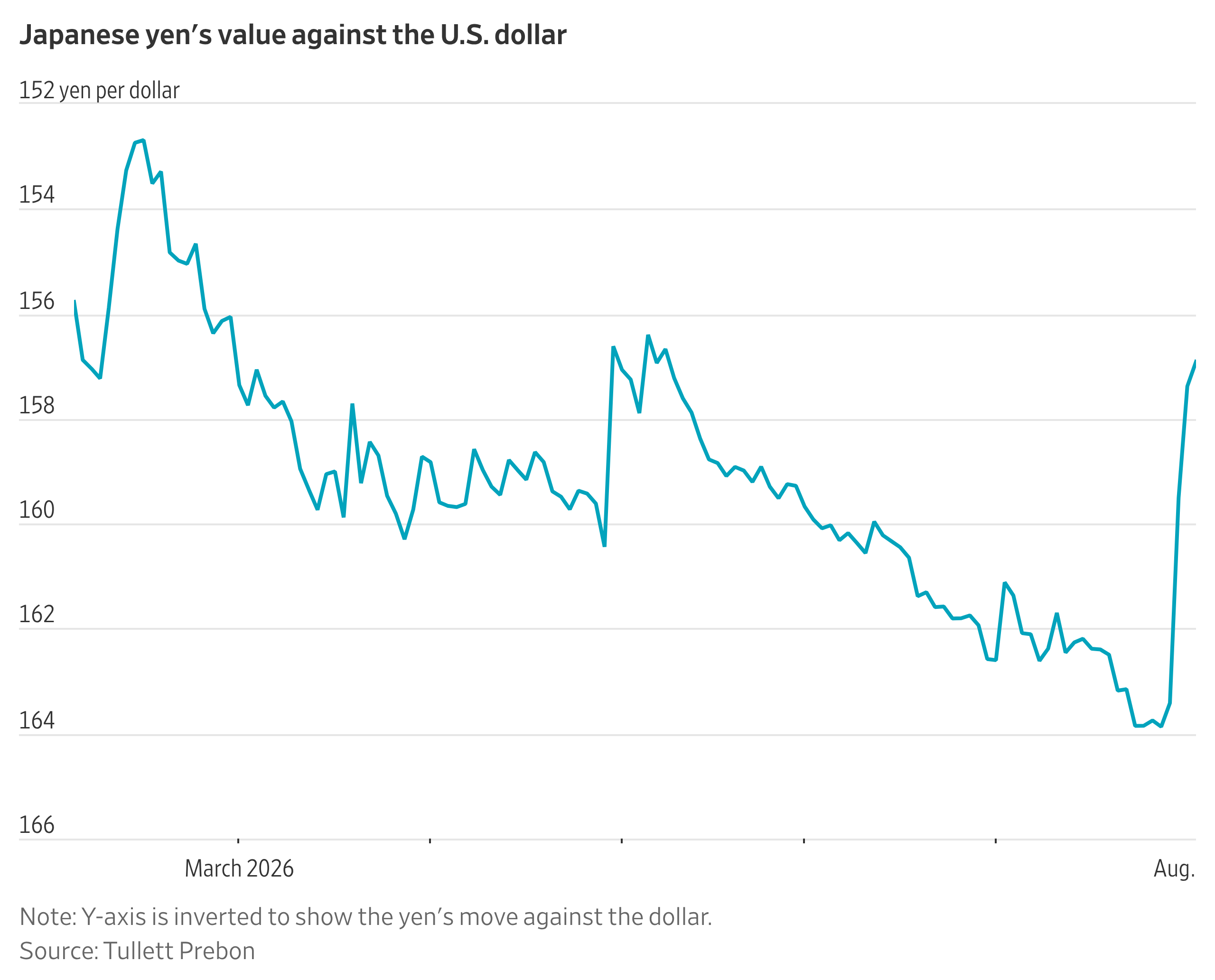
A rare joint U.S.-Japan currency intervention has helped lift the beleaguered yen off a multi-decade low. It will be an uphill battle keeping it there, analysts say.
The U.S.’s involvement sends a stronger message to investors who have been betting against the yen. Japan’s solo interventions in recent months have done little to halt the currency’s slide.
Still, there are a number of economic forces dragging down the currency. The Bank of Japan has been slow to raise interest rates, the government is loosening fiscal policy, and higher energy prices unleashed by the war in the Middle East are weighing on Japan’s terms-of-trade.
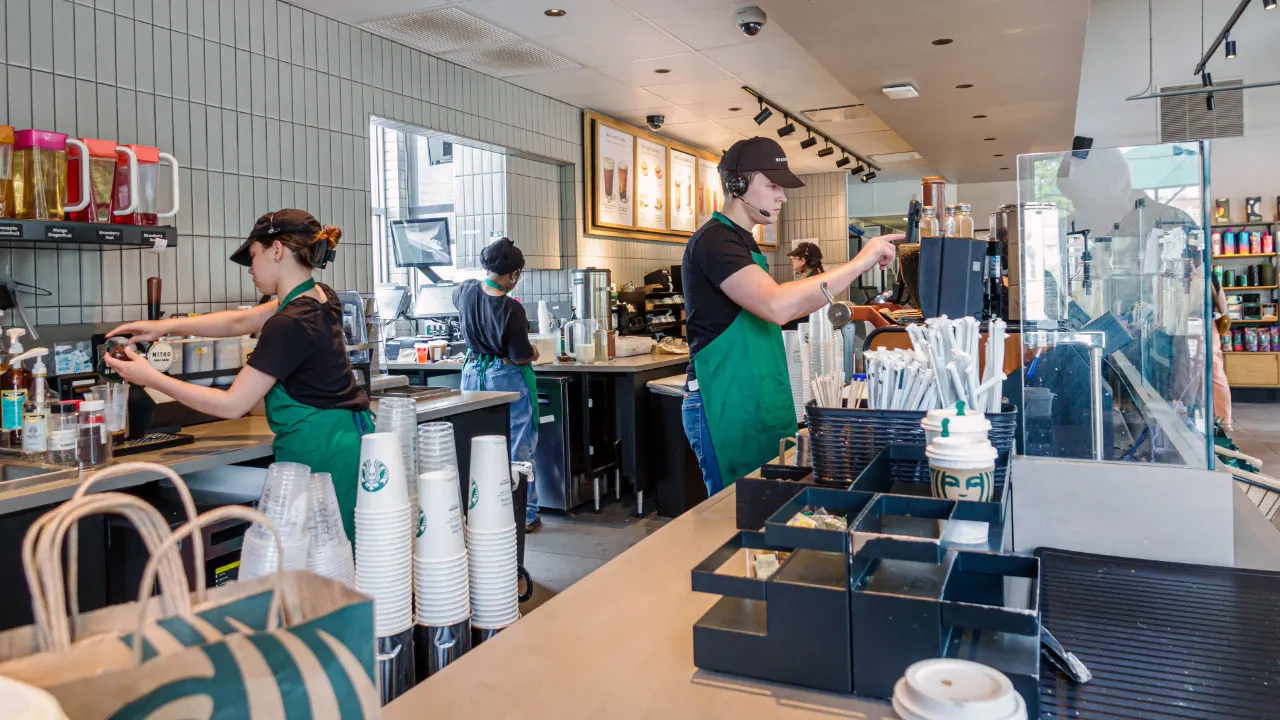
‘The Big Money Show’ co-hosts discuss Seattle Mayor Katie Wilson’s remarks dismissing millionaires leaving the city as Starbucks moves 2,000 jobs to Nashville.
Starbucks announced on Monday that its classic Pumpkin Spice Latte will be returning to store menus later this month.
The popular drink will be joined by new beverages and food items, as well as limited-time merchandise collections.
While the classic Pumpkin Spice Latte returns on Aug. 25, Starbucks will add new pumpkin spice-flavored drinks, including the Iced Pumpkin Cream Shaken Espresso, Pumpkin Spice Chai and Iced Pumpkin Cream Matcha. The Pumpkin Cream Cold Brew, Iced Pumpkin Cream Chai and Pumpkin Spice Frappuccino blended beverage will also return.
STARBUCKS TO CUT 300 US JOBS, CLOSE SOME REGIONAL SUPPORT OFFICES

The Pumpkin Spice Latte is returning to Starbucks’ menu on Aug. 25. (Christina Tkacik/Baltimore Sun/Tribune News Service via Getty Images)
A new iced banana bread-flavored latte and chai drink will join the company’s fall menu, as will the Chaider – a beverage featuring a blend of chai and cider-inspired flavors.
A new Chicken Bacon Protein Pocket and a Hedgehog Cake Pop will also join store menus this fall. The protein pocket is the latest addition to Starbucks’ broader push to expand its protein offerings.
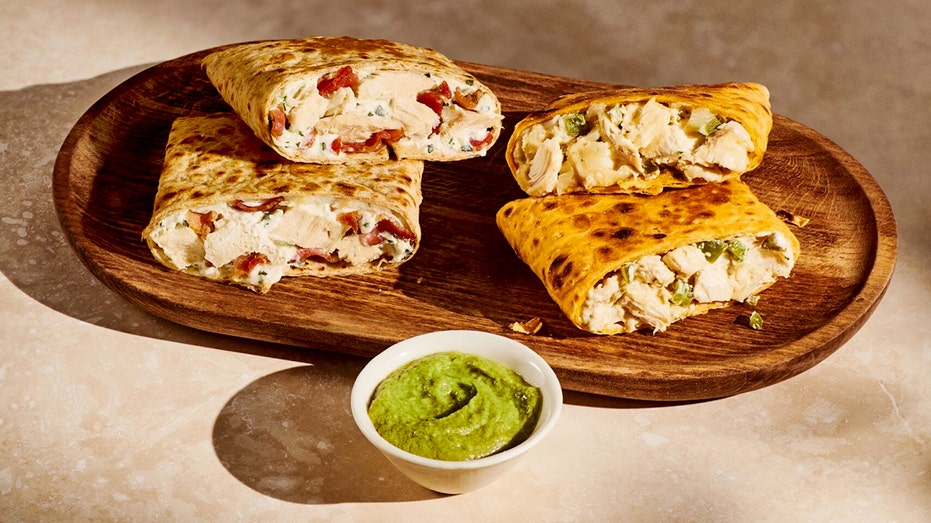
The new Chicken Bacon Protein Pocket contains 20 grams of protein. (Starbucks)
Starbucks is offering new drinkware and a hat as part of its PSL Society collection.
The announcement comes after the company reported third-quarter results last week.
SEATTLE COULD LOSE HUNDREDS OF MILLIONS IN TAX REVENUE AS STARBUCKS EXPANDS IN TENNESSEE
Starbucks raised its annual sales and profit forecasts for the second time, as CEO Brian Niccol’s years-long turnaround efforts reignite demand at the world’s largest coffee chain.
Under Niccol, the company has aimed to improve customer experience through a simplified menu and shortened wait times, fueling four straight quarters of comparable sales growth.
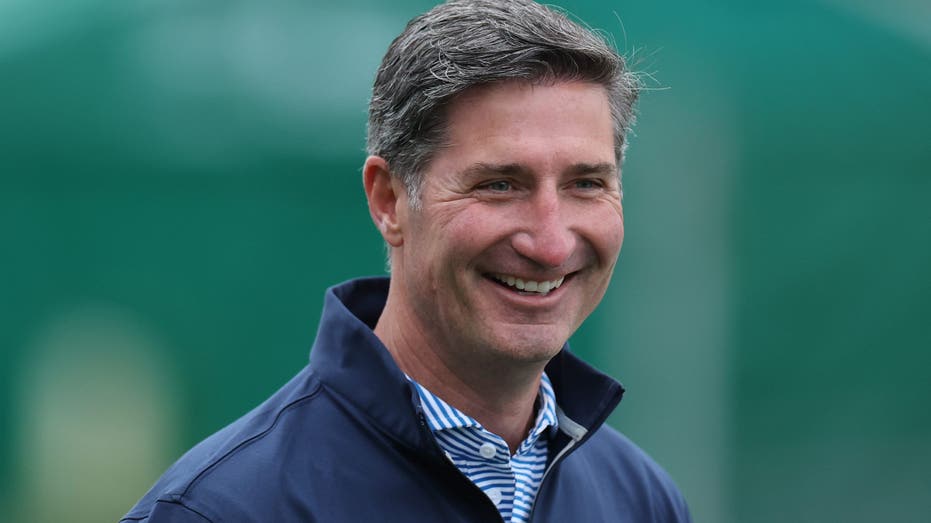
Starbucks CEO Brian Niccol’s turnaround plan is called “Back to Starbucks.” (Michael Reaves/Getty Images)
“We have more work to do,” Niccol said in a statement on Wednesday, while finance chief Cathy Smith said the company is focused on what it can control amid a “dynamic operating environment.”
WHY STARBUCKS PICKED NASHVILLE OVER SEATTLE FOR EXPANSION, ACCORDING TO LOCAL BUSINESS REPORTER
The Seattle-based company forecast global same-store sales growth of near 6%, above its prior forecast of about 5% or above. It expects adjusted earnings per share to be between $2.55 and $2.65, compared with its previous forecast of $2.25 to $2.45.
| Ticker | Security | Last | Change | Change % |
|---|---|---|---|---|
| SBUX | STARBUCKS CORP. | 103.37 | -1.88 | -1.79% |
“Starbucks has begun to experience market share stabilization in recent months, most notably with younger diners,” Consumer Edge analyst Michael Gunther said.
“Consumers may be shifting dining dollars toward in-home eating but are leaving room in the budget for daily drink habits,” he added.
GET FOX BUSINESS ON THE GO BY CLICKING HERE
The “Back to Starbucks” strategy had been squeezing margins, as it involved heavy investments in staffing and store operations, which the company has looked to tackle with cost cuts through layoffs, office consolidation and streamlining its operations.
Reuters contributed to this report.
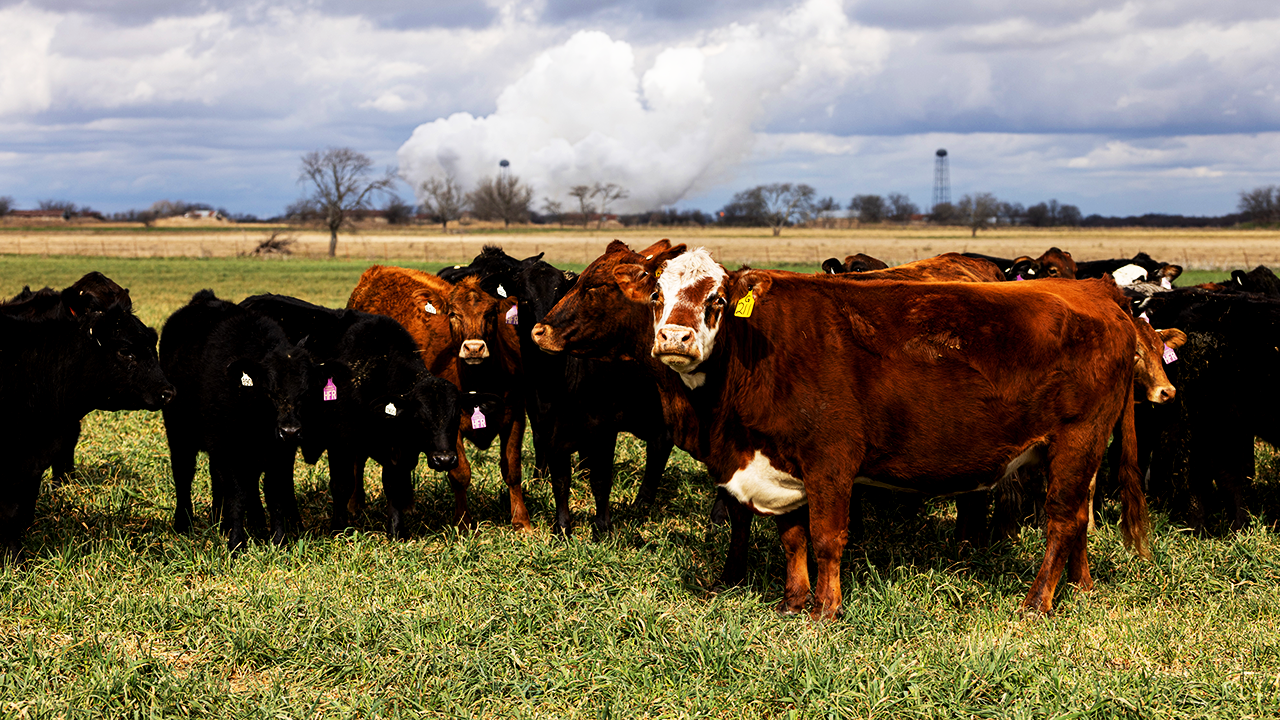
FOX Business correspondent Gray Trimble discusses record beef prices ahead of America’s 250th birthday celebrations.
American consumers are continuing to face elevated beef prices amid an ongoing cattle shortage, which is also hitting the bottom line of major meatpacking companies.
The U.S. cattle herd is at its lowest level in over 70 years due to drought reducing forage areas in key ranching regions, which forced ranchers to liquidate cattle.
Ranchers are also facing higher operating costs for feed, labor, fuel and equipment, while some live cattle imports have also been constrained due to concerns over diseases affecting livestock.
CATTLE HERD ‘FIX’ IS TAKING YEARS LONGER THAN PREDICTED, CEO WARNS AMID HISTORIC BEEF SHORTAGE
Beef prices have risen 11.8% over the last year and increased 1.2% on a monthly basis in June, according to the most recent consumer price index (CPI) data released by the Bureau of Labor Statistics. Ground beef prices were up 12.4% from a year ago, while beef roasts were up 13.8% and steaks were up 11.4% in that period.
Tyson Foods noted the challenges in its beef business in its earnings call Monday, with CEO Donnie King saying, “Beef hasn’t performed the way we expected, and we’re not pretending otherwise.”
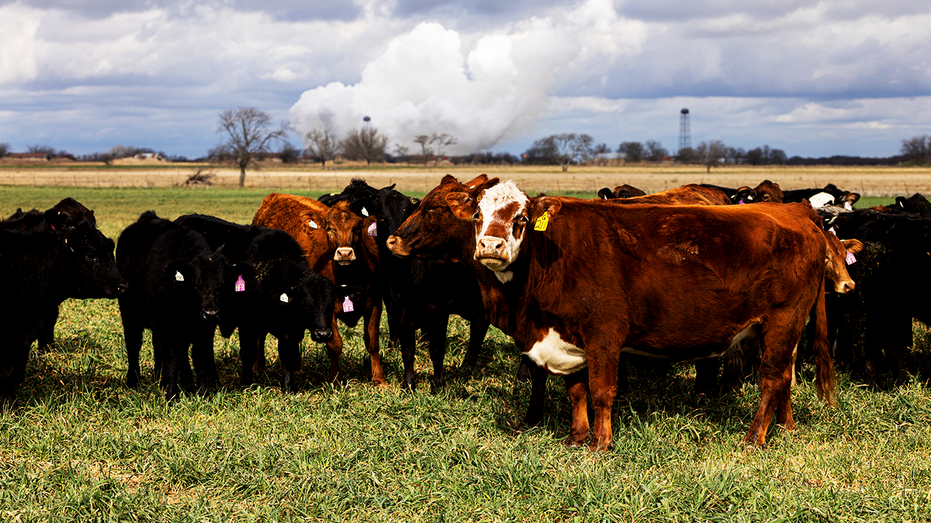
U.S. cattle inventories are at their lowest level in over 70 years. (Angela Piazza/The Dallas Morning News)
He noted the “well-documented challenges of the current cattle cycle” and said that Tyson’s beef segment operated at a loss of $138 million with sales volume down 15.9% and pricing up 12.1% as “constrained supply pushed input costs and pricing higher.”
The Tyson Foods CEO also discussed the recent announcement by the U.S. Department of Agriculture (USDA) that it will resume imports of cattle from Mexico starting in late August for the first time in more than a year.
‘WE GOTTA EAT’: PHILLY BUTCHER ON RISING BEEF PRICES AS CUSTOMERS ADJUST SPENDING HABITS
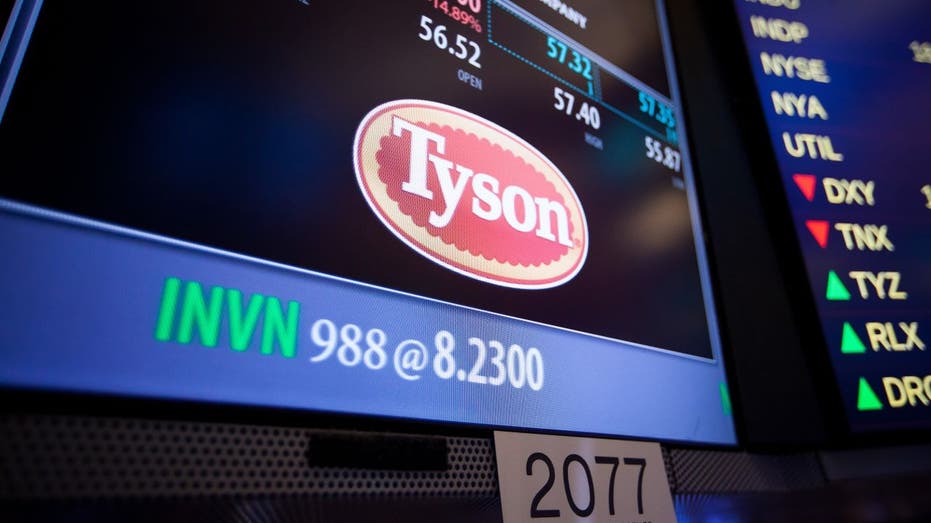
Tyson Foods reported losses in its beef division, and the price surge caused by supply shortages turned consumers away. (Michael Nagle/Bloomberg via Getty Images)
Cattle imports from Mexico were suspended due to an outbreak of the New World screwworm, which poses a threat to domestic livestock. USDA’s monitoring has noted 44 cases of New World screwworm in the U.S. since June, with cases concentrated in Texas and New Mexico.
The USDA’s resumption of imports will be flexible and will start at the Douglas, Arizona, port of entry after the neighboring Mexican states of Sonora and Chihuahua have been identified as the lowest-risk Mexican states for the New World screwworm.
The agency cited those Mexican states’ “strong, well-established inspection programs” and geographic distance from southern Mexico, where most of the cases have been concentrated.
BEEF PRICES HIT RECORD HIGHS AS NATIONWIDE CATTLE INVENTORY DROPS TO LOWEST LEVEL IN 70 YEARS
| Ticker | Security | Last | Change | Change % |
|---|---|---|---|---|
| TSN | TYSON FOODS INC. | 59.61 | +1.65 | +2.85% |
King said the “recent announcement of a phased reopening of the Mexican border for the importation of cattle shows potential improvements to long-term cattle availability.”
“Although the reopening won’t have a material impact on the remainder of this fiscal year, which ends in September, it does provide the potential for some level of improvement in 2027 and beyond,” King added.
“To be clear, the reopening of the Mexican border will not solve the entire gap of beef losses we are currently seeing. We are not waiting passively for the cattle cycle to turn, and we continue to focus on improving the variables within our control.”
Shopify earnings loom: Can AI strategy offset Meta threat?


Originally acquired 80% stake back in 2024.
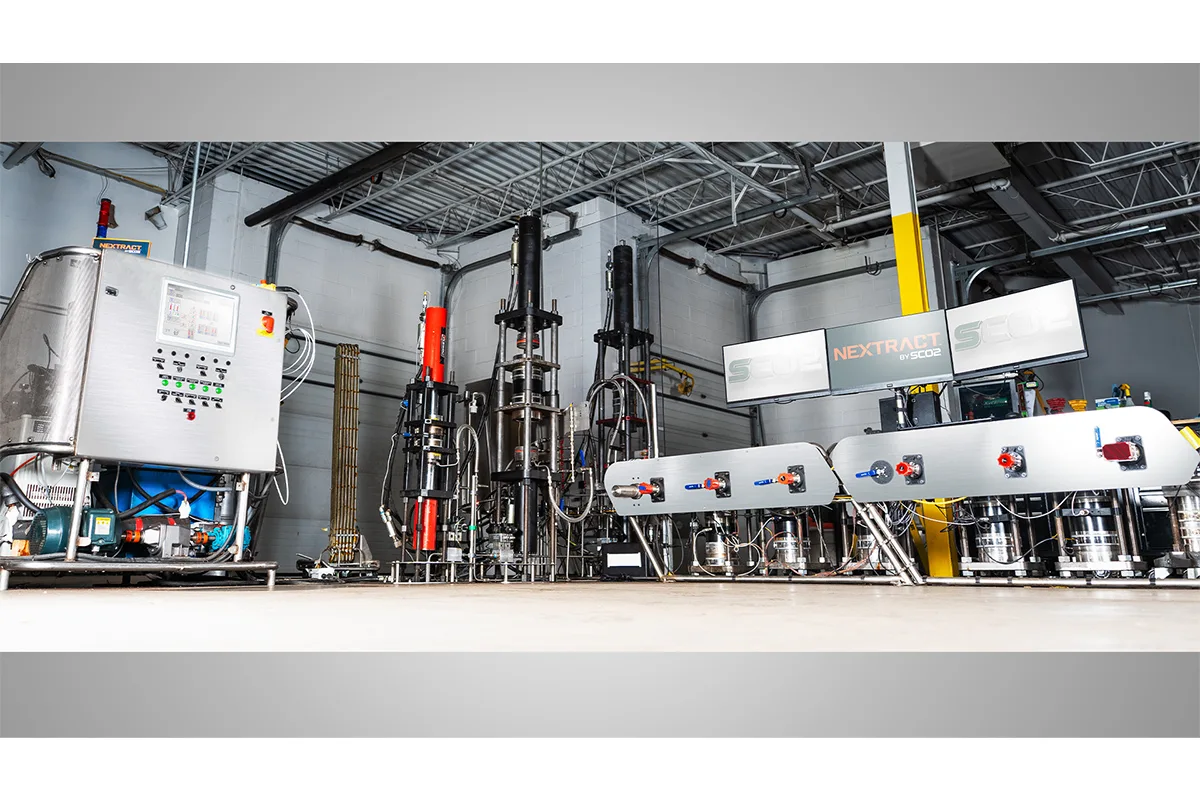

SCO2 converts byproducts and turns it into ingredient opportunity.
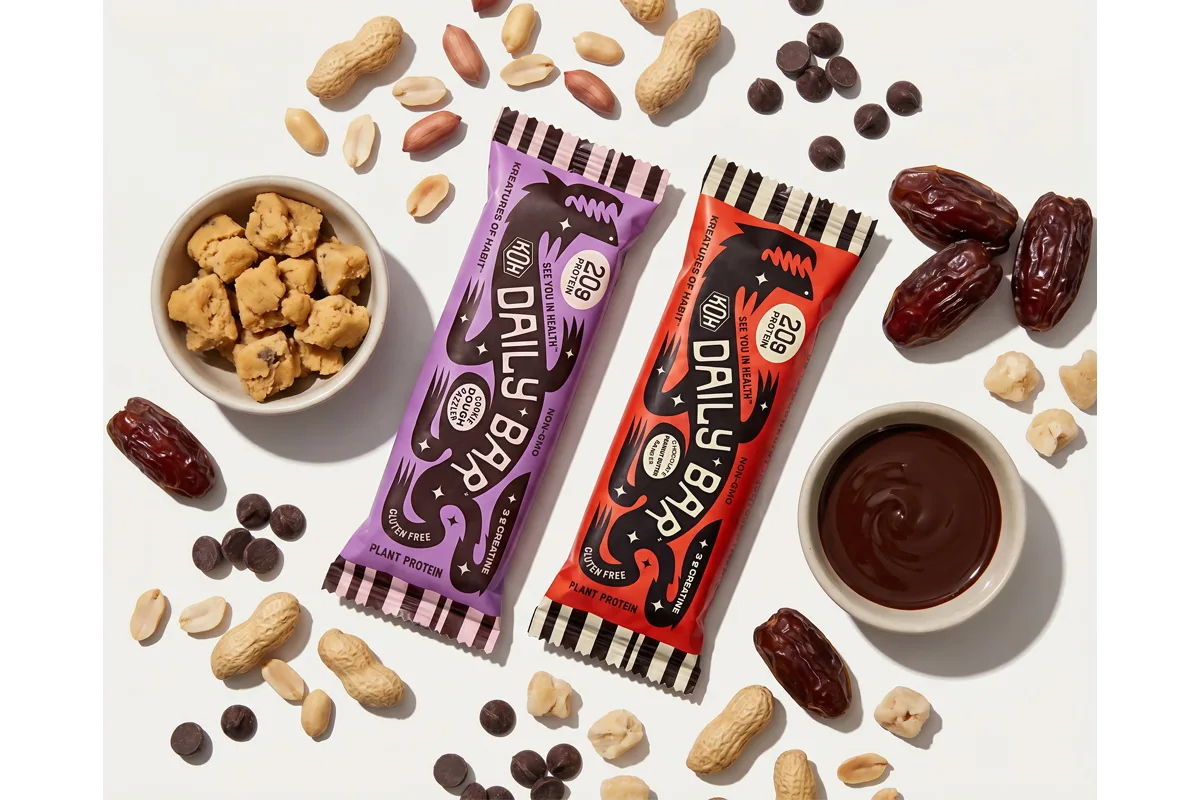

Entrepreneur is targeting active younger and older consumers.

10 Forgotten Sci-Fi Books That Have Aged Like Fine Wine

Crypto In Serious Trouble?

Prisoner who ran off from outside courtroom now back behind bars


-

 Business6 days ago
Why Trees Belong on the Risk Register
-

 Fashion4 days ago
Weekend Open Thread: Wit & Wisdom
-

 Politics4 days ago
Meta enters AI-training agreement with far-right ‘propaganda rag’ Newsmax
-

 Crypto World3 days ago
MicroStrategy Post-Earnings CLARITY Act Push Could Add New Catalyst for Its Stock
-

 Politics6 days ago
Reform UK betrays West Mids residents by running from party pledges
-

 Business7 days ago
Major shareholder moves on Canyon
-

 Crypto World4 days ago
XRP Ledger v3.3.0 brings five institutional features
-

 News Videos5 days ago
Bitcoin Enters the 3rd Stage of the Bear Market
-

 Politics2 days ago
Zack Polanski: an incitement to murder Nigel Farage?
-

 Crypto World7 days ago
Kraken Enables Retail Access to Jersey Mike’s IPO via Tokenized Shares
-

 Politics5 days ago
Luke Littler’s dominance sparks GOAT debate
-

 Sports5 days ago
Seema Kaliramna Wins Discus Throw Bronze, Takes India’s CWG Medals Tally To 17
-

 Crypto World4 days ago
New York sues Kalshi over prediction market gambling
-

 Crypto World2 days ago
Crypto PAC spending tops $2M in Michigan House race
-

 Business7 days ago
Johnson & Johnson agrees to $5.5B settlement over talc cancer claims
-

 Business4 days ago
Trump Announces Hamas Disarmament Agreement as Iran Strikes Kuwait Air Base and US Attacks Pause Overnight
-

 Tech6 days ago
Gemini can now summarize the messiest comment threads in Google Docs
-

 Tech3 days ago
ESET tracks rise in malicious AI skills and adaptable malware
-

 NewsBeat5 days ago
Four people die trying to cross Channel in small boats
-

 Tech4 days ago
Gemini Spark can now use Chrome logins and saved passwords to run errands on your behalf
You must be logged in to post a comment Login