Connect with us

Business

Paramount Skydance (PSKY) earnings Q2 2026

Published

on

Paramount Skydance (PSKY) earnings Q2 2026

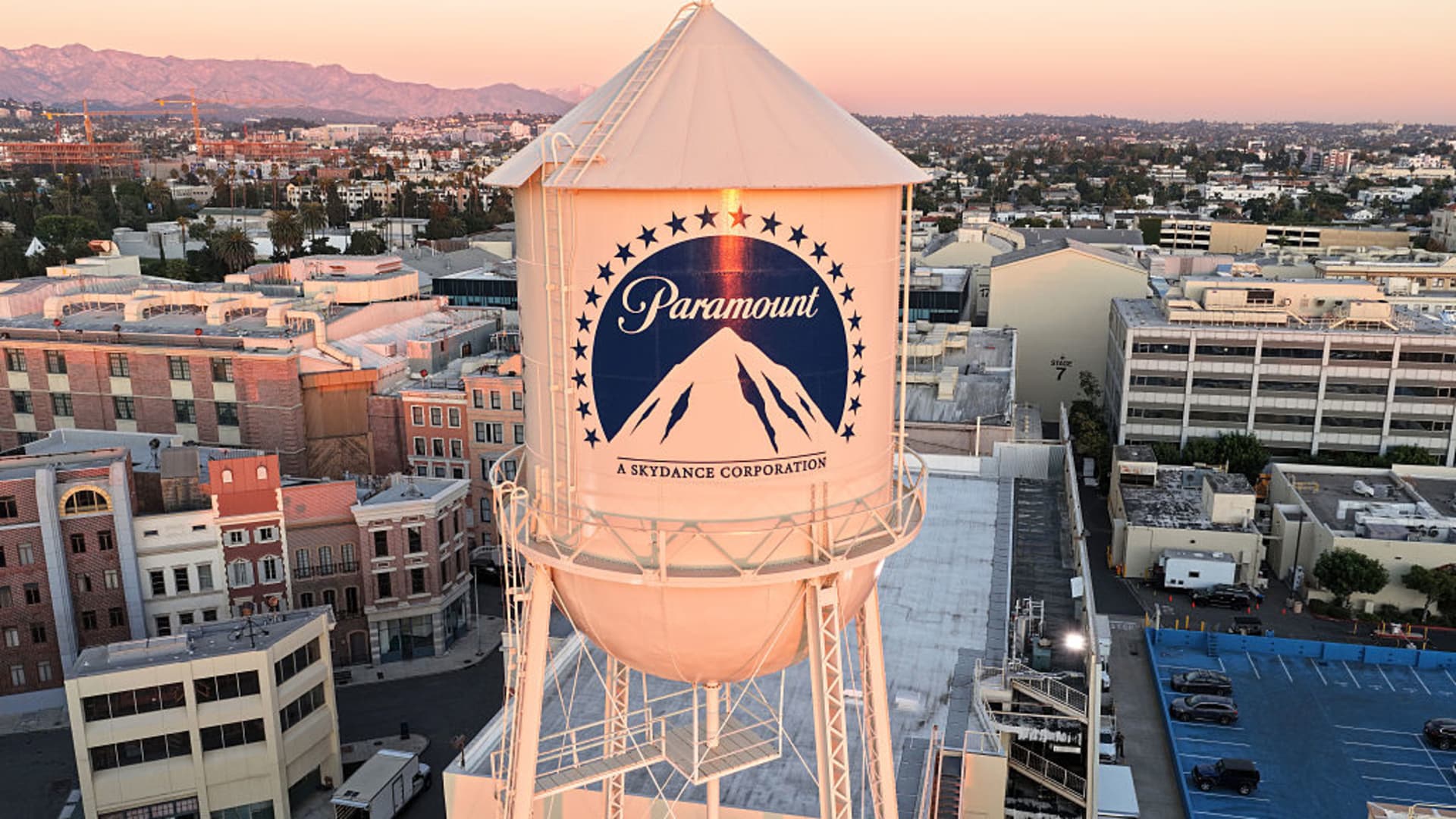
An aerial view of the Paramount logo displayed on the water tower at Paramount Studios on Dec. 8, 2025, in Los Angeles, California.

Mario Tama | Getty Images

Paramount Skydance raised its full-year guidance on Tuesday and reported second-quarter results that showcased the continued strengths of streaming and weaknesses of linear TV.

Advertisement

While Paramount beat Wall Street expectations for revenue and reported gains in its streaming unit, led by its Paramount+ streaming service, its portfolio of cable TV networks continued to weigh on the overall company.

Still, Paramount noted that cost cutting and its “creative execution” for the traditional TV business helped to improve margins and profit in the quarter.

Here’s how Paramount Skydance performed in the period ended June 30 compared with Wall Street estimates compiled by LSEG:

  • Earnings per share: 4 cents
  • Revenue: $6.91 billion vs. $6.88 billion expected

Paramount reported net earnings attributable to the company of $41 million, or 4 cents per share, versus $57 million, or 8 cents per share, in the comparable year-earlier period.

The company’s reported EPS for the second quarter was not comparable to Wall Street estimates of 15 cents per share adjusted, according to LSEG.

Advertisement

Paramount reported $6.91 billion in total revenue, up slightly year over year. Revenue for the direct-to-consumer streaming segment — which consists of Paramount+, BET+ and the free, ad-supported Pluto TV — was up 9% to $2.47 billion, while film studios revenue increased 16% to $1.31 billion. TV media revenue declined 9% to $3.13 billion.

The company said the second quarter was its “best quarter for retention in Paramount+’s history,” due to series like the “Yellowstone” spinoff “Dutton Ranch,” as well as live sports like the UFC and offering of the FIFA World Cup in parts of Latin America.

Paramount+ added 2 million subscribers during the quarter, bringing its total to 81.6 million global customers.

The company said Tuesday it was raising its full-year 2026 guidance for adjusted earnings before interest, taxes, depreciation and amortization to a range of $3.8 billion to $3.9 billion, due to savings from last year’s merger of Paramount and Skydance. The company has said it plans to save $3 billion from the consolidation.

Advertisement

Paramount still expects total revenue in 2026 of $30 billion, representing 4% growth year over year. Direct-to-consumer revenue from both streaming subscriptions and advertising is expected to accelerate for the year.

For the third quarter, Paramount expects total revenue of between $6.95 billion and $7.15 billion and for Paramount+ subscriber additions to be “flattish” quarter over quarter.

WBD merger trajectory

David Ellison, CEO of Paramount Skydance, speaks during the Paramount Pictures presentation at CinemaCon, the official convention of Cinema United, in Las Vegas, Nevada, April 16, 2026.

Caroline Brehman | Reuters

Advertisement

Tuesday’s earnings report comes nearly one year since the completion of Skydance’s merger with Paramount, putting the storied Hollywood company under the leadership of CEO David Ellison.

The company highlighted “early benefits” to unifying the tech behind Paramount+ and Pluto TV. It also noted that it increased Paramount’s film slate from eight to 15 films.

Paramount has more recently been in pursuit of Warner Bros. Discovery, a combination that has been held up by an antitrust challenge brought by U.S. states.

However, Ellison reiterated the company’s confidence in that merger Tuesday.

Advertisement

“As we’ve executed against our strategy over the past year, we’ve also prepared to close the transaction, and we remain confident it will be completed, creating a stronger, more competitive, creative-first media company that builds on the foundation we’ve established — one that benefits consumers, theater exhibitors and creatives,” he said in a shareholder letter.

Last month, Paramount agreed to delay the closing of the proposed acquisition to as late as June 2027 due to the lawsuit brought forth by a group of state attorneys general.

Initially Paramount said it planned to close the deal by the end of September. It has received approval from the antitrust division of the U.S. Department of Justice, as well as from several global jurisdictions, including European regulators.

The U.S. states’ lawsuit will go to trial in March 2027, according to a court filing on Tuesday.

Advertisement
Choose CNBC as your preferred source on Google and never miss a moment from the most trusted name in business news.
Continue Reading
Click to comment

You must be logged in to post a comment Login

Leave a Reply

Business

OpenAI settles DOJ hiring discrimination claims for $3.2M

Published

on

OpenAI settles DOJ hiring discrimination claims for $3.2M

OpenAI and one of its subsidiaries will pay $3.2 million to settle allegations that they discriminated against U.S. workers by favoring foreign workers with temporary employment visas, the Justice Department announced Tuesday.

The Justice Department said the settlement resolves allegations that OpenAI and its subsidiary, Statsig Inc., violated the Immigration and Nationality Act through the Permanent Labor Certification (PERM) process by discouraging qualified U.S. workers from applying for certain jobs.

Advertisement

According to the Justice Department, OpenAI and Statsig, which develops product software, recruited foreign workers for some positions while taking steps that discouraged U.S. applicants.

According to the DOJ, OpenAI did not advertise positions it sought to fill through the PERM program on its job website, even though its standard practice was to do so with other jobs.

CHINA NARROWS AMERICA’S AI LEAD AS HUAWEI EXPANDS ITS GLOBAL TECH FOOTPRINT, FORMER US OFFICIAL WARNS

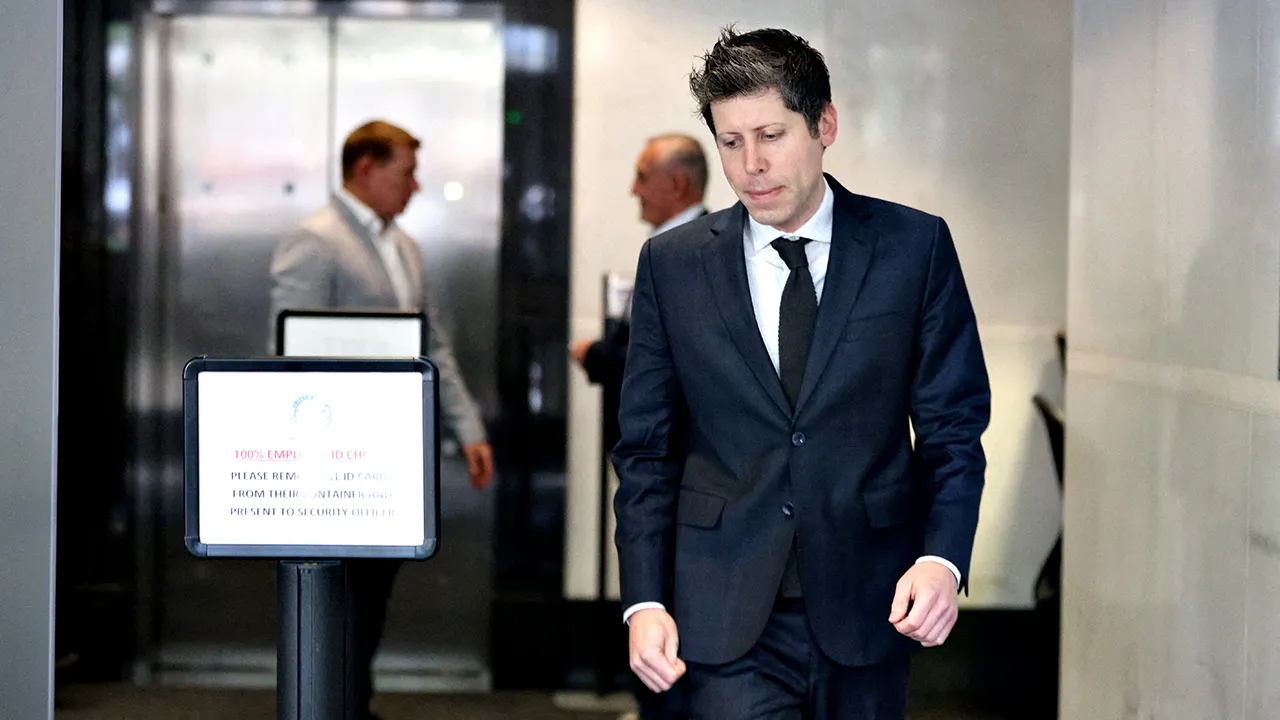
OpenAI CEO Sam Altman’s company agreed to pay $3.2 million to settle Justice Department allegations involving its hiring practices while denying wrongdoing. (Reuters/Manuel Orbegozo / Reuters Photos)

Federal investigators alleged that OpenAI failed to advertise certain PERM positions on its careers website, required applicants to mail paper applications for those jobs while accepting electronic applications for other positions, and in some cases aired radio advertisements late at night, practices the Justice Department said discouraged U.S. workers from applying.

Advertisement

The settlement includes $1.2 million in civil penalties and $2 million to compensate alleged victims of discrimination. OpenAI also agreed to revise its employment policies, conduct training and submit to Justice Department monitoring.

OpenAI denied wrongdoing as part of the settlement agreement.

FED DISSENTERS WARN INFLATION COULD BECOME ENTRENCHED WITHOUT MONETARY POLICY TIGHTENING NOW

Justice Department logo

The Justice Department alleged OpenAI favored foreign workers with temporary employment visas for certain positions in violation of federal law. (Brendan Smialowski/AFP via Getty Images / Getty Images)

“It is illegal to discriminate against U.S. workers by preferring temporary visa holders for jobs,” Assistant Attorney General Harmeet Dhillon of the Justice Department’s Civil Rights Division said in a statement.

Advertisement

“This substantial settlement ensures that OpenAI redresses harm and changes its recruitment practices so that U.S. workers receive a fair opportunity for highly sought-after technology positions,” Dhillon added.

President Donald Trump has previously argued that many companies abuse temporary employment visa programs and has sought to limit the hiring of foreign workers, including by proposing a $100,000 fee on new H-1B visas for highly skilled workers. That proposal remains tied up in court.

GET FOX BUSINESS ON THE GO BY CLICKING HERE

OpenAI logo

OpenAI will pay $3.2 million to settle Justice Department allegations involving its recruitment and hiring practices. (Omar Marques/SOPA Images/LightRocket via Getty Images / Getty Images)

FOX Business has reached out to OpenAI for comment.

Advertisement

Reuters contributed to this report.

Continue Reading

Business

When Does Outsourcing Design Make Sense? A Business Owner’s Guide

Published

on

UK-founded legaltech business Lawhive has raised $60 million (£47m) in Series B funding as it accelerates its expansion across the US consumer legal market and doubles down on its AI-driven operating model.

Most growing businesses hit the same wall with design. Demand for branding, websites and marketing collateral is rarely constant, so hiring a full-time designer can mean paying a salary that only earns its keep for part of the year.

Leaning on freelancers solves the cost problem but brings its own: variable availability, inconsistent quality and the time lost managing them. Increasingly, the businesses caught in the middle are turning to a third route, the white-label design studio.

The model has quietly become one of the more practical ways for agencies and busy companies to deliver design work without carrying the overheads. A white-label design studio such as VIVI Creative now runs a service built specifically for this, producing branding, websites and illustration that another business delivers under its own name. For business owners weighing it up, the useful question is not whether white-label is fashionable, but when it actually makes sense.

What White-Label Design Is

In a white-label arrangement, one business produces work that another sells under its own name. A studio designs the branding, website or marketing assets, and the agency or company presents the finished result to its own client as its own. The end client typically never knows a second team was involved.

The distinction from freelancing matters. A freelancer is usually a one-off hire for a single project. A white-label partner plugs into your workflow on an ongoing basis, works to your brand guidelines and operates under a confidentiality agreement, so the relationship stays behind the scenes, and the output stays consistent.

Advertisement

When It Makes Sense

Outsourcing design under your own brand tends to pay off in a few clear situations.

When demand is uneven. If design work comes in peaks and troughs, a white-label partner lets you scale production up and down without a fixed salary sitting idle in the quiet months.

When you want to widen what you offer. Agencies in particular use white-label studios to add branding, web or illustration to their service list without recruiting a specialist for each discipline.

When capacity is the bottleneck, if you are turning away work or straining to meet deadlines, an external partner absorbs the overflow while you keep the client relationship.

Advertisement

When consistency matters. A single ongoing partner who knows your brand delivers more predictable quality than a rotating cast of freelancers.

This flexibility is why the model has spread. It reflects a wider shift in how businesses source skills: Deloitte’s Global Outsourcing Survey found that agility and access to specialist talent now rank alongside cost as reasons to outsource, with most organisations planning to maintain or increase that investment.

When It Doesn’t

White-label is not always the answer. If design is core to what you sell and you need a team immersed in your product day to day, in-house may be worth the cost. If your needs are genuinely one-off, a freelancer or a traditional studio can be simpler. And the model only works with the right partner, one that communicates well, respects the confidentiality the arrangement depends on, and delivers to a standard you can put your name to.

How to Choose a Partner

A few questions separate a strong white-label partner from a risky one. Will they stay fully behind the scenes and never approach your client directly? Can they work to your brand guidelines rather than imposing their own house style? Is their turnaround reliable enough to build into your own deadlines? And can they show a portfolio and references that stand up to scrutiny?

Advertisement

Studios built around this model tend to be clear about how they work. VIVI Creative, for instance, runs its white-label service on exactly these terms, staying behind the scenes and working to the agency’s brand, an example of the more structured, partnership-led approach that has made the model viable for so many businesses.

The Bottom Line

For a business whose design needs rise and fall, or an agency that wants to offer more without building a creative department, white-label design has moved from a workaround to a legitimate strategy. The decision comes down to your own pattern of demand and the quality of the partner you choose. Get both right, and it becomes a way to grow the work you deliver without growing your fixed costs to match.

Advertisement
Continue Reading

Business

OpenAI, Anthropic AI agents implicated in new security breaches

Published

on


OpenAI, Anthropic AI agents implicated in new security breaches

Continue Reading

Business

Crexendo, Inc. (CXDO) Q2 2026 Earnings Call Transcript

Published

on

OneWater Marine Inc. (ONEW) Q1 2026 Earnings Call Transcript