



Connect with us
DAPA Banner
DAPA Coin
DAPA
COIN PAYMENT ASSET
PRIVACY · BLOCKDAG · HOMOMORPHIC ENCRYPTION · RUST
ElGamal Encrypted MINE DAPA
🚫 GENESIS SOLD OUT
DAPAPAY COMING

Business

People starting new jobs at lowest level in five years

Published

on

People starting new jobs at lowest level in five years

The Office for National Statistics says some areas of the jobs market are weakening, as vacancies continue to fall.

Continue Reading
Click to comment

You must be logged in to post a comment Login

Leave a Reply

Business

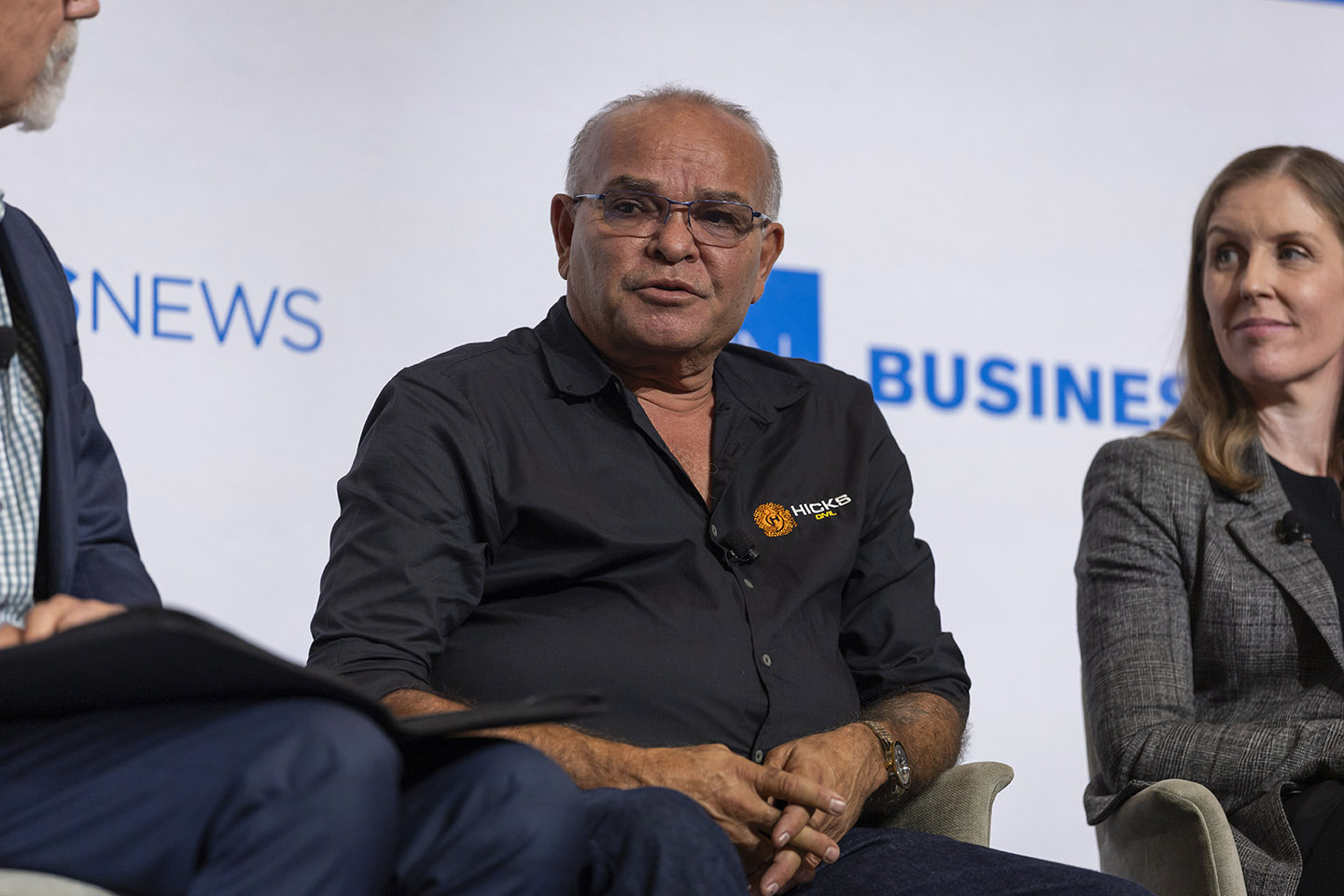
Federal government cuts grants to native title representative bodies

Published

on

Federal government cuts grants to native title representative bodies

Project proponents have been warned of approval delays after the federal government cut grants to native title representatives by as much as 40 per cent.

Continue Reading

Business

California IPO tax windfall: Factors complicating the equation

Published

on

California IPO tax windfall: Factors complicating the equation

The iconic Golden Gate Bridge and the stunning San Francisco skyline as seen from the Marin Headlands during the vibrant spring season.

Dan Kurtzman | Moment | Getty Images

A version of this article first appeared in CNBC’s Inside Wealth newsletter with Robert Frank, a weekly guide to the high-net-worth investor and consumer. Sign up to receive future editions, straight to your inbox.

Advertisement

The blockbuster SpaceX IPO and potential upcoming public offerings for OpenAI and Anthropic could create a tax windfall for the state of California. Yet the revenue boost may fall short of previous tech IPOs – at least relative to the firms’ valuations – given the specific nature and tax treatment of today’s tech compensation.

Following its IPO last week, SpaceX is now valued at $2.5 trillion, minting many of its employees who live and work near its Hawthorne, California, office as millionaires, at least on paper. California-based Anthropic and OpenAI are also expected to go public later this year at valuations that could approach $1 trillion.

The burst of tech wealth has drawn comparison to the 2012 IPO of Menlo Park-based Facebook, which generated $1.3 billion in taxes for the Golden State, per the California Department of Finance’s estimate. Facebook’s valuation at the time was just $104 billion, suggesting the new crop of super-IPOs could theoretically generate billions more.

But the revenue impact may be blunted, due to how these employees’ stock compensation was structured and because tech employees today have more tools at their disposal to mitigate their tax burden, experts and financial advisors told CNBC. 

Advertisement

As companies have stayed private for longer and reached sky-high valuations, financial institutions have increasingly catered to equity-rich, cash-poor startup employees with tax strategies that were traditionally only available to founders. 

For instance, employees at some startups can get a tax deduction by donating private, pre-IPO stock to a donor-advised fund, according to Richard Lowry of wealth manager Cresset. He said such donations were generally limited to the ultra-wealthy as recently as a decade ago, since few charitable organizations were equipped to accept or manage those assets.

“Historically, the only people who had equity in a private company and were certainly in a position to give it away were millionaire or billionaire founders who already had their own controlled structures, like a private foundation, where they could decide what they accepted,” said Lowry, managing director and head of tax strategy at Cresset. “Now there is a cottage industry around allowing people to avail themselves of this.”

There’s also a timing consideration on the SpaceX windfall.

Advertisement

Tax revenue generated by an IPO largely comes from two sources: ordinary income taxes on employees’ restricted stock units, or RSUs, when they vest and capital gains taxes paid when shareholders sell appreciated stock. 

SpaceX uses a unique stock-pay structure that may have pulled forward the tax revenue on the vesting of employees’ shares. At most private companies, RSUs vest after two conditions are met: continued employment with the company and a liquidity event like an IPO or acquisition. This dual-trigger RSU structure leads to a boom in taxable income on IPO day. 

Many SpaceX employees, however, have been paying income taxes on their RSUs for years as share vesting was only tied to employment, not a liquidity event.

This stock-pay structure has made it challenging to estimate tax revenue associated with the SpaceX IPO, according to the California Legislative Analyst’s Office. 

Advertisement

Get Inside Wealth directly to your inbox

“Revenue totals will depend more on financial decisions made by employees and investors who hold pre-IPO SpaceX shares and stock options,” the LAO wrote in a statement. “Relative to past IPOs, tax revenues from the SpaceX IPO are likely to be less immediate and more unpredictable.” 

The LAO, which advises state lawmakers on budget and fiscal policy, has not published tax revenue estimates for the IPOs of SpaceX, Anthropic or OpenAI. That said, the LAO’s statement to CNBC was cautiously optimistic that the market debuts would pad the state’s coffers.

“Past major tech IPOs have generated significant income tax revenue for the state and these upcoming IPOs certainly have the potential to do the same,” the statement reads.

The California Department of Finance also has not published revenue estimates for the IPOs, citing the risk that companies frequently delay their IPOs in the event of a market downturn. OpenAI and Anthropic, which each filed confidential S-1s in recent weeks, could do the same. 

Advertisement

The Department has reason to be conservative as market swings have undermined its revenue forecasts before. It had to revise its revenue estimate from the Facebook IPO from $1.9 billion to $1.3 billion after the social media giant’s share slump.

The Department’s budget report noted another factor that could limit the upside from IPOs: the growing trend of private companies allowing employees to sell stock before going public, reducing the backlog of stock taxed upon IPO.

Employees at SpaceX, Anthropic and OpenAI have had ample opportunity to take some chips off the table well before a public offering. In October, OpenAI finalized a secondary share sale totaling $6.6 billion in which current and former employees could sell their shares at a $500 billion valuation. CNBC previously reported that OpenAI plans to facilitate a tender offer at a $852 billion post-money valuation.

Tender offers have grown in popularity as a way to reward employees and investors as the timeline to exit has grown longer, according to Hamza Shad, insights manager at startup equity management firm Carta.

Advertisement

Gains on these sales are still taxed, but selling earlier pulls that tax revenue forward and makes it less predictable for regulators, he said.

“In the past, when early pre-public liquidity wasn’t as prevalent, the tax revenue would come all at once on the IPO and after,” Shad said. “But now it’s kind of up to each company, whether or not they want to do tender offers, how large they want them to be, how often they want to do them.”

Still, tender offers come with a lot of strings attached, such as a percentage cap on how much equity employees can sell. And wildly lucrative tender offers and secondary sales are largely limited to the “best of the best startups,” according to Michael Ewens, professor of finance at Columbia Business School.

What’s more likely to eat into potential tax revenue is employees choosing not to sell at all but rather to take loans instead, said Will Gornall, associate professor of finance at the University of British Columbia.

Advertisement

By taking a loan against their shares instead of selling them, shareholders save money by paying interest rather than capital gains taxes. This so-called “buy, borrow, die” strategy is employed by SpaceX founder and world’s first trillionaire Elon Musk, who has taken out loans against billions of dollars’ worth of Tesla shares. This strategy also has the benefit of allowing employees to stay invested and benefit from future stock appreciation.

While financial maneuvers to avoid taxes have grown more sophisticated, so, too, have the auditing methods of the California Franchise Tax Board, according to Robert Willens, longtime tax and accounting analyst, who added the agency is notoriously aggressive.

“It really comes down to when the shares are earned. The taxable event is the vesting of the shares, and if you’re a California resident, there’s not much you can do about it,” he said. “I would think that California is looking forward to a really great infusion of funds.”

Of course, IPOs are one-time revenue boosts, and there’s a potential downside to lobbing hefty bills. Ewens told CNBC that he worries a big tax burden may drive these newly wealthy and often entrepreneurial employees away from the state.

Advertisement

“That’s not a point that California should lower its taxes now, but I think it has to keep in mind that taxes have longer-term consequences for people’s entrepreneurial decision-making, and that’s a big wealth driver in the state,” he said.

Choose CNBC as your preferred source on Google and never miss a moment from the most trusted name in business news.
Continue Reading

Business

Consumers are content with private label

Published

on

Consumers are content with private label

Survey found 9 out of 10 consumers have private label products at home. 

Continue Reading

Business

Bank of England holds rates at 3.75% and ‘tolerates’ slow return to inflation target

Published

on

Business Live

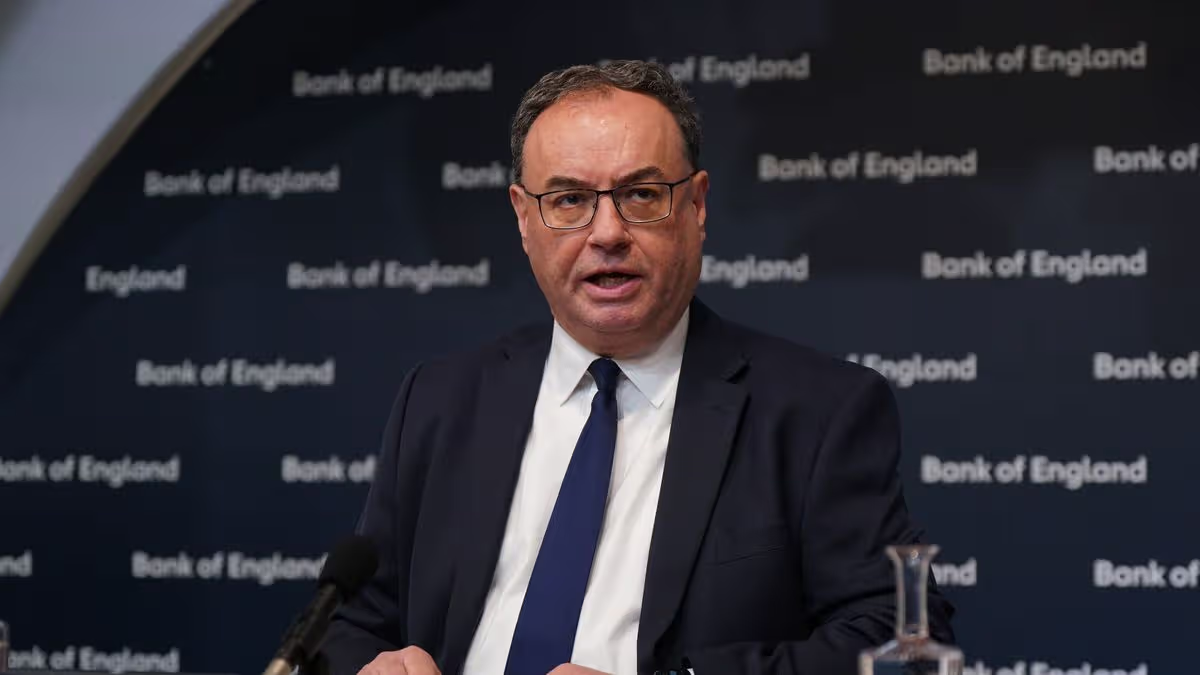
Governor Andrew Bailey warned inflationary pressure remained in the pipeline despite a fall in energy prices

Andrew Bailey, Governor of the Bank of England

Andrew Bailey, Governor of the Bank of England(Image: PA)

The Bank of England says it will accept a delay in returning inflation to its two per cent target, after holding interest rates at 3.75 per cent in a divided Monetary Policy Committee (MPC) vote.

Advertisement

Bank officials revealed they were keeping a close eye on the outcome of a peace agreement being reached between the US and Iran, which had pushed international oil and gas prices downward and alleviated concerns over a looming economic crisis in the UK.

However, the Bank cautioned that it still anticipated inflation would creep upwards this year, climbing above 3.3 per cent from its current rate of 2.8 per cent.

Minutes from the MPC decision revealed that members were required to assess how swiftly the Bank could bring inflation down to two per cent and how long it would be willing to accept sluggish growth.

The majority of members also concurred that elevated bond yields and mortgage costs affecting businesses and households “were already acting to reduce inflation over time”, tempering inflationary pressures and enabling the Bank to avoid raising interest rates, as reported by City AM.

Advertisement

The Bank signalled that its inflation outlook had been revised downwards following the peace deal’s impact on energy markets, alongside unexpected figures from within the UK suggesting price pressures had begun to ease.

Governor Andrew Bailey, who supported holding interest rates, described a drop in oil prices to below $80 per barrel as “encouraging”, though cautioned that they remained elevated compared to levels seen before the Iran conflict began. “Whatever happens in the future, the higher energy prices of the past four months mean there’s already some inflationary pressure in the pipeline,” he said.

Discussing his vote to hold interest rates steady, he indicated he was willing to accept inflation remaining above the Bank’s two per cent target in the medium term.

“Our remit recognises that attempting to bring inflation back to target too quickly may cause undesirable volatility in output,” he wrote.

Advertisement

“Given the context at present of softness in the real economy and uncertainty around the scale and duration of the shock to energy prices, tolerating temporarily above-target inflation as part of a return to target is an appropriate way to approach the trade trade-off, providing inflation expectations remain contained.”

The two Bank policymakers who voted in favour of raising interest rates were chief economist Huw Pill and external member Megan Greene.

Both Pill and Greene cautioned that businesses and households could be more vulnerable to inflation shocks than they were back in 2022, when Russia’s full-scale invasion of Ukraine sent gas prices soaring fourfold.

Pill argued that an interest rate rise would help curb spiralling wage and price-setting pressures, and “put the MPC in a good place from which to respond” to the current situation. Catherine Mann, who voted to hold interest rates on this occasion, appeared to indicate that an early rate rise could unsettle businesses and households, despite elevated pricing measures “needing an activist hike”.

Advertisement

She said she “had time” to assess whether workers would push for higher wages, which could drive prices above expected levels.

Fellow members who voted alongside her indicated they would be willing to raise interest rates should tensions in the Middle East flare up once more.

The MPC also cautioned that it would need to reach an early judgement on whether “second-round effects” — whereby rising wage pressures drive up prices — would take hold across the UK, given that a delayed rate rise may prove insufficient to bring inflation under control swiftly enough.

Some economists have argued that a sluggish jobs market and moderating wage growth — particularly within the private sector — would result in weaker second-round effects than those witnessed following the outbreak of the war in Ukraine in 2022.

Advertisement
Continue Reading

Business

BMW board chief says Chinese market has space for non-Chinese brands

Published

on


BMW board chief says Chinese market has space for non-Chinese brands

Continue Reading

Business

Universal Constructions wins $33m primary school contract

Published

on

Universal Constructions wins $33m primary school contract

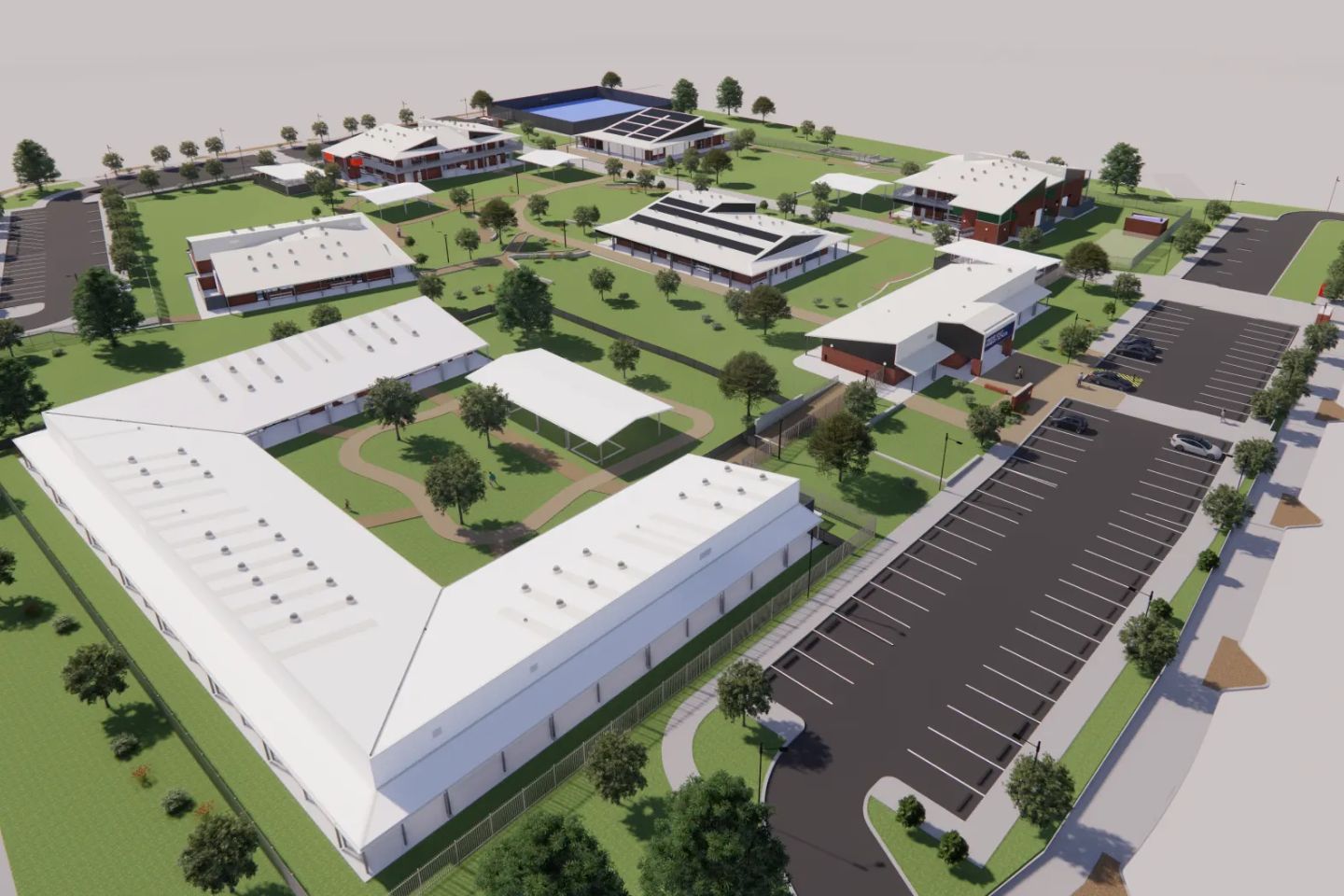
Universal Constructions has booked a $33 million contract with the state government over a new primary school.

The Department of Education recently awarded the Balcatta-based construction company a contract over a new school construction in Jandakot, dubbed Treeby East.

According to TendersWA, the contract starts on July 2 and covers about 15 months of work.

The proposed Treeby East primary school is expected to open in 2028, to accommodate 650 students.

Advertisement

It will comprise a seven-classroom early childhood teaching block, two double-storey teaching buildings, and a single-storey block for art and science.

Other features include a library, and administration building, a covered assembly building, staff facilities, and a full-size AFL oval with associated amenities delivered by the City of Cockburn.

“The construction of a new primary school in Treeby East will support families and benefit the growing local community,” the department said online.

The Treeby East PS is one of four new primary schools the state government flagged for a 2028 opening, as part of a $140 million re-election commitment.

Advertisement

Butler has been earmarked for two primary schools, dubbed Eglinton North and Yanchep East.

The state government also flagged a new primary school in Vasse, in the state’s South West.

Universal Constructions had been involved in the construction of Treeby Primary School, which opened in 2022.

Advertisement

In 2020, the state government awarded Universal a $14.6 million contract for works for the school.


Advertisement
Continue Reading

Business

Rory McIlroy Warns PGA Tour’s Two-Track Overhaul Could Turn Marquee Events Into Minor League Golf

Published

on

Scottie Scheffler

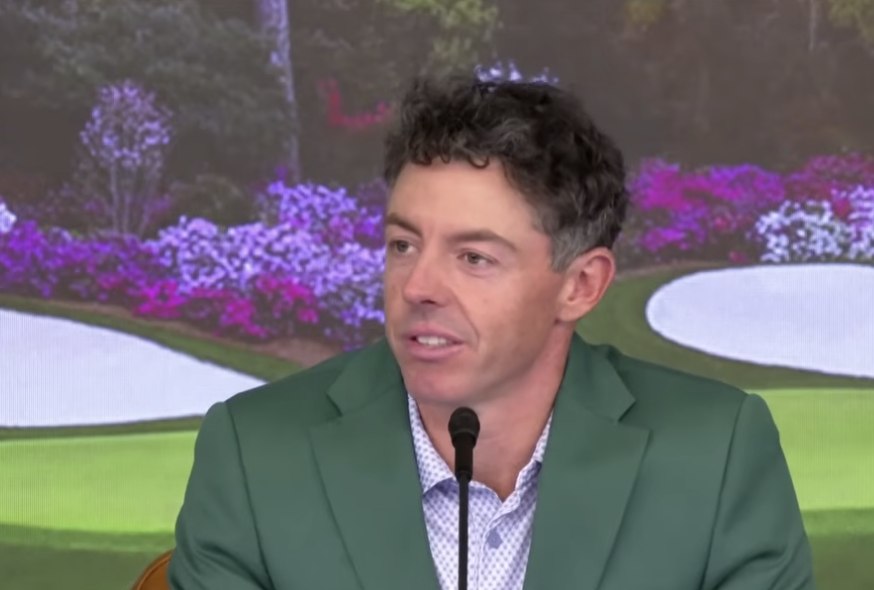
SOUTHAMPTON, N.Y. — Rory McIlroy arrived at Shinnecock Hills this week carrying six major championships, considerable credibility, and a pointed warning for the PGA Tour’s leadership: the sweeping structural overhaul being crafted behind closed doors risks degrading the very tournaments that define professional golf.

Speaking to reporters Tuesday ahead of the U.S. Open, McIlroy said he fears the proposed two-track competition model — a promotion-and-relegation framework modeled loosely on European soccer — will drain prestige from long-standing events that cannot secure elite-level sponsorships.

“I just think there’s going to be certain events that might lose their stature if a sponsor doesn’t pony up $30 million, so that’s the tough thing,” McIlroy said. “An event like last week, the Canadian Open, potentially going to one of these Track Twos — I don’t think the Canadian Open should be one of those.”

The comments were direct, unsolicited and striking in their scope. McIlroy, who briefly served on the Tour’s policy board in 2023 and was arguably the most visible player-ambassador during golf’s civil war with LIV, went further than criticizing the plan’s mechanics. He questioned its entire premise.

Advertisement

“I think, as they’ve done all this work, you start to realize that the way the Tour was before LIV came along was actually pretty good,” McIlroy said. “It was a pretty good structure, and everything sort of worked pretty well.”

A Restructure Years in the Making

The PGA Tour has been working toward a fundamental competitive overhaul since CEO Brian Rolapp took over last fall. At the Players Championship in March, Rolapp publicly signaled the Tour would adopt a two-tiered framework, citing the Premier League’s promotion-relegation model as an inspiration. Since then, a Future Competition Committee and a Player Advisory Council have been meeting regularly to hammer out details.

Under the proposal taking shape, Track One would comprise roughly 15 to 18 tournaments — including the four major championships and The Players Championship — featuring fields of approximately 120 to 130 players with 36-hole cuts restored at every event. Track Two would serve as a direct competitive pathway to Track One, with smaller purses, lower sponsorship thresholds, and fields of around 140 players. Between 20 and 30 spots would be available each season for Track Two players to earn promotion, with an additional 10 players joining annually from the DP World Tour under the current Strategic Alliance.

Rolapp said the model is designed to restore competitive meritocracy after years of signature events with 72-player fields and limited cuts. “I think we have lost a lot of that with the smaller field, no-cut events,” he said at the Memorial Tournament earlier this month. “The competitive meritocracy that makes this sport great and unique — we’ve gotten away from, and we’re getting back to it.”

Advertisement

Despite the momentum, Rolapp acknowledged that the full model likely will not launch until the 2028 season given the complexity involved. “There’s all sorts of questions,” he said. “It looks like it’s more ’28 just because of the complexity of not only the competitive model, but also the commercial things you need to do to actually put a new competitive model in place.” The Tour’s policy board is expected to vote on the framework June 22, the Monday before the Travelers Championship, when Rolapp is also scheduled to brief the media.

McIlroy Is Not Alone

The resistance to the proposed changes extends well beyond one player. Jack Nicklaus, the 18-time major champion whose Memorial Tournament is one of the events most likely to remain on Track One, expressed reservations of his own earlier this month in Dublin, Ohio.

“I don’t want to comment on the Tour’s schedule because I’m not exactly in favor of what they’re doing right now,” Nicklaus said at the Memorial. “I want to sit down with Brian and have that conversation. I hate to see tournaments bunched too much together with too many big tournaments too close together. That’s a problem, I think, and I think that’s going to be a problem for the Tour in the future.”

Tournament operators bracing for a second-tier designation have raised similar alarms, questioning whether they would commit to major prize funds for what amounts to a feeder circuit. Broadcast partners have sought clarity on what they are actually paying to air under existing rights agreements. And as Golf Digest reported Tuesday, some players see the proposal as little more than the existing PGA Tour and Korn Ferry Tour hierarchy repackaged under a different name.

Advertisement

McIlroy’s use of the phrase “glorified Korn Ferry events” was blunt in that regard — a direct comparison to a developmental tour that sits below the PGA Tour and carries substantially less prestige.

The LIV Factor

Central to McIlroy’s skepticism is the shifting landscape that gave rise to the reform push in the first place. The PGA Tour’s scramble to cut fields, increase purses, and consolidate talent at the top was a direct response to LIV Golf’s Saudi-backed challenge beginning in 2022. But with LIV’s funding from Saudi Arabia’s Public Investment Fund set to be pulled after this season, McIlroy argued the threat that justified those emergency measures has largely dissipated.

“LIV created this false economy where we had to up prize funds and had to cut fields and try to support the top players and all that stuff,” McIlroy said. “Which I think needed to happen because that was the only way to retain talent at the time, but now that LIV looks like it’s less of a threat, I think, as I said, the old ways of the PGA Tour weren’t actually that bad.”

That view — that the Tour may have overcorrected in its response to LIV and is now building a permanent structure on a foundation that was always meant to be temporary — is one Rolapp has not publicly engaged with directly. The CEO has maintained that the new model is about restoring the competitive integrity of professional golf for the long term, not about managing the LIV threat specifically.

Advertisement

A Critical Week Ahead

The timing of McIlroy’s remarks, arriving days before a consequential policy board vote, is unlikely to be lost on Tour leadership. The six-time major winner acknowledged he no longer has a seat at the table — “I’m not in those rooms,” he said — but his words carry weight well beyond the committee rooms at Tour headquarters.

Rolapp is expected to deliver a comprehensive public update on June 23, the day after the board vote, at the Travelers Championship in Cromwell, Connecticut. The announcement is anticipated to include which tournaments will be assigned to each track, new market expansions under consideration — cities including Boston, Chicago, Denver, New York and Philadelphia have been discussed — and details on a revamped postseason format that could include match play.

For now, one of professional golf’s most influential voices is not yet sold. “I’ll continue to play my schedule,” McIlroy said, “which is getting less and less as the years go on.”

The U.S. Open continues this week at Shinnecock Hills Golf Club in Southampton, New York. The PGA Tour’s policy board vote is scheduled for June 22.

Advertisement
Continue Reading

Business

Mining industry boosts Indigenous contractors

Published

on

Mining industry boosts Indigenous contractors

WA’s big miners have substantially boosted their spending with Indigenous suppliers.

Continue Reading

Business

Ex-Lindian Resources chair sues for shares worth $10m

Published

on

Ex-Lindian Resources chair sues for shares worth $10m

A former chair of Lindian Resources has launched a new legal action suing the ASX-listed rare earths developer over shares worth around $10 million.

Continue Reading

Business

Accenture cuts revenue outlook, stock crashes 11% in pre-market trading

Published

on

Accenture cuts revenue outlook, stock crashes 11% in pre-market trading
Accenture lowered the upper end of its annual revenue growth forecast on Thursday, signalling that companies remain cautious on discretionary technology spending despite continued investment in artificial intelligence and cybersecurity.

The consulting giant now expects revenue growth of 3%-4% for FY26, narrowing its earlier guidance of 3%-5%. It also forecast fourth-quarter revenue of $17.75 billion-$18.4 billion, below analysts’ consensus estimate of $18.47 billion, according to LSEG data.

The weaker outlook overshadowed Accenture’s announcement of $4.18 billion worth of cybersecurity acquisitions, sending its shares down more than 11% in premarket trading.

The company said it will acquire asset intelligence company runZero and device security specialist NetRise, while also taking a majority stake in industrial cybersecurity firm Dragos. The transactions are expected to close in August or September, subject to regulatory approvals.

Advertisement

The acquisitions are aimed at expanding Accenture’s cybersecurity capabilities, particularly in protecting industrial operations and critical infrastructure such as power grids, factories, pipelines and data centres amid rising cyber threats and increasing adoption of artificial intelligence.


Together, the acquired businesses generate annual recurring revenue of about $208 million and will strengthen Accenture’s cybersecurity business, which currently generates around $10 billion in annual revenue.
The revised forecast suggests clients continue to delay or reduce spending on discretionary consulting projects as they navigate an uncertain macroeconomic environment.

While demand for AI and cybersecurity services remains resilient, enterprises are becoming more selective in committing large transformation budgets, weighing on the broader consulting industry.

Continue Reading

Trending

Copyright © 2025