

Business
PepsiCo Stock Rises Nearly 3% as Shares Rebound From 52-Week Lows Amid Blue-Chip Rally Today

PepsiCo Inc. shares climbed Tuesday, rising 2.73% to $143.61, adding $3.82 as the beverage and snack giant participated in a broader rally among traditional consumer and industrial stocks even as it continues working to recover from a difficult stretch earlier this year.
Tuesday’s gains offer a notable bounce for a stock that has spent much of 2026 trading near its 52-week lows, weighed down by weakening consumer demand and a series of analyst downgrades following a disappointing earnings report earlier this month.
A Rough Second-Quarter Report
PepsiCo’s most recent earnings release, delivered July 9, fell short of Wall Street’s expectations and highlighted growing pressure on the company’s core North American business. PepsiCo’s earnings missed estimates as U.S. consumers tightened their budgets, with the company reporting that high prices at the pump were keeping consumers from heading into stores to buy snacks.
The quarterly results themselves offered a mixed picture even beyond the earnings miss. Second-quarter 2026 results delivered revenue of $24.18 billion that beat consensus estimates, while core earnings per share of $2.20 came in slightly below the $2.21 Wall Street forecast, with organic revenue growing 2.4% for the period.
International Strength Offsets North American Softness
PepsiCo’s results showed a clear divide between its performance overseas and its struggles closer to home. International operations remained a bright spot in the quarter, with the company’s Europe, Middle East and Africa segment posting 10% reported revenue growth and its Asia Pacific Foods segment up 12%, offsetting persistent softness in PepsiCo Foods North America.
PepsiCo Chairman and Chief Executive Officer Ramon Laguarta highlighted the company’s global sales volume trends following the report, pointing to continued international momentum even as domestic demand remained challenged.
A Wave of Analyst Downgrades
The disappointing earnings report triggered a round of price target cuts and rating downgrades from major Wall Street firms in the weeks that followed. Multiple analysts downgraded the stock or reduced price targets following the second-quarter report, with Citigroup cutting PepsiCo from Buy to Neutral and lowering its price target from $170 to $145. Citi’s downgrade came despite what the firm characterized as a Q2 beat, with the analyst slashing the target by 15% even as the quarter technically topped some estimates.
Other firms took a more cautious tone as well in the weeks following the report. Barclays maintained a Hold rating on the stock in mid-July before later raising its price target modestly to $142 from $138, while still keeping an Equal Weight rating on the shares.
Shares Fell to Multiyear Lows
The combination of the earnings miss and subsequent analyst downgrades pushed PepsiCo shares down sharply in the weeks following the report, extending a broader downtrend that had already been building through the first half of the year. PepsiCo shares declined approximately 3.4% over the 30-day period ending mid-July 2026, closing at $137.12 on July 17, extending a downtrend that pushed the stock near its 52-week low of $134.65. That represented a decline of roughly 20% from the stock’s 52-week high of $171.48.
A Notable Underperformer Against Rival Coca-Cola
PepsiCo’s struggles this year have stood out particularly when compared with the performance of its chief beverage industry rival. By contrast, rival Coca-Cola has advanced roughly 20% in 2026 and reached all-time highs in July, widening the performance gap between the two beverage and snack giants and raising questions among investors about PepsiCo’s relative competitive positioning.
A Dividend Increase Amid the Stock’s Decline
Even as its share price struggled, PepsiCo continued its long streak of annual dividend increases, a factor that has helped support investor interest in the stock despite its underperformance. The board of directors declared a quarterly dividend of $1.48 per share, a 4% increase, marking the company’s 54th consecutive annual dividend increase. The company’s annualized dividend now stands at $5.92 per share, yielding approximately 4.3% at recent trading levels, a yield that has made the stock increasingly attractive to income-focused investors even as its share price has lagged.
Guidance Reaffirmed, But Tracking Toward the Low End
Despite the disappointing quarter, PepsiCo’s management has continued to stand behind its broader financial targets for the year, even while acknowledging the company is unlikely to hit the upper end of its own projections. Management reaffirmed fiscal 2026 guidance but indicated earnings are tracking toward the low end of its 4% to 6% core constant-currency earnings-per-share growth range.
A Valuation Discount Relative to Peers
One factor that some analysts have pointed to as a potential source of support for the stock is its current valuation relative to both the broader market and its industry peers. PepsiCo’s forward price-to-earnings ratio of roughly 18 times stands at a notable discount to both the broader S&P 500 and rival Coca-Cola, a gap that some value-oriented investors view as an opportunity given the company’s continued international growth and long dividend track record.
Part of a Broader Blue-Chip Rally Tuesday
Tuesday’s gains for PepsiCo came alongside broader strength in traditional consumer and industrial names, even as technology and semiconductor stocks continued to face pressure from an ongoing global chip-sector selloff. That divergence has become a recurring theme in recent trading sessions, with more defensive, earnings-driven consumer names outperforming amid continued volatility in AI-linked technology stocks.
With PepsiCo’s stock still trading well below its 52-week high despite Tuesday’s gains, investors will be watching closely in the coming quarters to see whether the company’s international growth momentum can offset continued softness in its core North American snack and beverage business. Given the string of analyst downgrades that followed the July 9 earnings report, a sustained recovery in the stock is likely to depend heavily on whether PepsiCo can show clearer signs of stabilization in U.S. consumer demand when it next updates investors on its business performance.



Seeking Alpha’s transcripts team is responsible for the development of all of our transcript-related projects. We currently publish thousands of quarterly earnings calls per quarter on our site and are continuing to grow and expand our coverage. The purpose of this profile is to allow us to share with our readers new transcript-related developments. Thanks, SA Transcripts Team

Earnings call transcript: CoStar Group tops EPS in Q2 2026, shares sink after hours
Business
S&P Global Inc. (SPGI) Presents at Orbit as the Next Data Frontier: Capital Flows, Risk, and Realities Transcript
Sarah James
Research Analyst
Hello, everyone, and welcome to today’s webinar. My name is Sarah James, and I lead the Tech, Media and Telecom News team within S&P Global Market Intelligence. It is my pleasure to moderate today’s webinar, Orbit as the Next Data Frontier: Capital Flows, Risks and Realities.
Before I introduce my guests, a few housekeeping items. We recognize that the topic of today’s webinar is of great interest, and we want this to be an interactive session and encourage you to submit questions for discussion. At the bottom of your screen, you will see a row of widget icons. These icons will allow you to interact with us throughout the session. I would like to point out the Q&A widget, which can be used to submit questions to the panelists as well as the survey widget. Please take time to fill out our short survey after the webinar. We really value your insight. The webinar is being recorded and an on-demand version will be available shortly after we conclude. If you encounter technical issues during the program, please try refreshing your browser. If issues persist, please use the Q&A widget to contact us and a member from our technical team will assist you.
Now it’s my pleasure to introduce today’s panel. I’ll begin with my colleague, John Fletcher, a senior analyst with S&P Global Market Intelligence to kick in. John leads the Americas research team for broadband, multichannel video and mobile with a focus on how the U.S. can close the broadband digital divide. Just as a hint, LEO satellites are
Herc Holdings' Dip Offers An Entry Point
Earnings call transcript: Visa tops Q3 2026 estimates, raises outlook
TDAQ: The New Kid On The Nasdaq Block
Check out whats clicking on FoxBusiness.com.
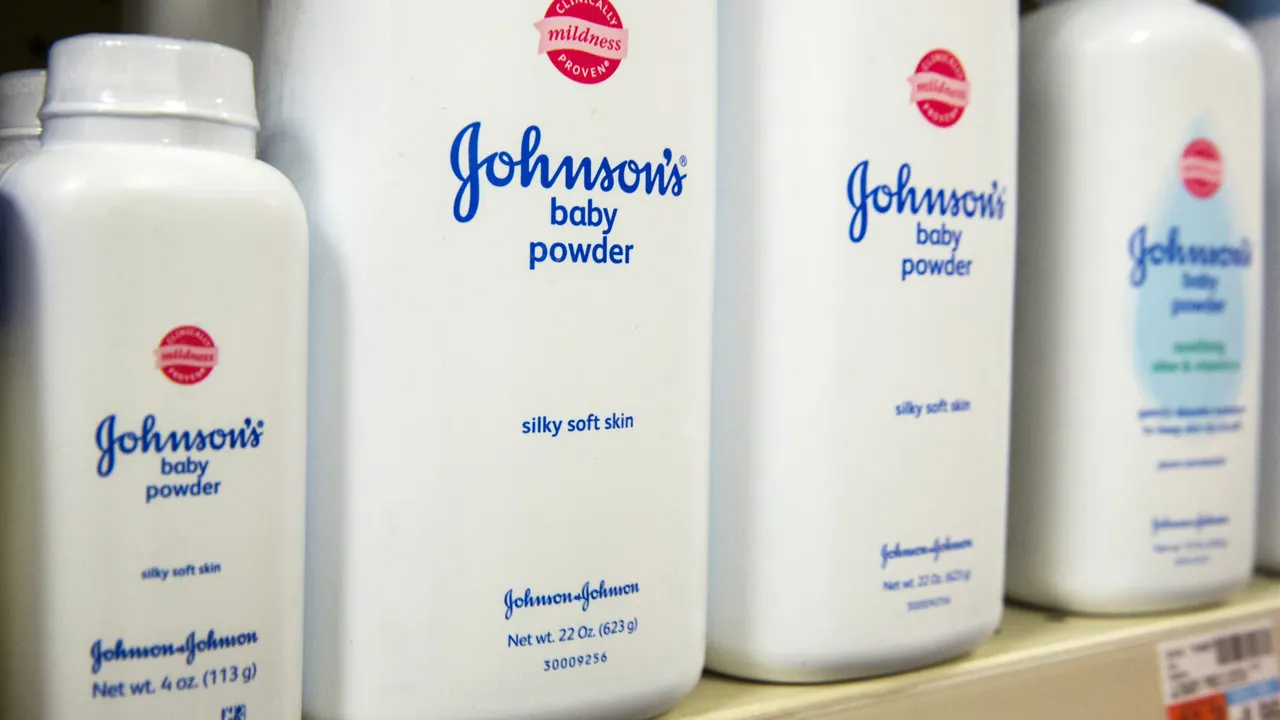
Johnson & Johnson (J&J) on Monday said it reached a settlement that it would pay an estimated $5.5 billion to settle tens of thousands of lawsuits alleging its baby powder and talc products cause ovarian cancer, which could end years of litigation on the subject.
The company said the proposed settlement would cover about 76,000 claims – including those that have been consolidated in federal court in New Jersey and related cases in state court – to cover nearly all the outstanding claims against J&J.
J&J previously settled most of the cases alleging its talc contained asbestos and caused mesothelioma.
The deal was confirmed by plaintiffs’ law firms on Monday, saying it was a good resolution after a decade-long court battle. The deal has to be accepted by 95% of the ovarian cancer claimants in state or federal court before it becomes final.
JOHNSON & JOHNSON CEO CREDITS TRUMP TAX POLICY FOR $55B US INVESTMENT PUSH, INCLUDING $1B IN FLORIDA
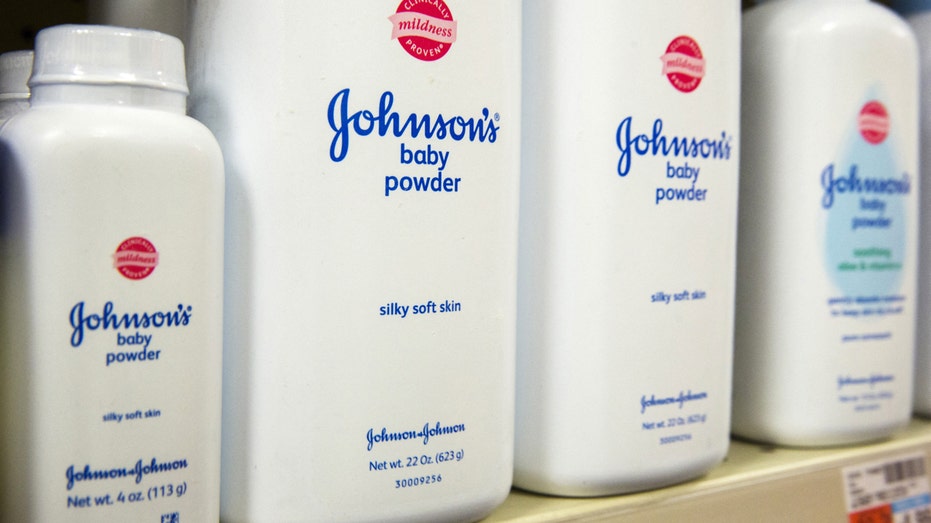
Johnson & Johnson announced a deal to settle talc powder lawsuits. (Lucas Jackson/Reuters)
J&J denied wrongdoing in its announcement of the settlement, saying that the plaintiffs weren’t able to prove their claims that the talc products caused cancer cases and that the settlement is a way of efficiently ending the litigation.
“While we are confident the company would ultimately have prevailed with further litigation, as it has in the vast majority of cases tried to date, this resolution allows the company to put this matter behind it and remain focused on its mission to develop medicines and devices that save lives,” said Erik Haas, worldwide VP of litigation at Johnson & Johnson.
The company expects to pay out $3 billion in 2027 and make further payments in 2028, though the deal could be worth more depending on how many people participate in the settlement.
JOHNSON & JOHNSON TO INVEST $1B IN PENNSYLVANIA MANUFACTURING FACILITY
| Ticker | Security | Last | Change | Change % |
|---|---|---|---|---|
| JNJ | JOHNSON & JOHNSON | 266.75 | +0.72 | +0.27% |
Chris Seeger, an attorney who represents about 2,500 clients with talc claims and helped negotiate the settlement, said J&J could ultimately pay $7 billion or more as the settlement doesn’t cap the total payout and rather assigns specific values to qualifying ovarian cancer claims.
Seeger told Reuters in an interview that the plaintiffs “got a fair settlement, and our clients are going to be happy with it.”
The settlement comes after J&J secured a series of courtroom victories, including in individual trials, moves to disqualify plaintiffs’ lawyers and rulings against experts used by plaintiffs. The company won a significant court victory last week when a federal judge cast doubt on individual plaintiffs’ ability to prove that talc specifically caused their ovarian cancer.
TEXAS AG SUES KENVUE, J&J OVER ‘DECEPTIVELY MARKETING’ TYLENOL TO PREGNANT WOMEN
Johnson & Johnson has denied that its talc products caused cancer and said the settlement is a way to end the litigation. (Cristina Arias/Cover/Getty Images)
J&J has long denied that its talc products caused cancer, saying the products were safe and didn’t contain asbestos. It stopped selling talc-based baby powder in the U.S. in 2020 and switched to a cornstarch product.
The company attempted a legal strategy in which shell-company subsidiaries declared bankruptcy in an effort to settle the cases, though that proved unsuccessful.
It had a mixed record when talc cases went to trial, winning some outright and reducing verdicts on appeal, though it was hit with a multibillion-dollar verdict in a case brought by 22 women.
GET FOX BUSINESS ON THE GO BY CLICKING HERE
The new settlement only applies to existing claims and doesn’t address future lawsuits. The exclusion of future claims made more money available to current plaintiffs and also accelerated the payments so that all claims will be paid within 18 months instead of being spread out over more than a decade, Seeger said.
Reuters contributed to this report.

Aevex stock rises on $88.1M precision strike system orders


The base features dried rye sourdough to deliver flavor and aroma.

Rosecliff founder and managing partner Mike Murphy discusses the chip sell-off as he highlights the U.S. becoming less dependent on Taiwan for the technology.
Meta CEO Mark Zuckerberg wrote in a new op-ed published on Tuesday that the rise of artificial intelligence should be used to empower all people rather than being centralized and controlled by a few institutions.
Zuckerberg wrote in The Wall Street Journal that people will be able to use superintelligence beyond human capacities in the next few years to create and discover new things, as well as drive economic growth and create opportunities. He noted that contrasts with some of the rhetoric from AI developers, and argued that diffusing AI access and its power broadly will lead to a better outcome.
“It is surprising that the discourse from many of those who are developing artificial intelligence is so filled with doom. I don’t understand why anyone who believes that AI will eliminate most jobs and much of humanity’s relevance would rush to build that future,” he wrote.
“The notion that AI is so dangerous that the only safe path is an extreme concentration of power seems dangerous. Historically, hoping that an absolute power will benevolently provide for humanity if sufficiently enlightened hasn’t led to safe or positive outcomes,” Zuckerberg explained.
ZUCKERBERG SAYS AI SHOULD EMPOWER PEOPLE, NOT REPLACE THEM, IN NEW META VISION

Meta CEO Mark Zuckerbreg argued that AI should be diffused rather than concentrated in a few institutions. ( John Nacion/Variety via Getty Images)
Zuckerberg said that there have been many transformative advances in technology throughout history that have stoked fears it would leave people behind, and that ultimately people enjoyed more prosperity, health and freedom as those technologies progressed.
“Putting power in people’s hands to pursue their own aspirations is how humanity has made the most progress. Novel ideas and major steps forward rarely originate from established institutions alone,” he wrote.
Zuckerberg alluded to how massive technological developments for humanity like flight, electricity and personal computing were advanced by individuals without deep ties to institutions. He said that as “everyone gains more powerful tools, each person will become more capable of shaping the future, not less.”
AI INNOVATION IS OUTPACING GOVERNANCE, LEAVING COMPANIES EXPOSED, EQUALAI WARNS
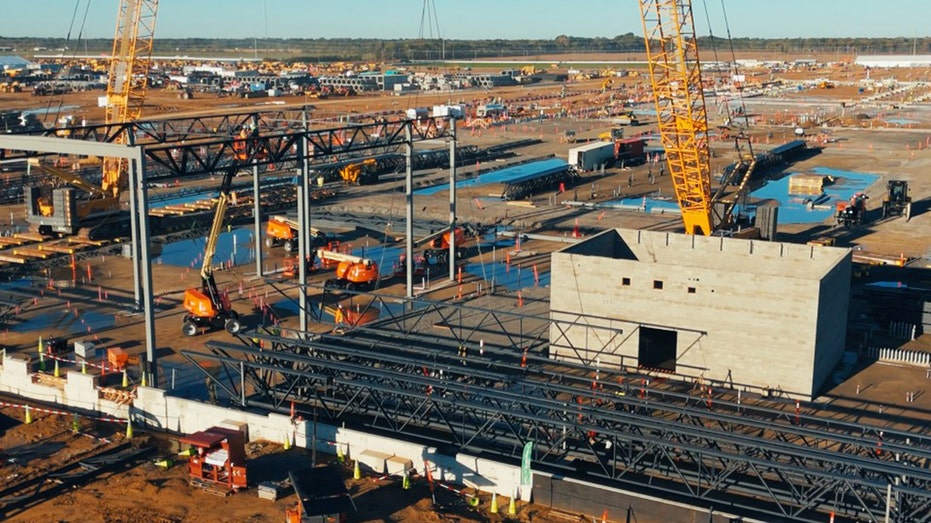
The rise of AI is leading to technological advances as well as investment in infrastructure, like new data centers. (Meta)
The Meta CEO acknowledged that there is a balance between the use of AI for automation and it being a tool that empowers innovation and enables people to expand skills and launch businesses, adding that if the balance leans toward automation it could have a negative impact on jobs and the economy.
“But if superintelligence is widely distributed, then I believe we will see more jobs in the future, not fewer. It will be significantly easier to start businesses without raising large amounts of capital.”
“I expect the economy will become more entrepreneurial with a greater number of people working at small businesses rather than larger companies,” he wrote.
PALANTIR CEO WARNS US AGAINST EUROPE’S AI REGULATION PATH, URGES TRUMP ADMIN TO NOT BAN OPEN MODELS
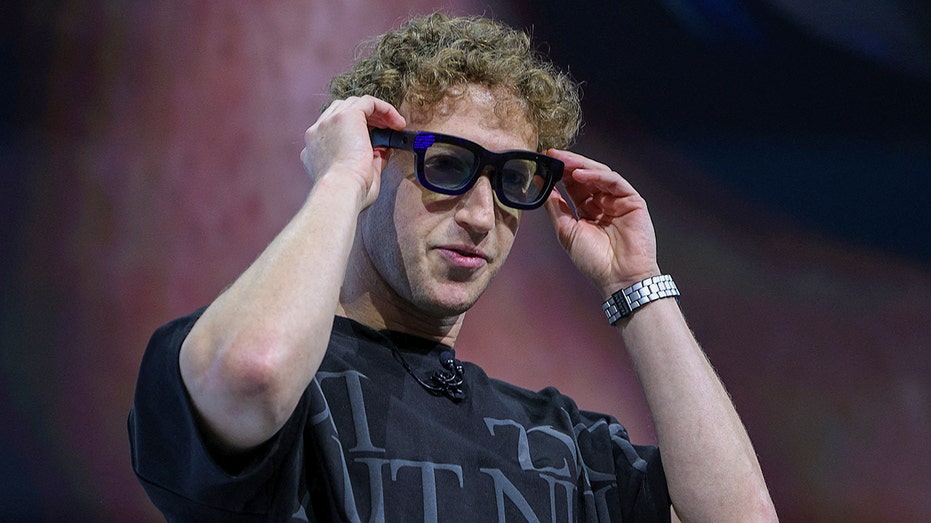
Zuckerberg said he thinks AI-powered superintelligence can bring about a positive future for humanity. (Reuters/Manuel Orbegozo)
Zuckerberg added that the development of superintelligence “will be the most profound technological advance we will see in our lifetimes.”
“Meta is committed to building with the principles of individual empowerment, invention and balance of power. The arc of human history has bent toward putting more power in people’s hands.”
“If these values lead the way, then I am optimistic that we can build a positive future for everyone,” he wrote.

Ipsos SA 2026 Q2 – Results – Earnings Call Presentation (OTCMKTS:IPSOF) 2026-07-28

TradFi perpetuals double to $2B on crypto exchanges: CryptoQuant report

Commanders Fire Ben Steele After Shocking Blood-Alcohol Levels

Renter of Home in Anne Heche Crash Denies Settlement With Son

No Jackpot Winner as $257 Million Prize Rolls Over to $269 Million Monday Draw

Weekend Open Thread: Staud – Corporette.com

Should you prepay your Home-loan? Let’s decode together. #homeloan #personalfinance #finance #fyp

8 Level Kekayaan Finansial, Kamu Ada di Level Berapa?

Chola Finance Q1 Results 2027 | Chola Finance Results Today | Chola Finance Share Latest News
-

 Fashion4 days ago
Weekend Open Thread: Brooks Brothers
-
 Business7 days ago
New Jersey voter registration controversy explained: How 6,600 noncitizens got on the rolls, and what happens next
-

 Tech2 days ago
Intel is reversing course and bringing hyper-threading back to its server chips
-
 Sports2 days ago
Commonwealth Games boxing: Jadumani Singh seals dominant 5-0 win over Pakistan’s Sumama Rehman to enter quarter-finals | Commonwealth Games News
-

 Crypto World6 days ago
Ethics, other provisions in crypto Clarity Act to be further discussed
-

 Politics1 day ago
Luke Littler dismantles Gerwyn Price to retain title in Blackpool
-

 Sports5 days ago
2026 3M Open leaderboard: Scottie Scheffler finds putter in Round 1, sits three back
-

 Fashion5 days ago
16 Dresses for the High Summer Event
-

 News Videos2 days ago
BITCOIN JUST ENTERED THIS CRITICAL ZONE…
-

 Politics14 hours ago
The Part of the Electric Transition Nobody Wants to Discuss
-

 News Videos5 days ago
The Peugeot Family: How 200 Years of an “Old Money” Dynasty Died in A Boardroom
-
 Entertainment4 days ago
A New Post-Apocalyptic Gundam Anime Series Blasts Into SDCC
-

 Politics2 days ago
Spain sweeps the board at 2026 World Cup with individual awards
-

 Crypto World3 days ago
Ripple bought a bank in pieces. The $4 billion audit
-

 Crypto World3 days ago
XRP Ledger adds $2.6B as RWA inflows rank second
-

 Crypto World5 days ago
Uniswap (UNI) pushes deeper into tokenized RWAs with permissioned trading pools
-

 Tech4 days ago
Anthropic launches Claude Opus 5, a cheaper AI model for coding, agents and enterprise workflows
-
 Entertainment4 hours ago
‘Stargate’ Creator’s New Sci-Fi Series Returns for Season 3 Tomorrow
-

 Entertainment3 days ago
Sara Gilson Killed By Husband After Viral “Pedophile” TikTok Video
-

 Crypto World7 days ago
Sablier Labs Enters Maintenance Mode, Halts Development
You must be logged in to post a comment Login