
Business
PepsiCo to cut prices on Lay’s, Doritos, Cheetos snack brands

PepsiCo CEO and chairman Ramon Laguarta discusses the removal of artificial colors and introduces ‘enhanced Gatorade’ that offers quicker hydration than water on ‘The Claman Countdown.’
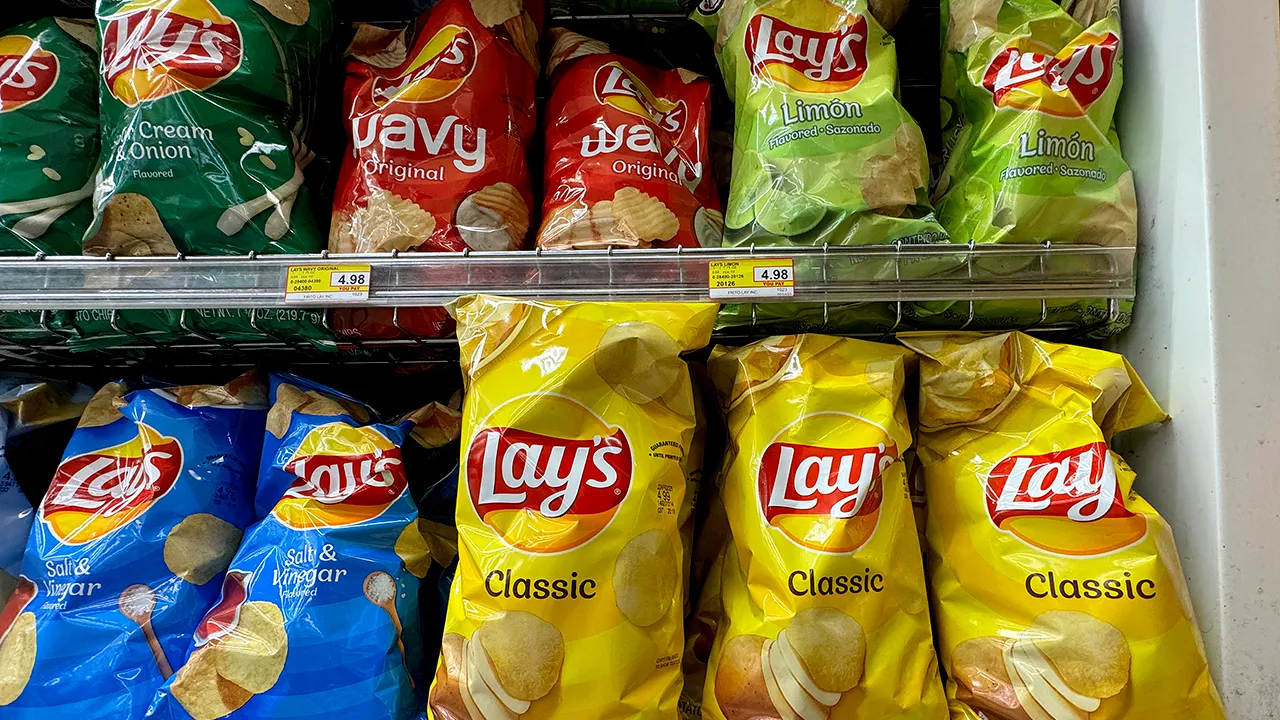
PepsiCo said it will cut prices on its core brands by up to nearly 15% as soon as this week to address consumer backlash over recent price hikes.
The snacks that will see prices lowered include products under its Lay’s, Doritos, Cheetos and Tostitos brands. It comes after the company received an influx of messages from upset consumers over the past year.
Food prices have remained elevated even as broader inflation has cooled.
POTATO CHIP BRAND UNVEILS BIGGEST REDESIGN IN NEARLY 100-YEAR HISTORY
Grocery prices rose 2.4% on an annual basis in December 2025, according to the Bureau of Labor Statistics’ consumer price index, and have surged since the COVID-19 pandemic.
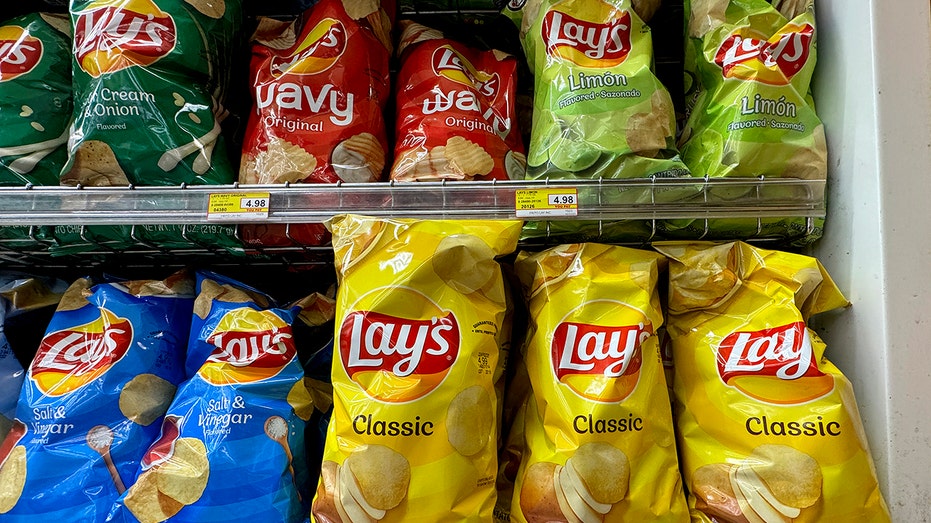
PepsiCo said it will cut prices on popular snack products. (Justin Sullivan/Getty Images)
DOMINO’S REBRANDS FOR FIRST TIME IN OVER A DECADE
“At the heart of our business are the consumers who choose our brands. They trust us to bring them moments of joy, and they’ve been honest with us about how rising everyday costs are making their daily decisions harder. Message received,” the company said on Tuesday.

Consumers flooded the company with messages complaining about prices. (Daniel Acker/Bloomberg via Getty Images)
PepsiCo Foods U.S. CEO Rachel Ferdinando said that consumers have made it clear that “they’re feeling the strain.”
COCA-COLA INTRODUCES CONTENDER IN PREBIOTIC DRINK TREND AS ‘GUT-HEALTHY’ SODAS GAIN POPULARITY
“Lowering the suggested retail price reflects our commitment to help reduce the pressure where we can,” Ferdinando said.
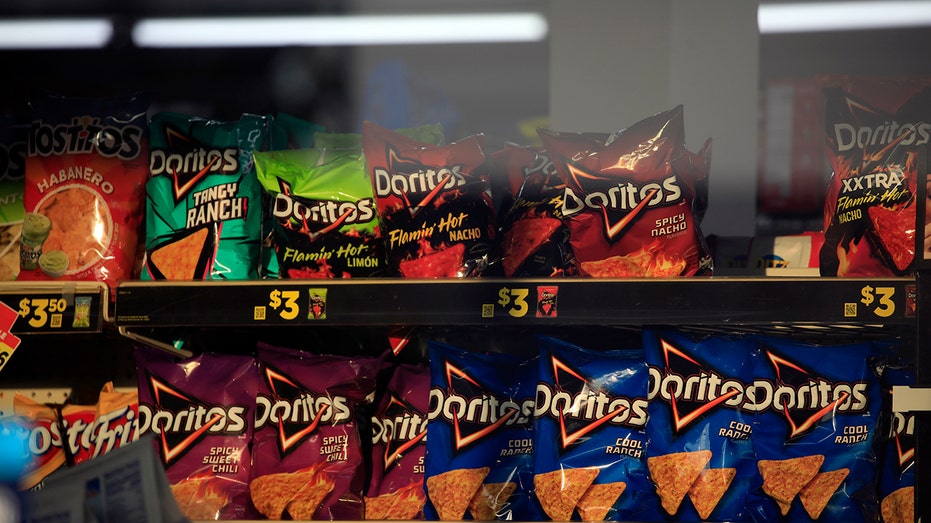
Grocery prices rose 2.4% on an annual basis in December 2025, according to the Bureau of Labor Statistics’ consumer price index. (Photographer: Luke Sharrett/Bloomberg via Getty Images)
The food conglomerate said that while it suggested new retail prices, which are slated to roll out this week, retailers ultimately set their prices, so “shoppers may see even greater savings depending on the store.”
GET FOX BUSINESS ON THE GO BY CLICKING HERE
The company said it will continue taking “steps to keep its most loved brands within reach” while maintaining quality. The price cuts are part of the company’s broader strategy to increase accessibility to its products.
PepsiCo shares are up more than 13% year to date.


The brokerage flagged that a significant portion of Indus Towers sites — around 10% — that were deployed in 2016–17 are up for renewal over the second half of calendar year 2026 and early 2027. This cluster of renewals comes at a time when industry wide tower additions are moderating, potentially intensifying competition among tower companies to retain tenants.
According to the broker, this dynamic may force Indus Towers to either offer discounts to retain clients such as Bharti Airtel and Vodafone Idea or risk losing tenancies to competitors. Even a limited discount to one operator could cascade across the entire tenant base, impacting revenues more broadly.
Jefferies has built in a conservative scenario where about 25% of such sites may not be renewed, leading to a 2-2.5% cut in revenue and EBITDA estimates for FY27 and FY28. Profit estimates have been reduced by up to 6%, reflecting both the renewal uncertainty and higher depreciation costs stemming from increased capital spending.
Capex remains a key overhang. Despite a nearly 30% decline in tower additions during the first nine months of FY26, overall capital expenditure rose sharply, driven by a surge in maintenance spending and continued investments in energy infrastructure such as solar solutions and lithium-ion batteries. Maintenance capex alone has nearly doubled year-on-year, indicating an ageing tower portfolio that will require sustained upkeep.

“Overall capex is expected to remain elevated in the range of Rs 72,000–80,000 crore annually over FY26-FY29, limiting free cash flow generation. This, in turn, is expected to cap dividend payouts, with Jefferies estimating free cash flow at only Rs 15-19 per share over FY27–FY29,” it said.
Growth outlook also appears modest. The brokerage expects Indus Towers to deliver just 4% revenue CAGR and 3% earnings growth over FY26-FY29, with EBITDA margins likely to remain largely range-bound. The limited growth visibility, combined with renewal-related risks, could restrict any meaningful re-rating in the stock.Valuation has also been adjusted downward. Jefferies has cut its target multiple to 6.5x EV/EBITDA, aligning it closer to long-term averages, and sees a downside of around 14% from current levels.
While there are potential upside triggers, such as stronger-than-expected capex from Vodafone Idea or better renewal outcomes, the near-term risk-reward remains skewed to the downside, according to the brokerage.
Business
Anand Rathi Share & Stock Brokers Q4 Results: Profit more than doubles to Rs 41 crore despite market crash

Operating performance remained robust during the quarter, with EBITDA increasing 51% YoY to Rs 110 crore. EBITDA margin expanded to 43.2% compared to 36.5% in the corresponding period last year.
For the full financial year FY26, the brokerage firm reported revenue of Rs 932 crore, marking a 10% increase over the previous year. EBITDA for the year rose 22% to Rs 380 crore, while net profit climbed 25% to Rs 129 crore. Margins also improved on an annual basis, with EBITDA margin at 40.7% and PAT margin at 13.8%.
The company’s performance was supported by strong growth in its non-core segments. Interest income from margin trading facility (MTF) grew over 50% YoY in Q4, while distribution income rose 34%. Other income from operations also saw healthy growth, indicating diversification beyond traditional broking revenues.
Despite a decline in broking revenues during the year, which fell 7% amid volatile market conditions and subdued investor sentiment, the company managed to offset the impact through expansion in high-margin verticals. This shift in revenue mix played a key role in boosting overall profitability.
Operational metrics also reflected steady growth. Assets under management rose 21% YoY to Rs 7,788 crore, while the MTF book expanded 61% to Rs 1,102 crore, highlighting increased client participation and deeper engagement with financing products. However, active client count saw a marginal decline of 3.9% YoY to 212,841.
The company’s board has proposed a dividend of Rs 5 per share for FY26.Management indicated that FY26 was marked by geopolitical uncertainties, global trade shifts and foreign institutional outflows, which weighed on broking activity. However, the firm remains focused on strengthening client relationships and leveraging its diversified business model to navigate market volatility.
Looking ahead, Anand Rathi expects continued momentum in its non-broking businesses, supported by rising demand for margin funding and distribution services. The company also highlighted its expanding footprint across more than 300 cities as a key driver for long-term growth.
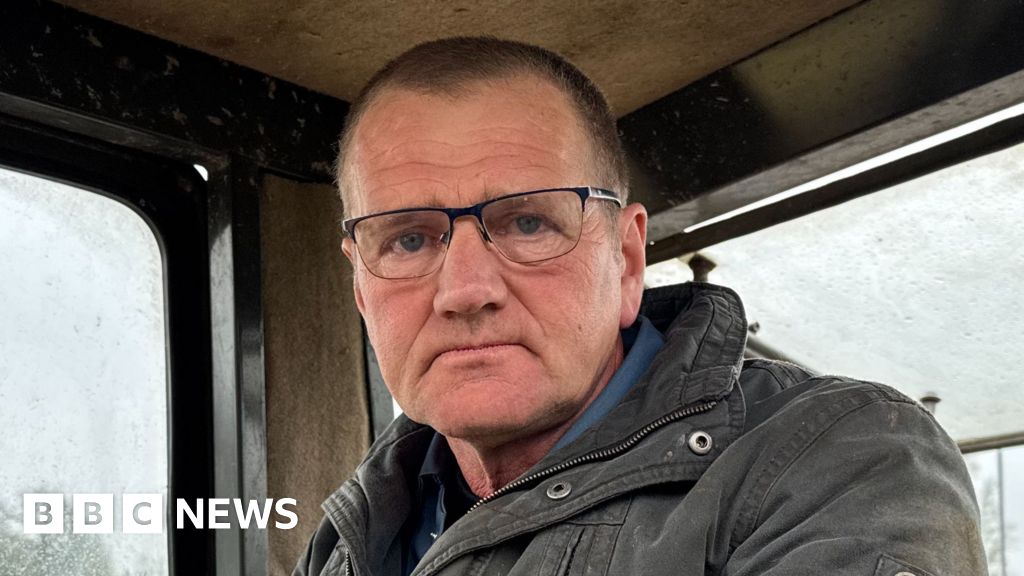
Farmers say they are being hit on several fronts, with the price of fuel and fertiliser all facing a hike.


Consumers are stretching ingredients to save money, says industry expert.
Business
Fragile US-Iran talks: Gold rises to Rs 1.53 lakh; silver jumps nearly Rs 10,000. What’s next?

Gold prices rose about 1% to Rs 1.53 lakh per 10 grams, while silver saw a sharper rally, jumping nearly Rs 10,000 or around 4% to Rs 2.5 lakh per kg,.
The gains in domestic bullion mirrored international trends, where gold advanced more than 1% as the US dollar weakened and hopes of a possible resumption in US-Iran talks provided additional support. A softer dollar typically boosts demand for gold by making it cheaper for holders of other currencies.
In global markets, spot gold was up 1.1% at $4,791 per ounce, while US gold futures rose 1% to $4,815. The movement came as reports suggested that negotiating teams from the US and Iran may resume talks later this week, easing some inflation concerns linked to geopolitical tensions.
Investors remain highly sensitive to developments around the conflict. Bob Haberkorn, senior market strategist at RJO Futures, said the direction of gold prices would hinge on progress in negotiations, adding that positive developments could push metals higher in the near term.
Back home, analysts pointed to continued volatility in the bullion market. Jateen Trivedi, VP Research Analyst for commodities and currency at LKP Securities, said geopolitical uncertainty continues to dominate sentiment.
“Volatility remains high as geopolitical uncertainty continues to dominate sentiment. In the near term, gold is expected to trade within a range of Rs 1,48,500–Rs 1,52,500,” he said.Despite Tuesday’s gains, technical indicators suggest that gold may face resistance near current levels. Ponmudi R, CEO of Enrich Money, said a sustained move above Rs 1,54,000 would be required to revive bullish momentum toward Rs 1,55,000.
“On the downside, a break below Rs 1,51,000 may extend weakness toward Rs 1,50,000 and further to Rs 1,48,000,” he said, adding that the broader bias remains cautious as momentum lacks conviction.
Silver, which tends to be more volatile than gold, also showed signs of technical weakness despite the sharp rally. According to Ponmudi, resistance is seen at Rs 2,40,000, and any recovery toward this level could face selling pressure. “A decisive break below Rs 2,37,000 could accelerate selling toward the Rs 2,35,000–Rs 2,33,000 range,” he noted.
The absence of daytime trading on MCX due to the holiday also meant thinner participation, potentially amplifying price moves during the evening session.

Operator
Welcome to Bank7 Corp. First Quarter 2026 Earnings Call. Before we get started, I’d like to highlight the legal information and disclaimer on Page 25 of the investor presentation.
For those who do not have access to the presentation, management is going to discuss certain topics that contain forward-looking information, which is based on management’s beliefs as well as assumptions made by and information currently available to management. Although management believes that the expectations reflected in such forward-looking statements are reasonable, they can give no assurance that such expectations will prove to be correct.
Such statements are subject to certain risks, uncertainties and assumptions, including, among other things, the direct and indirect effect of economic conditions on interest rates, credit quality, loan demand, liquidity and monetary and supervisory policies of banking regulators. Should one or more of these risks materialize or should underlying assumptions prove incorrect, actual results may vary materially from those expected. Also, please note that this conference call contains references to non-GAAP financial measures. You can find reconciliations of these non-GAAP financial measures to GAAP financial measures in an 8-K that was filed this morning by the company.
Representing the company on today’s call, we have Brad Haines, Chairman; Tom Travis, President and CEO; J.T. Phillips, Chief Operating Officer; Jason Estes, Chief Credit Officer; Kelly Harris, Chief Financial Officer; and Paul Timmons, Director of Accounting.
With that, I’ll turn the

Form 13F XY Planning Network For: 14 April

A version of this article appeared in CNBC’s Inside Alts newsletter, a guide to the fast-growing world of alternative investments, from private equity and private credit to hedge funds and venture capital. Sign up to receive future editions, straight to your inbox.
Fears of rising defaults and a systemic crisis from private credit don’t reflect the underlying fundamentals of private loan portfolios and returns, according to Blackstone’s head of private wealth.
A wave of redemptions is causing fresh concerns about the risks of private credit, with Ares Management, Apollo Global Management and others capping investor withdrawals from their funds last month. Joan Solotar, global head of Blackstone Private Wealth, which manages over $300 billion, said the capital flight isn’t justified by the likely returns and potential losses in individual funds.
“In my view, you’ve had all these calls that the house is on fire, when what we see is maybe a piece of burnt toast,” she said.
Solotar said investors and clients are asking important questions about transparency, loan losses, portfolio exposure to software and liquidity. She said some funds may see lower returns. Yet she said the broader case for private credit and access to private capital remains stronger than ever.
Some of worst-case scenarios published by Wall Street analysts, she said, call for loan defaults of up to 15%. Spread over three years, the loss of total annual return would be about 300 basis points. If credit spreads widen, she said the returns for private credit funds could fall to around 3% to 5%, down from the current 6% to 9% that is common for many funds.
“Is 3% to 5% return a disaster?” she said. “And what’s happening in the public equivalents? Because when I look at the public equivalents, they’re actually down. So we’re still outperforming, and that’s the key. I think it’s a matter of staying calm, understanding what you own, what the real downside is.”
Of course, many bank CEOs, analysts and investors disagree, saying private equity firms are understating the potential risks and exposure. The most cited risk is software firms, which make up a large share of private credit lending and are now seen as vulnerable to disruption from artificial intelligence. The Wall Street Journal recently found that large private credit funds managed by Blackstone, Apollo, Ares and Blue Owl had more exposure to the software firms than their filings suggest.
Solotar said less than 5% of the assets in Blackstone funds are vulnerable to AI. While some investors and commentators have criticized the lack of transparency and disclosure in private credit funds, she said the funds often disclose more loan information than banks.
“The word ‘private’ only relates to the fact that these aren’t publicly traded,” she said. “But it doesn’t mean secret or shadowy. I was a financial institutions analyst for many years, and I will tell you the banks do not let you know how they’re carrying any of their loans. We actually show you at the single, individual loan level. There is so much transparency, and we report that every single quarter.”
Solotar likens the current period in private credit to real estate funds after the pandemic. In 2022, Blackstone limited withdrawals from its $60 billion flagship real estate fund as investors worried about the decline in commercial real estate. Over time, withdrawals stabilized, all redemptions were honored and the property market rebounded.
She said the current “stress test” in private credit will actually prove its value in portfolios over the longer term. Institutional investors have proven for years that private investments provide important balance in a portfolio, with less volatility, longer time horizons and often better long-term returns than publicly traded investments.
The private equity industry’s efforts to expand private credit and private assets into 401(k) plans has come under growing criticism, especially given the current redemptions. Former Goldman Sachs CEO Lloyd Blankfein recently told Bloomberg that putting alternative assets into the retirement portfolios of everyday investors was “crazy.”
“Why are you going into this dangerous territory just to make your business a little bit bigger when that represents such a big potential problem in the future?” Blankfein told Bloomberg. “These securities are opaque and may be riskier than most.”
Solotar said Blankfein’s comments highlighted the need for more education.
“I think everyone has to be very well educated on what they’re putting in the portfolios, how the structures work, the limits of liquidity, how they interact with other parts of the portfolio,” she said. “And I would ask Lloyd if he has private investments in his portfolio. I’m guessing the answer is yes.”
Solotar said the demand for private investments will only continue to grow as investors seek to mimic the returns and strategies of large institutions, like endowments, pension funds and sovereign wealth funds that have been allocating to alts for decades. Given the vastly larger size of private markets compared to public, the alts revolution is still in its early stages.
Blackstone Private Wealth’s $300 billion in assets today is up from $58 billion in 2017. Solotar said Blackstone aims to grow its AUM to $1 trillion in the coming years.
“I like to say we are not even in the first inning, I think we’re still in spring training,” she said. “When you think about how pension funds are allocated, about a third of their investments are in private. The top foundations and endowments are at similar levels, and the same with family offices. And if you look at retirement accounts, you’re less than 1% or close to zero. So I see this as a very long-term path of travel, with the same trends happening globally, and it is super early.”

American Airlines and United Airlines airplanes at the Terminal A at Newark Liberty International Airport (EWR) in Newark, New Jersey, US, on Thursday, Jan. 12, 2023.
Aristide Economopoulos | Bloomberg | Getty Images
United Airlines CEO Scott Kirby reportedly floated the idea of a potential tie-up with rival American Airlines to the Trump administration earlier this year, a suggestion that if acted upon, would create the world’s largest airline.
While the Trump administration has appeared more open to mega deals than its predecessors, such a merger would face heavy regulatory scrutiny with the top four airlines (those two carriers, plus Delta Air Lines and Southwest Airlines) already dominating about 80% of domestic capacity. If they combined, American and United would have a roughly 40% domestic share, according to airline-data firm OAG.
“This would be the biggest of all time. I can’t even see the slightest chance that a court would allow it,” said George Hay, a law professor at Cornell University.

American and United declined to comment on the discussion of a merger, which was reported Monday by Bloomberg. The White House didn’t immediately comment on the reported discussion.
American shares were up 9% on Tuesday morning. Seaport Research Partners airline analyst Daniel McKenzie said he attributed the move “to short covering rather than the market assigning legitimacy to the merger idea.”
He added that the deal would be “be dead on arrival, though politely reviewed until the public backlash became too deafening.”
If the Justice Department “doesn’t object to that, then what would they object to? It is very hard to imagine a deal of that magnitude and concentration going through,” said Samuel Engel, senior vice president at consulting firm ICF.
He said consolidation allows carriers to better control capacity, which in turn can drive up fares, a key consideration generally with antitrust investigations
An American-United merger would likely require significant divestitures on routes where the two carriers’ combining would mean only one or two airlines are serving that route, said TD Cowen airline analyst Tom Fitzgerald, who said 289 routes fit that criteria now.
The Trump administration has shown a warmth toward mergers in the industry, however.
“Is there room for some mergers in the aviation industry? Yeah, I think there is,” Transportation Secretary Sean Duffy told CNBC’s Phil LeBeau last week, regarding industry consolidation. Duffy said President Donald Trump “loves to see big deals happen, adding that he would “have to review” a tie-up.

Delta and United already account for most of the U.S. industry’s profit.
American had fallen behind both airlines as it struggled to capitalize on higher-spending customers that are driving major airlines’ revenue in recent years. Kirby, whom American fired in 2016, has gone head-to-head with his former employer, including in key markets like Chicago.
The Biden administration challenged two major airline tie-ups, and won. A federal judge knocked down American’s partnership with JetBlue Airways in the Northeast in 2023 and in early 2024, a court ruled against JetBlue’s planned acquisition of Spirit Airlines, which is now in its second bankruptcy.
JetBlue and United formed a partnership that allows customers to book on each other’s airlines but falls short of the schedule coordination under that failed American deal. Kirby has expressed hesitation about taking that deal further.
“I like the partnership with JetBlue,” Kirby said in Boston last month. “I think highly of their team. They’ve got the right DNA and culture, but … we’re doing a great job growing. I feel really good about our standalone.
“Mergers are big and hard and complicated,” he added.


The soft, chewy cookies come in two flavors.

Samsung R95H (QE75R95H) Review

XL bullies savaged dad then fought their way into family home with children inside
Indus Towers: Jefferies cuts rating to underperform, gives reasons for bear outlook


-

 Politics4 days ago
US brings back mandatory military draft registration
-
 Sports4 days ago
Man United discover Nico Schlotterbeck transfer fee as defender reaches Dortmund agreement
-

 Fashion4 days ago
Weekend Open Thread: Veronica Beard
-

 Tech7 days ago
How Long Can You Drive With Expired Registration? What Florida Law Says
-

 Politics4 days ago
Malcolm In The Middle OG Turned Down ‘Buckets Of Money’ To Appear In Reboot
-

 Politics2 days ago
World Cup exit makes Italy enter crisis mode
-

 Crypto World5 days ago
Canary Capital Files SEC Registration for PEPE ETF
-

 Business4 days ago
Tesla Model Y Tops China Auto Sales in March 2026 With 39,827 Registrations, Beating Cheaper EVs and Gas Cars
-

 Crypto World23 hours ago
The SEC Conditionalises DeFi Platforms to Be Avoided for Broker Registration
-

 Crypto World19 hours ago
SEC Signals Exemption for Crypto Interfaces From Broker Registration
-

 Crypto World6 days ago
Bitcoin recovers as US and Iran Agree a Ceasefire Deal
-
 NewsBeat2 days ago
Pep Guardiola and Gary Neville agree over Arsenal title problem that benefits Man City
-

 Business4 days ago
OpenAI Halts Stargate UK Data Centre Project Over Energy Costs and Copyright Row
-

 Business3 days ago
Ireland Fuel Protests Enter Day 5 as Blockades Spark Shortages and Government Prepares Support Package
-

 Politics4 days ago
LBC Presenter Mocks Trump Over Iran War Failures
-

 Crypto World4 days ago
Federal judge blocks Arizona from bringing criminal charges against Kalshi
-

 Tech5 days ago
A version of Windows 10 released a decade ago is now eligible for additional security patches
-
 NewsBeat2 days ago
JD Vance announces ‘no agreement’ with Iran over nuclear weapons fear
-

 Business4 days ago
IMF retains floor for precautionary balances at SDR 20 billion
-

 NewsBeat8 hours ago
Trump and Pope Leo: Behind their disagreement over Iran war
You must be logged in to post a comment Login