

Business
Perfetti Van Melle to add Airheads innovation



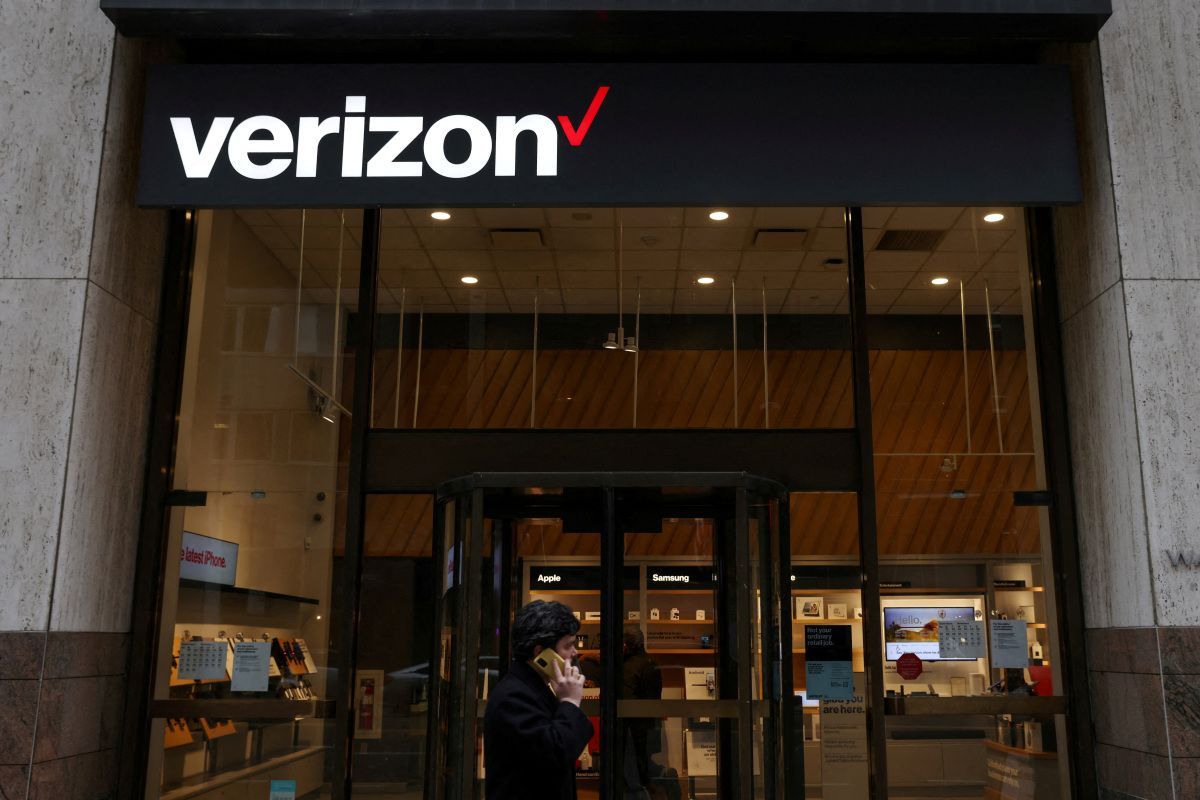
NEW YORK — Verizon Communications is experiencing service disruptions affecting hundreds of subscribers Wednesday, May 13, 2026, according to real-time alerts and user reports circulating online, though the issues appear limited in scope rather than a repeat of the massive nationwide outages that plagued the carrier earlier this year.
The outage monitoring account @status_is_down on X posted at 14:22 GMT, stating “Verizon is down for hundreds of subscribers right now. Are you one of them?” and linking to a community forum discussion titled “Is Verizon down May 13 2026?” The post quickly gained traction among frustrated customers seeking confirmation that their connectivity problems were not isolated.
Downdetector and similar platforms showed elevated but not catastrophic reports for Verizon wireless and 5G home internet in the past 24 hours. Most complaints clustered around mobile phone service and data connectivity rather than a complete network failure. Verizon’s official status dashboard indicated normal operations across major regions as of mid-morning Eastern time, with no broad alerts posted.
This latest flare-up comes months after Verizon’s infamous January 14 nationwide outage that left millions in “SOS-only” mode for nearly 10 hours. That incident, blamed on a software issue rather than a cyberattack, prompted account credits, an FCC investigation and heightened scrutiny of the carrier’s reliability claims. Smaller disruptions have occurred since, including a May 5 fiber-cut event in Western Pennsylvania that affected eastern U.S. customers.
Today’s reports appear more regional or device-specific. Customers in various markets described dropped calls, slow data speeds, failed texts and intermittent 5G connections. Some noted their phones switching to Wi-Fi calling automatically or displaying error messages. The volume of complaints — hundreds rather than the millions seen in January — suggests localized congestion, maintenance activity or a targeted software glitch rather than a core network collapse.
Verizon has not issued a public statement specific to May 13 issues. The company’s support pages encourage users to check network status via the My Verizon app or website. Standard troubleshooting steps recommended by the carrier include restarting devices, toggling airplane mode, updating software and testing Wi-Fi calling as a temporary workaround.
For those still affected, experts advise patience. Many such incidents resolve within minutes to a few hours as automated systems reroute traffic or engineers address underlying causes. Verizon typically credits accounts when outages exceed certain thresholds, though no formal announcement has been made for today’s reports.
The timing coincides with peak weekday usage across the U.S., when streaming, remote work and commute-related data demands strain networks. Verizon serves more than 146 million wireless subscribers and continues expanding its 5G Ultra Wideband footprint. Rapid growth in data consumption from AI applications, video calls and connected devices has increased pressure on infrastructure even as the carrier invests billions in upgrades.
Industry observers note that occasional service hiccups have become an unfortunate reality for all major carriers. AT&T and T-Mobile have faced similar scattered complaints in recent months. No network achieves perfect uptime given the complexity of modern telecommunications systems involving thousands of cell sites, fiber backhaul and software layers.
Customer frustration is understandable. Mobile service has become essential for everything from emergency calls to daily banking and navigation. When issues arise, even limited ones affecting hundreds can generate widespread social media buzz and anxiety, especially after high-profile outages earlier in 2026. Many users maintain backup options such as secondary SIM cards from competitors or satellite messaging features on newer phones.
Verizon has emphasized network reliability in marketing campaigns, positioning itself as the “most reliable network.” Today’s reports, however minor, risk reigniting debates about whether such claims hold up under real-world stress. Consumer advocates continue pushing for automatic compensation during disruptions and greater transparency from carriers.
For businesses and enterprise customers relying on Verizon, any downtime carries higher stakes. Dedicated support lines and service-level agreements often provide faster resolution, but consumer accounts depend on self-service tools and general updates. The company’s Fios fiber internet service appeared less impacted today, with reports focusing primarily on wireless.
As of late morning on May 13, the situation remained fluid. Some users reported partial restoration while others continued experiencing problems. Monitoring accounts like @status_is_down play a valuable role in crowdsourcing real-time information when official channels lag. The linked forum thread on DesignTaxi showed users sharing screenshots of error messages and discussing potential fixes.
Looking ahead, Verizon is expected to continue its aggressive rollout of advanced 5G and future 6G technologies. These expansions aim to reduce future incidents while supporting exploding data demands. In the meantime, customers can stay informed through Verizon’s outage map, the My Verizon app and third-party trackers like Downdetector.
The May 13 reports serve as a reminder of how dependent modern life has become on seamless connectivity. While not rising to the scale of January’s crisis, the issues affecting hundreds highlight ongoing challenges in maintaining flawless service across a vast network. Verizon has historically resolved such matters quickly and offered goodwill gestures to impacted subscribers.
Users are advised to document any prolonged disruptions for potential credits and to explore alternative communication methods until service stabilizes. The carrier’s commitment to network investments suggests these types of events will become less frequent over time, though complete elimination remains unlikely in such a complex system.
For now, most Verizon customers appear unaffected, with the reported problems limited to a subset of subscribers. The situation underscores the importance of diversified connectivity options and staying informed during peak usage periods. As the day progresses, further updates from Verizon or monitoring services will clarify the full scope and resolution timeline.

BEIJING — President Donald Trump arrived in the Chinese capital Wednesday for a two-day summit with President Xi Jinping, the first U.S. presidential visit to China since 2017, as the world’s two largest economies navigate trade tensions, the Iran conflict and technology competition in a dramatically changed global landscape.
Here are 10 essential things to understand about the high-stakes meeting:
1. Modest expectations replace grand ambitions. Unlike Trump’s 2017 trip billed as a celebratory “state visit-plus” with lavish pageantry and headline-grabbing deal announcements, this summit is more restrained. Officials on both sides describe it as a “risk-management” exercise focused on stabilizing relations rather than resetting them. No major structural breakthroughs are anticipated on core disputes.
2. Trade tops the agenda with limited deliverables. Trump is seeking Chinese purchases of U.S. agricultural products, Boeing aircraft and energy exports to show tangible wins for American workers. Beijing is expected to announce some buys and possibly new trade and investment forums, but analysts doubt anything approaching the scale of past promises that often went unfulfilled. Tariffs remain a sticking point after recent escalations and partial rollbacks.
3. Iran and the Strait of Hormuz loom large. With the U.S.-Israel conflict against Iran disrupting global oil flows, Trump is pressing China — Iran’s top oil buyer — to help reopen the Strait of Hormuz and support diplomatic efforts. Beijing has resisted deeper involvement but may offer symbolic gestures to maintain stability and protect its energy imports.
4. Taiwan remains highly sensitive. Discussions on arms sales and Beijing’s claims over the self-governing island are expected. China wants U.S. restraint on military support for Taiwan, while Trump’s team views it as leverage. Any movement here could have outsized implications for regional security.
5. Tech and AI feature prominently. The summit includes rare earths and critical minerals access, export controls and artificial intelligence cooperation or guardrails. Trump brought a delegation of U.S. tech executives, including Elon Musk and Tim Cook, signaling interest in business deals alongside government talks.
6. China holds a stronger hand than in 2017. Beijing’s economy is less dependent on the U.S. market, with diversified trade partners and advances in self-reliance. Xi enters talks with greater confidence despite domestic challenges, while Trump faces domestic pressure from inflation and the Iran conflict.
7. Security is unprecedented. Beijing has locked down parts of the capital, closed tourist sites and tightened airspace. The welcome includes formal ceremonies but scaled-back pomp compared to nine years ago, reflecting cooler bilateral ties.
8. Business leaders join the trip. The presence of high-profile CEOs underscores the economic focus. Announcements involving Tesla, Apple, Boeing and others could emerge, blending government diplomacy with commercial opportunities.
9. Domestic politics shape both sides. Trump needs visible wins ahead of midterm elections. Xi seeks stability to focus on China’s economic recovery. The summit offers optics of engagement even if substance is limited.
10. Long-term impact may be incremental. Analysts describe the gathering as a checkpoint rather than a turning point. Progress on fentanyl precursors, detainee releases or rare earths extensions is possible, but deep structural issues like industrial subsidies and technology competition will persist beyond these two days.
Trump touched down Wednesday evening local time and was greeted with a formal welcome ceremony. Formal meetings with Xi are scheduled for Thursday and Friday at the Great Hall of the People. The visit was delayed from earlier in the year due to the Iran conflict.
The summit occurs against a backdrop of cautious optimism mixed with deep mutual suspicion. Both leaders have met multiple times since Trump’s return to office, including in Busan last year, establishing a working rapport built on transactional deal-making. Yet underlying strategic competition defines the relationship.
U.S. officials emphasize reciprocity and fairness. Chinese counterparts stress mutual respect and non-interference. Public readouts will likely differ, with each side highlighting its priorities. Markets are watching closely for any signals on tariffs, supply chains or investment flows.
Security around the event is tight, reflecting the stakes. Beijing has imposed restrictions on movement and heightened digital monitoring. For Trump, the trip offers a chance to project strength on the global stage while addressing domestic economic concerns. For Xi, hosting the first U.S. presidential visit in nearly a decade projects China’s centrality in world affairs.
The two-day schedule includes bilateral meetings, possible cultural elements and business engagements. Outcomes could include memorandums on specific sectors, extensions of existing critical minerals agreements and commitments to future dialogue. However, few expect resolution of fundamental differences over technology competition, human rights or geopolitical flashpoints.
Global reactions have been mixed. Allies monitor for impacts on supply chains and security commitments. Emerging markets hope for reduced tensions that could stabilize commodity prices. The summit’s success will be measured in incremental steps rather than sweeping agreements.
As talks unfold, all eyes remain on whether the leaders can manage competition without confrontation. The Trump-Xi relationship has defined much of global politics in recent years. This Beijing meeting, though scaled back, continues that legacy at a pivotal moment for the international order.


Hires to drive global growth, lead research for California almonds group.

Tesco has suffered a significant setback in the long-running equal pay battle being waged by tens of thousands of its shop floor staff, after the Court of Appeal threw out the supermarket’s challenge to the way an Employment Tribunal had been assessing the value of jobs carried out by its customer assistants.
In a judgment handed down on 12 May 2026, the Court of Appeal dismissed Britain’s biggest grocer’s appeal against the Tribunal’s approach to determining the job facts of customer assistants and warehouse operatives, a critical step in the so-called “equal value” process that underpins the entire dispute.
The ruling comes mid-way through a separate Employment Tribunal hearing in which Tesco is attempting to justify paying its predominantly female store workforce less than its largely male distribution centre staff. The supermarket has leant heavily on the argument that the differential reflects “market rates”, a defence lawyers at Leigh Day, who act for more than 16,000 claimants, insist cannot lawfully stand.
At the heart of the appeal was Tesco’s attempt to stop the Tribunal from relying on the company’s own training manuals and operational documents to establish what customer assistants and warehouse operatives are required to do day-to-day. For Britain’s SME employers and retail bosses watching closely, the Court of Appeal’s response will make uncomfortable reading.
The judges upheld the Tribunal’s approach, accepting that Tesco operates in a highly regulated environment, deploys sophisticated digital stock systems and maintains exhaustive training materials precisely to ensure work is carried out consistently across every one of its stores. The Court found Tesco had a “strong business need” for these roles to be performed in the same way throughout its operations, and that, absent clear evidence to the contrary, its own training documents could properly be treated as determinative of what staff were required to do.
The implications stretch well beyond Welwyn Garden City. The judgment effectively rejects attempts to force thousands of workers in mass equal pay claims to individually prove every nut and bolt of their roles when the employer has itself standardised the work. For any business with a structured operating model, supermarkets, hospitality chains, logistics operators and the wider SME retail community, the precedent is plain: your own training materials and operating manuals may be used as evidence against you.
The Court of Appeal also repeated earlier criticisms of Tesco’s evidential approach, raising concerns about both the nature and presentation of witness testimony deployed during the litigation. In a further blow to large employers, the judgment offered fresh guidance that tribunals in mass equal pay claims may, where appropriate, assess jobs more generically rather than insisting every single claim be picked apart on an overly individualised basis, a clarification that could substantially reduce the runway of delay and procedural complexity that often accompanies these disputes.
Kiran Daurka, employment partner at Leigh Day, said the ruling was a significant moment for access to justice. “The Court of Appeal has recognised the importance of removing unnecessary hurdles that prevent everyday people from accessing justice in complex equal pay litigation,” she said. “This judgment is a welcome clarification that, in large-scale cases involving sophisticated respondents like Tesco and other large retailers, tribunals can take a practical and proportionate approach to assessing jobs, which then mitigates against unnecessary complexity to delay or obstruct claims.
“Our clients have always maintained that these cases should focus on the reality of the work being done, not on creating artificial barriers that make equal pay claims impossible to pursue. This ruling will help future claims progress in a more streamlined and accessible way.”
For Tesco, and for every employer with a workforce split between front-of-house and back-of-house operations, the message from the Court of Appeal is unambiguous. The defence of “that’s just what the market pays” is wearing thin, and the documents sitting on a company’s own intranet may yet prove to be the most powerful evidence claimants ever need.

Jamie Young
Jamie is Senior Reporter at Business Matters, bringing over a decade of experience in UK SME business reporting.
Jamie holds a degree in Business Administration and regularly participates in industry conferences and workshops.
When not reporting on the latest business developments, Jamie is passionate about mentoring up-and-coming journalists and entrepreneurs to inspire the next generation of business leaders.

OpenTheBooks CEO John Hart joins Varney & Co. to discuss long-term Social Security and Medicare deficits as fiscal pressures mount.
Social Security beneficiaries are expected to see a larger cost-of-living adjustment (COLA) next year amid rising inflation, according to new reports.
An analysis by The Senior Citizens League (TSCL) predicts that the 2027 COLA will be 3.9%, which would represent an increase of 1.1 percentage points from this year’s 2.8% COLA. TSCL’s previous prediction for the 2027 COLA was 2.8% in its February and March estimates.
TSCL estimates that the average Social Security benefits check for retired workers would rise by $81.17, up from $2,081.16 to $2,162.33.
“Many seniors are telling us the same thing: As inflation picks back up, life still does not feel affordable. The average senior already lives on much less than younger Americans, according to the Census Bureau, and our supporters constantly tell us they feel like they’re falling farther and farther behind,” said TSCL Executive Director Shannon Benton.

An analysis by The Senior Citizens League (TSCL) predicts that the 2027 COLA will be 3.9%. (Tom Williams/CQ-Roll Call, Inc via Getty Images)
The report noted that pressure from elevated oil prices could push inflation even higher, as energy prices impact household budgets directly and through higher transportation costs for other goods.
The nonpartisan Committee for a Responsible Federal Budget (CRFB) estimated that the 2027 COLA will be 3.8% based on the latest inflation data – slightly lower than the TSCL’s estimate.
CRFB notes that depending on inflation data over the next five months, the COLA will likely end up somewhere in a range between 3% and 4.5%.
SOCIAL SECURITY’S MAIN TRUST FUND FACES DEPLETION IN 2032, TRIGGERING AUTOMATIC BENEFIT CUTS
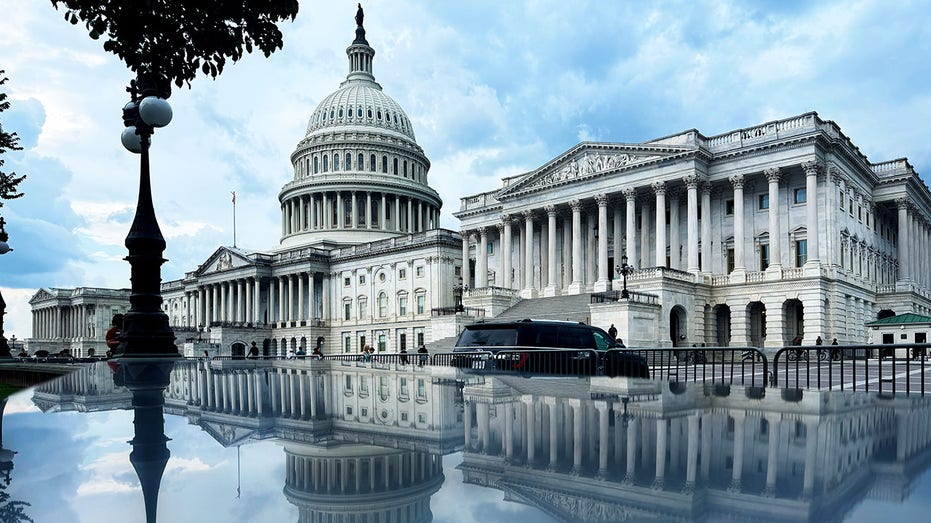
Social Security’s main trust fund is projected to become insolvent in 2032. (Demetrius Freeman/The Washington Post via Getty Images)
It also cautioned that if wages don’t rise in response to the ongoing rise in inflation, it will widen Social Security’s budget deficit and accelerate the insolvency of a key trust fund.
“If the recent spike in inflation boosts the COLA to 3.8% without increasing wages, we estimate it would worsen Social Security’s shortfall by roughly $300 billion over the next decade and advance the insolvency of the old age trust fund by three months from late 2032 to earlier in the year,” CRFB noted.
NEW PROPOSAL WOULD CAP SOCIAL SECURITY BENEFITS AT $100K FOR WEALTHY COUPLES
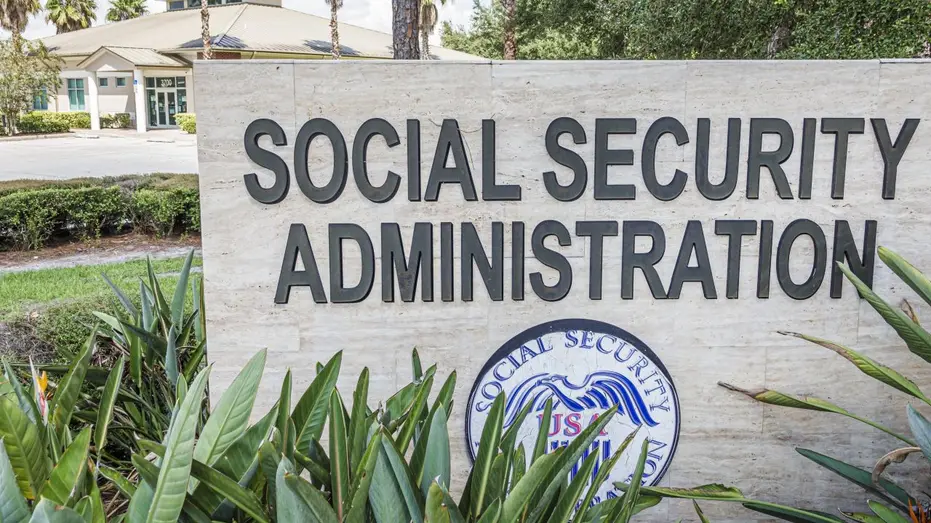
The SSA will be required to cut Social Security benefits if the program’s trust fund is depleted. (Jeffrey Greenberg/Education Images/Universal Images Group via Getty Images)
Once the trust fund is depleted, the Social Security Administration will be required by law to cut benefits to match incoming payroll tax revenues, which CRFB estimates will result in a 25% cut for beneficiaries and would “erase almost a decade’s worth of COLA increases.”
CRFB has offered a number of proposals aimed at improving Social Security’s solvency, including a cap on COLAs for those with the largest benefits and highest lifetime incomes that would be capped to match the benefits paid to middle and high earners.
GET FOX BUSINESS ON THE GO BY CLICKING HERE
The group has also proposed a six-figure limit, which would cap total benefits for wealthy couples at $100,000 or individuals at $50,000; as well as an employer compensation tax that would apply a flat tax rate to all employer compensation costs – including wages and fringe benefits like health insurance and stock options.

Form 13F Synergy Asset Management For: 13 May

NEW YORK — Palantir Technologies Inc. shares fell sharply Wednesday, trading down more than 3.96% to $130.61 in morning action on May 13, 2026, as investors locked in gains following the company’s blockbuster first-quarter earnings and aggressive full-year guidance raise.
The pullback comes just days after Palantir reported record results that exceeded Wall Street expectations on nearly every metric. The data analytics and artificial intelligence platform company posted Q1 revenue of $1.63 billion, up 85% year-over-year — its fastest growth rate since going public in 2020. Adjusted earnings per share reached 33 cents, beating estimates, while U.S. revenue surged 104% to $1.28 billion.
U.S. commercial revenue jumped 133% to $595 million, and government revenue climbed 84%. The company closed 206 deals worth at least $1 million during the quarter, underscoring strong demand for its Gotham, Foundry and AIP platforms. Palantir raised its full-year 2026 revenue guidance to between $7.65 billion and $7.66 billion, representing 71% growth, and lifted its U.S. commercial revenue target to more than $3.22 billion, implying at least 120% expansion.
Despite the strong numbers and upbeat outlook from CEO Alex Karp, who highlighted accelerating AI adoption and “commodity cognition,” the stock has seen typical post-earnings volatility. Palantir shares had rallied significantly into the May 4 report, pushing the company’s market capitalization well above $300 billion at peaks. High valuations — trading at elevated price-to-sales multiples — often lead to profit-taking when growth expectations are already priced in aggressively.
Analysts remain largely bullish. Consensus price targets hover around $190-$200, implying substantial upside from current levels. Firms have praised Palantir’s Rule of 40 score exceeding 100, robust cash flow generation and expanding customer base across government and commercial sectors. However, some caution that the premium valuation leaves little room for disappointment in future quarters.
Palantir’s business model centers on its artificial intelligence platform, which helps organizations integrate massive datasets and deploy AI models at scale. Government contracts, particularly with U.S. defense and intelligence agencies, continue to provide stable revenue, while commercial adoption has accelerated dramatically under the current administration’s focus on technology and data-driven decision-making.
The company ended the quarter with strong liquidity and continues to invest in talent and infrastructure to support growth. Adjusted operating margins reached impressive levels, reflecting improving operational leverage as the platform scales. Free cash flow generation remains a highlight, supporting potential future capital returns or strategic investments.
Market watchers note that Palantir’s stock often experiences sharp swings. The shares have delivered extraordinary returns over the past several years but remain sensitive to broader technology sector sentiment, interest rate movements and any perceived slowdown in AI spending. Wednesday’s decline occurred amid mixed broader market action and rotation out of some high-growth names.
Longer-term prospects appear bright. Palantir has positioned itself as a leader in enterprise AI, with expanding use cases in manufacturing, healthcare, finance and logistics. Boot camps and demonstration programs continue to convert prospects into paying customers at accelerating rates. International expansion also offers additional runway, though U.S. growth remains the primary driver.
Critics point to the company’s history of losses in earlier years and questions about sustainable competitive advantages. However, recent quarters have shown clear progress toward consistent profitability and cash flow positivity. Karp has repeatedly emphasized Palantir’s unique focus on practical AI deployment rather than hype.
For investors, today’s dip may represent a buying opportunity for those with a long-term horizon. The stock’s volatility creates entry points, but new positions should consider the elevated valuation and execution risks. Existing shareholders may view the pullback as noise amid strong fundamental momentum.
Broader AI sector dynamics support Palantir’s narrative. As enterprises and governments race to implement advanced analytics and large language models, platforms that can deliver secure, scalable solutions stand to benefit significantly. Palantir’s government roots give it credibility in regulated industries where data security is paramount.
The coming quarters will test whether Palantir can sustain its exceptional growth trajectory. Analysts will watch U.S. commercial acceleration, international performance and margin trends closely. Any signs of slowing deal velocity or margin pressure could trigger renewed volatility.
As of mid-morning trading on May 13, volume remained elevated, reflecting continued investor interest. Technical levels show support near recent moving averages, with resistance around recent highs. Options activity and institutional flows will provide additional clues about sentiment in the days ahead.
Palantir’s journey from a niche government contractor to a high-profile AI leader reflects larger shifts in technology and geopolitics. Wednesday’s modest decline does little to alter the company’s strong underlying momentum, but it serves as a reminder of the premium investors are paying for its growth story.


Cybersecurity Association of the Food Industry unites industry experts and cybersecurity leaders.

Borgwarner VP Isabelle McKenzie sells $221,733 in stock

Clear Channel Outdoor: Time To Cash Out

CZ says he prefers AI “shovels” over AI itself as infrastructure race intensifies
![[The Financial Hub] EL CONSUMIDOR VS. EL MERCADO](https://wordupnews.com/wp-content/uploads/2026/05/1778694258_maxresdefault-80x80.jpg)
[The Financial Hub] EL CONSUMIDOR VS. EL MERCADO

Paris Jackson lands crucial victory in case over dad Michael’s estate

Manchester United reach agreement with Casemiro over contract clause amid transfer speculation

US brings back mandatory military draft registration

Steven Gerrard disagrees with Gary Neville over ‘shock’ Chelsea and Arsenal claim | Football


-
 Crypto World5 days ago
HarrisX Poll Found 52% of Registered Voters Support the CLARITY Act
-

 Fashion5 days ago
Weekend Open Thread: Marianne Dress
-

 Crypto World6 days ago
Upbit adds B3 Korean won pair as Base token gains Korea access
-
 NewsBeat6 days ago
NCP car park operator enters administration putting 340 UK sites at risk of closure
-

 Fashion2 days ago
Coffee Break: Travel Steam Iron
-

 Fashion3 days ago
What to Know Before Buying a Curling Wand or Curling Iron
-

 Tech3 days ago
Auto Enthusiast Carves Functional Two-Stroke Engine from Solid Metal
-

 Politics2 days ago
What to expect when you’re expecting a budget
-
 Business4 days ago
Ignore market noise, India’s long-term story intact, say D-Street bulls Ramesh Damani and Sunil Singhania
-

 Politics4 days ago
Politics Home Article | Starmer Enters The Danger Zone
-

 Tech2 days ago
GM Agrees To Pay $12.75 Million To Settle California Lawsuit Over Misuse Of Customers’ Driving Data
-

 Politics6 days ago
Simon Cowell Says He Was ‘Horrible’ To Susan Boyle During BGT Audition
-

 Entertainment7 days ago
Sarah Paulson Called Out For Met Gala ‘Hypocrisy’
-

 Entertainment6 days ago
General Hospital: Ric & Ava Bombshell – Ric’s Massive Secret Exposed!
-

 Crypto World7 days ago
Robinhood says Wall Street is building onchain
-

 Entertainment7 days ago
Bold and Beautiful Early Spoilers May 11-15: Steffy Revolted & Liam Overjoyed!
-

 Sports6 days ago
UEFA Champions League final schedule, teams, venue, live time and streaming | Football News
-

 Entertainment6 days ago
Why David Letterman Called CBS ‘Lying Weasels’
-

 Fashion7 days ago
The Best Work Pants for Women in 2026
-
 Sports6 days ago
Mike Tyson speaks out on status of Floyd Mayweather fight
You must be logged in to post a comment Login