
Editor’s note: This article is intended to provide a general overview of the ETF for educational purposes only and, unlike other articles on Seeking Alpha, does not offer an investment opinion about the ETF.
Business
PICK: Diversified Industrial And Base Metals Producers For Commodities Exposure (PICK)



Nicolae Popescu/iStock via Getty Images
The iShares MSCI Global Metals & Mining Producers ETF (PICK) is a passively managed exchange-traded fund designed to track companies that participate in mining, extraction, or the production of industrial and base metals, excluding precious metals exposure. The strategy is regionally diversified and provides exposure across a number of different metals, including copper, iron & steel, and aluminum, amongst other materials. The strategy can be utilized by investors seeking diversified exposure to commodity producers and their respective cash flows in relation to the price of the commodities produced.
About iShares MSCI Global Metals & Mining Producers ETF
PICK was launched by iShares on January 31, 2012 on the Cboe BZX Exchange. PICK has a net expense ratio of 39bps, a relatively low cost strategy when compared to most peer ETFs.
Seeking Alpha
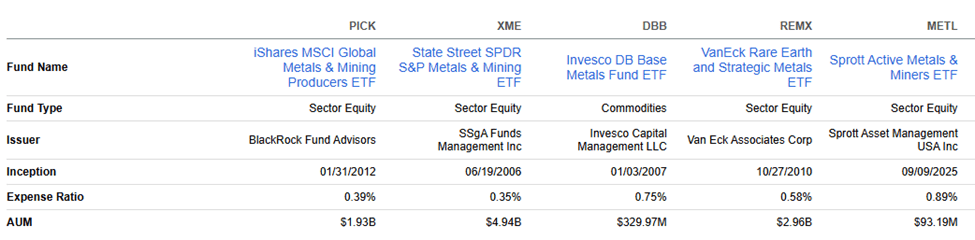
PICK exhibits substantial depth, though thin liquidity with $1.9b in net assets and a 30-day average trading volume of 538k shares. As a result of the lower liquidity, PICK exhibits a relatively wide 30-day median bid/ask spread of 0.18%, potentially adding additional fees when actively traded.
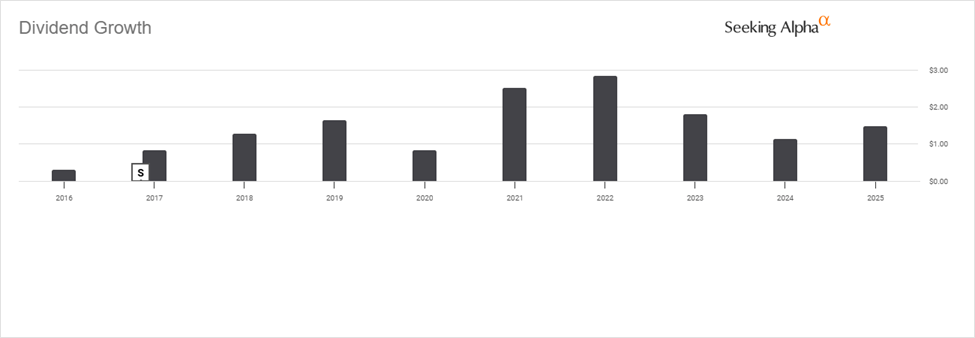
PICK pays out a semiannual distribution at an annualized rate of $1.28/share over the last twelve months, yielding 2.04%. Distributions can vary widely from period to period, making this strategy most appropriate for capital appreciation rather than income.
Seeking Alpha
PICK was designed to track the MSCI ACWI Select Metals & Mining ex Gold ex Silver Investable Market Index, which tracks the performance of companies that participate in industrial and the rare earth metals market. The Index consists of 234 constituents with exposure to small- through large-cap producers; the Index has a median constituent market capitalization of $1.21b with the largest constituent having a market capitalization of $175b. The Index is reviewed on a quarterly basis.
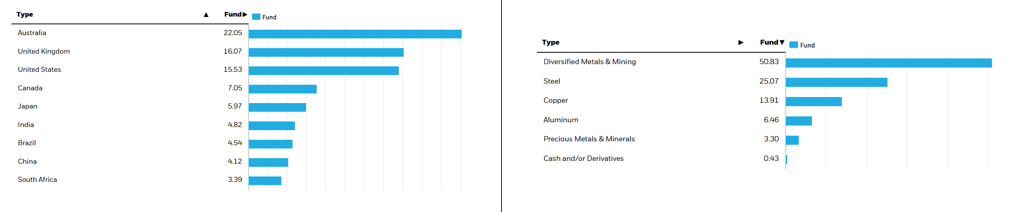
PICK currently invests across 244 holdings, which consist of equities as well as some exposure using futures derivatives. The ETF primarily invests in diversified metals & mining companies, making up 51% of the total portfolio weight, followed by steel at 25%, and copper at 14%. The strategy is regionally diversified with Australia accounting for 22% of regional exposure. Other regions include the UK at 16%, the US at 15.53%, and Canada at 7%.
Corporate Filings
The top 10 holdings within PICK account for 46% of the total portfolio’s assets. In contrast, the bottom 10 holdings account for roughly 0.12%. Top holdings within the ETF include BHP Group (BHP) at 12.30%, Rio Tinto PLC (RIO) at 6.80%, Freeport-McMoran (FCX) at 5.93%, and Glencore PLC (GLEN) at 4.55%.
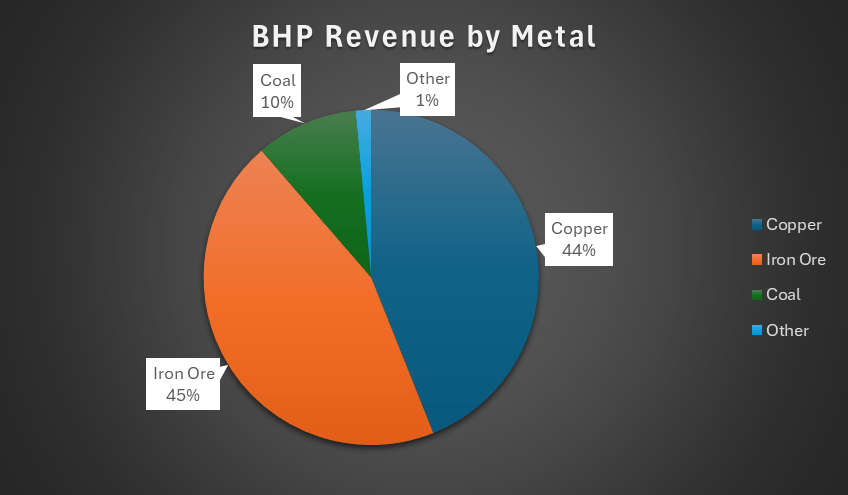
BHP is an Australia-based diversified mining enterprise, primarily producing copper and iron ore at the global scale.
Corporate Filings
Freeport-McMoran is a US-based copper producer, operating globally in mining and refining.
Thematically, the metals & mining sector can be viewed through a variety of lenses. For copper, a major theme to consider is the increasing investments in power infrastructure and data centers, each requiring vast amounts of copper to operate. Iron exhibits broadly diversified themes, including automobile production, industrial manufacturing, power, and construction, amongst others. Sector demand can vary by region; the US may exhibit a larger focus in the automotive industry whereas China may exhibit more steel utilization in construction. Being mindful of macroeconomic trends like annual vehicle production, trucking, and construction starts may be useful indicators for assessing this component of the portfolio.
Some other factors investors may consider when investing in the strategy include international trade. For example, China has historically been a major counterparty to BHP’s iron ore mining operations. For example, Chinese imports accounted for roughly 63% of BHP’s sales in FY25. Trade disputes between the two countries could significantly impact operations and must be taken into consideration when evaluating PICK as an investment, particularly given the portfolio concentration in BHP.
Another factor to consider is trade tariffs. For example, Alcoa’s (AA) business has been impacted in the last year resulting from the 50% duty on imported aluminum and steel. Alcoa has historically imported aluminum into the US through Canada, resulting in mismatched economics throughout FY25 before the Midwest Spread created a marketable opportunity. Alcoa holds a much lower weight in the strategy at 1.10% of net assets, though I believe the theme can apply to all constituents if import duties were to persist.
Overall, PICK can be considered as both a microeconomic and macroeconomic investment strategy given the ETF’s global footprint and general demand across regions and industries. At the microeconomic level, more efficient mining practices and ESG policies can influence the cost of production, or the all-in cash cost.
Investor Suitability
PICK can be utilized by investors seeking a diversified equity strategy tied to the global metals & mining industry. PICK may be best utilized as a buy-and-hold ETF given its relatively light trading volumes. PICK may also be utilized as part of an industry rotation or a macroeconomic strategy given the diverse portfolio of commodity producers. In terms of growth expectations in the fund, a benefit of owning the commodity producers over the commodities outright is that commodity producers gain exposure to stronger commodity prices, cost management, and cash flow generation; owning a portfolio of commodities is limited to the aggregate increase in commodity prices with no additional economic upside potential.
Risks Related to PICK
PICK may expose investors to a variety of risks that should be considered prior to making an investment decision, particularly when considering its global exposure. International trade, geopolitical risk, war, ESG policies, inflation rates, commodity prices, fuel costs, transportation costs, and interest rates can all influence the performance of the underlying companies within the portfolio.
Final Thoughts
PICK can be utilized as a diversified metals & mining investment strategy for investors seeking to participate in the cash flows earned by companies with direct exposure to industrial and base metals. I believe PICK offers investors greater value over investing in a commodity-based portfolio given that the producers provide more economic upside beyond the commodity price. Given the international footprint of the portfolio, investors must consider international trade risk when evaluating whether a broad strategy is appropriate for their investment needs.
This article answers three main questions about PICK:
- What type of investor is PICK most suitable for?
- Does PICK offer diversification to foreign companies?
- Is PICK considered an income ETF or is it focused more on capital appreciation?

Continue Reading
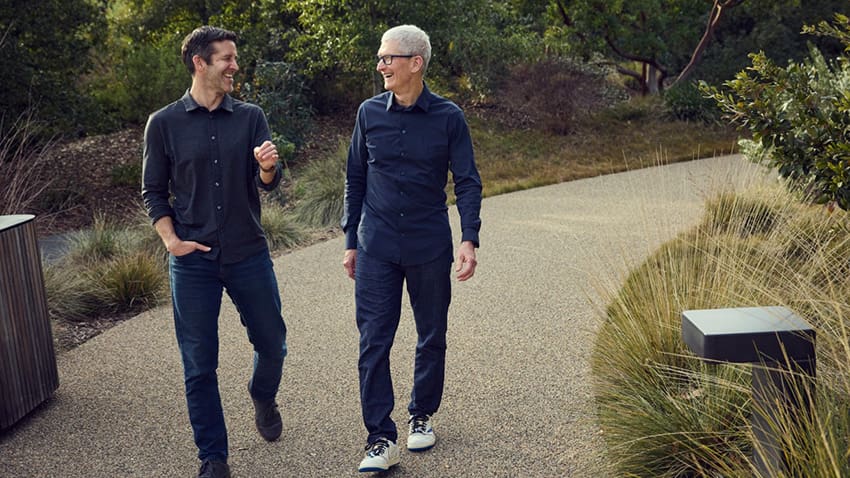
After 15 transformative years at the helm of the world’s most valuable company, Tim Cook is stepping aside as chief executive of Apple, with hardware engineering chief John Ternus set to inherit one of the most coveted seats in global business.
The Cupertino-based group confirmed on Monday that Cook, 65, will become executive chairman of the board on 1 September, with Ternus, senior vice president of hardware engineering, promoted to chief executive on the same date. The succession, approved unanimously by directors, caps what insiders describe as a patient, long-planned handover rather than a hurried passing of the baton.
Cook will remain chief executive through the summer, working alongside his successor to ensure a seamless transition. In his new chairman’s role, he is expected to focus on global policy engagement, a brief that has grown increasingly weighty as Apple navigates tariff regimes, artificial intelligence regulation and geopolitical pressure on its supply chain.
“It has been the greatest privilege of my life to be the CEO of Apple,” Cook said in a statement. “John Ternus has the mind of an engineer, the soul of an innovator, and the heart to lead with integrity and with honour. He is without question the right person to lead Apple into the future.”
The numbers behind Cook’s tenure make for arresting reading. Since succeeding the late Steve Jobs in 2011, Apple’s market capitalisation has swelled from roughly $350bn to $4tn, a gain of more than 1,000 per cent. Annual revenue has almost quadrupled, climbing from $108bn in the 2011 financial year to more than $416bn in 2025. Cook has added Apple Watch, AirPods and Vision Pro to the firm’s hardware roster, while the Services division he championed now generates more than $100bn a year, a standalone business that would rank inside the Fortune 40.
For British SMEs that built livelihoods around Apple’s ecosystem, from App Store developers in Shoreditch to hardware resellers on the high street, Cook’s legacy has been the steady expansion of a platform that now reaches 2.5 billion active devices across more than 200 countries. Apple’s global retail footprint has more than doubled during his reign.
Ternus, who has spent almost a quarter of a century at the company, represents a return to the engineer-led tradition established by Jobs. He joined Apple’s product design team in 2001, rose to vice president of hardware engineering in 2013 and entered the executive suite in 2021. His fingerprints are on every major product line, from iPad and AirPods to the recent MacBook Neo and the iPhone 17 range, including the ultra-slim iPhone Air that launched last autumn.
“I am profoundly grateful for this opportunity to carry Apple’s mission forward,” Ternus said. “Having spent almost my entire career at Apple, I have been lucky to have worked under Steve Jobs and to have had Tim Cook as my mentor.”
A Mechanical Engineering graduate of the University of Pennsylvania, Ternus cut his teeth at Virtual Research Systems before joining Apple. He has overseen the transition to Apple-designed silicon, the push into recycled aluminium and 3D-printed titanium, and the evolution of AirPods into an over-the-counter hearing aid, a rare example of Big Tech hardware being cleared as a bona fide medical device.
In a further reshuffle, Arthur Levinson, Apple’s non-executive chairman for the past 15 years, will step back to become lead independent director when the new regime takes effect. Ternus will join the board the same day.
“Tim’s unprecedented and outstanding leadership has transformed Apple into the world’s best company,” said Levinson. “We believe John is the best possible leader to succeed Tim.”
Cook’s departure from the chief executive’s office closes a chapter defined as much by stewardship as by showmanship. Where Jobs dazzled, Cook disciplined — turning a maverick product house into an operational juggernaut, reducing Apple’s carbon footprint by more than 60 per cent against 2015 levels even as revenue roughly doubled, and placing privacy at the heart of the brand proposition. Whether Ternus can continue that trajectory while reigniting the pace of hardware breakthrough will define the next era in Cupertino, and reverberate through every business, large and small, that lives within Apple’s orbit.

Jamie Young
Jamie is Senior Reporter at Business Matters, bringing over a decade of experience in UK SME business reporting.
Jamie holds a degree in Business Administration and regularly participates in industry conferences and workshops.
When not reporting on the latest business developments, Jamie is passionate about mentoring up-and-coming journalists and entrepreneurs to inspire the next generation of business leaders.
NEW YORK — Intel Corp. shares fell 3.78% in early Monday trading on April 20, 2026, dropping $2.59 to $65.91 as Wall Street prepared for the chipmaker’s first-quarter earnings report on Thursday and weighed ongoing challenges in its foundry business against recent progress in AI partnerships and process technology.
AFP
The semiconductor giant, which has staged a remarkable recovery in 2026 with shares more than doubling from early-year levels, saw modest profit-taking after closing near recent highs last week. Intel (NASDAQ: INTC) hit an all-time high around $70.33 in mid-April before pulling back slightly, reflecting heightened expectations ahead of the April 23 earnings release and conference call.
Analysts expect Intel to report revenue between $12.0 billion and $12.7 billion for the quarter, with adjusted earnings per share near breakeven or slightly positive. The company guided in January for a soft start to the year amid inventory adjustments and slower client computing demand, though data center and AI-related growth have provided some offset.
CEO Lip-Bu Tan, who took the helm in late 2025, has pursued an aggressive turnaround focused on improving manufacturing yields at the Intel 18A process node, expanding the foundry business and securing external customers. Recent wins include deepened collaboration with Google on Xeon CPUs and custom IPUs for AI infrastructure, as well as a high-profile partnership with Elon Musk’s Terafab project involving Tesla, SpaceX and xAI. That deal, announced earlier in April, positions Intel to supply advanced packaging and design expertise for massive AI computing capacity.
Despite these positive developments, investors remain cautious about execution risks. Intel’s foundry segment continues to post losses, and the company has faced criticism for lagging behind Taiwan Semiconductor Manufacturing Co. in cutting-edge process technology. Recent price target upgrades from firms such as Stifel (to $65 from $42) and Cantor Fitzgerald (to $65 from $60) highlight growing optimism, yet many analysts maintain “Hold” ratings amid concerns over margins and capital spending.
Intel’s stock has benefited from broader enthusiasm for U.S.-based semiconductor manufacturing and government support through the CHIPS Act. The company has received substantial federal funding to expand domestic fabs, including facilities in Arizona, Ohio and Oregon. However, analysts note that meaningful profitability from the foundry business may take several more quarters to materialize.
The upcoming earnings will offer the first detailed look at progress under Tan’s leadership. Key metrics to watch include data center revenue trends, client CPU shipments, foundry operating losses and any updates on the 18A node ramp. Intel has emphasized that 18A is on track for high-volume manufacturing later in 2026, with external customers already committed.
Broader market context added to the cautious tone on Monday. Renewed geopolitical tensions in the Middle East pushed oil prices higher, while the technology sector showed mixed performance. Intel’s decline came despite a strong year-to-date rally fueled by AI optimism, foundry contract momentum and signs of stabilizing client PC demand.
Intel ended 2025 with improved liquidity after cost-cutting measures and asset sales. The company has also repurchased a 49% equity interest in its Ireland fab joint venture, signaling confidence in internal capacity needs. In early April, Intel appointed Aparna Bawa as executive vice president and chief legal and people officer, part of efforts to strengthen leadership during the turnaround.
Wall Street sentiment has shifted more constructive in recent weeks. Benchmark’s Cody Acree raised his price target, citing partnerships and manufacturing improvements. Some analysts argue that even modest success in winning external foundry customers could justify a higher valuation, especially as global supply chains seek alternatives to concentrated production in Asia.
Still, risks abound. Intel faces intense competition from AMD in CPUs and NVIDIA in AI accelerators. Supply chain constraints in advanced packaging and potential delays in process node yields could pressure margins. The company also carries significant debt from past capital expenditures, though its balance sheet has strengthened.
For long-term investors, Intel’s story centers on whether it can successfully pivot from a primarily product-focused company to a major player in both leading-edge chips and contract manufacturing. Success would position Intel as a key beneficiary of U.S. efforts to reshore critical semiconductor production amid geopolitical tensions with China.
Retail traders have shown strong interest in INTC throughout 2026, with the stock frequently appearing among the most discussed names on social platforms. The recent rally has drawn both momentum buyers and value investors betting on a multi-year recovery.
As trading continued Monday morning, volume remained elevated but not extreme, suggesting the drop was driven more by pre-earnings positioning than any fresh negative catalyst. Some market participants viewed the pullback as a healthy consolidation after the stock’s rapid gains since March.
Intel’s transformation efforts extend beyond hardware. The company has invested heavily in software and AI optimization tools to complement its silicon offerings, aiming to provide end-to-end solutions for data center operators and AI developers. Partnerships with major cloud providers and hyperscalers remain critical to future growth.
Looking ahead to Thursday’s report, management is expected to provide color on 18A customer traction, Panther Lake and Clearwater Forest CPU roadmaps, and the trajectory of foundry losses. Any positive surprises on external design wins or improved guidance could spark another leg higher, while shortfalls might trigger renewed selling pressure.
The semiconductor industry as a whole has enjoyed tailwinds from AI demand, though cyclical risks in traditional PC and server markets persist. Intel’s ability to navigate this dual environment will define its performance through the remainder of 2026 and beyond.
Despite Monday’s decline, Intel shares trade well above levels seen at the start of the year, reflecting renewed faith in the turnaround narrative. Whether that momentum sustains will depend heavily on execution in the coming quarters and the company’s capacity to deliver on ambitious technology and commercial goals.
As one of America’s iconic technology names, Intel remains central to national discussions about semiconductor independence and innovation leadership. Monday’s modest retreat to $65.91 served as a reminder that even strong rallies can pause ahead of key catalysts, particularly when expectations run high.
Investors will now turn their full attention to the April 23 earnings release and conference call for fresh insight into whether Intel’s foundational changes are taking hold or if more challenges lie ahead in its quest to reclaim a leading role in the global chip industry.

Silvercorp secures $220 million syndicated loan from banks

Indian corporates raised about $4.60 billion in external commercial borrowing (ECB) in February, data from the Reserve Bank of India (RBI) showed Monday. This was 14% less than the ECB raised in January.
Out of the total overseas mobilisation in February, $4.20 billion was raised through the automatic route for which no prior approval is required either from the government or the central bank.
The balance $400 million was raised by Piramal Finance using the approval route, the RBI said.
Over 100 companies raised ECB through the automatic route in February, the data showed.
Among these companies are Tata Power Renewable Energy ($550 million), Manappuram Finance ($500 million), Renew Vyoman Power (454 million), IIFL Home Finance ($300 million), Serentica Renewable India (270 million), BMW India Financial Services ($237 million) and Tata Capital ($150 million).

The biggest ECB in February was done by a renewable energy-focused Telangana-based company, ABC Cleantech, which mobilised 595 million for about seven years.


Follow us on Twitter here: @theinvestar Previously a Trader/Portfolio Manager for a Treasury Office managing anywhere from $10-20 billion (treasury assets, retirement benefits, endowment related funds), currently part of a team that oversees an outside investment manager managing almost $30 billion. Previously the founder of theinvestar.com, LLC. theinvestar.com, LLC was a leading news provider on the potash and uranium mining industries supplying data services, commentary, interviews, investment news, newsletters and quarterly industry publications.
Analyst’s Disclosure: I/we have no stock, option or similar derivative position in any of the companies mentioned, and no plans to initiate any such positions within the next 72 hours. I wrote this article myself, and it expresses my own opinions. I am not receiving compensation for it (other than from Seeking Alpha). I have no business relationship with any company whose stock is mentioned in this article.
While we have no current holdings or plans to add to portfolios, this ETF is on our Buy List for clients and could be used in portfolio allocations in the future.
Seeking Alpha’s Disclosure: Past performance is no guarantee of future results. No recommendation or advice is being given as to whether any investment is suitable for a particular investor. Any views or opinions expressed above may not reflect those of Seeking Alpha as a whole. Seeking Alpha is not a licensed securities dealer, broker or US investment adviser or investment bank. Our analysts are third party authors that include both professional investors and individual investors who may not be licensed or certified by any institute or regulatory body.
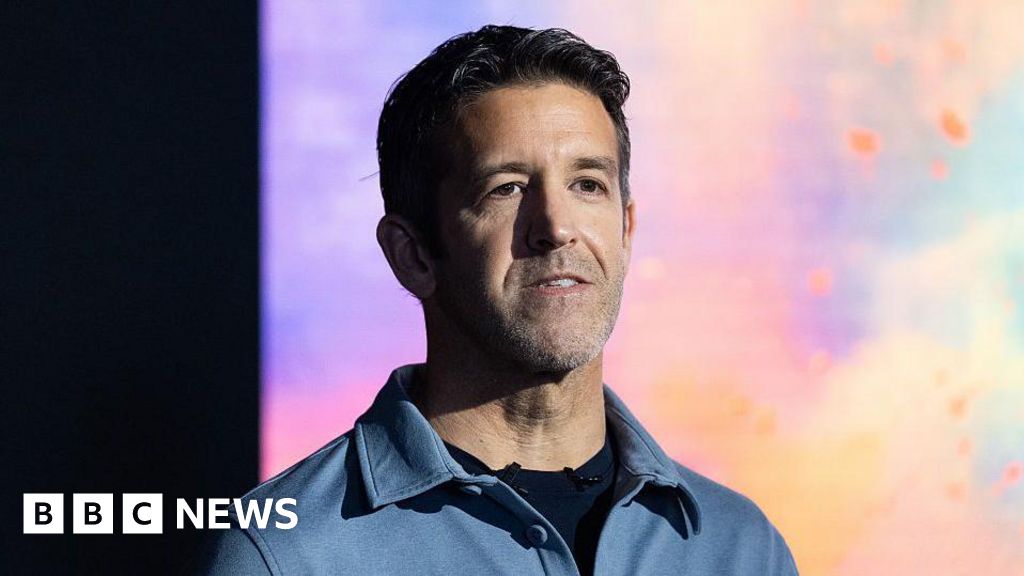
John Ternus will take over running the technology giant as Cook steps up to become executive chairman.

PNB Housing Finance reported a 19% rise in fourth quarter net profit at Rs 656 crore as compared with Rs 500 crore in the year ago period, backed by improvement in operating leverage.
Its annual net profit for FY26 stood at 2291 crore over Rs 1936 crore in the preceding fiscal reflecting a 18% growth.
The board of the company proposed a final dividend Rs 8 per share having face value of Rs 10 a piece for the fiscal ended March 31.
Its net interest margin for the quarter however dipped a bit to 3.69% against 3.75% in the year ago period while the gross non-performing assets ratio improved to 0.93% from 1.08% a year back.
The mortgage lender’s assets under management expanded 13% year-on-year to Rs 90,921 crore. Its retail loan asset grew 16% to Rs 86,946 crore while the company resumed corporate lending after a gap of around four years.
The company said that the affordable and emerging Markets segment grew by 28% year-on-year and contributed 40% to the retail loan assets.
Its retail disbursements clocked an all-time high of Rs 9,020 crore in the quarter under review while it disbursed Rs 335 crore to builders marking a re‑entry into the corporate lending segment.
QVC Group to be delisted from Nasdaq following bankruptcy filing
Business
Facebook Messenger Instability Frustrates Users as Outages, Web Shutdown and Backend Changes Pile Up in 2026
NEW YORK — Facebook Messenger, once a reliable go-to for billions of daily messages, has left users increasingly frustrated in recent weeks with frequent glitches, delayed deliveries, failed sends and outright outages that have disrupted conversations across mobile and web platforms.

Complaints have surged on social media and outage trackers since early April 2026, with many wondering why the Meta-owned messaging app feels so unstable lately. From sudden connection drops to messages not appearing in real time, the issues come as Meta pushes major structural changes, including the shutdown of the standalone Messenger.com website and integration of messaging deeper into the main Facebook experience.
DownDetector and similar services recorded spikes in reports on April 15 and again on April 20, with hundreds of users noting problems sending or receiving messages, loading chats or experiencing lag. On April 8, broader Meta platform wobbles affected Facebook, Instagram and Messenger for nearly 10 hours, according to StatusGator reports, compounding user irritation.
Meta has not issued a comprehensive public explanation for the latest wave of instability, but experts and user reports point to a combination of factors: aggressive backend migrations, the ongoing phase-out of legacy web and desktop access points, heavy AI-driven feature rollouts and occasional server-side bugs during high-traffic periods.
The most visible change driving confusion is the discontinuation of Messenger.com. Starting in April 2026, the standalone website no longer supports messaging. Users attempting to access it are automatically redirected to facebook.com/messages. Meta had already discontinued the dedicated Messenger desktop apps for Windows and Mac late last year, steering everyone toward either the mobile app or the integrated Facebook web interface.
While the mobile Messenger app for iOS and Android remains fully operational, the transition has created friction. Users who relied on the clean, dedicated web version for desktop chatting now face a clunkier experience embedded in Facebook’s main site. Those who used Messenger without a full Facebook account are especially affected, as they can no longer access chats easily on a computer and must rely solely on the mobile app, with chat history restored via a PIN code.
Analysts say the moves are part of Meta’s long-term strategy to unify its messaging ecosystem, reduce maintenance costs for separate platforms and push users toward its core apps where advertising and data collection are more tightly integrated. Similar consolidations have occurred with WhatsApp and Instagram messaging features, but the abruptness has left many Messenger loyalists feeling the service is being neglected or deliberately made less convenient.
Compounding the perception of instability are periodic outages. On April 15, reports of Facebook and Messenger problems spiked around midday, with users unable to load threads or send messages for extended periods. Similar spikes occurred earlier in the month. These incidents often resolve within hours, but their frequency has raised questions about whether Meta’s infrastructure is under strain from rapid feature additions, including enhanced AI tools for message summarization, smart replies and content moderation.
Meta has poured resources into AI across its family of apps, integrating large language models to power everything from Reels recommendations to chat assistants. While these features promise smarter messaging, they also add computational load and introduce new points of failure during rollout. Some users report that messages disappear temporarily or arrive out of order — symptoms consistent with synchronization issues between servers and client apps during backend updates.
Another contributing factor may be the sheer scale of the service. Messenger handles billions of messages daily across a global user base that includes older devices and varying network conditions. As Meta prioritizes newer hardware optimizations and energy-efficient AI processing, legacy support can suffer, leading to crashes or slow performance on certain phones and operating systems.
Privacy and security updates have also played a role. Meta has tightened encryption defaults and rolled out end-to-end encryption more broadly, processes that can temporarily disrupt message delivery while keys are exchanged or verified. Although these changes enhance user safety, they sometimes manifest as “unstable” behavior to the average person trying to send a quick text.
For businesses and power users, the instability hits harder. Customer service teams relying on Messenger for client communication have reported missed inquiries during outage windows. Creators and small businesses using click-to-Messenger ads have seen intermittent failures, potentially affecting revenue.
Meta’s official communications have been minimal. The company typically posts brief acknowledgments on its status pages for business tools but offers little transparency for consumer-facing apps like Messenger. When outages occur, users are often left refreshing the app or checking DownDetector rather than receiving clear timelines for resolution.
Some observers link the recent problems to broader Meta platform tweaks. In early April, the company acknowledged bugs that undercounted views and reach on posts, suggesting internal metric and backend systems have been undergoing significant refactoring. Such large-scale changes frequently cause ripple effects across interconnected services like messaging.
Users have shared workarounds online: clearing cache and data, reinstalling the app, switching between Wi-Fi and mobile data, or logging out and back in. For desktop users affected by the Messenger.com shutdown, the redirection to Facebook messaging works for most but feels slower and less intuitive, with some reporting notification delays or missing message threads during the transition period.
The frustration has sparked memes and complaints across Reddit, X and TikTok, with hashtags highlighting “Messenger down” trending periodically. Long-time users reminisce about the app’s earlier days when it felt snappier and more reliable, before heavy feature bloat and ecosystem consolidation took hold.
Meta’s broader strategy appears focused on efficiency. By folding messaging into Facebook.com, the company reduces the number of separate codebases to maintain, potentially freeing engineering resources for AI advancements and advertising tools. However, the execution has left some users feeling like an afterthought, especially those who preferred the lightweight, dedicated Messenger experience.
As of April 20, 2026, no major new outage was dominating trackers, but sporadic reports continued. Meta has not commented publicly on whether the recent instability is linked to the web shutdown or represents separate technical debt being addressed.
For now, the company advises users to keep the mobile app updated and to use facebook.com/messages for desktop needs. Those experiencing persistent issues are directed to standard troubleshooting steps or the help center.
The situation highlights the challenges of maintaining a service used by over a billion people daily while simultaneously modernizing infrastructure and integrating new technologies. As Meta continues its push toward unified experiences and AI-powered features, users may need to adapt to more frequent adjustments — even if those adjustments temporarily make Messenger feel less stable than before.
Whether the current wave of complaints subsides as transitions settle remains to be seen. In the meantime, many are turning to alternatives like WhatsApp, Signal or iMessage for critical conversations, hoping Meta stabilizes its flagship messaging platform soon.

Plans call for production line expansion, more capacity and new technology.

Sports15 seconds ago
Exclusive | Shreyas Iyer In Line For Captaincy As BCCI Prepares 2-Team Structure For T20Is

Tech1 minute ago
Mastodon was hit by a ‘major’ DDoS attack that briefly took down parts of the service

News Videos2 minutes ago
Ela pede money c/ ( YB no Vision x Yankema x DjeyElEf x Evas x Bill John)

NewsBeat4 weeks ago
Manchester United reach agreement with Casemiro over contract clause amid transfer speculation

NewsBeat3 weeks ago
Steven Gerrard disagrees with Gary Neville over ‘shock’ Chelsea and Arsenal claim | Football

Politics1 week ago
US brings back mandatory military draft registration
News Videos2 minutes ago
Ela pede money c/ ( YB no Vision x Yankema x DjeyElEf x Evas x Bill John)

News Videos8 minutes ago
XRP IS NOT GOING TO $1000 IN 2026 – FEDNOW & XRP EXPLAINED! – IS 300 XRP ENOUGH? – OUR LAST SHOT!

News Videos39 minutes ago
How to Withdraw in Col Financial Philippines #colfinancial #stockmarket
-

 NewsBeat7 days ago
Trump and Pope Leo: Behind their disagreement over Iran war
-

 Fashion3 days ago
Weekend Open Thread: Theodora Dress
-

 Crypto World7 days ago
SEC Signals Exemption for Crypto Interfaces From Broker Registration
-

 News Videos6 days ago
Secure crypto trading starts with an FIU-registered
-

 Sports4 days ago
NWFL Suspends Two Players Over Post-Match Clash in Ado-Ekiti
-

 Crypto World7 days ago
SEC Proposes Certain Crypto Interfaces Don’t Need to Register as Brokers
-

 Business1 day ago
Powerball Result April 18, 2026: No Jackpot Winner in Powerball Draw: $75 Million Rolls Over
-

 Crypto World3 days ago
Russia Pushes Bill to Criminalize Unregistered Crypto Services
-

 Politics3 days ago
Palestine barred from entering Canada for FIFA Congress
-
 Business4 days ago
Creo Medical agree sale of its manufacturing operation
-

 Politics1 day ago
Zack Polanski demands ‘council homes not luxury flats for foreign investors’
-
 Entertainment7 days ago
Brand New Day’ Footage Reveals the Devastating Impact of ‘Now Way Home’
-

 Crypto World3 days ago
Russia Introduces Bill To Criminalize Unregistered Crypto Services
-

 Tech2 days ago
Auto Enthusiast Scores Running Tesla Model 3 for Two Grand and Turns It Into Bare-Bones Go-Kart
-

 Politics36 minutes ago
Gary Stevenson delivers timely reminder to register to vote as deadline TODAY
-
 Entertainment7 days ago
Karol G’s ‘Ultra Raunchy’ Coachella Set Gave ‘Satanic Vibes’
-

 Tech6 days ago
Microsoft adds Windows protections for malicious Remote Desktop files
-

 Tech5 days ago
‘Avatar: Aang, The Last Airbender’ Leaked Online. Some Fans Say Paramount Deserves the Fallout
-

 Tech7 days ago
What was the first ransomware attack to demand payment in Bitcoin?
-

 Business7 days ago
Intuitive Machines Stock Climbs 2.4% as $180M NASA Lunar Contract and $900M Revenue Outlook Fuel Momentum
You must be logged in to post a comment Login