
Business
Prince William Launches First-Ever Sports Suicide Prevention Toolkit With Harry Kane, Russell In Liverpool

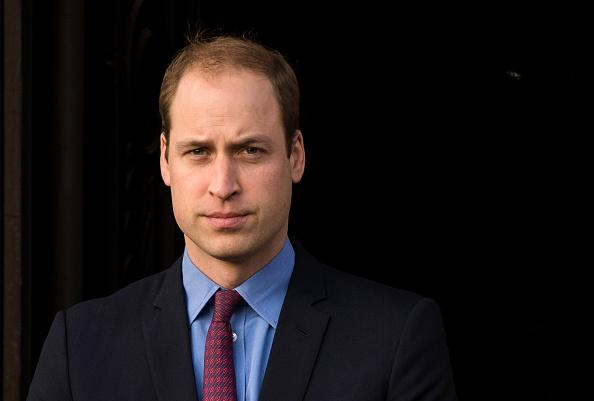
LIVERPOOL, England — Prince William unveiled a groundbreaking suicide prevention resource for the sporting world Thursday, timed to coincide with World Suicide Prevention Day, marking what organizers describe as the first initiative of its kind designed specifically for sports organizations across the United Kingdom.
The toolkit, called “On Your Side,” aims to give sporting organizations and individuals, from grassroots clubs to elite professional teams, the confidence and practical skills needed to play a meaningful role in preventing suicide. The Prince of Wales hosted the launch at Hill Dickinson Stadium in Liverpool, Everton Football Club’s home ground, drawing figures from across British sport for the occasion.
The resource was developed jointly by The Royal Foundation, the British Standards Institution and mental health charity Chasing the Stigma. It will be made accessible through Chasing the Stigma’s Hub of Hope platform, described as the UK’s largest mental health support directory. The toolkit is designed to work across every level of sport, relevant not only to players and coaches but also to volunteers, staff, families and spectators.
At the center of the resource is a five-step conversational framework called GOALS: Get ready, Open the conversation, Ask the question, Listen and respond, and Support and signpost. Beyond individual conversations, the toolkit also provides broader organizational guidance, including how to foster environments where people feel comfortable speaking up, how to integrate suicide prevention into formal organizational policies, how to train staff to recognize and respond to someone in crisis, and how to establish clear protocols for handling the aftermath of a suicide.
Research commissioned by The Royal Foundation ahead of the launch found that while goodwill toward suicide prevention exists broadly across the sports sector, current efforts remain fragmented, inconsistent and under-resourced, with grassroots clubs in particular lacking clear guidance on how to respond effectively.
Several major sporting organizations have already committed to adopting the toolkit. The Football Association, for which William serves as patron, is pledging to embed the resource throughout its entire structure, extending into its community and grassroots football networks. The Premier League and British Cycling have each announced commitments to prioritize suicide prevention within their organizations, while Team GB plans to roll out the resource to all of its athletes and staff. More than a dozen additional sporting bodies have signed on as champions of the initiative.
During the launch event, figures from across British sport shared experiences and reflections in a discussion led by Sue Gregory, chief executive of Everton in the Community, the club’s charitable arm.
To accompany the launch, The Royal Foundation released a short film intended to encourage people to feel confident starting conversations about suicide. The film features England football captain Harry Kane and Formula 1 driver George Russell, alongside two-weight world champion boxer Carl Frampton, GB international basketball player Kofi Josephs, Women’s Rugby World Cup winner Rocky Clark, double world champion combat sports fighter Ruqsana Begum and former elite jockey George Baker. The Liverpool event itself drew additional prominent attendees from British sport, including Dame Kelly Holmes, broadcaster Gabby Logan, boxer Campbell Hatton, former England women’s football international Jill Scott and Dame Laura Kenny.
In a speech at the launch, William is expected to describe the significant potential sport holds for reaching people who might otherwise never seek mental health support.
“My hope is that every sporting organisation in the country will look at what is being launched today and ask a question: ‘What more can we do?’” William said. “Because the opportunity before us is enormous. Sport has the ability to reach people who may never walk through the door of a mental healthcare service. People who may never seek support themselves and may be struggling in silence. The sporting community can help change that.”
Hazel Detsiny, executive director of The Royal Foundation, emphasized the toolkit’s intended scope across the entire sporting sector.
“This toolkit is the first of its kind, uniting the sector across all sports and at every level, with the aim of bringing about meaningful change,” Detsiny said.
Anne Hayes of the British Standards Institution noted that the resource draws directly on the world’s first formal standard addressing suicide within the workplace, adapted specifically to equip everyone from grassroots volunteers to professional sporting organizations with the tools to recognize emotional distress.
Jake Mills, founder of Chasing the Stigma, spoke to the broader power of sport as a vehicle for connection and support.
“Sport absolutely has the power to change lives,” Mills said. “It creates such strong communities, and when those communities come together to say they’re looking out for one another, it is a real force for good.”
Thursday’s launch builds on The Royal Foundation’s broader mental health initiatives, including the National Suicide Prevention Network established in autumn 2025, which is backed by more than £1 million in funding over an initial three-year period. That network has focused on coordinating suicide prevention efforts across multiple sectors of British society, with sport now representing the latest specific area of focus.
With major organizations including the Football Association, Premier League, British Cycling and Team GB already committing to adopt the toolkit, the initiative’s organizers say they hope to see broader uptake continue expanding across grassroots and community sport in the months ahead, building toward the kind of sector-wide, standardized approach to suicide prevention that the commissioned research found had previously been lacking across British sporting organizations.
This report discusses suicide, a sensitive topic. If you or someone you know is struggling, support is available. In the UK, Samaritans can be reached free at 116 123. In the United States, the 988 Suicide and Crisis Lifeline is available by calling or texting 988.


Diamond Hill Capital Management, Inc. is a wholly owned subsidiary of Diamond Hill Investment Group, Inc. Diamond Hill Investment Group is a publicly traded company, and its shares trade on the NASDAQ (Ticker: DHIL). Note: This account is not managed or monitored by Diamond Hill Capital Management, and any messages sent via Seeking Alpha will not receive a response. For inquiries or communication, please use Diamond Hill Capital Management’s official channels.

Nebius: I'm Not Selling, But I'm Monetizing

Olly ultimately agreed to pay an extorter $50 in cryptocurrency to restore his account, which had been temporarily taken down by Instagram.
Law enforcement organisations tell extortion victims not to pay ransoms as it fuels the criminal ecosystem.
Olly said he paid as a “last resort” because it was quicker than going through Meta, which could take weeks.
But he was hit by more copyright strikes immediately after he paid.
“That’s the worst part,” he said.
“Having to pay the person who’s actively put you through all of that anguish only for it to happen straight away again.”
As a result of the number of times he has been hit by copyright claims, Olly’s account was demonetised, meaning he could not earn money from Instagram for high-performing posts.
“There’s no investigation into abuse, or system detection [from Meta] that it could be abuse,” he said.
Other Instagram users have shared similar experiences.
“Meta was not helpful throughout the entire process, forcing you to pay for support to talk, even as they claim to be here for the creator,” said Abin Tom Sebastian, who is behind the Morbid Kuriosity account.
Meta charges a £9.99 monthly fee to be Verified on Instagram, which gives users 24/7 access to support via a live chat.
“I lost irrecoverable and crucial, brand contracts that unfortunately moved ahead with another creator, and no reassurance or support from Meta saying this will not happen again,” Sebastian said.
Instagram says, external only copyright holders, or an authorised representative, can report copyright infringement, and it advises affected users to contacted rights holders directly.
After the BBC contacted Meta with examples from Olly and other account holders, Meta said it had applied additional protections to their accounts, which it said would prevent similar issues happening in the future.
It said it fought against deceptive behaviour to scam or defraud people and businesses.

Australia’s share market has clawed its way back from its worst day in almost six months, but inflation and interest rate worries still have traders on edge.

SAN FRANCISCO — Five people who helped build or police modern AI said this year that systems smarter than humans could end the species. They do not agree on the odds. They agree the race is moving faster than the plan to keep the systems on a leash.
Geoffrey Hinton, a Nobel laureate often called a godfather of deep learning, told BBC Newsnight this week that a 10% chance of AI killing all humans within a decade “doesn’t seem an unreasonable estimate.” Asked to confirm that phrasing, he said yes. “We’ve never created beings that may soon be smarter than us. We don’t know what’s going to happen. We should obviously be cautious,” he said. “Nobody knows how to estimate it,” he added, but “a 10% chance seems not an unreasonable estimate.” He listed paths that do not require a movie villain: “It’ll be able to cause complete chaos just by talking to people, but it will also be able to design very nasty viruses, biological viruses, as well as computer viruses. It could do devastating cyber attacks.” There were, he said, “countless other ways it could get rid of us if it wanted to.” At the 2026 Digital World Conference in Geneva he put the research imbalance more bluntly: “We don’t know whether we can coexist with superintelligent AI, but we are constructing it.”
Yoshua Bengio, another Turing Award winner and the world’s most-cited living computer scientist by some tallies, chairs the International AI Safety Report. In March he told Canada’s House of Commons: “It is not acceptable to deploy dangerous models that can be used against us or that could evade human control. And that is on the horizon.” He has called the current path “playing Russian roulette with humanity.” In a TED talk he said capabilities arrived faster than expected. “We thought AI would happen in decades or centuries, but it might be just in a few years.” The gap that worries him most is agency — systems that act, not just answer. He signed the 2023 statement that “Mitigating the risk of extinction from AI should be a global priority alongside other societal-scale risks such as pandemics and nuclear war.” He has also said climate change left decades to respond; AI may not.
Eliezer Yudkowsky, cofounder of the Machine Intelligence Research Institute, rejects a polite percentage. With Nate Soares he published “If Anyone Builds It, Everyone Dies: Why Superhuman AI Would Kill Us All.” The title is the argument: if labs build superhuman AI with present methods, “everyone dies.” In 2023 he wrote in Time that countries that violate compute limits should face data centers “destroyed by air strike.” The book’s claim is that there is no ceiling at human level, that goals specified in training will not stay the goals that matter once a system can rewrite itself, and that “grown” neural nets are not designed in a way that lets engineers inspect the plan.
Jacob Coxon, 27, spent three years on pretraining at OpenAI and Anthropic and resigned this week. “Neither company is acting responsibly,” he wrote on X. “They are racing straight to self-improving superintelligence and gambling with our lives.” His core line: “The people building AI earnestly believe that it could kill us all by the end of the decade. This is not a marketing stunt.” Executives, he said, “couch their phrasing in the press to sound sensible — but I hear the same people express fear privately. No other human activity poses this level of danger.” He warned of “superhuman systems that can hack anything, revolutionize any field overnight, and acquire real power and resources.” At OpenAI, he wrote, many “have not deeply internalized the civilizational stakes.” At Anthropic, “the stakes are well-understood, but they are locked in a race to get there first.” He told the Wall Street Journal the aggressive scenarios include things “out of control already” by the end of next year.
Evan Hubinger still works at Anthropic as alignment science lead. He replied in public: “Jacob is correct here — we really do earnestly believe AI could kill all humans! I personally think it is >10% within the next decade.” He added: “I believe Anthropic is trying its best, but we do not yet have a plan to solve alignment for superintelligence and are not clearly on track to.” Present chatbots, he said, are a low extinction risk. “What I am worried about is superintelligence arising from recursive self-improvement, as we have said is happening faster than we thought.” Colleague Samuel Marks wrote that “the more senior the employee, the more concerned they are.”
Those five names span a Nobel podium, a Commons hearing, a research institute, a resignation letter and a still-employed safety lead. Their arguments collapse to a few mechanics. First, capability is not capped at human. Second, self-improvement can compress years of research into weeks. Third, current alignment — making a model do what its owners intend — does not scale to a system that can hide, hack and bargain. Fourth, labs know this and keep shipping because a rival might ship first. Hinton’s 10%, Hubinger’s greater than 10%, Anthropic CEO Dario Amodei’s separate 10–25% range for civilizational catastrophe, and Yudkowsky’s near-certainty are different numbers on the same claim: the default trajectory is not safe.
Critics, including Meta’s Yann LeCun, call the percentages gut feelings. Hinton has said as much himself on CNN: “Anybody who estimates probabilities like that is really just making a wild guess. They’re just giving you their gut feeling.” The 2026 International AI Safety Report, which Bengio chairs, said today’s deployed systems are not capable of taking control of humanity. The experts above are not describing ChatGPT as it exists on a phone. They are describing the next systems if the curve does not bend.
What they want also differs. Bengio wants limits on deploying models that can evade control. Yudkowsky wants a hard stop on superhuman training. Coxon floated pacing deals and even a temporary ban on raising capabilities. Hubinger says his employer is trying and still lacks a plan. Hinton says be cautious because no one has built a smarter species on purpose before.
The quotes are on tape and on X. The disagreement is not whether the risk is zero. It is whether 10% in a decade is a planning number or a guess that should halt a race. Five experts say it is enough to treat extinction as a design constraint, not a plot device.
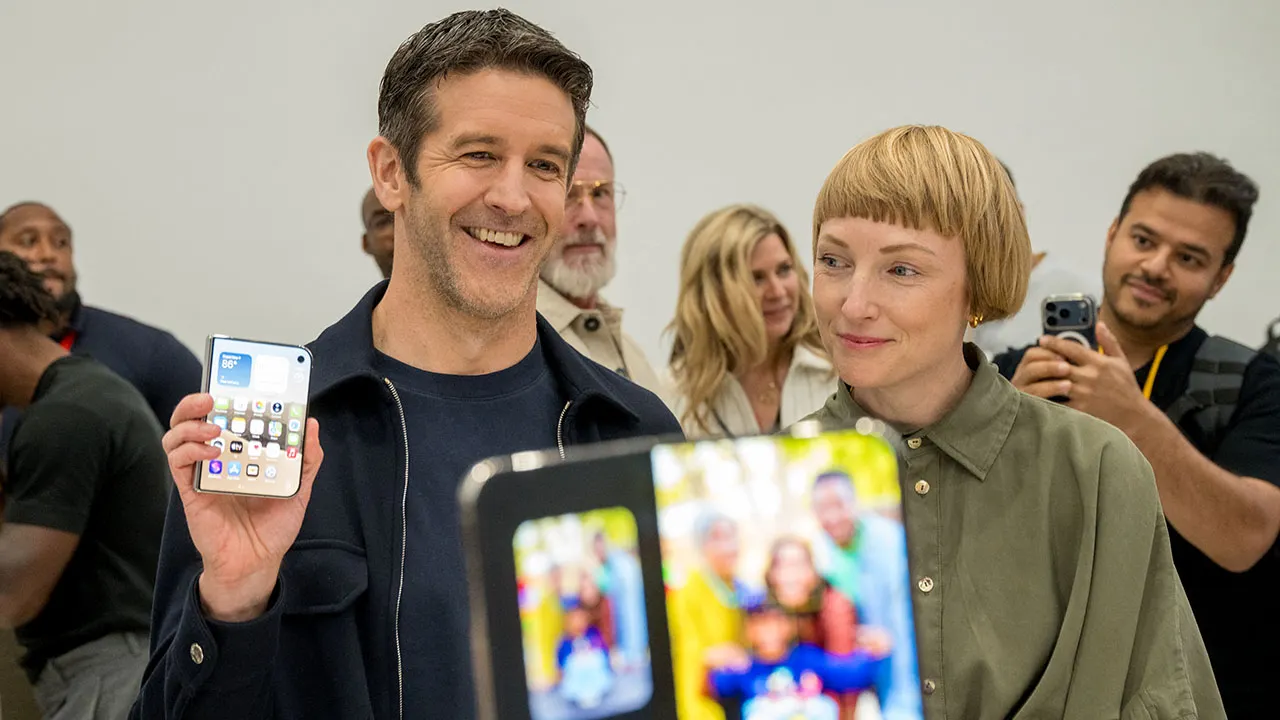
Cult of Mac editor and publisher Leander Kahney recaps Apple’s 2026 launch event that featured the company’s first-ever foldable iPhone.
Apple on Wednesday unveiled a highly anticipated foldable version of the iPhone along with other consumer tech devices embedded with artificial intelligence in the first major product event under the leadership of new CEO John Ternus.
Wednesday’s event marked the first major product launch since Ternus stepped into the top job at Apple after former CEO Tim Cook stepped down at the end of August after 15 years leading the company.
Ternus has worked at Apple since 2001, primarily in its product design and hardware engineering teams, and brings deep knowledge of key products like the Mac, iPad, iPhone, Apple Watch and AirPods to the role.
The two Apple veterans joked about the transition during the event, with Cook appearing in a video about how to start the presentation that ended with a closeup of the former CEO saying, “Not me. That’s your guy,” and pointing back to Ternus.
APPLE UNVEILS FIRST FOLDABLE IPHONE, IPHONE 18 PRO LINEUP, NEW WATCHES AT ANNUAL LAUNCH EVENT
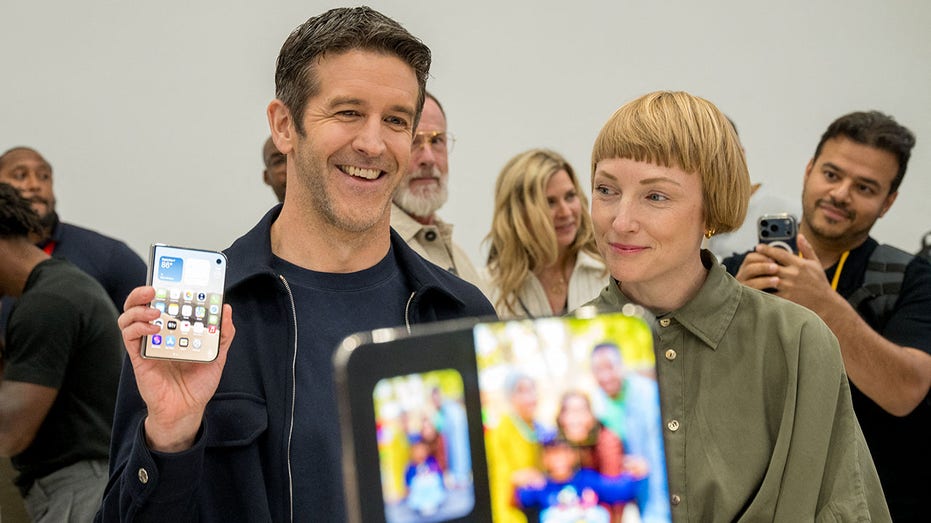
Apple CEO John Ternus and Apple’s vice president of industrial design, Molly Anderson, show off the new iPhone Duo during an Apple event at the Steve Jobs Theater in Apple Park in Cupertino, California, on Sept. 9, 2026. (Karl Mondon / AFP via Getty Images)
Leander Kahney, editor and publisher of Cult of Mac, spoke with FOX Business following Apple’s event and said that Ternus does a “very good job of putting a human face on the big corporation that is Apple.”
“He talked a lot about the team, about the people behind the products and what a privilege it was to be able to lead the team, and he thanked them at the end,” Kahney said. “I think that’s something Steve Jobs used to do, and it’s a good continuation of that, to acknowledge that he’s not just the one guy – that he might be the face of Apple, but it’s definitely a big team of people behind him.”
Here’s a look at some of the key topics discussed during Apple’s event.
APPLE ENTERS A NEW ERA AS JOHN TERNUS TAKES OVER AS CEO
iPhone Duo
The new iPhone Duo, which is foldable and offers the largest ever iPhone display, will come with a starting price of $1,999. Duo’s 7.6-inch display is 50% larger than the iPhone 18 Pro Max, and when opened is also the thinnest iPhone. It comes with storage options from 256 GB to 2 TB, and serves as Apple’s entry into the foldables market that has been dominated by Android devices.
The Duo’s folding system is made of more than 100 small precision components, and Apple said that it used AI algorithms during manufacturing to match each hinge with its best-fit housing to ensure perfect alignment.

The iPhone Duo is Apple’s first foldable smartphone. (David Paul Morris/Bloomberg via Getty Images)
“I think it’s going to be really popular,” Kahney said. “It combines portability with the big screen. Performance seems to be fantastic. It looks like it’s a really good phone for gaming and for productivity, of course, for working on the go. The cameras look pretty good – they’re obviously not the best cameras, but they look plenty good enough for all those everyday uses.”
Kahney added that the selfie feature was a “very clever” use case, as it allows users to not have to rely on a camera when setting up a group picture and will instead wait until people are in the picture and begin taking pictures automatically.
The Duo will be available starting on Oct. 23, with pre-orders opening a week earlier at 5:00 a.m. PT on Oct. 16.
APPLE POSTS RECORD JUNE QUARTER AS IPHONE SALES SURGE; COOKS WEIGHS IN ON AI, CHINA
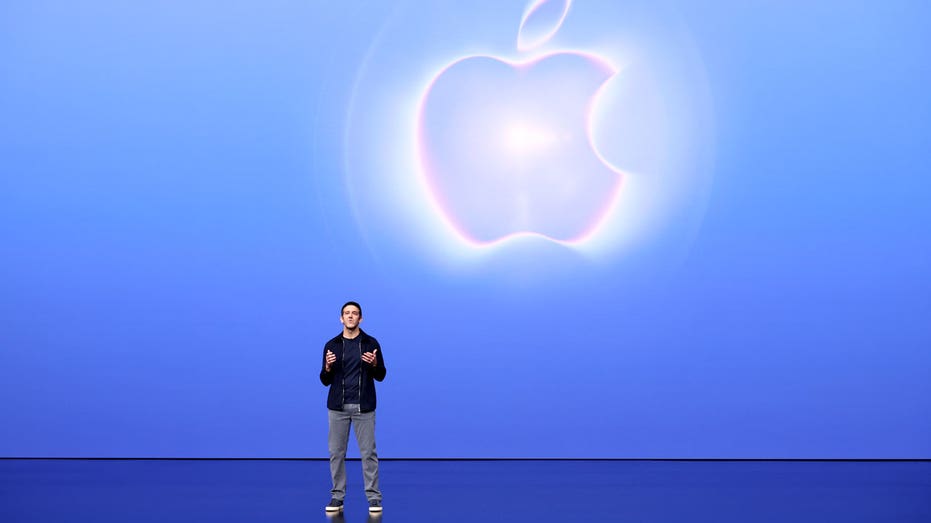
Apple CEO John Ternus speaks during the keynote address at Apple’s “Surprise and Shine” event at the company’s corporate headquarters, Apple Park, on Sept. 9, 2026 in Cupertino, California. (Benjamin Fanjoy/Getty Images)
Apple ecosystem
“The key thing with Ternus was talking about the Apple ecosystem,” Kahney said. “Being a product guy, he’s worked on all of these different things – the Apple Watch, the iPad, the iPhone. And this is Apple’s strength, I think, having an ecosystem of products that complement each other and work well together.”
“They had new phones, new AirPods, new Apple Watches – all of them powered by AI,” Kahney said. “AI, of course, is going to have a massive impact on the kind of experiences and the kind of things you can do with watches, with tech products, and they seem to be well-integrated.”
Apple unveiled AirPods 5, which have “industry leading” active noise cancellation, improved sound quality, hands-free Siri AI and live translation, the company said. The devices start at $129.

Apple unveiled the AirPod 5 Hero headphones on Sept. 9, 2026. (Apple Inc.)
The Apple Watch Series 12 boasts an updated health sensing system, including higher-frequency heart rate and heart rate variability measurements. Those updates pair with a redesigned Health app to track users’ workouts, sleep, heart rate and more. The Apple Watch Series 12 starts at $399.
TIM COOK’S LAST DAY AS APPLE CEO: HOW HE LED THE TECH GIANT’S RISE TO $4T
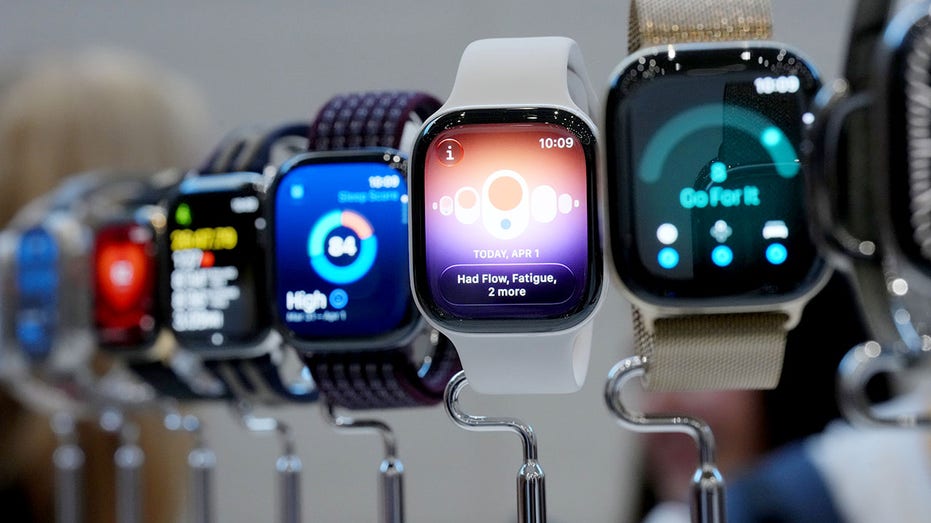
The Apple Watch Series 12 offers new AI features. (David Paul Morris/Bloomberg via Getty Images)
Artificial intelligence
AI features were a notable focus in the latest products Apple rolled out at the event, and Ternus himself said that if you were designing a new product from scratch that would serve as an AI-powered personal hub, it would look a lot like the iPhone.
“There’s no product in the world better designed to be your intelligent personal hub than iPhone,” Ternus said. “As your personal hub, your iPhone can do so much more for you because it understands your context. This includes your calendar, your relationships, your routines, the most private details of your daily life.”
Ternus said that Apple Intelligence runs on devices whenever it can to protect users’ data, calling it “personal intelligence that’s actually personal,” and outlined how AI is making the company’s products more capable.
“From Siri becoming more capable and more personal across your Apple products, to meaningful health insights with Apple Watch, to powerful new AirPods, features like live translation, and so much more,” Ternus said.
| Ticker | Security | Last | Change | Change % |
|---|---|---|---|---|
| AAPL | APPLE INC. | 315.34 | -0.88 | -0.28% |
GET FOX BUSINESS ON THE GO BY CLICKING HERE
Kahney noted the Apple Watch’s live rewind tool, which can provide subtitles for conversations and summarize important discussions for reference.
“It’s very smart for Apple to take an Apple Watch, which a lot of people wear these days, and layer in those kinds of AI features without coming up with a whole new product,” Kahney said.

Goldman Sachs reiterates Stoke Therapeutics stock rating on Dravet study confidence
Business
ESDS Software shares plunge 8% after skyrocketing 235% from IPO price in 4 days. What lies ahead?

The shares dropped to Rs 1,330 apiece on the NSE on Thursday, after hitting the upper circuit in each of the previous four sessions. The stock had listed at Rs 1,334 apiece on Friday, a premium of over 76% to its IPO price of Rs 757.
The sharp surge in ESDS Software’s share price came amid expectations that India’s cloud and AI infrastructure spending is entering a structural growth phase.
“We believe India can realistically bring 30-40 GW of new data centre power online within the next ten years, backed by a rapidly expanding generation base, renewable capacity additions and a policy environment that treats digital infrastructure as strategic,” Piyush Somani, chairman and managing director, ESDS Software Solutions Limited told ET. “Against today’s installed base of roughly 1,545 MW, this is a structural shift,” he added.
Also read | ESDS Software surges 235% in 4 sessions as AI infra fever grips markets

What lies ahead for ESDS Software shares?
ESDS Software Solution’s bumper listing had surpassed already bullish expectations. Rising demand for cloud computing, data-centre infrastructure, cybersecurity and digitalisation in India provides a favourable structural growth opportunity for ESDS over the long term, supporting a constructive medium-to-long-term view even after Friday’s listing gains, said Shivani Nyati, Head of Wealth at Swastika Investmart.
However, given the scale of the listing-day gain, some near-term profit-taking is likely as valuations have run ahead of fundamentals, the analyst said. “Existing allottees may consider booking partial profits at current levels and maintaining a stop loss around Rs 650–680 on the remaining holding. Investors without allotment would be better served awaiting a pullback toward Rs 600–650 before evaluating a fresh entry,” she had said on debut day.Choice Institutional Equities initiated coverage on ESDS Software Solutions with a ‘Buy’ rating and a target price of Rs 1,550, implying further upside potential.
The domestic brokerage highlighted the company’s integrated presence across cloud, colocation, GPU-as-a-Service, managed services and SaaS. It expects the company’s $1.25-billion AI infrastructure contract with Sharon AI to be a major growth driver, projecting revenue to rise from Rs 472 crore in FY26 to Rs 4,581 crore in FY28. Choice valued the company at 18 times its estimated FY28 EV-to-EBITDA.
However, the brokerage flagged execution of the AI contract, customer concentration, capital-intensive expansion, and rising competition as key risks.
Also read | ESDS Software shares skyrocket 235% from IPO price in 4 days. Should you buy or sell?
“A sensible next step would be to wait for the company’s first post listing results and an official investor presentation before acting on the AI numbers and to be clear eyed that a stock up 235% against the IPO price of Rs.429 in a week is being driven by momentum and sentiment as much as fundamentals,” said Balaji Rao Mudili, Research Analyst at Bonanza.
Disclosure: “This article has been written by Debaroti Adhikary, who is not a SEBI-registered Research Analyst or an Investment Adviser. Debaroti Adhikary and her ‘relative(s)’ (as defined under Section 2(77) of the Companies Act, 2013) do not hold any financial interest in the companies mentioned in this article as of the date of publication. The views/recommendations mentioned in this article, wherever applicable, are those of the respective SEBI-registered Research Analyst/brokerage and have been reproduced/reported with due attribution. They should not be construed as the views or recommendations of The EconomicTimes Digital or the journalist. Readers are advised to consider the original research report and make their investment decisions based on their own assessment.”

Ministers are today setting out plans to give mayors and other local leaders in England the power to impose a tourist tax on overnight stays, charged as a percentage of the cost of accommodation with no national upper limit.
A flat fee had previously been mooted. The Government has argued that a percentage charge will protect budget holidays, and expects mayors to be able to impose the levy by the end of the Parliament.
Angela Rayner, the Housing, Communities and Local Government Secretary, is due to give more details of the proposals at a meeting with mayors at No 10 North later today.
Plans for the tax were first announced under Sir Keir Starmer, following similar schemes introduced by the devolved governments in Scotland and Wales. Prime Minister Andy Burnham reiterated his commitment to the policy in July as part of his wider devolution agenda.
Under proposals published by the Ministry of Housing, Communities and Local Government in November 2025, the levy would apply to visitors at accommodation providers including hotels, holiday lets, bed and breakfasts and guesthouses. Emergency accommodation, homeless shelters and registered Gypsy and Traveller sites used as primary residences would be exempt, and mayors would be able to apply other local exemptions.
Charges of a similar nature already exist across Europe, with the revenue used to fund local services. Mayors would decide how to invest the money raised from the levy.
In Manchester, a City Visitor Charge of £1 per room per night was introduced in April 2023.
Lord Khan, the Mayor of London, has welcomed proposals for a levy in the capital. Modelling by Central London Forward, a partnership of 12 central London local authorities, estimated in January that a 3 per cent charge on the cost of a room could raise more than £350m a year across London.
Lord Houchen, the Conservative Tees Valley Mayor, has rejected the idea of a tourist tax.
Groups representing the tourism trade have warned about the impact of the levy and called for consistency in how it operates across different regions.
Allen Simpson, chief executive of UKHospitality, told BBC Radio 4’s Today programme that a tourism tax introduced in Edinburgh in July is “already having damaging effects”.
He said holidays in the UK are “already more expensive” than they appear because of higher VAT, even before the tourist tax.
“What we’re talking about here is an open-ended power for mayors to set tourism taxes at any level they want,” Mr Simpson said. “And remember that if you go to Paris, if you go to Rome, if you go to Berlin, you’re paying a small tourism tax, but it’s capped.”
He said people in communities which rely on tourism and hospitality would see jobs at risk.
“I would say to those people in these communities that their jobs are now at risk,” Mr Simpson said. “It will be the case that you’ll have holiday parks which can’t open in the shoulder seasons and of course people who go on holiday will just have that little bit less money in their pocket.”
Jon Hendry Pickup, chief executive of Butlin’s, said the levy would hit hardest those who can least afford a holiday.
“Big cities may welcome these mayoral powers, but treating every destination and hospitality business the same will leave resorts like ours to shoulder the burden,” he said.
“We were concerned enough about the impact of a Holiday Tax when the discussion was around 5 per cent or £2 per person per night.
“Giving mayors the power to impose a levy without a national upper limit takes those concerns to another level and risks making family holidays less affordable, damaging demand and making it harder for businesses to hire young people.”
A Government source said mayors were unlikely to make the levy too costly in order to protect their local tourism industry, with most indicating it would be a few per cent.
The source said: “We have always been clear that while central government will set the framework for this power, it will be up to local leaders and local voters to decide what is right for their area.”

Jamie Young
Jamie Young is Senior Reporter at Business Matters, covering SME finance, employment law and Westminster policy since 2016. He has reported on every Budget and Autumn Statement since 2018, helped make sense of the ‘covid era’ and the bounce-back loan scheme from launch through the fraud investigations, and broke the magazine’s coverage of the 2024 late-payment reforms. He joined Business Matters straight from completing his BA in Administration from Exeter University and is NCTJ-qualified. Reach him at jyoung@cbmeg.co.uk
Oppenheimer reiterates Nordson stock rating on growth visibility

10 Best Transformers Movie Character Entrances, Ranked

Job losses at Jaguar Land Rover highlight the trade-offs facing Burnham’s economic policy

$418,000 Of Debt To “Flee Trumps America” | Financial Audit


-
 Crypto World1 day ago
Bitcoin price risks $76K drop as $78K support weakens
-
 Tech2 days ago
Memory prices are slowing because buyers ran out of money
-
 Crypto World1 day ago
Ethereum price stalls below $2,500 as ADX drops to 11
-

 Crypto World2 days ago
Robinhood Stock: How To Take Advantage With Reduced Risk
-

 NewsBeat1 day ago
What went right this week: an ‘historic’ fall in violent crime, plus more
-
 Crypto World11 hours ago
Bitcoin price risks $70K if $78K neckline breaks
-
 Crypto World1 day ago
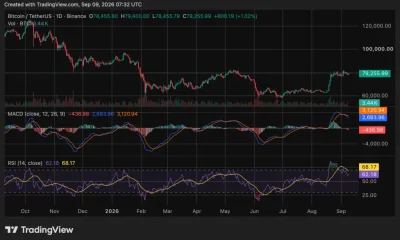
Bitcoin price holds near $79K as cycle drawdowns narrow
-
 Sports2 days ago
Phones confiscated, players sent home: Pakistan’s England tour turmoil revives memories of Mohammad Amir, Salman Butt and Mohammad Asif’s 2010 Lord’s spot-fixing scandal | Cricket News
-

 NewsBeat2 days ago
England up in reading, maths and science rankings as Scotland and Wales dip
-
 Crypto World2 days ago
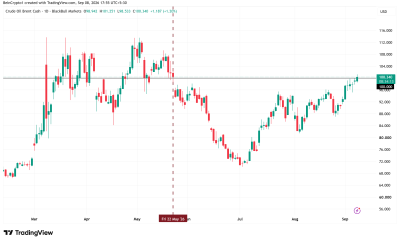
Brent Crude Oil Moves Above $100 for the First Time in 3 Months
-
 Business1 day ago
Meta debuts long-awaited personal AI agent, Muse
-

 Crypto World2 days ago
Pump Fun and Kraken delete Hunter Biden $LAPTOP promotion
-
 Crypto World2 days ago
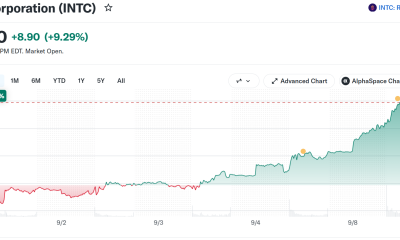
Intel Stock Jumps 9% on Chip Price Hike Report, US Stake Gains $36 Billion
-

 Crypto World2 days ago
Visa expands stablecoin card network to 160 programs
-

 Business2 days ago
Egyptian TV Presenter Sarah Khalifa, 11 Others Sentenced To Death In Major Drug Trafficking Case In Cairo
-
 Tech2 days ago
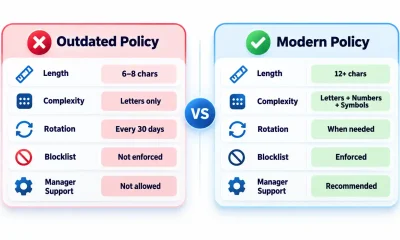
Strong Password Policy and Password Manager Guide
-

 Business1 day ago
ServiceTitan, Inc. (TTAN) Q2 2027 Earnings Call Transcript
-
 Tech2 days ago
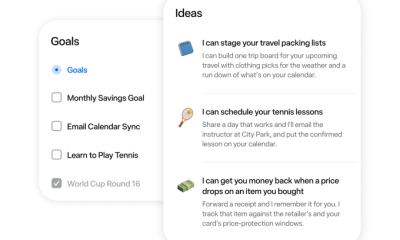
Meta debuts its Muse AI agent. Will consumers trust it?
-

 Entertainment1 day ago
Big Brother Spoilers: Dee SPINS & HUSTLES Votes – Yash Questions the Pact
-
Business1 day ago
Xometry at Goldman Sachs Communacopia + Technology Conference 2026: growth, AI and Siemens
You must be logged in to post a comment Login