
Politics
The House Article | How Parliament is detoxifying the immigration debate

3 min read
Imagine you’re having a conversation about immigration with someone whose views differ from yours. You’re probably not imagining a respectful conversation where you listen to each other, acknowledge nuance and complexity, and find common ground.
But at Demos, we’ve been showing that politicians can have exactly those conversations with the public, and the public with each other.
This year, we’ve been working with the Home Affairs Select Committee to run public deliberation on immigration across the country, and with MPs to trial new ways of engaging with constituents.
Earlier this week, we launched a report for the Home Affairs Committee based on in-person deliberative workshops on work-related immigration we held in March and May with 89 people across the country, in partnership with the House of Commons and King’s College London. Participants reflected each area’s demographics and views on immigration, enabling the Committee to hear from a cross-section of the public, not just the loudest voices.
Over a weekend, participants heard balanced information from experts, discussed the issues, and developed principles to guide the Home Affairs Committee on work-related immigration. The principles demonstrate how much common ground there really is. Within each workshop, as well as hundreds of miles apart, the same principles independently came up again and again.
We set the tone at the outset of the conversations, asking participants to anticipate disagreement, but to handle it respectfully. The room was almost quiet as the conversations happened in small groups. Participants were genuinely listening to each other, not talking over each other. Almost all (92 per cent) felt they had changed their minds over the course of the workshop as a result of hearing others’ views. How often does that happen on social media or on the doorstep?
MPs ’ offices don’t have the same resources as select committees for these conversations. Our new model of MP-constituent engagement recognises that, but our pilots have shown it’s still possible to have better conversations between MPs and constituents, and constituents with each other.
We are currently partway through our latest pilot in Worcester with Tom Collins MP. We brought together a small group of Worcester constituents who hadn’t previously been in touch with their MP over two Saturday afternoons to discuss how immigration impacts the local area, and how constituents and the MP can work together to strengthen Worcester’s community.
The conversation was open and respectful. Almost all (90 per cent) said they thought differently about something as a result of the discussion. And the conversations brought something rare: hope. Ninety-five per cent of participants are optimistic about what will happen as a result of the conversations.
Now the wider Worcester community gets to have its say in a live online conversation using pol.is. Using bridge-based ranking, pol.is does the opposite of social media: the algorithm rewards consensus, rather than division.
Polarisation on immigration is not inevitable. It is a product of the spaces we create for conversations, and those spaces can be designed differently. When they are, the public can find common ground and help create better policy. This changes the way the public sees policymaking, too: people start to understand how complex immigration policy is and value the opportunity to have a say, and, as a result, feel more positively about the decisions made by policymakers.
After taking part in the workshops for the Committee, participants were more likely to feel the government’s immigration policies address concerns they have about immigration (from 24 per cent before to 44 per cent after), and in Worcester, that their MP listens to constituents and makes decisions based on their input (from 40 per cent to 100 per cent).
Better conversations make better policy with more public buy-in. Get in touch if you’re interested in giving conversations like these a go.
Hana Kapetanovic is lead researcher at Demos


It’s been a bad year to be an incumbent.
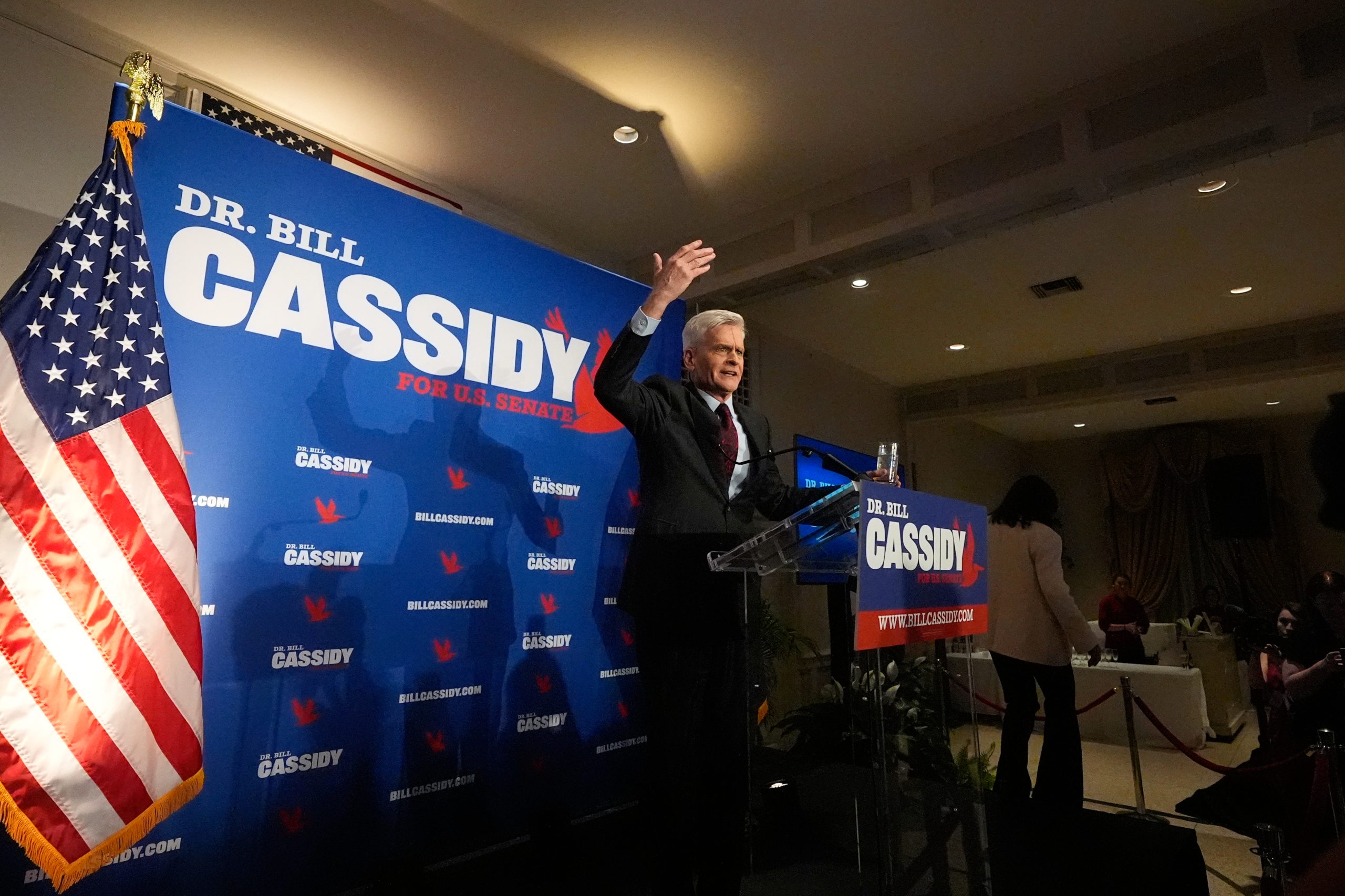
Rhode Island Gov. Dan McKee’s ouster on Wednesday, the first primary defeat for an incumbent governor in eight years, caps off a primary season that’s seen longtime leaders fall across the map and politicians across both parties struggle to make the leap to higher office.
Thirteen members of Congress have lost their reelection bids: seven Democrats and six Republicans, including two GOP senators. At least 16 more who were trying to move from the House to the Senate or take on statewide office have lost primaries: nine Republicans and seven Democrats, including Colorado Sen. Michael Bennet who unsuccessfully ran for governor.
The upheaval has been driven by a confluence of factors that will continue to dog incumbents through November. Voters are frustrated with both parties’ leadership in Washington. President Donald Trump has targeted some GOP foes as he looks to cement his legacy; Democrats are in the midst of pitched generational and ideological battles. Some members in both parties faced daunting new district lines. Others faced scandals that sank them.
In some races, those factors converged. Rep. Haley Stevens (D-Mich.) didn’t benefit much from her years in Washington in her Senate bid — and lost her primary to a left-flank rival who yoked her to the party establishment.
Caitlin Legacki, who advised Stevens’ bid, said incumbents’ losses this year show voters are simply fed up.
“It speaks to the high level of dissatisfaction that voters have with everyone,” said Legacki, who noted the anti-incumbent climate contributed to Stevens’ loss. “It’s a major ‘throw the bums out’ moment.”
DEMS KICK INCUMBENTS TO THE CURB
Democrats disillusioned with their leadership in Washington are taking it out on the party’s rank and file.
Progressives picked off more-moderate House members from New York to Colorado. Younger challengers ousted older incumbents from Texas to Connecticut. Local elected officials outran Washington incumbents. And voters have spurned lawmakers seeking higher office from Michigan to Minnesota.
Sometimes age was the biggest factor, sometimes it was ideology and sometimes both played a role. Democratic socialists defeated decades-older Reps. Diana DeGette of Colorado and Rep. Adriano Espaillat of New York. Former Hartford Mayor Luke Bronin relied on generational change to topple longtime Rep. John Larson in Connecticut.
THE TRUMP FACTOR
For Republicans, Trump played a major role in directing voters against his longstanding Washington foes.
Trump-backed challengers wiped MAGA irritants Sen. Bill Cassidy (R-Louisiana) and Rep. Thomas Massie (R-Ky.) off the map. And the president’s late-stage endorsement of Texas Attorney General Ken Paxton in the Senate runoff helped sink Sen. John Cornyn (R-Texas).
REDISTRICTING RIPPLE EFFECTS
The unusual mid-decade gerrymandering war took out members of both parties, who lost competitive races in less favorable districts, ran for other offices or switched parties to avoid similar fates.
Texas Democratic Rep. Al Green was ousted by Rep. Christian Menefee in a member-on-member primary forced by gerrymandering that played on their generational divide.
Democratic Rep. Julie Johnson lost her redrawn Dallas-area district to former Rep. Colin Allred, while Rep. Dan Crenshaw’s right-flank challenger leveraged the redraw (as well as some of Crenshaw’s breaks with Trump) to oust the Republican.
Others chose to retire rather than keep fighting uphill battles. Democratic Reps. Steve Cohen of Tennessee (who had already been facing a generational primary challenge before the redraw), Lloyd Doggett of Texas and Cleo Fields of Louisiana hung it up after Republicans dismantled their districts. So did GOP Reps. Darrell Issa of California and Burgess Owens of Utah after their districts were redrawn. California Rep. Kevin Kiley, who opposed the mid-decade gerrymanders and switched from GOP to independent after his district was redrawn, said the new maps have unleashed “chaos” on the House and “reduced the quality of representation in Congress.”
SWEPT OUT BY SCANDAL
Call it the midterms of controversy: Incumbents in both parties have succumbed to the political pressures of their scandals this year.
Democratic Rep. Eric Swalwell ended his run for California governor and exited Congress amid sexual assault and misconduct allegations. Rep. Tony Gonzales (R-Texas) dropped his reelection bid and resigned after admitting to having an affair with a staffer who later killed herself.
Tennessee GOP Rep. Andy Ogles, despite his Trump endorsement, couldn’t overcome his past controversies, a newly redrawn district and outside spending. Republican Florida Rep. Cory Mills faced attacks over probes of his conduct from primary winner Ryan Elijah. Elijah told POLITICO this week that he believed Mills’ controversies collided with voters’ anti-incumbent angst.
“We ran on our merits, but trust was a factor,” Elijah said. “I think trust was the biggest factor.”
HIGHER OFFICE FLAMEOUTS
Several congressional Democrats struggled to outmatch opponents without Washington ties in Senate primaries. Bennet, Stevens and Reps. Angie Craig (D-Minn.), Jasmine Crockett (D-Texas), Raja Krishnamoorthi (D-Ill.) and Robin Kelly (D-Ill.) all lost statewide primaries to rivals who hadn’t served in D.C.
Voters haven’t been kind to GOP representatives seeking higher office either. Reps. Randy Feenstra of Iowa, Dusty Johnson of South Dakota and Nancy Mace and Ralph Norman of South Carolina all lost their gubernatorial bids. Voters rejected Norman twice: He also lost the snap primary for Lindsey Graham’s seat to the late senator’s sister — a total political newcomer. Texas Rep. Chip Roy also lost a runoff for state attorney general.

No parent wants to even consider that their child might be thinking about suicide.
But sadly, some teens do have these thoughts – and, in rare and devastating cases, they act on them. According to Samaritans, around 200 young people die by suicide every year.
It can be hard for parents to know if their child is experiencing such dark thoughts, however. A study of young people aged 11 to 17 and their parents found that amongst teens who reported they had experienced suicidal thoughts, 50% of their parents said they had no idea of what their child was going through.
Fiona Yassin, a psychotherapist and founder and clinical director of The Wave Clinic, told HuffPost UK: “It’s not always easy to recognise when a young person is thinking about suicide. Sometimes, young people themselves will not be clear that they’re having suicidal thoughts.”
To mark World Suicide Prevention Day (10 September), Yassin has shared some of the early warning signs that might signal a young person is experiencing these thoughts, including:
-
Saying goodbye to pets and/or friends;
-
Giving away or dividing up possessions;
-
Misusing drugs or alcohol;
-
Isolating themselves from the rest of the family in the home;
-
An increased interest in death or discussing funerals – this may appear as ‘How to…’ questions in internet search history;
-
A sudden in-depth knowledge about suicide or dying;
-
Expressing ideas about death through art or writing;
-
Relationship problems with peers, partners, or family members. Yassin noted these often precede suicide attempts. “This is especially true for young people below the age of 14, who are less likely to have a diagnosed mental health disorder. In these cases, suicide attempts may follow a short period of distress centred around social relationships,” she said.
-
Expressing feelings of hopelessness, sadness, guilt, shame, or worthlessness;
-
Losing interest in activities they’d usually enjoy;
-
Expressing ideas like ‘things would be better without me’.
Unfortunately, the internet makes it easier for children to see posts and find out more information about suicide, which they can then act upon.
Analysis by Ripple Suicide Prevention Charity estimates that nearly 1,000 UK searches online for suicide and self-harm information take place every day.
The charity’s CEO, Alice Hendy, said her brother Josh took his own life in 2020 following extensive searches for methods and advice on how he could die by suicide, which he found with ease on the internet.
“It is more important than ever for us all to be vigilant of the signs of someone in crisis, particularly during a period when harmful content is so easy to come by,” Hendy said.
Yassin is also concerned about this. “Social and online media has made it easier for children and young people to see posts about suicide. Not only can they be very traumatic for children to see, but they can also provoke young people,” she said.
“For example, a teen who is already struggling with their mental health may see this, realise there is an exit point and want to copy it.”
Young people who self-harm may be at an increased risk of suicide attempts. For this reason, Yassin also advises keeping an eye out for signs of self-injury. Aside from visible injuries, she urges parents to be vigilant of:
-
Unexplained burns, bite marks, cuts, bruises, or other marks on their body;
-
Insistence on covering parts of their body with long clothes or other material;
-
Feeling low, depressed, and withdrawing from relationships;
-
Angry outbursts;
-
Self-blame.
If you believe your child is experiencing suicidal thoughts, or they’ve told you they have, Yassin said this should always be taken seriously and treated urgently.
- Stay in the moment with them, sitting with their sadness and despair without trying to fix it immediately.
- Reassure them that you are listening, that you take their feelings seriously, and that you are there with them. “It’s important young people feel their feelings are being recognised and taken seriously,” said the expert. “When their distress is met too quickly with reassurance or attempts to make it better, they may feel unheard or misunderstood.”
- Avoid dismissing their comments or actions as “attention-seeking” or minimising what they’re expressing.
- Mirror their language. “Reflecting their language back to them helps them feel understood and shows that you are not afraid to meet them where they are,” added Yassin.
- Stay calm. “However uncomfortable, scared and distressed you may be feeling, it’s really important you stay calm and centred,” said the expert. “People often tap into anger when they are scared. Check that you do not sound angry. If you do sound angry or if you think your young person thinks you’re angry, be honest. Let your child or teenager know that even though you may sound angry the emotion you’re actually feeling is sadness.”
- Reassure your child they won’t feel like this forever and “this is a moment in time that will pass”.
- Stay with them. “Even if you feel the conversation has ended in a peaceful place, do not leave a young person alone when it has finished,” she added.
- Take extra precaution and remove any objects that could be used as a way to follow on with the discussion about suicide if they were left alone.
- Seek professional help. “If your young person is suicidal, shares suicidal ideations, or you believe they are at risk, seek professional help from a GP or mental health professional immediately. If it is a medical emergency, call 999,” she added.
The family therapist ended: “You do not have to manage this alone, and it’s important your young person receives support from those who are specially trained in this space. Plus, ensure you are talking to the people who can extend their support network, such as the school counsellor.”
Help and support:
- Mind, open Monday to Friday, 9am-6pm on 0300 123 3393.
- Samaritans offers a listening service which is open 24 hours a day, on 116 123 (UK and ROI – this number is FREE to call and will not appear on your phone bill).
- CALM (the Campaign Against Living Miserably) offer a helpline open 5pm-midnight, 365 days a year, on 0800 58 58 58, and a webchat service.
- The Mix is a free support service for people under 25. Call 0808 808 4994 or email help@themix.org.uk
- Rethink Mental Illness offers practical help through its advice line which can be reached on 0808 801 0525 (Monday to Friday 10am-4pm). More info can be found on rethink.org

Less than a week after season eight of RuPaul’s Drag Race UK launched, the BBC has revealed it has pulled the plug on the popular reality TV show.
A spokesperson for the channel said it was facing “very difficult choices” amid “significant financial pressures”, which led to Drag Race UK being axed.
Following the announcement, many queens who found fame on the drag competition show have been paying tribute.
Bimini – a breakout star from its second season two, who has gone on to become an international performer, DJ and political activist – revealed the cancellation has left her “very sad”.
“Something happened in that room I’ve never been able to explain to anyone who wasn’t in it,” she wrote. “I miss it. I miss them. You don’t realise how incredible we had it at the time. So grateful.”
Bimini added: “Everything I have came from that. The fact I get to do this for a living at all. I’ll be grateful for the rest of my life and I mean it.”
The performer ended her statement with a note on how important series like Drag Race are in these turbulent political times, writing: “That show was on in living rooms where drag was not welcome, and it changed something in those living rooms. At a time when queer and trans people in this country are being legislated about and shouted about more than ever, that matters. It still does.”
Her fellow season two queen Tayce commented on Bimini’s post that the BBC’s decision represented the “end of an era”, while winner Lawrence Chaney agreed: “So emotional today! Love you – proud of everything you’ve done.”
Season six finalist and former Strictly Come Dancing contestant La Voix also reminisced on Instagram about leaving the show with “memories, stories, opportunities and, most importantly, some divine friends”.
“I loved every second of it!” she enthused. “The madness, the glamour, the nerves, the laughter and all the fabulous nonsense in between.
“But more than anything, I loved being part of something that has given so many incredible performers a platform and opened doors that might otherwise have stayed firmly shut. I’m incredibly grateful for everything that came from that show and platform, I wouldn’t be where I am today if it wasn’t for this show.
La Voix added her thanks to “everyone who has been part of the BBC Drag Race UK family – queens, crew, producers, judges and everyone behind the scenes”.
Drag Race UK vs. The World champion Blu Hydrangea also spoke in a video on Instagram about the “lovely” time she had working with the BBC, noting that she hopes that the show’s move away from the broadcaster meant future queens could win bigger cash prizes.
She added her hopes that, going forward, the format could be picked up by ITV or Channel 4.
While Drag Race UK is ending its run on the BBC, the franchise will continue on production company World Of Wonder’s streaming service Wow Presents Plus next year, beginning with the first-ever UK-specific season of All Stars.
“This her-storic season will be available virtually globally on Wow Presents Plus and, for the first time, in the UK where members will also be able to stream all eight past seasons of RuPaul’s Drag Race UK plus all three seasons of RuPaul’s Drag Race UK vs The World!” a spokesperson said in a statement.
Drag Race UK series eight continues on the BBC, with new episodes coming to BBC iPlayer every Thursday evening.
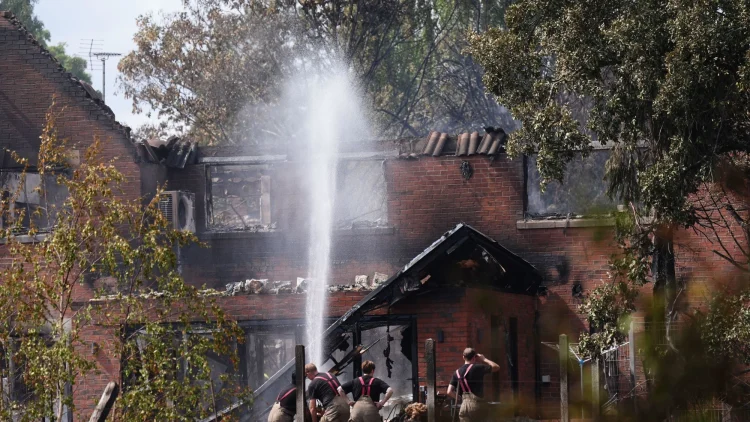

Firefighters dampen down the burnt-out remains of a house on 14 August in Stourbridge (PA Images/Alamy)

3 min read
This summer should have been a wake-up call. Across the UK we watched the countryside burn – but in Stourbridge it hit on our doorstep, with wildfires destroying 19 homes and damaging 18 others.
Climate change is no longer a distant threat; it is here with us and we must face up to the fact that it will keep getting worse until we stop burning fossil fuels.
As a former NHS worker, I care deeply about public safety. Right now, our emergency services are being stretched to the limit, and the people we represent are the ones paying the price.
Climate scientists have been clear for years that these events are directly linked to the continued burning of fossil fuels. Yet right now, the government is mulling over whether to approve Rosebank, the largest undeveloped oil field in the UK.
When the Prime Minister visited Stourbridge this month, he rightly said we need to take climate change seriously. The decision on Rosebank, expected soon, will be the biggest test of this statement.
After the courts ruled that the full emissions from burning the fossil fuels extracted must be considered in the consenting process, Rosebank’s developers were forced to admit that its true climate impact over a 25-year period would equate to almost 70 per cent of the UK’s entire annual emissions. To sign off on Rosebank now would lock us into a colossal amount of emissions at the precise moment the science tells us we have to pull back.
Tragically, it is ordinary people and workers like those in my community who will pay the price.
It’s families like those who saw their homes go up in flames along with their possessions and, in some cases, their pets. It’s the firefighters who across the country are on the front line of this emergency but are grossly overstretched. Firefighters who themselves have called on Andy Burnham to stop drilling for more fossil fuels. And it’s the NHS patients sweltering in hospital wards deemed unsafe and “dangerously hostile”.
We keep hearing the same tired argument that projects like Rosebank offer energy security. But the reality is that over 90 per cent of the North Sea’s reserves are already gone.
And in the case of Rosebank, the vast majority of its reserves are oil, nearly all of which will be exported.
The events of this summer do not begin to scratch the surface of what lies ahead
Extracting what is left will do nothing to help struggling families facing the consequences of yet another fossil fuel price shock. It won’t knock a penny off energy bills and will further fuel the climate crisis that is pushing up the cost of food and other vital goods.
This isn’t a choice between the climate and British industry. As the basin declines, jobs supported by the North Sea have more than halved over the past decade despite the previous Conservative government issuing hundreds of new licences and companies raking in record profits.
Unlike the Conservatives and Reform UK, we know the only way to truly reindustrialise North Sea communities is by creating good, unionised jobs in industries with a long-term future. The decision on Rosebank will define where this government truly stands: on the side of people facing increasing climate damage, or with mega-multinationals who have profited to the tune of billions from war and spiralling bills.
If we are serious about protecting places like Stourbridge from worse fires and harsher weather, Westminster needs to show more courage. We simply cannot fight fires with one hand while pouring fuel on them with the other.
Cat Eccles is Labour MP for Stourbridge

(Alamy)
4 min read
Exclusive: The Conservatives are developing a policy to distribute pamphlets to every UK household advising how to respond to a civilian emergency.
The plans are inspired by European countries like Denmark, where the government uses literature to instruct the public on what steps to take within the first 72 hours.
The Tories say they also want the government to be more honest with the country about threats facing the nation, which could include declassifying information held by the state.
Shadow defence minister David Reed is leading on the party’s national resilience policies.
In an interview with PoliticsHome, the Conservative MP for Exmouth and Exeter East said the coronavirus pandemic had created a public mindset that the state can do everything for them, when, in the event of a national emergency, people will need to take steps themselves, especially in the first hours and days.
“The onus needs to be pushed back onto the citizen to say, if things are coming down the track… you need to start thinking more about yourselves and your families, and start preparing so that you can be more resilient and really start to reinvigorate that idea of being a citizen, contributing, and being part of the community,” Reed said.
“By physically giving something to someone, posting it through their door, what I want to see is the narrative in people’s minds change.”
The government is preparing to launch a public awareness campaign around household resilience later this year, with a spokesperson telling PoliticsHome: “The campaign will bring the UK in line with European countries that run similar campaigns already. We’ll announce further details in due course.”
Last month, the Financial Times reported that people would be encouraged to stockpile emergency supplies, including tinned food and bottled water, as part of the push to help households prepare for hostile state acts, cyber warfare, and extreme weather.
In an interview with Sky News Defence Insider, published on Thursday, Defence Secretary Wes Streeting said the UK does “need to have a national conversation about resilience”.
Streeting pointed not just to state-based threats but climate-based disruption, too, and said people should consider practical questions, like “in the event you have a power cut, would you know where you keep your torch? Have you even got matches or candles?”
Last week, the National Audit Office warned that government had not done enough to engage with households and businesses to strengthen resilience to supply chain shocks.
Reed, a former Marine, is concerned that the planned comms campaign will “fall flat” unless it goes as far as giving every household in the country a readiness pamphlet.
A version being drawn up by Conservatives, seen by PoliticsHome, seeks to communicate that, for a short period after a national emergency or major disruption, it will be up to people to take action where the government cannot help. It sets out a three-point household response, based on stockpiling supplies, making a plan and checking on each other, and lists key items to have in an emergency kit.
The European Commission has encouraged citizens to stockpile enough supplies to last for 72 hours to increase readiness, following in the footsteps of Germany and Nordic states.
“If you look at the Danes, if you look at the Dutch, and if you look at some other European countries, they produce a pamphlet, and they deliver it to every single house in the country, and it just goes through really simply in a nice, civilian-digestible way,” Reed said.
At the same time, the shadow minister said the government should look for non-military figures to communicate the importance of preparedness, especially to young people, and said ministers should “definitely” consider influencers as campaign spokespeople.
The Conservative MP argued that due to the UK having experienced peaceful decades since the mid-20th century, resilience has become “such an abstract concept”, especially for younger generations, “that you can’t even have the conversation at all”.
He referred to the experience of his 84-year-old father, born in 1942 during the Blitz in Plymouth: “That’s the last generation that has any sort of real semblance, that physical idea of border insecurity and things not being right in terms of security”.
“Work does need to be done with the younger generation because they will be helping out. They will have to help out with all these efforts,” Reed stressed.
He also called for a greater central government focus on resilience, pointing to Denmark, where they have their “own ministry for national resilience and preparedness, and they’ve got a centralised minister that has been able to work with the different departments to be able to have the conversation about what needs to be done, to be able to set targets”.
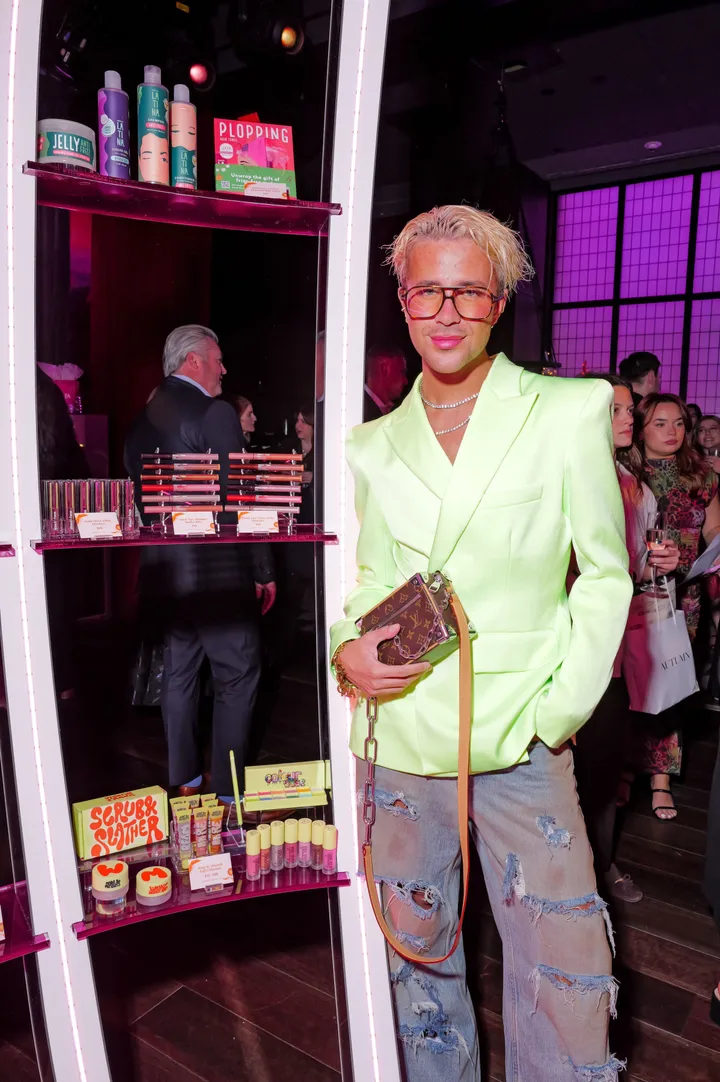
The makeup artist behind Katie Price’s dramatic look at this year’s National Television Awards has spoken out in her defence, after a wave of what he described as “evil” comments.
On Tuesday night, the former glamour model attended the NTAs just 24 hours after undergoing cosmetic surgery.
She also told her followers that she’d had filler the previous day, which makeup artist Mitchell Halliday, who she’d commissioned for the event, had to grapple with while putting her glam look together.
After Katie arrived at the NTAs, Mitchell – known to his followers as Made By Mitchell – shared a video of himself doing the transformation, which he later said prompted an “insane” response.
“Thousands and thousands and thousands of people have given their opinion on the glam and on the outfit and everything else,” he explained the following day.
“A lot of is positive, and there is a lot of negative as well. But, that’s so OK, everyone is allowed to have their opinion, and that’s not really what this video is about.”

Sansho Scott/BFA.com/Shutterstock
He continued: “As a makeup artist, my job is to listen to a brief, follow that brief and make someone feel incredible. How they feel incredible may be very different to how someone else feels incredible.
“I absolutely did my job yesterday. I was given a brief, we wanted to create a conversation – check. We wanted to do something different to what everyone else was doing on the carpet – check. And I wanted to make Katie feel like Katie Price, the one we all know and love – check.”
Mitchell pointed that, “in the video that I posted of Katie, you can clearly see how happy Katie was with her glam, so that’s all that matters to me”.
“In fact, in the video that I posted with Katie, she actually said, ‘this is the first time in 48 years I’ve actually been able to look at myself and say – wow, you’re a sort’,” he said. “And that just made me so happy. So, my job is done.”
“When I was doing the glam, trust me, I knew that this glam wouldn’t be for everyone. I clearly understood that,” Mitchell insisted. This is a Katie Price and Mitchell glam. If Katie asked me to go and do her makeup for a red carpet and she asked me to just do a really soft, clean girl look… really? I would have said, ‘why have you brought me all the way down to London to do this?’.
“This was about creating a moment, creating a conversation and doing something different, and all three of those things, we absolutely did.”
Mitchell added: “When I was on the train home, I was genuinely a little bit upset by what I was reading in some of the comments – not because some people didn’t like my makeup, that is so OK, that is literally fine, my client was happy, that was all that mattered to me. It was more that people had seen a video of someone that literally loved the way they looked, and the amount of negativity and quite cruelness, really, that was commented in regards to Katie and to the makeup.
“The makeup, honestly, you don’t need to like it, it wasn’t meant for everyone. It was meant for a very specific demographic of people. But how people were speaking about Katie, it just got me, to be honest. It was so, so evil. So many evil comments.”
“What is wrong with people?” he questioned. “Just scroll on.
“Opinions are so valid – I’m never going to stop someone giving their opinion in a comments section. That’s completely fine, especially on my page. However, you don’t need to be nasty about it. And some of those comments were just downright rude and nasty. Some of the comments about Katie were so uncalled for, and my page is just not the place for that.”
“Just be a bit kinder, it’s not that hard,” Mitchell concluded.
Katie attended the NTAs with her son, Junior, her sister, Sophie, and her eldest daughter, Princess.
Before the event, Katie revealed that she’d helped Princess choose her NTAs look, telling her followers: “ dress that Princess is wearing, I said, ‘look, if you get slagged off for it, you get slagged off for it, but you’ll look different, you’ll look like a princess, you are a princess, and the fact that you’re out of your comfort zone… blame it on me’.”
“I don’t care what anyone says about my outfit because I love it,” she added, before teasing she had someone “absolutely iconic” booked to do her makeup.
“We’re going to see how good this person is, because he’s got to cover all this up,” she quipped, referring to the bruising and swelling from her filler.
Politics
Politics Home | A reckoning has begun for the gambling sector, and the country will thank Andy Burnham for it
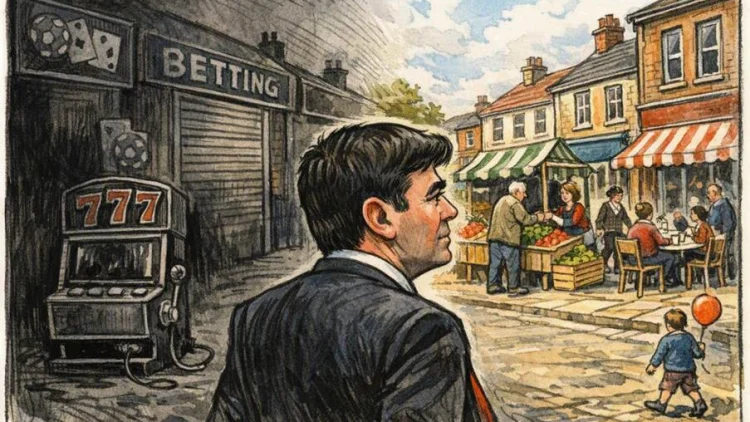
AI generated image.
Andy Burnham has announced he will end the “aim to permit” rule in the Gambling Act 2005

Will Prochaska, Director
| Coalition to End Gambling Ads
The new Prime Minister’s clampdown on Britain’s gambling companies will save lives, breathe life back into high streets, and deliver economic growth
It was 2007, the year the iPhone came out, that Britain’s gambling nightmare took hold. A new Gambling Act came into force, ending centuries of accepted wisdom that gambling was to be permitted but not promoted. It reframed gambling as a mainstream leisure activity, enabling liberalised advertising, licensing and product innovation that have been linked to heightened harm.
Under the Act, the Gambling Commission has given out licences liberally, creating a market that has over 2,000 licensed gambling operators. Whilst it’s widely accepted that social media and smartphones can be addictive, what’s less understood is that the gambling sector pioneered some of the worst addictive digital features, and online slot and casino games still far surpass the addictive potential of other digital products.
The physical land-based versions of these slot games, machines in bookmakers and slot venues across the country, essentially deliver the same highly addictive content.
The result has been millions of people harmed, communities held back, high streets blighted, and losses to the national economy.
When the Starmer administration repeatedly called for the growth of the gambling sector as well as the reduction of harm, the gaslighting seemed to have reached its zenith. Fortunately, Andy Burnham has enough empathy, political nous, and understanding of public opinion to realise something had to be done, and he has acted quickly.
Within days of becoming Prime Minister, Burnham announced that a major principle that made the Gambling Act so harmful – that councils shall “aim to permit” gambling venues, even if they and their residents don’t want them – is to be scrapped.
This isn’t just the deletion of a couple of clauses, “aim to permit” underpins the legislative ambition to grow the gambling sector. Removing it signals a fundamental change to the government’s stance. It acknowledges that the policy of the past 20 years has failed, and a new approach is needed.
Both sides of this debate will be watching closely to see what Burnham does next. As Mayor of Greater Manchester, he also joined calls for a prohibition on gambling advertising, something which has long been advocated for by public health leaders.
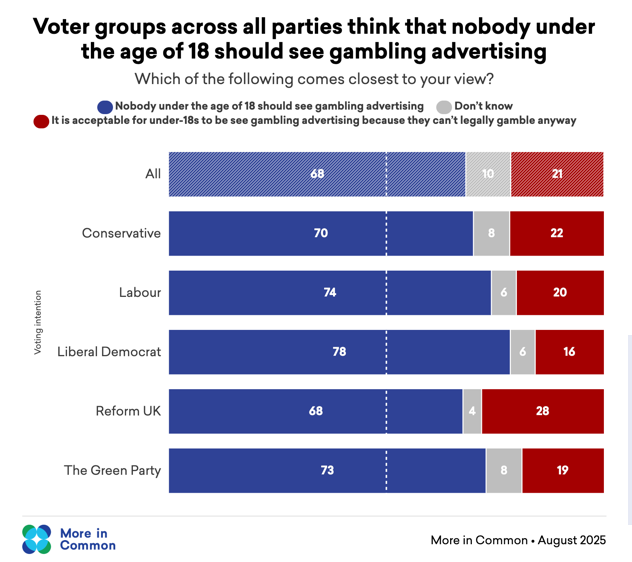
Burnham’s new gambling minister, Vicky Foxcroft MP, could support such a policy. In the past Foxcroft has called gambling addiction a “public health emergency”, urging greater reforms including a ban on gambling advertising in live sport. Lewisham Council, which covers her constituency, has joined the Coalition to End Gambling Ads, alongside 60 other organisations, including 20 other councils – so she would have a lot of support. Polls (Survation; MiC) have shown the public are fed up with seeing so many gambling ads so any action would also be a vote winner.
As if the opportunity to introduce policies that are popular, cost little to implement, and deliver public health gains weren’t enough, the beauty of restricting gambling advertising is that it will deliver economic growth by restricting the gambling sector.
According to the University of Sheffield this year, a 10 per cent reduction in gambling spend could lead to a £1.25bn uplift to the economy and more than 22,000 new jobs. Combined with multiple other studies with findings that gambling spend is bad for the economy (SMF; NERA) this should be enough to get the buy-in of the Treasury.
Under Burnham, the gambling sector’s permission to profit from the country’s population and finances could be coming to an end. A sector that’s had its way for far too long may be about to experience the overriding feeling of 99 per cent of its customers – what it’s like to lose.
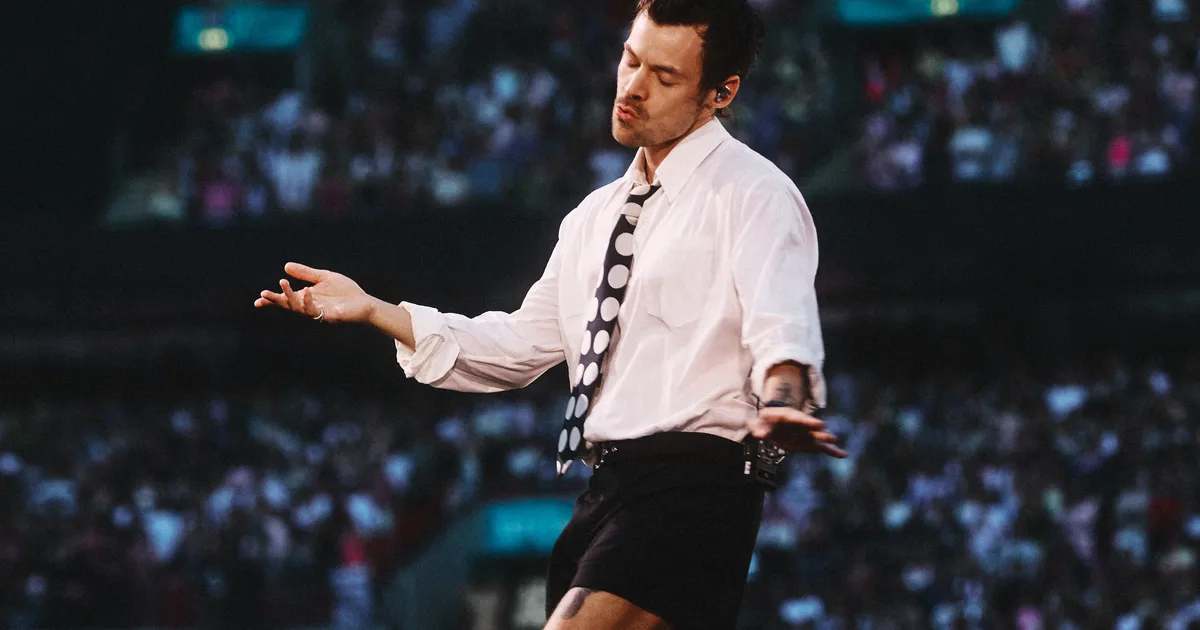
Harry Styles has announced that he’ll be extending his current world tour into next year.
On Wednesday night, Harry – who is currently in the middle of a whopping 30-night residency at New York’s iconic Madison Square Garden – told his fans in an email message: “When we decided to do the 2026 tour I knew it would be special but what you turned it into was far beyond what I could have imagined.
“I love playing music, I love being with all of you and being a part of the love and joy you all create together every night. That’s why I wanted you to be the first to know we will be adding 2027 dates.”
Harry then said that the specifics of these shows would be coming on Thursday, teasing: “After that, I don’t know what comes next for me, but l know that I’m excited to find out.”
“I can’t wait for us to keep dancing with all our friends,” he concluded. “I hope to see you there.”
Harry brought the Together Together tour to London earlier in the summer, performing 12 nights at Wembley Stadium, with Shania Twain serving as his opening act.
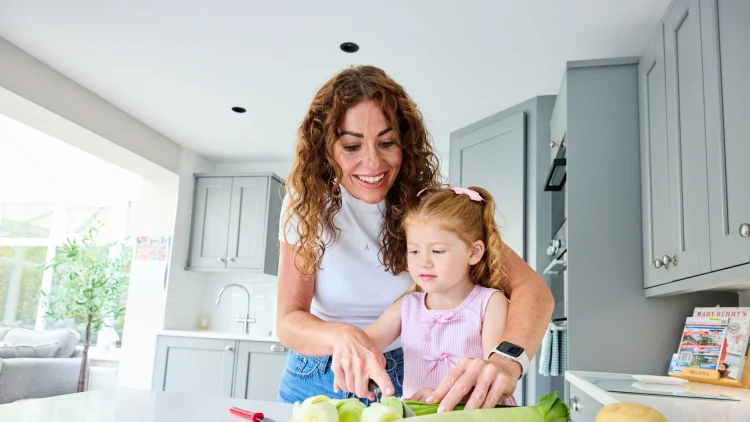

As the challenge of childhood obesity persists, Dr Sarah-Elizabeth Bennett, Senior Nutritionist at Slimming World examines the vital role of families and communities in obesity care and prevention
The recent publication of the Health and Social Care Committee’s report, Food and Weight Management: Fixing the Food Environment1 and the findings from the All-Party Parliamentary Group (APPG) on Obesity policy paper on Childhood Food Environment, Planning and School Food2 has brought renewed focus to childhood health, children’s food environments and the urgent need to support families to live healthier lives.
With obesity among reception-aged children at its highest recorded level, there’s a very clear message: tackling obesity is not simply about individual choices but about creating environments that help whole families thrive. And while the systemic changes recommended by the Committee and APPG, such as restrictions on advertising of high fat, salt and sugar products and mandatory healthy food sales reporting, are vital, sitting them alongside measures that recognise and harness the influence parents can have on children’s health behaviours could have the potential for further widespread benefits.
New independent research3 published in BMJ Paediatrics Open provides compelling evidence of the relationship between parents addressing their own weight concerns and the health behaviours of their children. The study, conducted by the University of Bristol and funded by the National Institute for Health and Care Research (NIHR), explored the experiences of 396 Slimming World members with children aged between five and 11 years old.
The findings reveal the powerful link between parental behaviour change and positive outcomes for children:
- more than two-thirds (67 per cent) of parents who were concerned about their child’s weight felt more motivated to support their child after addressing their own weight
- almost half (48 per cent) of parents reported healthier improvements in what their child ate after they joined a weight management programme
- more than a quarter (27 per cent) said their child had become more physically active
These findings are particularly significant at a time when global projections suggest that by 2050, one in three children, teenagers and young adults could be living with overweight or obesity.4 Research also consistently shows that children with parents living with obesity are more likely to experience obesity themselves.5
Through our understanding of the significant influence parents have on their child’s habits, our Family Affair programme acknowledges the important role family can play in the health of children. It provides our members with a set of resources to support them in encouraging their children to have a healthy, varied balanced diet and form life-long healthy habits.
As policymakers consider how best to address rising childhood obesity rates, recognising the role of families and communities in obesity care and prevention is crucial. In doing so, family influence can become one of the most powerful tools available – putting family at the heart of all adult weight management programmes could help to break the cycle of intergenerational obesity.
Moreover, as the number of people using weight loss medication continues to increase, we should consider whether this could lead to the loss of family influence and what impact this could have on the younger generation, if those using medication aren’t making or being encouraged to make, healthy lifestyle changes alongside it.
Whether our members lose weight with Slimming World alone or alongside medication, they are fully welcome in our groups to receive evidence-based, cost-effective support that ensures they make lasting changes to their diet, activity levels and mindset. We would welcome the opportunity to meet with the government to discuss our commitment to supporting its efforts to help people whose lives are adversely impacted by obesity and introduce them to our members who have lost weight and created lasting healthy habits for their entire family.
For more information on our latest research and outcomes or our programme, please visit slimmingworld.co.uk/health
- https://publications.parliament.uk/pa/cm5902/cmselect/cmhealth/223/report.html
- https://obesityappg.com/inquiries
- Mears R, Sharp D, Searle A, Salway R, Hamilton-Shield J. Effect of parent attendance at an adult commercial weight management programme on their children. BMJ Paediatrics Open. 2026;10:e004417. https://doi.org/10.1136/bmjpo-2025-004417
- Global, regional, and national prevalence of child and adolescent overweight and obesity, 1990–2021, with forecasts to 2050: a forecasting study for the Global Burden of Disease Study 2021 – The Lancet
- https://www.gov.uk/government/publications/childhood-obesity-applying-all-our-health/childhood-obesity-applying-all-our-health
25 Years After 9/11
Twenty-five years ago today, we recall that my country shook violently but never broke.
On the morning of September 11, 2001, I was sitting at my desk in Cambridge, Massachusetts, working on a proposal with my colleague, John Devanney, when the news arrived. A young coworker, Kat Lam, from our company, Sapient, had called in from lower Manhattan moments after the first plane hit the first tower. She told John she would be late to the office because of the falling debris coming down on her. I heard John tell her to be safe and not to worry about getting to the office. As I listened to their brief exchange, my mind began to do what terrorists long for: race, imagine, and let fear take hold.
I turned to my web browser and hit refresh repeatedly. CNN published the first of millions of images of billowing smoke rising from the building that symbolized so much to me as a child. News soon came in that a second plane hit the second tower and then the Pentagon had been hit. America was breaking into pieces as unchecked imagination and deep uncertainty blended into toxic plumes of smoke. Hundreds of colleagues assembled in a restaurant lobby at One Memorial Drive so we could watch events on a single television near the lobby. We were told by the leaders of our company to reach out to account for all our teammates and then head home to be with our families.
John and another colleague, Meg Armstrong, who could not return to NYC that night, came home with me, so they did not have to be alone in a hotel room. As I saw my wife come out of our apartment door in Porter Square, my eyes welled with tears that would flow on and off for many weeks ahead. We huddled around the television and tried to find meaning and context. Stunned silence was punctured only by the nonhyperbolic voice of the television anchor Peter Jennings. I watched the television until the early morning hours of September 12. It was impossible to look away.
The Twin Towers were much more than buildings to me. They were and remain iconic and dreamy markers connecting me to youthful pride in my dad’s professional accomplishments and the heart stopping moment of asking a beautiful woman to spend a life together.
In the 1980s, my father was a successful real estate lawyer who occupied a corner office on the one hundredth floor of the North Tower. Commuting into NYC with your dad to spend the day in the World Trade Center was a heady experience for any kid from Long Island. We took our seats on the Port Washington train line from Manhasset and settled in for the ride to Penn Station. I thought people would talk on the way to work, but it was strangely quiet, save the loudspeaker announcements of the next station. I mostly stared out the window. When we got to Woodside, Queens, I caught a glimpse of the NY skyline. Somewhere amidst the sea of skyscrapers were two shining towers inviting us to join them. I still see them. They never fell.
Dad held my hand as we navigated up from the subway and into the lobby of the North Tower. The grandness of the concourse, with flags hanging down, framed the enormity of the building. My dad held a briefcase with important stuff inside. I thought one day I, too, would have a briefcase like his.
Moments later, the sea of humanity was reduced to narrow lines of workers queuing outside of elevator banks of the North Tower lobby. It took two rides to reach the one hundredth floor, and I was surprised that there was a man seated on a bar stool in the corner of the elevator, set to press the buttons that would bring us to the top.
“They move really fast,” my dad told me. “And your ears will pop, so chew this stick of gum as we ride up.” Riding in the elevators felt like being inside a drafty rocket ship. And they always seemed to ride past the floor you were seeking and then reverse and slowly pulse downward until their doors flew open. My stomach would churn and then reset when the bell rang, signaling the end of the ride. During those elevator rides, I watched my dad’s energy rise. For him, it was another day at work, but I was entering a foreign yet friendly land that floated a mile up in the sky.
Once in the lobby of Dad’s law office on the 100th floor, I remember shaking hands with secretaries and partners. “This is my youngest son, Danny,” Dad would say. Looking out his massive corner office window into a clear view of Brooklyn, I could feel the building slowly sway in the wind. It was designed to sway. Clouds and fog would often bump into the glass. I would sit at Dad’s desk with my feet up and a notepad in my hand, trying to impersonate him. I would deliver packages from the mail room to partners’ offices. Some would invite me into their offices for a chat. They would recall stories my dad had told them about me and my family.
My dear friend Eric Kispert once asked me what it was like to have a father who literally worked in an office in the clouds. To that unexpected question, I could only pause and eventually reply: intimidating and joyful.
During the one hundredth anniversary celebrations of the Brooklyn Bridge in 1983, dozens of people packed into my father’s office for a perfect view of the celebrations as the sun began to set. I remember seeing fire boats shooting red, white, and blue water streams high into the sky. The river was packed with dozens of boats making the pass underneath the bridge. All dressed up for the big party, my sister, Lynn, and I sipped Shirley Temples with extra cherries as the fireworks display began at nightfall. A radio was tuned to an FM station because they had set the fireworks to music for the first time. We pressed up against the glass window for a front row view. The room was loud with the many voices of adults holding cocktails firmly in their hands. The room quieted when white light reflected in our eyes. Sparks streamed down like a waterfall from the bridge into the river. It was magnificent. One of the partners commented that this would likely be the only time in our lives that we experienced fireworks from above. It was a heavenly and hopeful night.
A few times, my dad and I ate lunch at the Windows on the World restaurant. During father and son events with our beloved New York Mets, I once sat next to pitcher Ron Darling and across from first baseman Keith Hernandez. These were heady encounters for a young boy who thought he was meeting New York royalty. Somehow, my dad always made sure I was sitting at or near the head table. Thank you for that, Dad.
My father never lived to see the towers fall.
Thinking about where to propose to your future wife is not an easy task. I knew it would be in New York City, and I thought I would pick a spot that would stand the test of time. And given that the Twin Towers were such a part of my childhood, I thought how cool it would be to propose to Nancy Harvier on one knee and in between two extraordinary buildings.
On a snowy Saturday afternoon in the winter of 2000, I walked with Nancy between the Twin Towers and through what was called Tobin Plaza. Nancy said “yes.” Moments later, we jumped into the same elevators I rode with my dad and landed at Windows on the World to drink some champagne. We sat at the bar next to two British tourists who were the first to hear the news that we would be married. We stared out at the night sky across an illuminated Manhattan with full hearts.
Our children will never see the spot where I proposed to their mother. That ground is now sacred and carries the stories of thousands of lives.
The founding fathers could never have imagined a day like 9/11, but they knew a lot about courage. They knew what it meant to stand up for something much larger than themselves. 250 years ago, they foreshadowed the resolve within Americans that would be summoned on that September morning in 2001. They set in motion something that generations to come would one day see as precious and fragile and amazing, all at the same time. They gave us the DNA for what it means to be an American in the words of the Declaration of Independence.
Jefferson wrote, “we mutually pledge to each other our Lives, our Fortunes and our sacred Honor.”
“Pledge to each other Our Lives”: On 9/11, thousands of first responders and ordinary citizens went into chaos, risking their own lives for others. Millions of ordinary citizens donated blood.
“Our Fortunes”: Tens of millions of Americans donated billions of dollars in relief money.
And “Our Sacred Honor”: Hundreds of thousands of young men and women joined our military in response to the attacks, and tens of thousands became local first responders across communities in every state.
For over fifteen years, I have edited and updated this essay on each 9/11 anniversary. It was a combination of therapy and keeping a living memory. I have reflected on each change, and I am thankful to all who have read it and shared feedback. This will be the last time I re-edit and publish it.
I asked Iain Dale to publish this final version on the 25th anniversary, as he was the one who asked me to write the initial essay. Iain is like a brother to me. He was also my last phone call on the evening of 9/11 as he had frantically attempted to reach me throughout that fateful day. Hearing his voice that night made me well up with tears. We just sat on the line, quiet and stunned. Given how much I travelled for business at the time of the attacks, I thought how lucky am I to have a friend from another country so concerned about my safety? Thank you, Iain, for decades of friendship, asking me to write these words and for comforting me on that terrible day.
The memories of the Twin Towers will never fade for me.
The madness of that day reminds us all how precious, fleeting, and short this amazing life is.
The towers are still there when I see the skyline.
They never fell.
May God bless all those who lost their lives on 9/11.
Daniel Patrick Forrester
Madison, New Jersey

Bitcoin trades near $78,000 as memecoins, small caps lead a broad crypto retreat

Ryan Giggs reveals why Manchester United ignored Kylian Mbappe transfer recommendation

Bajaj Finance Personal Loan 2026 | Bajaj Finserv Personal Loan Kise Le | Bajaj Finance Loan Kise Le


-

 Crypto World1 day ago
Bitcoin price risks $76K drop as $78K support weakens
-
 Tech2 days ago
Memory prices are slowing because buyers ran out of money
-

 Crypto World1 day ago
Ethereum price stalls below $2,500 as ADX drops to 11
-

 Crypto World2 days ago
Robinhood Stock: How To Take Advantage With Reduced Risk
-

 NewsBeat1 day ago
What went right this week: an ‘historic’ fall in violent crime, plus more
-

 Crypto World11 hours ago
Bitcoin price risks $70K if $78K neckline breaks
-

 Crypto World1 day ago
Bitcoin price holds near $79K as cycle drawdowns narrow
-
 Sports2 days ago
Phones confiscated, players sent home: Pakistan’s England tour turmoil revives memories of Mohammad Amir, Salman Butt and Mohammad Asif’s 2010 Lord’s spot-fixing scandal | Cricket News
-

 NewsBeat2 days ago
England up in reading, maths and science rankings as Scotland and Wales dip
-

 Crypto World2 days ago
Brent Crude Oil Moves Above $100 for the First Time in 3 Months
-
 Business1 day ago
Meta debuts long-awaited personal AI agent, Muse
-

 Crypto World2 days ago
Pump Fun and Kraken delete Hunter Biden $LAPTOP promotion
-

 Crypto World2 days ago
Intel Stock Jumps 9% on Chip Price Hike Report, US Stake Gains $36 Billion
-

 Crypto World2 days ago
Visa expands stablecoin card network to 160 programs
-

 Business2 days ago
Egyptian TV Presenter Sarah Khalifa, 11 Others Sentenced To Death In Major Drug Trafficking Case In Cairo
-
 Tech2 days ago
Strong Password Policy and Password Manager Guide
-

 Business1 day ago
ServiceTitan, Inc. (TTAN) Q2 2027 Earnings Call Transcript
-
 Tech2 days ago
Meta debuts its Muse AI agent. Will consumers trust it?
-

 Entertainment1 day ago
Big Brother Spoilers: Dee SPINS & HUSTLES Votes – Yash Questions the Pact
-
Business1 day ago
Xometry at Goldman Sachs Communacopia + Technology Conference 2026: growth, AI and Siemens
You must be logged in to post a comment Login