




Connect with us
DAPA Banner
DAPA Coin
DAPA
COIN PAYMENT ASSET
PRIVACY · BLOCKDAG · HOMOMORPHIC ENCRYPTION · RUST
ElGamal Encrypted MINE DAPA
🚫 GENESIS SOLD OUT
DAPAPAY COMING

Business

Radich resigns as Perth Glory chief

Published

on

Radich resigns as Perth Glory chief

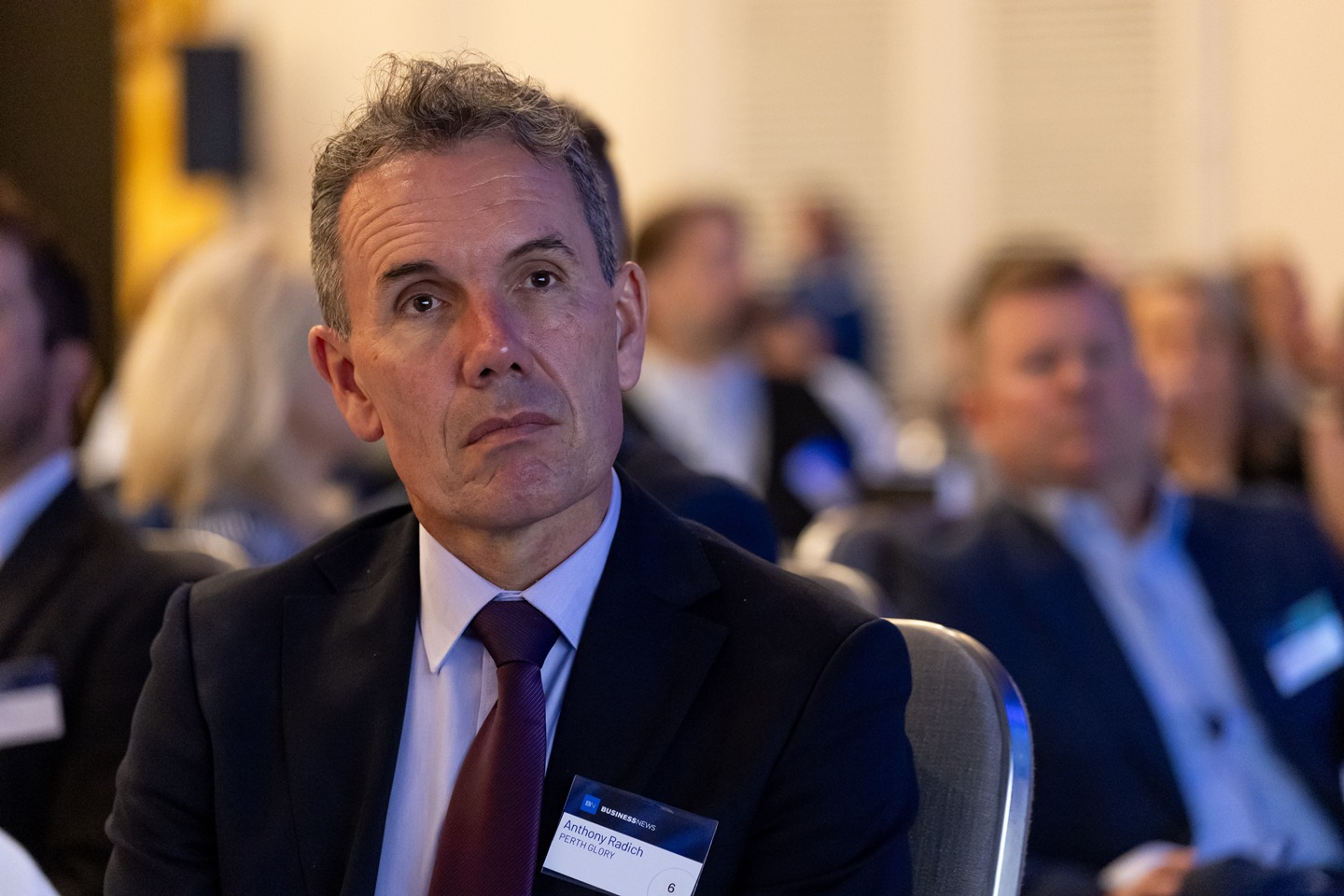
Perth Glory’s chief executive Anthony Radich is leaving the club after four years at the helm of the A-League soccer club.

Continue Reading
Click to comment

You must be logged in to post a comment Login

Leave a Reply

Business

Car finance: Compensation payments delayed until next year

Published

on

A woman with shoulder-length blonde hair talks into a microphone

Millions of drivers were in line to receive compensation this year, and most of the remainder should have got compensation by the end of 2027.

But the FCA has confirmed that no compensation will be paid before 2027 as a result of legal challenges to the scheme.

Consumer Voice said the scheme left “too many people short-changed”. The FCA has also received challenges from three lenders: Volkswagen Financial Services, Mercedes Benz Financial Services, and Credit Agricole Auto Finance.

The UK’s Upper Tribunal has agreed to hear legal challenges to the scheme, either in December or February next year.

Advertisement

It means that lenders will no longer need to calculate or pay compensation to people owed money under its scheme, until the legal process concludes.

The FCA said it would need to decide what to do next if the courts decided to overturn the programme. Without a scheme in place, the FCA has estimated that up to 19 million complaints would need to be handled individually, taking three years and costing lenders £6bn more.

It said it would “defend the scheme robustly as lawful and the best way to resolve such a widespread, long running and complex issue”.

Ultimately, the industry is expected to cover the full costs of any compensation scheme, including any administrative costs.

Advertisement

Lenders – including some of the UK’s biggest banks and specialist motor finance firms – have already set aside billions of pounds for potential payouts.

The body that represents the lending industry, the Finance and Leasing Association, said it had “concerns” about the programme but that it was choosing not to raise a legal challenge.

Santander, Barclays and Lloyds also accepted the scheme, despite raising concerns that the level of redress is disproportionate to those who suffered harm.

Even if drivers are entitled to compensation from these lenders they will need to wait.

Advertisement

There were some concessions made to lenders in a scaled-down final compensation plan from the FCA.

The Supreme Court considered three test cases which influenced the FCA’s decision and, ultimately, limited how broad the compensation programme could have been.

It focused on whether the car dealers had a duty to act on behalf of their customers, rather than in their own interests. The test case which was upheld was that of Marcus Johnson, who bought his first car – a Suzuki Swift – in 2017.

In his case, the Supreme Court said the terms of his finance deal were unfair due of the size of the commission payment, and the fact he appeared to have been misled over the relationship between the finance firm and the dealer.

Advertisement
Continue Reading

Business

June 2026 jobs report: US economy added jobs at a steady pace

Published

on

April 2026 jobs report: US economy added jobs at a steady

The U.S. economy added jobs at a steady pace in June despite headwinds caused by elevated inflation and uncertainty over the Iran war’s economic impact.

What are the key findings of the June 2026 jobs report?

The Bureau of Labor Statistics on Thursday reported that employers added 57,000 jobs in June. That figure was below the estimate of economists polled by LSEG, who estimated 110,000 jobs added.

Advertisement

The unemployment rate dipped to 4.2%, which was also below the estimate of 4.3%.

A construction worker hammers a beam

The U.S. economy added jobs at a slower pace than expected in June. (Al Drago/Bloomberg via Getty Images)

Revisions were made to the payroll numbers for the prior two months, with April revised down by 31,000 from a gain of 179,000 to 148,000; while May’s report was revised down from 43,000 from a gain of 172,000 to 129,000.

Taken together, employment in April and May was 74,000 jobs lower than previously reported.

BLS TOOK STEPS TO FIX DATA RELEASE FAILURES BUT WATCHDOG SAYS MORE SAFEGUARDS ARE NEEDED

Advertisement

What sectors added or lost the most jobs in June 2026?

Private payrolls added 49,000 jobs in June, well below the LSEG poll’s prediction of 110,000 jobs. May’s private sector job gains were also revised down from a gain of 120,000 to 97,000.

Government payrolls grew by 8,000 jobs last month, while the increase of 52,000 in May was revised down to 32,000 jobs.

The manufacturing sector added 3,000 jobs in June, in line with the estimate of economists polled by LSEG. May’s figures were revised down from a gain of 7,000 jobs to a loss of 2,000.

Healthcare continued to add jobs last month, with the sector adding 21,500 jobs in June. That’s a slower pace than the average monthly gain of 38,000 over the last 12 months. Hospitals added 9,200 jobs for the month, contributing to a significant portion of the gain.

Advertisement

Leisure and hospitality employment declined by 61,000 in June, which reflected weaker than usual seasonal hiring. The sector has shown little net change in employment over the course of 2026 to date.

FEDERAL RESERVE LEAVES INTEREST RATES UNCHANGED AS WARSH ERA BEGINS

Fed Chair Kevin Warsh speaks at a press conference

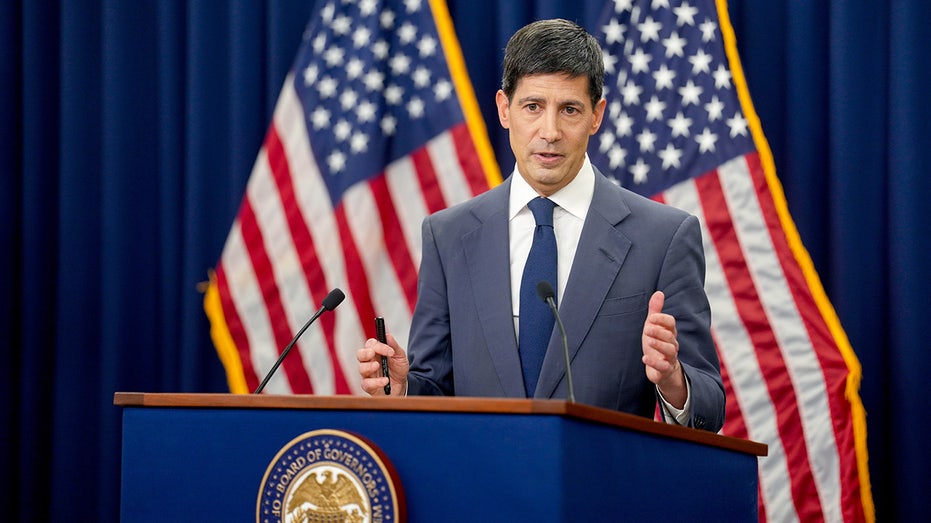
Federal Reserve Chair Kevin Warsh and other Fed policymakers left interest rates unchanged at their meeting last month. (Al Drago/Bloomberg via Getty Images)

What does the June 2026 jobs report mean for the workforce?

The number of long-term unemployed, defined as those who have been jobless for 27 weeks or more, was little changed at 1.9 million in June but is up 286,000 over the year. The long-term unemployed accounted for 27.3% of all unemployed people last month.

The number of people employed part-time for economic reasons also held relatively steady at 4.7 million in June. These individuals would’ve preferred full-time employment but were working part-time because their hours were reduced, or they weren’t able to find full-time jobs.

Advertisement

The labor force participation rate decreased by 0.3 percentage points to 61.5% in June, while the employment-population ratio edged down by 0.2 percentage points to 59%. Both figures were changed little over the year after accounting for annual population control adjustments.

ACTING LABOR SECRETARY PRESSURES 53 STATES AND TERRITORIES TO TACKLE UNEMPLOYMENT INSURANCE FRAUD

workers places food in freezer racks

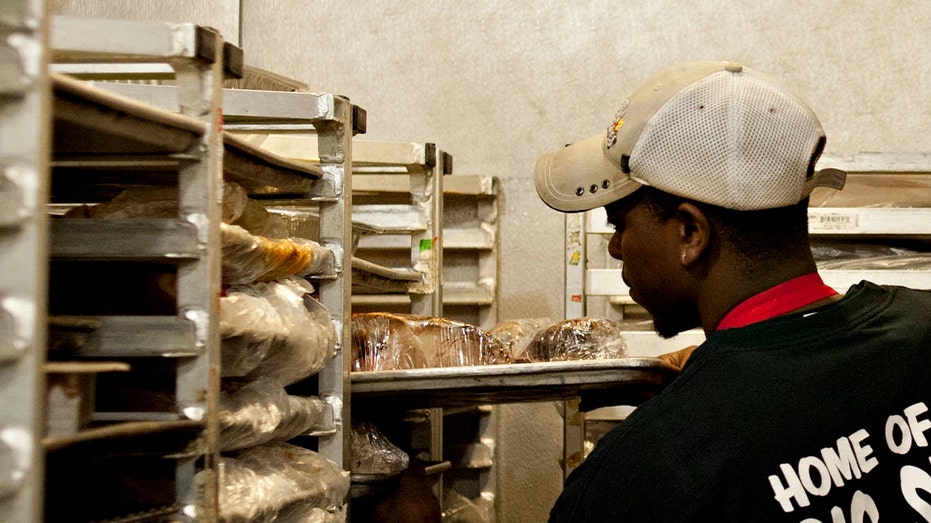
The leisure and hospitality sector shed jobs in June. (Daniel Acker/Bloomberg / Getty Images)

What experts are saying about the June 2026 jobs report

LPL chief economist Jeffrey Roach noted that, “Firms are still adding to their payrolls, but hours worked are below pre-pandemic levels as firms cut back labor utilization.”

“A concerning trend is the increasing flow of individuals dropping out of the job market altogether. For now, the labor market is holding, giving the Fed opportunity to stay focused on price stability,” Roach added.

Advertisement

Seema Shah, chief global strategist at Principal Asset Management, said that the June jobs report “paints a softer picture of the labor market than investors have become accustomed to, but it should ultimately be welcomed by markets.”

“The slowdown in payroll growth challenges the narrative of renewed labor market strength that has been building in recent months but, importantly, reinforces the view that the Federal Reserve is under little pressure to tighten policy,” Shah said.

GET FOX BUSINESS ON THE GO BY CLICKING HERE

What does it mean for interest rate cuts?

The Federal Reserve is expected to hold interest rates steady in the near term due to stubborn inflation remaining elevated above the central bank’s 2% target, though the market sees a strong possibility of rate hikes later this year.

Advertisement

The CME FedWatch tool shows a 41.8% probability that the Fed will hike the federal funds rate by 25-basis-points from its current target range of 3.5% to 3.75%, versus a 21.7% chance of rates remaining at their current level. 

What does the June 2026 jobs report mean for the market?

The benchmark S&P 500 index rose about 0.7% on Thursday during morning trading following the release of the June jobs report.

The Dow Jones Industrial Average was up about 0.6%, while the Nasdaq Composite was up a little more than 0.7%.

Advertisement
Continue Reading

Business

Greater Manchester’s economic growth has not boosted outer borough incomes, report finds

Published

on

Business Live

Greater Manchester’s economic boom has not increased household incomes across outer boroughs, with earnings remaining stagnant despite regional growth, according to new Oxford Economics research

The Manchester City skyline viewed from Werneth Low Country Park

The Manchester skyline viewed from Werneth Low Country Park(Image: Manchester Evening News)

Greater Manchester’s relative economic success has failed to translate into improved wages or earnings for residents in its outer boroughs, according to a new report.

Advertisement

Research by Oxford Economics has indicated that “exceptional economic growth” has not resulted in higher earnings or income growth across the wider region.

Economists noted that elevated levels of economic inactivity and stagnant productivity gains in areas beyond Manchester city centre have constrained household finances.

The report scrutinises the broader narrative unfolding ahead of Andy Burnham’s anticipated move into Number 10, with the former Greater Manchester mayor having claimed credit for the growth achievements recorded in recent years.

He has also leveraged strong growth figures to bolster his calls for greater devolution, while pledging “good growth in every postcode”, as reported by City AM.

Advertisement

Although average disposable income growth in the city has outstripped the national average by approximately 0.6 percentage points between 2008 and 2025, growth in Greater Manchester boroughs Salford and Bolton has trailed 0.7 percentage points behind the country’s benchmark rates.

Bury, Oldham and Wigan have similarly struggled to match the growth witnessed in areas such as Manchester, Trafford and Tameside.

Economists highlighted that these areas have been disproportionately impacted by a significant surge in economic inactivity among working-age residents, with long-term sickness rising by nearly 25 per cent across the entire city region.

The report also indicated that poor transport links and a “relatively small” labour market have prevented Manchester’s growth from filtering through to surrounding areas across the region.

Advertisement

The report noted that sluggish income growth beyond the city centre suggests urban areas “remain too weak, too small, and too poorly connected to spread. growth across the entire region”.

Economists at Oxford Economics also raised questions over the city’s productivity growth, which “has been weak by historical standards”.

While the city benefited from an average annual productivity growth of 2.1 per cent between 1991 and 2007, that figure has since fallen to an average of 1.2 per cent per year following the financial crisis — though this still outpaced levels recorded across the UK and in London.

A separate paper by the consultancy also cast doubt on the data underpinning Manchester’s growth figures, given that the Office for National Statistics has encountered difficulties in publishing reliable labour market statistics.

Advertisement

In contrast, the Centre for Cities, a think tank favoured by Burnham, argued that Manchester’s city centre has strengthened thanks to a sharper focus on buses through the privately operated Bee Network bus and tram services.

It described the new transport frameworks as a “devolution success story”. The report also noted that wages across the city exceeded the national average, though unemployment levels between 2024 and 2025 were equally higher than the UK’s overall rate.

Continue Reading

Business

OSF’s flavor innovations tap into ‘swicy’ trend

Published

on

OSF’s flavor innovations tap into ‘swicy’ trend

Company launches “swicy” soy barbecue and caramelized sweet corn and chili flavors.

Continue Reading

Business

Meta Might Have Just Popped The AI Bubble (NYSEARCA:SPY)

Published

on

It Takes A Pin To Burst A Bubble

This article was written by

I’ve been in the investing world for over 10 years at this point. My interests in writing on Seeking Alpha center around both the larger purview of macroeconomic themes, as well as around microeconomic issues regarding specific companies. In that way, my writing is very opportunistic, just like my investing. My goal, first and foremost, is to be able to articulate my views clearly and in a way that provides value for the reader, even if they disagree with the conclusions I come to. You might not always agree with me, but if I’m able to stimulate some interesting intellectual activity, I will consider that a success. Happy Investing!

Analyst’s Disclosure: I/we have a beneficial short position in the shares of QQQ either through stock ownership, options, or other derivatives. I wrote this article myself, and it expresses my own opinions. I am not receiving compensation for it (other than from Seeking Alpha). I have no business relationship with any company whose stock is mentioned in this article.

In addition to put options, I also have a short position against the Nasdaq through PSQ.

Advertisement

Seeking Alpha’s Disclosure: Past performance is no guarantee of future results. No recommendation or advice is being given as to whether any investment is suitable for a particular investor. Any views or opinions expressed above may not reflect those of Seeking Alpha as a whole. Seeking Alpha is not a licensed securities dealer, broker or US investment adviser or investment bank. Our analysts are third party authors that include both professional investors and individual investors who may not be licensed or certified by any institute or regulatory body.

Continue Reading

Business

Wales experiences biggest fall in equity deals in the UK but their value up slightly

Published

on

Business Live

The British Business Bank has published its latest annual Small Business Equity Tacker

John Atack and Simon Ward of Draig Therapeutics.

Wales has experienced the biggest percentage fall in equity deals in the UK while their combined value have increased marginally, show new research from the British Business Bank.

According to its Small Business Equity Tracker 2026 the value of equity investments in Wales last increased 1% on 2024 to £152m.

Advertisement

One deal, the £107m raised by Cardiff University life sciences spinout Draig Therapeutics accounted, for 70% of the total. The research from the UK Government’s economic development bank also shows that Wales and parts of the north of England under-performed on their share of university spinouts.

While Wales accounted for 7% of incorporated spinouts, only 3% of those receiving investment. Wales experienced the biggest percentage fall of equity deals of any UK nation or region, down 45% to 44. Only Northern Ireland had fewer deals with 35.

For the UK as a whole deals were down 17% to 2,002 with their total value down 4% to £12.28bn. On value Wales made up just over 1% of the UK total and on number of deals 2.2%

Across the UK, equity markets remained challenging in 2025 with investors increasingly concentrating capital into fewer, larger transactions. London’s dominance continued to ease as investment fell, while Scotland, the South West and the North West all recorded strong growth in investment value.

Advertisement

Across the UK, AI companies accounted for a record 44% of smaller business equity investment in 2025 and 26% of all deals, with investment increasing by 48% year-on-year to £5.4bn across 527 deals.

In Wales, AI businesses raised £5.6m across eight deals in 2025, accounting for 18% of all equity deals. While investment activity remains at an earlier stage than in some parts of the UK, AI continues to represent an important area of innovation, with Welsh businesses increasingly attracting backing to develop new technologies.

Recent examples supported by the British Business Bank’s £130m Investment Fund for Wales – whose equity element is fund managed by Foresight – include Cardiff-based automation company Bots for That, which secured a £1.5m equity investment to support growth of its AI-powered software platform, and Cardiff University spinout Nisien.AI, which received backing to accelerate research and development, expand its workforce and bring new products to market.

Jessica Phillips-Harris, director, Wales, British Business Bank local growth team, said: “Equity investment in Wales was resilient in the face of a challenging year in 2025, demonstrating that investors continue to back ambitious Welsh businesses with strong growth potential.

Advertisement

“Artificial intelligence is becoming an increasingly important driver of investment activity across the UK, and Wales is benefitting through innovative businesses developing new technologies and attracting investor interest. At the same time, strong investment into sectors such as life sciences demonstrates the breadth of innovation taking place across Wales.”

Continue Reading

Business

Form 4 Old Second Bancorp Inc For: 2 July

Published

on


Form 4 Old Second Bancorp Inc For: 2 July

Continue Reading

Business

Tamilnad Mercantile Bank shares surge 5% after strong Q1FY27 business update

Published

on

Tamilnad Mercantile Bank shares surge 5% after strong Q1FY27 business update
Tamilnad Mercantile Bank witnessed a sharp uptick in its share price on Thursday, rising 4.52% to Rs 763.30, following the release of its provisional business update for the June 2026 quarter (Q1FY27). The stock’s momentum was supported by robust year-on-year growth across key banking metrics, reinforcing investor confidence in the lender’s steady expansion trajectory.

The bank reported total business of Rs 1,21,715 crore as of June 30, 2026, marking a strong 23.04% increase from Rs 98,923 crore in the same period last year. On a sequential basis, total business also advanced 5.76% from Rs 1,15,091 crore in the March 2026 quarter, indicating sustained operational momentum.

Growth was particularly strong in the advances segment, which stood out as a key driver. Gross advances surged to Rs 57,306 crore, up 27.01% year-on-year from Rs 45,120 crore. Sequentially, advances rose 7.36% from Rs 53,379 crore, reflecting healthy credit demand and continued expansion in lending activity.

On the liability side, deposits climbed to Rs 64,409 crore, compared to Rs 53,803 crore a year earlier, registering a 19.71% YoY growth. Deposits also rose 4.37% quarter-on-quarter from Rs 61,712 crore, indicating stable inflows and consistent customer confidence.

Advertisement

The bank’s CASA (Current Account and Savings Account) deposits showed a divergent short-term trend. CASA balances increased 16.94% year-on-year to Rs 16,852 crore, but declined 2.95% sequentially from Rs 17,365 crore in the previous quarter. This suggests a mild shift in deposit mix in the near term, despite strong annual growth in low-cost funds.


Over the past year, the stock has delivered a remarkable rally of around 65%, with the current market capitalisation standing at approximately Rs 11,582 crore. Its 52-week high stands at Rs 763.
From a technical standpoint, the 14-day RSI stands at 46.9, indicating neutral momentum, while the stock trades above 6 out of 8 key simple moving averages (SMAs), suggesting an overall bullish undertone in trend structure.In the March 2026 quarter, institutional interest in the stock improved, with Foreign Portfolio Investors (FPIs) increasing their holding from 4.95% to 6.19%. Mutual funds also began building or expanding positions, raising their stake from nil to 0.35%, indicating a gradual rise in institutional participation and confidence in the stock.

(Disclaimer: Recommendations, suggestions, views and opinions given by the experts are their own. These do not represent the views of Economic Times)

Continue Reading

Business

World Cup boom falters as US hospitality jobs fall in June

Published

on

A woman with shoulder-length blonde hair talks into a microphone

A World Cup jobs boom in the US has failed to materialise, with employment in restaurants, bars and hotels falling in June.

Analysts had expected the tournament, being hosted jointly by the US, Canada and Mexico, to lead to an increase in leisure and hospitality jobs.

But the sector saw a decline of 61,000 jobs last month, the Bureau of Labor Statistics (BLS) said on Thursday.

Overall employment in the US rose by 57,000 in June, which was lower than expected, while the unemployment rate dipped slightly to 4.2%.

Advertisement

The BLS’s previous release reported early signs of a jobs boom in May, with bars and restaurants ramping up hiring to prepare for the World Cup.

And a report by Goldman Sachs analysts expected June’s figures to show the competition boosting employment by around 40,000 jobs.

But, despite reports of travelling football fans drinking bars across the US dry, the growth went into reverse in June.

ING’s chief US economist James Knightley said leisure and hospitality was a “real area of weakness” in Thursday’s figures.

Advertisement

He added that the decline was “a major surprise given the World Cup is on and bars and venues are busy”.

“Admittedly, this sector had seen a 44,000 jump in May, but even so that is a surprising outcome,” he told the BBC.

Thursday’s jobs report included significant downward revisions to increases reported in previous months, with the number of jobs created in April and May now 74,000 lower than the BLS thought.

Knightley said June’s lower-than-expected overall increase, combined with the downward revisions, suggest “the decent uptick in jobs over the previous three months is not necessarily the start of a new trend”.

Advertisement

He added the figures make an interest rate hike later this month less likely.

Susannah Streeter, chief investment strategist at Wealth Club, said the slowdown in jobs growth opens the door to a “Goldilocks scenario” for the US economy, in which it could stay “not too hot, but not too cold”.

“Expectations of multiple rate hikes are fading away, with only one hike now fully priced in, and not until next year,” she added.

Advertisement
Continue Reading

Business

Nestle testing Kit Kats with regeneratively farmed wheat

Published

on

Nestle testing Kit Kats with regeneratively farmed wheat

Company part of partnership with Wildfarmed in the UK.

Continue Reading

Trending

Copyright © 2025