MUMBAI, India — Bollywood’s most anticipated action thriller sequel, “Dhurandhar: The Revenge,” starring Ranveer Singh and directed by Aditya Dhar, is set to storm theaters worldwide on March 19, 2026, with paid previews kicking off in India on March 18. The film, a direct continuation of the 2025 blockbuster “Dhurandhar,” has generated massive hype following its explosive trailer, early censor screenings and a fresh wave of viral reviews — even as it navigates controversy over promotional materials and community objections.
Dhurandhar: The Revenge
Directed, written and produced by Aditya Dhar under Jio Studios and B62 Studios, the 3-hour-49-minute epic (certified ‘A’ by India’s Central Board of Film Certification on March 17) picks up where the first installment left off. Ranveer Singh reprises his role as Hamza Ali Mazari — the undercover alias of Indian agent Jaskirat Singh Rangi — who delves deeper into Pakistan’s criminal underworld to track down a powerful antagonist known as Majo while confronting personal betrayals and escalating threats.
The cast boasts a powerhouse ensemble: Sanjay Dutt as S.P. Choudhary Aslam, Arjun Rampal as Major Iqbal, R. Madhavan as Ajay Sanyal, Sara Arjun as Yalina Jamali and others in pivotal roles. Yami Gautam, who makes a cameo, praised the film in late February as “beyond extraordinary” and “an experience the audience will never forget.” The sequel was shot back-to-back with the original, principal photography wrapping in October 2025 after starting in Bangkok in July 2024.
The first film, released December 5, 2025, became a massive commercial hit despite mixed critical reception, grossing huge figures and sparking debates over its portrayal of espionage and India-Pakistan dynamics. It was banned in several Gulf countries over specific dialogue and re-released globally in March 2026 to build momentum for the sequel. A post-credits tease in the original confirmed the duology’s second part.
The “Dhurandhar: The Revenge” trailer, dropped in early March, has been widely lauded for its gritty, bloodier tone, high-octane action sequences, dark humor and Ranveer Singh’s commanding performance. Reviewers described it as teasing a “baahubali-level” spectacle, with Dhar’s direction promising intense backstory revelations on Hamza’s transformation and vendetta. Music by Shashwat Sachdev, including the viral track “Aari Aari,” adds to the cinematic fire.
Advertisement
Early buzz exploded after overseas censor screenings. Dubai-based critic and censor board member Umair Sandhu posted a glowing review on March 13, calling the film “the Baahubali 2 of this era” and giving it 5 stars, claiming it left him “speechless” and predicting 3000 crore worldwide collections. He hailed Ranveer’s “lifetime performance” and Dhar’s comeback vision, declaring Pushpa and Baahubali series pale in comparison. Other first reactions echoed praise for the first half’s “zabardast” pacing and overall “crazy cinema.”
However, not all early feedback has gone unchallenged. Some alleged positive reviews went viral on social media, prompting Ranveer Singh’s fans to call out potential “fake reviews” and planted hype. Discussions on platforms like Reddit and X highlight cautious optimism, with fans excited but wary of overpromising after the first film’s polarizing reception.
The film faces fresh controversy just days before release. Reports emerged March 18 that a Sikh community member issued a legal notice to the makers, Ranveer Singh, CBFC and the Ministry of Information and Broadcasting over an AI-generated promotional poster. The image reportedly shows Singh’s character in a turban while holding a cigarette, drawing objections for alleged misrepresentation. The issue has sparked online debates about sensitivity in character portrayal.
Marketing remains aggressive. The original “Dhurandhar” received a rare worldwide re-release starting March 12 (India) and March 13 (overseas) on about 500 screens to refresh audiences ahead of the sequel. Premieres for “The Revenge” are slated March 18 in the U.S. and Canada on premium large-format screens, a format usually reserved for major Hollywood events.
Advertisement
Industry observers predict a blockbuster opening, with pre-sales and advance bookings surging amid festive timing coinciding with Gudi Padwa, Ugadi and Eid al-Fitr. Projections from trade sources suggest strong potential in domestic and overseas markets, especially in Telugu, Tamil, Kannada and Malayalam versions alongside Hindi.
Speculation about a third installment swirled after reports that makers urged Dhar to consider expanding the saga, though the director has expressed interest in reuniting with Singh for a mythological action project instead. For now, focus remains on delivering a satisfying conclusion to the duology.
As theaters prepare for packed houses, “Dhurandhar: The Revenge” stands as one of 2026’s biggest cinematic events — a high-stakes blend of patriotism, revenge, espionage and star power. Whether it lives up to the hype or faces backlash over content sensitivities, the film is poised to dominate conversations this week. Audiences can expect non-stop action, emotional depth and Ranveer Singh at his intense best when it hits screens March 19.
Center for Medicare Director Chris Klomp joins ‘Mornings with Maria’ to outline the Trump administration’s latest Medicare rate update, defend new efforts to curb rising healthcare costs and highlight ongoing moves to lower prescription drug prices a
Falling prescription drug costs are emerging as a key development in the broader push to rein in U.S. health care spending, with new pricing shifts beginning to show up at the pharmacy counter.
Medicare Director Chris Klomp joined FOX Business’ Maria Bartiromo on “Mornings with Maria” to discuss how recent policy changes are starting to impact affordability across the health care system.
Klomp pointed to early signs that pricing pressure is easing, particularly for high-demand medications like GLP-1 drugs, which have surged in popularity but have remained out of reach for many patients. He attributed the recent price declines to actions taken by President Donald Trump to lower drug costs through new pricing initiatives.
FOX Business’ Gerri Willis reports on a Gallup poll showing 61% of Americans are greatly concerned about rising healthcare costs, surpassing worries about the economy and inflation.
“If you need a GLP-1, you’re now paying half of what you were paying just a couple of months ago before he announced those deals,” Klomp said.
Advertisement
Klomp framed the pricing changes as part of a broader effort to address affordability challenges that have prevented many Americans from filling prescriptions.
Woman injecting a syringe of medicine into her stomach (David Petrus Ibars/Getty Images / Getty Images)
“That’s solving the problem for a quarter of Americans who can’t pick up a prescription when they get to the pharmacy counter because they can’t afford it right now,” Klomp said.
The price drop reflects a broader effort to align drug costs more closely with international benchmarks while increasing competition in the market. GLP-1 medications, commonly used for diabetes and weight management, have become a focal point in the affordability debate as demand continues to climb.
Advertisement
eMed chief wellness officer Tom Brady and eMed CEO Linda Yaccarino discuss GLP-1 market growth and the company’s latest funding round on ‘Mornings with Maria.’
Klomp suggested the changes extend beyond a single drug class, pointing to similar trends in other treatments where costs have historically been a barrier to access.
“If you want to grow your family, you need to pick up fertility medicine again. You’re paying about half for those drugs, saving you thousands of dollars per cycle of treatment than you were just a couple months ago,” he said.
The shifts come as policymakers look for ways to reduce out-of-pocket costs while maintaining long-term sustainability in federal health care programs.
Advertisement
“[Trump’s] delivering on affordability for every American family to be their healthiest self,” Klomp said.
PE-backed firm teams up with Royal Fulfillment for centres in New Jersey, Chicago and Los Angeles
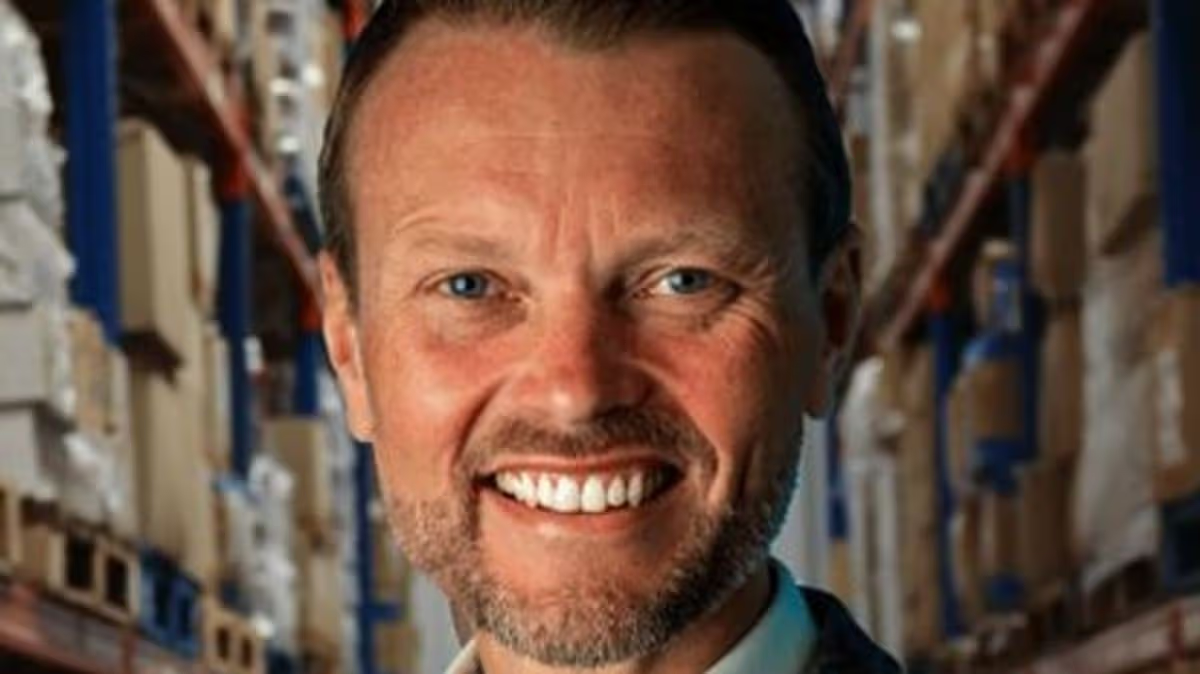
fulfilmentcrowd’s CEO Lee Thompson(Image: fulfilmentcrowd)
Logistics tech specialist fulfilmentcrowd is expanding its US network with new centres in New Jersey, Chicago and Los Angeles.
Chorley-based fulfilmentcrowd has teamed up with American group Royal Fulfillment on the centres designed to “support high-volume eCommerce and B2B distribution across the United States” and to offer coast-to-coast coverage for brands serving the US market. They will replace the group’s two previous US sites.
Royal Fulfillment is a family-run operator with more than 18 years of industry experience. Its centres can handle both direct-to-consumer and large-scale retail distribution, and the business has worked with major retailers such as Amazon, Walmart and Sephora.
Advertisement
Fulfilmentcrowd says its expanded US network will give its customers access to a wider range of US shipping services, including through carriers such as USPS, FedEx and DHL
Lee Thompson, CEO at fulfilmentcrowd, said: “The US is a critical growth market for many of our clients. With this three-centre network, we’re aiming to reduce operational friction at scale, giving global brands the ability to operate domestically across the US with speed, flexibility and cost control built in.”
He added: “This is about more than just adding locations. These centres add to a network that already reflects how modern brands operate: omnichannel, fast-moving and customer-first. Now we can support these requirements across the entire United States.”
Varney & Co. host Stuart Varney warns NYC Mayor Zohran Mamdani’s tax proposals could drive jobs, capital and residents out of New York as a $12.6B deficit looms.
JPMorgan Chase CEO Jamie Dimon warned that New York City and other cities with high taxes and regulatory burdens run the risk of losing businesses and workers to locales with more hospitable business climates.
Dimon released his annual letter to shareholders on Monday in conjunction with the firm’s 2025 annual report and said that companies need to weigh the benefits of operating in places like New York City against areas with lower taxes on businesses and individuals.
Advertisement
“No matter who you are, you need to deal with reality and the truth. The truth is that while New York City has much going for it, particularly for financial companies (because of extraordinary local talent), it also has the highest city and state corporate taxes and the highest individual income and state taxes,” Dimon wrote.
“People often make this a moral or loyalty issue, but it is not. Companies need to remain competitive in this very tough, fast-moving world. And higher taxes lower returns on capital and less competitiveness by their nature,” he said.
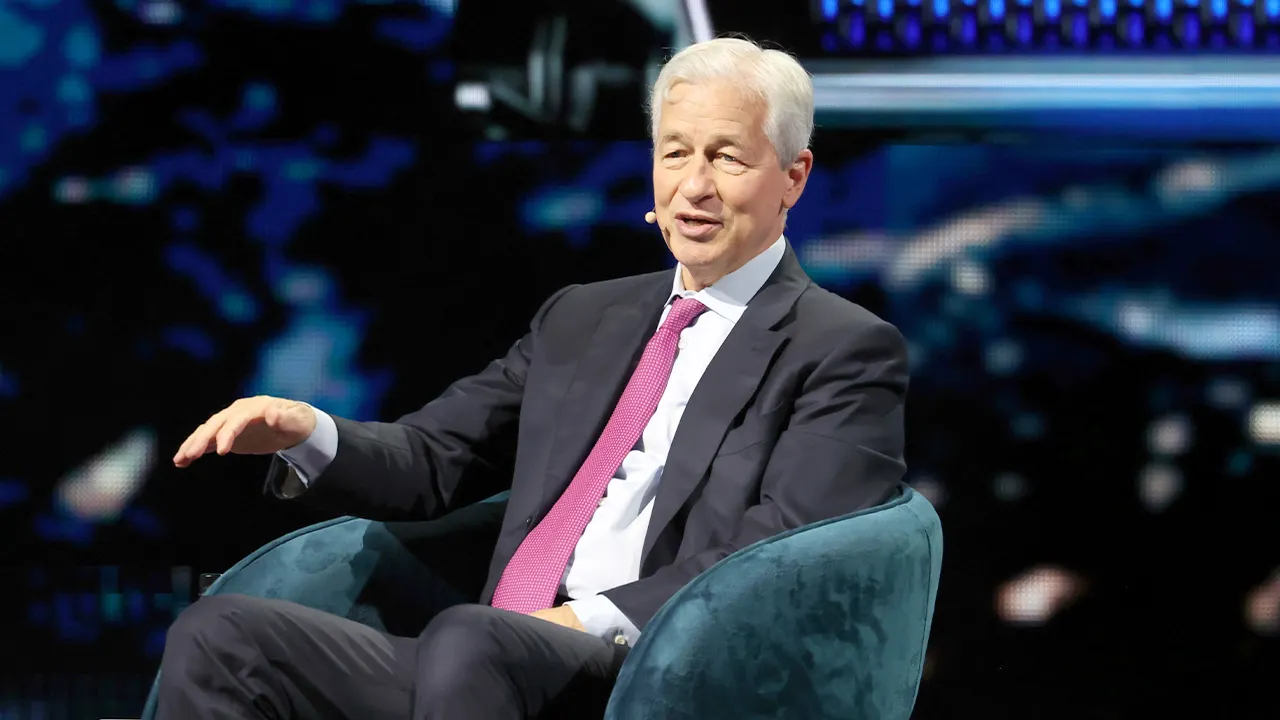
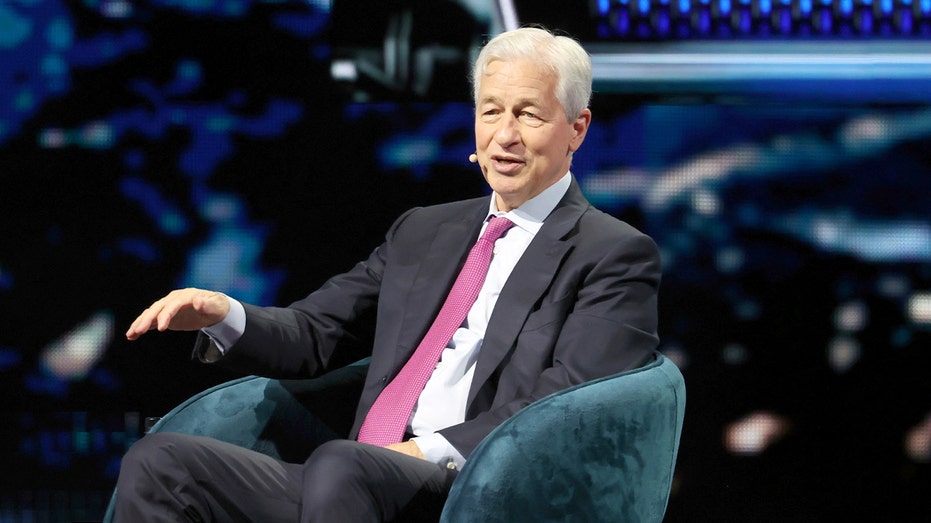
JPMorgan Chase CEO Jamie Dimon said that cities and states have to compete to keep businesses in their jurisdictions. (Alexander Tamargo/Getty Images for America Business Forum)
Dimon said while companies relocating their headquarters or significant aspects of their operations to states with more favorable tax and regulatory regimes may be easier to track, those shifts happen at the employee level as well and can amount to significant moves for the workforce.
Advertisement
“Additionally, individuals vote with their feet – you can already see a fairly large exodus of people and jobs out of some states with high taxes and high expenses (often due to high taxes and regulatory burdens). Sometimes you see companies leaving states, but migration also shows up in shifts of employees out of certain states,” Dimon wrote.
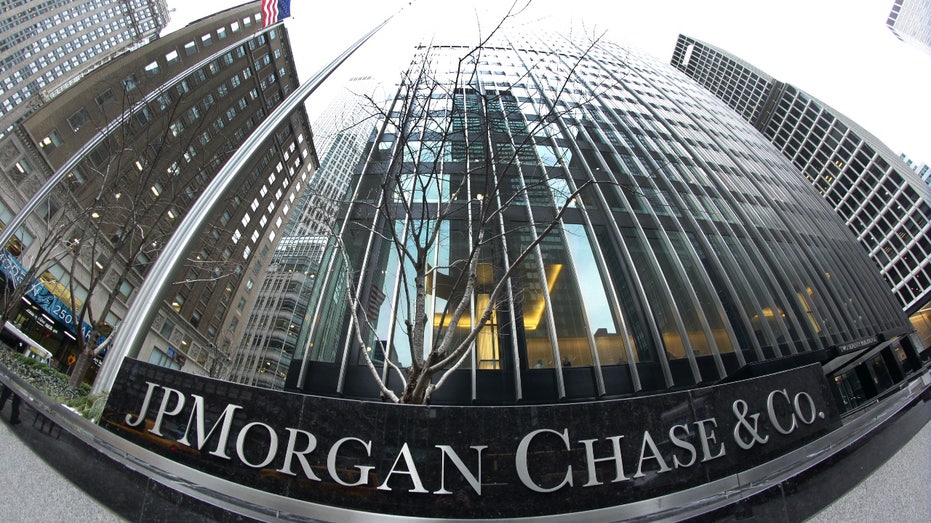
JPMorgan Chase has expanded its presence in Texas while its headcount has declined in New York City. (Tim Clayton/Corbis via Getty Images)
He explained how that dynamic has played out at JPMorgan, which has expanded its footprint in a low-tax state like Texas and will probably continue to do so.
“For example, while New York City is still our company’s global headquarters, we have shrunk our headcount in the city, from 30,000 a decade ago to 24,000 today, and increased our headcount in Texas, from 26,000 in 2015 to 32,000 today. This trend will likely continue,” Dimon said.
The JPMorgan CEO said that he has seen an exodus of corporations out of New York City before that was driven in part by the business climate, adding it can pose significant problems for city governments.
“Sometimes this can be a disaster for a city. I am reminded that in the 1970s, nearly half of the 125 Fortune 500 companies based in New York City left,” he wrote. “While mergers accounted for some departures, the price of doing business in New York City accounted for most: cost of taxes, office rents, labor and so on.”
















































You must be logged in to post a comment Login