



Connect with us

Business

Resolute Mining Shares Rise 5 Percent as Analysts Call Gold Miner Undervalued After Profit Surge

Published

on

Resolute Mining Shares Rise 5 Percent as Analysts Call Gold

Shares of Resolute Mining rose more than 5% Monday, extending a stretch of investor interest in the Perth-based gold producer following a set of half-year results that showed profit more than doubling on the back of surging gold prices.

The stock traded at 1.44 Australian dollars, up 0.07 dollars, or 5.11%, on the Australian Securities Exchange. Resolute, which operates the Syama gold mine in Mali and the Mako mine in Senegal while developing the Doropo project in Cote d’Ivoire, has drawn sustained attention from analysts and investors in the roughly two weeks since it reported its results for the six months ended June 30.

Resolute reported net profit after tax of 162.6 million dollars for the first half of 2026, up 129% from 71 million dollars in the same period a year earlier, according to a summary of the results published by Kalkine Media. Revenue rose 31% to 584.7 million dollars, driven primarily by a sharply higher average realized gold price of 4,712 dollars per ounce, compared with 3,076 dollars per ounce in the first half of 2025, even as overall gold production declined to 104,795 ounces from 151,460 ounces a year earlier. Earnings before interest, taxes, depreciation and amortization rose 42% to 323.9 million dollars, according to the same figures.

Resolute Chief Executive Officer Chris Eger described the results as reflecting the strength of the company’s underlying operations despite the production decline. “Resolute has delivered a strong first half of 2026, generating significant operating cash flow and ending the period with a net cash position of 317.4 million dollars,” Eger said, according to a company statement carried by TradingView News. “This performance was underpinned by continued strength in the gold price, disciplined cost management and the resilience of both Syama and Mako. During the period we continued to advance our key growth initiatives. At Doropo, the project progressed from final investment decision into active construction, with early works advancing and financing progressing.”

Advertisement

The lower production figures were tied to operational disruptions at the Syama mine, including a planned roaster shutdown, explosives supply interruptions and slower-than-expected mobilization in the mine’s A21 area, according to reporting from Discovery Alert. Those disruptions pushed the company’s all-in sustaining cost up sharply to 2,327 dollars per ounce, a 38% increase from 1,688 dollars per ounce in the first half of 2025, a rise the company attributed to a combination of higher royalty payments tied to elevated gold prices and reduced production volumes.

Resolute’s balance sheet strengthened considerably during the period. Net cash climbed 189% to 317.4 million dollars, up from roughly 109.9 million dollars a year earlier, while operating cash flow more than doubled to 277.6 million dollars. The company also received 31.9 million dollars from the sale of its stake in Loncor Gold and a further 53.9 million dollars from repayment of a vendor financing note tied to its earlier Ravenswood mine transaction, according to figures reported by Kalkine Media.

Beyond its existing operations, Resolute continued advancing its growth pipeline during the period. The company’s ABC Project in northwest Cote d’Ivoire saw its inferred mineral resource estimate grow to 3 million ounces of contained gold, up from 2.16 million ounces a year earlier, according to Stocklight. Resolute has also secured 155 million dollars in local bank financing in Cote d’Ivoire to support the Doropo project’s construction, with an additional 105 million dollars in financing expected to be secured during the third quarter of 2026.

Analysts have responded favorably to the results. According to Simply Wall St, Resolute’s stronger-than-expected profitability has prompted some analysts to argue the stock remains meaningfully undervalued, with certain fair-value estimates suggesting upside of as much as 59% from prior trading levels, even as the firm cautioned that funding requirements and regulatory risk in the company’s West African operating jurisdictions remain factors investors should continue to monitor closely.

Advertisement
Continue Reading
Click to comment

You must be logged in to post a comment Login

Leave a Reply

Business

Thailand’s Visa-Free Stay Drops from 60 to 30 Days Starting September 15, 2026

Published

on

Thailand to Reduce Visa-Free Stay Limit to 30 Days

It is now official. Thailand is ending its 60-day visa exemption scheme and reverting to a 30-day stay for nationals of 60 countries and territories, including the United States, the United Kingdom, Canada, Australia and most of the European Union. The four Ministry of Interior regulations behind the change were published in the Royal Gazette on August 31, setting the effective date at September 15, 2026.

What is changing

Since July 2024, travelers from eligible countries have been able to enter Thailand visa-free for up to 60 days, a scheme introduced to help revive tourism after the pandemic. From September 15 onward, that period is cut to 30 days for tourism purposes. The change affects only the length of stay, not the process itself: eligible nationalities still enter without applying for a visa in advance.

Travelers arriving on or before September 14 remain under the current 60-day rule for that entry, even if their stay extends past the cutoff date. The new 30-day limit applies only to entries made from September 15 onward.

Who is affected

The reform sorts nationalities into several tiers. Sixty countries and territories, including the US, UK, Canada, Australia, France, Germany and most other EU members, receive a 30-day tourist exemption. Two nationalities, reportedly Mauritius and the Seychelles, move to a 15-day exemption, while three others remain on the Visa on Arrival track.

Advertisement

This finalizes a process that had been under discussion since March 2025, when Thailand’s Tourism and Sports Ministry first floated the idea of scaling back the 60-day scheme over concerns it was being used for unauthorized work, informal business activity, and overstays. The Cabinet approved the principle of the rollback on May 19, before the exact terms were settled and published.

The 30-day extension option

The shorter exemption does not fully close the door on longer stays. As was the case before 2024, travelers can apply for a 30-day extension at a Thai immigration office, generally for a fee of around 1,900 baht and a TM.7 application form. That brings the maximum visa-free stay to 60 days in total, down from the 90 days previously available under the 2024 scheme, but only if the traveler completes the extension in person.

Why Thailand is scaling back

Thai authorities have framed the rollback as a response to abuse of the extended exemption, including unauthorized remote work, informal businesses run without a work permit, and cases where the extra time was used to facilitate illegal activity. Industry groups had also raised concerns that the looser 60-day rule made it easier to bypass proper visa channels altogether. The reform comes as Thailand’s tourist arrivals continue to run behind the government’s targets for the year, a backdrop that shaped months of internal debate before the final texts were signed.

What this means for travelers

For a standard two- to three-week holiday, the change makes no practical difference: a passport valid for at least six months, a completed Thailand Digital Arrival Card filed within 72 hours of arrival, and proof of onward travel remain the only requirements. The impact falls mainly on travelers who had grown used to two full months without paperwork. Anyone planning to stay longer than 30 days from September 15 onward will need to either apply for the extension locally or arrange an appropriate visa before departure.

Advertisement
Continue Reading

Business

Musk Says Tesla FSD Pothole Avoidance Is Coming Soon, Seven Years After He First Teased This Feature

Published

on

Musk Says Tesla FSD Pothole Avoidance Is Coming Soon, Seven

Elon Musk said this weekend that Tesla’s Full Self-Driving software will soon be able to automatically steer around potholes, reviving a promise the Tesla and SpaceX CEO first made roughly seven years ago that has yet to materialize.

Musk offered the latest update Sunday night, responding on the social platform X to a user who asked whether FSD would eventually be able to avoid potholes. True to his typically terse style, Musk replied with just two words: “coming soon.” The exchange quickly drew attention from Tesla-focused outlets given how long the specific promise has been outstanding.

Potholes remain one of the most persistent and costly road hazards in the United States, capable of damaging tires, wheels and suspension components, and in more severe cases, causing injury to vehicle occupants. Reliable, automated pothole detection and avoidance has proven to be a genuinely difficult engineering problem, requiring a vehicle’s software to identify a pothole under varying lighting and road conditions, estimate its depth, location and overall risk level, and then decide in real time whether to slow down, steer around it, or simply drive through it if avoidance isn’t feasible.

Musk’s pledge traces back years earlier than most casual observers might expect. In 2019, he agreed with a Tesla owner that pothole avoidance would “definitely” improve the driving experience under Autopilot, the company’s less capable predecessor to Full Self-Driving. The following year, in February 2020, Musk responded “Yes” when asked whether Tesla vehicles could eventually create and share “micro-maps” containing data on road features such as potholes and stop signs, allowing the broader vehicle fleet to benefit from data collected by individual cars. Neither capability has become a standard, broadly available feature in the six years since.

Advertisement

Despite that long gap, there are indications the feature may genuinely be closer to release this time. Pothole avoidance has been explicitly listed as an “Upcoming Improvement” in Tesla’s FSD release notes since the company deployed FSD version 14.3 in April, distributed through software update 2026.2.9.6. That version also included a significant upgrade to Tesla’s neural network vision encoder, improving the system’s understanding of three-dimensional geometry and difficult road environments, alongside a complete rewrite of the company’s underlying AI compiler and runtime software, which Tesla said resulted in a 20% improvement in the system’s reaction time. More recent builds, including versions 14.3.4 and 14.3.8 rolling out as part of Tesla’s 2026 Summer Update, have continued to list the feature as pending rather than active.

Some drivers have already reported seeing early, inconsistent signs of the capability in action. Tesla vehicles running current FSD versions have occasionally been observed steering slightly to avoid large potholes, including one documented case in which FSD version 14.2.2.5 positioned a vehicle so that a damaged section of road passed cleanly between its tires. It remains unclear whether the software specifically recognized the feature as a pothole or simply treated it as a generic road obstacle, though the behavior suggests the underlying capability may already be partially functional even without a formal rollout.

Unlike some previous Tesla hardware initiatives, pothole avoidance is expected to be delivered as a pure software update rather than requiring new sensors or components, meaning it should eventually become available across Tesla’s existing FSD-capable vehicle fleet, including older cars running Hardware 3, once the feature is formally activated.

Musk’s latest promise arrives at a notable moment for Tesla’s broader autonomous vehicle ambitions. The company recently expanded the operational area for its driverless robotaxi service in Austin, Texas, marking its first such expansion in some time, as Tesla continues working to establish its Cybercab service amid intensifying competition from rival autonomous vehicle operator Waymo. Musk has a long history of publicly discussed self-driving predictions that have taken considerably longer to materialize than initially promised, a pattern extensive enough that it has been documented at length by outside trackers. Even so, Tesla has continued to make incremental technical progress toward full autonomy in the years since Musk’s original 2019 pothole comments, even if the specific feature he first teased has, until now, remained conspicuously absent from the company’s production software.

Advertisement
Continue Reading

Business

GFL Environmental closes acquisition of SECURE Waste

Published

on


GFL Environmental closes acquisition of SECURE Waste

Continue Reading

Business

What to do if you've been scammed

Published

on

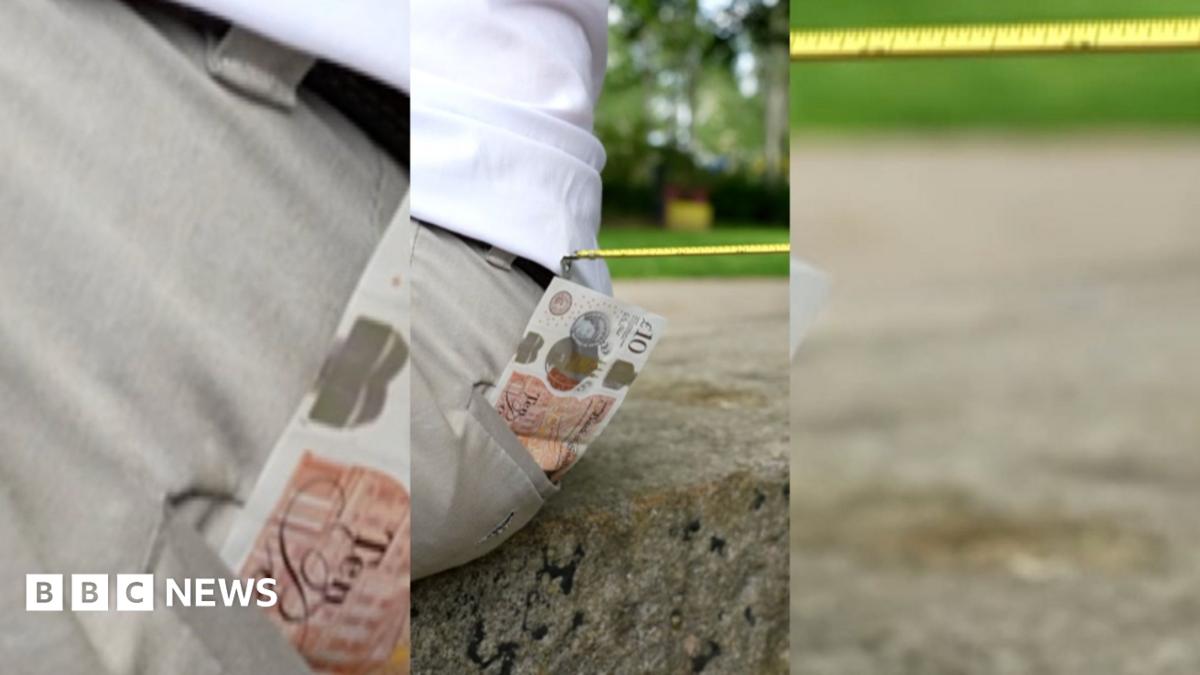
A £10 note sticking out of someone's back pocket with a tape measure attempting to steal it.

Consumer Expert Harry Kind explains how you could get you money back if you have been scammed.

Continue Reading

Business

UK long-term borrowing costs hit highest since 2008 ahead of October Budget

Published

on

A woman with long brown hair looks at someone off-camera

Long-term government borrowing costs have risen to a 28-year high, putting further pressure on Prime Minister Andy Burnham ahead of his first Budget next month.

The yield on a 30-year gilt — a loan to the British government — rose to 5.89%, the highest since 1998.

The effective cost of borrowing for governments across the globe has continued to rise this morning with new multi-decade highs in market interest rates.

The moves reflect concerns about inflation arising from the ongoing Iran war, competition from major tech firms for long-term borrowing, and concerns about state borrowing levels.

Advertisement

All of those factors will make the Budget process trickier for Burnham, who will face MPs on Tuesday for the first time as prime minister, and his Chancellor John Healey.

Higher borrowing costs will reduce the amount of headroom the government has against its self-imposed fiscal rules, limiting the amount Healey can spend on consumer-friendly measures to ease the cost of living.

Downing Street said fiscal discipline is the “bedrock” of Britain’s economic stability and national security.

But a spokesperson for the prime minister refused to comment directly on the rise in borrowing costs.

Advertisement

“The chancellor and the prime minister are in lockstep that the government will meet the fiscal rules with a buffer against uncertainty and we’re cutting the deficit faster than any other G7 economy to the lowest level in six years,” the spokesperson said.

The yield on the benchmark 10-year gilt rose to its highest rate since June 2008, at the height of the global financial crisis.

Gilt yields move counter to the value of the bonds, meaning their prices fall when yields rise.

Borrowing costs in the US, Japan and Europe have hit similar highs in recent days.

Advertisement

Global markets reacted in particular after suggestions in the US that its central bank could raise rates. The UK market was closed for the bank holiday yesterday. Japan is also facing pressure to raise rates.

The Chancellor is in the USA attending a meeting of global finance ministers and central bankers. He told the G20 that the UK had the fastest growth in the G7 in 2026 so far, that productivity was improving and that the UK was cutting its borrowing at the fastest rate of the major economies.

Kathleen Brooks, research director at investment company XTB, told the BBC News Channel: “Of course, this is red lights flashing.”

“We are used to pockets of volatility, it has been volatile few months,” she says.

Advertisement

But record levels of government debt and a record tax take mean “these are not comfortable times for the new government and the new chancellor,” she says.

Every time bond yields rise, the UK has to pay more on the debt interest, she says.

Continue Reading

Business

Court rejects Allen Caratti’s bid to block inquiry over debt to Reliance

Published

on

Court rejects Allen Caratti’s bid to block inquiry over debt to Reliance

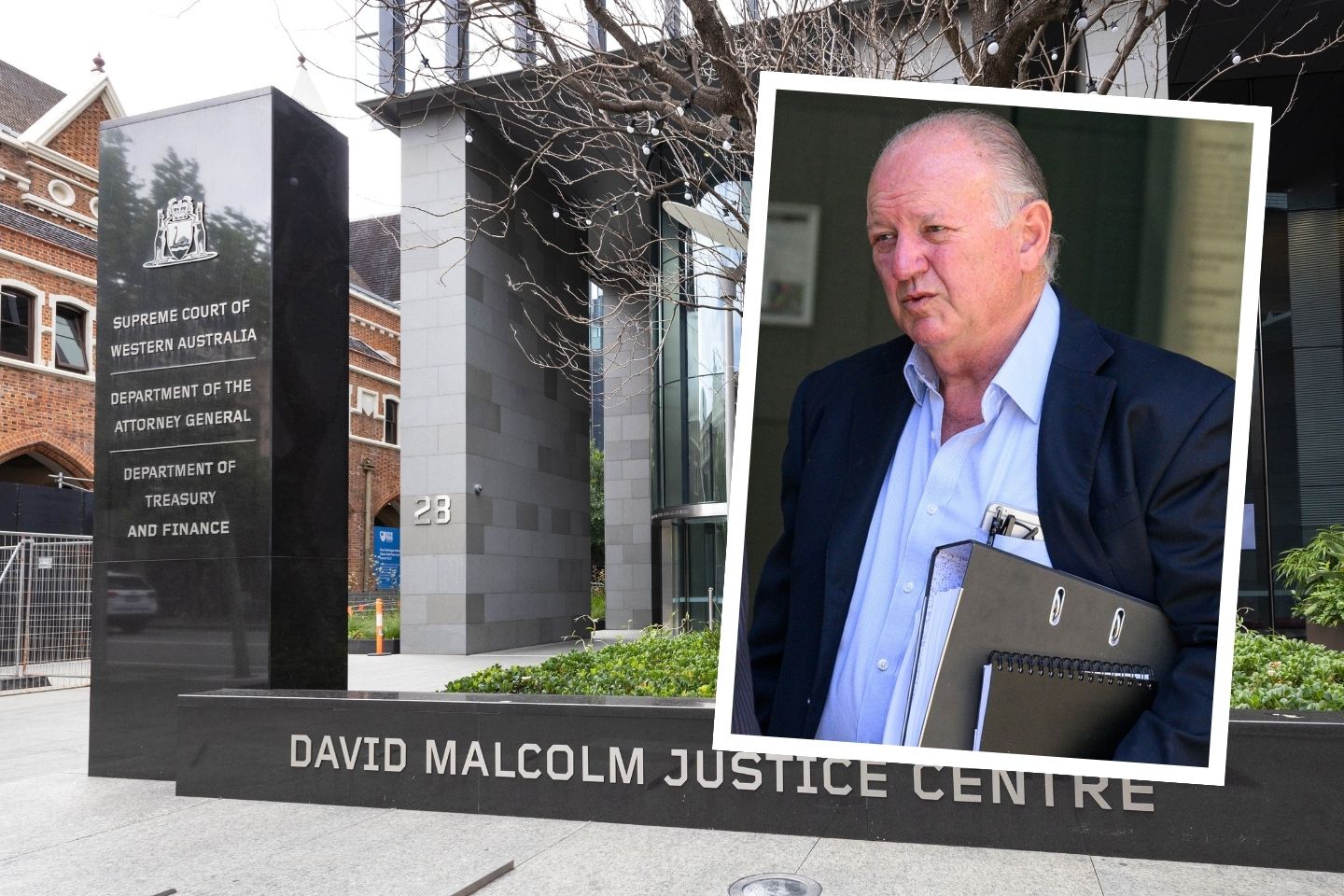
A WA court has rejected Allen Caratti’s bid to shelve an inquiry despite the property mogul’s claims he has secured financing arrangements to pay off a judgment debt.

Continue Reading

Business

Keurig Dr Pepper to sell back Chobani stake for $925 million

Published

on


Keurig Dr Pepper to sell back Chobani stake for $925 million

Continue Reading

Business

The Mall at Cribbs Causeway becomes more eco friendly with help of bees and robot cleaner

Published

on

Business Live

The shopping centre has invested in a number of schemes to cut carbon emissions

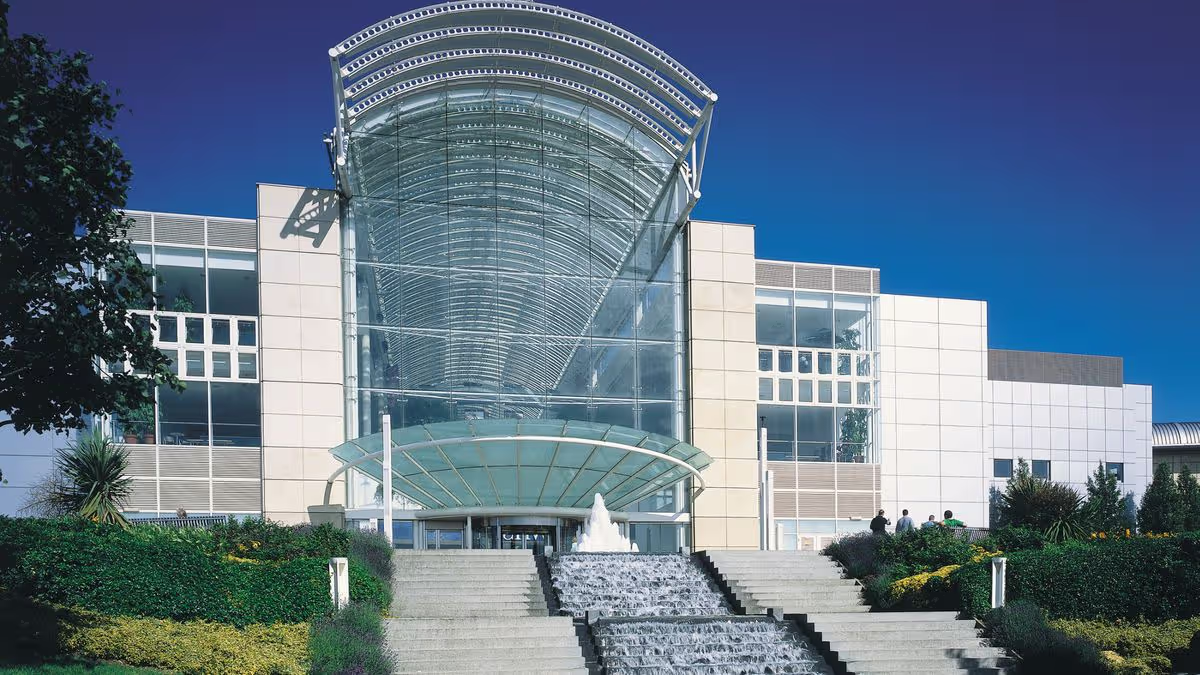
The Mall at Cribbs Causeway in Patchway, South Gloucestershire.

The Mall at Cribbs Causeway in Patchway, near Bristol(Image: The Mall at Cribbs Causeway)

Cribbs Causeway shopping centre has been recognised for its eco efforts after launching a number of schemes to help it become more environmentally friendly. The Mall is one of only a few UK retail destinations to secure the so-called BREEAM excellent rating, according to its owners.

The award follows a comprehensive environmental programme by Cribbs including a campaign called ‘People, Planet, Purpose’ aimed at helping shoppers and tenants understand how the Mall is becoming more energy efficient.

Advertisement

Changes include installing LED lighting across 98 per cent of the site; investing in a solar thermal domestic hot water system powering hot water taps across toilet blocks; and replacing its inefficient plant with modern heating-cooling and fresh air systems.

The shopping centre has also introduced a robotic cleaning machine, which it says uses 35 per cent less water than traditional cleaning methods, and has developed a wildflower garden with beehives to boost biodiversity across the estate.

Other schemes include a new recycling strategy within the centre; reinstating a recycling coffee grinds initiative for shoppers to collect unwanted coffee grinds for their gardens; and regularly recycling unused uniforms from staff.

“The award highlights all the hard work the team have undertaken over the past few years as we strive to become one of the most sustainability-friendly destinations in the country,” said Katie Searle, director of asset management at Sovereign Centros from CBRE, which provides asset management to Cribbs.

Advertisement

“Becoming BREEAM certified is one of the key steps on this journey and we are looking forward to working closely with our partners at Savills, tenants and the local community to implement new ideas to not only support our ESG goals, but also those of our retailers and the wider community.”

BREEAM – or building research establishment environmental assessment method – is an international system used to measure and certify the environmental and sustainability performance of buildings and infrastructure.

The certification follows wider investment by Cribbs, including £300,000 in pedestrian and cycle pathway extensions; installing more electric vehicle charging points; and collaborating with local travel networks to offer staff subsidised rates on public transport.

Elsewhere, the shopping centre has launched a free events calendar, while also investing in first aid, mental health, and dementia and autism awareness training for its guest services team, it said.

Advertisement

It has also refurbished its accessibility unit and introduced care packages and new sanitary bins across male toilets as part of the ‘Boys Need Bins’ campaign – a public health initiative calling on the UK government to make sanitary disposal bins a legal requirement in all male public and workplace restrooms.
Continue Reading

Business

Mike Ashley’s Frasers Group considers move to oust Hugo Boss chairman

Published

on

Business Live

Group told investors on Tuesday that it wants to control more than half of Hugo Boss

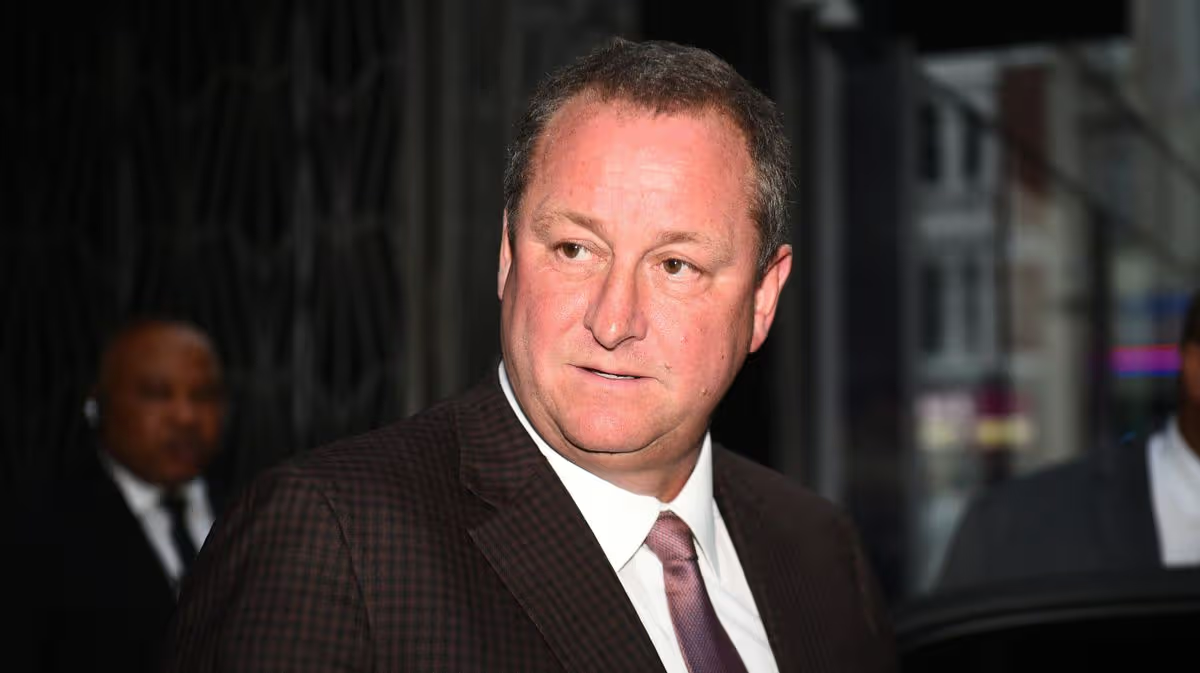
Mike Ashley, chief executive of Frasers Group

Mike Ashley, founder of Frasers Group(Image: PA)

Mike Ashley’s Frasers Group is considering a move to remove the boardroom chair at Hugo Boss, as it set out fresh ambitions to increase its stake in the German fashion giant.

Advertisement

The retail conglomerate, founded by the British billionaire, told investors on Tuesday that it is seeking to acquire more than half of Hugo Boss. It already holds close to 48 per cent of the business, positioning it as the company’s largest shareholder.

Frasers Group’s announcement cast doubt over the future of Stephan Sturm as chairman of Hugo Boss’s supervisory board, hinting it could stage a coup to unseat him.

The group stated: “Frasers is currently reviewing whether it continues to support Mr. Stephan Sturm in his position as the Chairman of the Supervisory Board of Hugo Boss.”

A potential push to oust Sturm would be the latest chapter in Frasers’ well-documented history of boardroom clashes. The group has built a reputation for acquiring stakes in rival firms and leveraging these positions to push aggressively for internal change, as reported by City AM.

Advertisement

Sturm has held the role of chair of Hugo Boss’s supervisory board since May last year, while Frasers chief executive Michael Murray occupies a seat on the board.

Hugo Boss’s supervisory board sits above its managing board, overseeing its operations and appointing its members.

Last month, Frasers raised its stake in the German fashion house to 47.9 per cent – a holding valued at nearly €1.5bn. Frasers had put forward a £1.7bn bid for the entire business, but this was firmly rejected as “inadequate” by Hugo Boss.

The UK retail giant instead turned its attention to shareholders, acquiring approximately 17 per cent of Hugo Boss through its €38-per-share offer.

Advertisement

Frasers has reportedly been lobbying to install Murray, Ashley’s son-in-law, in the role of chief executive at Hugo Boss.

Throughout 2024, Frasers accumulated stakes in luxury bagmaker Mulberry and online fashion retailer Boohoo, yet fell short in its efforts to secure board representation at either company.

Earlier this year, Ashley launched a £166m takeover bid for Australian footwear firm Accent, simultaneously calling for the ousting of its chairman over alleged “poor performance”.

The group’s pursuit of Hugo Boss forms part of Ashley’s broader ambition to drive his retail empire further upmarket, having originally founded Sports Direct.

Advertisement

Last month, Frasers snapped up struggling department store chain Harvey Nichols out of administration for approximately £40m.

The group, which also owns the upmarket fashion brand Flannels, stated that its acquisition of Harvey Nichols would build upon its “elevation strategy, strengthening its luxury positioning”.

Ashley established Frasers Group in 1982, and its portfolio of brands now includes Jack Wills, Evans Cycles, Lonsdale and Slazenger.

Advertisement
Continue Reading

Business

Eurozone Inflation Picks Up, Adding Fuel to Bond Selloff

Published

on

Alexander Osipovich hedcut

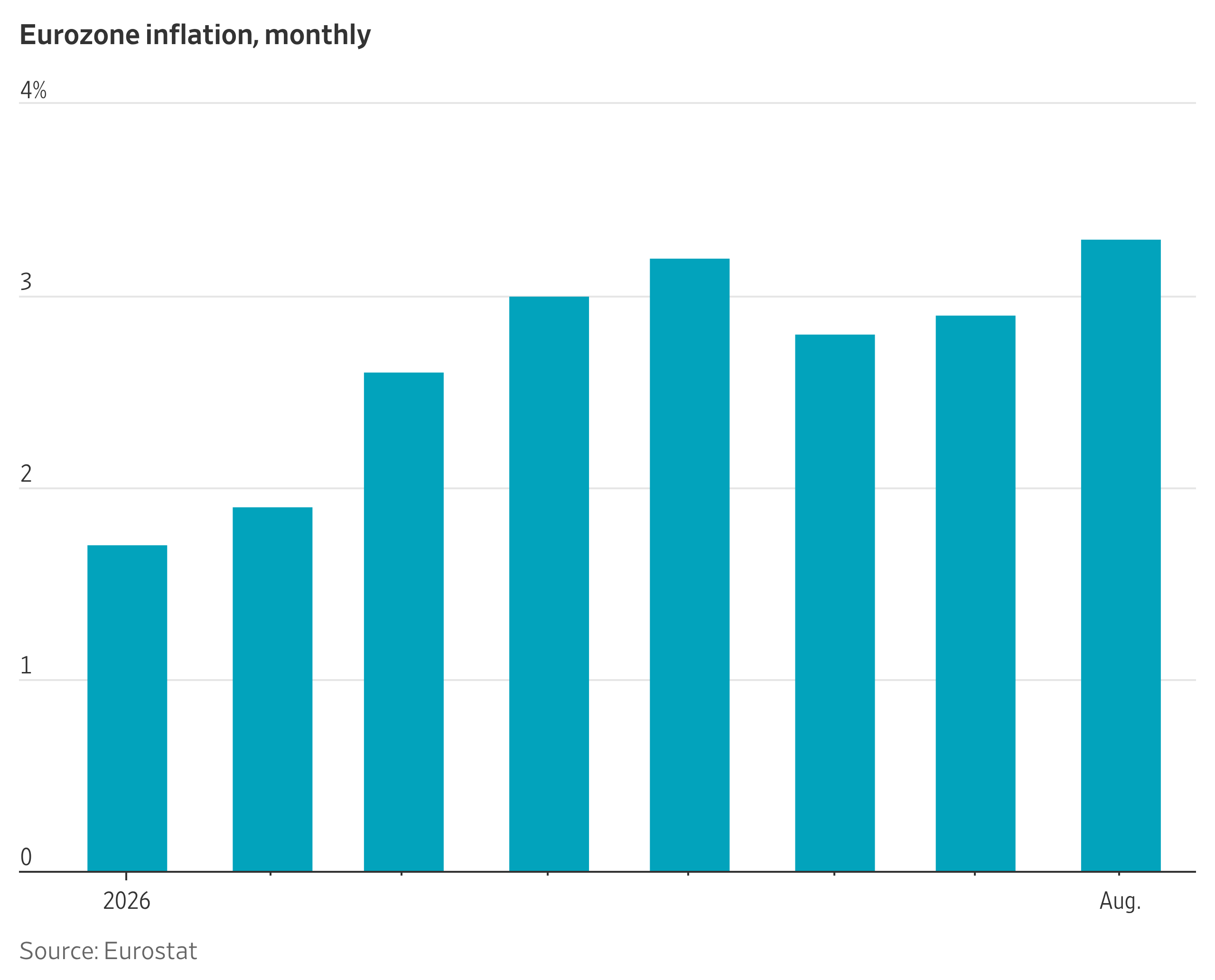
Inflation in the eurozone rose to 3.3% in August, the third consecutive month of gains, bolstering the case for the European Central Bank to hike rates and adding more fuel to the global bond selloff.

Continue Reading

Trending

Copyright © 2025