Connect with us

Business

Riot Platforms Shares Climb Ahead of Earnings as Bitcoin Miner’s AI Pivot Draws Fresh Attention This Week

Published

on

Buy or Sell AMD Stock in 2026? Analysts Bullish on

Shares of Riot Platforms climbed to $23.30, up 8.05%, on Wednesday as the Castle Rock, Colorado-based bitcoin mining company prepared to report second-quarter earnings, with investors weighing the stock’s exposure to both cryptocurrency markets and an increasingly prominent push into artificial intelligence data center infrastructure.

Riot was scheduled to release its second-quarter results Wednesday, with analysts expecting a 2.8% revenue decline and a loss of 39 cents per share, reflecting broader pressure across the bitcoin mining sector tied to a significant drop in bitcoin mining difficulty and continued volatility in cryptocurrency prices.

Wednesday’s Rally Amid Broader Market Strength

The stock’s advance came amid a broader rally across U.S. equity markets, with major indexes including the Dow Jones Industrial Average and S&P 500 climbing to fresh record highs this week on optimism tied to easing tensions over the Strait of Hormuz and a busy stretch of corporate earnings. That risk-on environment has generally provided a supportive backdrop for higher-volatility names like Riot, whose share price has historically shown a strong correlation with broader shifts in investor risk appetite alongside movements in bitcoin’s own price.

Advertisement

A Bitcoin Miner Betting on AI Infrastructure

Much of the recent bullish narrative surrounding Riot has centered on the company’s strategic pivot from pure bitcoin mining toward broader data center infrastructure that could serve artificial intelligence workloads. Riot currently owns roughly 1.7 gigawatts of power capacity across two large-scale facilities in Texas, assets that analysts have described as rare tier-one infrastructure within the bitcoin mining sector, given the difficulty and cost of securing comparable power capacity for new data center projects.

Activist investor Starboard Value has publicly argued that Riot’s AI infrastructure pivot could be worth as much as $21 billion, a figure that stands in stark contrast to the company’s more modest market capitalization, underscoring what bulls see as a significant valuation gap between the company’s current stock price and its potential long-term value as a power-heavy infrastructure operator. J.P. Morgan has separately forecast as much as 45% upside for Riot shares through 2026, citing expectations that the company could secure a large-scale colocation deal at its Corsicana, Texas site.

Riot chief executive Jason Les has increasingly framed the company’s identity around its infrastructure capabilities rather than mining alone, describing Riot in recent public statements as a Bitcoin-driven industry leader in the development of large-scale data centers, a framing that reflects the company’s broader strategic emphasis on power infrastructure and data center development over its original core mining business.

Advertisement

Analyst Sentiment Turns More Bullish

Wall Street sentiment toward Riot has grown increasingly positive in recent weeks. Citi raised its price target on the stock from $21 to $28 while reiterating a buy rating, and BTIG similarly increased its own target on the shares, both moves reflecting growing analyst confidence in the company’s dual exposure to bitcoin mining economics and the broader AI infrastructure buildout that has dominated market narratives throughout much of 2026.

A History of Volatility

Despite the recent bullish momentum, Riot’s stock has continued to exhibit the kind of pronounced volatility that has long characterized bitcoin mining equities. Shares fell 3.55% in a single session in late July amid mixed options market sentiment, illustrating the degree to which the stock remains sensitive to shifting short-term sentiment even as its longer-term strategic narrative has grown more favorable among covering analysts. The stock has climbed roughly 90% year-to-date, according to recent analysis, reflecting strong market approval of the company’s broader strategic shift toward digital infrastructure even amid the sector’s characteristic volatility.

Advertisement

Funding Growth Through Bitcoin Sales and Equity

Riot has continued to fund its expansion plans in part by selling a portion of its mined bitcoin output alongside periodic equity raises. The company maintained a substantial liquidity position earlier this year, holding more than 15,000 bitcoin, a portion of which was held as collateral, valued at more than $1 billion based on prevailing market prices at the time. The average cost to mine each bitcoin, excluding depreciation, has risen modestly compared with the prior year, driven primarily by an increase in the global network hash rate that has made mining incrementally more competitive across the industry.

What Investors Are Watching

With Riot’s official second-quarter results expected later Wednesday, investors are likely to focus closely on updated commentary regarding the pace of the company’s data center infrastructure buildout, particularly any additional detail on potential colocation agreements at its Corsicana facility, alongside standard bitcoin production and mining cost metrics that have traditionally driven the stock’s performance. The results are expected to offer further clarity on whether Riot’s ongoing transformation from a pure bitcoin miner into a broader power infrastructure operator is beginning to translate into the kind of valuation re-rating that bullish analysts and activist investors have argued the stock deserves.

Advertisement
Continue Reading
Click to comment

You must be logged in to post a comment Login

Leave a Reply

Business

Iran says it has agreed Strait of Hormuz shipping route with Oman

Published

on

Vessels in the Strait of Hormuz, as seen from Musandam, Oman, August 3, 2026

Iran says it has reached an agreement with Oman on a route for shipping through the Strait of Hormuz.

Foreign ministry spokesman Esmaeil Baqaei did not give any further details on the agreement, which he said was “in the final stages”.

Baqaei warned however that a deal with Oman would not guarantee safe navigation through the strait on its own, arguing that security remains impacted by the US blockade of Iran’s ports. The US and Oman have not commented on the proposal.

Since the US and Israel attacked Iran in late February, Tehran has largely blocked the Strait of Hormuz through which about a fifth of the world’s oil and liquefied natural gas usually passes. Since then, global oil prices have fluctuated wildly.

Advertisement

On Tuesday, US President Donald Trump warned that Iran would be “hit very hard” if the strait did not open “very soon”.

His comments came after senior US officials said talks had progressed to allow shipments to potentially to resume later this week, though Iran has maintained that it is not negotiating with the US and has no plans to do so.

Reopening of the strait has been a key point in discussions between the two countries and mediators.

In his statement, the Iranian foreign ministry spokesman said the “geographical coordinates of the route” had been agreed with Oman.

Advertisement

“The factors making the Strait of Hormuz insecure still exist on the part of the United States, particularly the naval blockade and other aggressive and threatening actions against Iran and its interests,” he said, according to Iran’s official Irna news agency.

Iran’s Deputy Foreign Minister Kazem Gharibabadi later told Irna that the new route would be temporary and could stay open from two to four months. He did not give further details.

Since the beginning of the war, traffic through the strait has dwindled. Iran has said all passage needs to be cleared beforehand – and it has attacked vessels which have ignored the order.

One of the main points of disagreement between Tehran and Washington has been Iran’s threat to impose a fee on vessels wishing to cross the strait.

Advertisement

On Wednesday, Iranian officials did not say if this issue formed part of the talks with Oman.

In June, Iran and the US signed a Memorandum of Understanding (MoU), aiming to stop fighting, reopen the Strait of Hormuz, and reach agreement to end the war within 60 days.

The deal quickly fell through, as did diplomatic talks, with tit-for-tat attacks resuming just days after the MoU was signed.

The US has maintained a naval blockade of Iranian ports in the region, while another blockade is in place on Saudi Arabia’s ports in the Red Sea, imposed by Yemen’s Iran-backed Houthis since 20 July.

Advertisement
Continue Reading

Business

SanDisk Q4 FY2026 slides: record results, AI boom, stock slides

Published

on


SanDisk Q4 FY2026 slides: record results, AI boom, stock slides

Continue Reading

Business

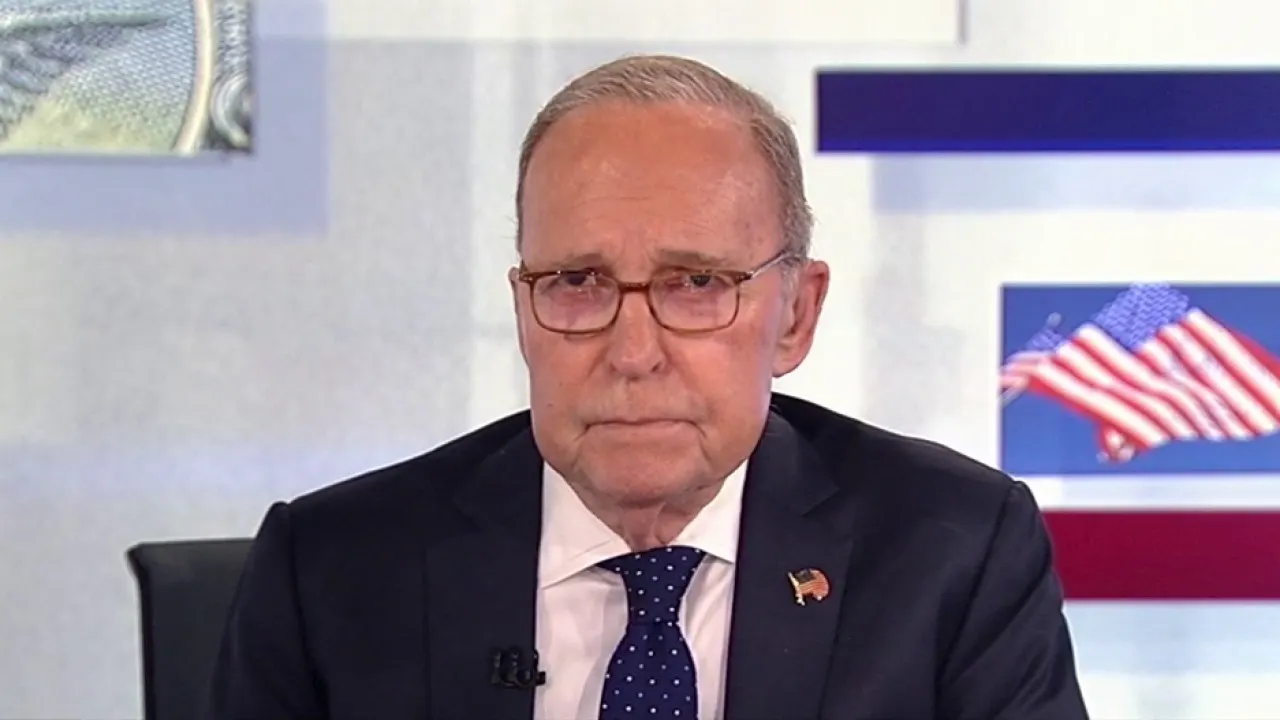
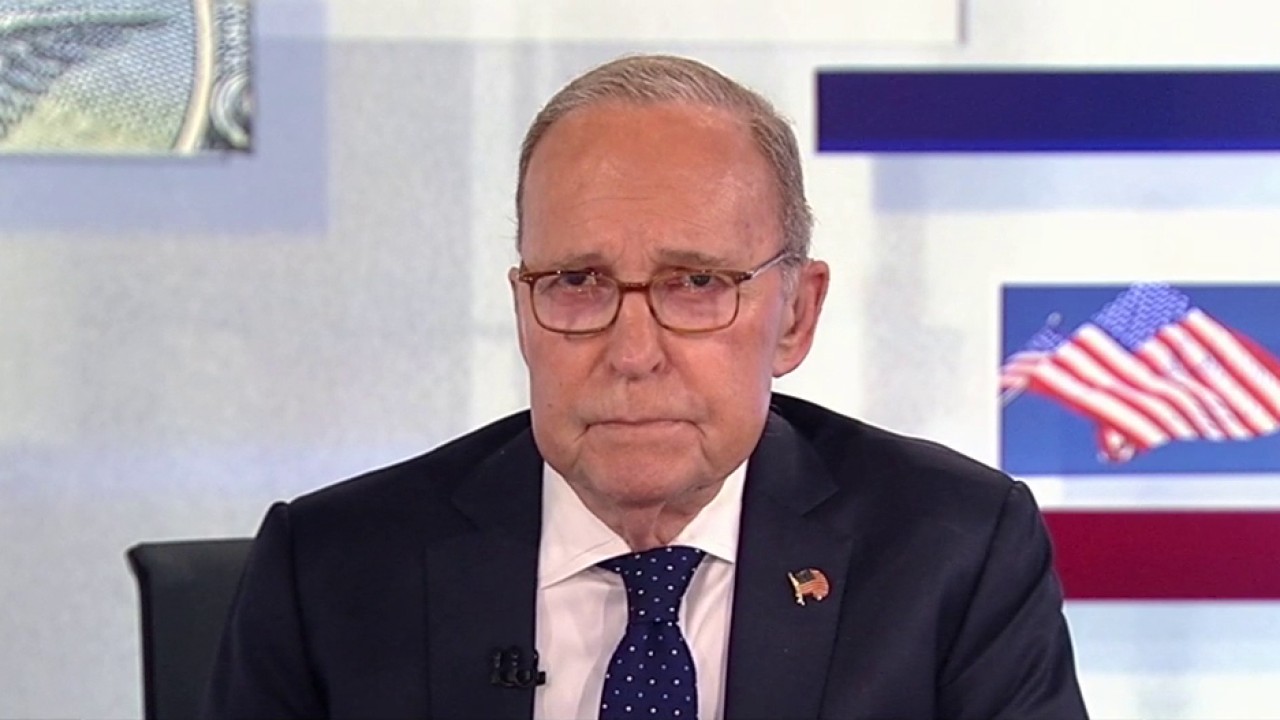
LARRY KUDLOW: Can Republicans beat socialism in the Midterms?

Published

on

LARRY KUDLOW: From General Jack Keane -- 10 to 14 days to return to military operations

Now look, it may wind up being a huge gift to the GOP come November. But the far-left socialist, antisemitic, anti-American Democrats had a field day yesterday in carrying these Michigan primaries. Of course, the leader is this Dr. Abdul El-Sayed, who won his Senate race by a cat’s whisker, but he won it. He didn’t get any black votes, I don’t think. He didn’t get any brown votes. He didn’t get any working-class votes. Yet he beat a regular Democrat who was backed by Senator Chuck Schumer and Governor Gretchen Whitmer.

So the El-Sayed Democrats, they’re really no different than the Mamdani Democrats or the Bernie Sanders Democrats or the AOC Democrats. It is interesting politically how fast the socialists have taken over in the last couple of years. And the issues are very familiar and very bad for America. 

It’s big government socialism. It’s this Medicare for all, which is really a euphemism, not simply for government control of healthcare, but frankly for government control of the entire economy. Hence the flirtation, not just with socialism, but really with communism. To be sure, it means vast tax increases, the destruction and liquidation of wealth. The destruction of success, the end to individual initiative, the end-to-work incentives, open borders, anti-cops, anti-ICE. 

Advertisement

This crowd, by the way, would raise taxes beyond your wildest dreams. They have no family values. There’s no community, there’s no tradition. Some of them want to abolish the Thanksgiving Day holiday. All they can talk about is transgenderism, and then there’s Palestine. Oh, Palestine. Antisemitism is perhaps the driving animating force behind this entire socialist movement. 

The biggest issue in the Michigan Senate race seems to be the hatred of Israel, which levers off the anti-semitism of Mayor Zohran Mamdani of New York, and it is catching on with all the socialists.

Our friend Ben Domenech now calls the Democrats the party of Commie ISIS. Well put. Now, on the other hand, this is a great Republican opportunity if the GOP can seize it. The problem here is we’re in a booming economy. 

All cylinders, manufacturing, technology, consumers, businesses, a roaring stock market today, another record. Trump Accounts are the most popular thing going, but no one seems to know it according to the best polls. I’m talking about likely voters here, from ace Republican pollster, John McLaughlin, among the best in the business, not registered, not adults, actual likely voters who participated in the last elections. 

Advertisement

For the McLaughin poll he asked, is the economy worse or better? Are you listening? Some 56 percent say worse, 37 percent say better. And then he goes on. Are the Trump tax cuts of last year good enough to improve the economy? Only 26 percent said yes. Boy, that sounds like a messaging problem, but you know what, it’s a policy problem too.

Today, in the paper, an old Reagan hand, my pal, Bruce Thompson — and this was copied by the Committee to Unleash Prosperity Hotline — he notes that Americans pay more in taxes than they spend on food. Clothing and housing, that’s right. As of last year, Americans paid $8.192 trillion in federal, state, and local taxes, and spent $7.388 trillion on food, clothes and housing.

All right, that is not affordability. And I think that’s got people down. They should be up, but they’re not. Yet, the Republican Congress… Has completely bungled the budget. There’s just a couple of days left. No pro-growth tax cuts, no strong communication of the economic successes and the boom, no reform of the spending cuts.

To help solve the affordability issue, people want more money in their pockets. It’s an old Republican theme and for some reason Republicans in Congress and the White House have forgotten it

Advertisement

Today, I just saw the vice president talked about $56 billion of waste fraud. Why isn’t that in the budget? Times 10 years, that would be $560 billion of spending cuts from waste, fraud and corruption. Why isn’t that in the budget? Anyway, if the GOP doesn’t wake up, if the GOP doesn’t start to develop some policies, and if the GOP doesn’t start to develop some significant messaging, then they may bungle not just the midterm election, but they may bungle the whole battle with this Democratic Socialism. And I can’t think of anything worse for America.

Continue Reading

Business

Supply chain issues impact Ingredion

Published

on

Supply chain issues impact Ingredion

Company sees volume increases in Texture & Health Solutions business.

Continue Reading

Business

Why Morocco Fits RD Dubai’s and Lukas Kerrebijn’s Long-Term Investment Thesis

Published

on

Why Morocco Fits RD Dubai’s and Lukas Kerrebijn’s Long-Term Investment Thesis

For decades, global real estate investors have largely viewed the Middle East and North Africa as separate investment stories.

The Gulf represented capital, stability, and modern infrastructure, while North Africa was often discussed through the lens of tourism or emerging markets.

That distinction may be beginning to blur.

As capital becomes increasingly global and investors search for markets supported by long-term structural fundamentals rather than short-term momentum, Morocco is attracting growing attention. The country’s strategic location, political stability, infrastructure investment, and demographic shifts are beginning to position it as one of the region’s more compelling long-term growth stories.

Rather than competing with the UAE, Morocco may ultimately complement it.

Lukas Kerrebijn, Co-Founder of RD Dubai, believes the two markets occupy different positions within the same broader regional growth narrative.

Advertisement

“We don’t see Morocco competing with the UAE,” he says. “We see it as complementary. They’re both countries that have strong long-term fundamentals and continue attracting people from all over the world.”

For Kerrebijn, the investment thesis extends well beyond property prices.

Leadership remains one of the most overlooked variables in long-term real estate investing. Countries capable of executing ambitious infrastructure projects, maintaining political stability, and fostering investor confidence often create conditions where private capital can compound over decades rather than years.

“Leadership is incredibly important,” he explains. “When a country has strong leadership and a clear long-term vision, it creates confidence for investors. We see that in the UAE, and we believe Morocco shares many of those characteristics.”

Advertisement

Infrastructure forms another pillar of that outlook.

Morocco has spent years investing in transportation networks, tourism infrastructure, and urban development while positioning itself as a gateway between Europe, Africa, and the Middle East. Those investments are expected to accelerate further as the country prepares to co-host the 2030 FIFA World Cup alongside Spain and Portugal.

Major international sporting events rarely create investment opportunities on their own. Instead, they often accelerate infrastructure spending, tourism development, and international visibility that were already underway.

“We want to establish ourselves before the World Cup,” Kerrebijn says. “We believe there will be tremendous growth because of everything that’s happening there.”

Geography also plays a central role.

Few countries occupy such a strategic position. Morocco sits just across the Mediterranean from Europe while maintaining deep economic and cultural ties throughout Africa and the broader Middle East. That accessibility continues to attract tourists, entrepreneurs, and international investors seeking exposure to multiple regions from a single location.

Advertisement

For European buyers in particular, Morocco offers an attractive combination of proximity, climate, and lifestyle.

“It’s very convenient for Europeans,” Kerrebijn notes. “It’s close to Europe, the weather is excellent, and there are significant opportunities developing across the country.”

Demographic trends reinforce the investment case.

Kerrebijn points to an often-overlooked phenomenon: members of the Moroccan diaspora who have spent generations living across Europe are increasingly returning to the country, bringing both capital and entrepreneurial activity.

“There’s a lot happening,” he says. “People whose families have lived in Europe for generations are starting to move back to Morocco, and that creates additional opportunities.”

Advertisement

Such population movements often become powerful drivers of long-term housing demand, business formation, and local investment.

Viewed together, these trends suggest Morocco’s story extends beyond tourism or short-term development cycles. Instead, it reflects the convergence of several structural forces: infrastructure investment, international connectivity, demographic change, stable governance, and increasing global attention.

For investors accustomed to looking only at established markets, those characteristics may appear familiar.

Indeed, many of the same long-term fundamentals that helped transform the UAE into a global investment destination are increasingly visible elsewhere in the region.

Advertisement

That does not imply Morocco will replicate Dubai’s trajectory, nor should it. Every market develops according to its own economic, political, and demographic realities.

But as institutional and private capital become increasingly selective, investors are placing greater emphasis on structural resilience than speculative momentum.

By that measure, Morocco’s investment story may be only beginning.

For firms like RD Dubai, the country’s appeal lies not in chasing the next headline, but in identifying markets whose strongest years may still lie ahead.

Advertisement

Continue Reading

Business

5 mistakes that cost money when connecting payments in Europe

Published

on

5 mistakes that cost money when connecting payments in Europe

Payment integration often begins as an IT project: choose a provider, connect the API, complete the checks, and go live.

The way a business builds its payment infrastructure is now a commercial decision. A poor setup causes more declines and drives up support costs. Revenue suffers long before the technical team calls the integration a failure.

The European payment market is changing faster than most businesses can adapt. PSD3 will change how providers handle authentication, fraud data, and customer protection. The EU Instant Payments Regulation is requiring payment providers to offer instant euro transfers.

What works in Germany may reduce conversions in France. A checkout optimised for Spain can underperform in the Netherlands. Even neighbouring markets often rely on completely different payment habits.

The pressure is greater for High-Risk businesses in sectors such as iGaming and Forex. Banks apply different risk policies, approval rates fluctuate between providers, and a single integration decision can affect approval rates for months after launch.

Advertisement

Many of the costs companies associate with payment processing in Europe are not caused by fees alone. They come from failed transactions, payment declines, abandoned checkouts, manual operations, delayed settlements, and rebuilding integrations that were never designed to scale.

Why payment integration in Europe is more complex

Europe is often treated as a single payments market. The Single Euro Payments Area (SEPA) and the Instant Payments Regulation have created common standards for many financial institutions. The move from PSD2 towards PSD3 will affect authentication, fraud controls and provider responsibilities. Merchants should review whether their current setup is ready.

Customers across the continent pay differently and expect different checkout experiences. In the Netherlands, iDEAL remains dominant for online purchases. German consumers still favour direct bank transfers and invoice payments. Southern European markets show stronger card usage, while open banking payments are gaining ground momentum across both the EU and the UK.

Payment integration in Europe needs to reflect local customer behaviour without forcing the operations team to manage a separate integration and dashboard for every market.

Advertisement

PSD3 introduces stricter rules around authentication and fraud prevention. The EU Instant Payments Regulation requires payment service providers to offer real-time euro transfers under the same pricing conditions as standard SEPA transfers. Faster settlement gives customers and merchants quicker access to funds, but it also leaves less time to catch processing errors.

High-Risk merchants face additional pressure because payment providers apply different risk criteria depending on industry, transaction volume, and geography. A payment route that performs well for an e-commerce retailer may generate lower approval rates for a Forex platform or an iGaming operator. Merchants expanding into multiple European countries often discover that approval rates differ significantly between providers.

Baymard Institute research shows that checkout friction remains a significant cause of cart abandonment. Worldpay’s latest Global Payments Report also shows that digital wallets, account-to-account payments, and alternative payment methods continue to gain market share across Europe, reducing reliance on traditional card payments.

For a growing business, payment processing in Europe is part of the customer experience. It needs the same level of localisation as pricing and language.

Advertisement

Understanding the European payments ecosystem

European payments are shaped by regulation and local customer behaviour. Success depends on understanding how these layers interact rather than treating them as separate challenges.

A checkout can pass every PSD2 requirement and still underperform in the Netherlands if it does not offer iDEAL. Equally, adding every available payment option without considering fraud controls or routing logic often increases operational costs instead of improving performance.

Five payment trends matter most for merchants entering Europe.

Trend Business impact
Instant payments Faster settlement and better cash flow, alongside rising expectations for real-time transfers
Open banking Lower processing costs, higher trust in account-to-account (A2A) payments, and reduced dependence on cards
Payment localisation Higher conversion rates through local payment methods and familiar checkout experiences
Stronger regulation More investment required in compliance, fraud monitoring,
and authentication
Payment orchestration Better approval rates through smart routing and multiple provider management

[иллюстрация: оформить таблицу в фирменном стиле]

Advertisement

Many businesses still struggle to offer enough local payment methods when entering new European markets. Others experience declining approval rates because transactions are routed through a single provider regardless of geography or issuer behaviour. Fraud losses remain a concern. New compliance requirements are adding more work for payment and risk teams.

SEPA simplifies euro transfers across participating countries. Different currencies remain in use, while domestic banking systems operate alongside SEPA.

The UK follows its own regulatory system under the Financial Conduct Authority (FCA), while faster payments and open banking have evolved independently from the EU’s payment stack.

Companies that treat payment integration as an ongoing optimisation process generally achieve higher payment conversion rates than those relying on a one-time implementation.

Advertisement

Five costly mistakes

Most payment integration problems develop gradually as businesses grow. The same five mistakes recur among businesses entering European markets. While they are especially common among High-Risk merchants, they affect virtually any company managing cross-border payments across Europe.

Mistake 1: Ignoring local payment preferences

Payment behaviour varies widely between countries. Many customers actively look for familiar local payment methods before deciding whether to complete a purchase.

Dutch customers overwhelmingly expect iDEAL. German users often prefer direct bank transfers or invoice-based payments. Mobile payments are widely used across Scandinavia. Open banking payments grow across both the UK and continental Europe.

Customers hesitate when they cannot immediately recognise a trusted payment method. Some leave without paying. Others switch to competitors that offer payment experiences better aligned with local expectations.

Advertisement

The problem is sharper on mobile.

Younger users increasingly expect biometric authentication, QR payments, or digital wallets instead of manually entering card details. Every additional field, redirect or authentication step increases the probability of abandonment.

Currencies, language, checkout design, payment options — everything can affect conversion. Showing the most relevant payment methods first can improve payment conversion without changing the underlying payment setup.

Payment localisation belongs in the launch plan. Adding it after conversion falls is usually more expensive.

Advertisement

Mistake 2: Skipping compliance checks

Compliance gaps often remain hidden until volumes rise. Then providers request updated documents, banks increase monitoring, and some payment flows begin to see more declines.

A compliance review can freeze settlement or delay a market launch.

Payment teams now have to prepare for:

  • the transition from PSD2 to PSD3
  • stronger AML requirements
  • enhanced Strong Customer Authentication (SCA) rules
  • stricter fraud-monitoring requirements

Payment providers are also becoming more selective when onboarding merchants operating in High-Risk industries.

Some businesses rely on payment providers that are not fully aligned with future regulatory changes. Others postpone fraud monitoring until chargebacks begin to increase. Documentation is treated as a one-off onboarding exercise instead of an ongoing operational process.

Advertisement

For companies handling payment processing in Europe, compliance should be part of the operating model. Working with providers that actively monitor regulatory developments and update their authentication, monitoring and reporting processes as the rules change reduces the risk of disruption later.

Mistake 3: Hardcoding provider integrations

Some businesses start with one PSP and later add separate providers for individual methods or markets.

Businesses relying on a single payment provider have limited ability to redirect traffic during technical disruptions. Each additional provider brings another API connection and reconciliation process. Over time, payment teams spend more resources managing integrations than raising approval rates and reducing failed payments.

Without dynamic payment routing, every transaction follows the same path regardless of issuer behaviour or approval history. If one provider experiences lower authorisation rates in a particular country, every declined transaction directly affects revenue. If the route underperforms, every transaction sent through it carries the same disadvantage.

Advertisement

Payment orchestration addresses this challenge by separating business logic from individual payment providers.

A payment architecture that connects several providers through one integration is significantly easier to scale than one built around a single integration. SPAYZ.io gives High-Risk merchants access to 55+ payment solutions through a single API integration. Availability depends on the market and the required payin/payout flow.

Mistake 4: Poor testing and error handling

A poorly tested integration may look fine on launch day.

Many merchants validate only successful transactions while overlooking the scenarios that happen every day in production:

Advertisement
  • interrupted customer sessions;
  • failed 3D Secure authentication;
  • declined issuer responses;
  • expired payment links;
  • duplicate submissions;
  • network latency;
  • provider downtime;
  • webhook delivery failures.

These scenarios directly affect payment approval rates and customer trust.

Imagine a customer authorises a payment through their banking app but returns to an error page because the callback was delayed by a few seconds. From the customer’s perspective, they’ve paid. From the merchant’s perspective, the payment may remain in an unknown state until someone manually investigates it.

The same applies to mobile checkout.

European consumers increasingly complete transactions on smartphones, particularly when using digital wallets or open banking payments. Redirect flows that work perfectly on desktop can introduce unnecessary friction on mobile devices. Long loading times, poorly optimised authentication pages, and unclear error messages all contribute to lower checkout optimisation metrics.

A practical approach includes:

Advertisement
  • automated sandbox testing before every release;
  • monitoring webhook delivery and retry logic;
  • detailed payment logs for every transaction;
  • real-time alerts when approval rates fall unexpectedly;
  • clear customer-facing error messages that explain what happened and suggest the next step.

Testing should begin before launch and continue throughout the life of the integration.

Mistake 5: Overlooking fraud and security gaps

As payment technology changes, fraud tactics change with it. Criminals no longer rely solely on stolen card details. Account takeover attacks, synthetic identities, authorised push payment fraud, phishing campaigns, and increasingly sophisticated social engineering schemes are becoming more common across digital payments.

The challenge across European markets is balancing security with customer experience. Adding excessive verification to every transaction creates unnecessary friction and lowers conversion.

Higher-risk transactions should face stricter checks; routine payments should not carry the same friction.

Fraud prevention combines behavioural analysis with device fingerprinting and transaction monitoring to identify unusual activity without interrupting legitimate customers.

Advertisement

Alongside PCI DSS requirements for handling payment data, European businesses must comply with stronger cybersecurity expectations under rules such as NIS2, particularly if they provide essential digital services or operate critical infrastructure.

Strong payment fraud prevention affects approvals, chargebacks, and customer trust, so they can’t be left to the IT team alone.

UK vs EU: key payment differences

Following Brexit, the UK retained much of PSD2 but now develops payment regulation independently under the Financial Conduct Authority (FCA) and the Payment Systems Regulator (PSR). The EU, meanwhile, is moving towards PSD3 and implementing the Instant Payments Regulation.

For merchants, these differences have practical consequences.

Advertisement
EU Payments UK Payments
PSD2 moving towards PSD3 FCA-led regulatory framework
SEPA credit transfer & SEPA Instant Faster payments infrastructure
Instant euro transfers across participating countries Near real-time GBP payments through faster payments
Growing adoption of open banking across member states A more mature open banking market within one platform
Multiple currencies outside the Eurozone Primarily GBP-focused domestic integration model

[иллюстрация: оформить таблицу в фирменном стиле]

Choosing the right UK payment providers, supporting payment processing in the UK alongside payment processing in Europe, and adapting checkout experiences to local expectations generally improves approval rates and checkout conversion.

Hidden costs businesses often overlook

When businesses compare payment providers, they usually focus on transaction fees. Those fees matter, but they are rarely the largest expense.

Hidden cost Business impact
Payment declines Lost revenue and lower customer lifetime value
Checkout abandonment Reduced conversion despite stable website traffic
Manual reconciliation Higher operational costs for finance teams
Provider downtime Lost transactions during peak demand
Single-provider dependency Limited negotiating power and slower expansion
Chargebacks and fraud investigations Increased manual work and compliance costs
Slow onboarding for new markets Delayed revenue generation in new GEOs

[иллюстрация: оформить таблицу в фирменном стиле]

Advertisement

Increasing the payment approval rate by only a few percentage points can generate substantial additional revenue for businesses processing thousands of transactions each day. Reducing payment failures reduces support requests and gives customers fewer reasons to abandon the platform.

Many payment teams eventually realise that payments should be managed like any other revenue-generating function. That means continuously monitoring performance, measuring provider efficiency by market, analysing decline reasons, and refining routing strategies over time.

How payment orchestration helps

Many of these problems emerge because payment infrastructure becomes increasingly difficult to manage as businesses grow.

Adding more providers introduces additional APIs. Expanding into new countries requires new payment methods. Fraud controls become more complex. Each change may require another API connection or manual process.

Advertisement

Payment orchestration reduces the number of integrations a merchant has to manage.

Transactions can be directed dynamically
according to:
  • customer location
  • payment method
  • historical approval rates
  • issuer performance
  • provider availability
  • transaction value
  • fraud risk

[иллюстрация: оформить как “цитату”]

If one provider experiences technical issues, traffic can automatically move to another route. If approval rates decline in a specific country, routing rules can be adjusted without rebuilding the entire payment architecture.

Payment provider checklist

Before committing to a new payment partner or reviewing your existing payment setup, use the checklist below.

Advertisement
Question Why it matters
Does the provider offer
your target markets?
Make sure the provider operates in the countries where you plan to expand.
Are local payment methods available? Check whether it supports bank transfers, eWallets, or other local schemes customers use in each market.
Is the platform ready for PSD3 and future regulatory changes? Ask how the provider updates authentication, reporting, and fraud controls when regulations change.
Can transactions be routed dynamically? Ask whether routing can change by country, issuer or method.
Does the provider offer transparent reporting? Ask for detailed analytics to identify payment failures, monitor conversion, and optimise performance.
How does the provider handle fraud prevention? Look for PCI DSS compliance, risk scoring, 3DS, behavioural monitoring, and adaptive fraud controls.
Is the infrastructure flexible? Check whether new methods and markets can be added without rebuilding the existing integration.
Can the provider work
with High-Risk industries?
Businesses in iGaming, Forex, and other emerging markets require payment partners familiar with higher-risk transaction flows.

[иллюстрация: оформить таблицу в фирменном стиле либо сделать как карточки “вопрос/ответ”]

Many growing businesses now build their payment infrastructure around orchestration platforms, allowing them to manage several providers and change routing rules without redesigning the checkout.

Conclusion

Payment decisions belong in commercial planning because they determine how much acquired traffic turns into revenue.

Businesses that consistently improve payment localisation, monitor payment approval rates, build more resilient payment processing in Europe, and build a flexible payment architecture are usually better positioned to grow across both established and emerging markets.

Advertisement

The right setup should make the next market easier to launch, not add another integration the team has to maintain. Reviewing the payment setup before volumes rise is cheaper than rebuilding it after declines, support costs and provider dependencies are embedded in the business.

Advertisement
Continue Reading

Business

Zeta Global Shares Jump 16% as Marketing Software Firm Extends 20-Quarter Beat-and-Raise Streak This Week

Published

on

Zeta Global Shares Jump 16% as Marketing Software Firm Extends

Zeta Global Holdings shares extended a sharp rally Wednesday, building on gains from the previous session after the marketing technology company delivered second-quarter results that beat expectations and extended what the company describes as its 20th consecutive “beat and raise” quarter.

Shares climbed to $28.20, up 16.24%, continuing a rally that began Tuesday when the company’s earnings report initially sent the stock up 7.54% to close at $24.26. The move built on a year in which Zeta shares have already climbed nearly 50%, according to recent trading data, as the New York-based company has continued posting accelerating growth in its AI-driven marketing platform business.

A Streak Extended

Zeta reported second-quarter revenue of $442.8 million, comfortably clearing the company’s own guidance range of $419 million to $422 million and marking a 44% increase year over year and a 12% sequential gain from the first quarter. In a statement, the company described the results as achieving positive GAAP net income for the second quarter, a milestone that adds to the company’s continued push toward sustained profitability alongside its rapid top-line growth.

Advertisement

Adjusted EBITDA for the quarter came in at $91.7 million, more than 50% higher than the $58.77 million posted in the same period a year earlier. Following the results, Zeta raised its third-quarter revenue guidance to a range of $469 million to $472 million, above the $461.01 million analysts had been expecting, while also lifting its full-year earnings-per-share guidance to a range of 9 cents to 11 cents, up sharply from a prior forecast of 2 cents to 4 cents.

AI Platform Drives Momentum

Much of the enthusiasm surrounding Zeta’s results has centered on the rapid adoption of the company’s Athena AI platform, which the company has said captured 60% of platform AI usage within its first week of availability, driving what Zeta described as a sevenfold surge in agentic interactions and a 40% lift in sales pipeline activity. The company has continued expanding partnerships tied to its AI infrastructure strategy, including collaborations with OpenAI, Snowflake and Palantir, with integration of the Palantir partnership expected to be completed within 45 days of the announcement.

Zeta has also continued extending Athena’s capabilities to advertising agencies, using what the company calls its proprietary SuperGraph technology to analyze consumer signals and recommend real-time marketing actions across a customer’s full lifecycle. The company has said a broader rollout of that agency-focused offering is planned to continue through the remainder of 2026, following an initial beta period with select partners.

Advertisement

A Credit Facility to Support Growth

Alongside its earnings results, Zeta has continued strengthening its financial flexibility. The company closed a $1 billion credit facility in recent weeks, which it said would be used to support mergers and acquisitions, share repurchases and general corporate purposes, giving the company additional capacity to pursue growth initiatives beyond its organic platform expansion.

Zeta has also continued building out its executive team, recently naming Intel and Synopsys veteran Trey Campbell to lead investor relations, a move the company has framed as part of its broader effort to strengthen its engagement with the investment community as it continues to scale.

Some Caution Amid the Rally

Advertisement

Despite the overwhelmingly positive market reaction, not every signal surrounding Zeta’s stock has been unambiguously bullish. Options activity ahead of the earnings release showed significantly more call volume than put volume, reflecting broadly bullish positioning among traders, though the company has also seen a notable number of recent insider transactions net sold, a dynamic some analysts have flagged as a cautionary signal against uniformly bullish sentiment. Wall Street coverage of the stock remains heavily weighted toward buy ratings, with 12 buy recommendations and two holds and no sell ratings among covering analysts, alongside a consensus price target implying meaningful additional upside from recent trading levels.

A Track Record of Consistency

Zeta’s ability to extend its beat-and-raise streak to 20 consecutive quarters has become a central part of the bullish narrative surrounding the stock, with the company’s full-year 2026 revenue guidance now standing at a range of $1.779 billion to $1.792 billion, up $30 million at the midpoint from its prior forecast and representing year-over-year growth of 36% to 37%. Even excluding the impact of political candidate advertising revenue and contributions from its Marigold enterprise business, the company has said its underlying growth rate remains in the 22% to 23% range, a figure management has pointed to as evidence of durable demand for its core marketing platform independent of one-time or cyclical revenue sources.

With Zeta’s stock continuing to build on its post-earnings momentum into Wednesday’s session, investors are likely to keep a close eye on the continued rollout of the company’s Athena AI platform and its expanding partnership ecosystem as key indicators of whether the company can sustain its remarkable streak of exceeding its own guidance in the quarters ahead.

Advertisement
Continue Reading

Business

Bayer CEO Rules Out Breakup, Says Spinoffs Would Be a Distraction

Published

on

Bayer CEO Rules Out Breakup, Says Spinoffs Would Be a Distraction

Bayer’s BAYN Chief Executive Bill Anderson ruled out a breakup of the group’s operations for now, saying the company still has work to do before it can consider options.

The German conglomerate is focused on containing litigation uncertainty, reducing debt and internal bureaucracy, strengthening the drug pipeline of its pharma business, and improving the profitability of its agriculture unit. Anderson said Bayer wouldn’t allow discussions on potential sales or spinoffs of its divisions to become a distraction.

Copyright ©2026 Dow Jones & Company, Inc. All Rights Reserved. 87990cbe856818d5eddac44c7b1cdeb8

Continue Reading

Business

NICE Ltd. (NICE) Q2 2026 Earnings Call Transcript

Published

on

OneWater Marine Inc. (ONEW) Q1 2026 Earnings Call Transcript